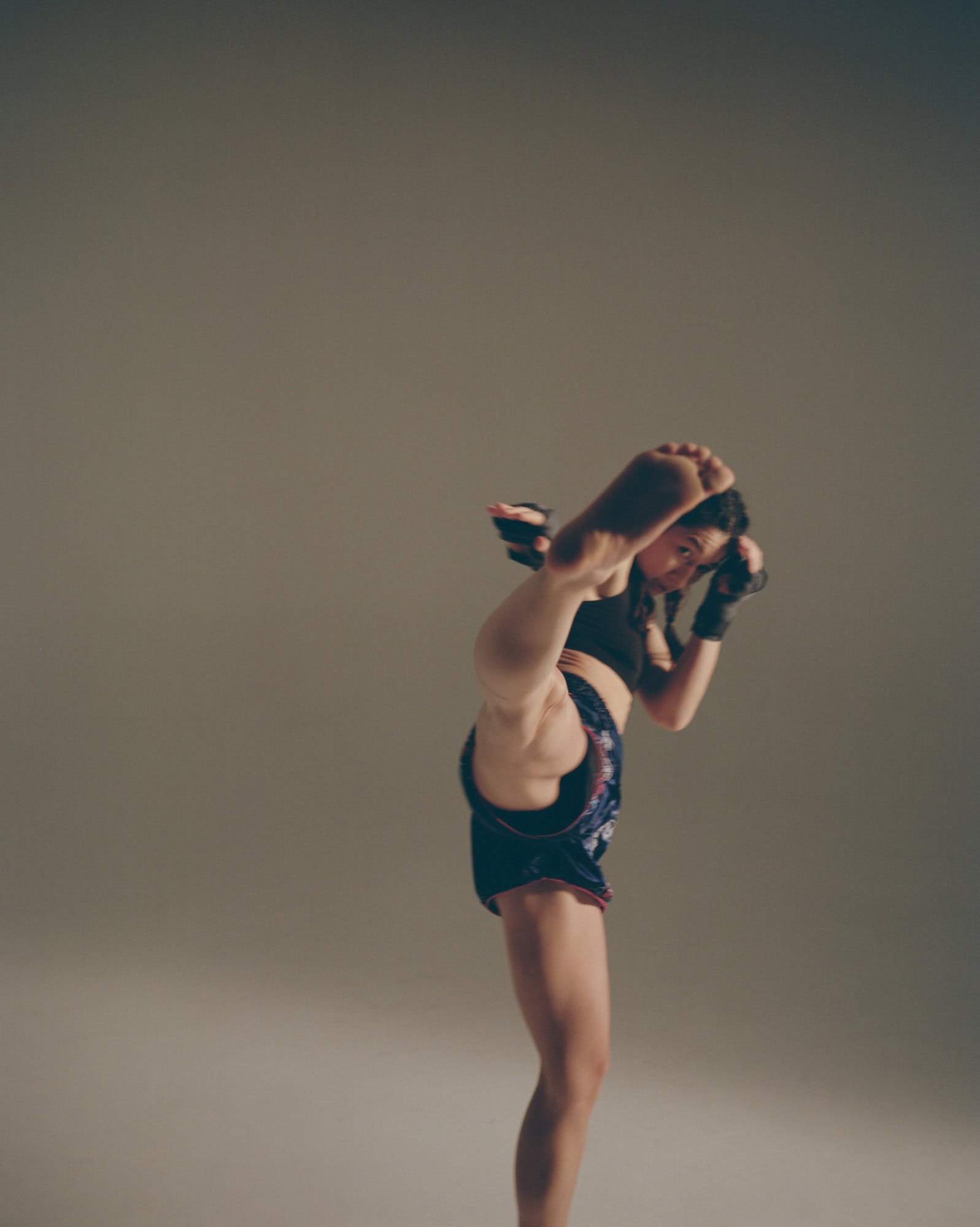
The film originated as David Fiene’s idea, born when he pointed a camera and asked a question that proved surprisingly difficult to answer properly throughout the entire shoot. Over the years, many explanations had been offered for why someone would choose to rise early to run, endure leg kicks that leave them unable to walk properly for days, or repeatedly return to a room where their shortcomings are laid bare, but most of those responses were merely convenient enough to end a conversation rather than reveal a fundamental truth.
Originally a secondary school mathematics teacher from New York who moved to Barcelona roughly nine years ago, she stumbled into Muay Thai almost by accident under the instruction of Pablo Rayo, having never considered herself an athlete nor searching for a sport. Like many women, she had survived sexual and domestic violence, responding by firmly deciding that anger was not the answer after seeing the destruction it could cause. Believing violence was never a solution, she kept her emotions hidden away and assumed she was fine, but Muay Thai stripped away that illusion not through mysticism, but through raw, visible struggle.
Being placed in situations where weakness, fatigue, and being out of one’s depth are exposed in front of others breaks through the surface, uncovering buried pain and leaving only the physical realization of whether one can fight back. Crucially, martial arts highlights the profound difference between pain inflicted without consent and pain that is willingly agreed to, where choosing the room, the partner, and the intensity allows the body to gradually relearn that it belongs to itself as the nervous system updates with new evidence. The genuine reason for continuing is not discipline, fitness, or enjoyment, but rather the reality that the pain is chosen, accompanied by a physical strength that contrasts sharply with past periods of powerlessness. This experience extends beyond any single individual or gender, speaking to anyone who has felt small or stripped of agency through illness, demanding work, grief, or immigration challenges, though women face an added societal expectation to take up less space and absorb impact rather than push back.
While hitting a pad for the first time often feels awkward or apologetic, consistent practice builds a presence that carries over into everyday life, prompting the co-founding of SOMA alongside Sevda Tunaboylu and Verena Walther to run free Muay Thai programs for migrant and refugee women in Barcelona. Clinical measurements consistently show meaningful improvements in wellbeing after every program cycle, yet the most convincing evidence remains watching participants realize they are allowed to stand their ground and be loud. Ultimately, the film offers no clean resolution to the central question, reflecting the reality that anyone claiming absolute certainty about enduring such repetitive discomfort is likely selling something, whereas the true significance lies simply in the ongoing act of choosing to step back into the room.