
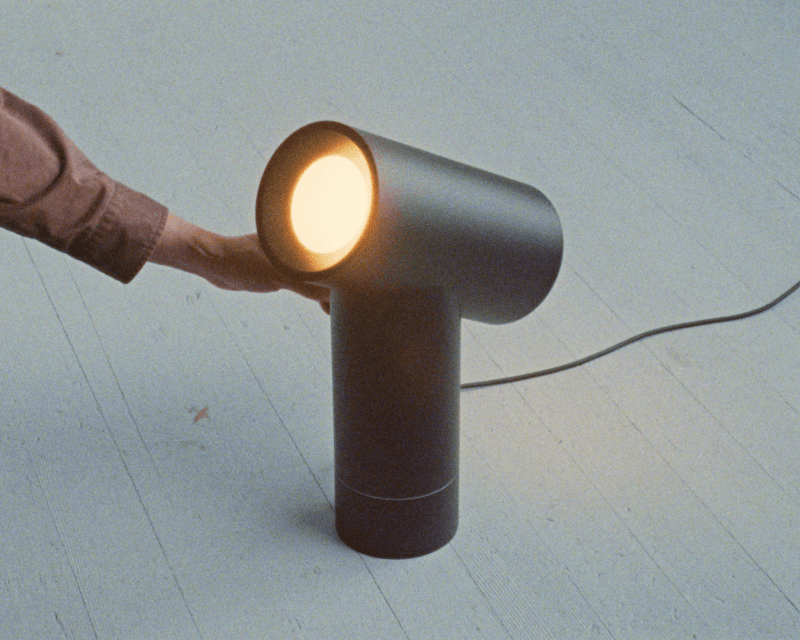
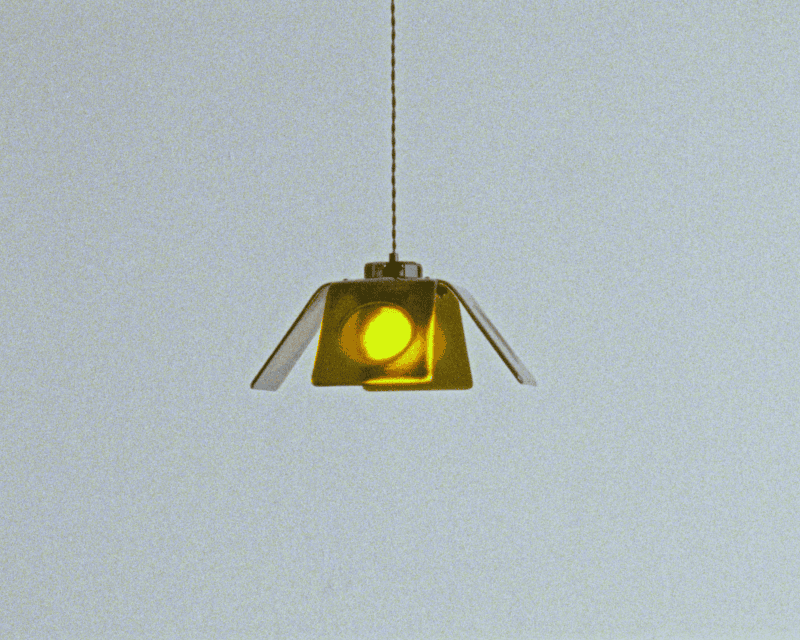
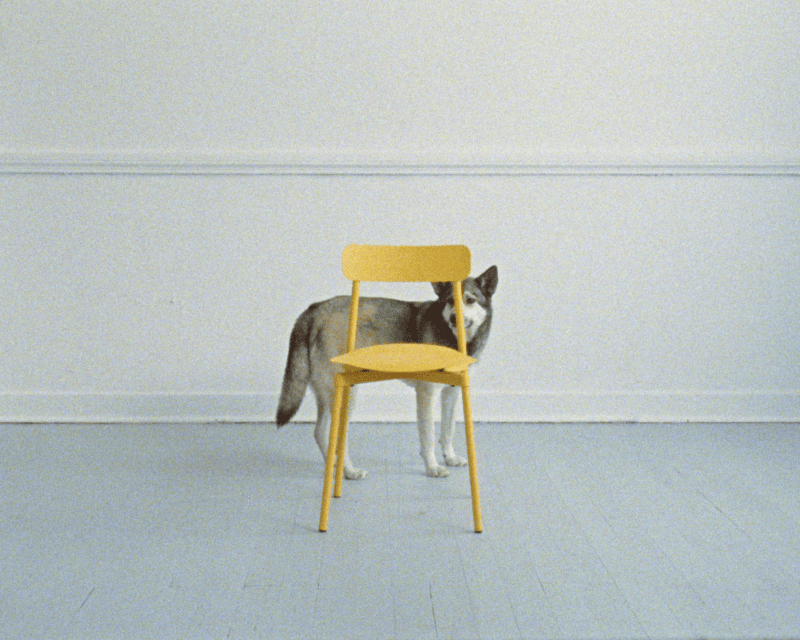
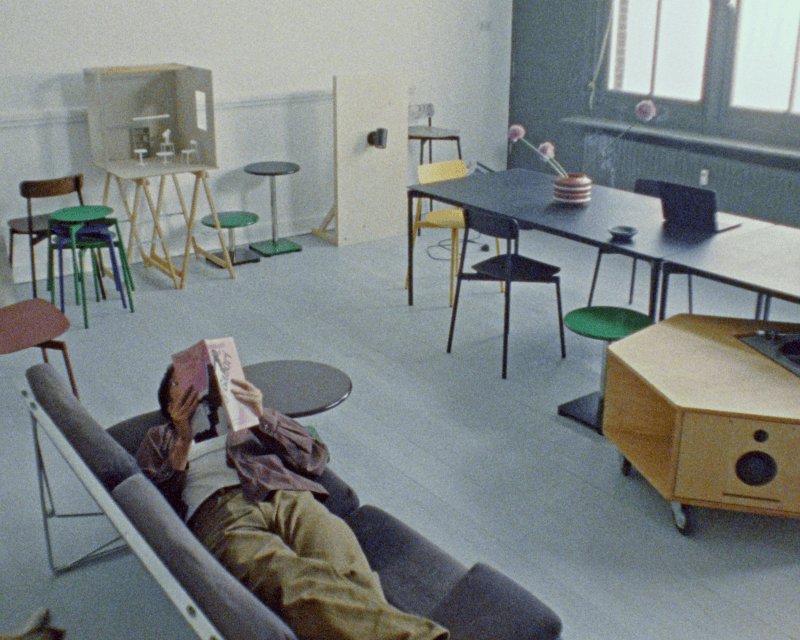
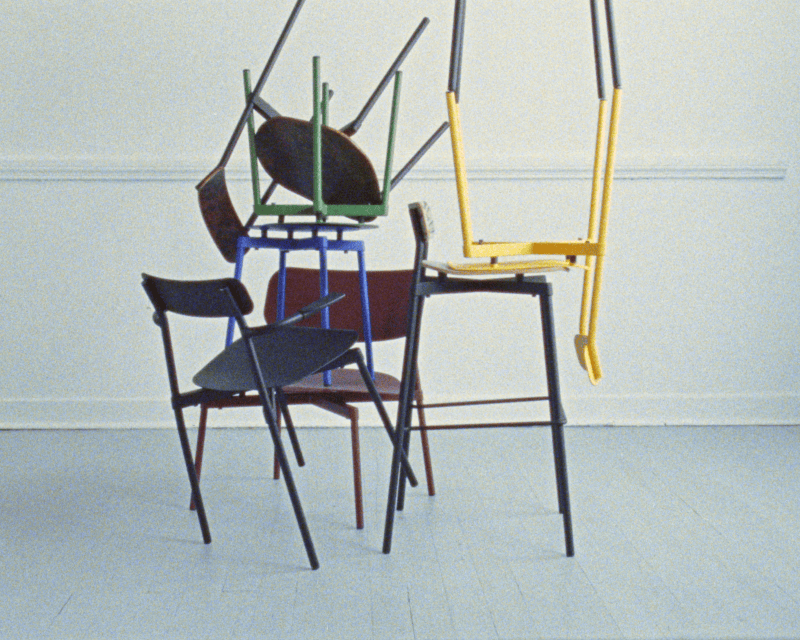
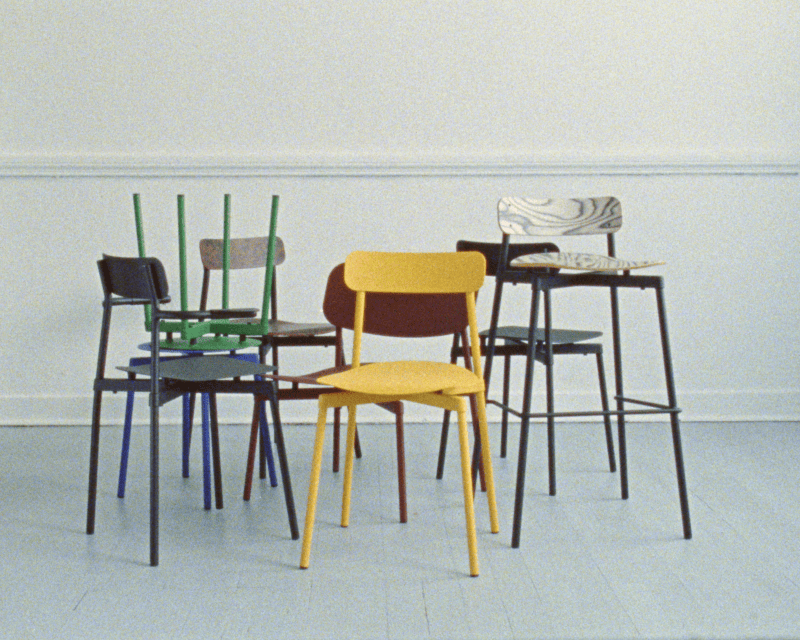
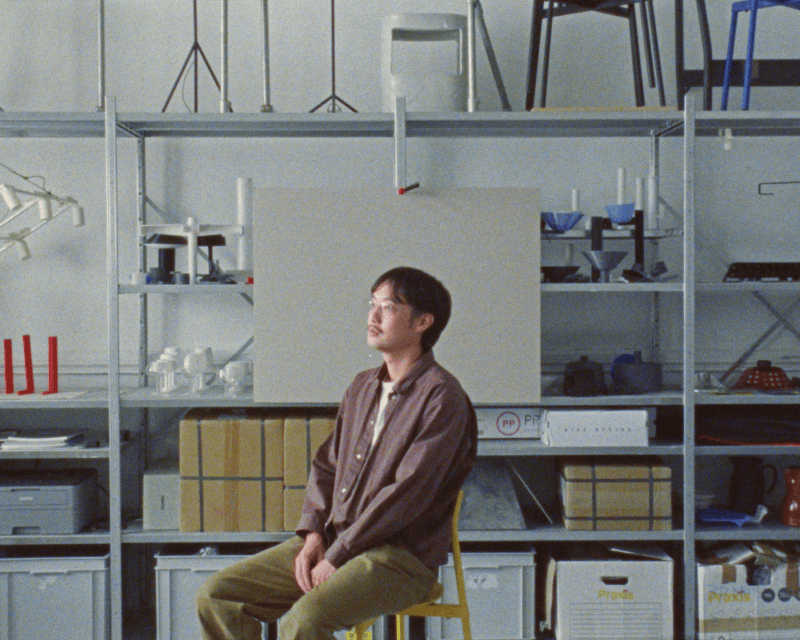
Through a newly released film, a clear nod to the past, and to designers like Charles and Ray Eames, Tom Chung marks the relocation of his studio to Amsterdam and a new chapter in a practice defined by movement, observation, and cultural exchange. Created in the year that also marks a decade of independent practice, the film offers a glimpse into Chung’s world-building approach, capturing the personal realities behind a studio that has long balanced design with broader reflections on identity and place. Raised in Vancouver by parents who immigrated from Zimbabwe and Malaysia, and now navigating life as an immigrant himself, Chung’s perspective has been shaped by the experience of living between cultures. As he looks back on ten years of independent work and forward to a future in Amsterdam, he reflects on design’s capacity to connect people, objects, and the stories that shape them.
Melis Özek: The relocation of your studio to Amsterdam marks a significant new chapter in your practice. Why did this moment feel right for such a move, and what drew you specifically to Amsterdam?
Tom Chung: Although Amsterdam is a relatively new base for me, I’ve actually been bouncing around the Netherlands since 2019. After leaving my job and founding my studio in Toronto, Canada some time around 2015-2016, I gained some momentum working with European manufacturers.
I found myself traveling to Europe to exhibit around once a year during this time, always making work that I could carry onto the plane. Because of the way I was working, I started to look for a way to relocate to Europe, and Rotterdam happened to be the easiest place to land at the time. I was under the impression that I would carry the early momentum into in-person meetings, easier logistics, and the mobility of living in a European design hub. However, a few months later COVID happened and I was bound to my apartment like everybody else. These years really rocked the industry, and in turn my studio.After emerging from all this around 2023 and bouncing around various studio spaces in Rotterdam, I decided to give the capital city a try and set up shop at the end of 2024.
MO: After years of working between different contexts and cultures, how has the idea of place influenced the way you think about design and creative work?
TC: Growing up in Vancouver, my parents, both of Chinese heritage, immigrated from Zimbabwe and Malaysia respectively. I grew up in a house that had artifacts from Africa and Hong Kong mixed in with minimalist 1990s IKEA. I often played music from my dad’s record collection, mostly British, where he lived for a few years before immigrating to Canada. I have always been strongly influenced by British culture even though I hadn’t visited the UK until I was in my 30s. We lived in a proto-hippie, working-class neighbourhood (at the time), in a house up the hill from the beach, which felt culturally isolated from the rest of the world. Growing up within an environment filled with artifacts pointing to other places is how I became interested in the outside world, and I began connecting cultural dots through objects. I feel that when you grow up as a second-generation immigrant, you assume that adulthood means choosing where you want to make your own life, and at some point you end up wanting to move yourself. Through all this, I feel a constant sense of displacement no matter where I live, and much of my work becomes a way of understanding my place in the world through material artifacts and observations of my surroundings.
MO: The move has been announced through a film. What role does film play in communicating a design practice, and what aspects of your work or philosophy were important to convey through this medium?
TC: I have always been interested in world-building, and there is an aspect of my studio that feels partially like a type of performance. The studio, in a way, is a mask that can be worn. I have never worked with interns or hired assistants, so everything that goes into running my studio practice is deeply personal. Through the studio moniker, I am able to shift scales optically, assuming the identity of an almost corporate entity. The idea of a film plays into this. Working with my partner filmmaker Rosanna Peng, we decided to shoot on 16mm film. I am not one for nostalgia, however, the medium has a direct, simplistic approach that mirrors my practice. We shot the film in my studio on a Bolex with DP Lenny Lu, using a really minimal setup. There is a clear nod to the past, and to designers like Charles and Ray Eames, who integrated film heavily into their work. I think my work generally feels very contemporary, to the point of often being difficult to integrate naturally into more conservative interiors. Through this classic film format, I hope to showcase the studio’s output in a direct, honest manner that combats the high resolution imagery we’re used to. It also aimed to capture the reality of my practice, one person in a room trying to make a living through design.
MO: This year also marks a decade of your independent practice. Looking back, what feels most different about the designer you were ten years ago and the designer you are today?
TC: When I left my job 10 years ago, my only goal was to find a way to make work on my own terms. When I started out I was arrogant, carefree, and almost maniacally driven to get my work into the world. I was working with an urgency because I knew that I was behind: coming from a country with little design industry, without the pedigree of a big school or brand name studio experience behind me. Fast forward 10 years, and I think that objectively, I’ve achieved a bit of success within my field, but also many failures. Because of this, I’ve gained a humbled perspective on how difficult it is for anything to go right, and am extremely grateful whenever this happens. I am now in the process of trying to regain the fun and freedom that I had in creating when I was first starting out, initiating more independent projects and trying to remove myself from the computer. I think 10 years is where you probably thought you would be after 5 years; it is both an extremely short and extremely long period of time. I hope now that I can navigate the field with the patience of an experienced practitioner and some of the youthful exuberance of someone just starting out.
MO: When you founded your studio, what assumptions did you hold about design that experience has since reshaped? Over ten years, how has your definition and perception of design evolved?
TC: In Canada, when explaining what you do or applying for funding, residencies, or exhibitions, you generally had to frame your practice through the lens of fine art. Because of this, I became very critical of design as a practice. I have always maintained an existential view of design, seeing it as both a celebration of and a repulsion toward my own relationship with consumerism. However, moving to a society that treats design as a more practical, value-added part of everyday life has lifted that weight. My practice now feels simpler, aiming at its most basic level to improve people’s everyday experiences.
MO: Many designers speak about growth in terms of scale. Do you think growth is necessarily linked to expansion, or can it also mean refinement and reduction?
TC: If you analyze growth only through the lens of capitalism, I think that is unfortunately where we are with the design industry at the moment. If we look at the current state of things, it is bleak. We are stuck with the same companies, releasing the same products with the same designers over and over. The numbers say: stick with known variables, blue-chip designers, and re-issues. Unfortunately, where this leaves us is with a homogeneous and backward-looking society which lacks imagination about how to overcome today’s struggles: war, the economy, ai, global warming etc. I think we are entering a period where a lot of established companies are starting to realize this too late and many are at a point where they won’t recover. In this case, I think the design industry needs a bit of a reset in order to serve regular people again and regain a perspective that aims to serve the middle class. Through this, I think growth through reduction is an interesting concept, something that gets us through to the other side.

MO: What have been the most valuable lessons learned from maintaining an independent practice over a decade?
TC: In order to run a successful independent practice, you need a lot of help from other people. I have had countless friends and family who were my first clients, who have helped me with graphic design, prototyping, photography and all sorts of other things. I think design, like many other industries, all comes down to maintaining interpersonal relationships. At the same time, once you grow and start to expand to opportunities beyond your immediate network, you cannot expect anybody to do anything for you. What might start off as an exciting collaboration might quickly crumble, and you must always be ready for heartbreak. Treat people well, and do not compromise on your own values.
MO: Looking back across the first decade of your independent practice, is there a question, whether explicit or unconscious, that has consistently guided your work? And as you begin this new chapter in Amsterdam, what question do you hope will define the next decade?
TC: Looking back on the first decade of independent practice, I was making a conscious effort to remove myself from the work. I have always been turned off by the need to center the designer to sell the work, and for that reason I latched onto functionalism and pragmatism as a signature of my practice. In some ways, this aversion to identity was also the result of not being able to perfectly
articulate my own narrative. After a decade of practice, my identity as a designer has begun to clarify. I see my work as a reflection of my lived realities: growing up in Canada in the 1990s and 2000s, shaped by cable television and peak consumer culture; coming of age alongside the rise of the mainstream internet; and navigating life both as the child of immigrants and now as an immigrant myself.
As a result, I have developed a strong emotional connection to objects, while continuing to value practical and functional solutions. My work aims to create connections across cultures, material objects, and functional references. Looking towards the next decade, I hope that design as a whole can regain a sense of cultural relevance, to become unstuck from the past as it has been for the past 30 years. I hope for more collective and critical action amongst the designers of my generation that challenge to reshape the industry that we are working within.