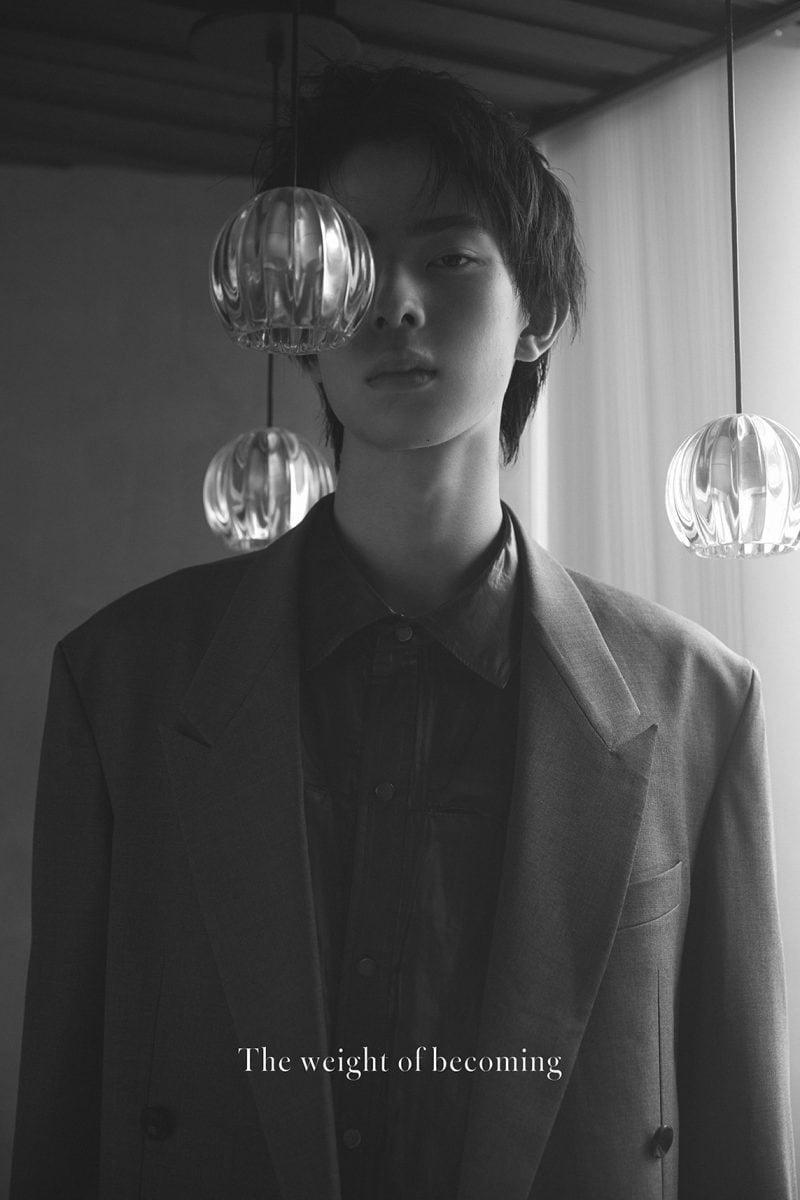
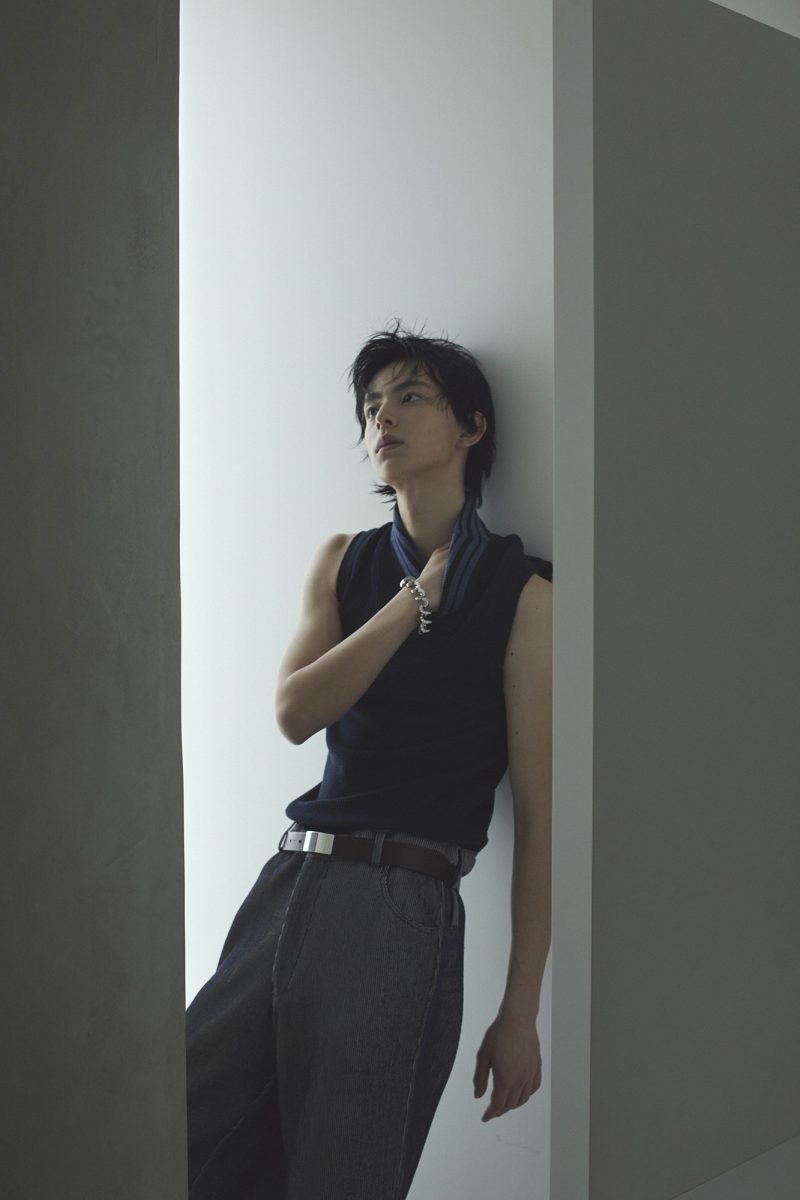
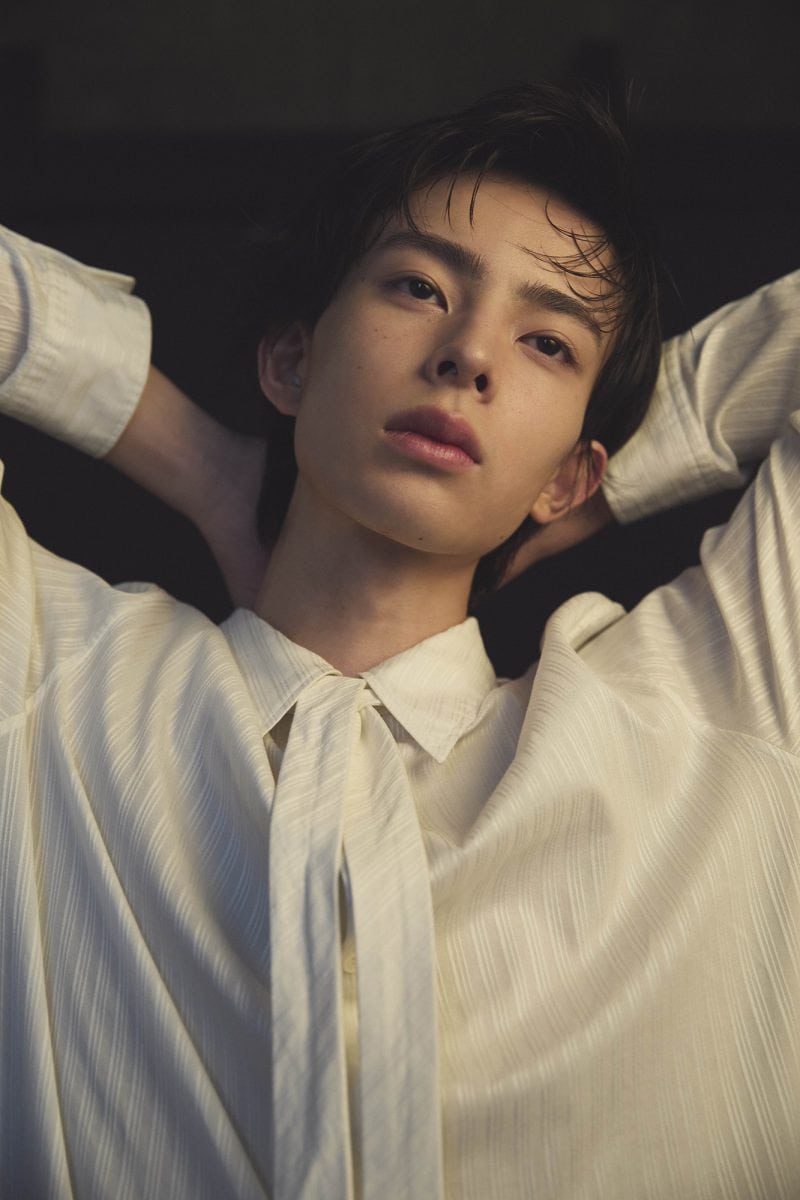
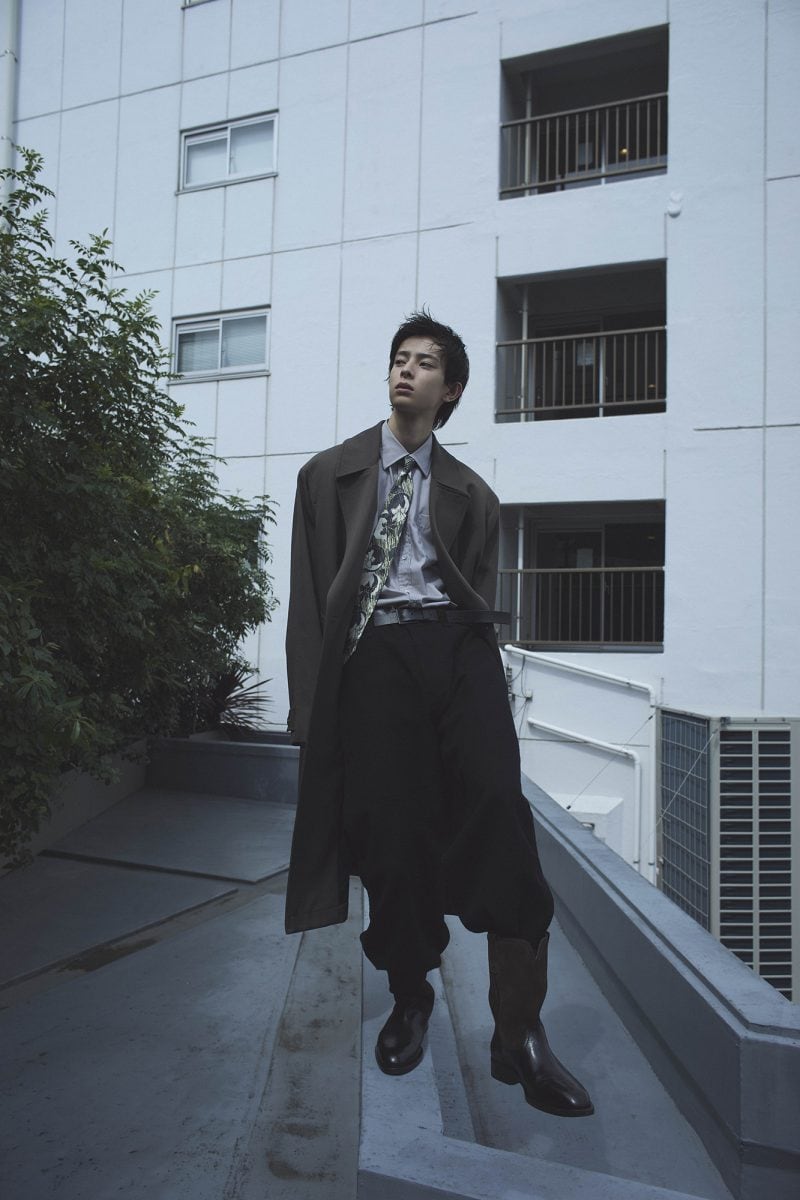
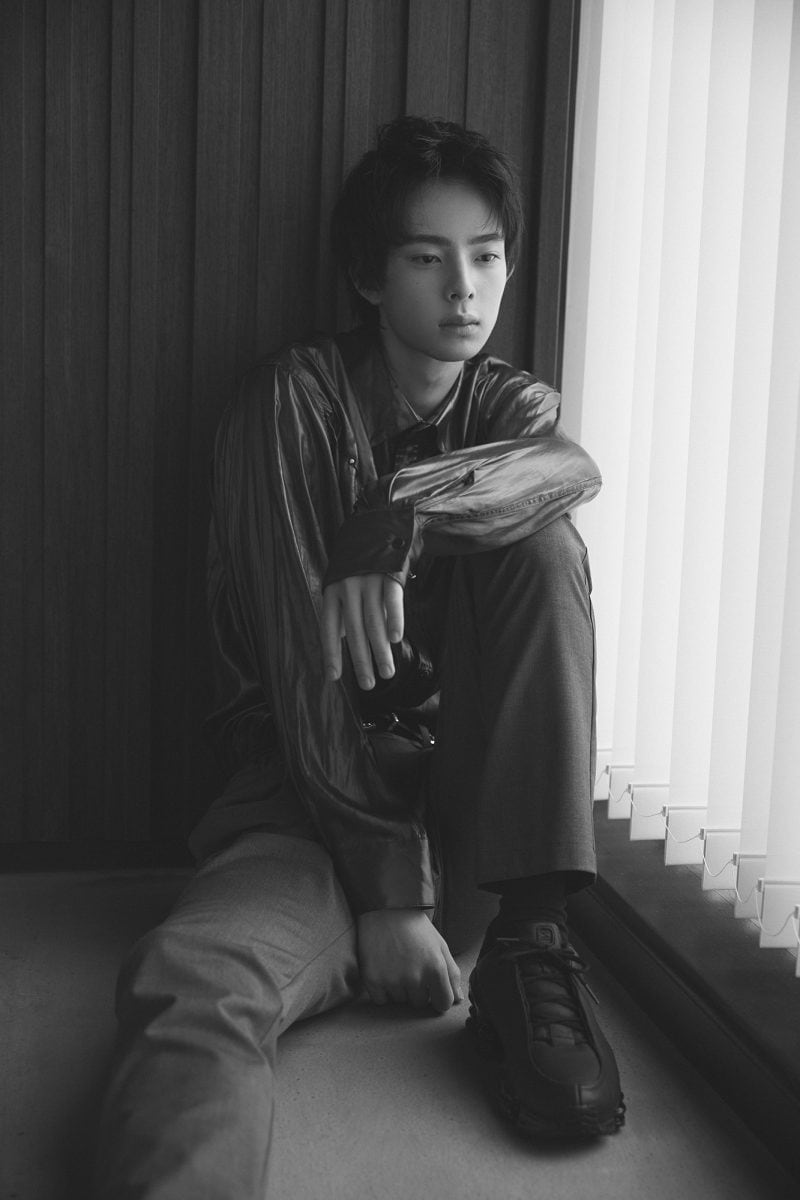
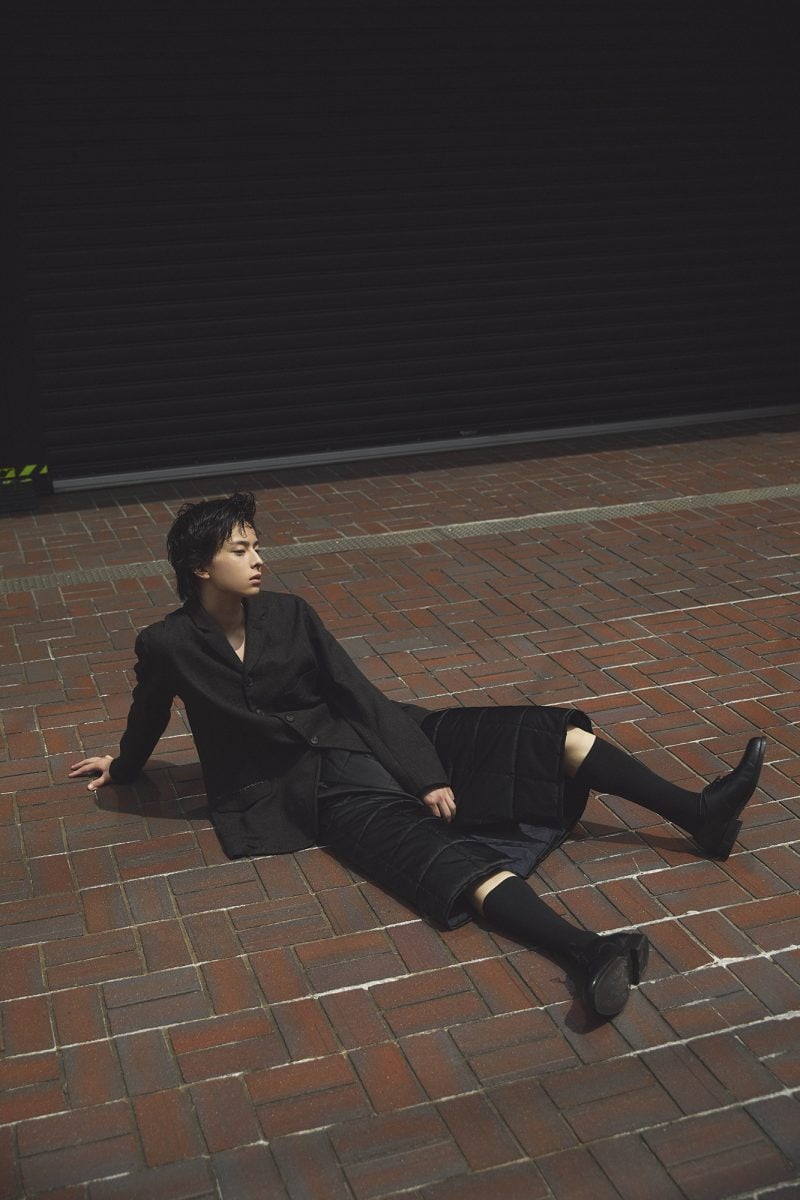
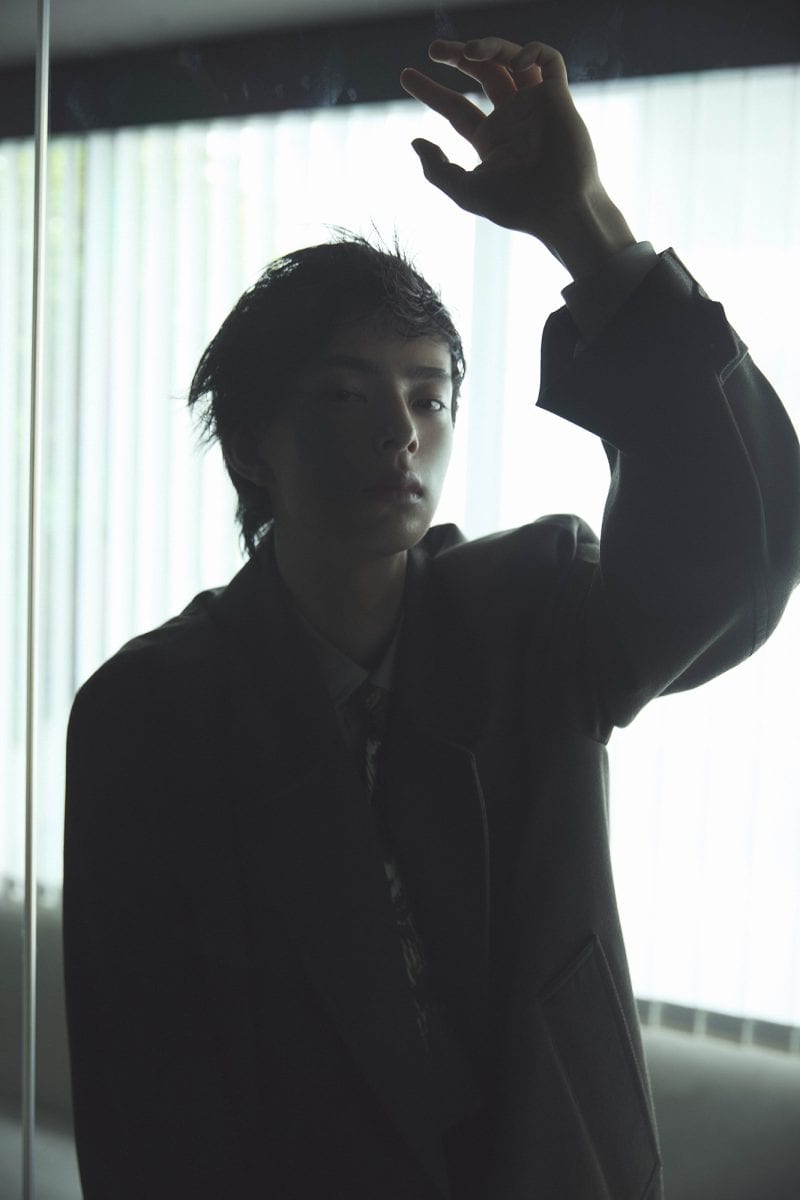
In this context, the land consists of bricks, corridors and the walls of flats. It does not offer an open horizon, but rather confines. In The Weight of Becoming, the urban landscape appears as a suspended space in which Matsuse Daiji crosses a threshold without yet knowing his final destination. Toshiyuki Imae constructs this uncertainty through images, without turning it into a linear narrative. In the black-and-white portrait, a spherical lamp covers one eye: the gaze appears both present and concealed, as if the subject’s identity were still being defined. In other scenes, the body relaxes in a light-coloured shirt, with arms behind the head, only to reappear in a dark suit in front of the railings of a residential building. These poses oscillate between shelter and exposure, between the desire to disappear and that to be recognised. The clothes do more than merely illustrate a transformation.
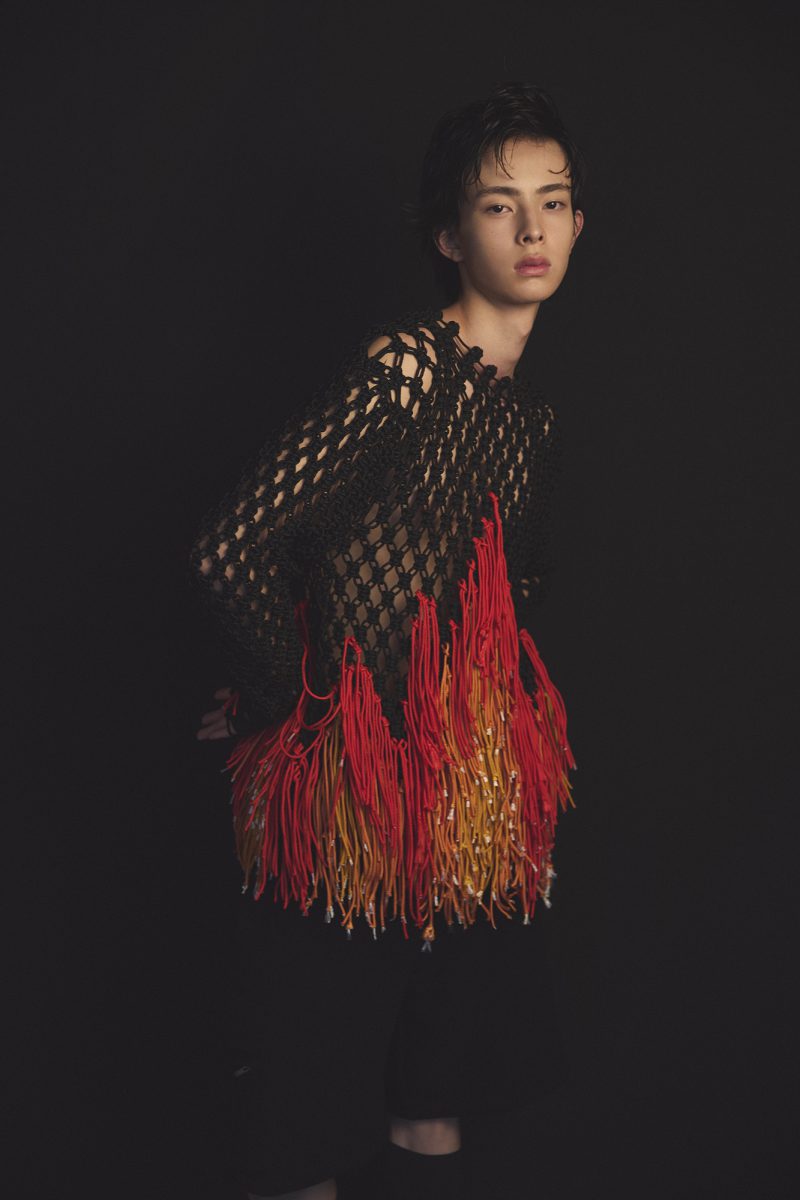
The tailored jacket, the sleeveless top and the openwork jumper with red fringes offer different ways of relating to the body, like a provisional grammar to be tried out and refined. In the mesh ensemble, the knitwear offers glimpses of the skin whilst the fringes disrupt its surface; what might seem a simple decorative gesture becomes a subtle friction with the idea of a compact, legible masculinity. The sequence evokes a journey of growth, yet rejects the reassuring promise of gender: here, growing up does not lead to a definitive form. A close-up, vulnerable portrait gives way to a figure lying on the pavement, whilst the anonymous façade and the vertical lines of the awnings seem to measure the surrounding space. The city does not serve as a neutral backdrop, but represents a framework of expectations, made up of pre-defined rules and roles. The aim is not to establish who this boy will become, but rather to linger in the time before the answer is revealed, when every gesture can still be a test. The earth waits, without pointing the way. In this story, the only possible future begins with the right not to have chosen one yet.