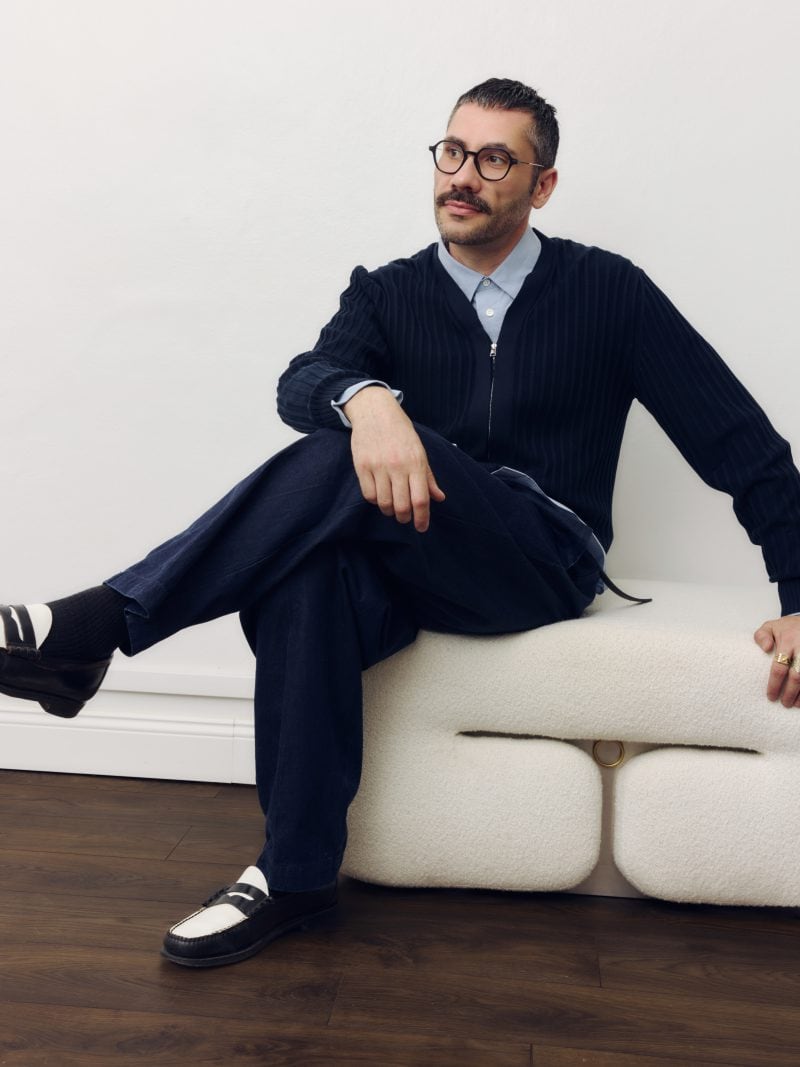
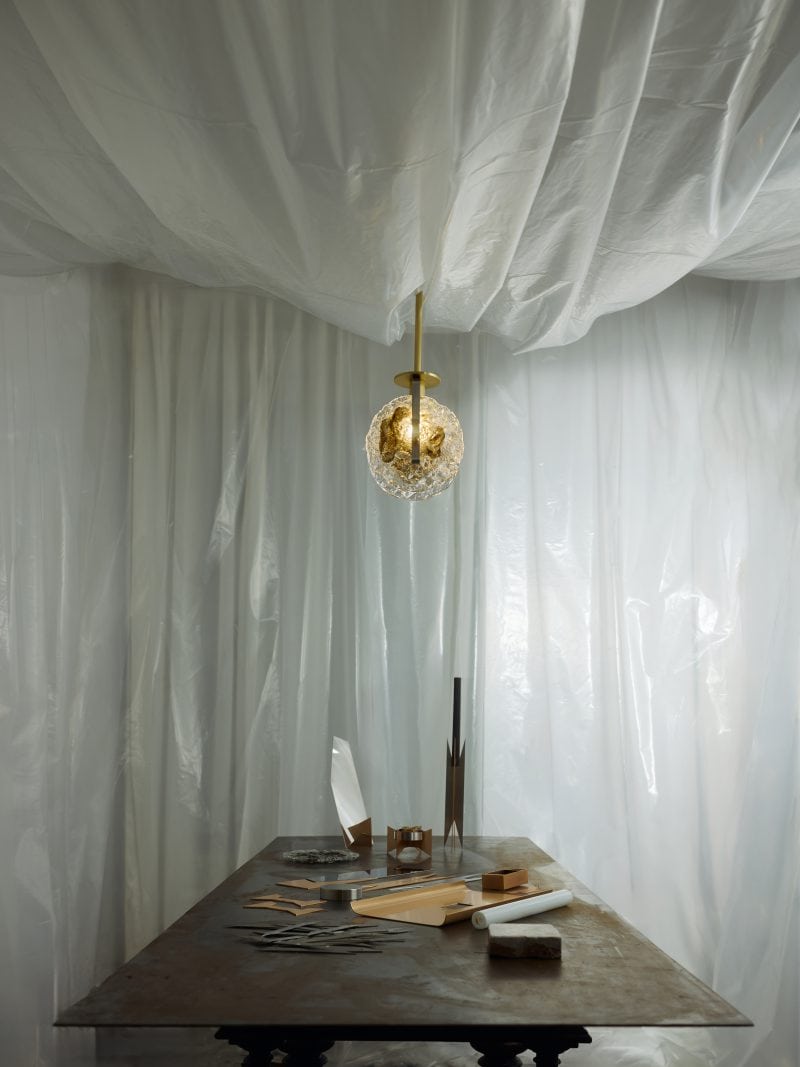
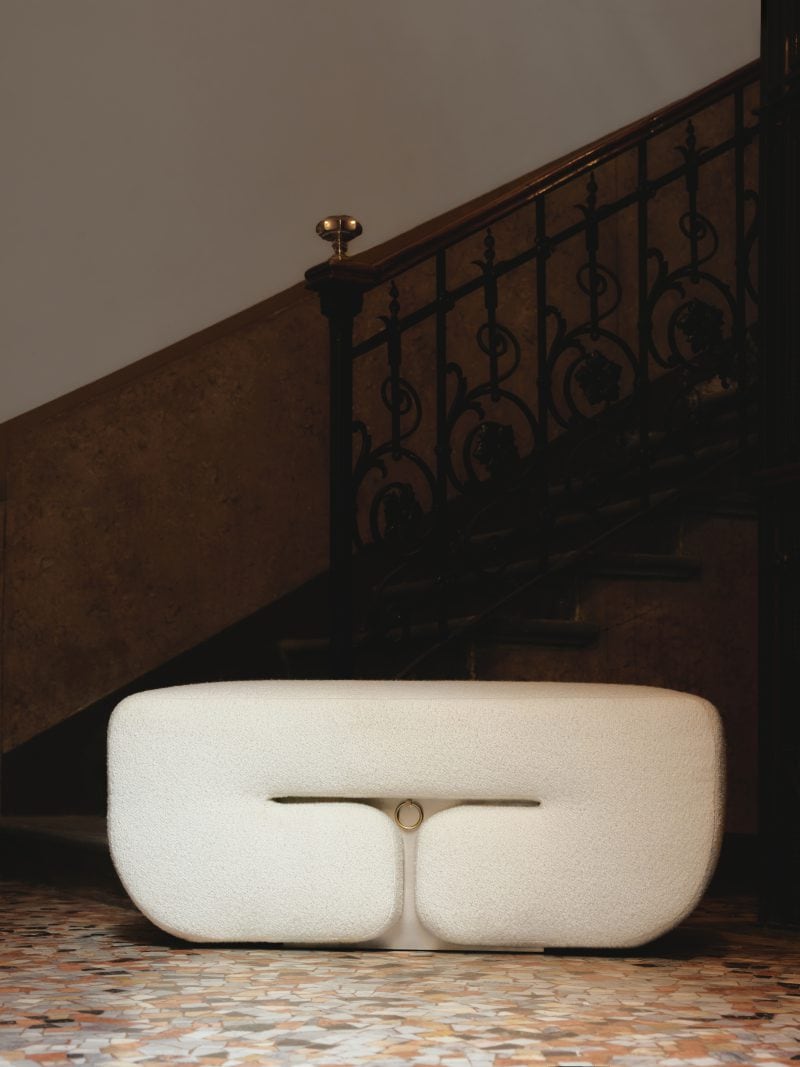
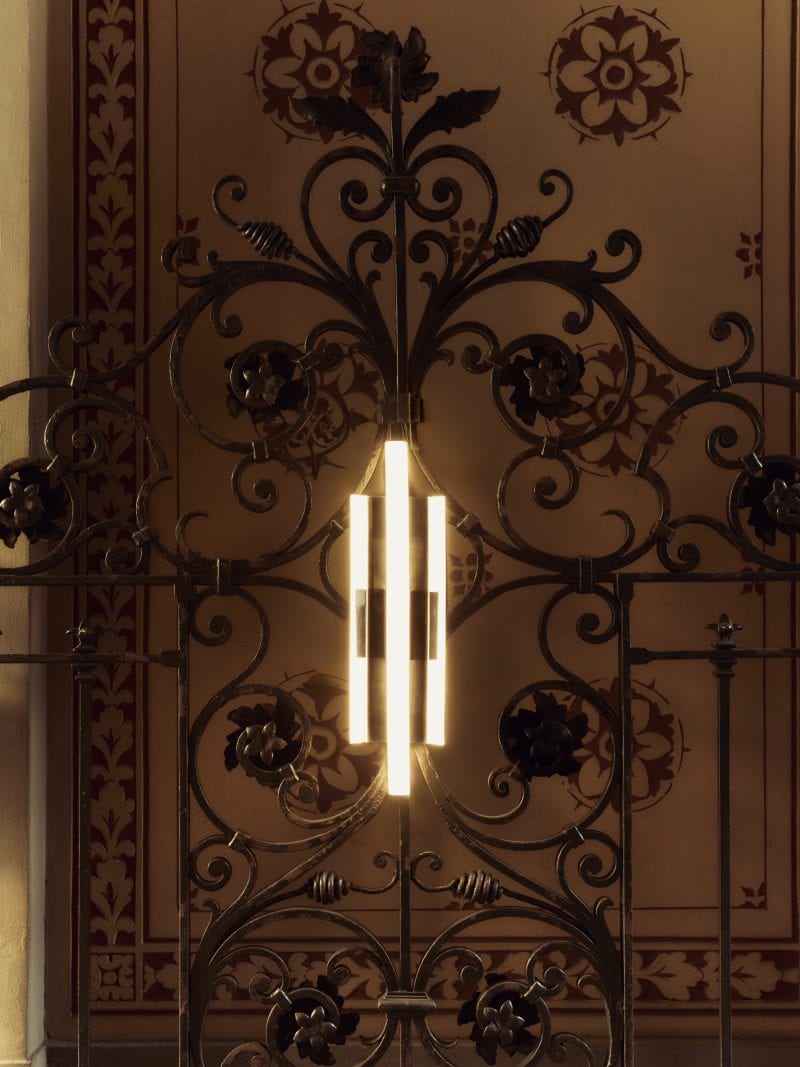
To step into the world of Eugenio Laponte is to witness a deliberate, almost sacred collision between the weight of history and the sharpness of the contemporary grid. Operating from his Milanese studio under the moniker EUTOPIARCH, the Calabrian-born architect treats design not as a pursuit of aesthetic perfection, but as a continuous, friction-filled passage from utopia—the weightless non-place of pure idea—to eutopia, the habitable, physical reality. His debut collectible collection, PRAGMA, unveiled through the immersive exhibition MEDULLA, manifests this philosophy in metal and stone.
Athena Kuang: Your studio’s name marks a trajectory from utopia (the non-place) to eutopia (the inhabitable reality). If utopia is a flawless concept and eutopia is the flawed, physical manifestation of it, how do you know when an object has successfully made the journey from concept to physicality?
Eugenio Laponte: I don’t think there is ever a clear point when a project is fully complete. The process could continue indefinitely. Whether it is art, interiors, objects, or clothing, everything remains open-ended. The physical object is always a manifestation of an idea, but also of a gesture: when I design, I always think about how people will interact with it.
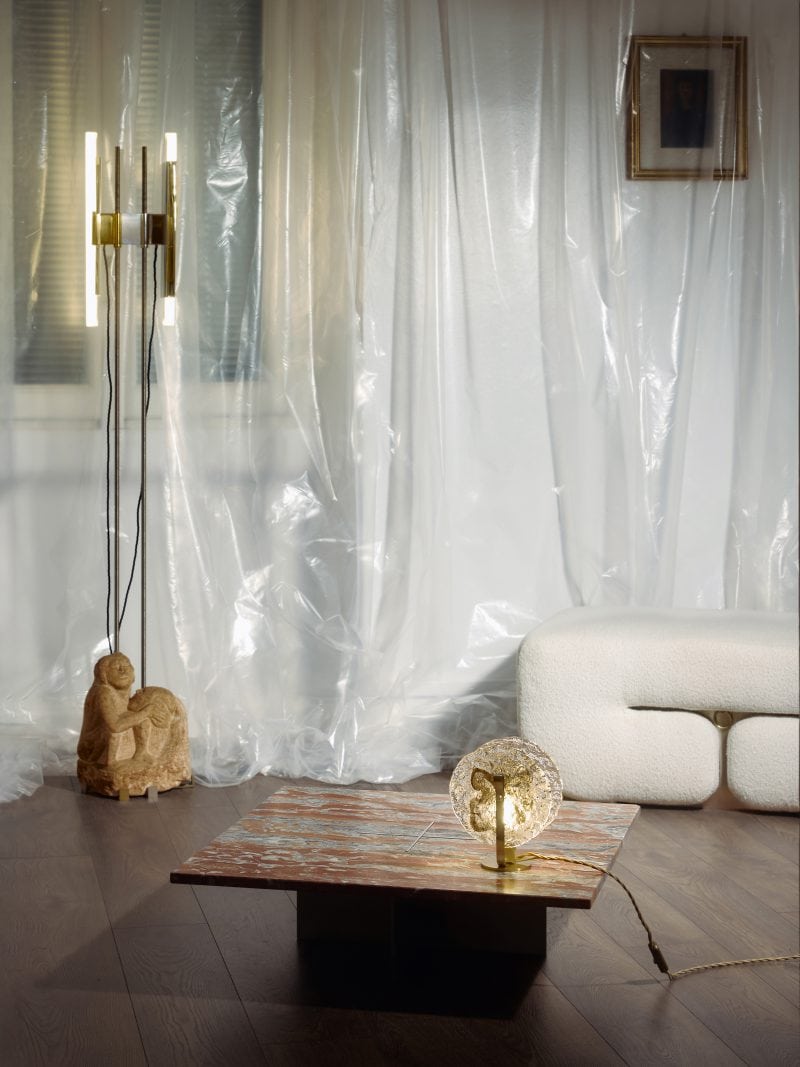
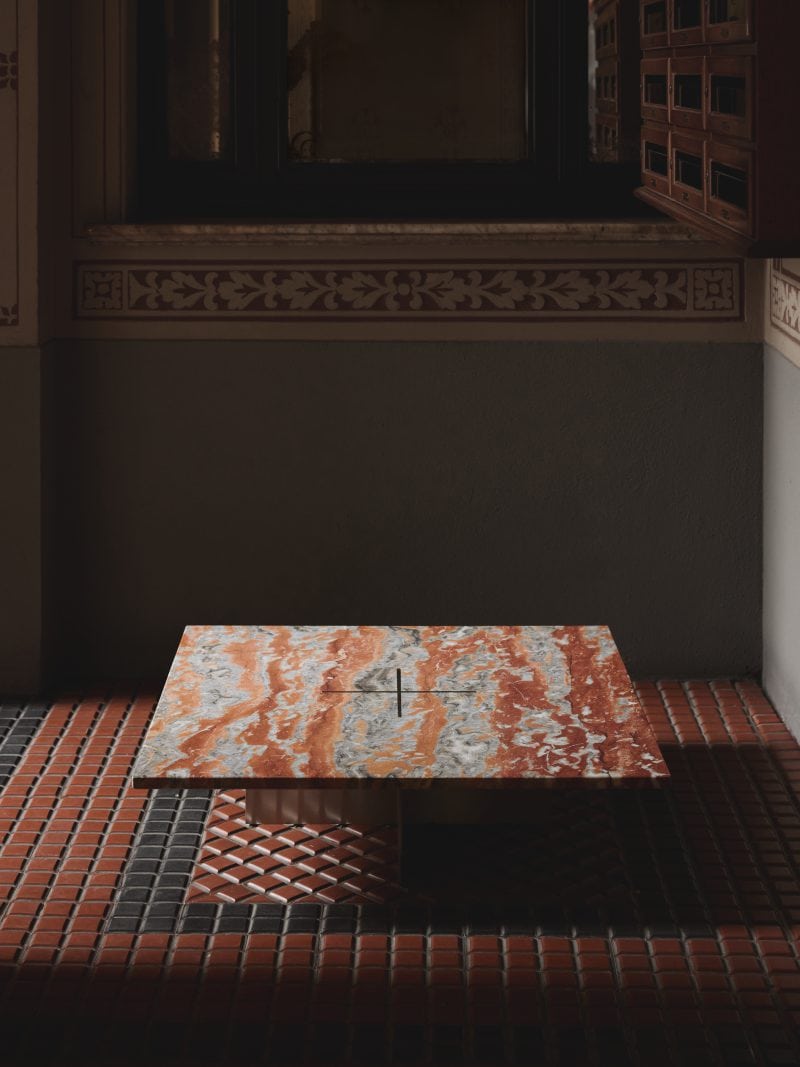
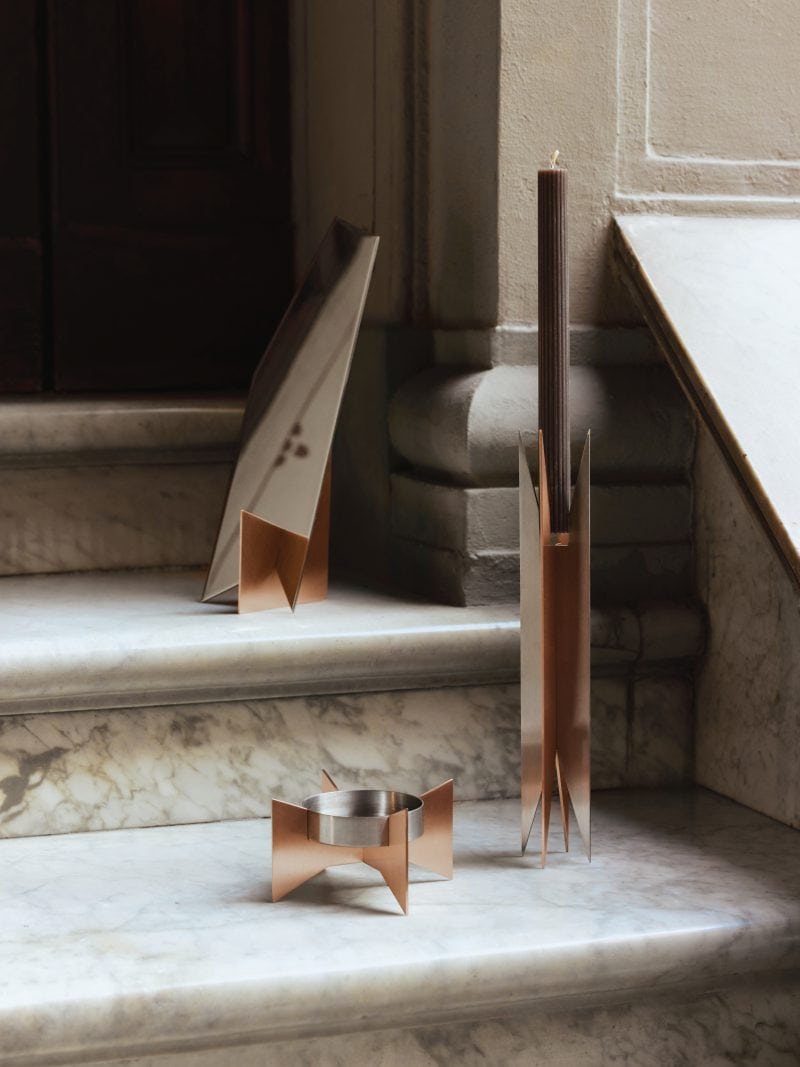
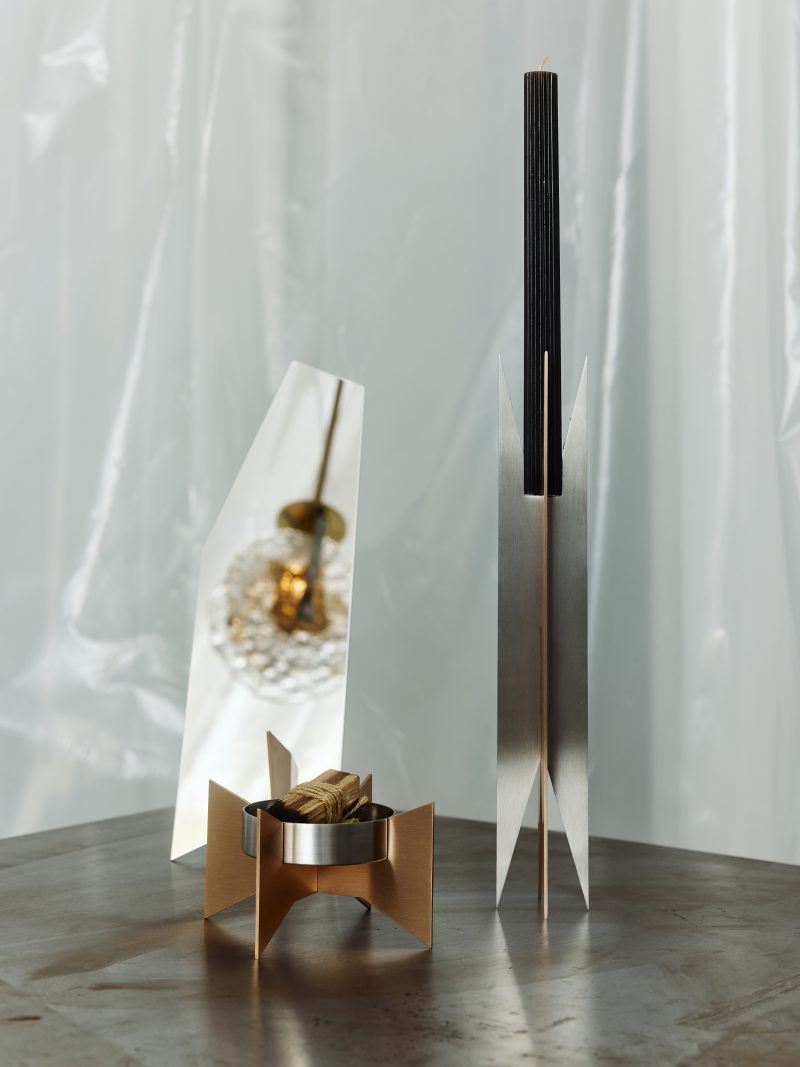
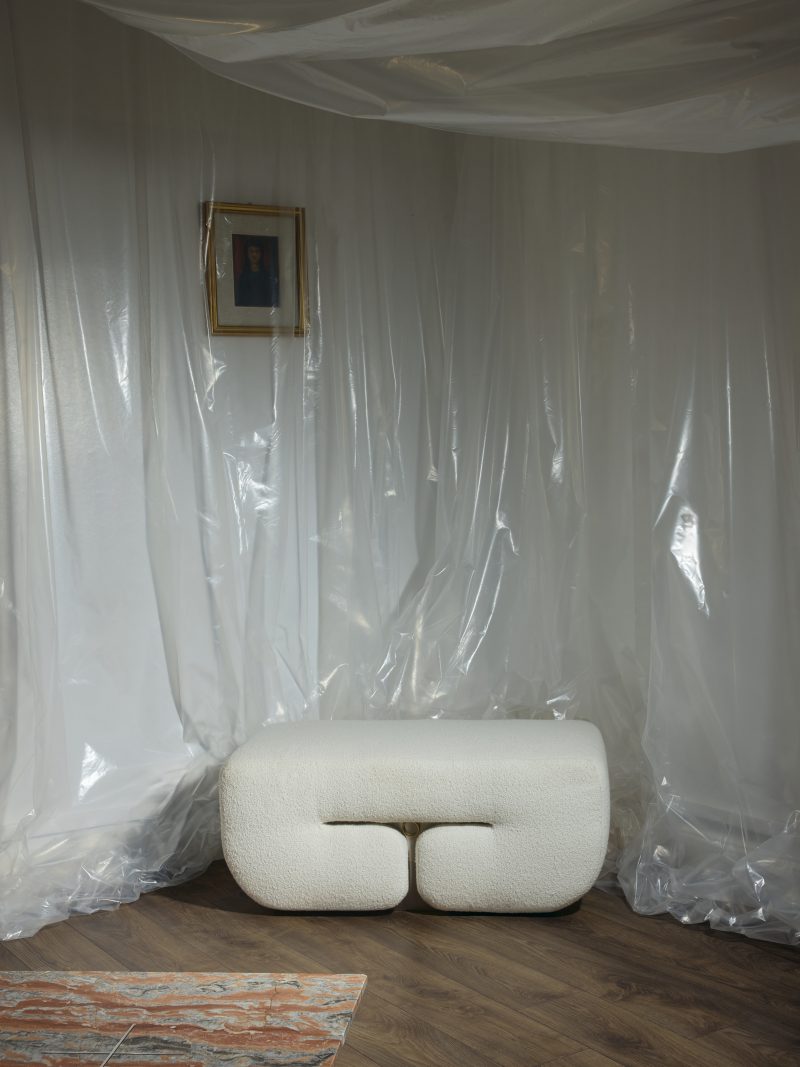
For example, the Golgotha Table is intentionally very low because I wanted people to almost adopt a posture of reverence. I’m fascinated by religion and by how humans create systems of meaning for things they cannot explain. The Innesti pieces follow a similar logic: elements that assemble and disassemble, holding a constant tension between construction and dissolution.
AK: Of course, and I was actually really curious about the Innesti objects, because for me, there’s a very beautiful paradox within them that also connects to the root of your studio—the connection between the utopia and the eutopia. This transformation from the two-dimensional into the three-dimensional object itself, from weightlessness to mass.
EL: Exactly, Innesti originates from almost two-dimensional forms—flat sheets that become functional through interlocking. My process often begins with words, which are my main source of inspiration. There is a quote I often think about: “The art of simplicity is a puzzle of complexity.” I feel it perfectly describes Innesti. The objects appear simple, almost childlike, and the assembly feels intuitive, but it actually demands focus and concentration. That act of putting them together is essential to the experience, and through that gesture they become something entirely different.
AK: You’ve mentioned that language is a precise tool and that an idea must be clearly articulated in words before it takes shape. What happens to a concept when it encounters the reality of metal or stone? Is there a specific moment where the raw material forces you to alter your vocabulary?
EL: For me, material is primarily a medium. The meaning of an object does not depend strictly on what it is made of.
I often use metal because it comes in flat sheets and naturally supports the idea of interlocking systems. In some cases, material can reinforce meaning—for example, I chose Rosso Francia marble because it evoked the blood of Christ. But if the same object were made of wood, the conceptual core would remain unchanged. There is no fixed link between meaning and material.
AK: Your work weaves in an incredible amount of classical reference—from the hundred eyes of Argus to the dual gaze of Janus, down to the very etymology of pragma. In lesser hands, Greek mythology in design can feel like an ornament, a clever sticker, or a superficial postmodern joke. For you, it seems structural. What does it mean for your broader design philosophy to intertwine ancient myths into objects meant for the modern world?
EL: I come from Calabria, in Southern Italy, a region deeply connected to Magna Graecia. Greek culture has always been present in my background and has fascinated me since childhood.
I am drawn to the way humans have historically created meaning for things they could not explain. What we now call mythology was once a form of belief and structure. Alongside mythology, philosophy is another constant source of inspiration. It is not something calculated, it is simply my inspiration and the cultural space I naturally belong to.
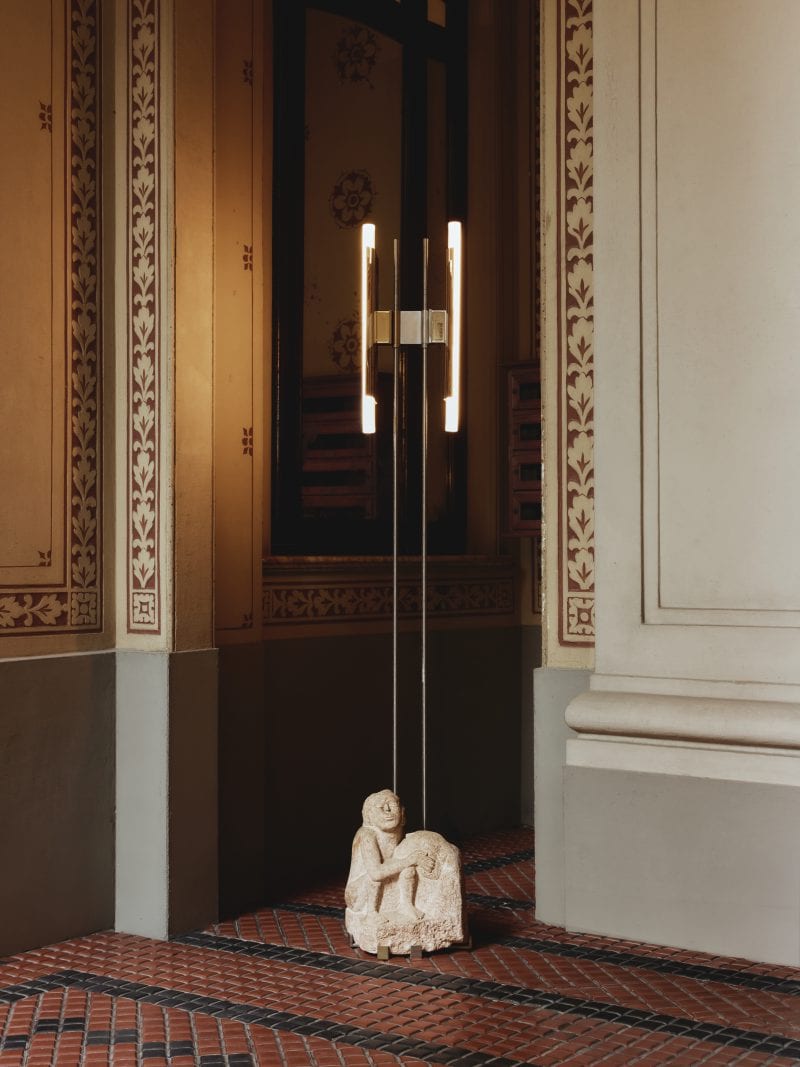
AK: Does history feel like a conduit for you to express these very large philosophical questions? And how do you feel like that reflects into your work, especially regarding the PRAGMA collection?
EL: Sometimes a project begins from a practical need: I want an object, so I design it. From there I make sketches and small maquettes. Very quickly, however, I feel the need to give it meaning and justification.
That meaning then shapes every aspect of the object—its proportions, structure, and harmony. It is my way of expressing intent. Even if the material changes or the interpretation varies, what matters to me is that every decision has a reason behind it.
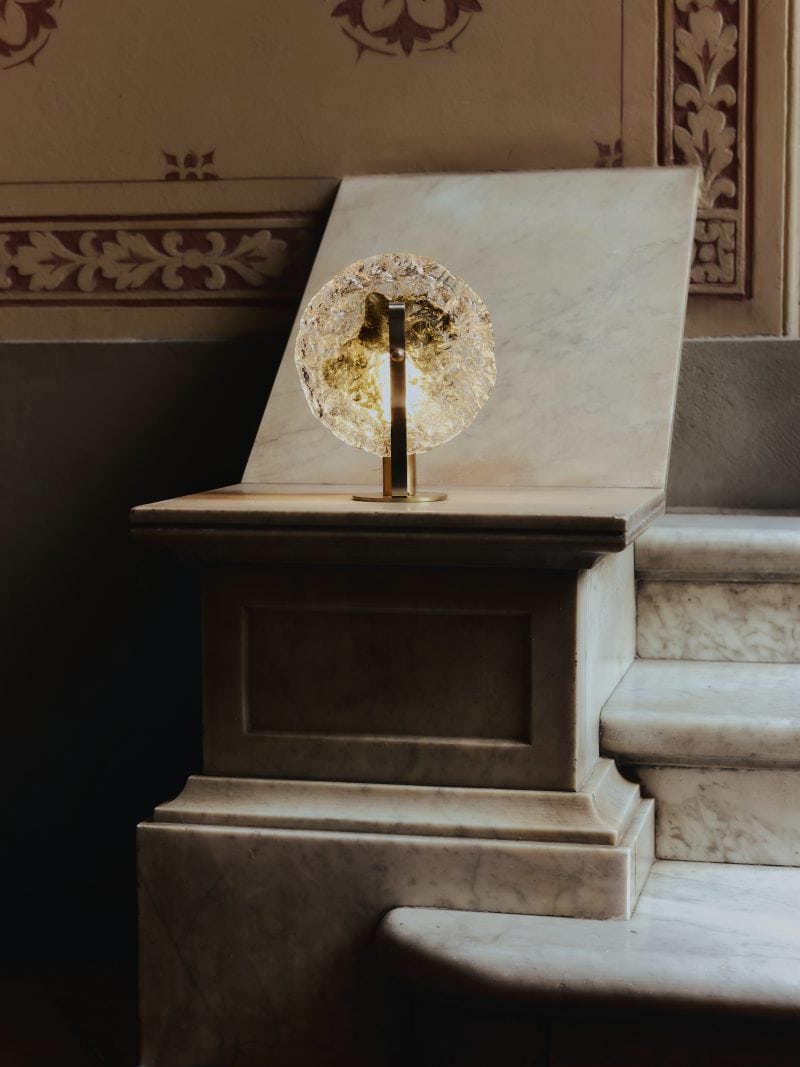
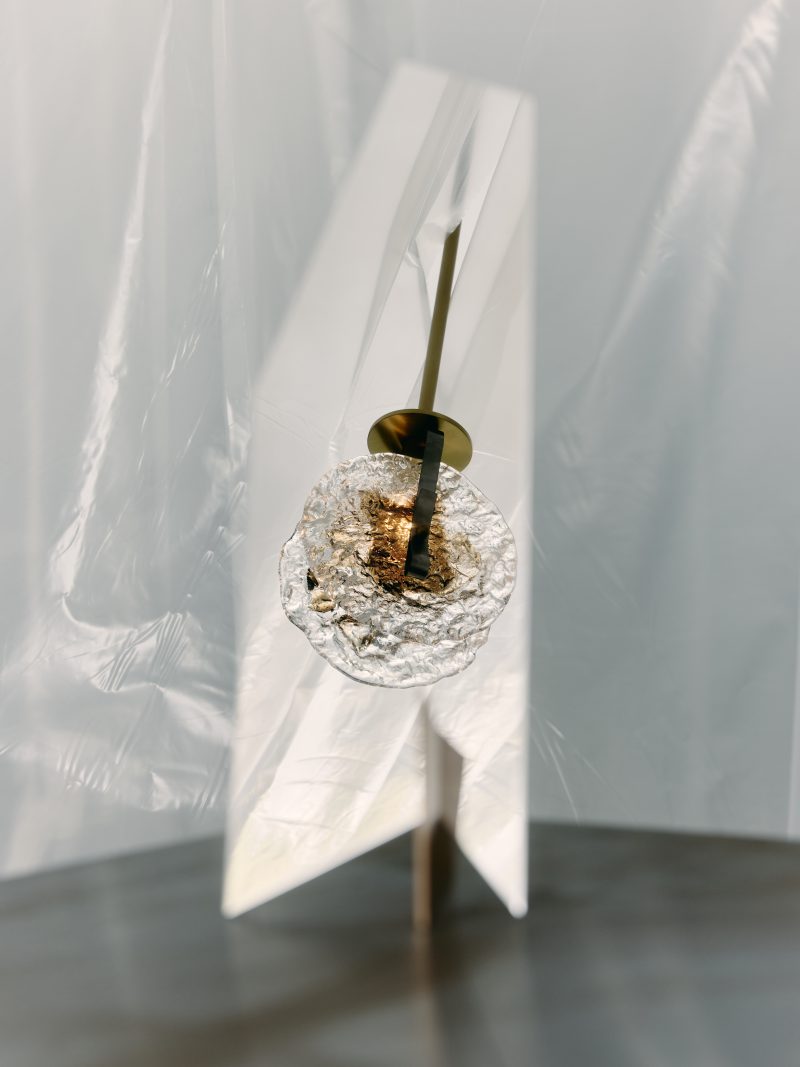
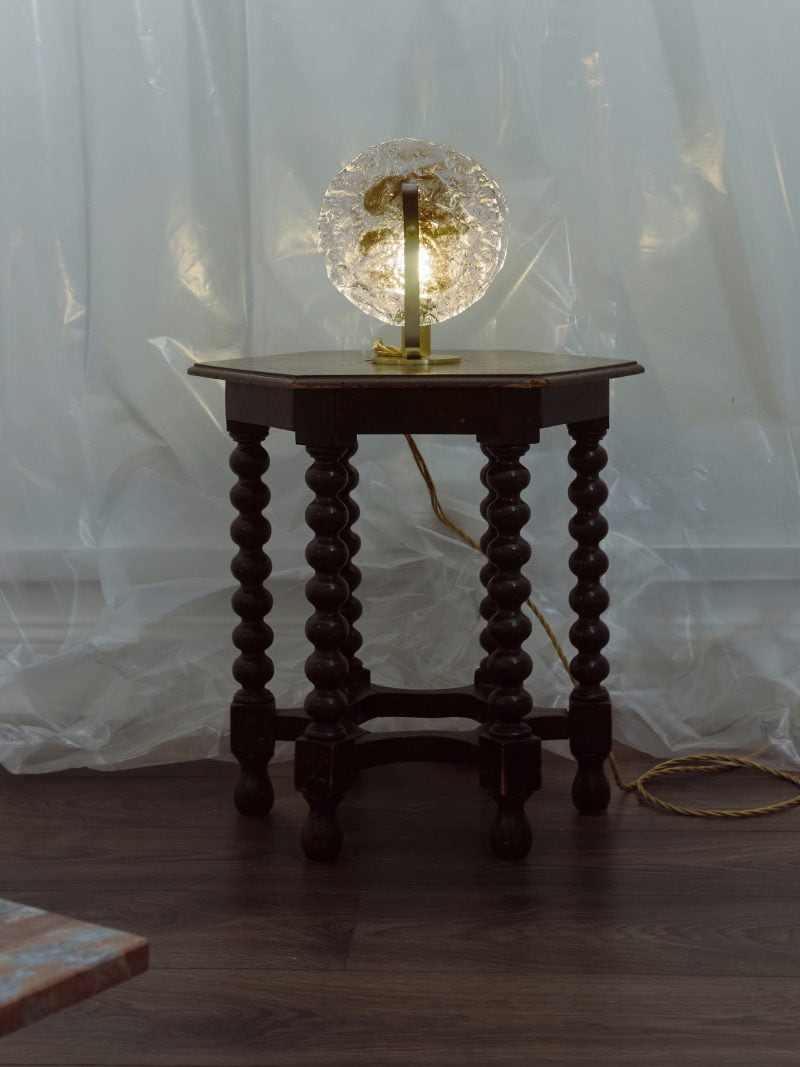
AK: For Argo, you repurposed historic Murano glass discs from an old chandelier. When you “graft” a found historical fragment into a sharp, contemporary steel structure, are you rescuing the material by anchoring it to its past, or are you forcing it into a new contemporary life?
EL: I don’t see myself as giving objects a new life. I prefer to think I am assigning them a new meaning and function. In reality, I feel more grateful to the materials than the other way around. Finding them is what triggers the idea. Rather than transforming them, I respond to what they already suggest.
AK: You’ve stated that no project is ever truly finished and that appreciation or rejection from the public is secondary to curiosity. When the MEDULLA exhibition closes and the objects are dispersed into private collections, what is the lingering question you hope this debut leaves behind in your own practice?
EL: It was the first time that I actually made an installation with all my pieces in my studio. It was, first of all, a milestone in my overall career. And I’m really happy with the help of many parties, because they gave me the push to actually create something. The main thing is that I felt the satisfaction of bringing the whole show together, as well as seeing so many people engage with my work. Whether or not the pieces were sold didn’t matter as much—the fact that people came and understood my design was deeply fulfilling.
AK: And looking forward, what do you feel is next for you in your practice?
EL: Lately, I’ve been questioning the relationship between interior design and collectible design. At the moment, I find strong satisfaction in designing objects through my own language and process. However, I think the most interesting direction is to merge these two practices. Interiors can host my objects, but they can also generate new ideas for them. For example, I recently completed a house featuring a Golgotha Coffee Table, and that context led me to develop a dining version.
I want to continue in this direction, creating a continuous dialogue between interiors and objects, where each informs the other.