The blade: an object whose shifting monikers change the very perception of it—knife, sword, dagger, cleaver. We grasp at the shades of change in this imperceptible concept, this conduit of violence, creation, utility.
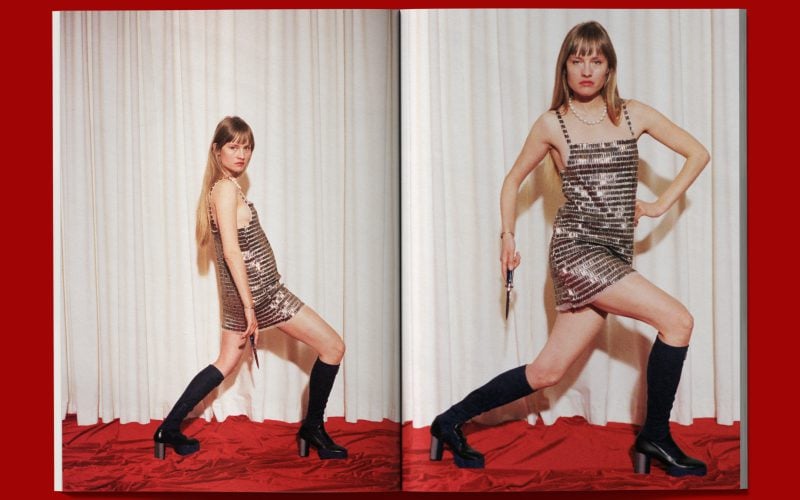
The European Blade Magazine, by photographer and director Jonas Bang, curates this dichotomy and obsession of the blade in zine-form: editorials featuring model and actress Klara Kristin, mock-advertorial text—a retro capsule of how the blade can be perceived. The cleanness of the blade’s craft is marked in the sleekness of its design: a sliver of sharpened metal and a sturdy handle. There is beauty in a body made for cutting.
We are so accustomed to the dull domesticity of the knife—buried in the background of a kitchen, slick with the juices of a split tomato, or tucked into the quiet chaos of a drawer. Yet, it carries a heavy, trembling gravity that other cutlery never could. It sits in a permanent state of tension, an omen waiting to sow our destruction, an object that changes its soul entirely depending on the hand that claims it. The imagery unspools like a mid-century cinematic fever dream, utilizing a warm, grainy haze that feels like looking at a plume of smoke rising against a setting sun. Klara Kristin moves through these frames not merely as a model, but as a silent, detached orchestrator of our deepest fears and desires, her gaze holding us captive while the world around her bows and hisses to an unseen flame.
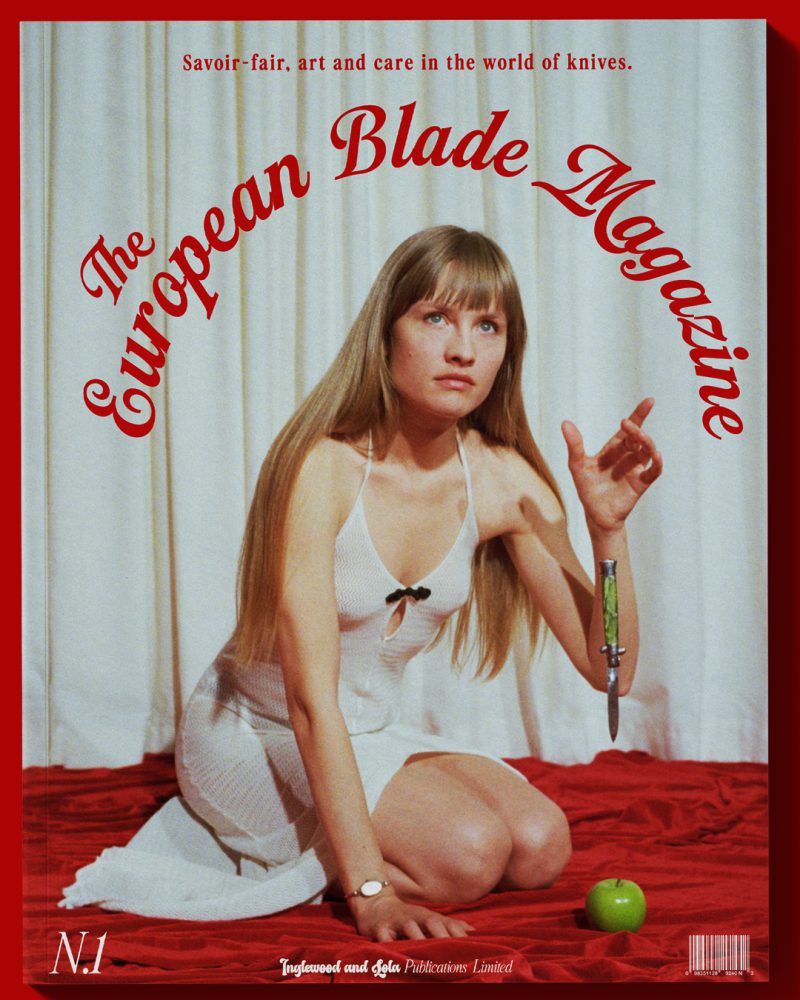
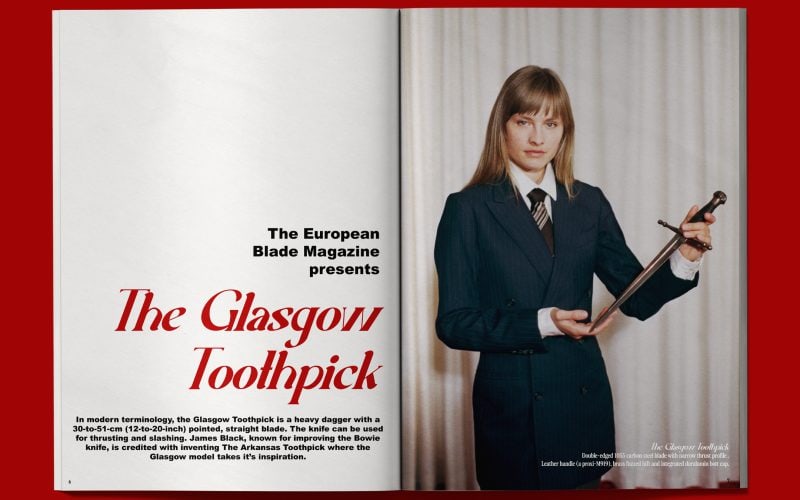
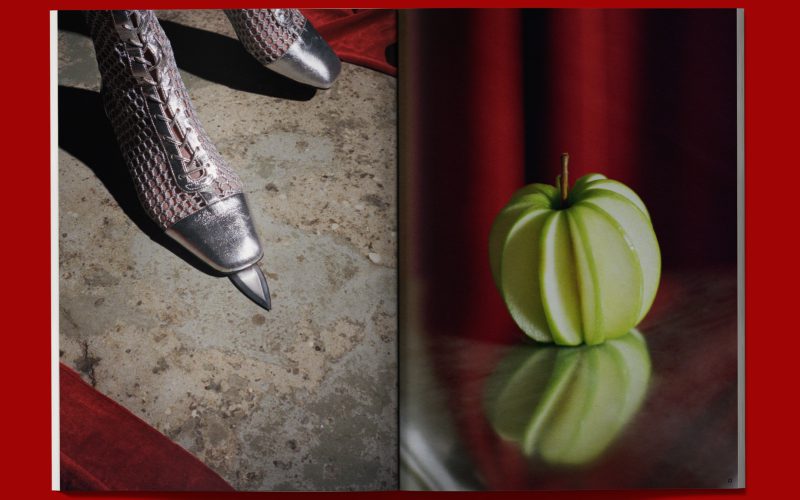
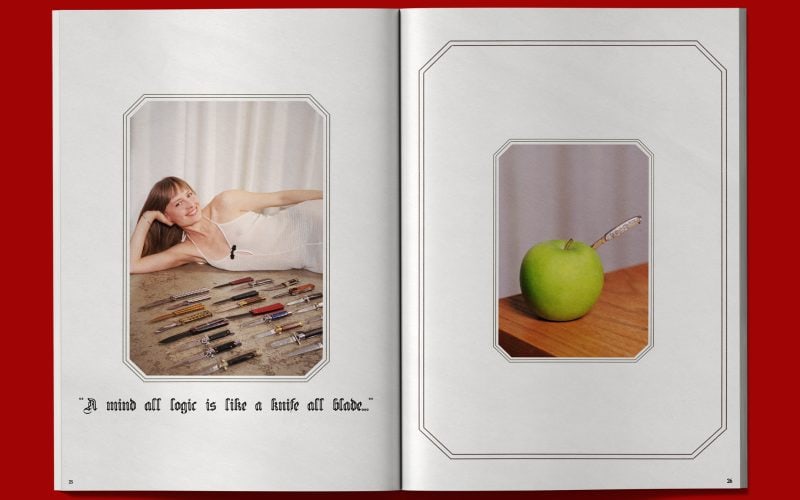
Within the pages of this mock archival catalog, the glossy allure of fashion journalism balances on a razor’s edge against the clinical terror of a weapon collector’s inventory. In one striking spread, Kristin kneels on a rich crimson carpet in a delicate white knit dress, her expression a fragile mask while a switchblade hangs suspended mid-air, pointed like a needle directly at a solitary green apple. The gravity in the room feels heavy, suffocating, capturing that exact, suspended heartbeat between disbelief and the reality of a sudden strike. The zine layout forces us to confront this surrender to the visual spectacle, shifting effortlessly between hyper-specific personas and historical vignettes. In a stark, masculine turn, Kristin appears in a sharp, pinstriped power suit, cradling a heavy “Glasgow Toothpick” dagger with the practiced, devouring reverence of an auctioneer presenting a priceless, lethal relic.
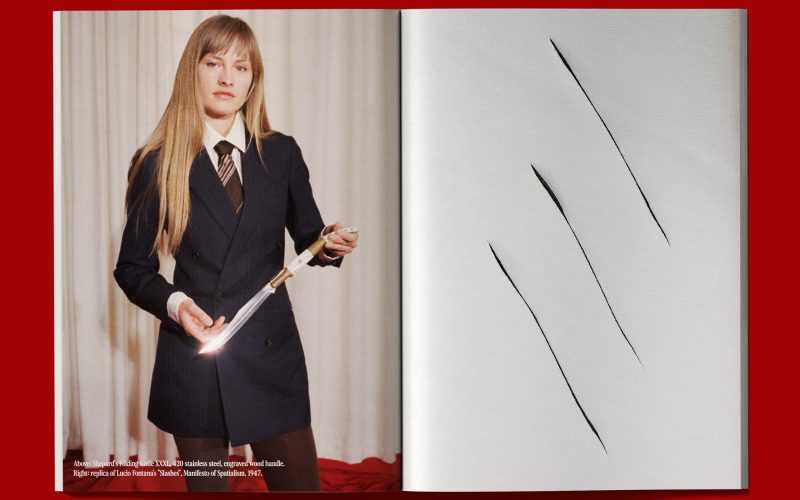
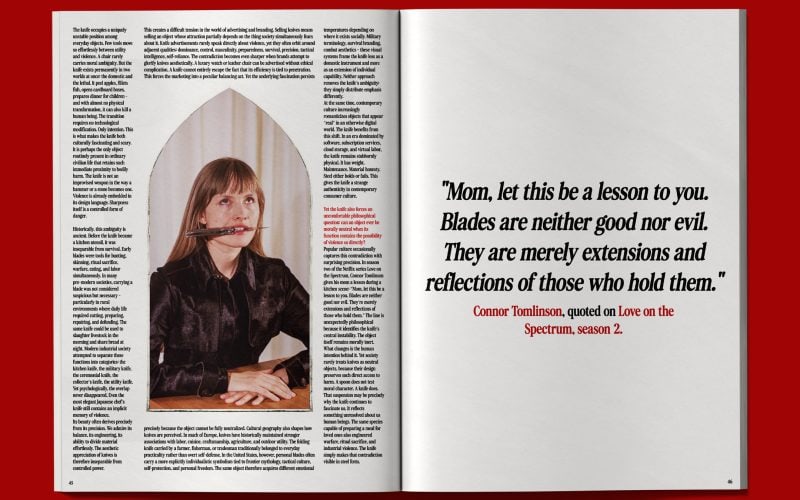
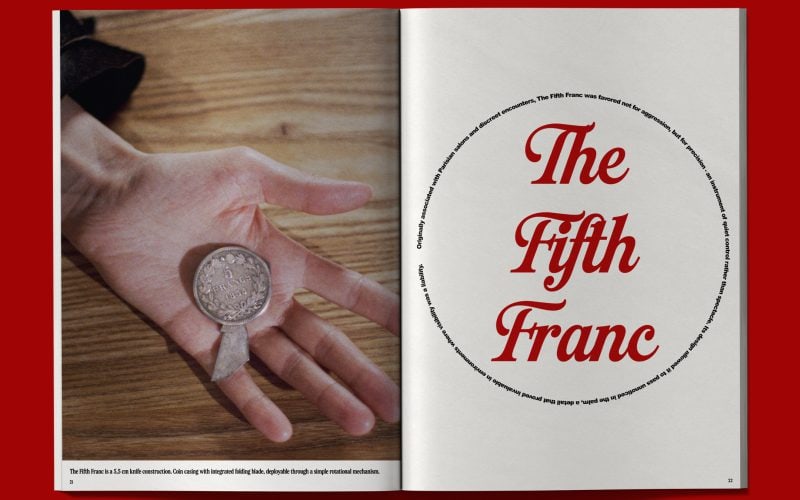
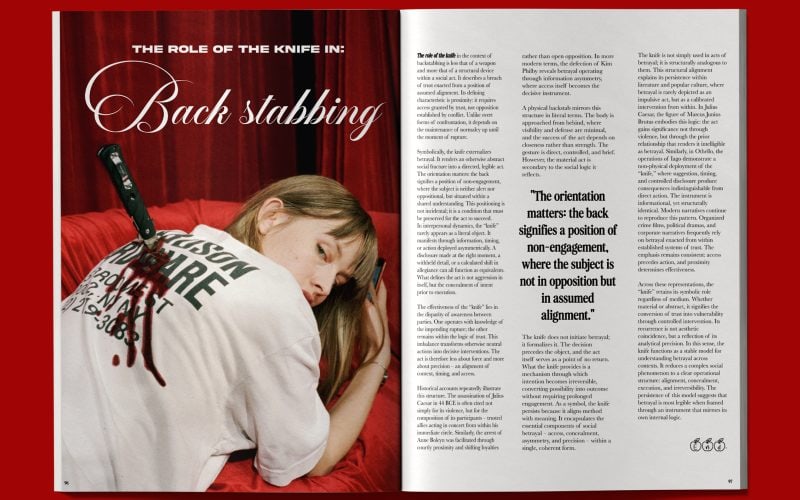
This subversion of desire deepens as the pages detail the hidden, secret life of these objects, elevating steel from a functional tool to a complex mirror of human betrayal. We see a pale palm open on a wooden table to reveal “The Fifth Franc”—a tiny 5.5 cm blade meticulously engineered to fold inside an authentic coin casing, designed entirely for the quiet, unsaid politics of a closed hand. Later, a dark editorial spread titled “Back stabbing” features Kristin resting on her side against a red velvet backdrop, a switchblade protruding directly from the graphic on her t-shirt. It is an image that aches with a strange vulnerability, accompanied by an analytical breakdown of how the act of betrayal requires total proximity, a false alignment of trust, a dangerous closeness where the pressing of a body suddenly turns from a warm embrace into a direct rupture. Interspersed within these visual essays are bold, grounding reminders of the object’s inherent neutrality, featuring a quote from Connor Tomlinson on Love on the Spectrum that cuts through the melodrama, reminding us that blades are neither good nor evil, but merely extensions and reflections of those who hold them.
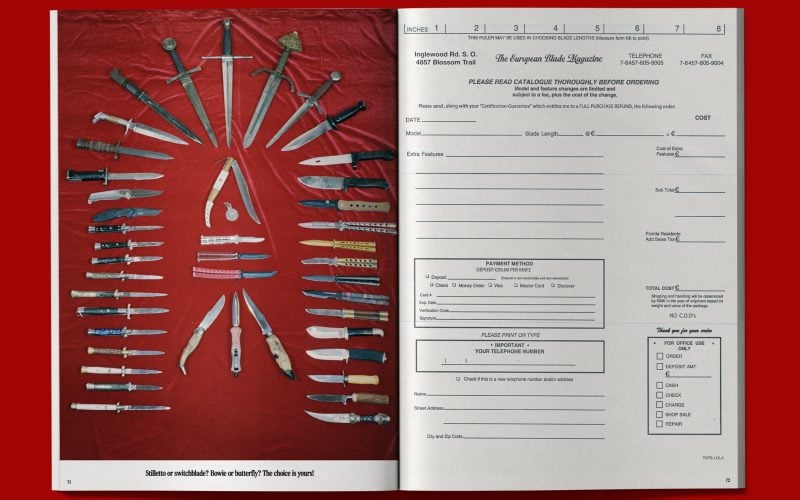
By the time the reader reaches the back of the publication—where a meticulous mail-order form invites you to calculate European shipping costs, fill out credit card details, and select your preferred silhouette from a crimson layout of weapons—the line between utility and aesthetic obsession completely dissolves. The vintage catalogue layout, complete with a ruler and check-boxes for Visa or Mastercard, transforms the acquisition of danger into an act of casual consumer curation. “Stiletto or switchblade? Bowie or butterfly? The choice is yours!” the text coos from the bottom of the page, mimicking a retro dream that promises safe passage through our own dark impulses. Bang doesn’t offer a moral judgment or a grand lecture on the dangers of the edge. Instead, he treats the blade as a beautiful, terrifying mirror of human intent frozen in steel, leaving us to wonder why contemporary culture remains so deeply, irreversibly drawn to the very objects designed to cut it open.