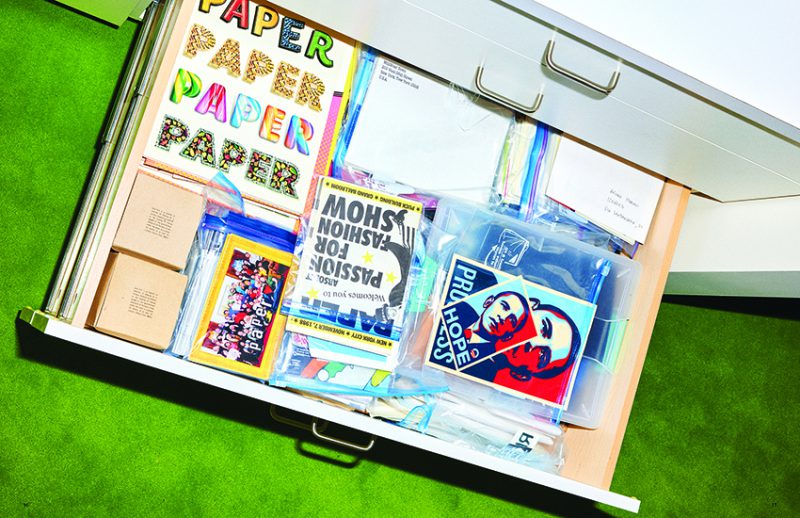
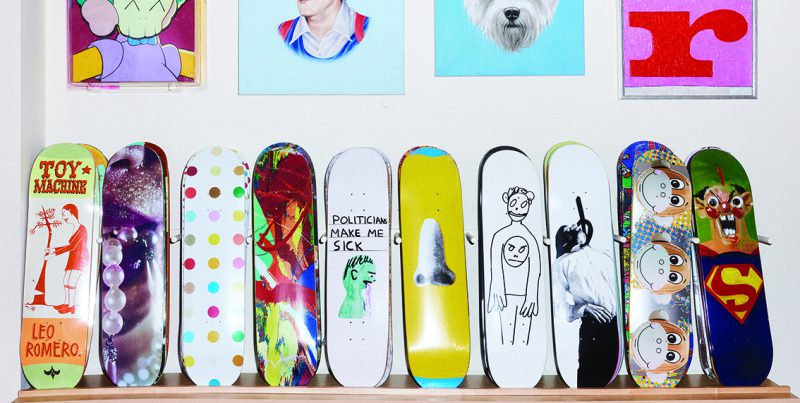
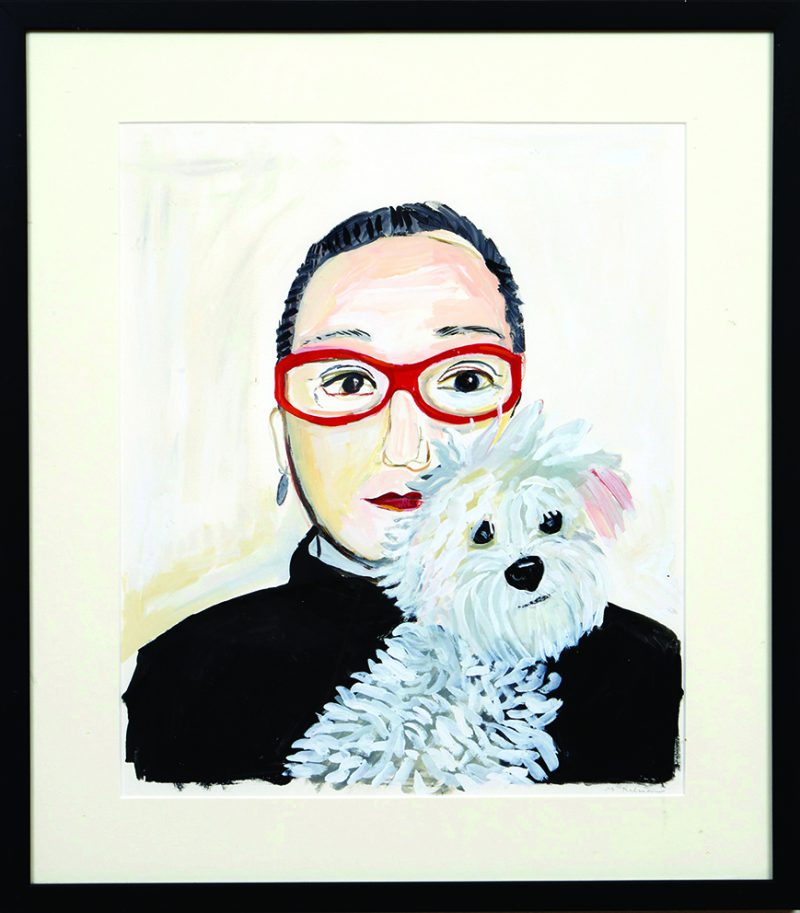
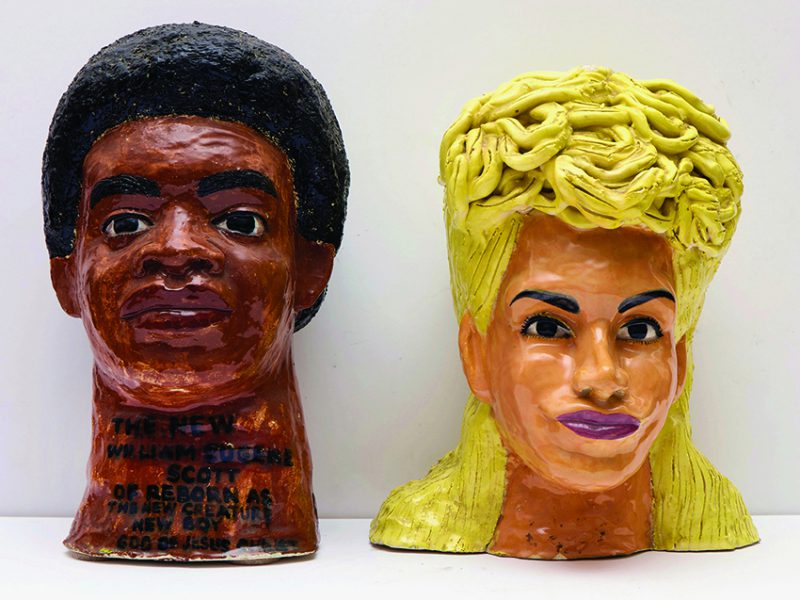
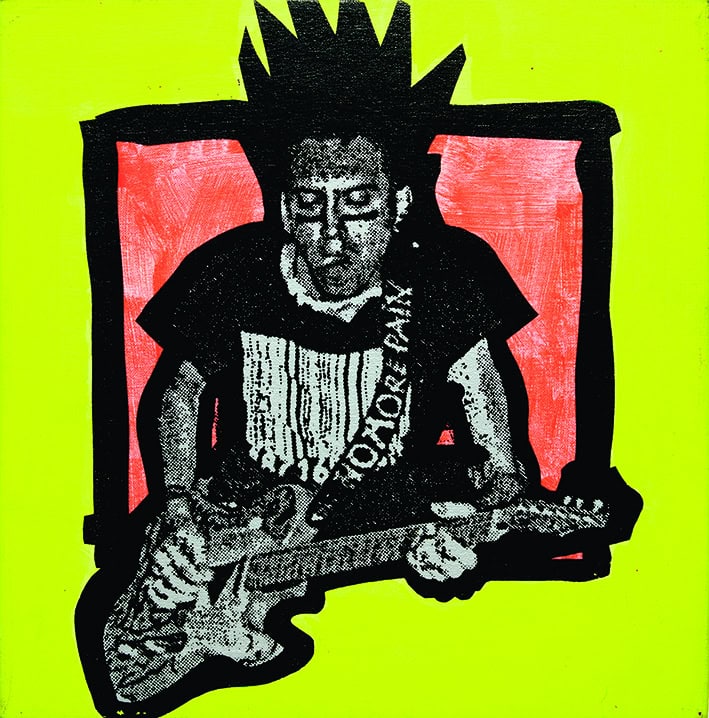
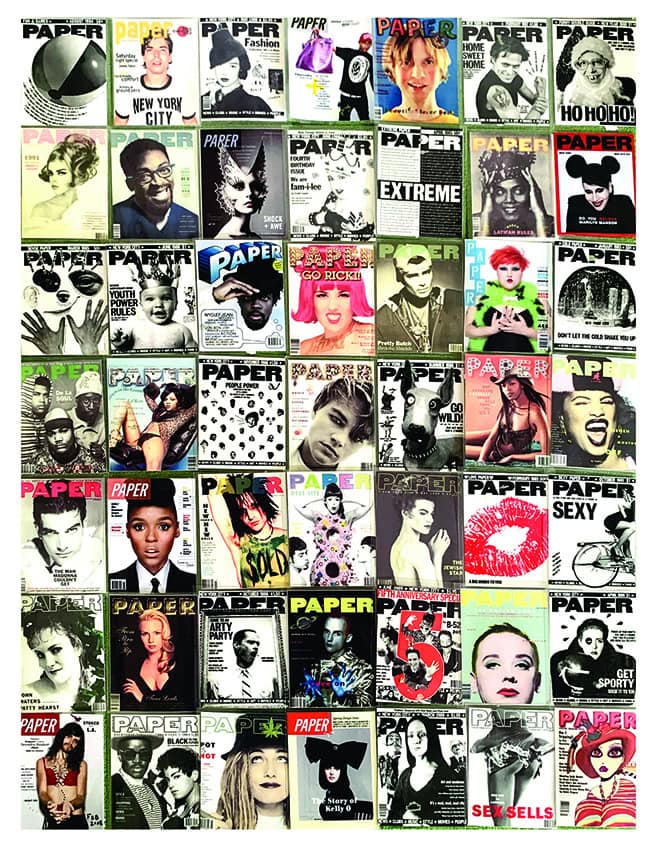
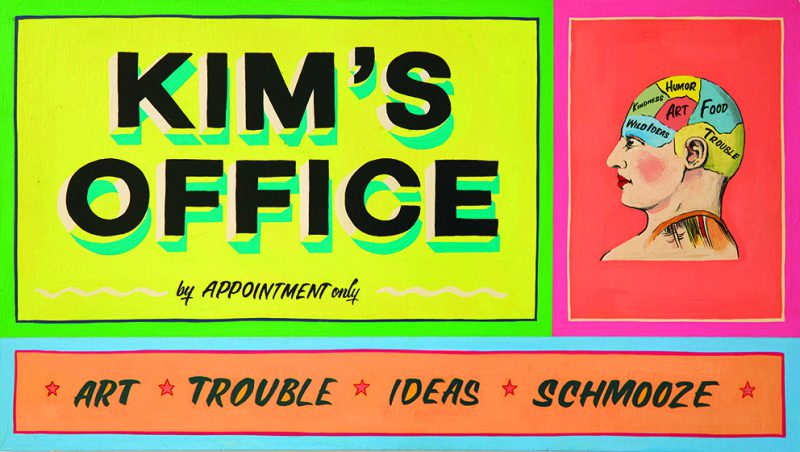
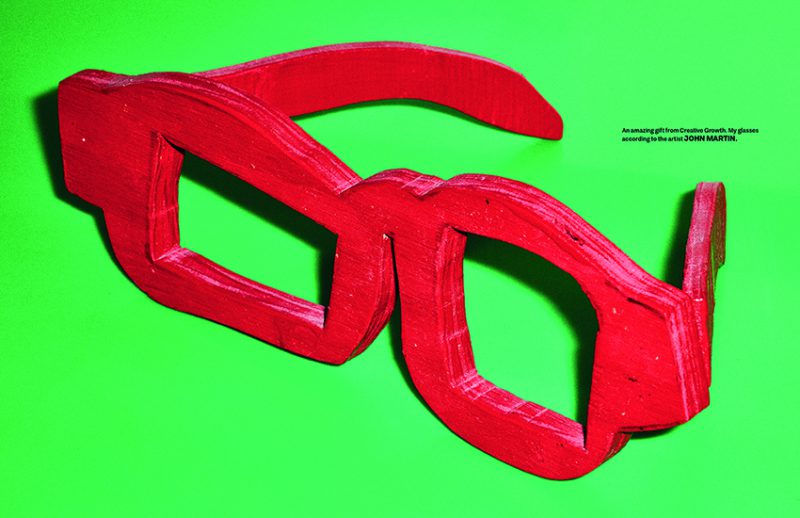
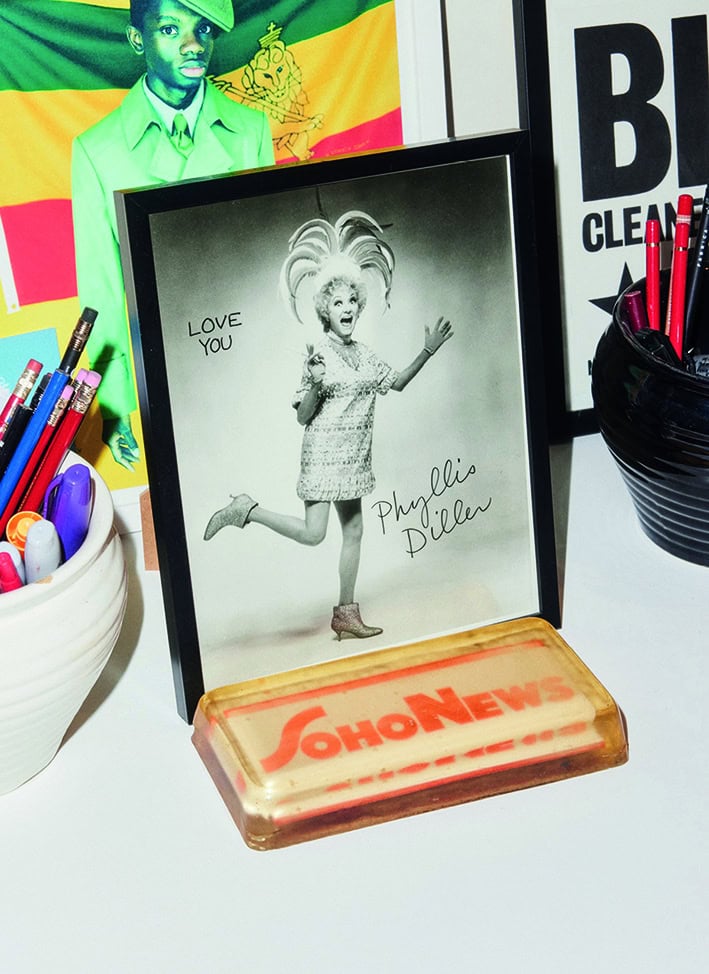
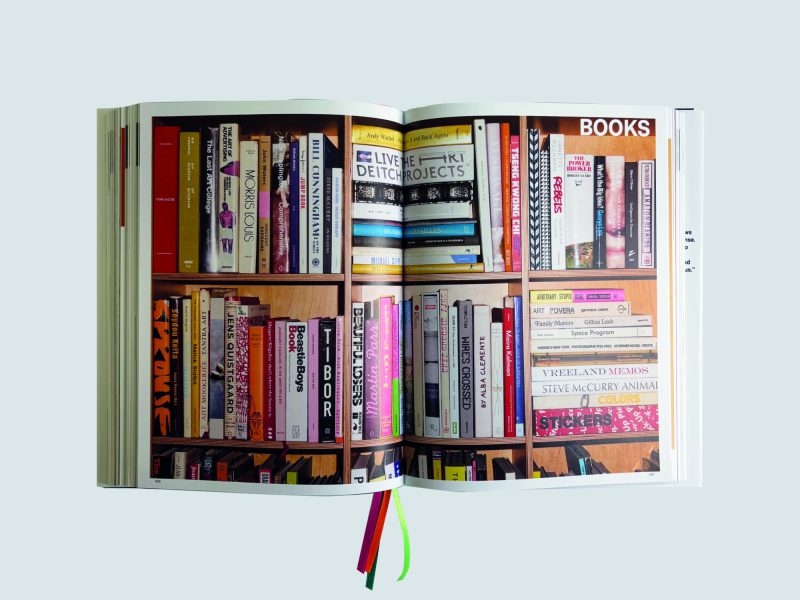
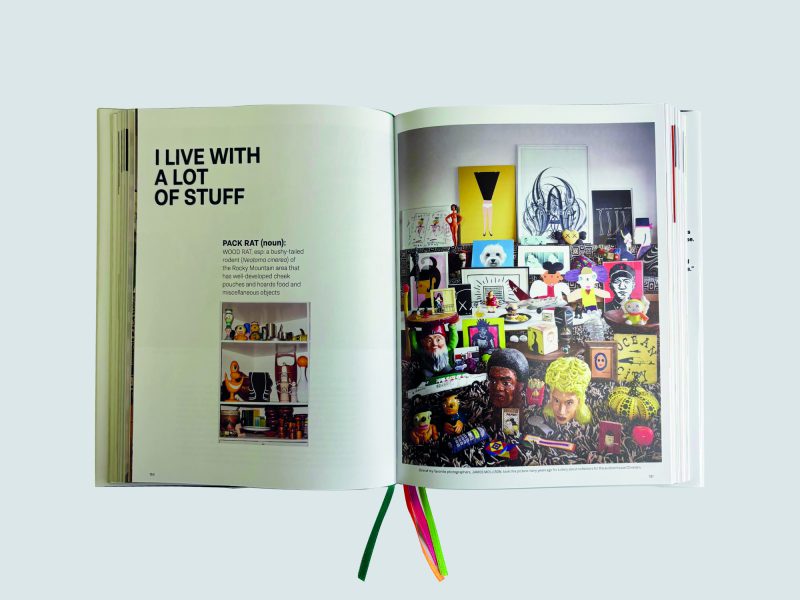
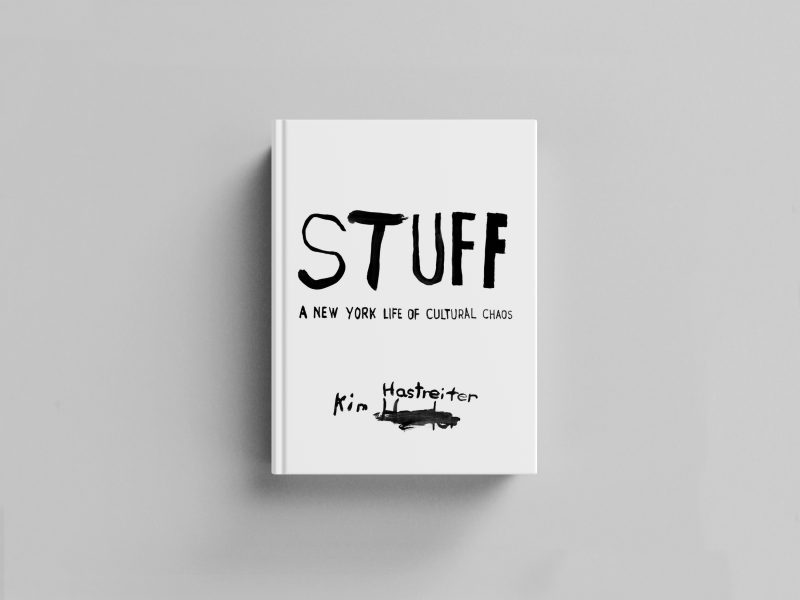
If anyone has a life colorful enough to transform decades of collected ephemera into a living archive of cultural memory, it’s Kim Hastreiter. Artist, taste-maker, and co-founder of Paper magazine, Hastreiter has distilled her storied life into book form with STUFF: A New York Life of Cultural Chaos. More than a catalogue of objects, it captures the kind of stories passed between friends—over a cigarette outside the bar, laughing chatter in-between at parties—moments of culture in the making, so true and alive you feel compelled to hold onto them forever.
In this conversation with C41, Kim Hastreiter divulges in the radical act of turning a life into an artwork—one built not from singular masterpieces, but from magazines, friendships, protest ephemera, and the charged debris of downtown New York. Reflecting on five decades of collecting, editing, and world-building, she reframes objects as vessels for stories and positions her home as a living archive of cultural memory. For her, taste is a discipline, connection is a creative force, and collaboration is the truest expression of art.
Athena Kuang: You’ve spent five decades collecting magazines, photographs, ceramics, clothes, protest ephemera, outsider art—in your upcoming book, STUFF: A New York Life of Cultural Chaos, it catalogues 1,100 objects across 448 pages. At what point did you realise that the objects in your home weren’t souvenirs, but a living archive of cultural memory?
Kim Hastreiter: I actually had a lot more than what’s in the book. That’s just the tip of the iceberg. I’m very kind of picky with what I keep and what I discard, and I have over a thousand pieces of art in my house that’s all really very important to me. I’m a very brutal editor. I’m a good editor, and I don’t keep anything that’s not fantastic.
Put me in the biggest thrift store on Earth, and I’ll find the Hermès scarf in 10 minutes. Give me 1,000 photographs, I’ll find the best one in 15 minutes. Put me in a room with 100 people, I’ll find the best person in 15 minutes.
Because I had so much amazing stuff, I categorized and organized it. I have a great archive program—I have four different archives: design, fashion, art, and a personal and ephemera archive for letters, photos, and personal material. I know a lot of amazing people, very important cultural figures, many of whom are my friends. So I have an archive for all that personal material.
AK: You once wrote, “I am an artist and this became my medium,” referring to PAPER. If a magazine can function as a medium, can a life curated through objects also function as a medium?
KH: I came to New York to be an artist in a gallery. But even what I did didn’t fit in a box. I was doing conceptual art, crazy paintings. People would ask, are you a sculptor? Not really. A painter? Not really.
No one ever knows where to put me. I’ve always had that problem. No one gets behind what I do until after I do it. They don’t trust my ideas because they haven’t been done before.
When we started Paper, people asked, what kind of magazine is it? Fashion? Not really. Art? Not really. Music? Not really. Where does it go on the shelf? Because it was new, no one wanted to give us money. Advertisers didn’t know where to place their ads. My whole career has been a struggle like that.
But I knew what I was doing was amazing. I’m very stubborn and I work really hard. So we did it ourselves. We made Paper in my house. After about 20 years, we broke through.
Even with this book, no one would publish it because they didn’t know what it was. They would ask, what have we already done that’s the same as what you’re doing? That’s the question they ask.
I was rejected until I met the people at Damiani. Eleanor came to my house, looked at the book, and loved it. But I had already done the whole book myself—the layout, everything—so it was in good shape.
The older I get, the more I realize I’m not a journalist, not really a writer, not just an art director. I do everything. But what do I call myself? There’s no name for what I do. I’m an artist. Everything I do—from my garden, to my books, to my collecting, to my home, to my animals—is part of my art. My medium is my life.
AK: New York is often narrated through headlines and myth, but your work captures something closer to the soul—a still slice of the city held inside objects, apartments, kitchens, fleeting encounters. Do you think objects can freeze a city more truthfully than photography or journalism, and what does it mean to hold a still fragment of New York in your hands?
KH: Photography is probably better. But for me, it’s not about the stuff. It’s about the stories behind the stuff. Nothing in that book is about the object. It’s about the story behind it.
Every single thing I have has an amazing story. The book is just remnants of my experiences. I lived an amazing life. I came of age in a crazy time in New York, when the city was exploding culturally.
Art, music, fashion, film—all these things were colliding and collaborating. There was indie music, indie film, indie magazines. It was anti-corporate. Do it yourself.
That mix was art to me. I wasn’t interested in hanging paintings in a gallery. I was interested in collaboration.
Bill Cunningham got me my first job at a newspaper. This was before the internet. We made our magazine on typewriters. Communication was posters and postcards.
When that newspaper went out of business, David Hershkovits and I decided to continue something—but with more style. That’s how Paper started. We each put in $1,000 and did it in my house. Everyone came after their day jobs.
We weren’t journalists or PR people. We just wanted to communicate the cultural explosion happening downtown—fashion, art, music, performance, politics, AIDS activism. Instead of journalists, we had people from the field write. It was authentic. No bullshit.
AK: You often say you “collect amazing friends” with the same care as you collect objects. How do you understand connection as a creative force in itself?
KH: I’m always on the hunt. For an amazing artist, an amazing chair, an amazing coffee cup, an amazing chef, an amazing person to be friends with. I’m like a truffle hunter.
I host dinners and soup parties. I have a very high bar for people. It has nothing to do with status or money. It has to do with who they are. They have to blow my mind.
I hate trendiness. I hate status. I hate celebrity. I just have an inner radar. I know.
AK: To preserve objects is also to preserve your point of view. It requires believing in your taste enough to declare it historically relevant. What are the implications of trusting your aesthetic instinct so deeply that it becomes an archive, even a persona, and what responsibility does that carry for young creatives who are still learning whether their own taste is strong enough to stand against time?
KH: At my age, I think about what will happen to my stuff. I have a plan—my final artwork is what happens when I die.
When I turned 70, I could see the end. I wanted to get everything out of my head. I want to dump my brain so others can learn from it. I want to teach. Young people are attracted to me. They love hearing my stories.
I lived through the shift from analog to digital. I use Instagram now as my medium. It’s like my magazine.
STUFF took six years to edit. It includes catastrophes, fashion, history, memoir. Publishers said it was too much. But I persisted. When it came out, all the people who said no loved it.
My next book is called WORK. It’s a companion to STUFF. It’s about not fitting in a box. How do you build a creative life if you don’t do just one thing? It’s hard. You have to work really hard, be creative, not be afraid.
STUFF was a teaching book. WORK will be too. Young people are living history right now. When you’re young, you don’t realize it. But when you’re older, you look back and see how monumental it was.
I want young people to understand that if they don’t fit in a box, that’s okay. You don’t have to do what teachers tell you. I’ve seen people end up in jobs they hate because they followed a path that wasn’t theirs.
WORK is about building a life around your creativity.
AK: It sounds incredible. I can’t wait to read it.