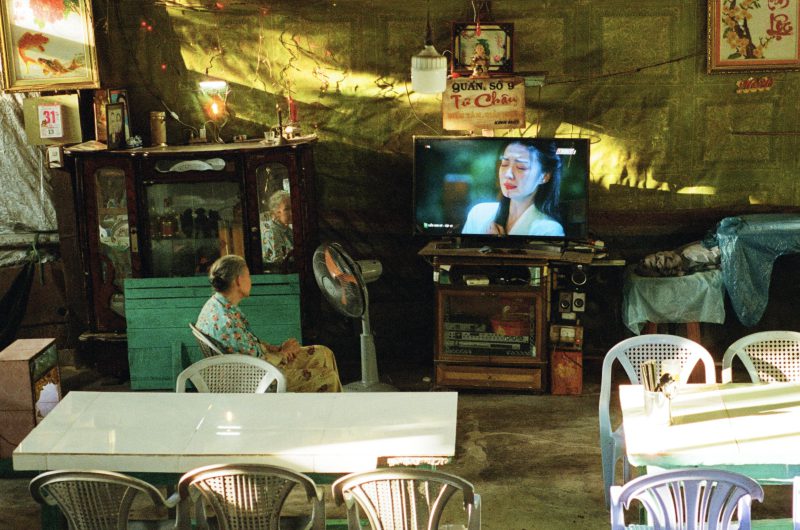
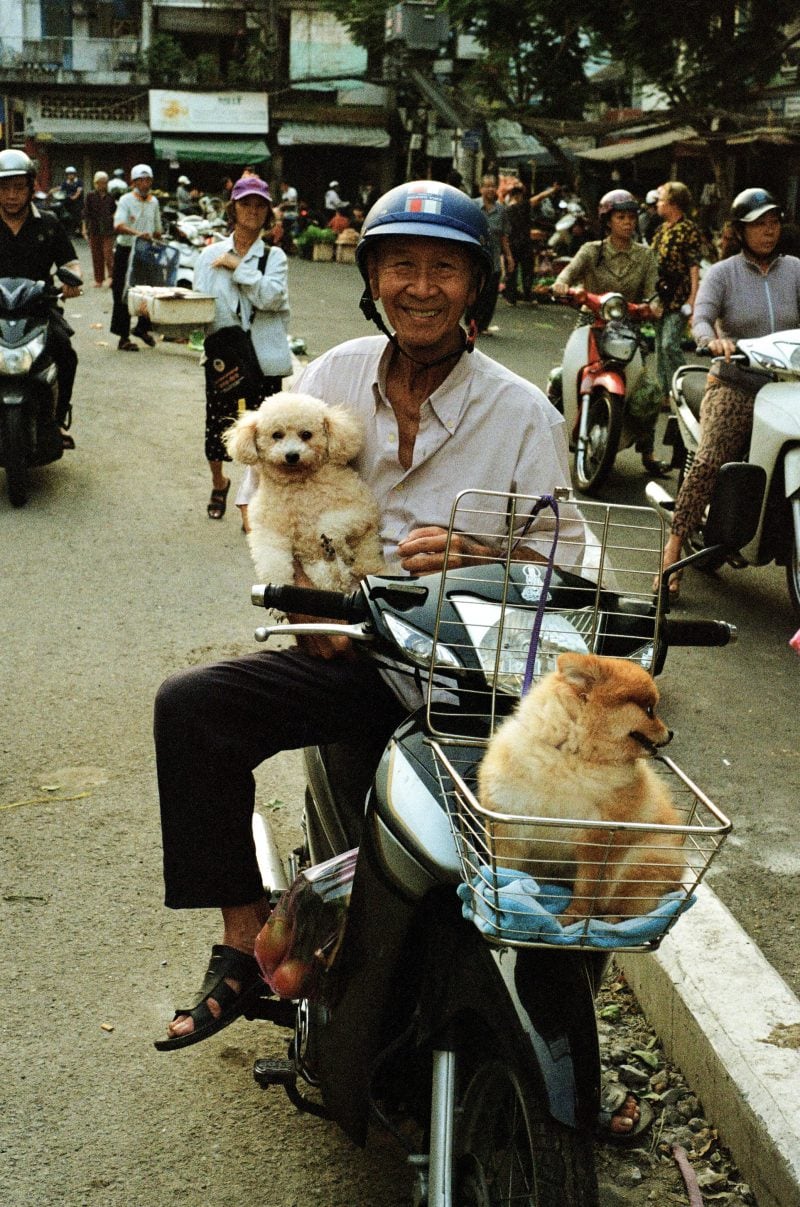
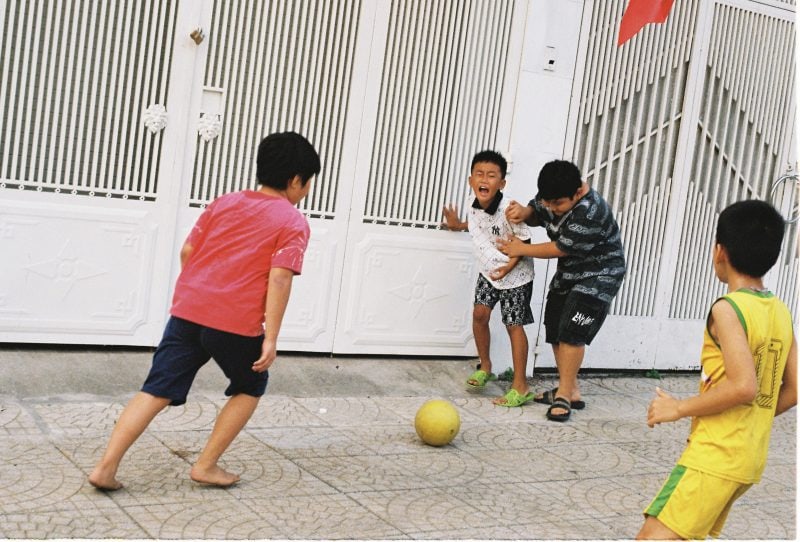
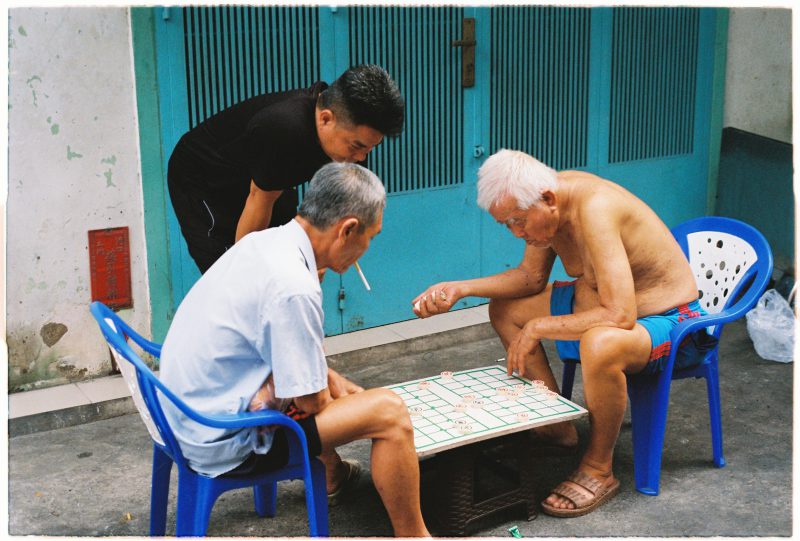
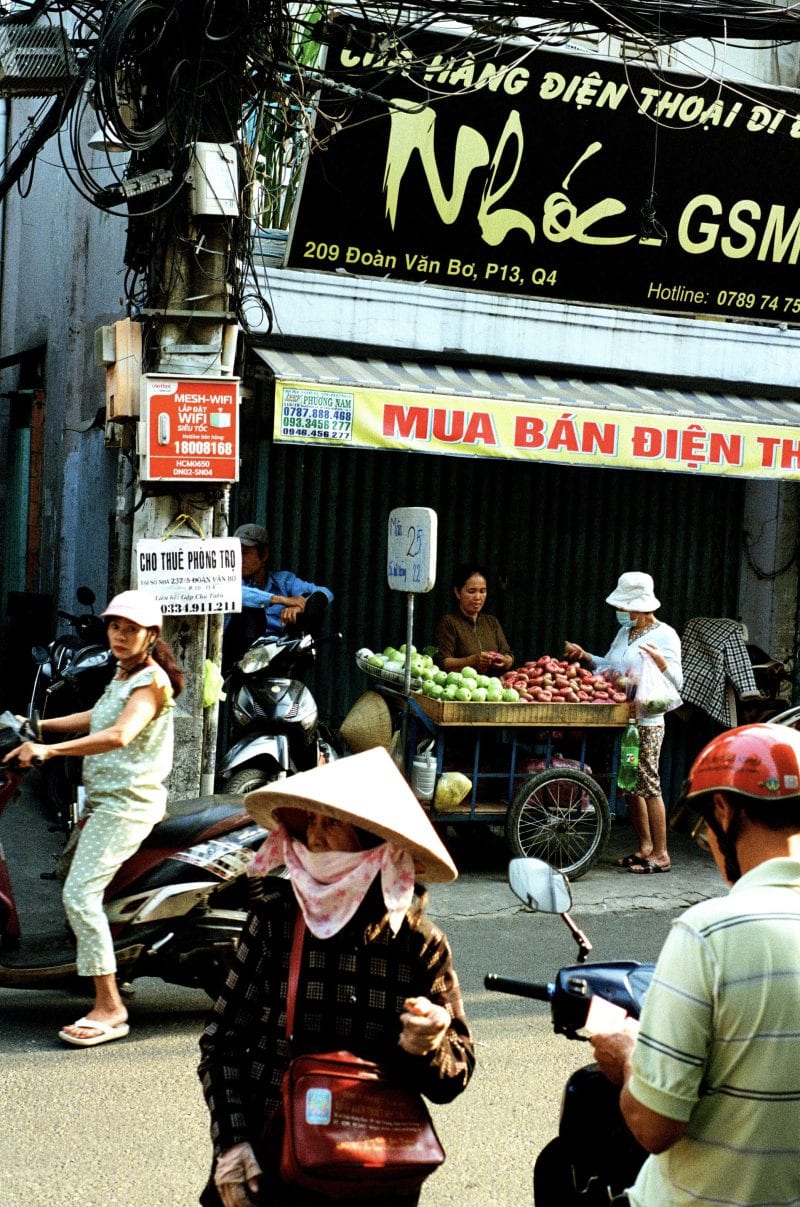
In Saigon, the street unfolds according to its own dynamics, serving simultaneously as a corridor, a market, a living room, a playground and a waiting area. In Dino Mehle’s photographs, this interplay is neither organised nor interpreted, but simply documented. The result is a portrait of the city built upon minute coincidences, everyday gestures and compositions destined to last but a few seconds. Street photography has often sought this balance between observation and chance, from William Klein to Martin Parr’s ability to lend the ordinary a slightly unexpected dimension. Mehle operates within the same sphere without seeking dramatic effects. A man smiles whilst sitting on his moped with two dogs perched in front of him; four children turn a pavement into a football pitch; three men are concentrating on a makeshift chessboard. These are scenes in which little happens, yet the essence is captured. The city presents itself above all as a system of relationships. Bodies, signs, electric cables, scooters, plastic chairs and market stalls share the space without any obvious hierarchy.
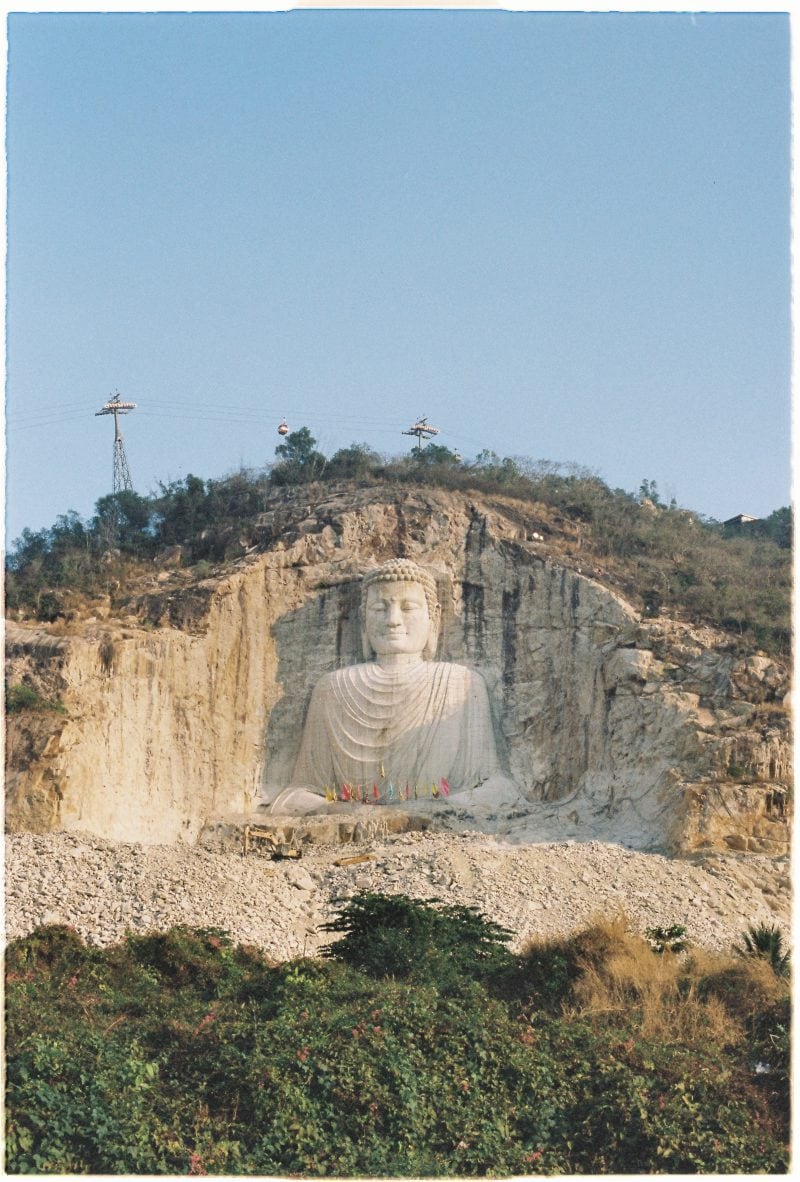
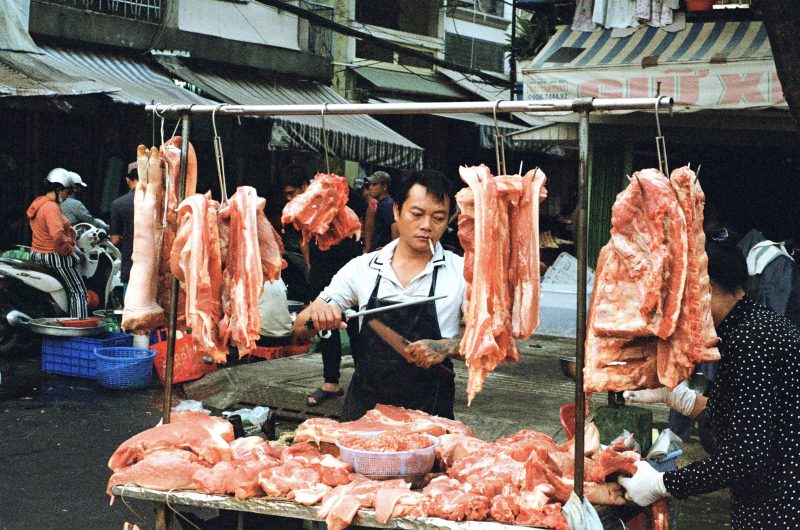
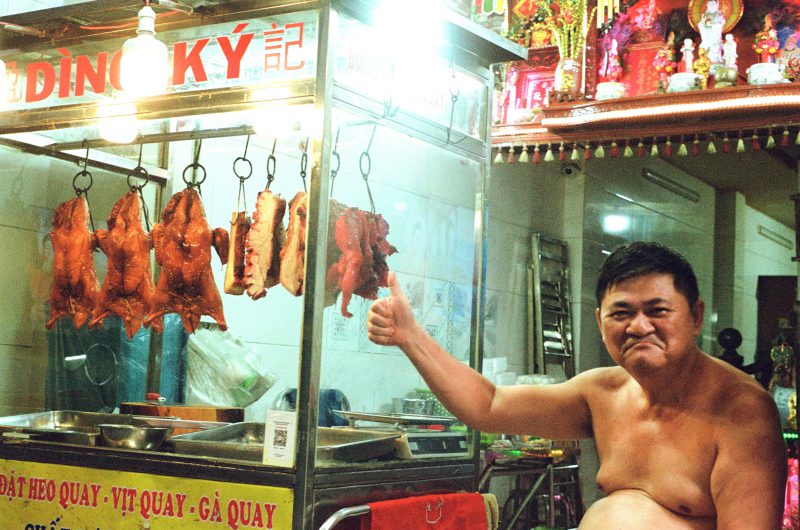
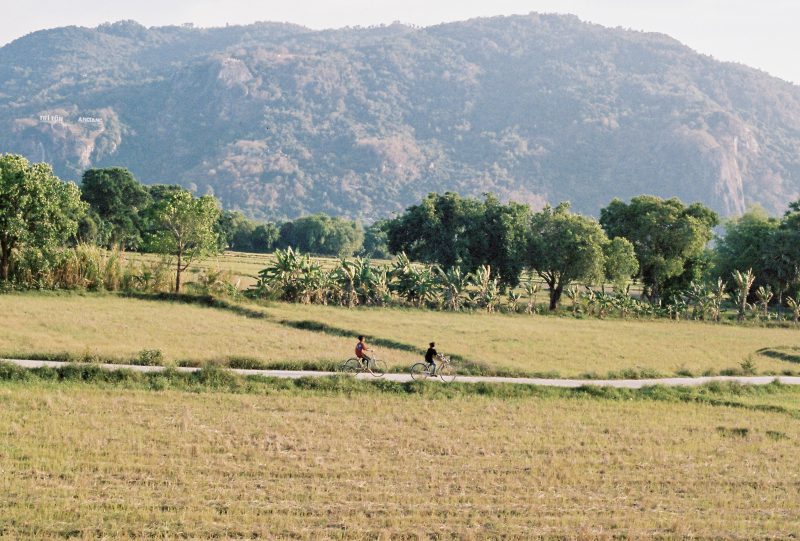
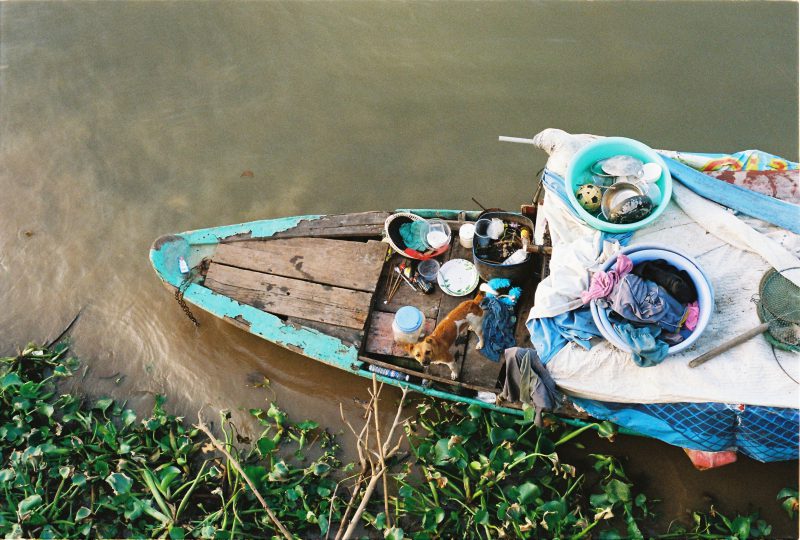
It is a defining feature of urban life in Ho Chi Minh City, where pavements and roadways continue to function as extensions of domestic and commercial spaces. Mehle captures this density by getting close enough to become part of it, without reducing it to a folkloric element. Colour, too, contributes to the sense of closeness. The deep blue of the chairs and shutters, the red of the signs, the green of the fruit, the almost harsh light of a butcher’s shop: the film captures the imperfections and gives the city a tangible texture. In one of the most direct images, a bare-chested man gives a thumbs-up in front of a row of roast ducks. The portrait arises from the encounter, not from the search for an ideal composition. Subsequently, the rhythm changes. Having left Saigon, the journey continues towards the Mekong Delta and the urban density gradually thins out. It is perhaps in this transition that the work finds its most significant aspect: not in defining a place, but in recording two different paces. On the one hand, a city that seems to constantly anticipate the next frame; on the other, a landscape that invites one to pause. In between, Mehle chooses to proceed with simplicity: walking, waiting and observing whatever comes into the frame.