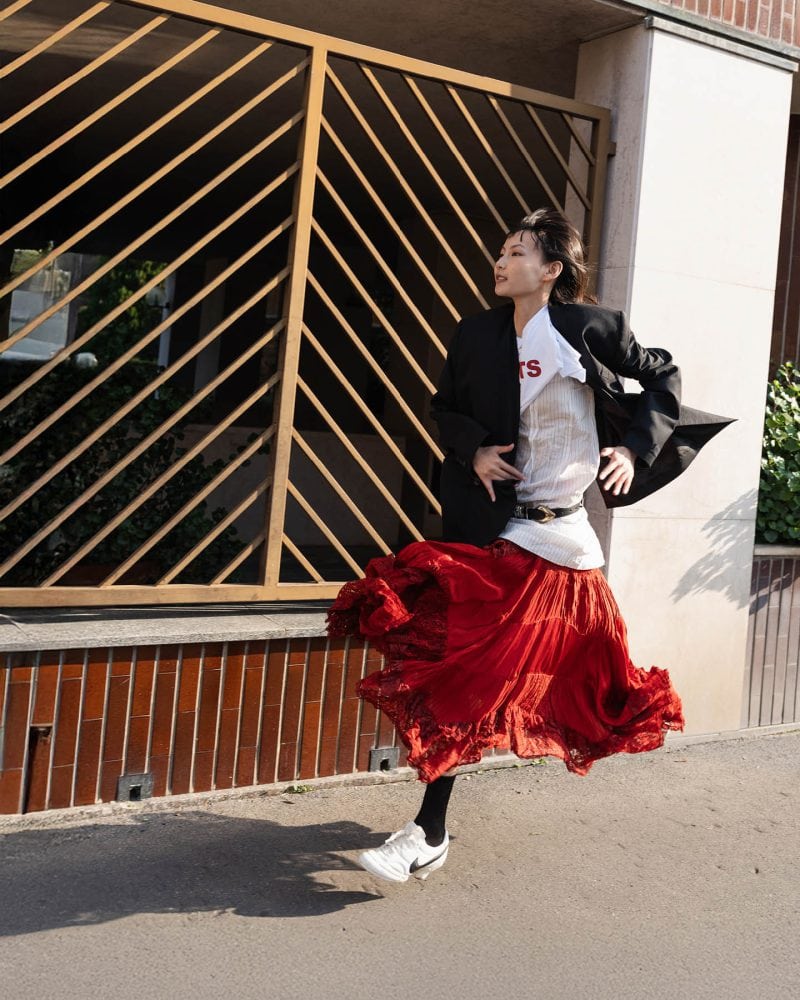
Residue is an editorial that explores the promising nuances of urban space. The protagonist, played by Meng Qu, moves through the streets like a presence that always seems to arrive a moment after the action. What we see is not the event itself, but its delayed reflection, what continues to exist when everything else has already dissolved.
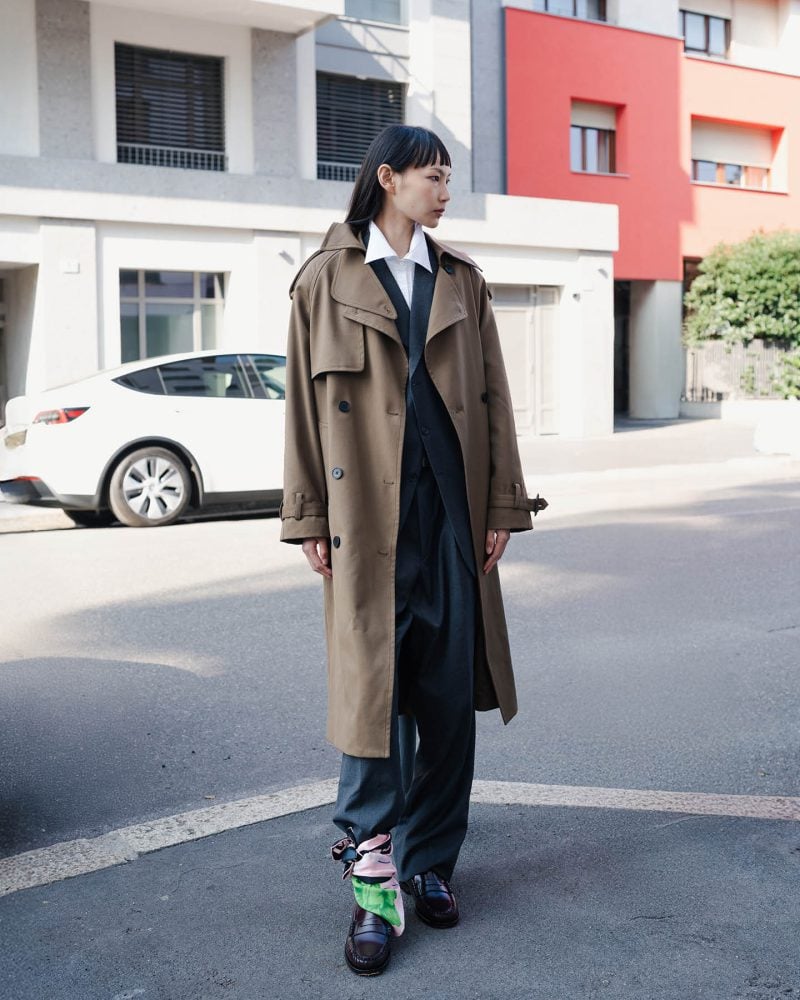
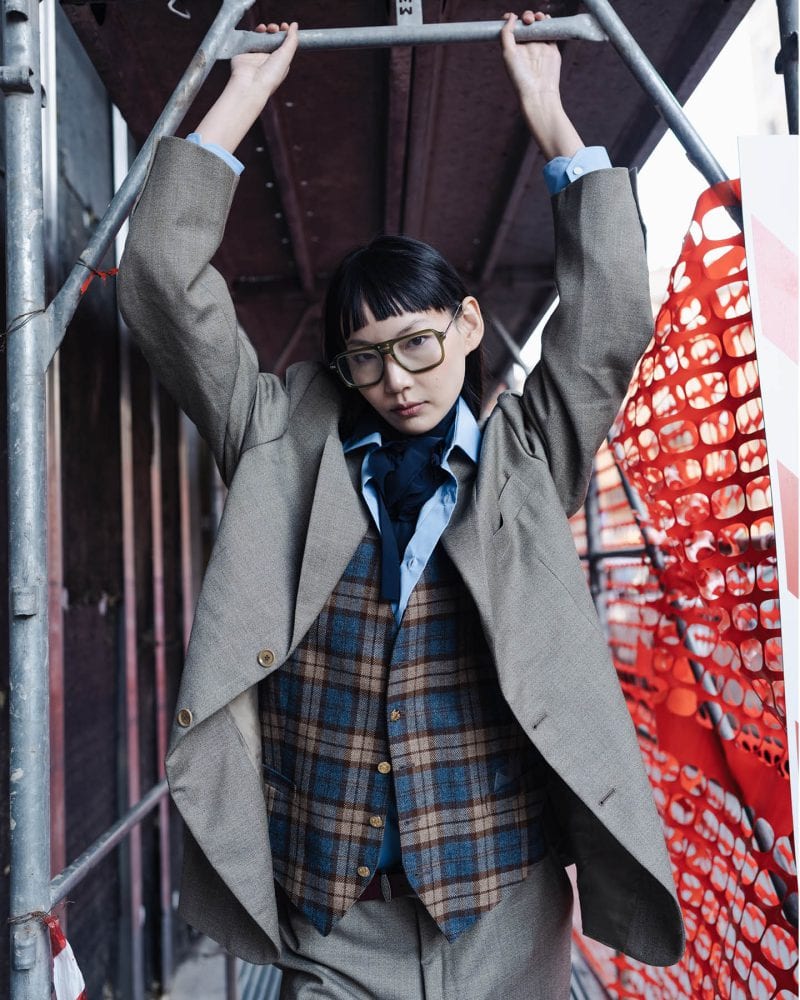
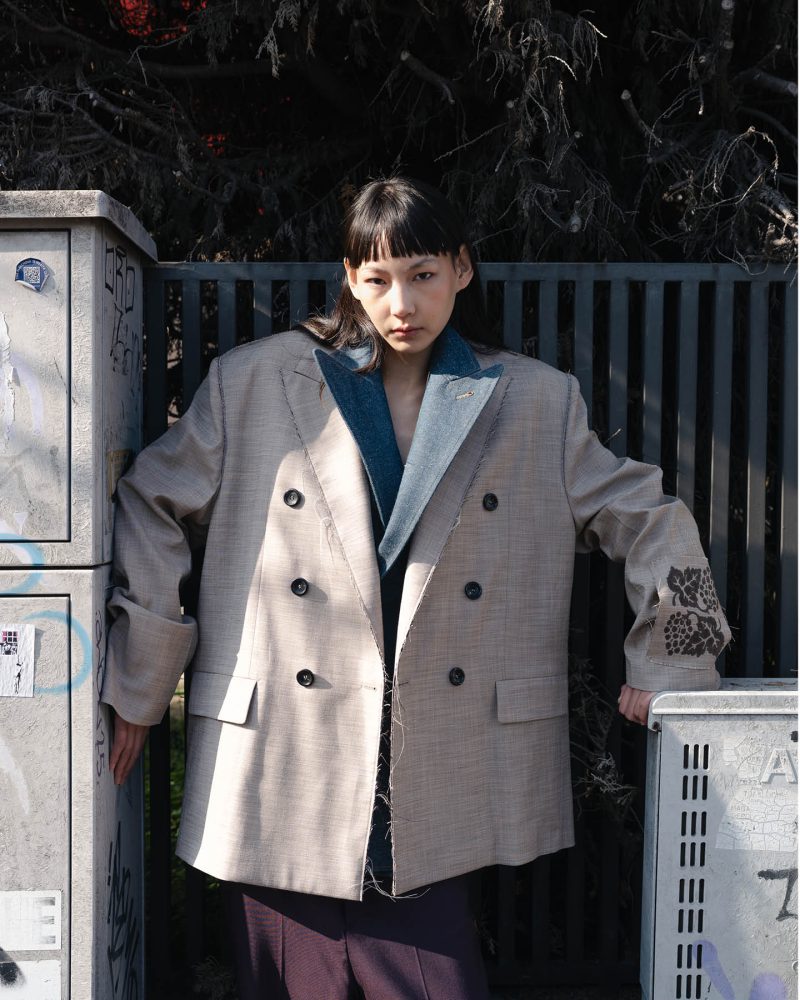
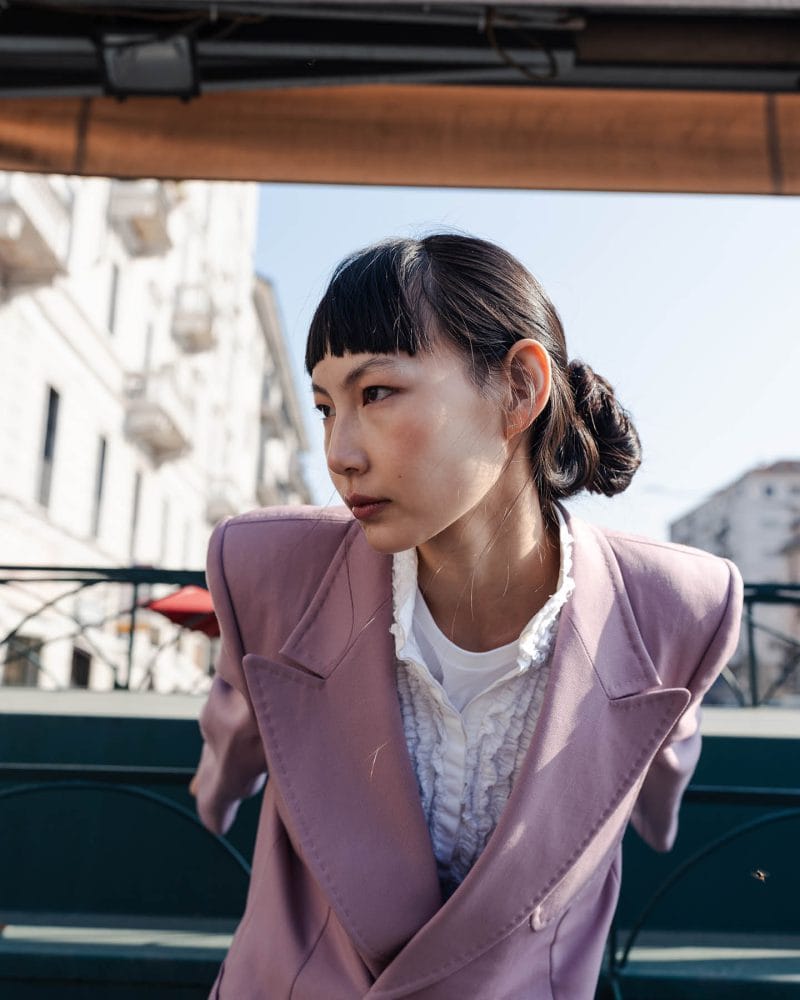
Astrid Zorzetto is behind the creative direction and styling, developing an identity through eccentric sartorial choices and layers of waistcoats, blazers and coats. The styling is like a collection of overlapping identities that the protagonist wears like scraps from previous lives. Each layer suggests a past identity: student, office worker, contemporary dandy, while at the same time indicating that these have been overcome.
The work of photographer Niccolò Morrone visually explores the duality between stillness and movement. In the early images, Meng’s figure is often framed by architectural elements such as grates and metal structures. The composition suggests a sense of confinement, with the city becoming a narrative element, defining the spatial limits of the subject. The urban environment is perceived as a rigid structure and amplifies the static nature of the clothing.
The series, while initially characterised by staticity, shows an evolution. Towards the end, the narrative lightens and takes on a more dynamic rhythm. In the final scenes, the protagonist makes an unexpected gesture, running, disrupting the formal setting. The red skirt, which swirls outwards, is a visual representation of liberation. After a period of immobility, the image culminates in an explosion.
Residue does not interpret identity as something defined, but as a set of traces in constant transformation. Styling does not function as an immediate expression of the self, but as a code that leaves imprints rather than meanings. And photography does not capture the moment, but what remains afterwards.