
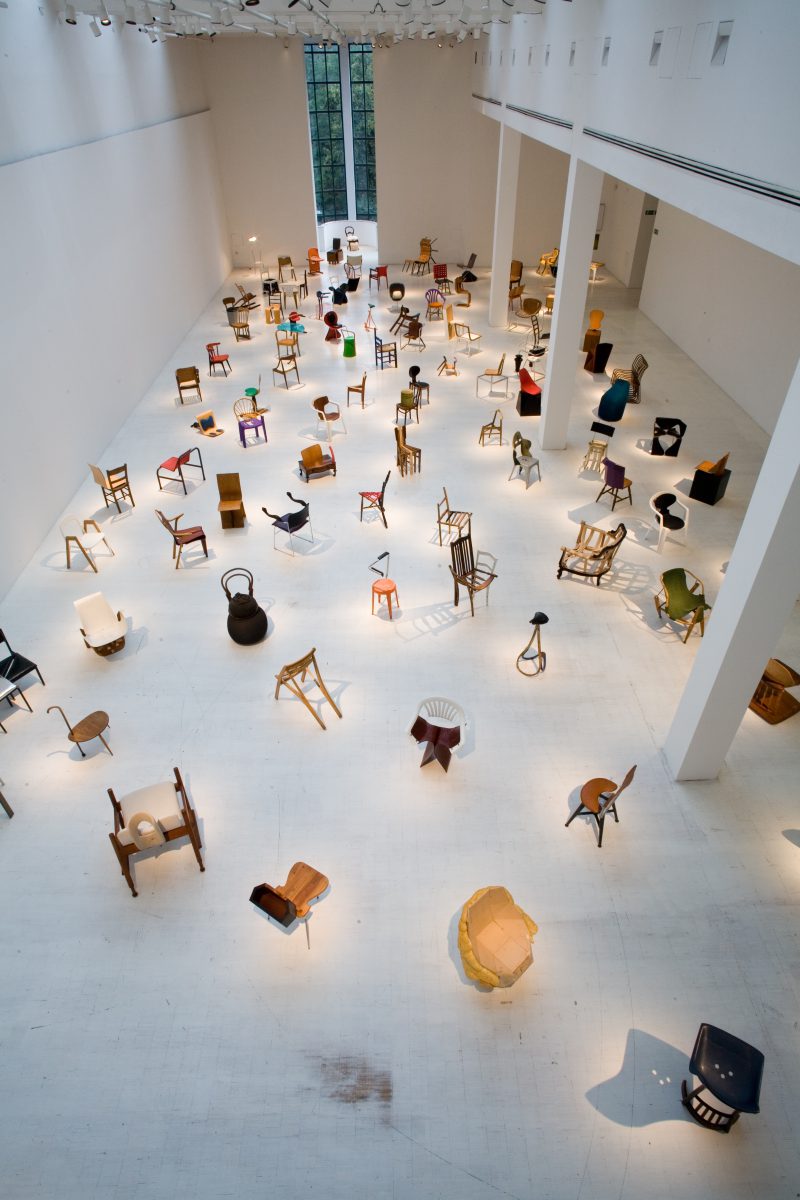
To dismantle, reassemble, and sustain a collective narrative across two decades requires a rare defiance against a design market obsessed with the singular luxury commodity. What began as Martino Gamper’s rapid, instinctive harvesting of discarded furniture from the streets of London became an indivisible, 100-piece universe when gallerist Nina Yashar immediately recognized its institutional weight and refused to let it be fragmented.
For nearly twenty years, 100 Chairs in 100 Days has existed as a fluid, nomadic archive—navigating the world not as a static collection, but as a living benchmark for contemporary design and reuse. Sitting down at the Nilufar Warehouse just before this monumental body of work exits the commercial landscape to enter a permanent museum collection, Yashar and Gamper reflect on the psychological evolution of the collection, the tension between domestic utility and pedestaled artifact, and the enduring beauty found within the debris of our global consumption cycles.
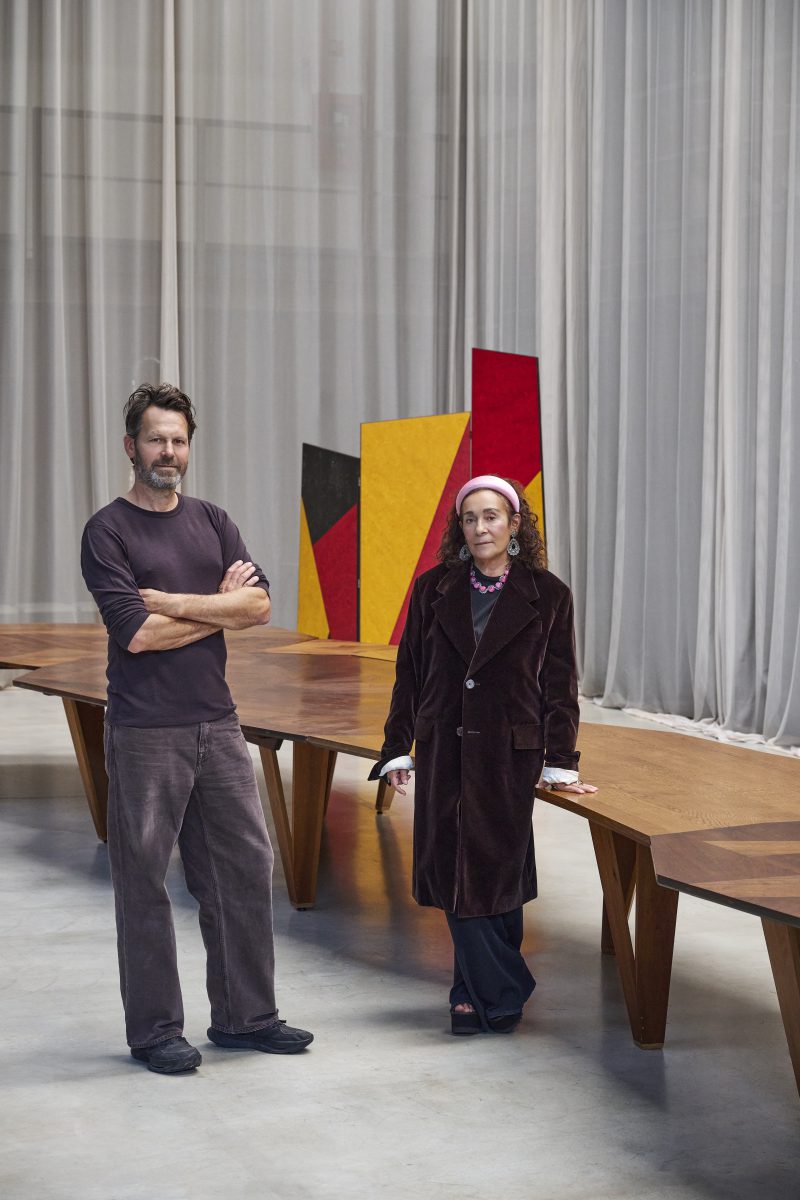
Athena Kuang: In 2009, you made the decision to acquire 100 Chairs in 100 Days as an indivisible, 100-piece collective narrative, actively resisting the contemporary market’s instinct to fragment design into isolated luxury commodities. The design market heavily incentivizes the isolation of the single, autonomous masterpiece. How did you navigate the friction of championing a massive, collective narrative in 2009, and in what ways does this major institutional acquisition redefine what we value as a collectible unit?
Nina Yashar: I have to say that I didn’t have any friction, but an immediate certainty. When I saw this body of work, I saw them in 2009 in London, in a Victorian villa, the full center of London.
When I first saw the collection displayed across those rooms and the upper floor, I immediately felt a powerful conviction. I turned to my sister after seeing just the first three rooms and said, ‘I want to buy all of them; I don’t even need to see the rest.’ That is truly indicative of how I operate in my professional life—when I make a decision, I am highly instinctive, quick, and completely free of inner doubt. I am secure in my vision.
The market often tends to fragment and isolate individual pieces, but I believe that approach doesn’t do justice to a cohesive body of work like this. Over the last couple of days, many clients approached me wanting to buy just a few pieces—two, ten, or fifteen. However, I refused to separate them. From the very moment I purchased this collection, my intuition told me its ultimate destination belonged in a museum or institution.
AK: For nearly two decades, Nilufar has acted as a temporary custodian for this work, moving it through global institutions without allowing it to settle into static permanence. What is your philosophy of dynamic preservation, and how do you protect the physical integrity of an archive while keeping its cultural relevance fluid?
NY: I never viewed myself as the owner of this collection, but rather as its custodian. Because of that, I always felt a deep responsibility to share its narrative, beauty, and world with the public. It was actually quite frustrating for me to think of these incredible pieces sitting in crates inside a warehouse, which is why I decided to have them travel to major museums around the world. Fluidity and movement were fundamental.
In my view, this collection represents a true benchmark in the history of contemporary design. Martino Gamper was a pioneer in addressing the concepts of reuse, process, and authorship, and I felt it was essential to share that message with as many people as possible.
There is a beautiful concept in preservation philology: you protect the body, but you keep the spirit moving. That truly resonates with me. While we must physically preserve these pieces, their spirit needs to circulate out in the world. Sending them to an institution isn’t a sad departure; it is the ultimate fulfillment of that philosophy. Their preservation is secure, and their spirit can now inspire the public forever.
AK: The upcoming event at the Nilufar Warehouse marks the final public viewing before the collection enters a permanent museum archive. As someone who has lived alongside this singular narrative for seventeen years, how do you perceive the psychological shift of preparing to let this entire micro-universe leave your hands?
NY: I naturally experience a bit of a dual feeling. On one hand, there is a touch of personal sentimentality—these pieces are like my children in a way, especially since I recognized their value and bought them the very moment I first saw them.
But on the other hand, seeing them enter an institution is the ultimate victory. It finally does justice to this entire body of work. They are no longer hidden away in a warehouse; instead, they are accessible to the public, displayed for everyone to see and experience. Achieving this goal—ensuring they are preserved and shared with the world—is exactly what I always wanted for them.
AK: How do you feel about the fact that these objects are so interactive right now—for example, we are sitting on them—but soon they will enter a museum where they might become pedestalled artifacts viewed only from afar? How do you feel about that transition?
NY: Actually, my philosophy remains entirely the same. I believe that design is inherently functional, even if some of these pieces defy traditional functionality. I love the fact that we can use them as domestic objects.
As they transition into an institution, I do not believe they will ever truly be pedestalled or isolated. These works are so strong and so powerful that they do not need a pedestal to elevate them, nor do they need to be isolated to be understood. Their power speaks for itself. They simply need a great, open space to inhabit.
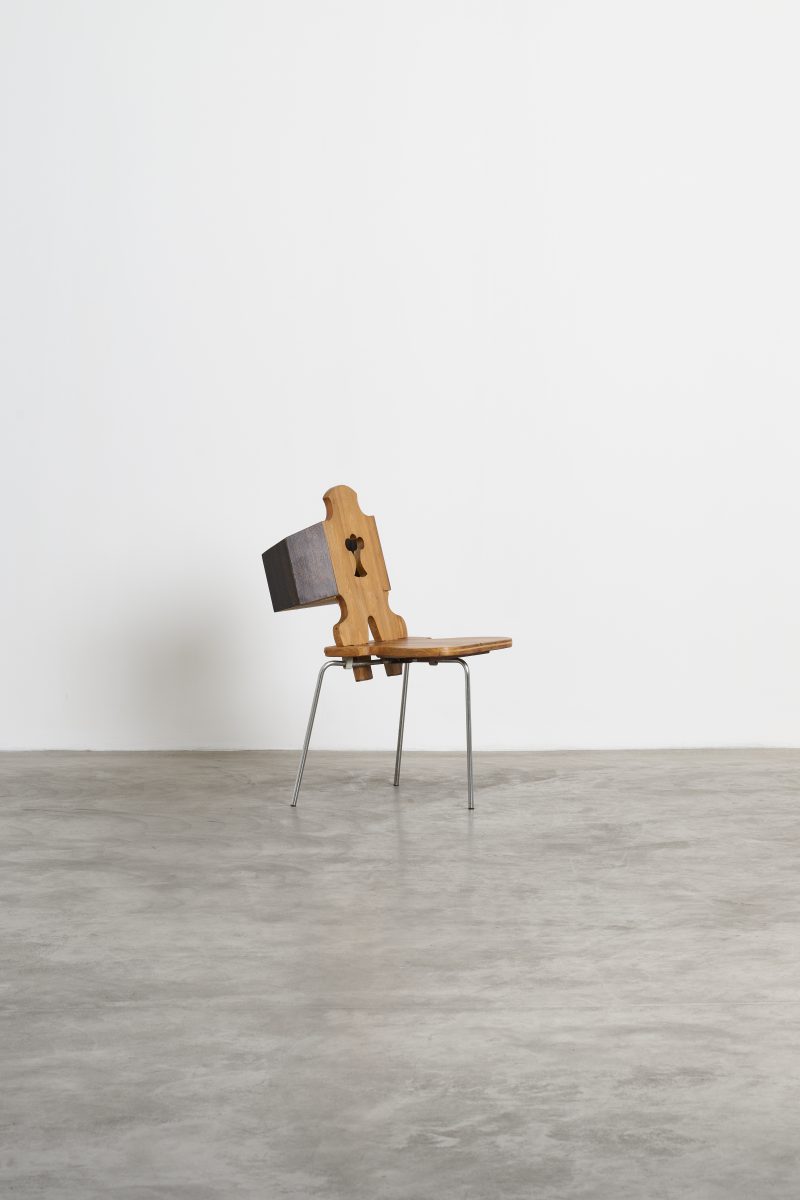
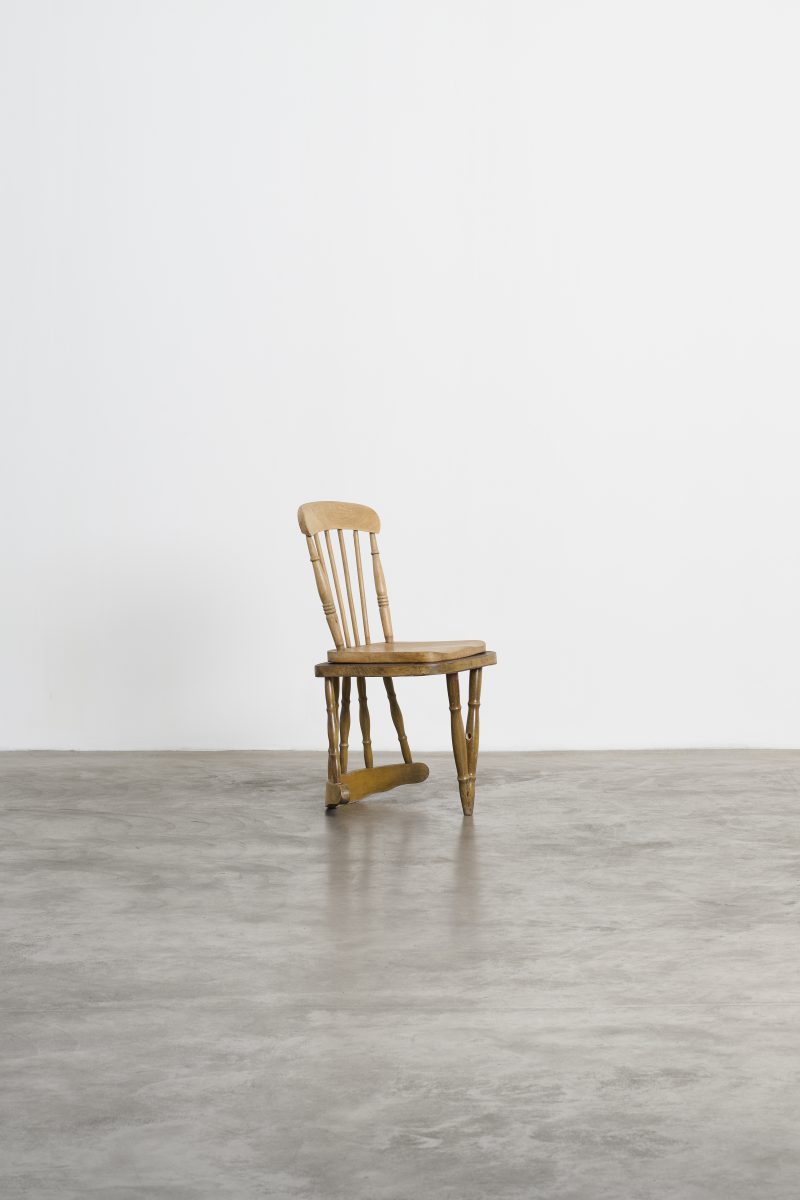
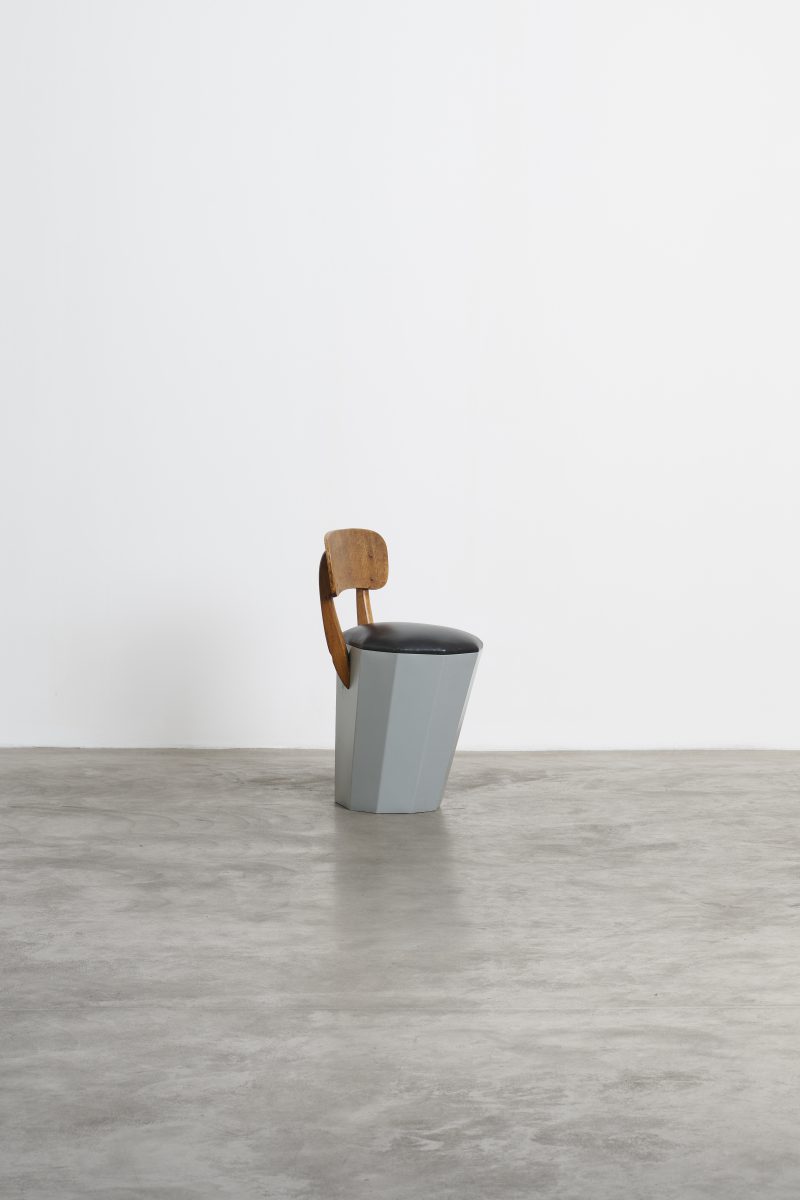
AK: 100 Chairs in 100 Days began by harvesting the debris of London’s streets, yet the project has since been re-contextualized in Tokyo, Melbourne, and Milan. How do these chairs absorb the specific energy of new geographical spaces, moving past their 2007 London origins to become global artifacts?
Martino Gamper: All cities have a similar consumption pattern: we buy something, and eventually we throw it out. The question is how long that cycle is between when you acquire an object and when it gets given back to the street.
For me, this project was not only about making chairs; it was about understanding how people actually live with objects. When people discard them, they give them a second life on the street, and whatever happens out there happens. Whenever I am in a new city or environment, I always look for abandoned chairs. It provides a very strong reading of a place. In some cities, there is nothing on the street. In others, there is a lot, depending on specific days or systems of how people handle furniture and cycling.
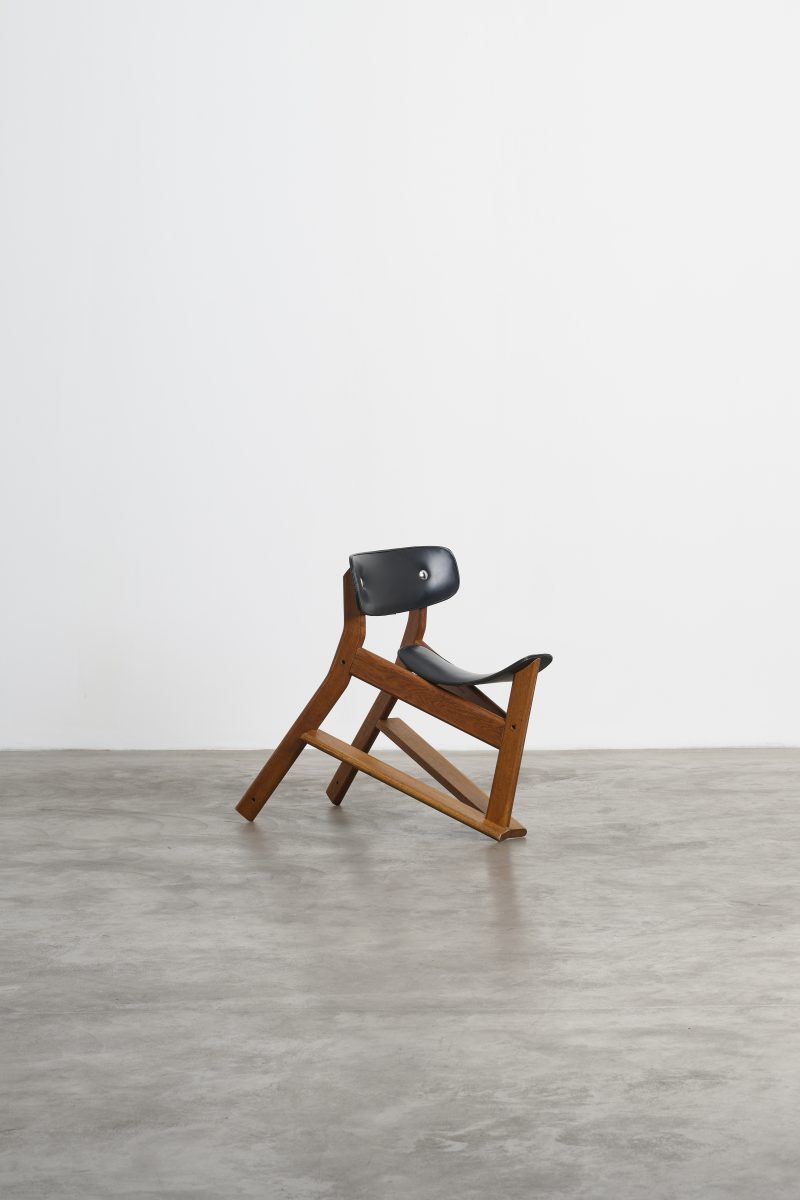
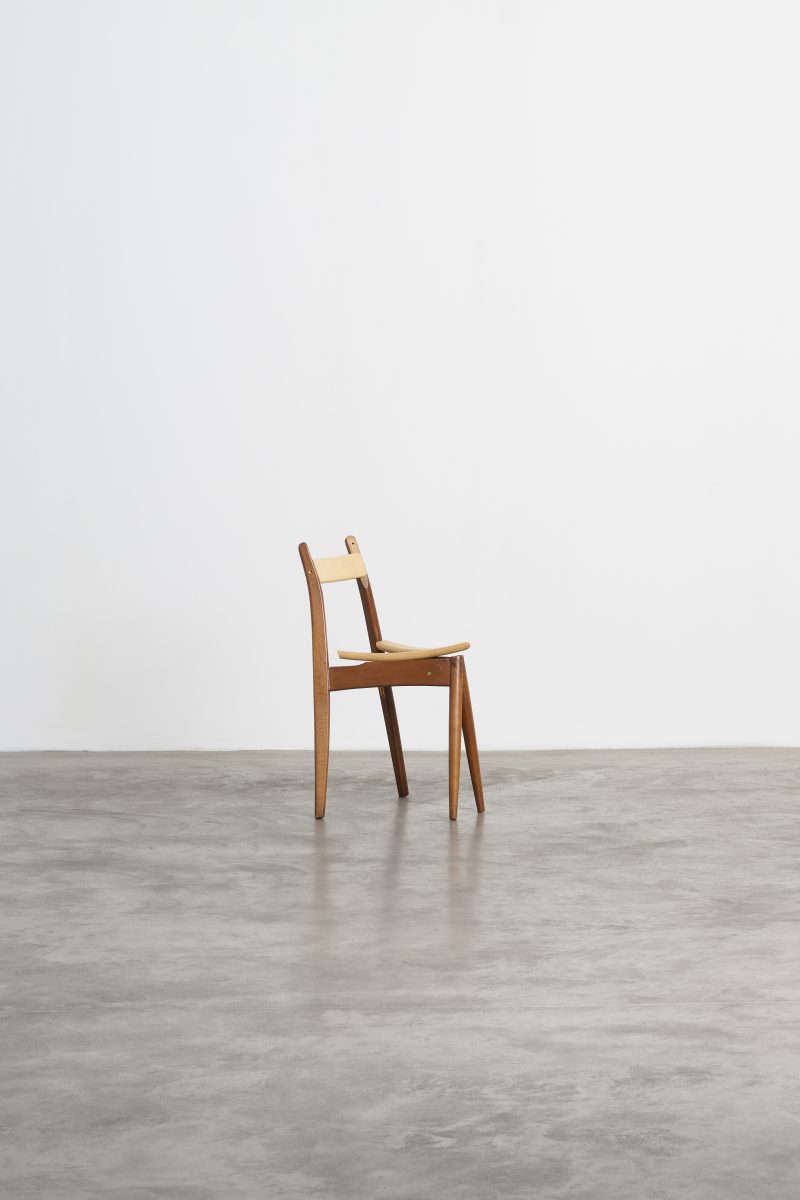
Part of this project is about that cycle: once an object leaves our consumption, what happens to it? I still see beauty and potential in them. It is a way to show people that even though these objects might have left our houses and our possession, they still have a story to tell. That is what I did here: I showed their story and created new creatures and chairs.
AK: How do you see the contrast between the cities across the world and the kind of design that you find initially? Is the language out there all quite similar, or is it different?
Martino Gamper: You can see that some cities have a much richer texture. But I think what has changed a little bit since I did this project almost twenty years ago is that people are now more aware of furniture on the street. Back then, there was actually better furniture to be found.
Now, I mostly find discarded IKEA furniture, so it has less value. I was lucky when I started. I could find pieces by Thonet, Arne Jacobsen, and other incredible things right on the sidewalk.
AK: Critics have noted that looking closely at this collection forces an encounter with an existential dilemma—that a chair is merely a random constellation of disparate elements held together by our collective belief in its utility. How does your practice deliberately exploit this psychological threshold where an object threatens to lose its function but somehow maintains its identity?
MG: For me, this project was an exploration of what a chair can be. I gave myself a window of 100 days to work without any limitations, thinking of the chairs more as creatures or personas. In a way, people are like chairs; we all have distinct characters and very strong personalities. It is exciting to move away from mass production, where everything looks the same.
As a designer, I tried to work as freely and quickly as possible. Of course, our role in this profession is often to serve an industry, but we also need to create out of pure freedom. This project was a research endeavor rather than a commercial program. It became a way for me to explore the potential and the origins of a chair, completely free from the constraints of industrial manufacturing.
AK: Throughout the global tour, you routinely disrupted the boundaries of this archive by creating a localized, site-specific “hundredth chair” from regional debris. Now that the entire body of work is entering a permanent museum collection, how does this definitive institutional closure alter the fluid, experimental nature of the project?
MG: I have already made peace with letting them go, especially because they have been traveling to different shows for a while, so I have already seen them in many institutional settings.
Once I finished the hundred days, that project was complete. I am still thinking along those lines and repurposing things in my other work, so it remains a current theme in my practice. But I deliberately kept this project to that immediate, strict hundred-day limit. I really did not want to be known simply as the guy who makes a chair a day for the rest of his career. You have to move on as well—take the experience, keep it with you, and move forward.