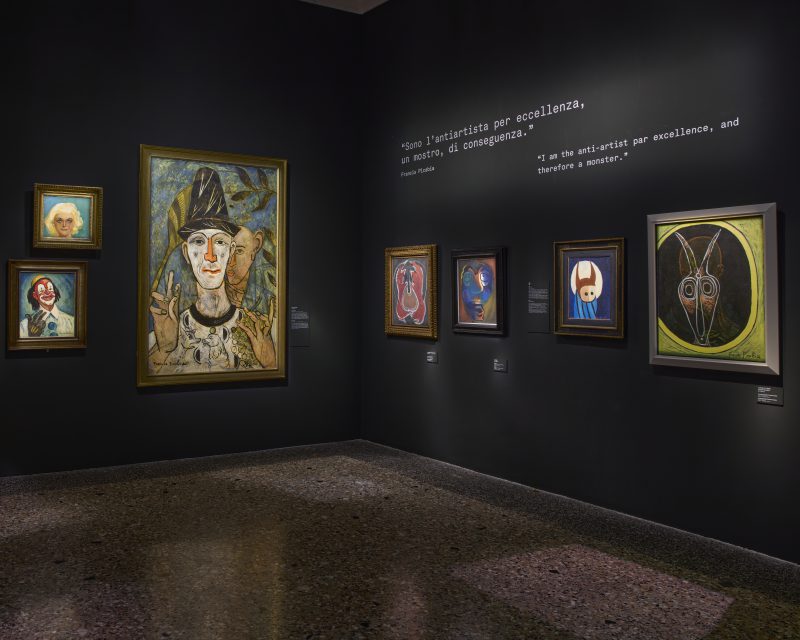
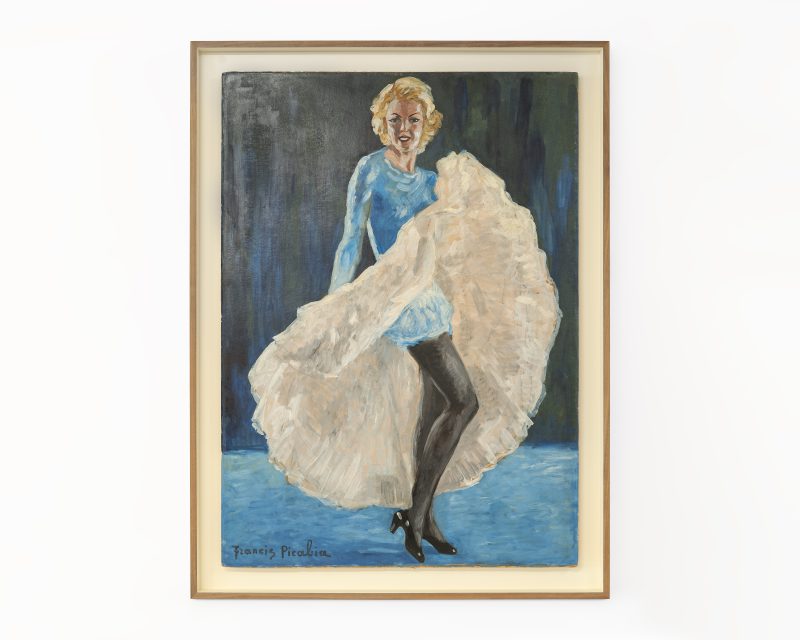
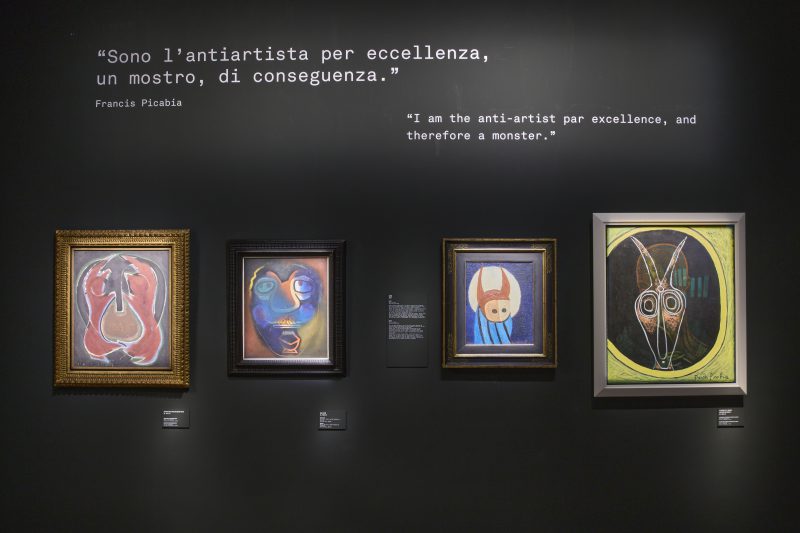
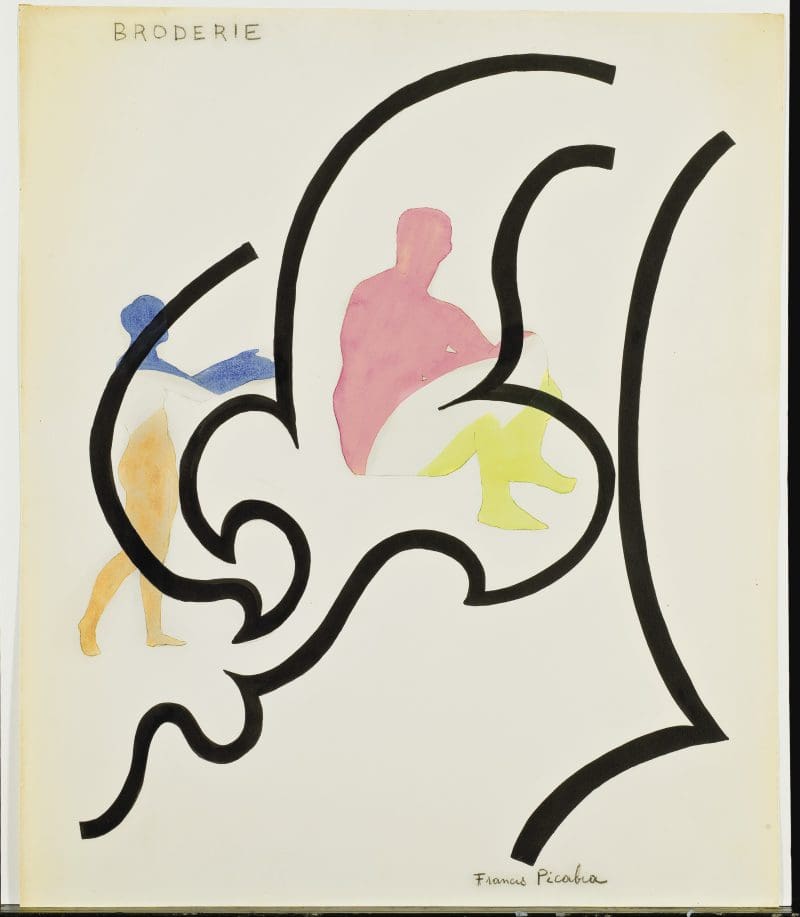
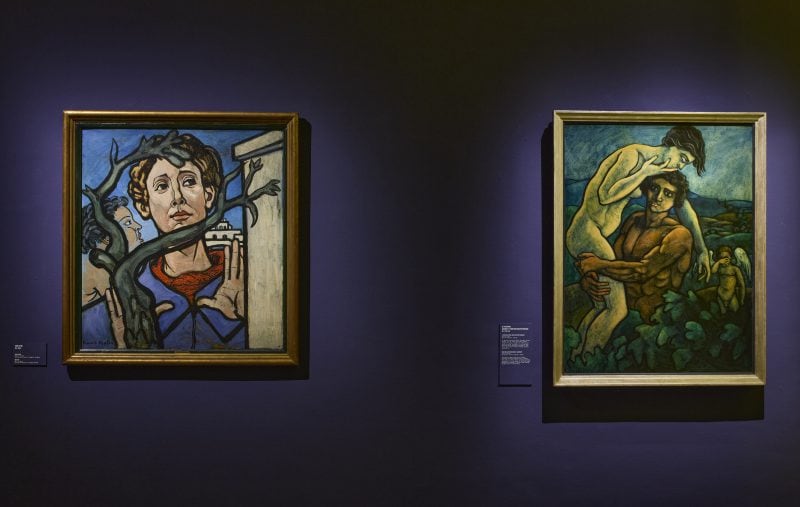
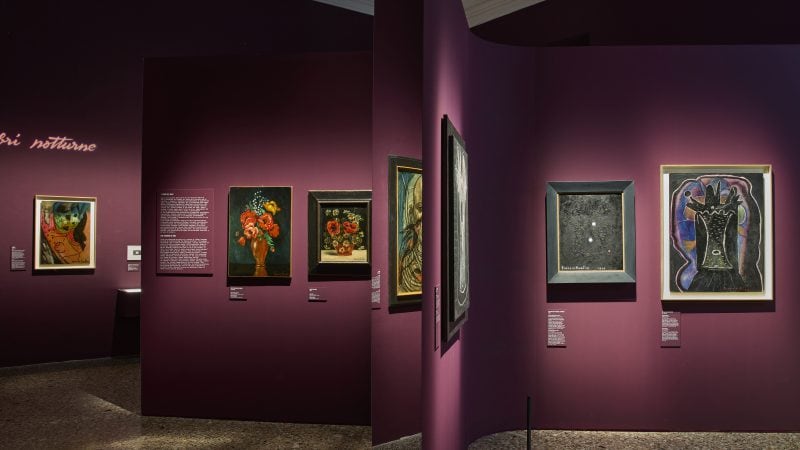
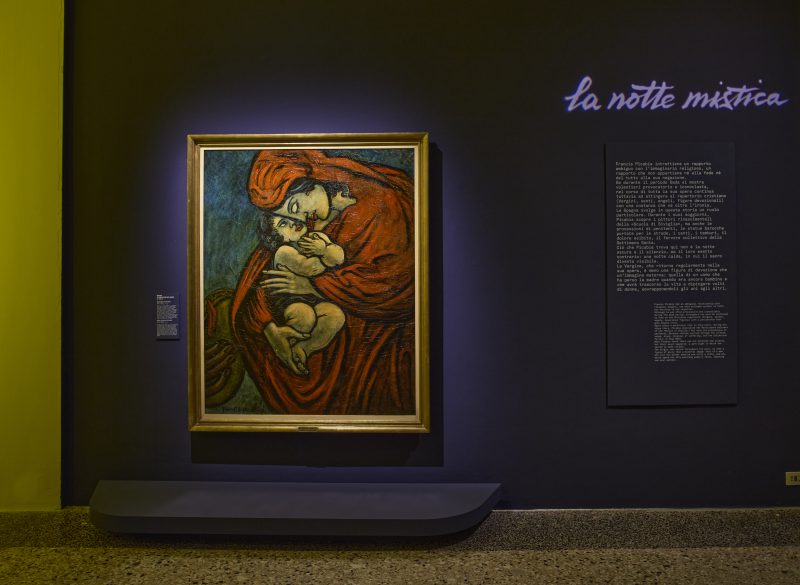
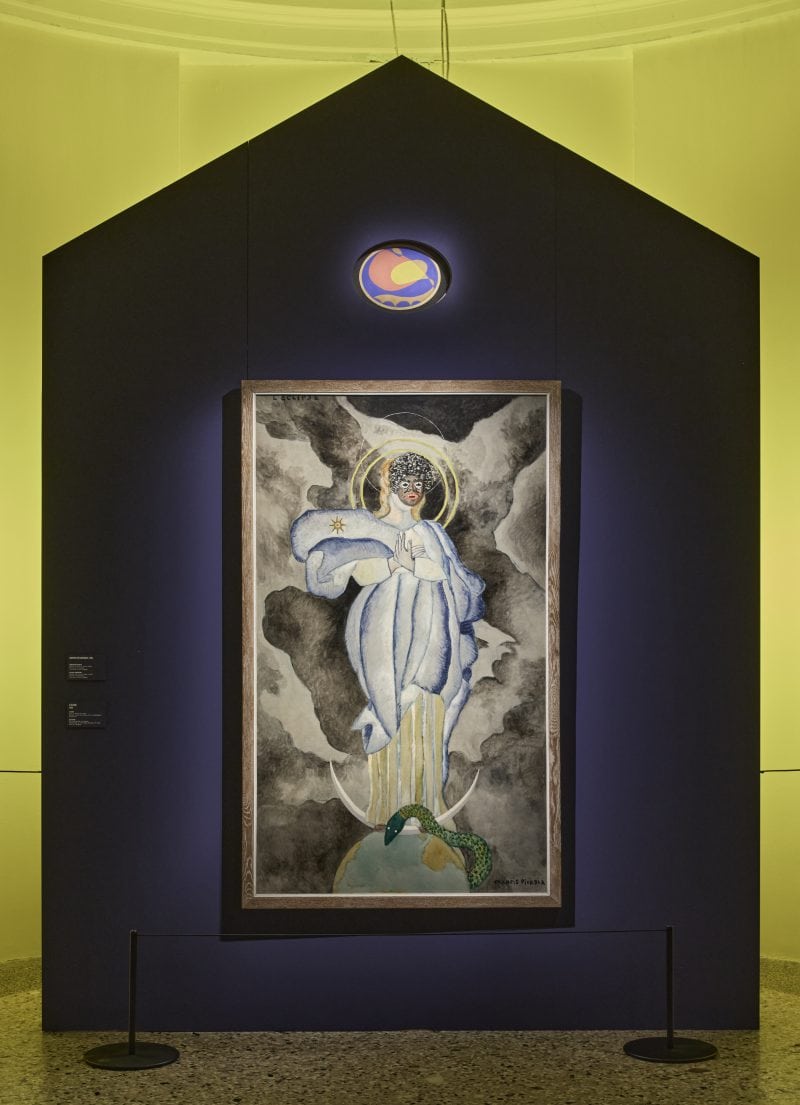
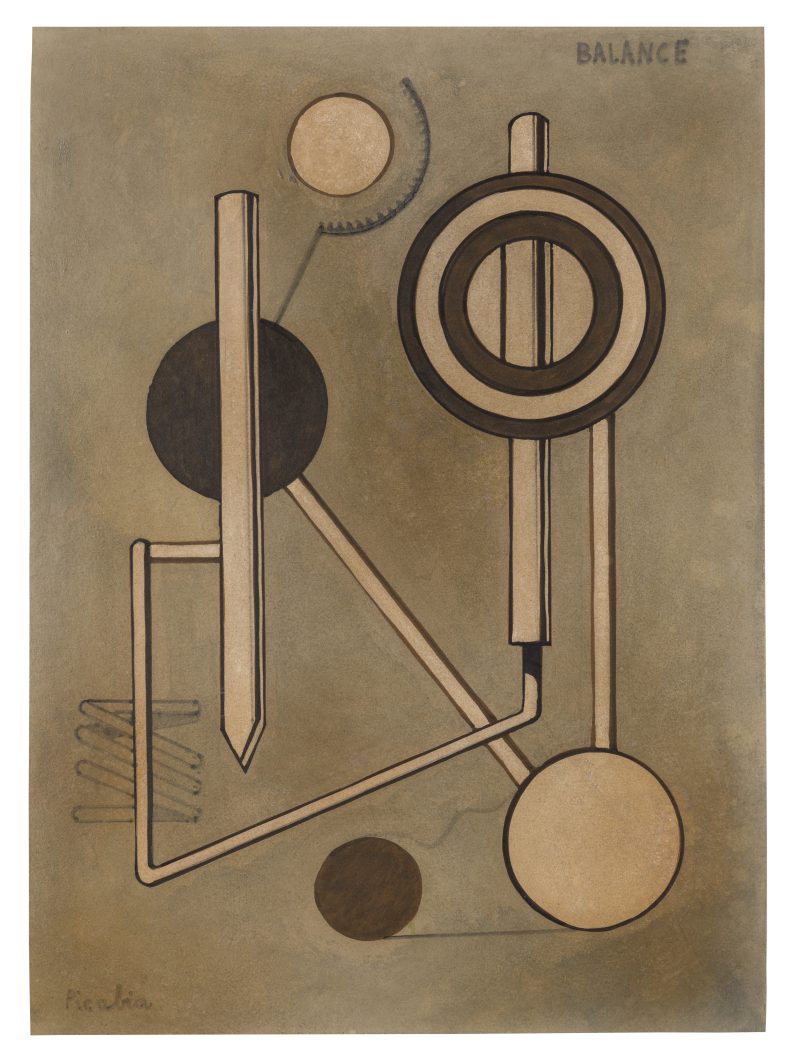
For Francis Picabia, the night was never a period of rest. It was an engine of creation, an arena for high-society hedonism, and a canvas where art, music, and provocation dissolved into one another. Now, in Italy’s first-ever retrospective of this magnitude, Picabia. Aprire Le Porte Della Notte transforms Palazzo Reale into an immersive spatial journey through the shifting tempos and atmospheric light of the artist’s nocturnal mind.
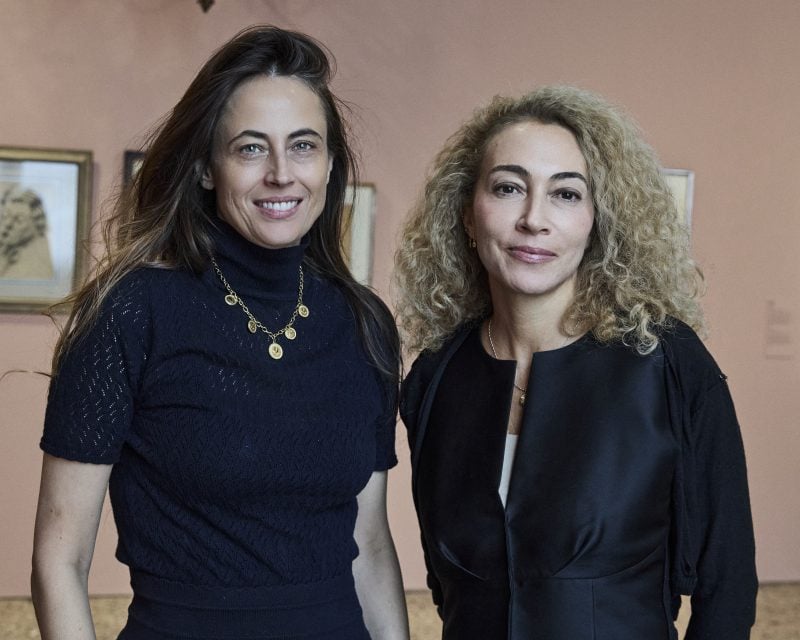
The landmark exhibition is curated by writer Anne Berest—Picabia’s great-granddaughter and co-author of Gabriële—and produced by Consuelo Nocita of MADEINART. From Dadaist galas reimagined as the birth of club culture to the drug-fueled metaphysics of his Transparencies and the tender minimalism of his final polka-dot works, these conversations offer a rare, behind-the-scenes gaze into the mind, mythos, and restless soul of one of modern art’s greatest provocateurs.
Athena Kuang: Aprire Le Porte Della Notte borrows its name from Victor Hugo, framing Picabia’s vast body of work not through a linear chronology, but through the atmospheric arc of many shades of night. As a writer stepping into the role of a curator, how did you translate the emotional tempo and shifting light of the night into a spatial, room-by-room experience across Palazzo Reale?
Anne Berest Picabia: Well, actually, I’m not a curator. I am a writer. So at the beginning, when I was proposed to organize everything, I said no, because I do not know how to do it. But actually, the team then said to me, “Well, you know, writing a book is the same as organizing an exhibition like this one.”
So the first thing I thought, as I am his great-granddaughter, was: how would he want to be known by people? Because I really think that his soul is walking here. So I said, “Well, I want the exhibition to not be boring. It’s mandatory.” And the exhibition must convey some emotions to people coming—that people, when they finish the tour here, really want to have parties, listen to music, and have fun.
AK: You co-authored Gabriële, a deeply personal portrait of your great-grandmother, Gabriële Buffet-Picabia, who was an immense intellectual force alongside Francis. Coming into Palazzo Reale not just as a curator, but as family, how does your intimate knowledge of your family’s personal mythology change the way you read these artworks compared to an outside art historian?
ABP: Well, actually, I have scientific knowledge of the paintings, and also a historic knowledge of the paintings. It’s something that is really in me, that kind of knowledge. And the fact that I am his great-granddaughter actually allows me to do something more; to make the exhibition more vibrant. That kind of freedom is based on the scientific knowledge I mentioned before. That kind of freedom gives me the opportunity to position some paintings maybe not in a regular way, not in a standard way, because he was not a standard person. So, for me, the most important thing is to have this sort of artistic vibration in the rooms.
AK: The exhibition highlights how Friedrich Nietzsche’s The Gay Science inspired works like En faveur de la critique and Question et réponse, framing critique not as a cold exercise in reason, but as an evolution of the soul—an inner movement of life itself. Throughout his career, Picabia shed artistic styles the moment they became recognizable. How do you think this major retrospective reflects this multi-faceted tendency of his?
ABP: It’s very interesting that you actually create a link between Nietzsche’s thought and him, because he was a person that kept changing his way of doing. Because you’re right, these two aspects are not connected; they are intertwined. He was a person that didn’t have a straight feeling, because as soon as he started making something that people could love, he stopped it. Maybe it was because he didn’t love himself, so he didn’t put up with people that agreed with him. That’s why he has so many different ways of painting. And he may not be famous among the general public, but he was very famous among his colleagues. So there were other artists that took inspiration, and new generations of artists were always fascinated by him. In the ’70s, ’80s, and ’90s, he was a reference among the underground artists of that time.
AK: For Picabia, partying was never a mere escape or weekend distraction—it was a core artistic method and an engine of creation. From orchestrating legendary Dada balls in Paris to designing extravagant themed galas on the Riviera like La Nuit Tatouée and Le Bal des Cannibales, how did he turn nightlife into a total work of art (Gesamtkunstwerk) where the guests themselves became living canvas and choreography? How did these lavish parties blur the boundary between Dadaist provocation and high-society hedonism?
ABP: Well, I would say that in what DJs say, and in what DJs think, we can find some origins of Francis. Because, you know, when DJs talk, they say that, for example, music and parties are political, but also, at the same time, a creative act. So if you want, he was like the ancestor of that kind of thought. Let’s not forget that Edgar Varèse, whose letters were seen before, is often referred to as the “Father” of electronic music.
AK: Spain was a recurring phantom throughout Picabia’s life, from his early Flamenca period and Andalusian portraits to the Transparencies and post-war polka dots. How much of this “Spanish Night” was tied to real childhood memories of Seville, and how much was an imaginary world for him to play in?
ABP: Both. His first journeys were made when he was a child. In his first biography, the author wrote about the imaginary aspects of his early time in Seville.
At that time, the most important painters all came from abroad: Picasso, Modigliani and others. In Paris, being a foreigner was already seen as the beginning of being a genius. So he started nourishing the idea that he came from abroad, even though it wasn’t actually true—he was educated in France.
That was his idea. He wanted people to think he was a foreigner, a mix of different cultures.
AK: In the Transparencies of the late 1920s and 30s—where Botticelli faces, Roman myths, and natural motifs float on top of one another—images do not clash; they coexist. Beyond its connection to his overlapping romantic life, what does this layering reveal about how Picabia perceived memory, sight, and human consciousness?
ABP: Well, there are actually many different ways to talk about Transparencies, and we could stay here talking for hours and hours. But in this exhibition, I wanted to touch on two points about transparency. The first one is linked to perception and metamorphosis, linked with drugs and the consumption of drugs—because he used drugs in his life, opium, for example. And the second one is more philosophical: that things do not necessarily have an opposite thing, but things can overlap.
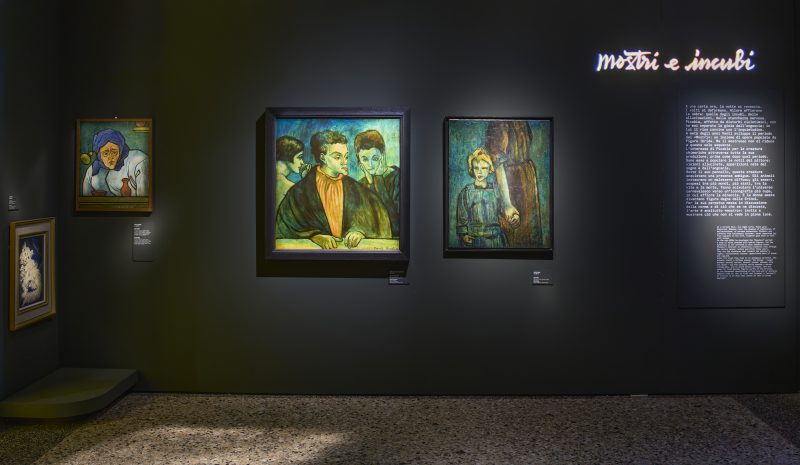
AK: Room 8 (Monsters and Nightmares) explores the darker shift of the night—where faces distort, cyclothymic anxieties surface, and carnival celebrations turn eerie. You’ve noted that for Picabia, “laughter is always accompanied by unease.” How did he navigate that razor-thin line between intense joy and deep, nervous depression in his studio practice?
ABP: Well, I would say that maybe today, he would be considered a bipolar person, because there were many different phases. Sometimes he was extremely happy, so he bought a lot of cars, even castles. And on the other hand, there were periods where he was extremely sad, so he stopped doing things. He stayed at home all the time and didn’t do anything.
That concept of being depressive can also be found in his poems, because actually, when he was depressive, he didn’t paint. Even his doctor said, “No, please do not paint when you have that feeling.” So every time that he writes, it’s about his feelings or depression.
AK: Did he ever write in joy?
ABP: No, because when he was happy, he painted.
AK: We’re in this room now, the final room that is so beautiful where you open the curtain and you see the light coming through, as if you’re seeing the dawn rise at the end of a long journey, a long party. I wanted to ask about this contrast between the first painting and one of the last paintings ever: the continuation of the polka dot theme. How do you feel like this extreme juxtaposition here at the end reveals about him as a man that constantly changed, but also somehow remained loyal to a theme?
ABP: What maybe could strike you is that here, at the end, he’s very essential. He didn’t need any more huge canvases; he needed small canvases. There’s just one dot. It’s very abstract, so we are approaching symbolism. It’s as if he got rid of all the false problems that he had mentioned before.
In his letters, when he wrote those letters to my great-grandmother, he was 68, and he said, “I have finally found a new life. I have found a new way of painting.” And he wrote that just a few years before dying, and I think it’s really striking. Because as we said, he wrote many sad poems, but when he knew that he was about to die, it’s like he found a new way of living—something different, something beautiful, and something that I consider beautiful, too.
AK: So, just to close everything together, at the beginning of this interview, you said that your primary rule is that it must never be boring, and that you wanted a vision of him, imagining him walking through the gallery and the exhibit. In which room do you think he would spend the most time?
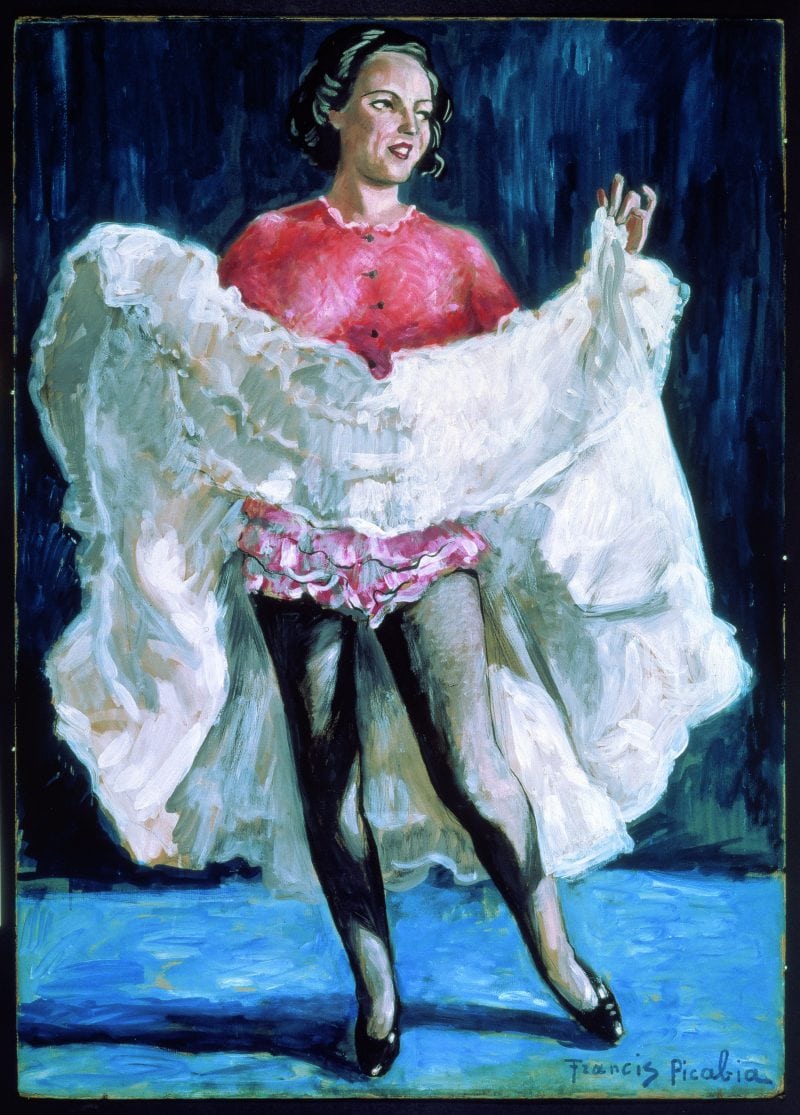
ABP: In the room with all the women!
As the producer behind MADEINART, Consuelo Nocita turned an initial spark of inspiration into a landmark production—self-sponsoring, mounting, and guiding the vision for Picabia. Aprire Le Porte Della Notte. Below, Nocita discusses leading the multidisciplinary team, navigating international loan negotiations, and weaving Picabia’s world into an immersive spatial experience at Palazzo Reale.
AK: Was it your initial idea to create this exhibition?
Conseulo Nocita: Yes. Everything began when I read Gabrielle, the book written by Anne and her sister Claire. I was initially thinking about doing a Picabia exhibition, so I met Anne and invited her to think about a project for Palazzo Reale.
I then spoke with the director of Palazzo Reale to introduce Picabia’s work. When Anne started suggesting names of other curators and scholars, I realized I wanted to do something totally different.
AK: How did that process develop?
CN: It was challenging because Anne is a writer, but I thought it would be interesting to approach art exhibitions in a new way—similar to how movies are often inspired by books. I was genuinely inspired by the book, so I felt we could tell a story through real storytelling.
To do that, we needed to work with a team of professionals who could dialogue with both Anne and Picabia’s legacy. We collaborated with architect Francesca ForNasari, lighting designer Marco Miglioli, creative Luca Ladiana and Giulia Gaetani, who conducted the research of the artworks and acted as the bridge between all of us. We worked on this project for months—days and nights—alongside Anne.
The result is a journey into Picabia’s creativity, exploring different angles of his life. We discovered he was an amazing poet, and while I knew about his strong relationships with women, I hadn’t realized how much of his creativity stemmed directly from his love affairs. It was very romantic—he translated his dreams, nightmares, and ideas of love and relationships into his work.
We dive into his life, his friends, and his parties. His life was just as interesting as his art. The exhibition highlights his poetry, books, lectures, artworks, paintings, drawings, and quotes. He was a genius—very ironic and funny.
Additionally, we self-sponsored, supported, and financed this project. We strongly believe in it and hope it delivers a message: Picabia was a free spirit. It’s an important message for both young and old audiences to remain free from rules and public trends.
AK: Picabia. Aprire Le Porte Della Notte is a historic landmark—marking the first time Italy has ever staged an exhibition of this magnitude dedicated to Francis Picabia, featuring over 170 works and rare archival loans. From a production standpoint at MADEINART, what were the biggest ambitions and logistical feats required to bring together loans from over fifteen international museums—from Centre Pompidou and Kunsthaus Zürich to private family collections?
CN: We conducted extensive research to locate where Picabia’s works were held across museums and private collections. Anne conceptualized the theme of “a night,” and we searched for artworks that fit that vision.
We initially made informal inquiries to gauge interest before sending formal loan requests with our scientific project, curator biography, facility reports, and company background. Lenders needed to know their treasures were in good, professional hands. Through negotiation, we achieved a strong balance of loans from both museums and private collectors.
AK: What made Palazzo Reale in Milan the ideal partner and canvas for this nocturnal journey?
CN: Palazzo Reale is unique because it doesn’t hold a permanent collection. When requesting loans from a museum with a permanent collection (like the Rijksmuseum), it’s often easier because they have works to offer in exchange for future projects. Palazzo Reale cannot offer exchanges, which makes loan requests more difficult.
However, Palazzo Reale has a glorious history of hosting major exhibitions—such as Caravaggio, Leonardo da Vinci, and Keith Haring. That reputation makes it a highly respected and serious partner venue.
AK: MADEINART has a distinct reputation for bridging visual art with fashion, cinema, music, and performance. In Aprire Le Porte Della Notte, visitors encounter early cinema excerpts (Entr’acte), archival footage of 1920s galas, flamenco film projections, and listening stations playing Picabia’s musical selections. How did MADEINART approach integrating these varied multi-sensory media into the exhibition design so that sound and moving images feel organically woven into the spatial narrative?
CN: We wanted the visitor’s journey to feel like spending a night with Picabia—being invited to join his party. His nights encompassed many elements: parties, music, friends, painting, and sometimes bad dreams or nightmares.
One of my favorite rooms features his “monsters.” These weren’t just drug-induced visions—though opium was popular back then—they were the monsters of his obsessions, anxieties, and deep feelings.
We created different ambiances to reflect everything that inspired him: love, friendship, music, Spanish nights, books, and cinema.
Most of the exhibition is kept dark to create that nighttime atmosphere, and then the final two rooms are fully illuminated to represent the end of the party and the break of day.