
At Paris Men’s Fashion Week this season, something loosened. Not collapsed, not abandoned—but loosened, deliberately. After years of armored tailoring, performative masculinity and luxury-as-spectacle, the Fall/Winter 2026 collections suggested a quieter, more complex proposition: that power today might reside in sensitivity, adaptability, and ease. That luxury, far from being loud, could be precise. And that masculinity, long policed by rigidity, might finally be allowed to exhale. This was not a week of revolution. It was a week of recalibration.
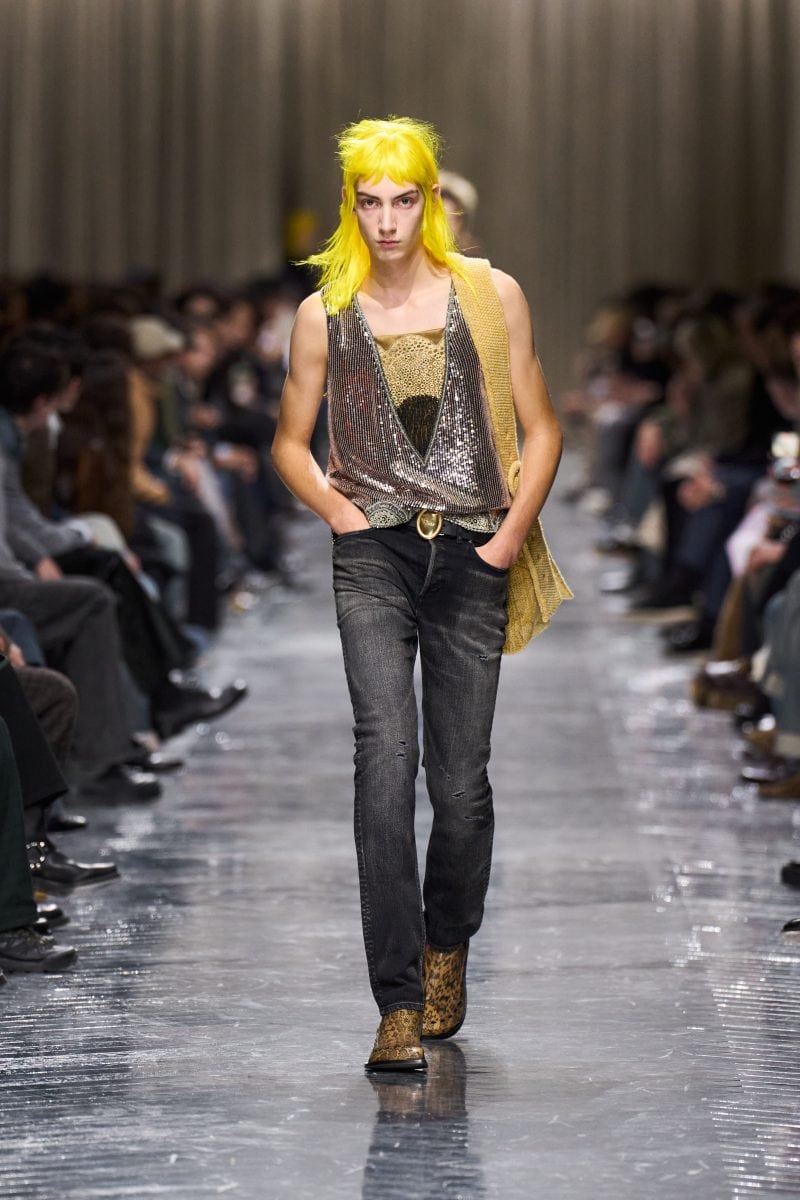
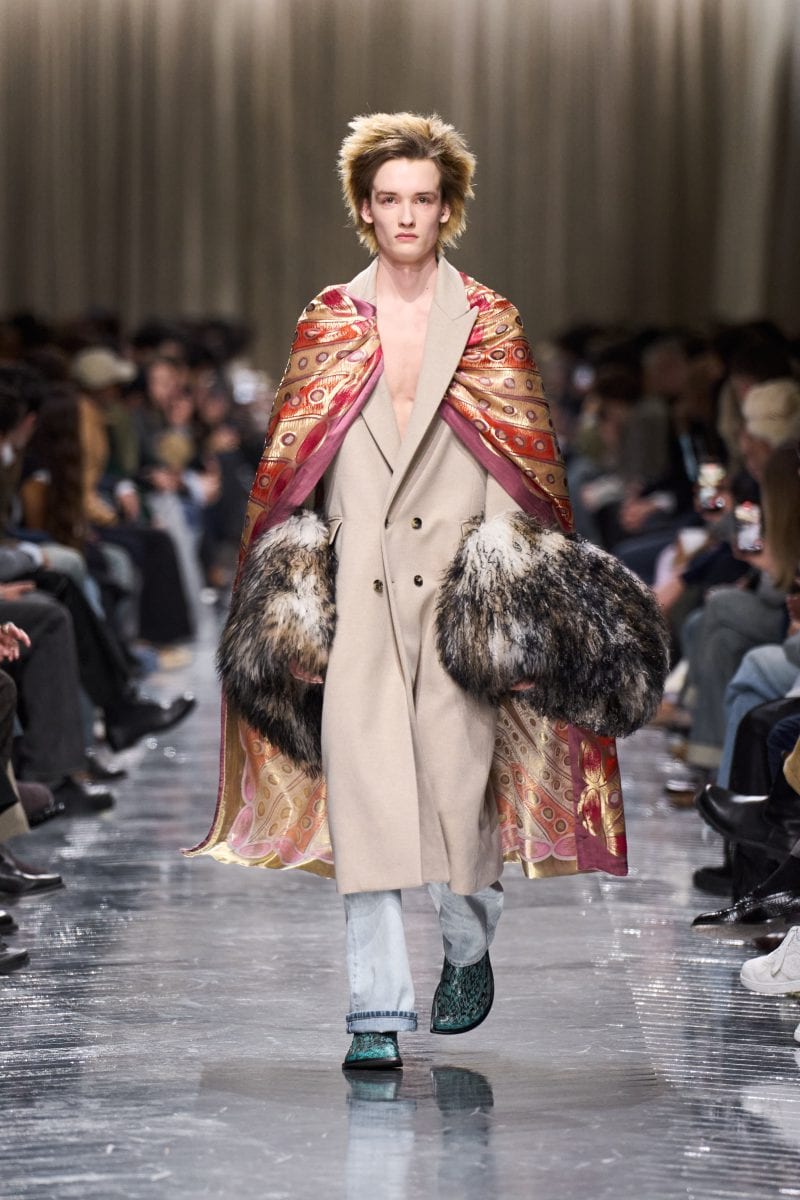
At Dior Homme, Jonathan Anderson—showing in the gardens of the Musée Rodin—offered an aristocratic youth liberated from inherited stiffness. His was a Dior that flirted with excess but never drowned in it: yellow eccentric wigs by Guido Palau, embroidered epaulettes stitched onto polo shirts, faux-fur cuffs and soft sheepskin that suggested wealth worn lightly rather than guarded jealously. Anderson looked to Paul Poiret, the early 20th-century designer who freed the body from corsetry, and translated that philosophy into a contemporary study of contradiction: Napoleonic jackets colliding with workwear, acid-washed denim brushing up against metallic silk deep-V tops, capes swelling with volume yet controlled by Dior’s institutional polish. Masculine and feminine blurred—not as provocation, but as fact. This was affluence without anxiety, elegance without severity.
If Dior proposed aristocracy rediscovered, Louis Vuitton imagined luxury reengineered. Pharrell Williams titled his collection Timeless Textiles, and staged it inside a transparent structure called the “DROPHAUS,” a conceptual ecosystem of sound, craft, and celebrity. Precision was the operative word: houndstooth and herringbone suits woven with reflective threads, shirts constructed with aluminum, reversible bags reinforced with titanium hardware. Even softness arrived via innovation—hand-embroidered wool engineered to behave like neoprene, mink bombers mimicking toweling. Raindrop embroidery became both motif and metaphor: luxury as something that falls, accumulates, and resh
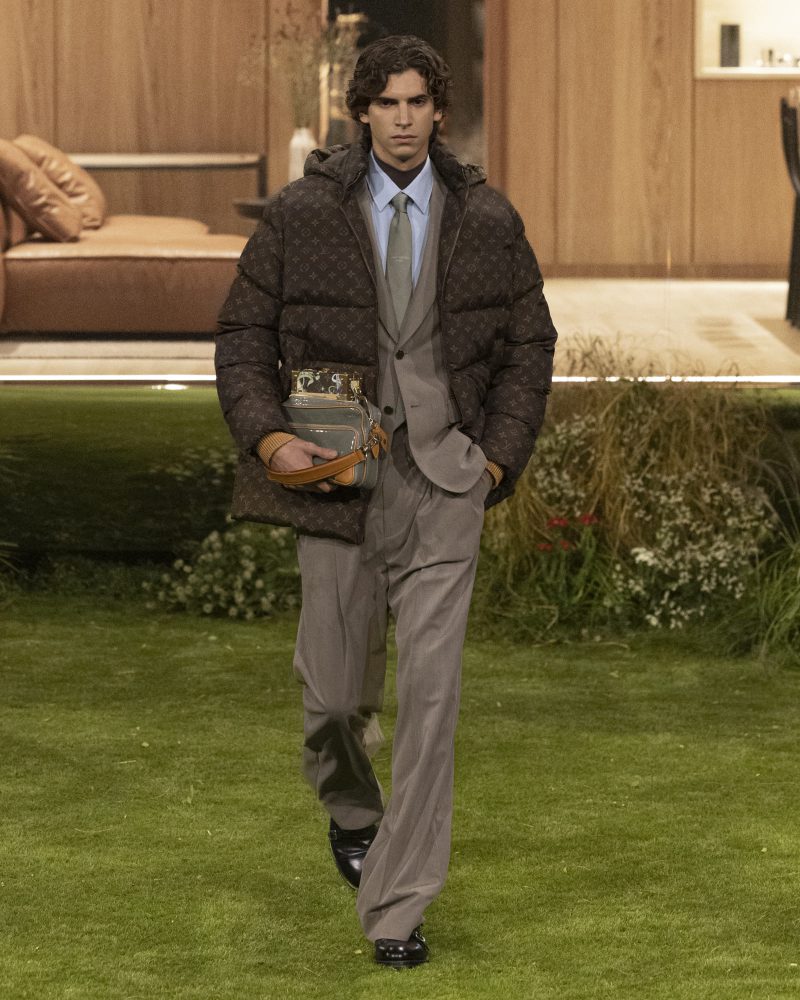
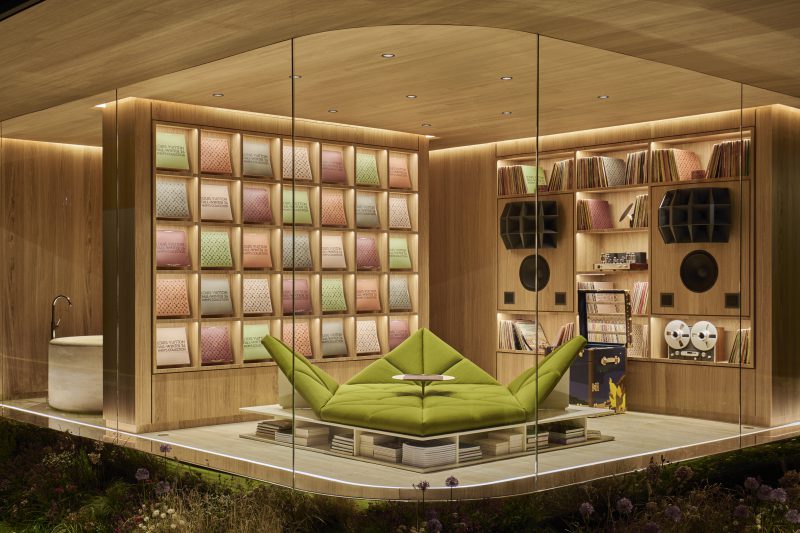
apes over time. The New Dandy Williams proposed was fluent in technology and nostalgia, accompanied by a soundtrack curated by Pharrell himself and punctuated by appearances from A$AP Rocky, Quavo, and John Legend. It was luxury as total environment—less atelier, more universe.
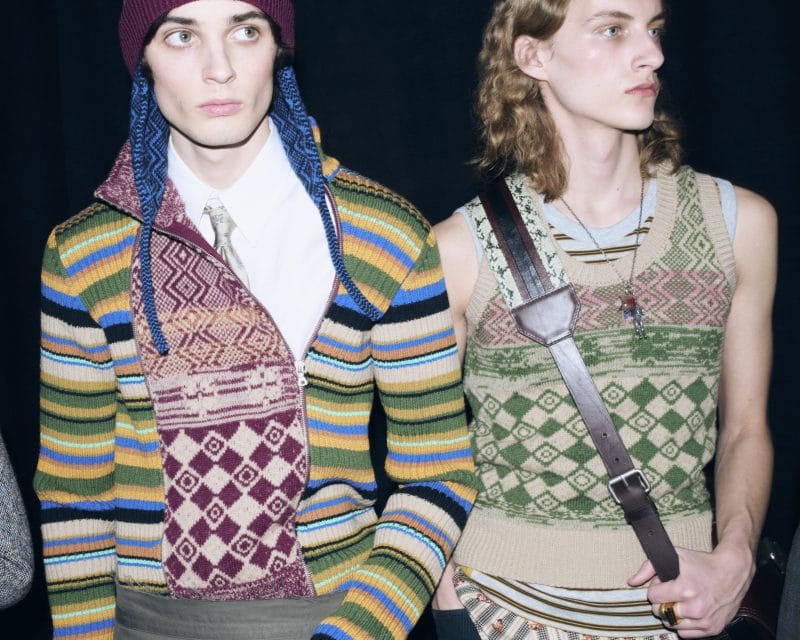
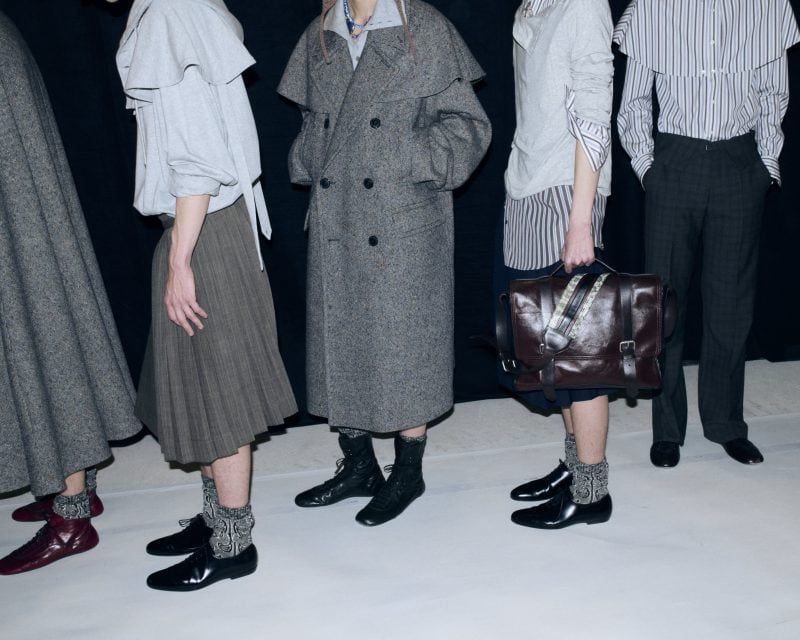
At Dries Van Noten, under the guidance of Julian Klausner, the mood shifted inward. His collection was framed as a coming-of-age story—but not the dramatic, romantic kind. Instead, it celebrated the joy of beginning again. Clothes felt lived-in, emotionally weighted, as if inherited rather than purchased. School-uniform tailoring dissolved into blurred floral prints that looked like Polaroids left too long in the sun. Kilts and flat shoes stayed close to the ground, suggesting movement rather than display. Wool, Shetland, jacquards, flannels—materials associated with comfort and memory—formed the backbone, while oversized soft bags and lucky-charm accessories hinted at personal rituals. This was fashion as companion, not armor. A wardrobe meant to remember you back.
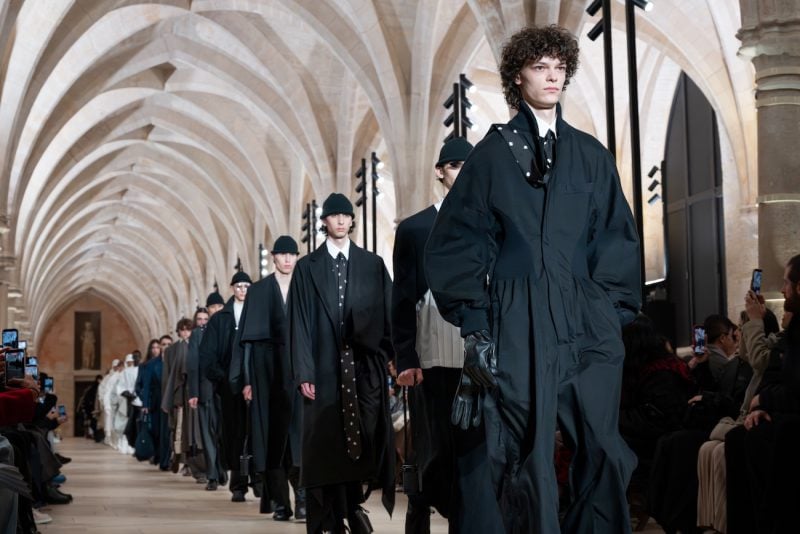
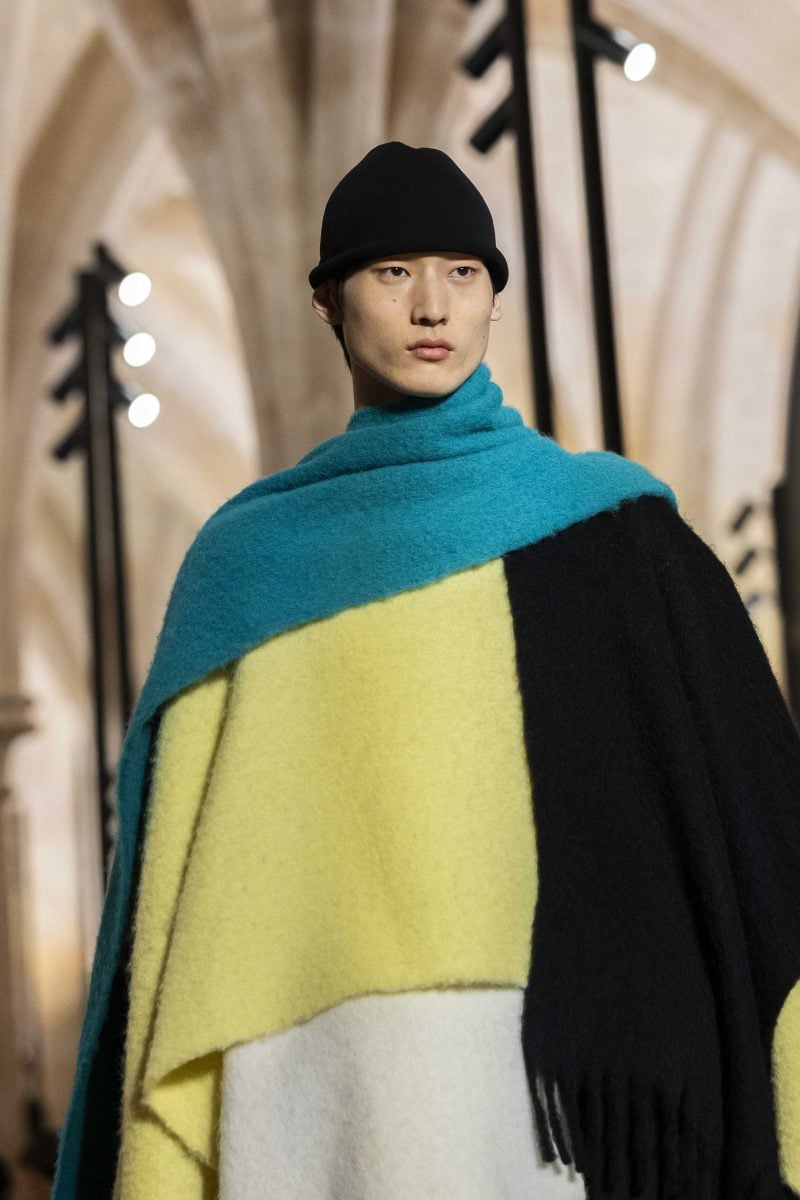
That idea—clothing as something that adapts to the human, rather than the other way around—was made literal at IM Men by Issey Miyake. Presented at the Collège des Bernardins, the collection, titled Formless Form, followed the house’s foundational principle: begin with a single piece of cloth and let it discover its own life. Through a series of named techniques—CLAY, DAWN, OVERLAP, GRADATION WOOL, LEATHER PLEATS—garments shifted, layered, converted. Capes unfolded in three-tone gradients recalling skies at dusk; cotton and nylon blends created sculptural silhouettes that never restricted movement. Eco-conscious materials, including recycled polyester, reinforced the sense that innovation here was ethical as well as aesthetic. These were clothes designed not to dominate the body, but to collaborate with it.
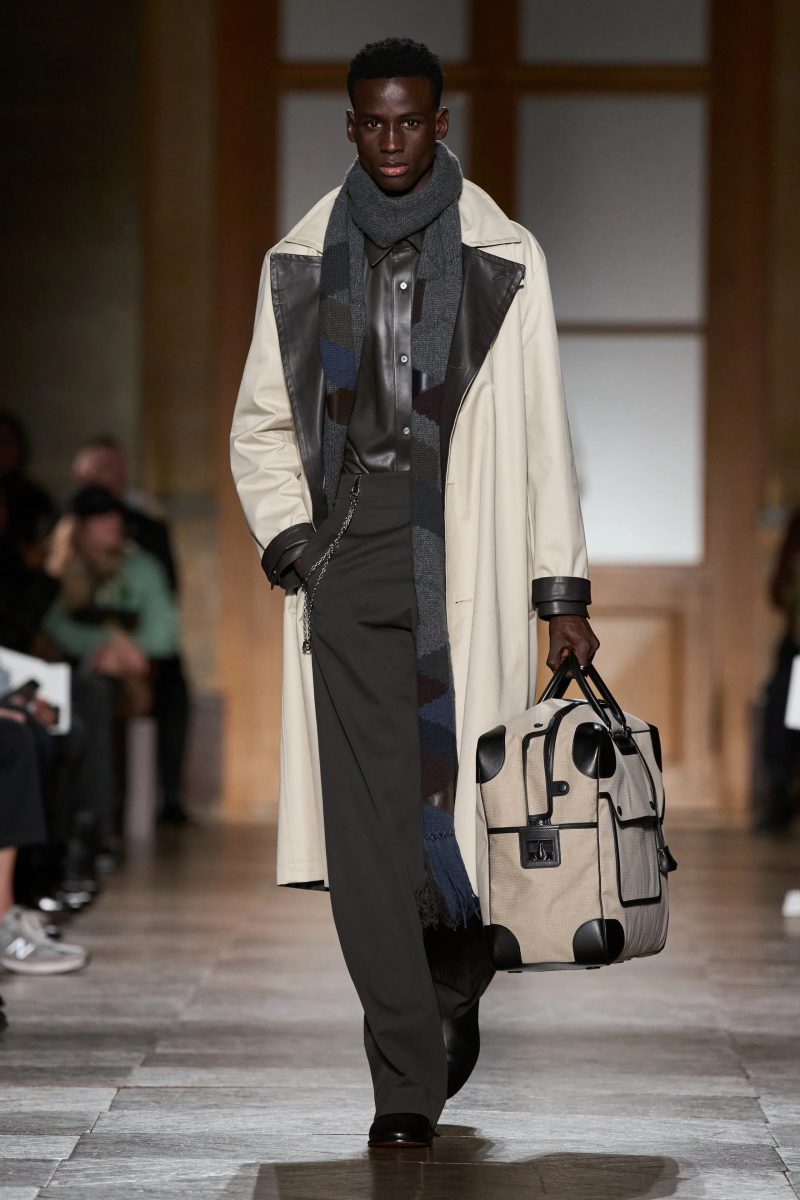
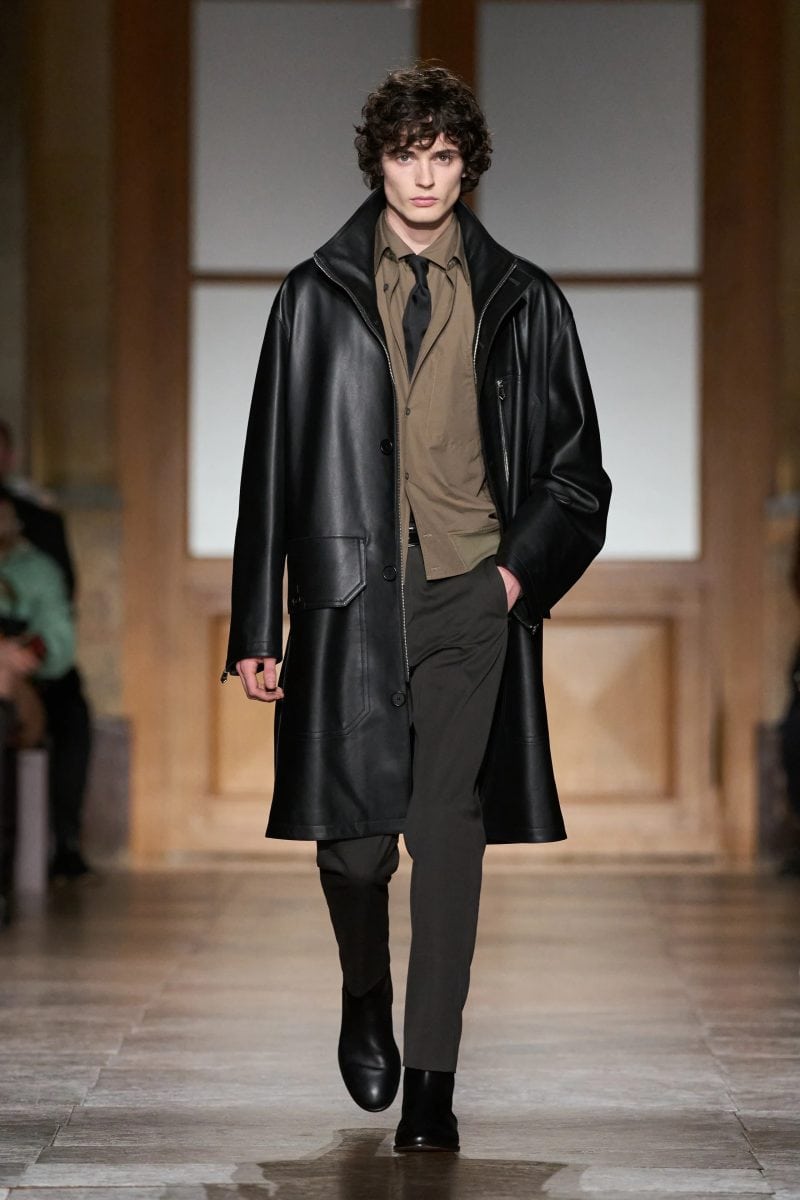
At Hermès, the week reached a quiet emotional peak. Véronique Nichanian presented her final menswear collection after 37 years at the house, and received a standing ovation—not for spectacle, but for constancy. Her farewell was composed of what she has always done best: clean lines, sensual materials, and color used sparingly, like punctuation. Terracotta, blues, pinstripes, étrivière stitching, double lambskin lapels, off-center pockets—each detail refined, never ornamental. Reversible cashmere travel coats, full-grain leather jackets, double-breasted leather suits suggested clothes meant to live across decades, not seasons. In a fashion system addicted to acceleration, Nichanian’s legacy felt quietly radical: endurance as luxury.
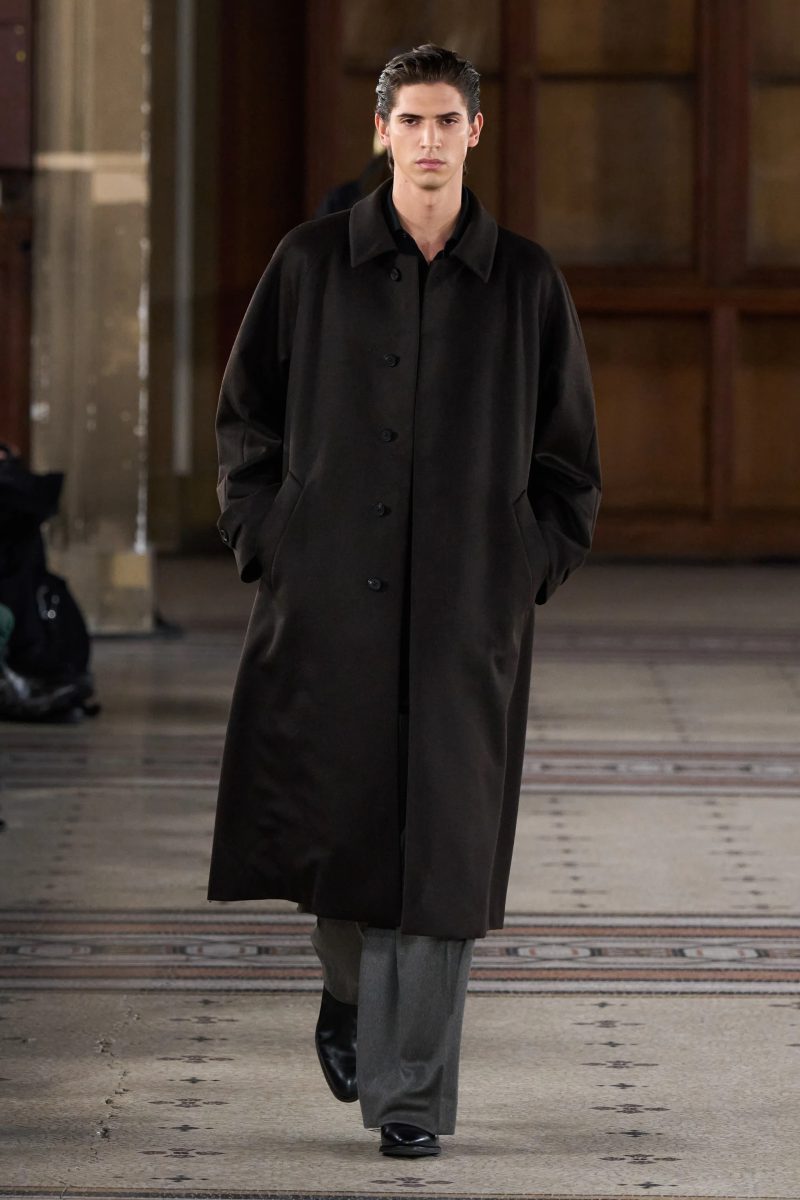
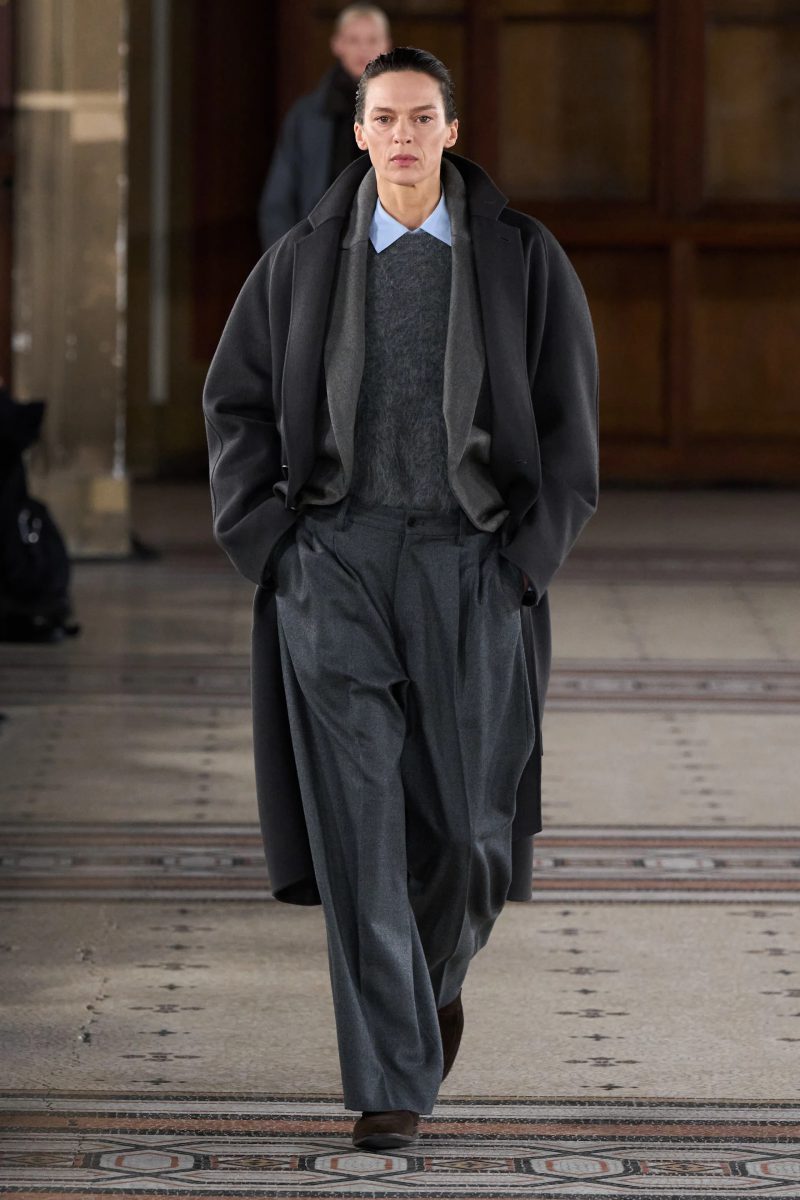
Finally, at SSStein, Kiichiro Asakawa distilled the week’s emotional undercurrent into its most intimate form. Shown at the Musée des Arts et Métiers, the collection drew from quotidian moments—small scenes, half-remembered emotions. Neutral tones dominated, warmed by restrained hints of autumnal color. Leather collars, tweed, Japanese corduroy, wool knits were paired with loose denim and voluminous pleated trousers. Nothing shouted. Everything lingered. It was quiet luxury not as branding strategy, but as emotional register.
The men’s shows suggested a shift in how fashion understands strength. Not as rigidity, dominance, or excess—but as flexibility, precision, and care. The body was no longer something to discipline or disguise, but something to honor. The collections proposed that the most radical gesture might be making clothes that allow people to move through it with grace. And perhaps that is where Paris still leads: not by declaring the future, but by tailoring space for it.