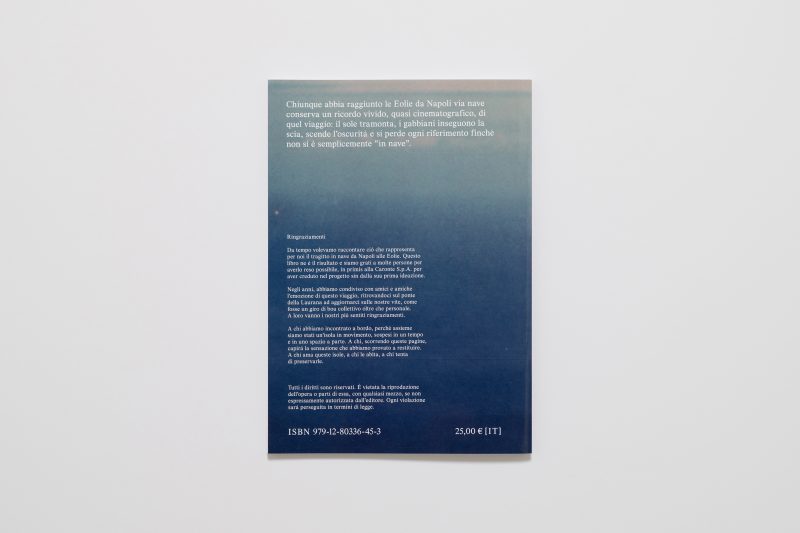
The journey to the Aeolian Islands begins before arrival. In Laurana Napoli Eolie, Andrea De Fusco views the crossing as a space in its own right, made up of waiting, repeated passages and details that become familiar after many journeys. The ship is not merely a means of reaching the islands: it becomes the central setting of the narrative.
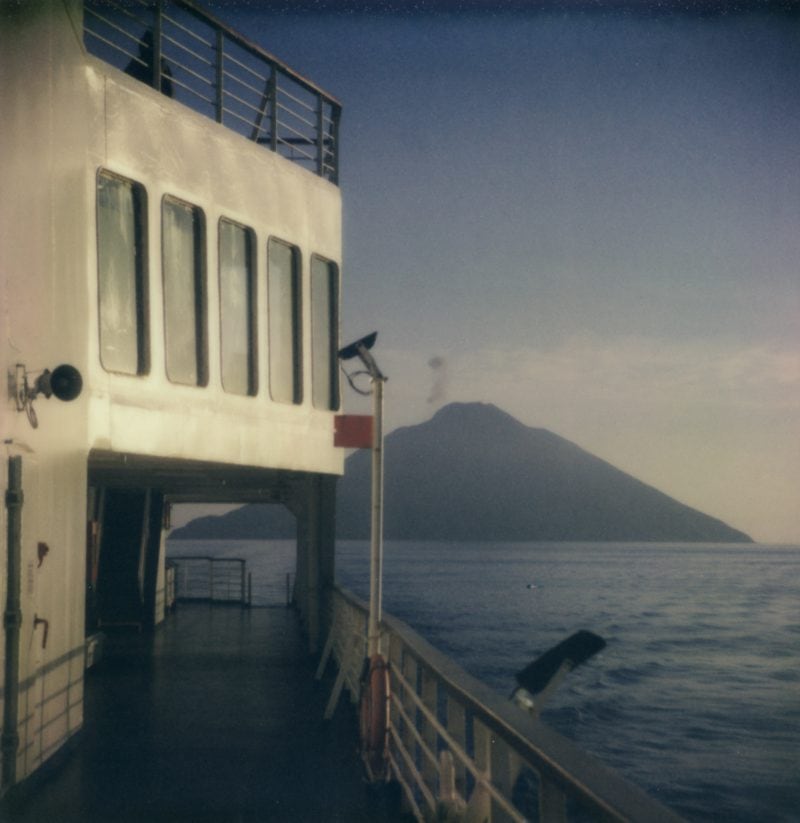
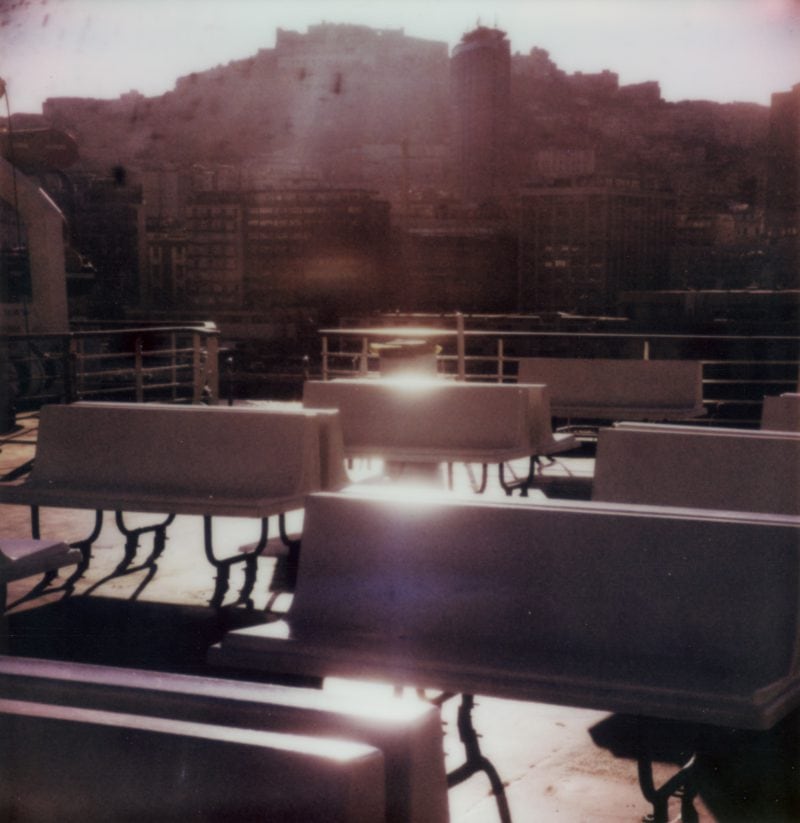
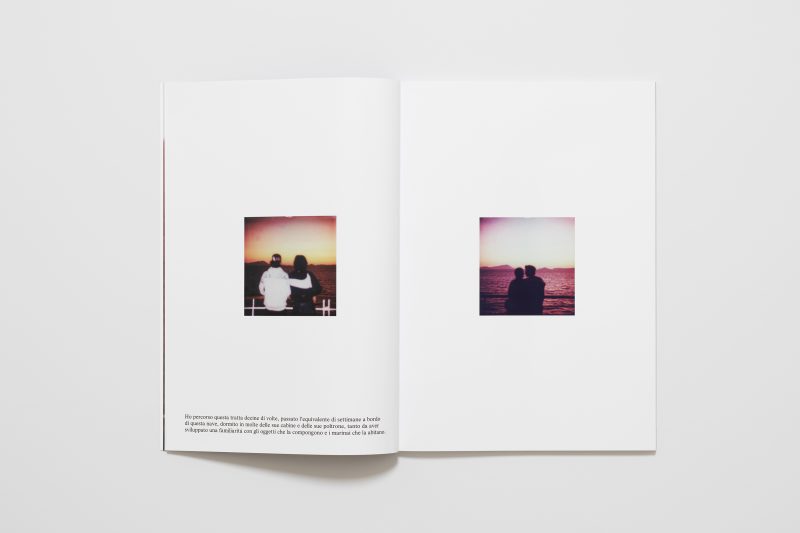
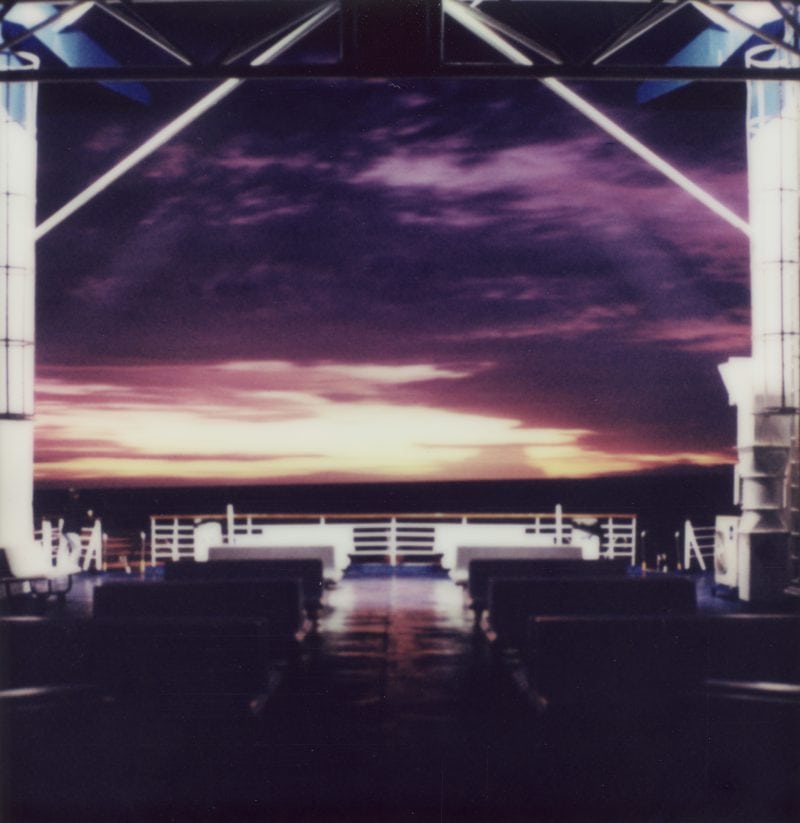
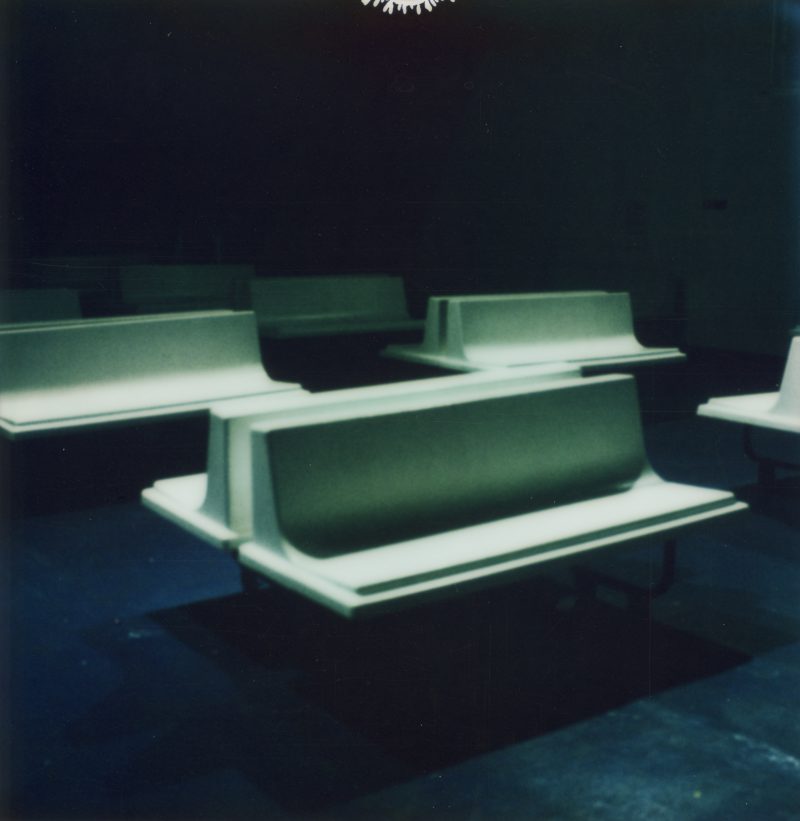
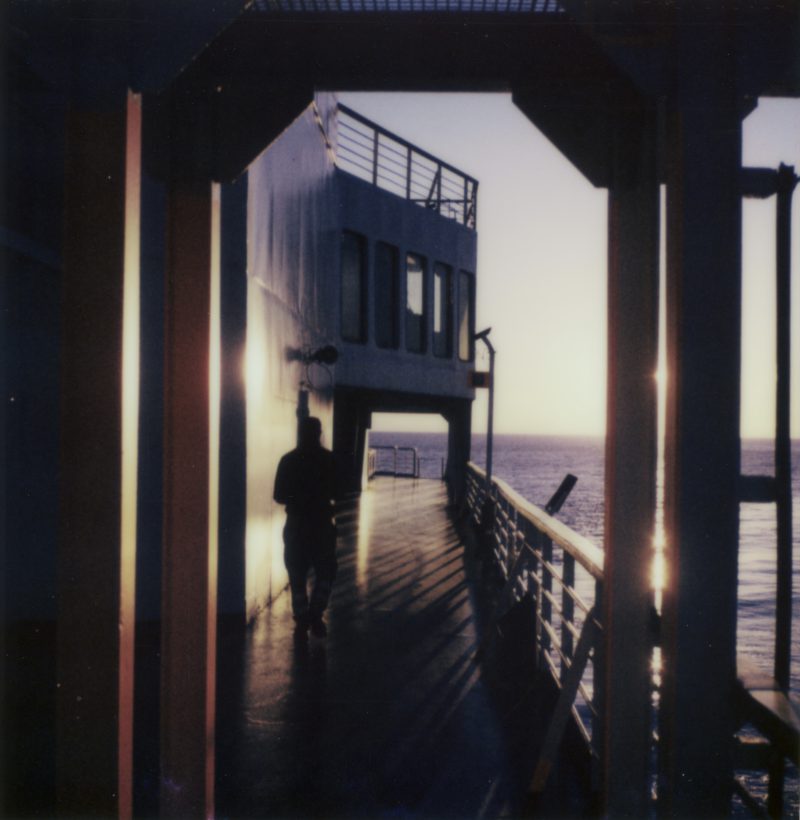
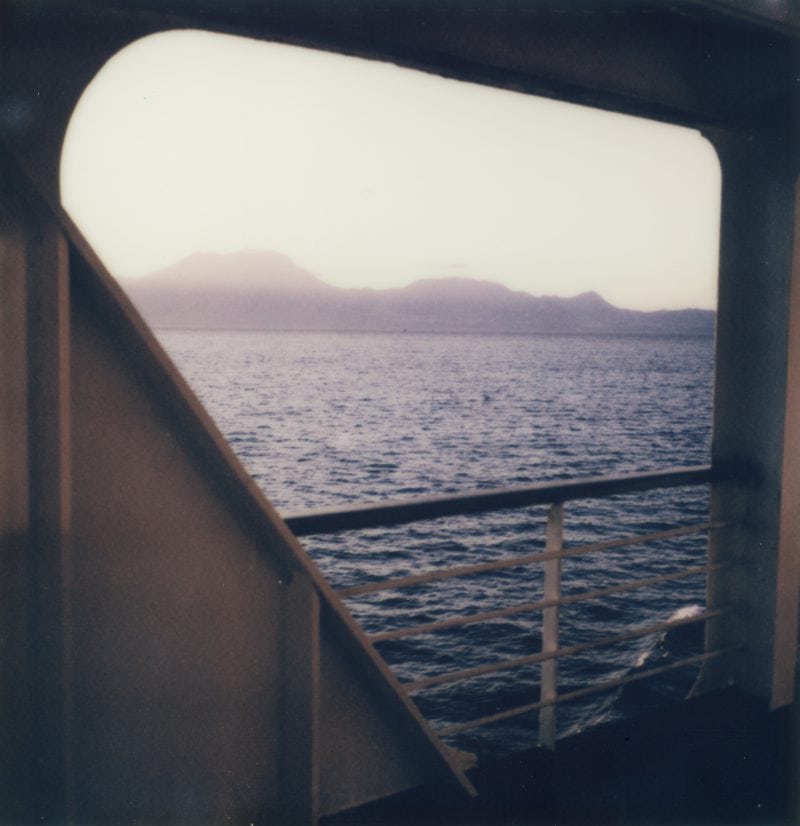
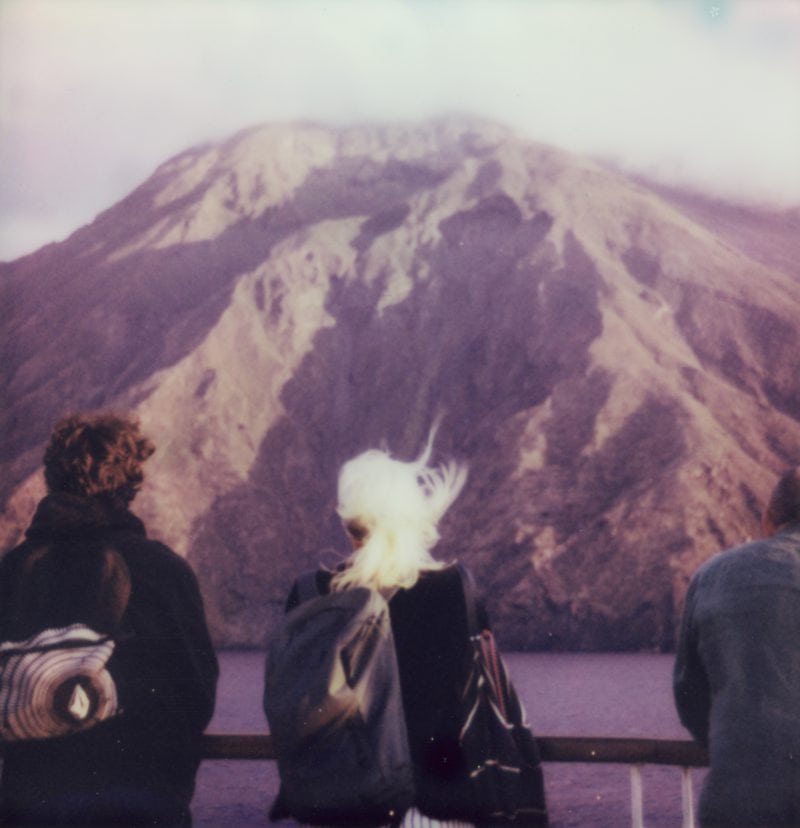
The Polaroids shift the focus from the postcard-perfect scenery to what is happening on board. The rows of empty seats, the corridors and the ferry’s layout create an everyday landscape, whilst the figures photographed from behind remain part of the group rather than protagonists. When the outline of an island or the silhouette of a rock appears, the landscape unfolds in fragments, without interrupting the rhythm of the crossing.
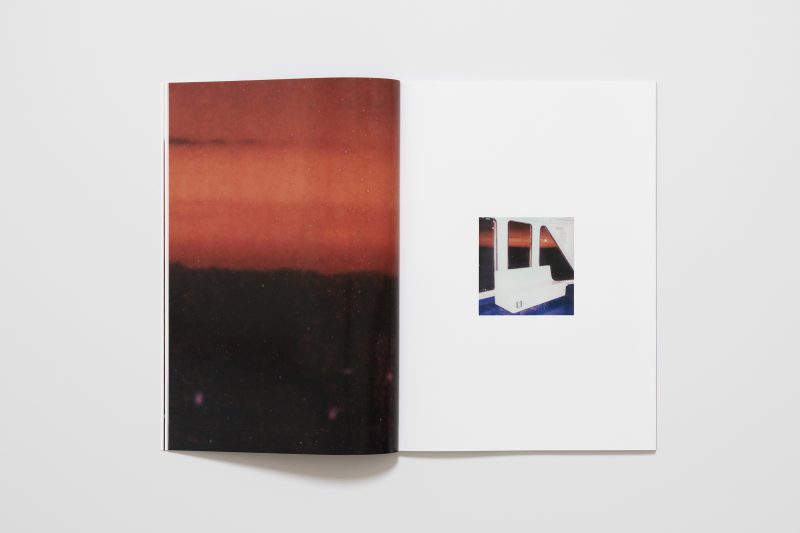
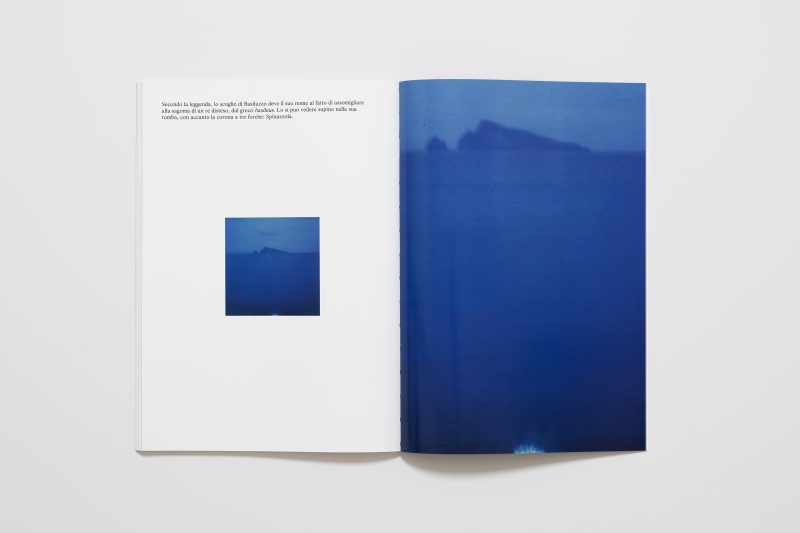
The immediate rendering of colour, with deep shadows, light that takes on a pinkish hue and soft contours, avoids the sharpness typical of tourist reportage. The images resemble notes jotted down during a familiar journey, closer to a visual diary than to a documentation of places. Even the layout alternates between isolated photographs, given space to breathe on the page, and wider shots that transform the blue of the sea into a surface.
The book thus plays on repetition: each passage is similar to the previous one, but not identical. Returning to the same stretch of water changes the way one views it; seats, cabins and sailors become recognisable figures. And when the ship moves away from the coast, the journey ceases to be merely a line on the map: it is a tangible interval between the city and the islands, observed by someone who has come to know their rhythms and customs.