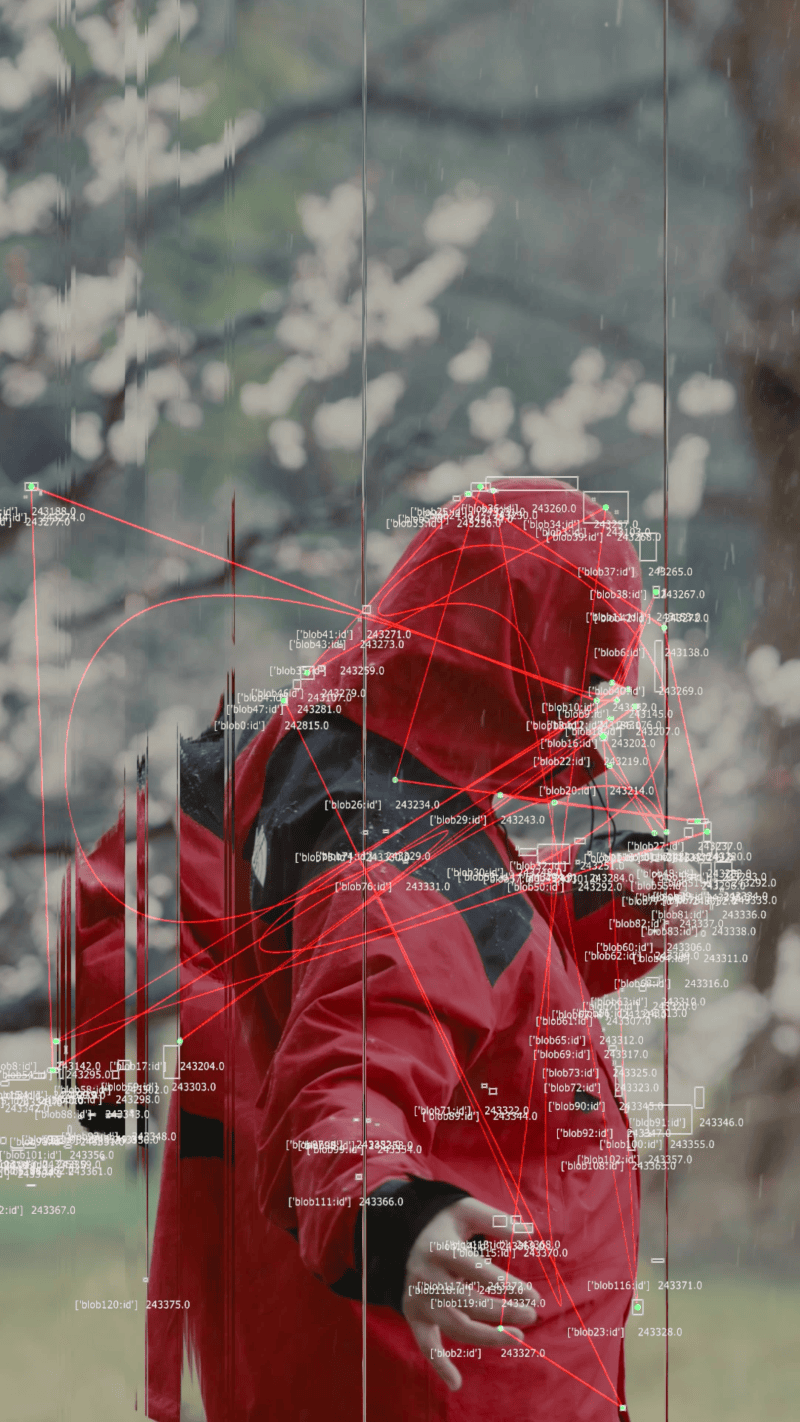
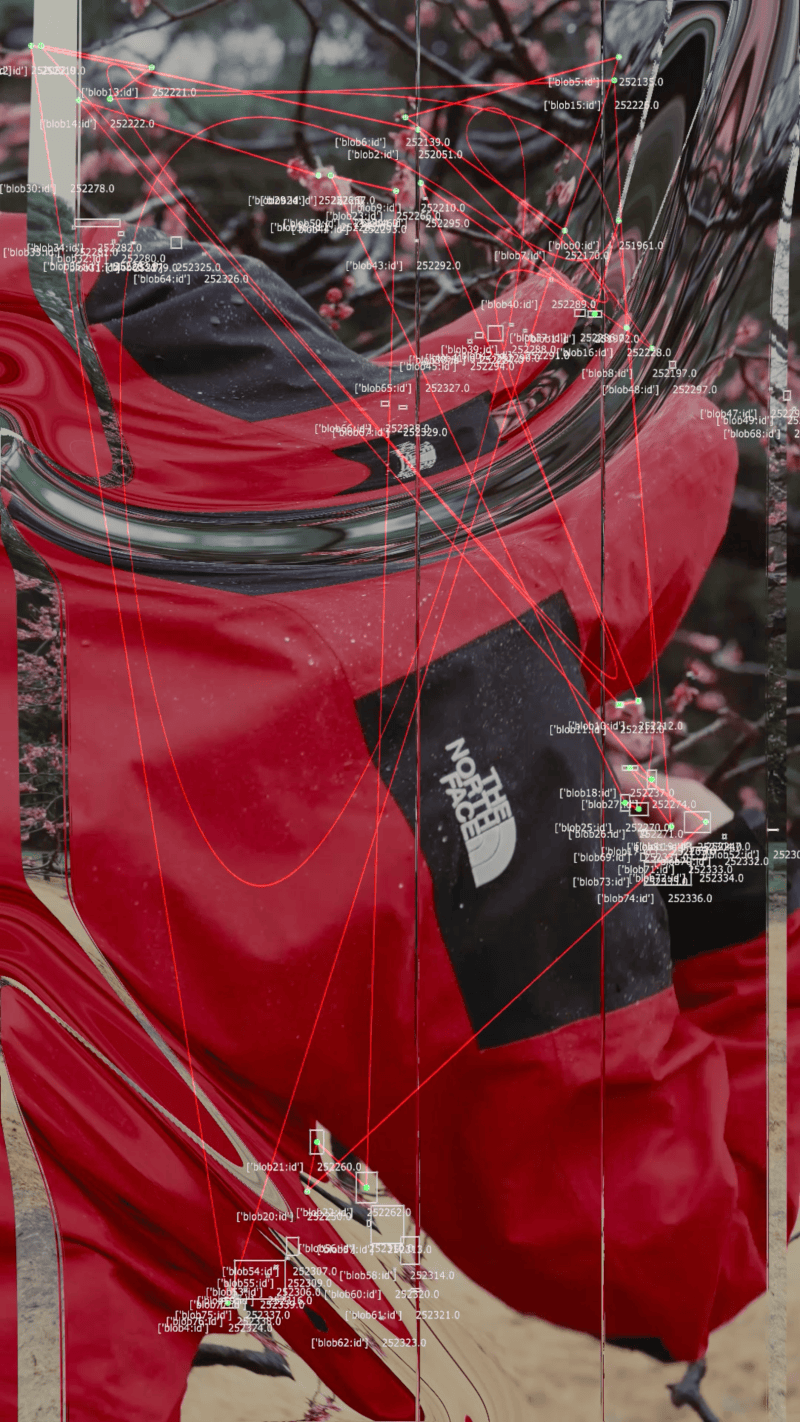
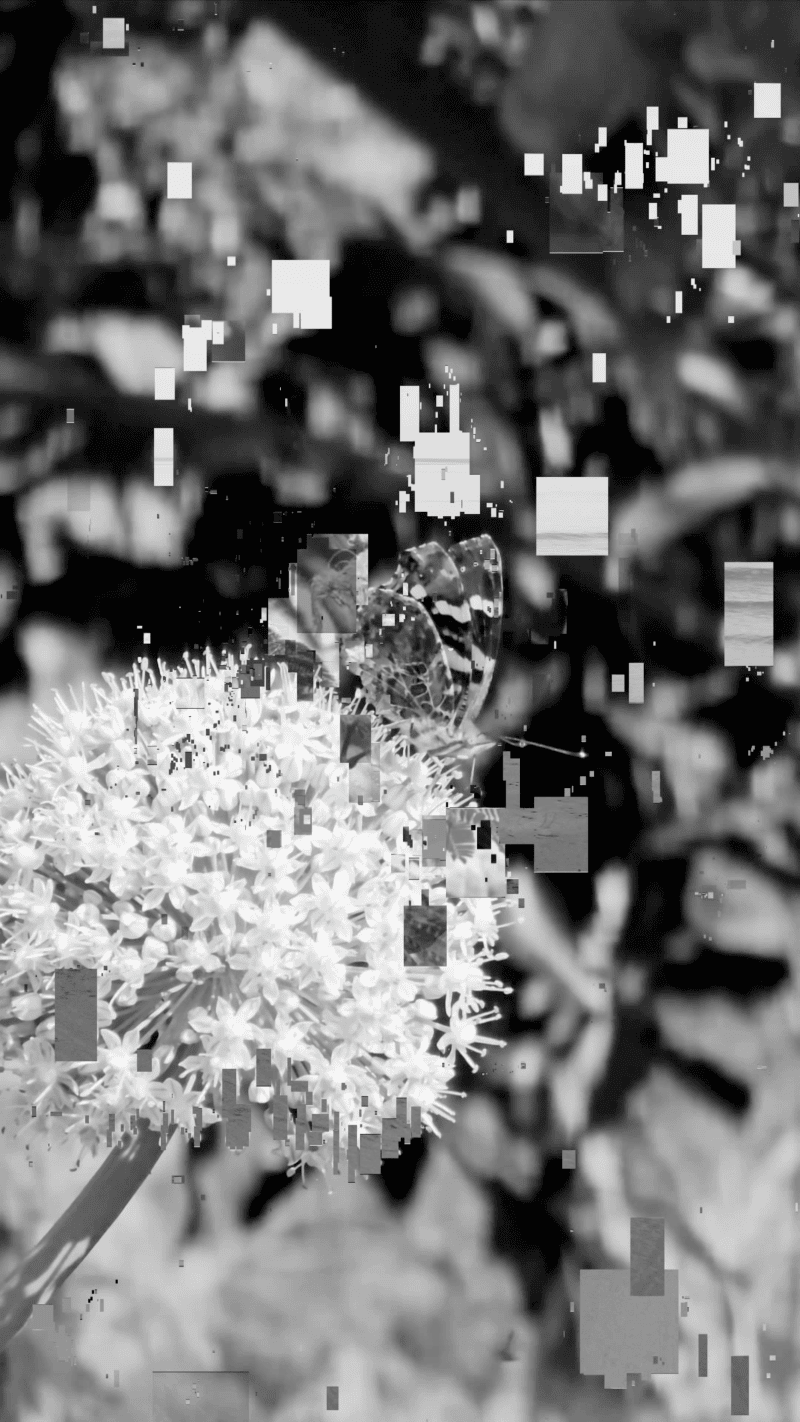
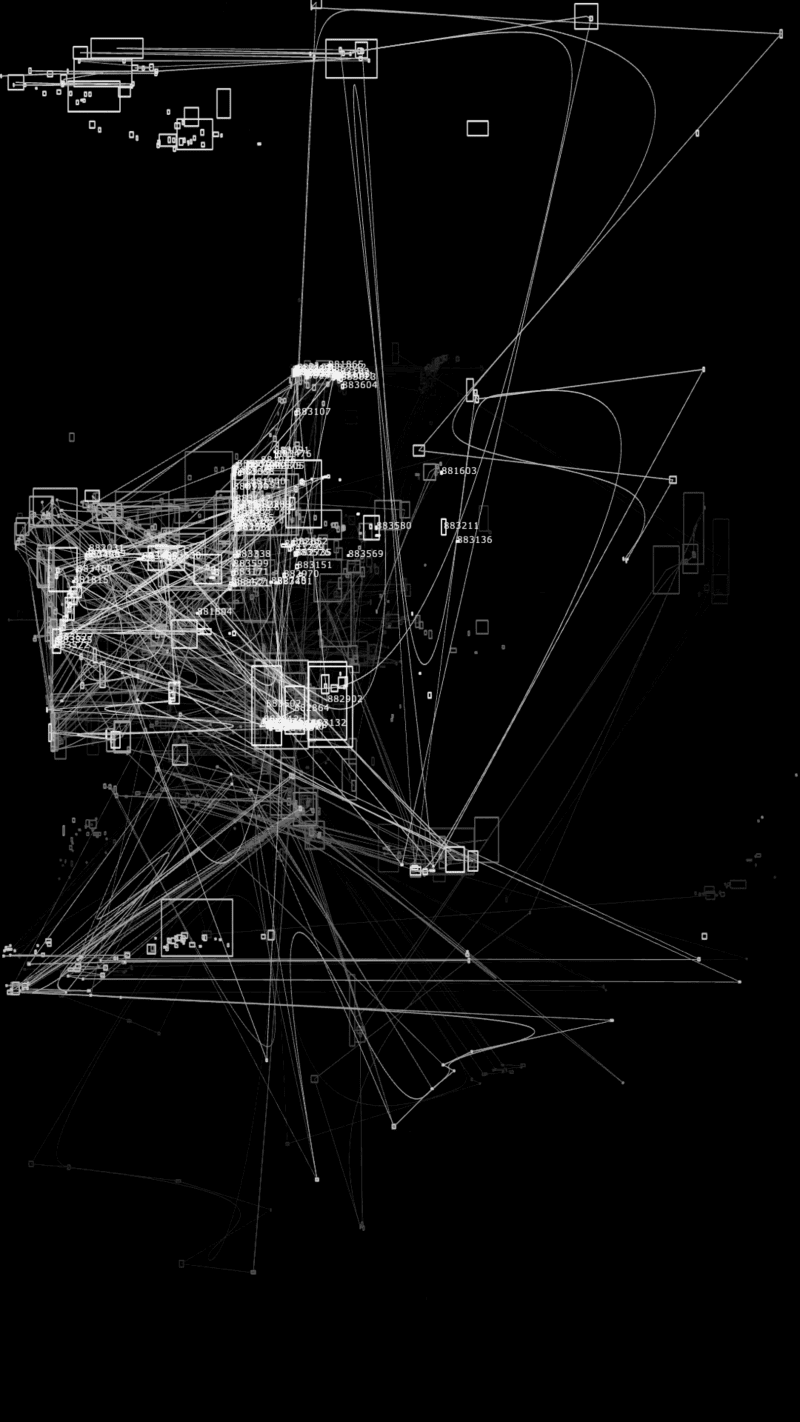
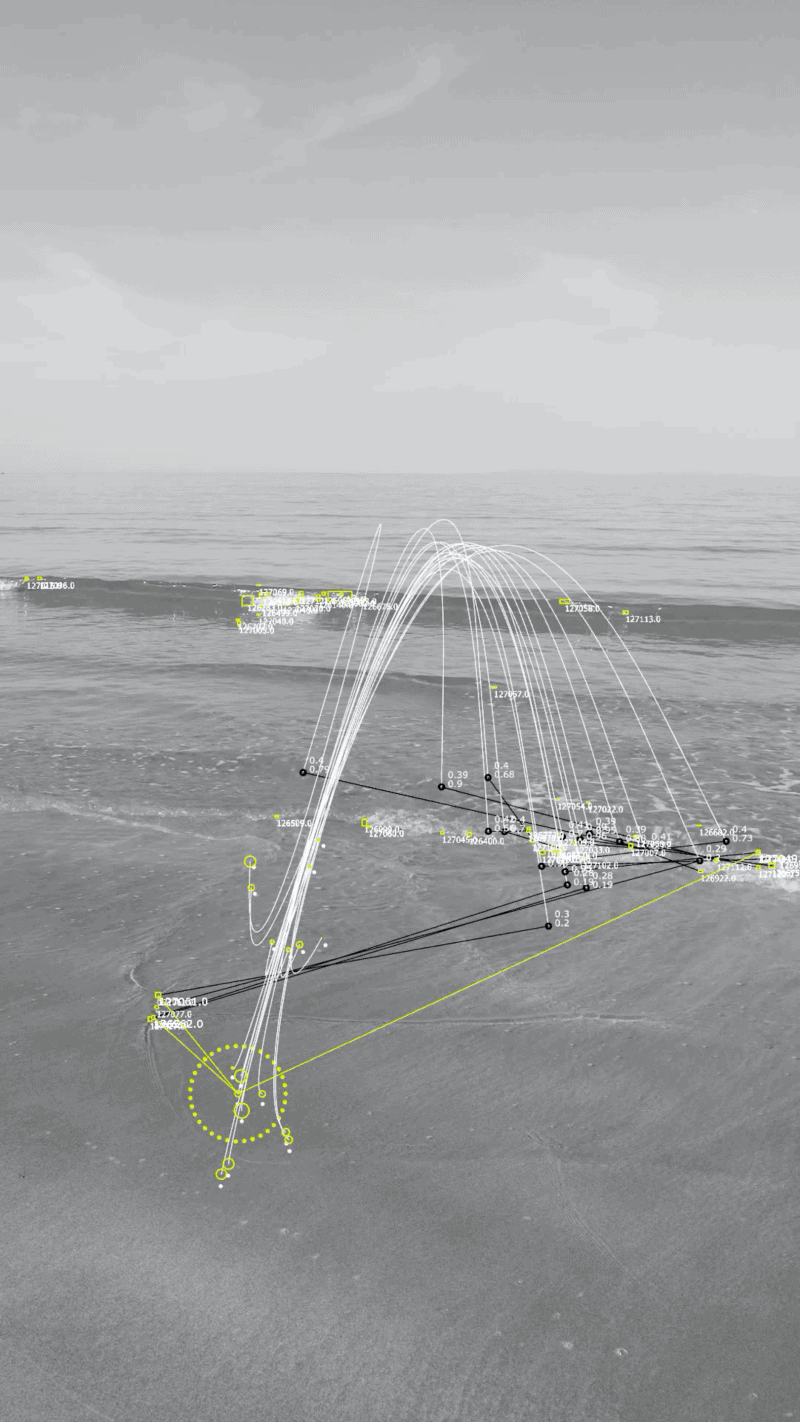
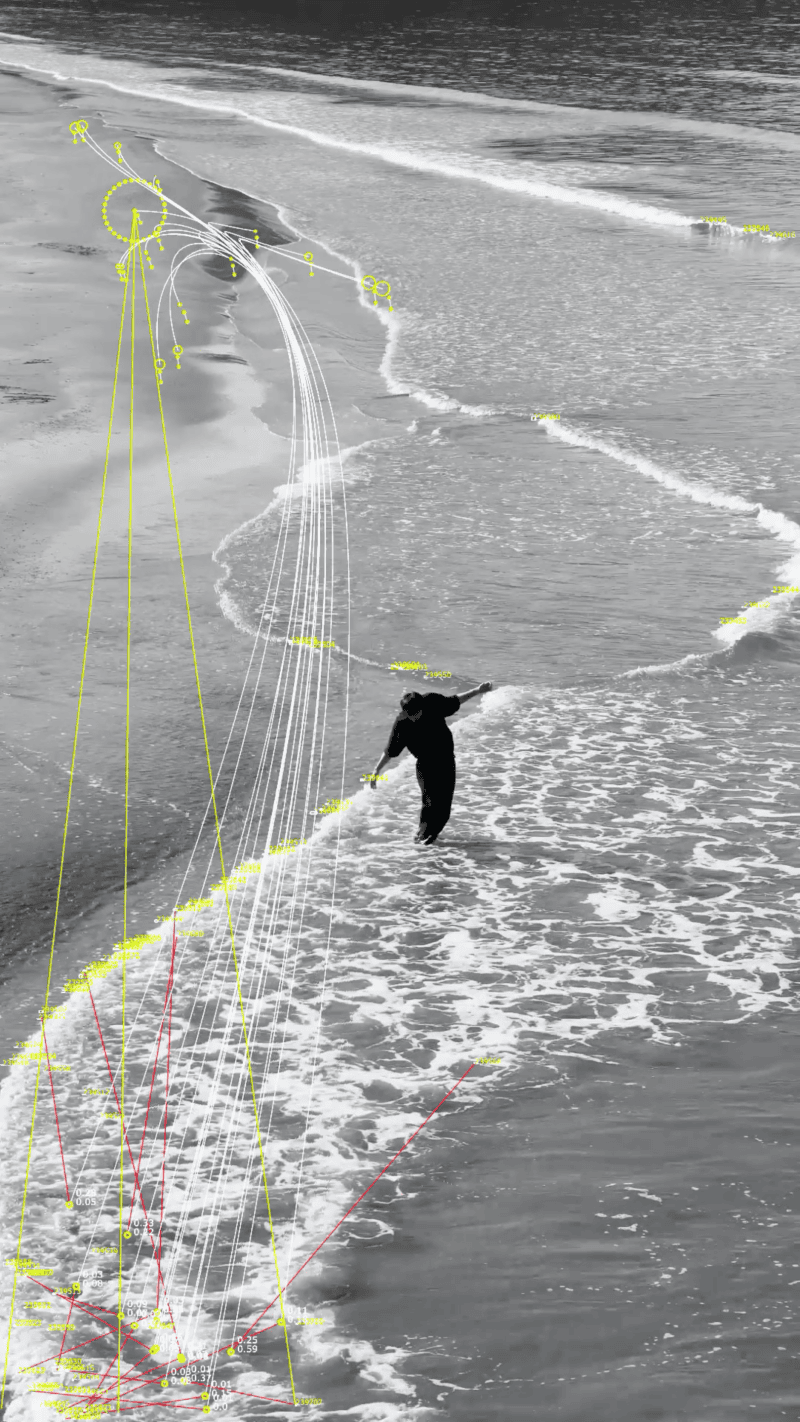
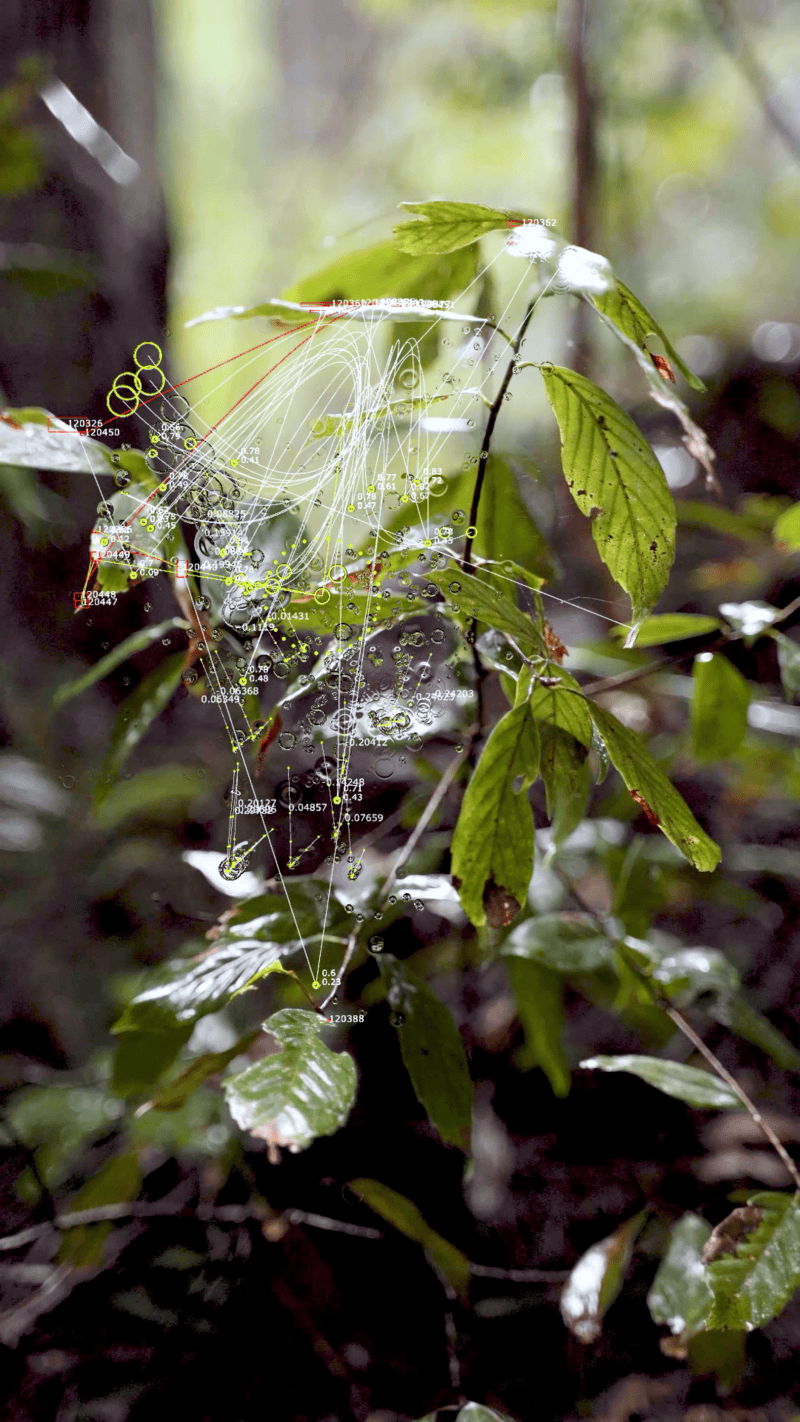
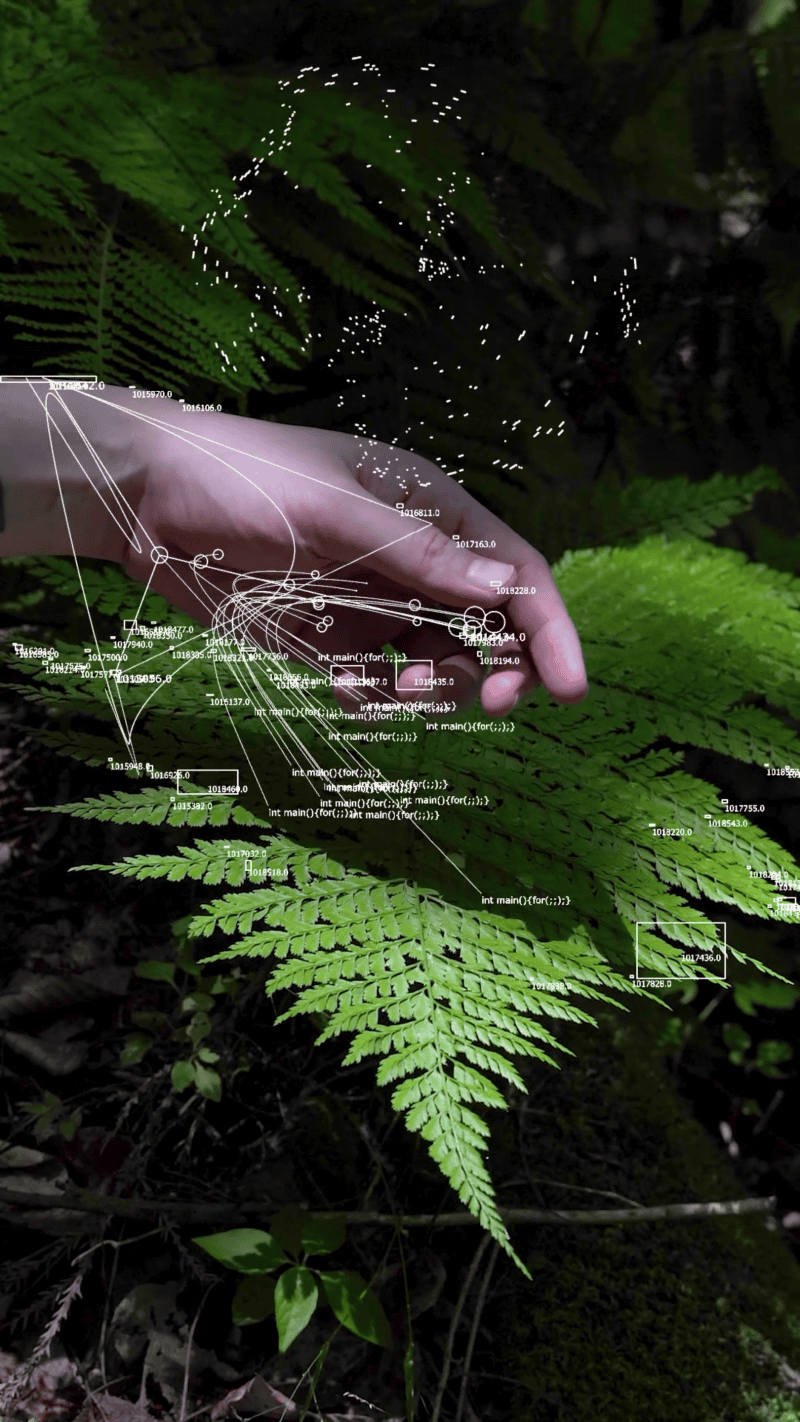
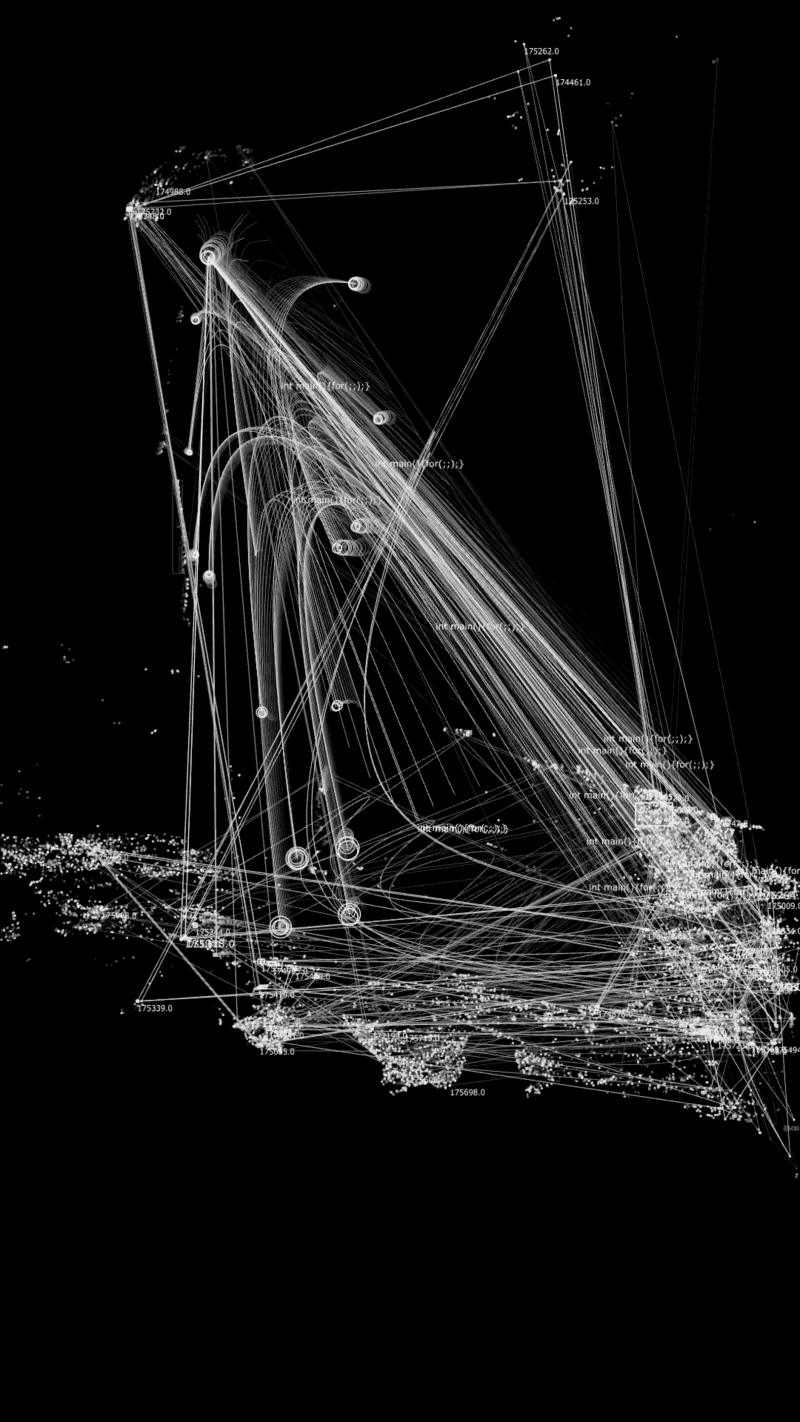
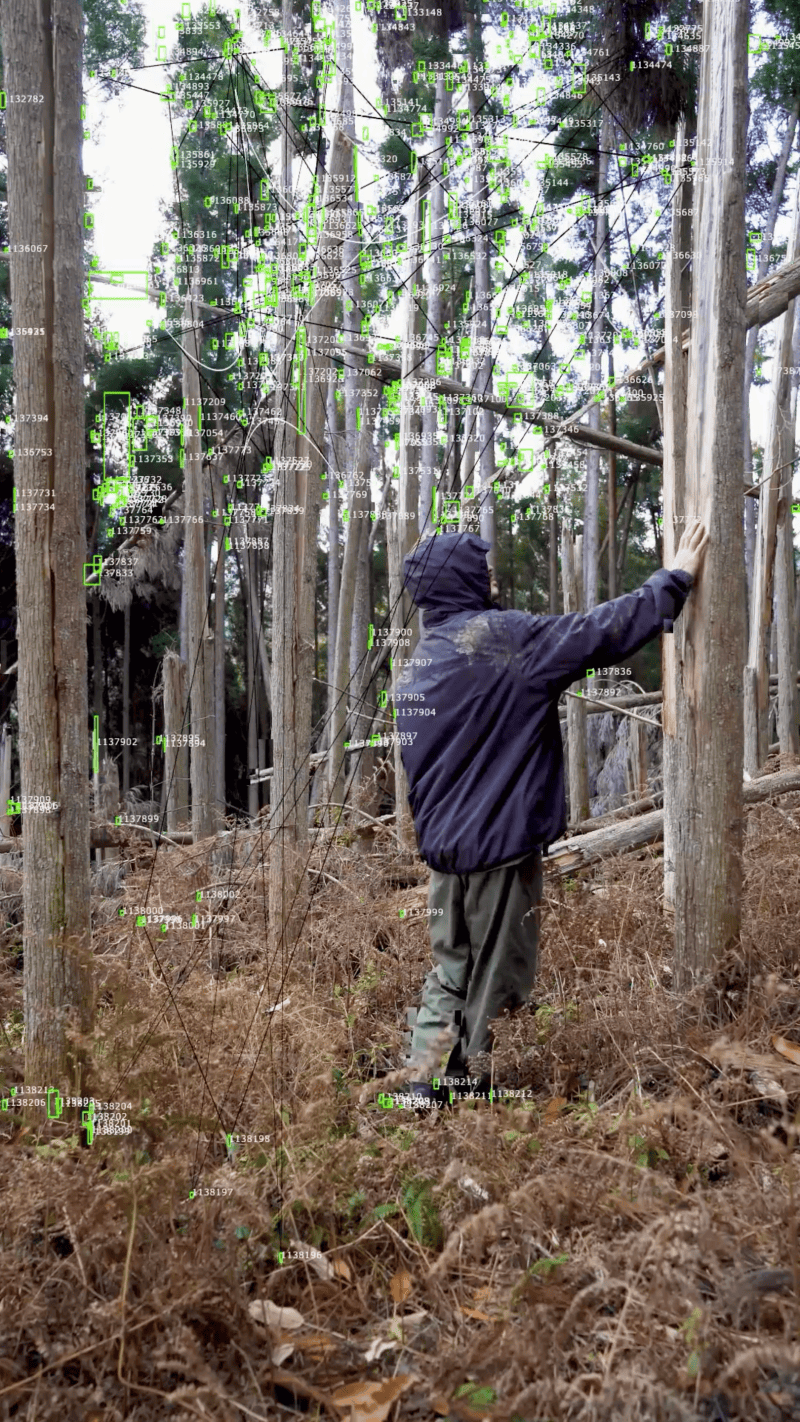
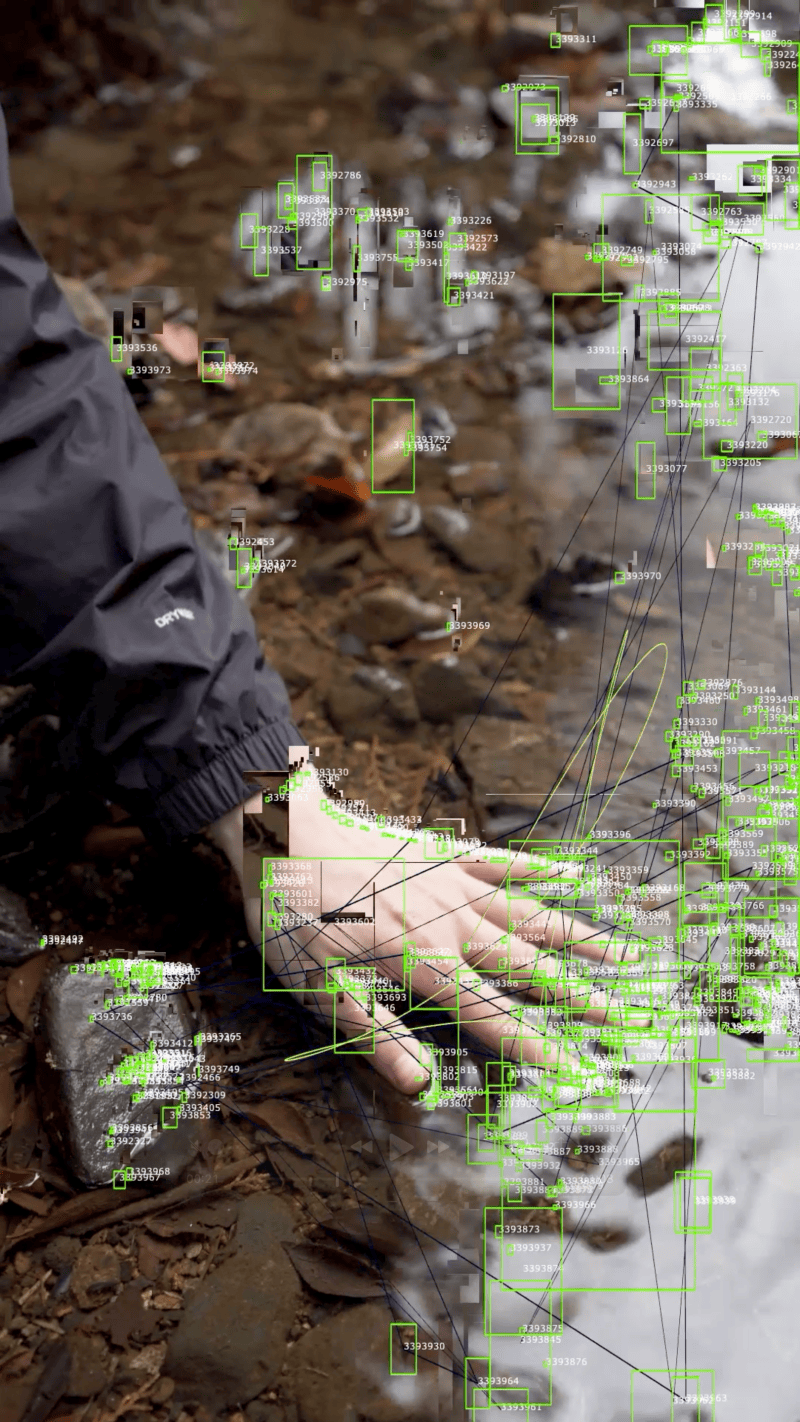
In the shifting landscape of digital art, nouseskou—the pseudonym of Kou Yamamoto—moves as an elusive figure, resistant to fixed definition. From Kyoto, he weaves together dance, sound design, dramaturgy, and visual art, creating works that present themselves less as objects than as experiences: performances that become images, images that behave like bodies, installations that breathe like landscapes.
The point of departure is always the body, not as a mere subject but as a living source of transformation. A danced gesture becomes a line, breath translates into luminous vibration, the instant refracts into sequences of pixels. With tools such as TouchDesigner, Yamamoto transfigures physical presence into unstable digital environments, oscillating between contemplation and chaos, between suspended silence and the vertiginous intensity of the glitch.
Kyoto, with its temples and forests, remains the subterranean matrix of his imagination. What emerges is not naturalistic imitation but poetic transposition: the landscape becomes a luminous flow, matter dissolves into digital strata, ancient stillness cracks into sudden distortions. It is a constant tension where nature does not vanish but is absorbed and returned in a new, vibrant, almost organic form.
His research resonates with Mono-ha, the Japanese movement of the late 1960s and ’70s that interrogated space and material presence, and with musique concrète, which transfigured the sounds of the everyday into sonic matter. Likewise, Yamamoto treats the digital not as a neutral medium but as an autonomous substance, pliable and open to accident. The glitch, far from being an error, becomes a luminous wound that reveals the hidden vitality of the image.
Works such as Loop (format t “~%”) ;Osf2 (2024) embody this approach: a visual current that fragments, repeats, and regenerates itself, evoking memories that flare up and instantly dissolve. In his live performances, also presented at Kyoto Steam, the boundaries between body, sound, and image grow porous, giving rise to environments without a center but with multiple simultaneous horizons of perception.
Nouseskou’s digital universe is, ultimately, a laboratory of the present. It shows how technology can become an extension of the body, how error can be turned into poetry, how nature and algorithm may coexist in a fragile yet fertile equilibrium. His works do not merely ask to be seen; they invite us to live them, to breathe them in, to traverse them.