Milan Fashion Week has long been a study in control: control of craft, of heritage, of image. But this Fall/Winter 2026 season, the men’s shows seemed less interested in mastery for its own sake than in something quieter, more fragile — the idea of continuity as an act of care. Not reinvention, not rupture, but the discipline of remembering, and deciding what, exactly, deserves to be carried forward.
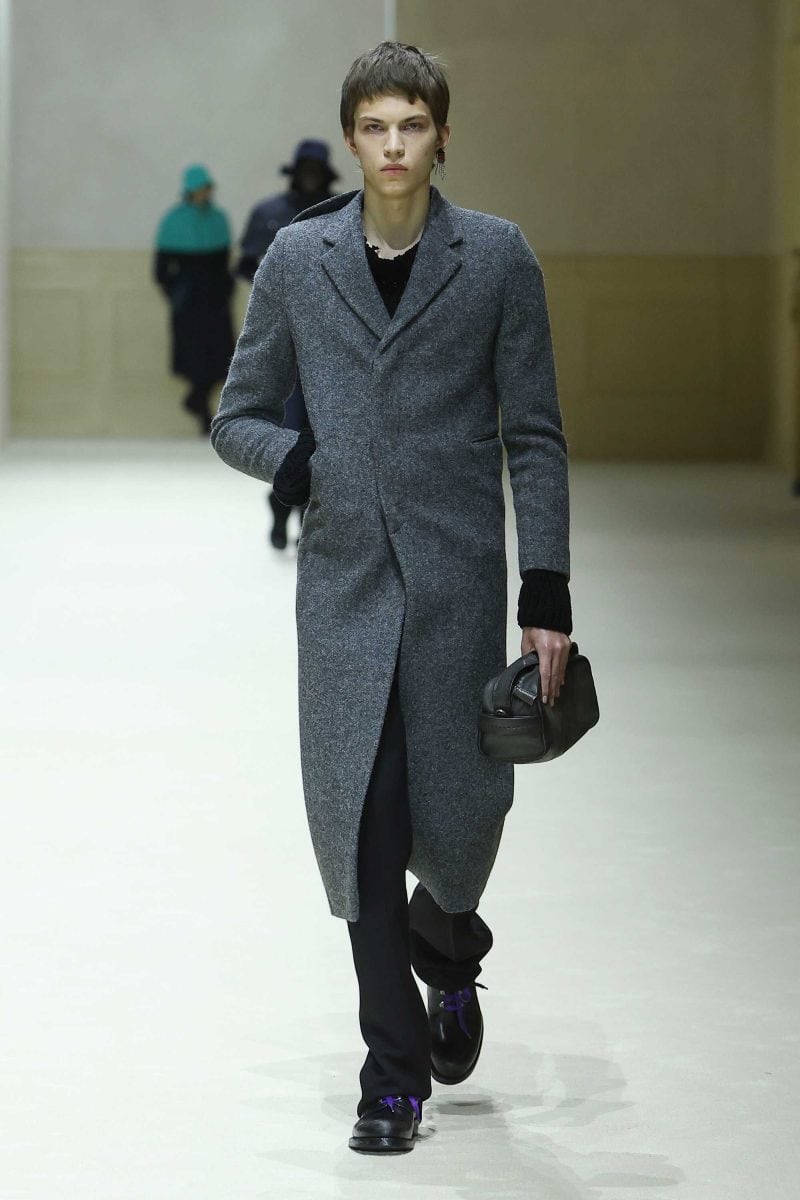
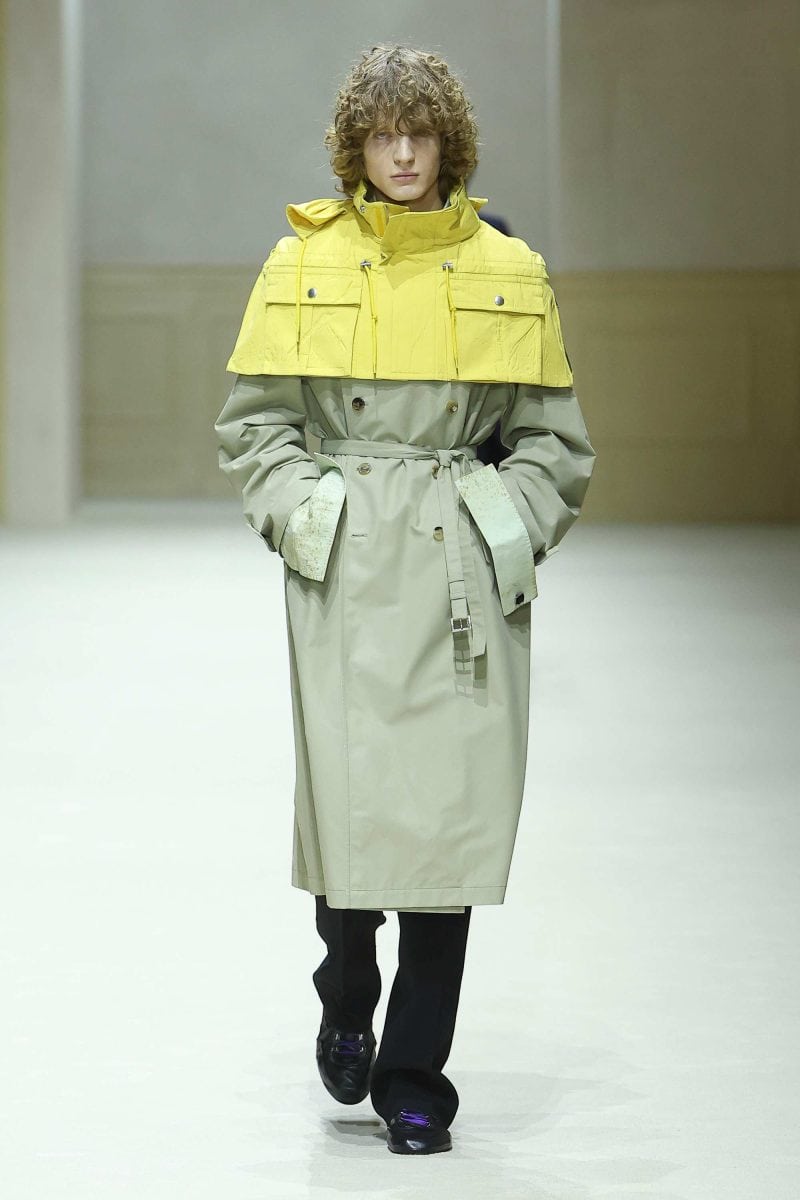
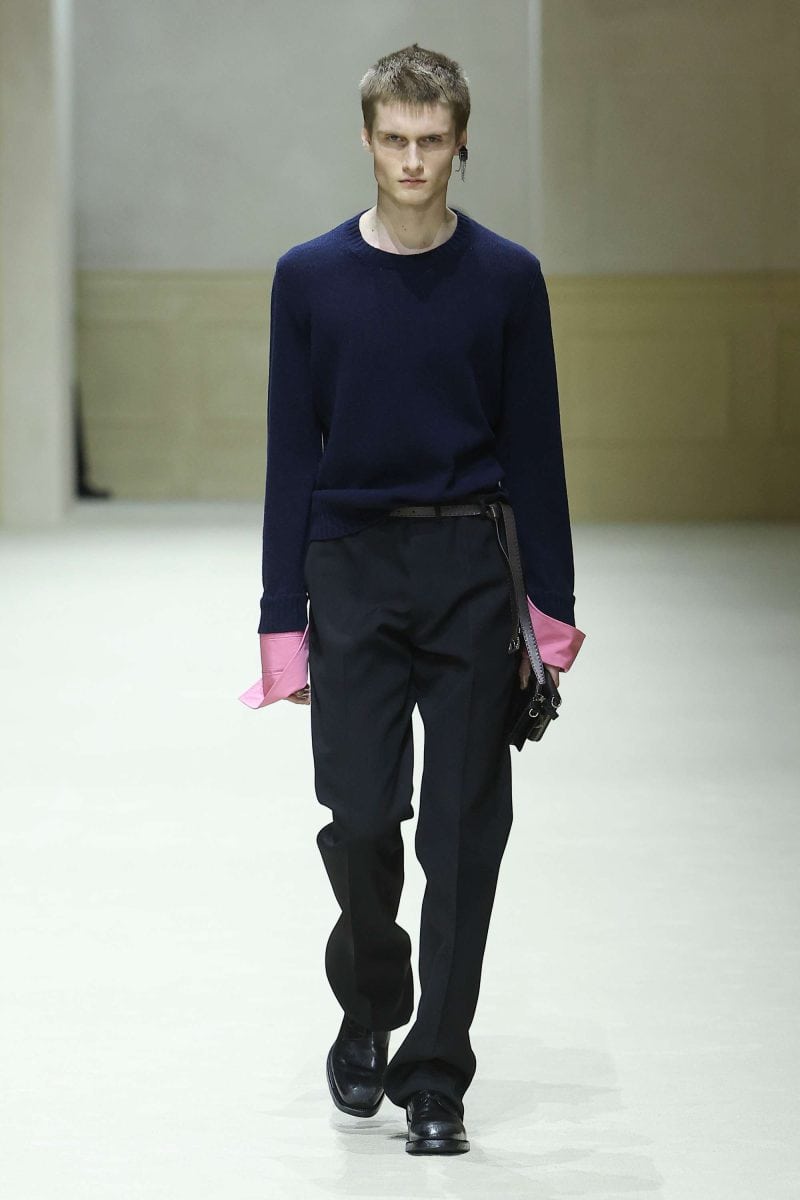
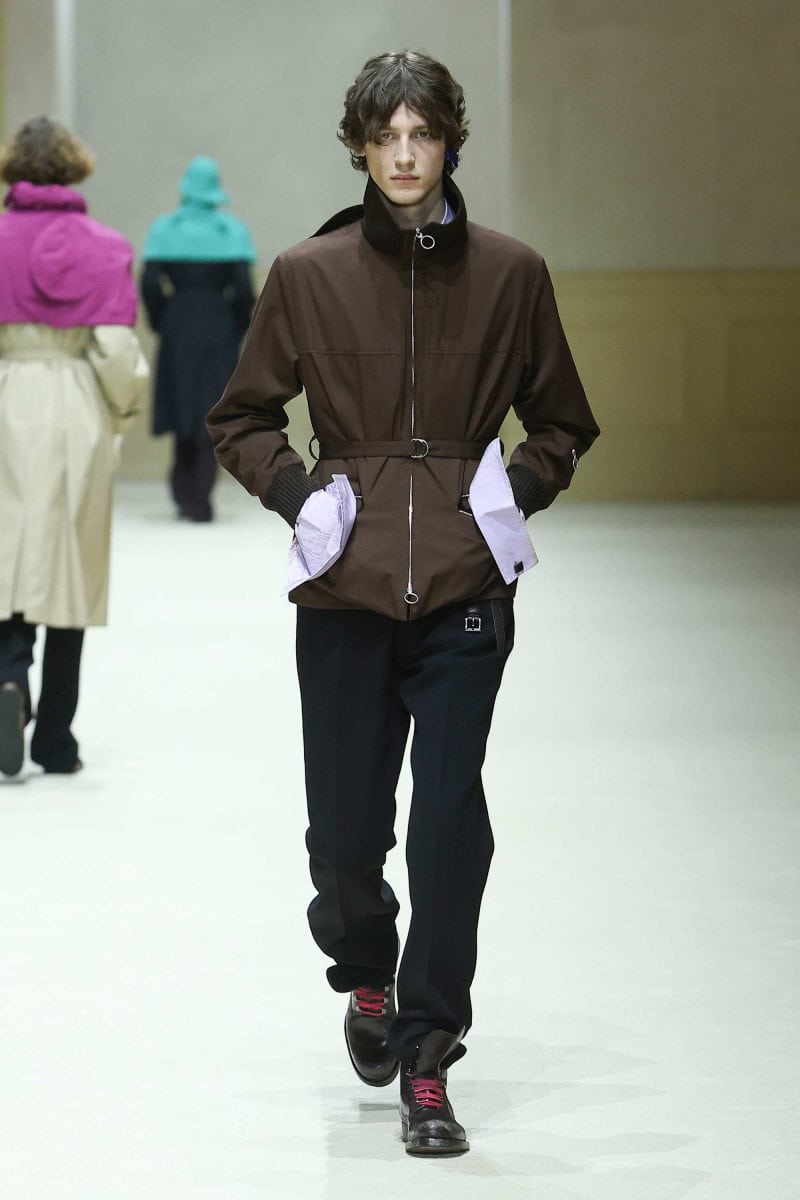
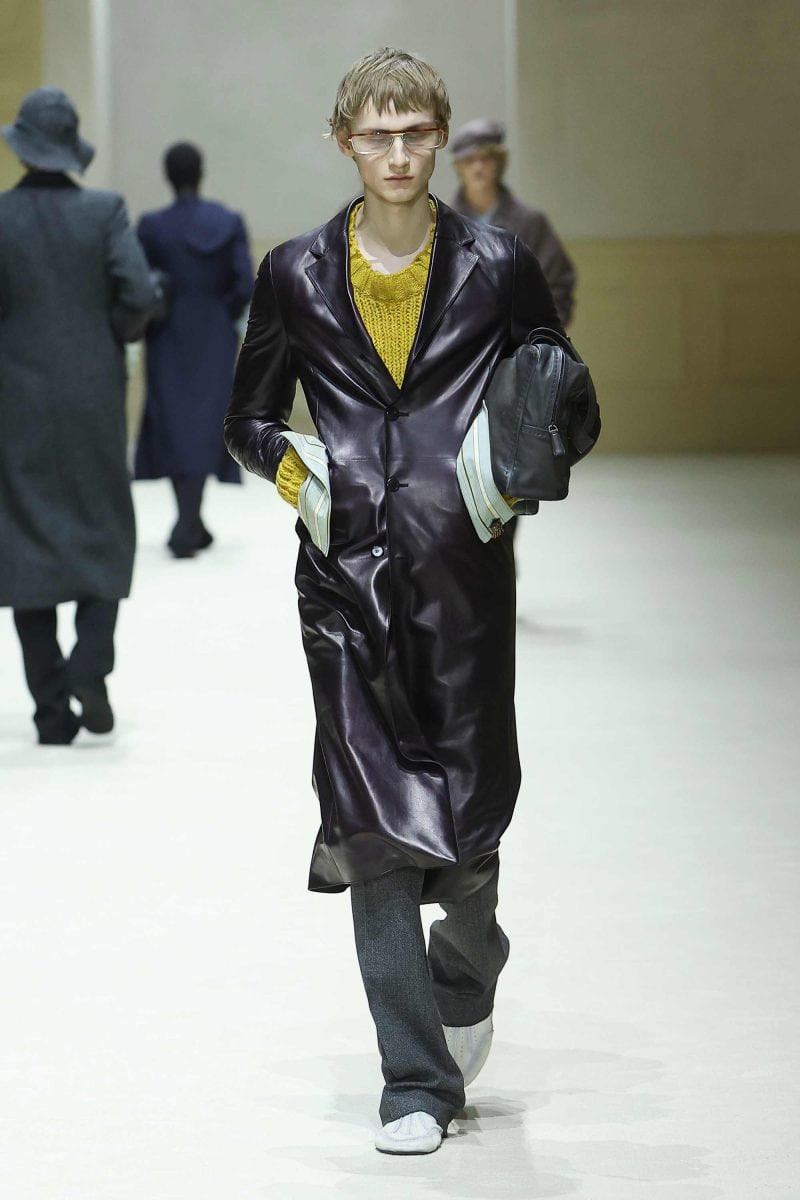
That sensibility was most articulate at Prada, where Miuccia Prada and Raf Simons titled their collection “Before and Next,” a phrase that read less like a mood board caption than a philosophical position. What can we create, they asked, from what we already know? In a political panorama increasingly defined by reactionary cycles, revisionism, and the weaponization of nostalgia, the question felt pointed. Memory here was not a retreat, but a responsibility.
The clothes reflected that tension. Elongated, precise silhouettes traced the human body with a studied awareness of posture and gesture — not heroic, not aggressive, but upright. Familiar garments appeared almost archeological: coats, suits, knits that seemed excavated from a collective past, then reassembled with subtle disruptions. Prints functioned like collage essays, layering references from antiquity, the Renaissance, and modernity, compressing centuries into a single surface. They were not decorative so much as evidentiary — proof that culture is cumulative.
The setting amplified the message. The Deposito at Fondazione Prada, imagined as a liminal space marked by an invented past, framed the show as a public unveiling of interior lives. What is usually hidden was exposed; what is closed, opened. In an era of political opacity and social fracture, that gesture — clarity as reassurance — felt almost radical. Prada did not shout. It insisted. On intelligence. On care. On the persistence of human values like meaning and civility, words that in 2026 feel less abstract than endangered.
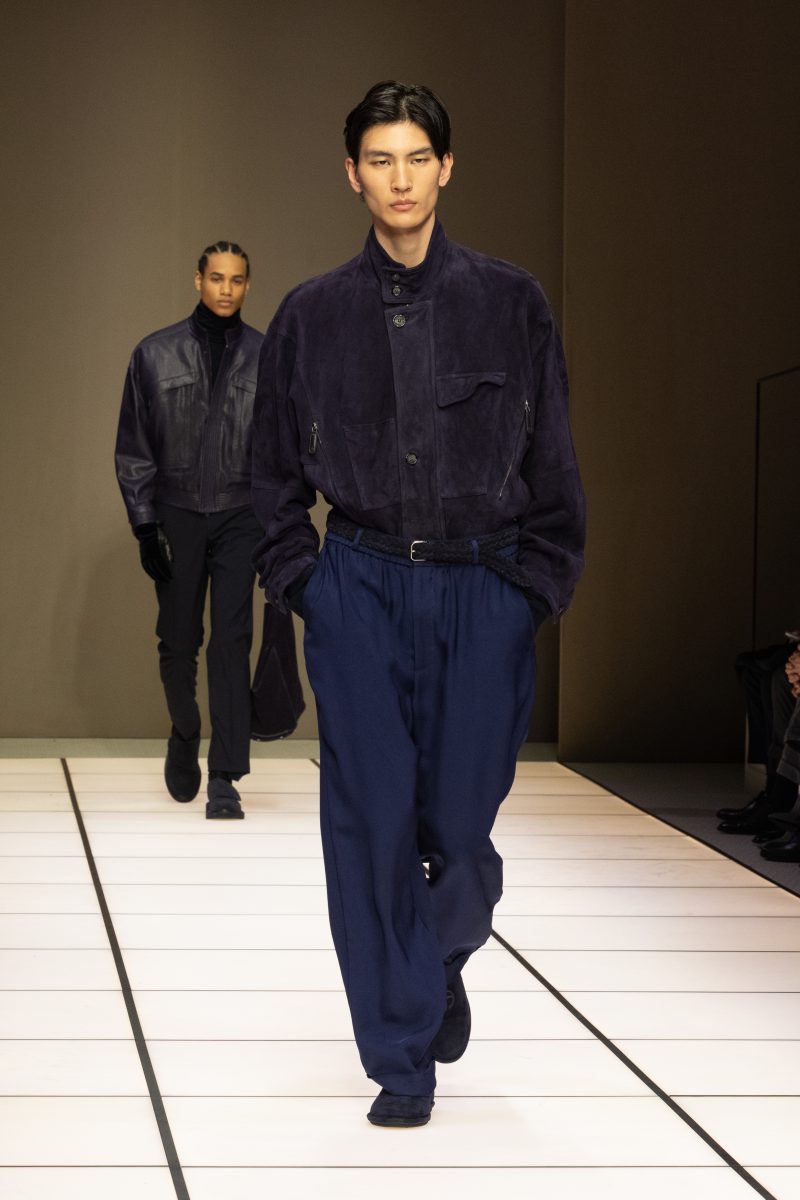
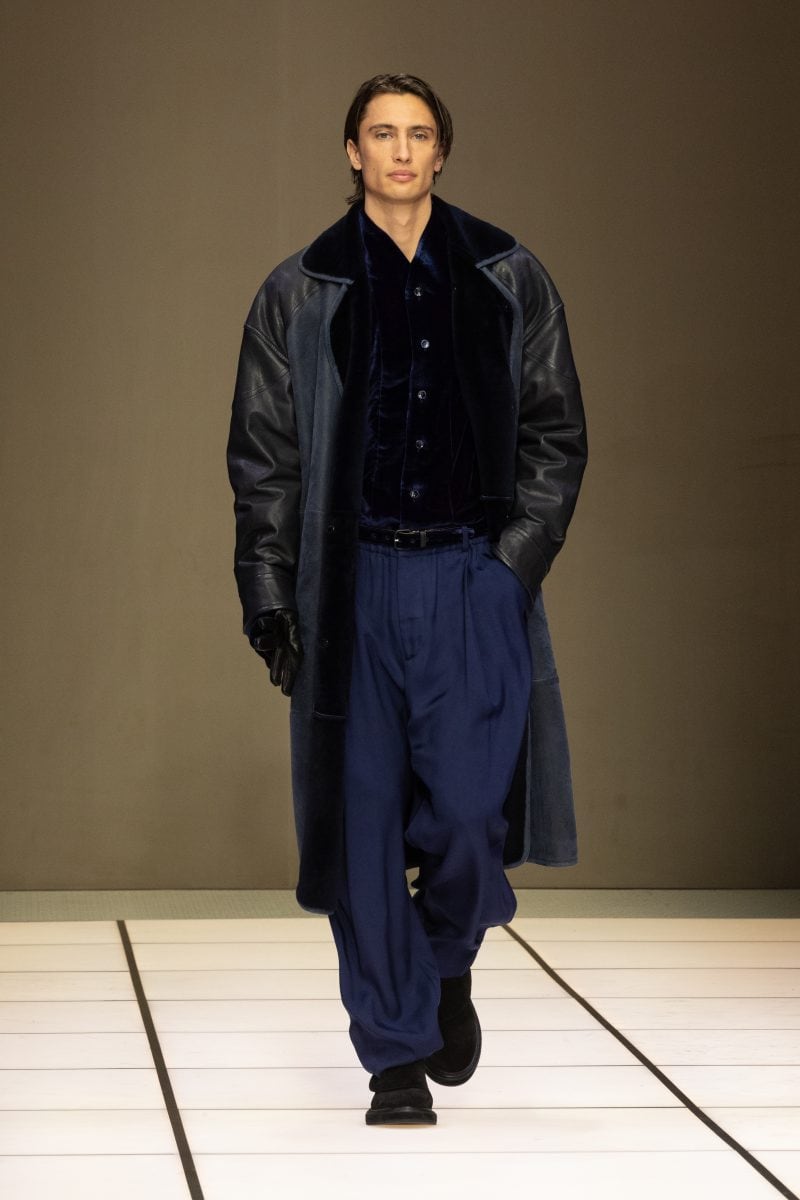
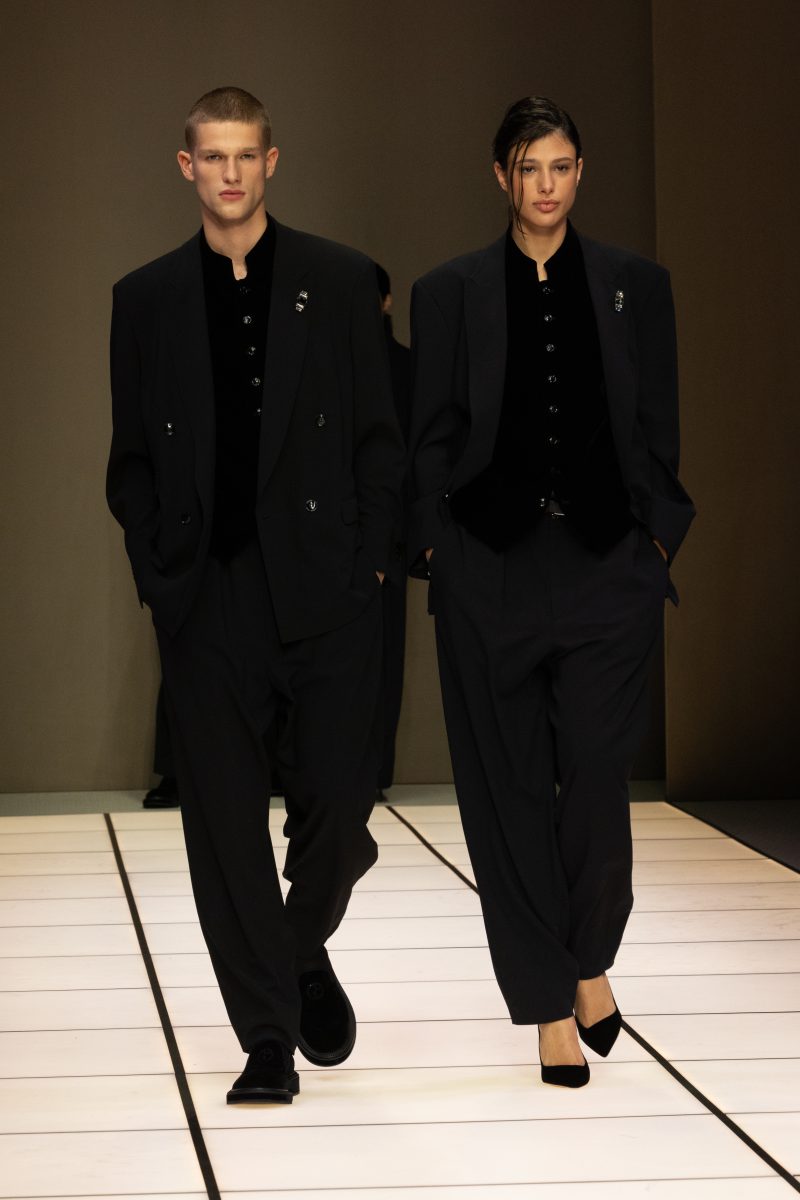
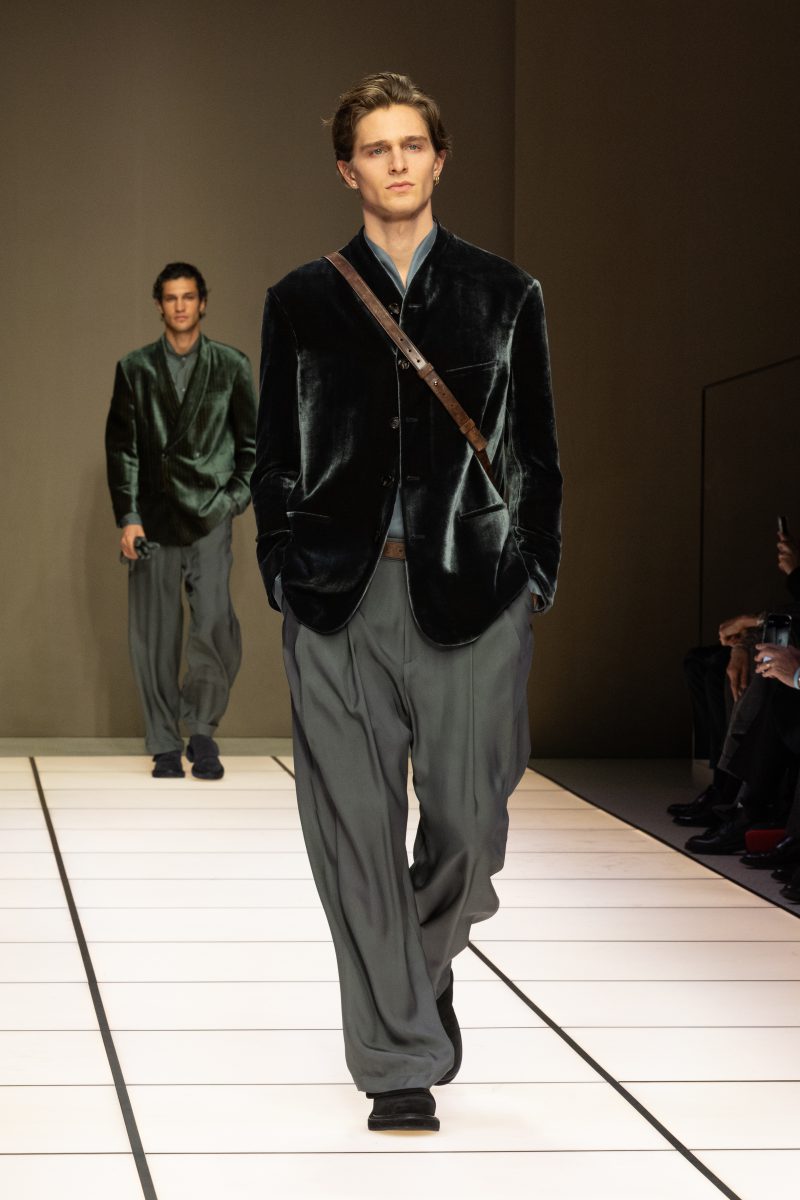
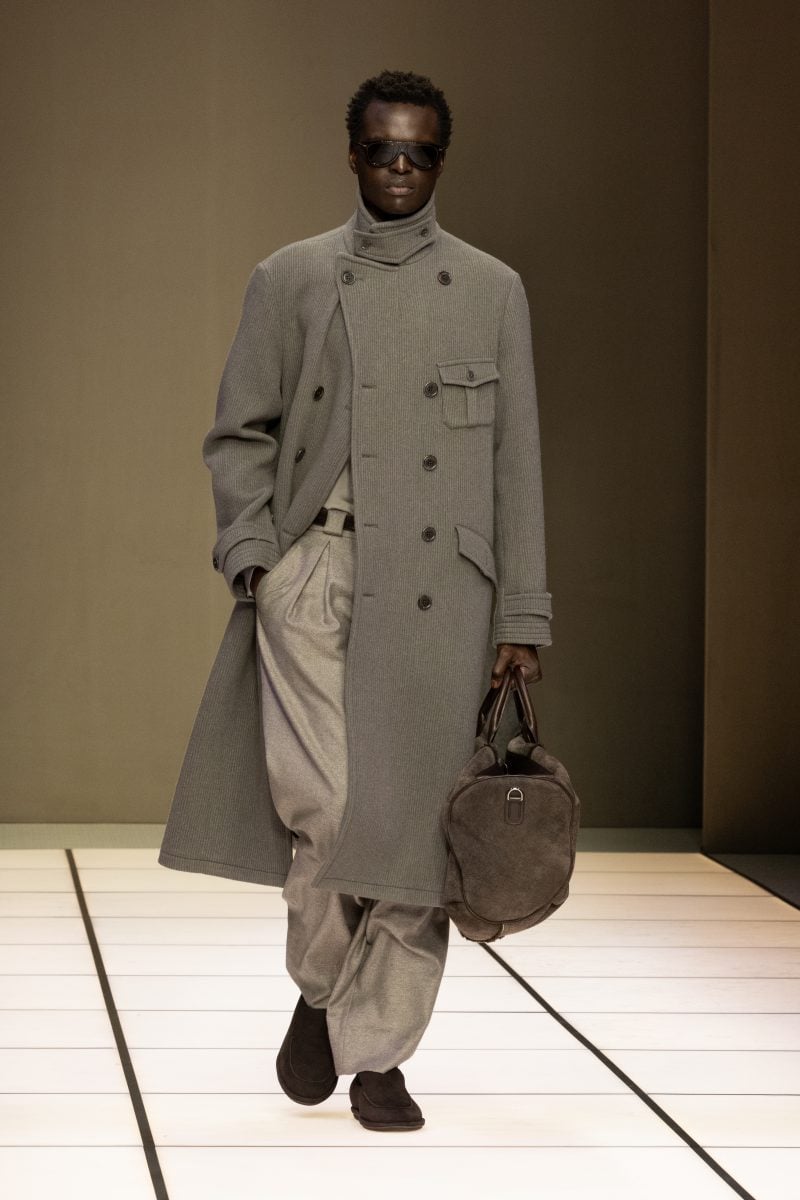
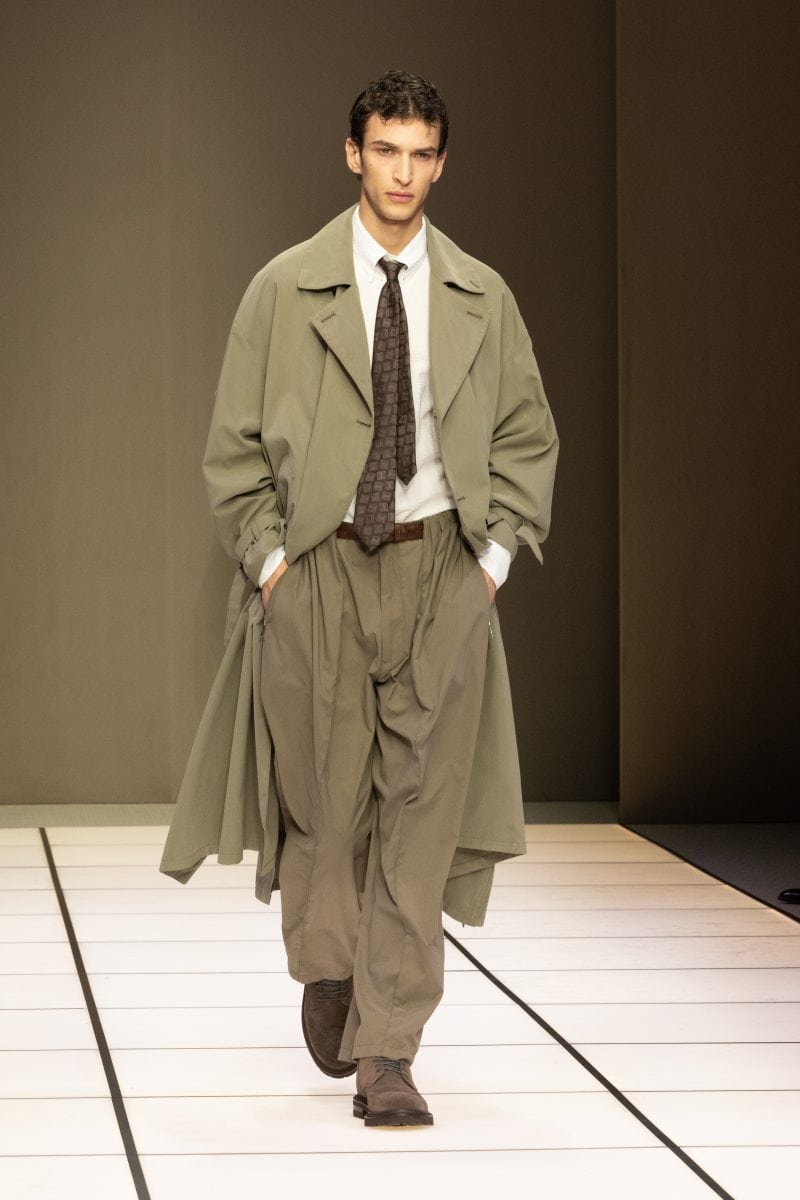
If Prada addressed the present through memory, Giorgio Armani approached it through perception. “Cangiante,” the debut menswear collection by Leo Dell’Orco after four decades alongside Giorgio Armani, took its name from iridescence — the quality of remaining the same while changing depending on the angle of view. It was a subtle but telling metaphor for a house that has always understood power in understatement.
Color, long treated at Armani as a whisper rather than a statement, emerged with new confidence: olive green, amethyst violet, lapis blue igniting a base of greys, beiges, and deep navy. The effect was not loud, but alive. Fabrics did much of the talking — velvet, crêpe, ciniglia, silk — playing with light in ways that rewarded attention rather than demanding it. There was a quiet pleasure in the deception of surfaces: shearling that felt like velvet, silk that masqueraded as denim. Things were rarely what they first appeared to be.
The silhouettes were fluid, unforced. Jackets hung low, trousers wide and generous, coats wrapped rather than armored the body. Even the snowwear obeyed the same logic of ease. This was elegance as accommodation, not assertion — clothing that moves with the wearer, not ahead of him. The collaboration with Alanui, expressed through a geometric jacquard cardigan, nodded to craft and continuity without sentimentality.
Taken together, Milan’s Fall/Winter 2026 men’s season suggested a shift in how authority is expressed in fashion. Less about dominance, more about discernment. Less about the new at all costs, more about the ethical weight of choices. In a moment when both politics and culture are addicted to extremes, these collections argued — persuasively — for something harder: nuance.
Perhaps that is Milan’s quiet provocation this season. Not to forget, but to remember well. Not to change for spectacle, but to evolve with intention. In fashion, as in society, what endures is rarely what shouts the loudest. It is what knows why it exists, and continues anyway.