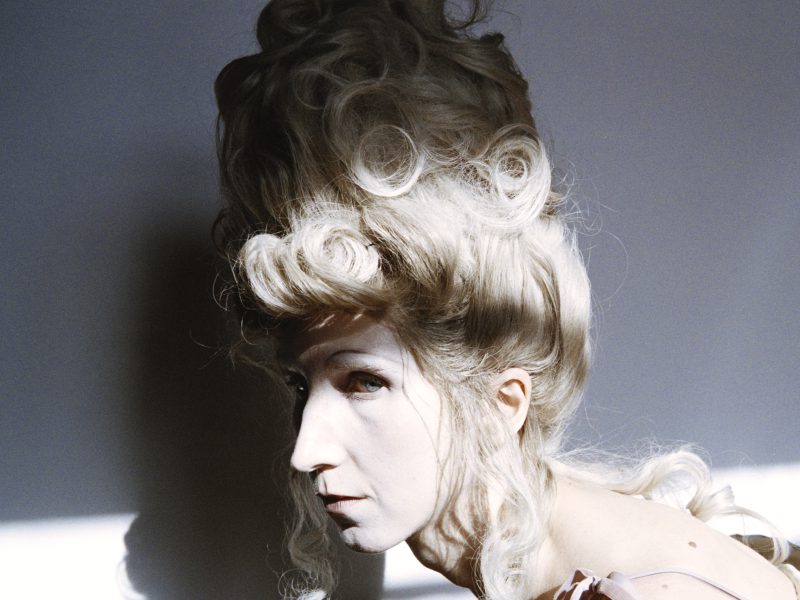
Lustgarten is a wry take on nature in an age of humans, a collection that calls out the idealisation of nature’s idyll in times of climate change. It turns these contradictions into a new allegory of the seasons, where the friction of looking at a perfectly blooming garden in a freakishly warm winter becomes a physical reality. Rather than mourning the loss of old-world seasons, the collection leans directly into the bizarre contradictions of our modern climate crisis, asking what the natural world looks like when it is permanently intertwined with human artifice. This manifests as a wardrobe born of explicit material conflict. Climatic crisis prints meet synthetics, and natural fibres meet glazed artificiality.
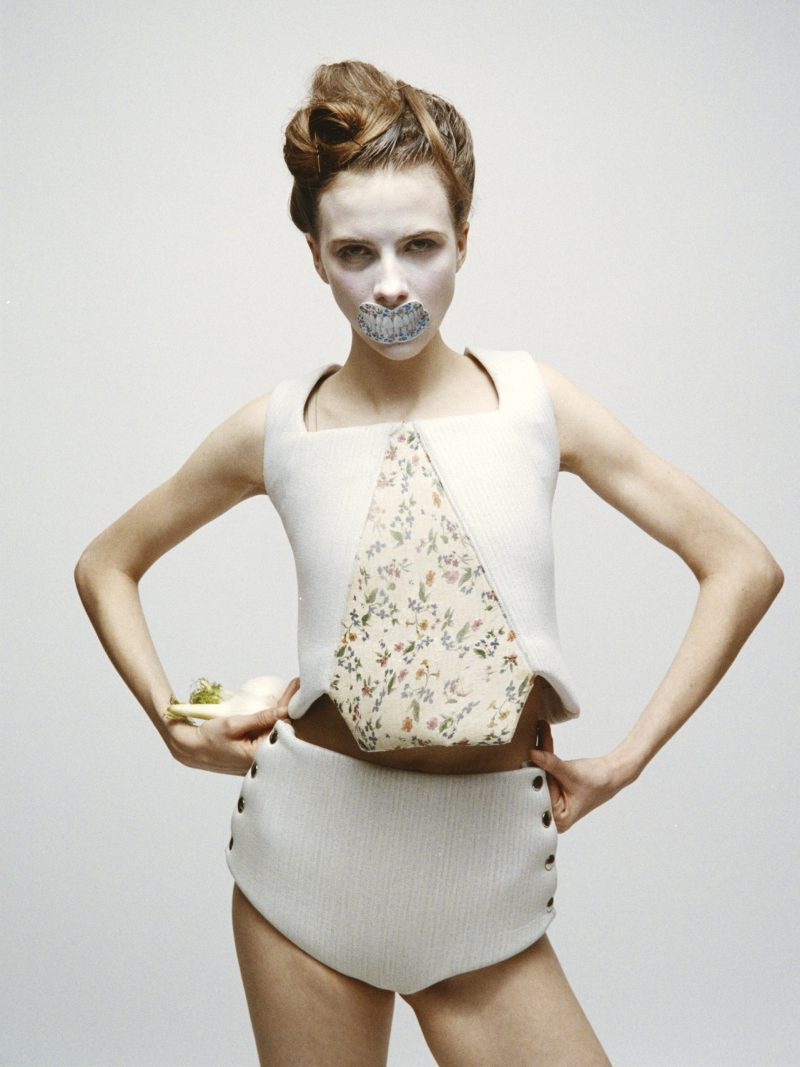
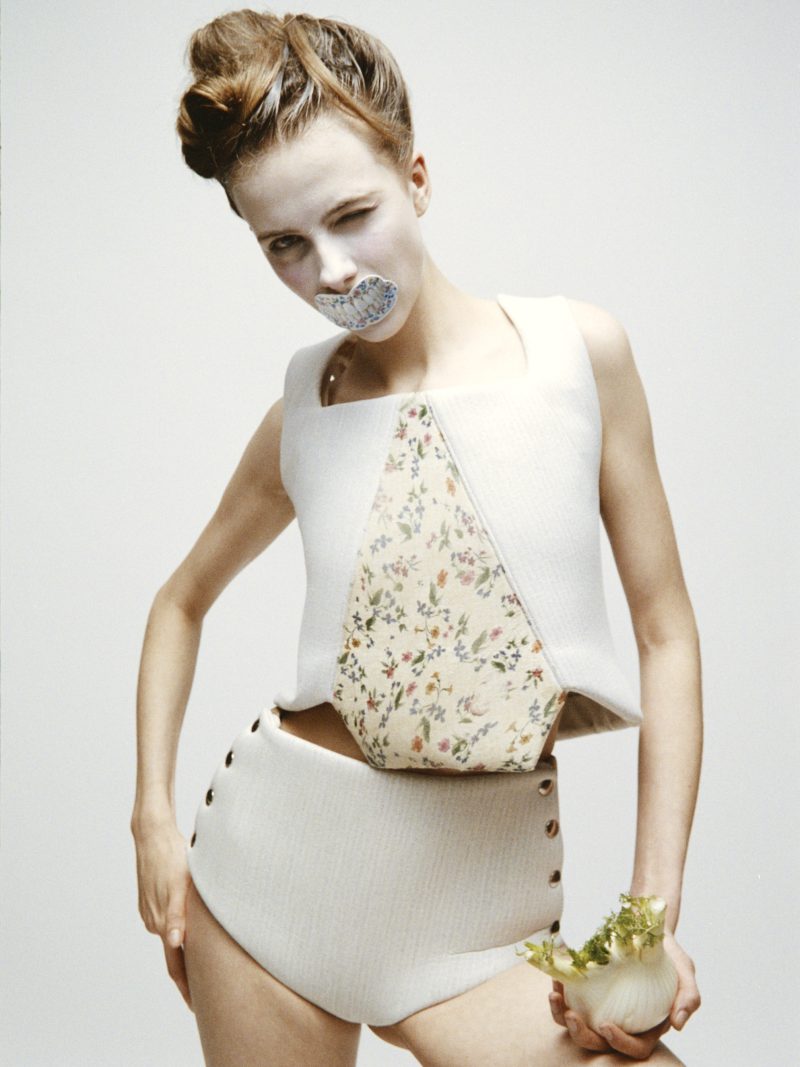
Traditional floral motifs are disrupted by digital prints that mimic thermal imaging maps, smog-tinted skies, or shifting radar data, stamped onto high-tech, weather-resistant synthetics. Raw, earth-born textiles like organic linens and heavy cottons don’t just sit alongside plastics, they are fused with them, resulting in classic knitwear laminated with high-gloss finishes that feel simultaneously protective and surreal. Visually, the collection bridges two eras obsessed with escaping into nature by staging a confrontation where Rococo meets cottagecore.
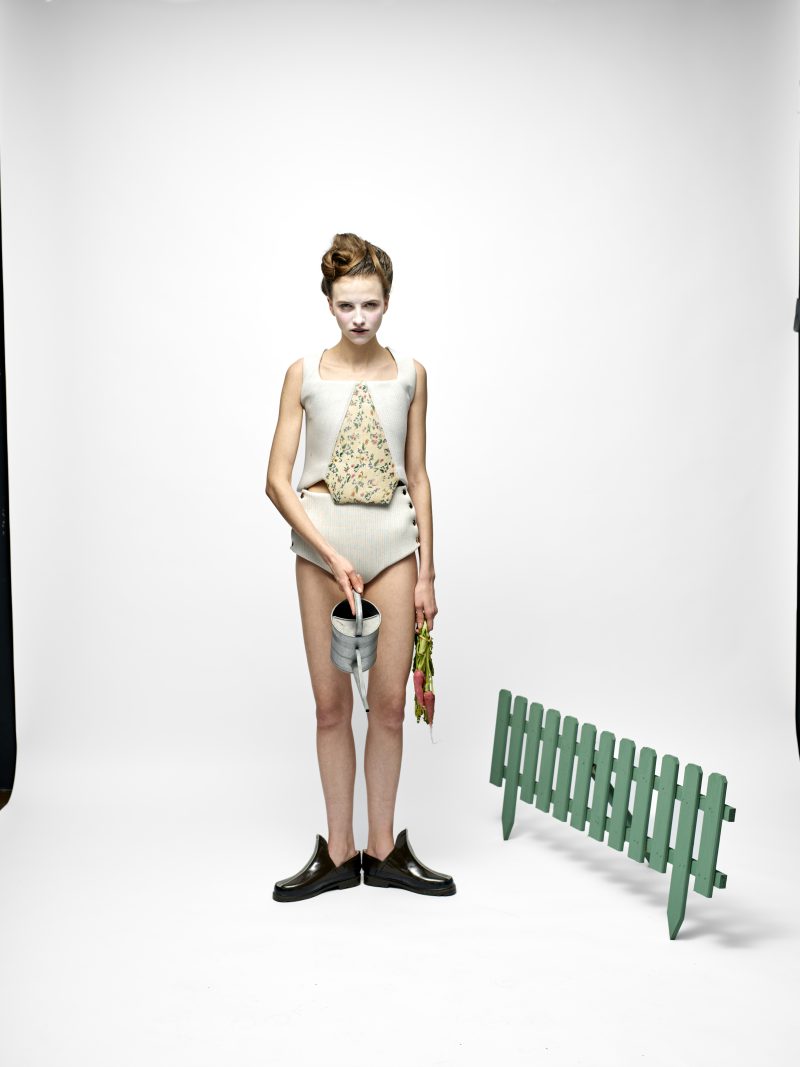
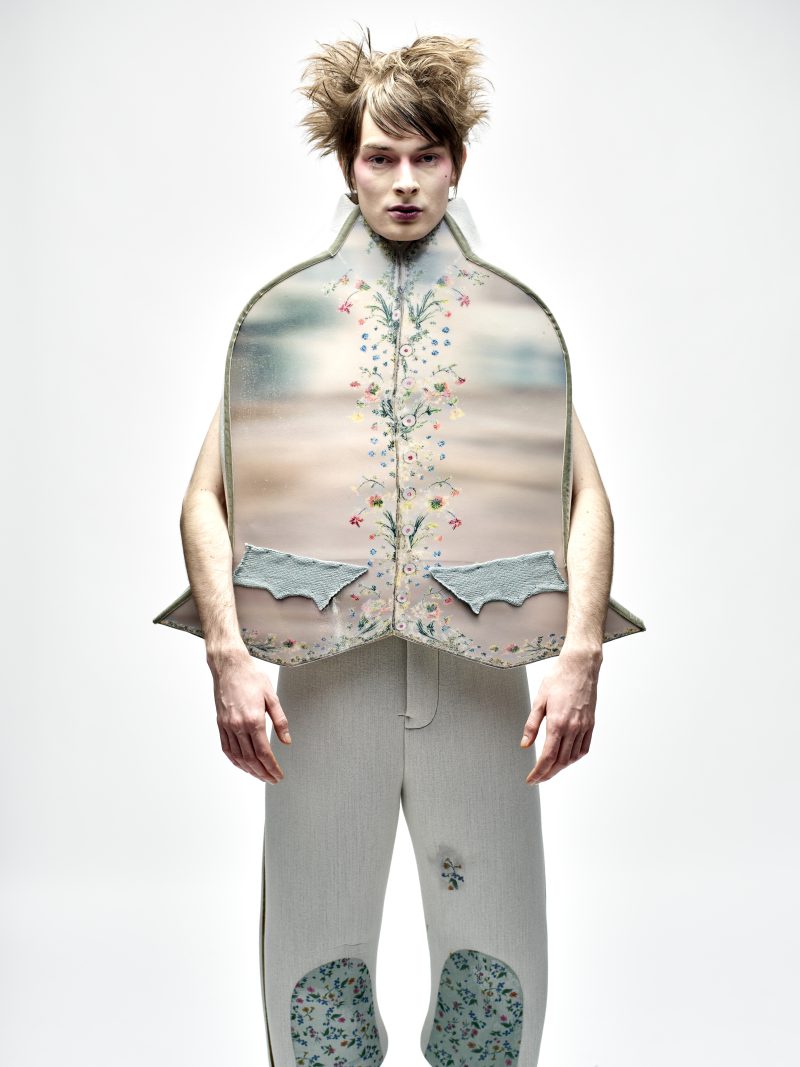
By crashing the ultra-ornate, theatrical opulence of eighteenth-century court wear into the rustic, nostalgic comfort of pastoral silhouettes, Lustgarten creates a hyper-stylized aesthetic for the climate era. The result is a grand, dramatic performance of nature that acknowledges our relationship with the environment is no longer purely organic, but curated, manicured, and deeply complicated. It does not offer an easy escape into a green paradise, but instead invites us to look closer at the beautiful, synthetic mess we have made, dressing us for whatever strange season comes next.