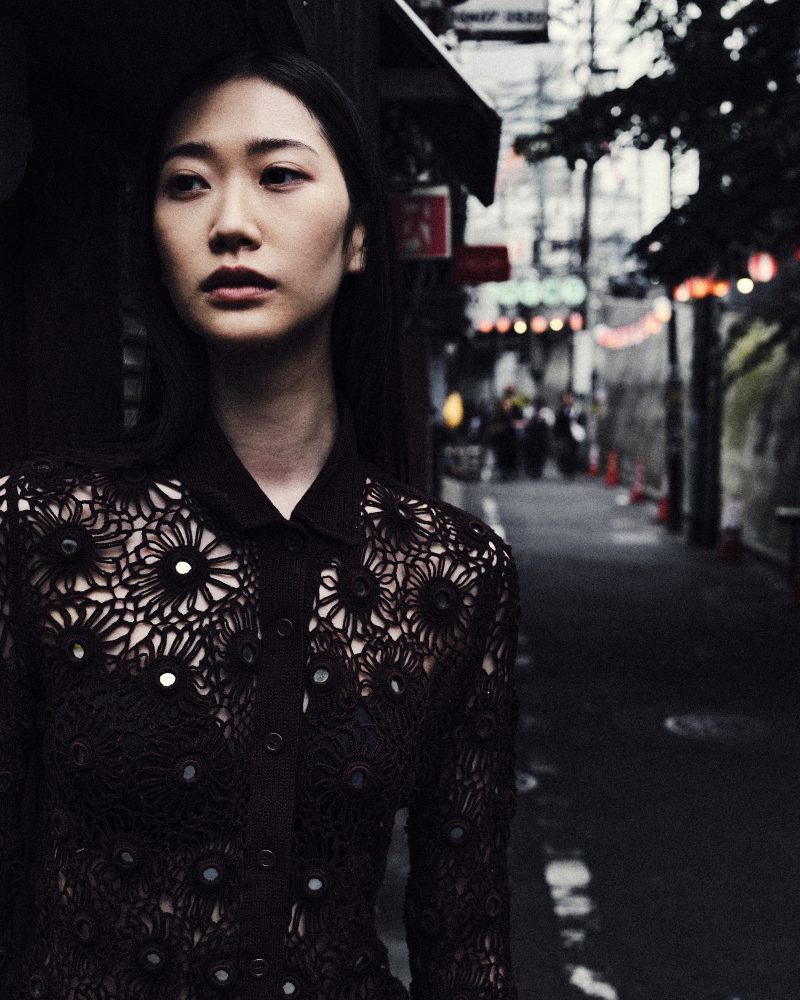
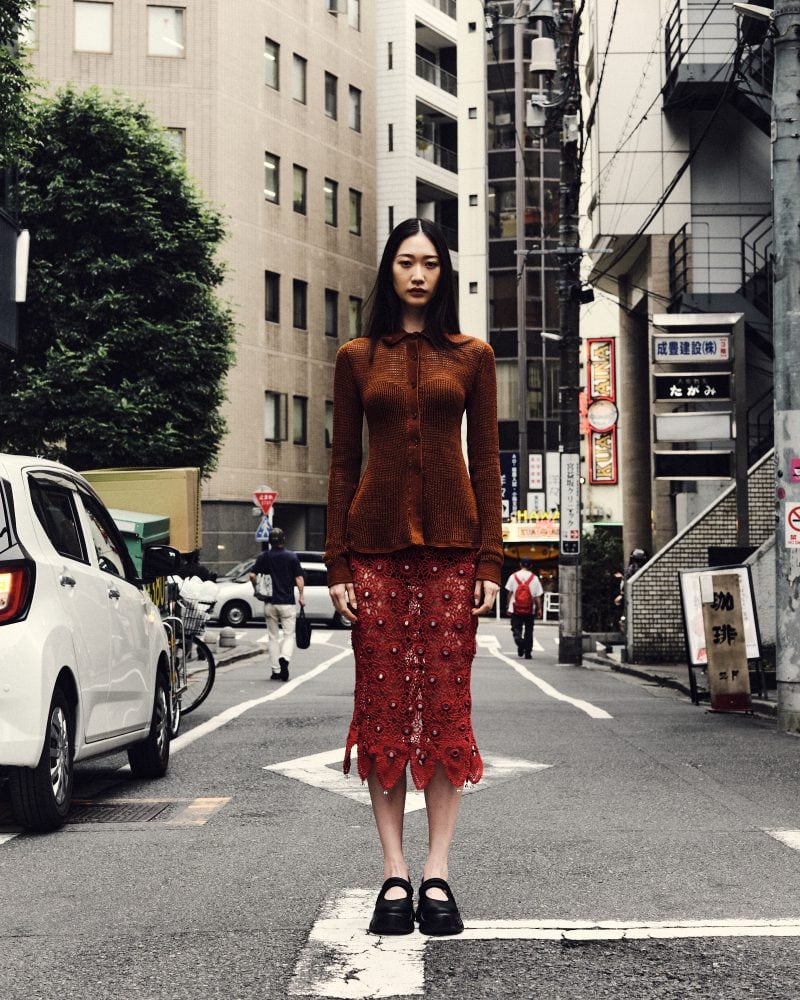
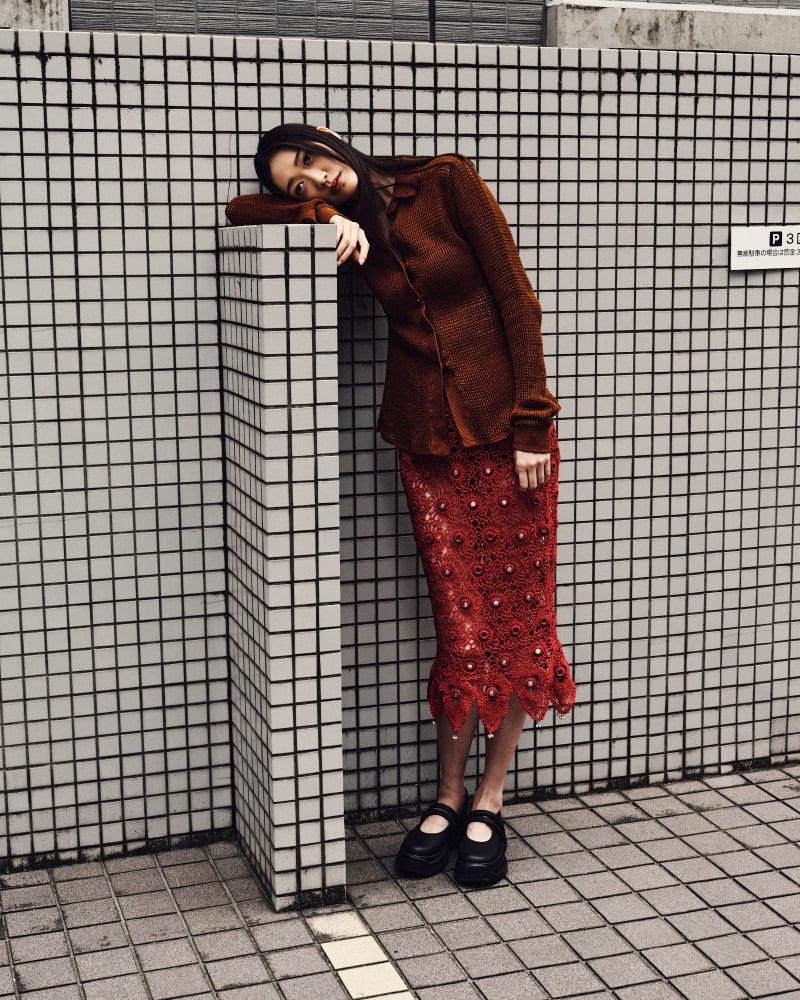
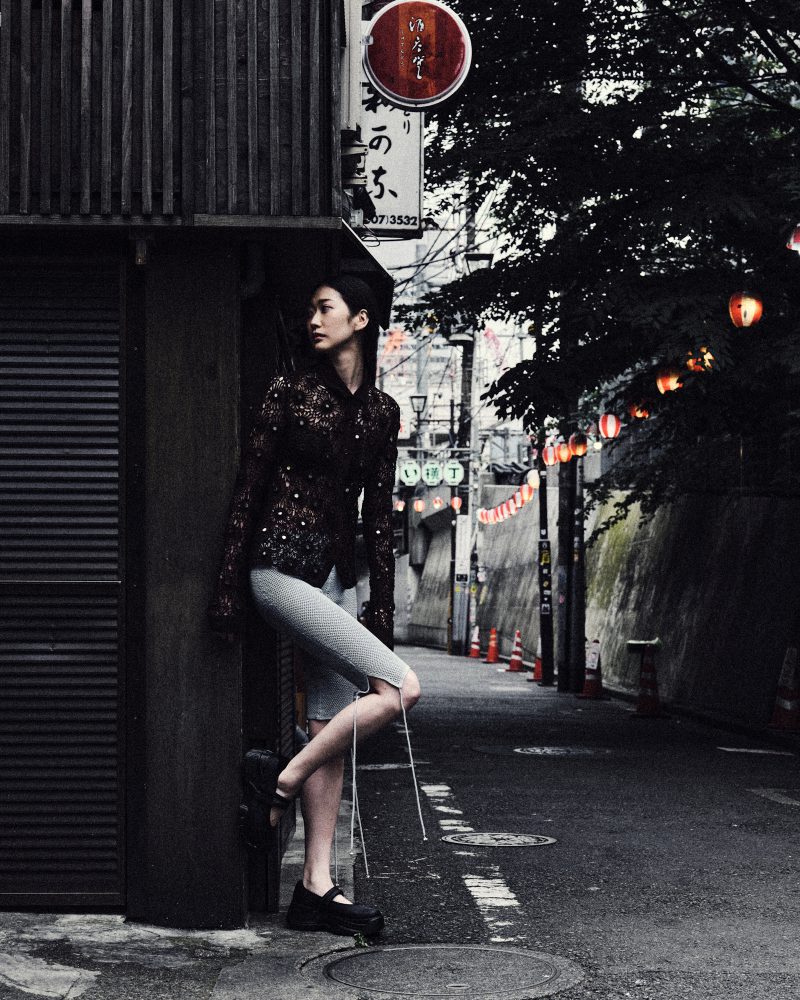
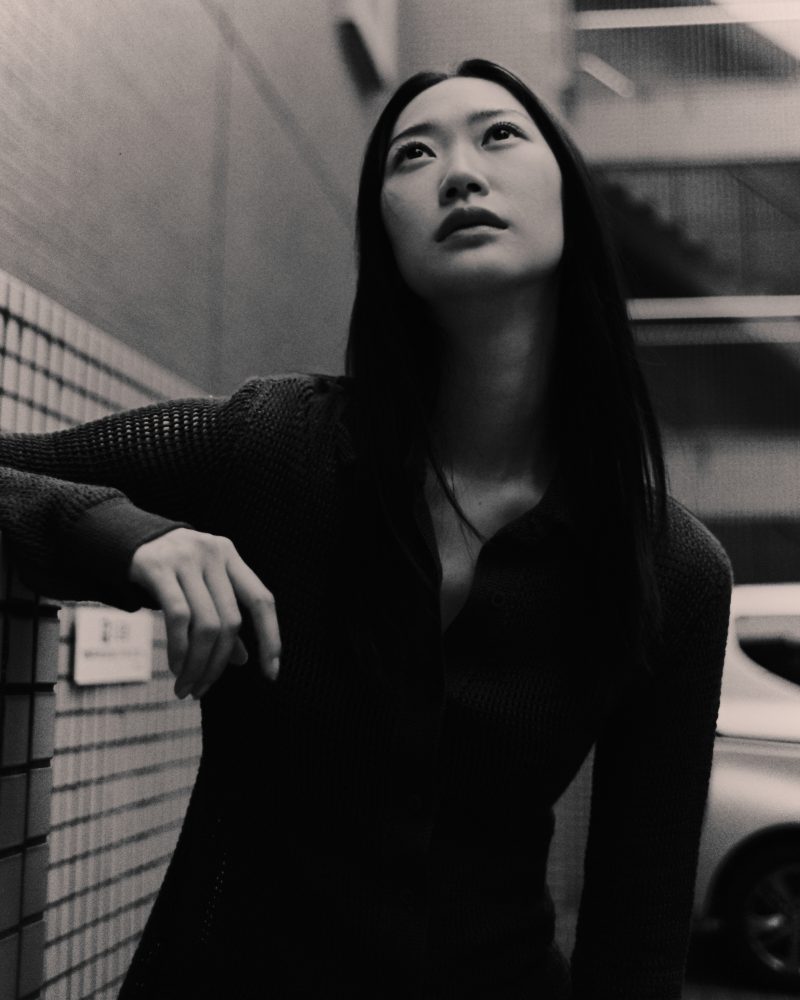
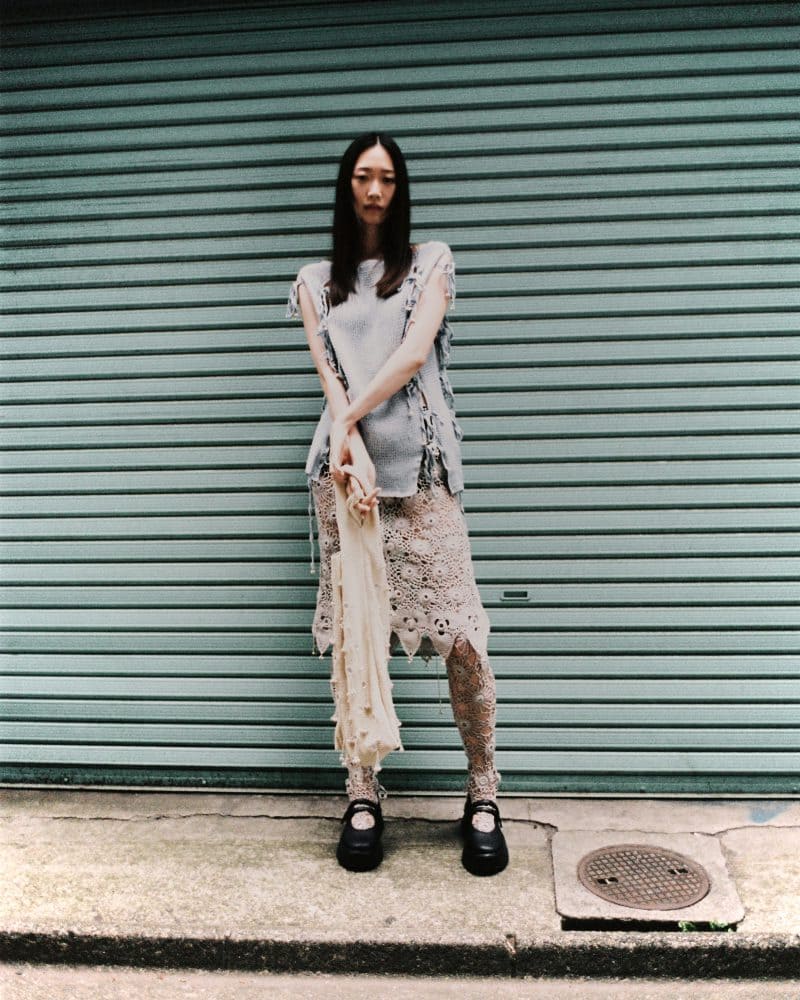
For decades, Tokyo has been portrayed as the quintessential symbol of modern-day speed. Yet what happens when the world’s fastest-paced metropolis becomes a setting for waiting? ‘Lost in Tokyo’ turns this perspective on its head, replacing movement with stillness and transforming the urban space into an emotional landscape. In this vision, the city is not a spectacular backdrop, but a discreet presence that invites us to notice what usually escapes our attention: moments of pause, detours, those instants when the body slows down whilst the urban fabric carries on with its course. Shot predominantly on film and using only natural light, Elie Bianco’s photo series creates an atmosphere that belongs more to memory than to the present. The grain of the images softens the frenetic pace and presents a Tokyo far removed from the hyper-technological aesthetic often associated with its Western image.
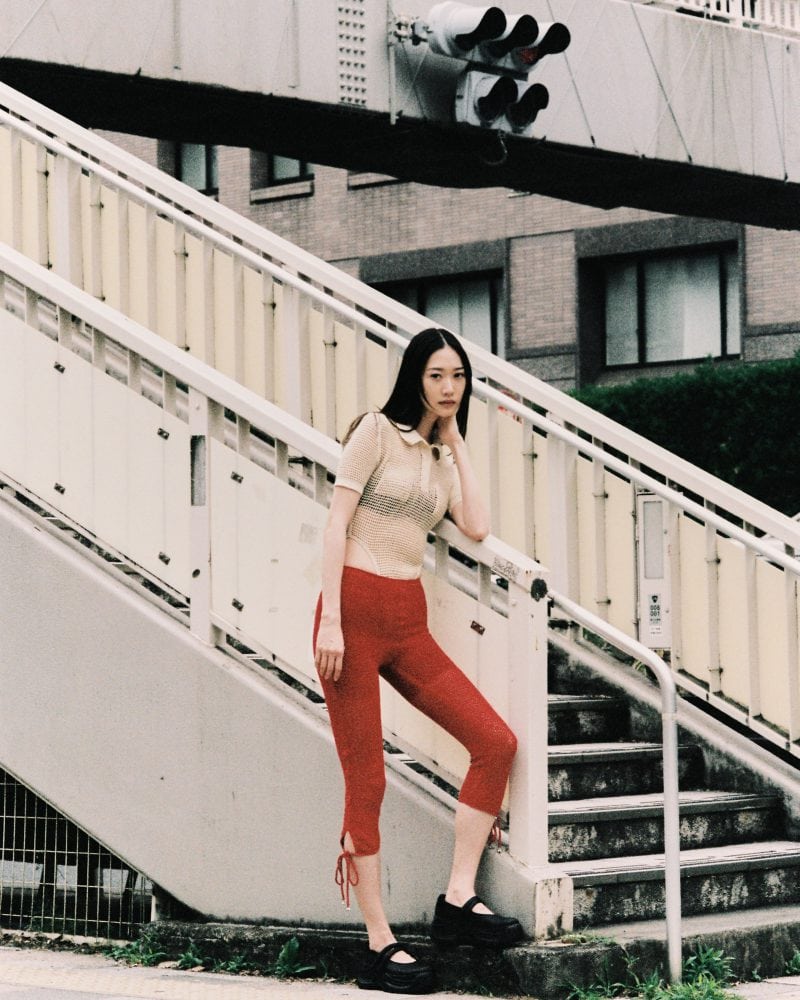
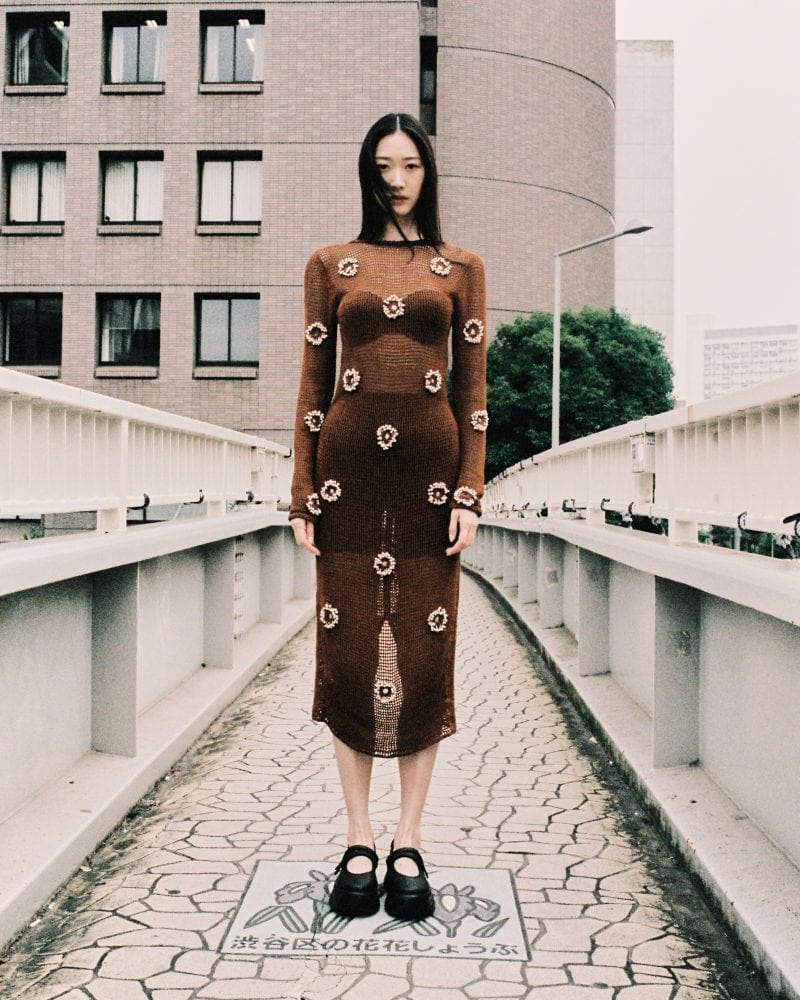
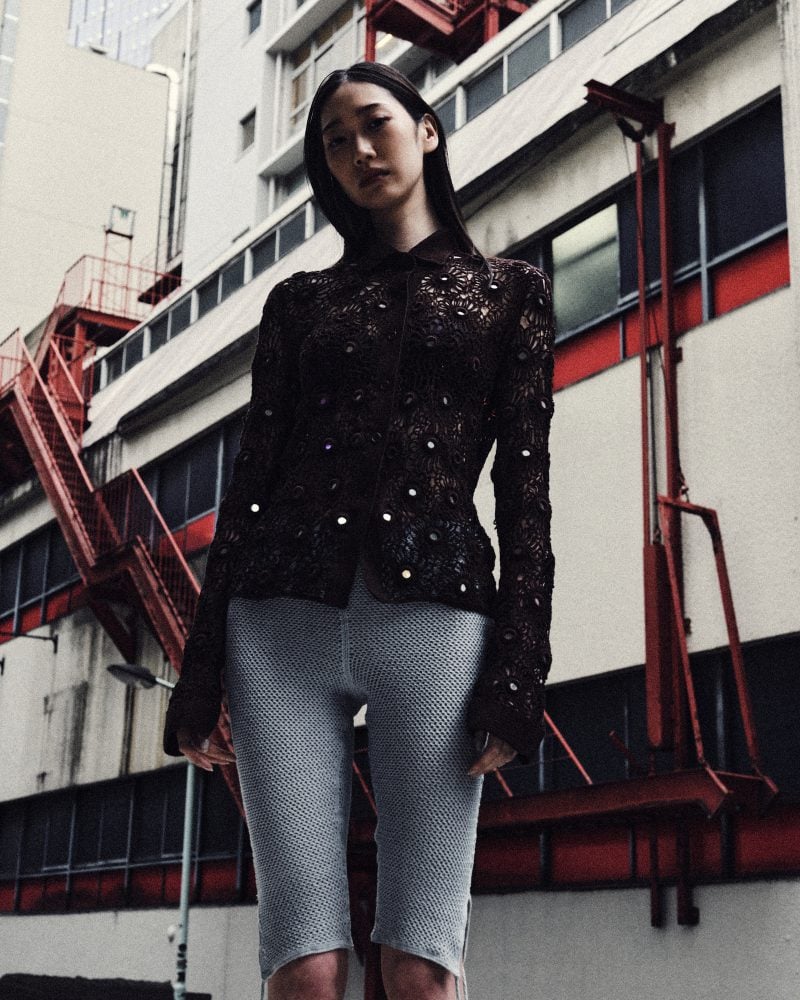
The reference is not to the neon lights of “Blade Runner”, but rather to the suspended melancholy of Sofia Coppola’s “Lost in Translation” or the contemplative pace of Wim Wenders’ “Perfect Days”, where everyday life takes on an almost ritualistic quality. In this context, fashion engages in a dialogue with architecture rather than overshadowing it. Openwork knits, crochet, floral embroidery and open weaves create a language defined as much by absences as by presences. It is a slow, artisanal craft that seems to contrast with the geometric rigidity of concrete, tiles and infrastructure. However, the contrast does not create tension: the garments ultimately absorb the city, reflecting its hidden rhythm. The floral motifs echo the street lamps dotting the alleyways, the open weaves harmonise with the electric cables criss-crossing the sky, and the form-fitting silhouettes express a vulnerability that the environment amplifies.
The protagonist, Enya, does not wander through Tokyo like a modern flâneuse, but experiences it with an almost alienating calm. Standing at the corner of a traditional, lantern-lit street, motionless in the middle of the road or suspended on a footbridge, she seems to defy the logic of having a destination. Her gaze is not searching for anything: she observes, waits, and allows the landscape to wash over her. Consequently, the city ceases to be a mere backdrop and becomes a measure of inner distance. It is precisely this choice that makes ‘Lost in Tokyo’ more profound than a simple tale of ‘lost’ youth. Being lost is not a dramatic condition, but an act of silent resistance. In an age that measures time in terms of productivity and speed, allowing oneself a pause becomes a meaningful gesture. Elie Bianco’s images suggest that, perhaps, the only way to rediscover a place is to stop, at least for a moment, looking for it.