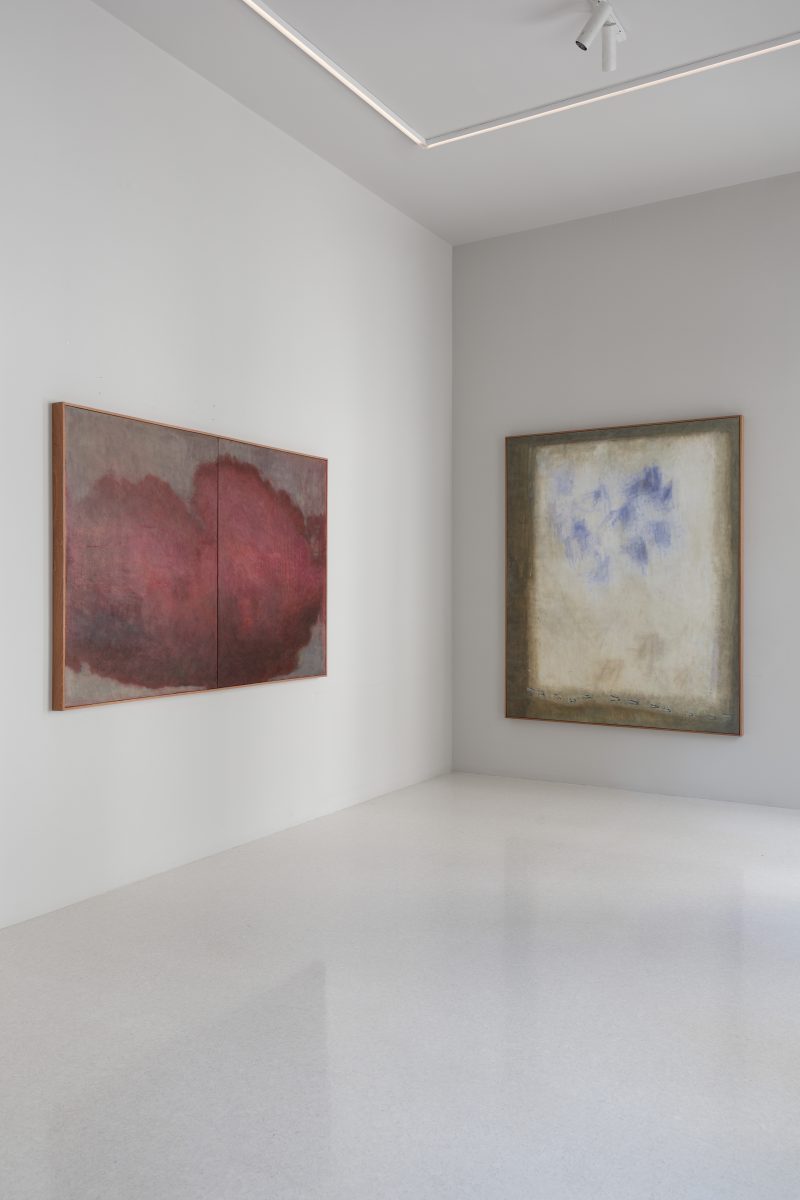
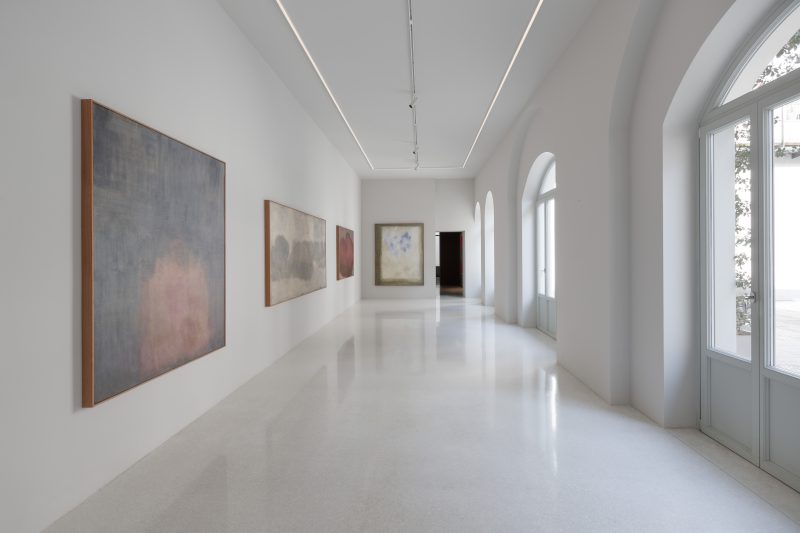
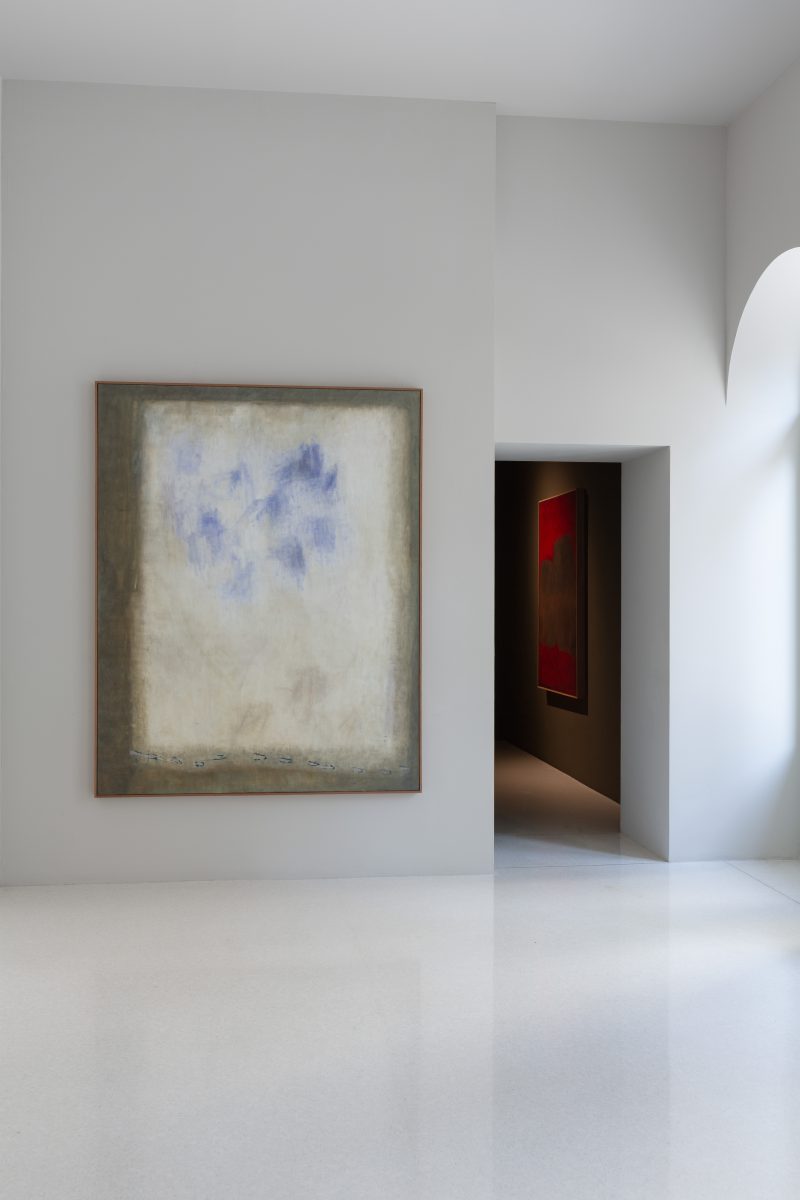
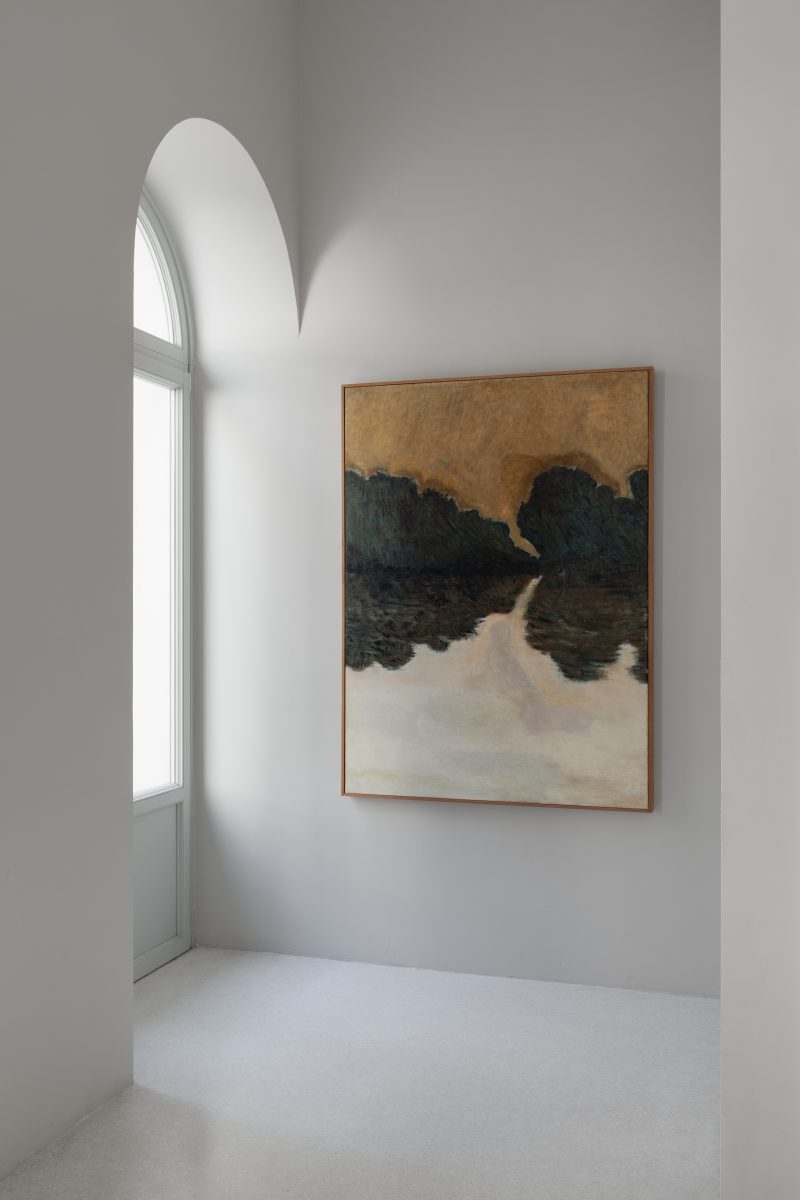
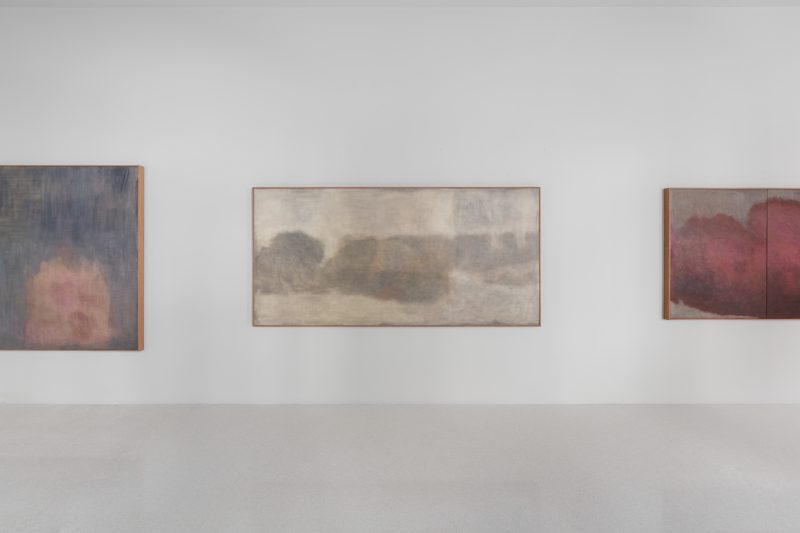
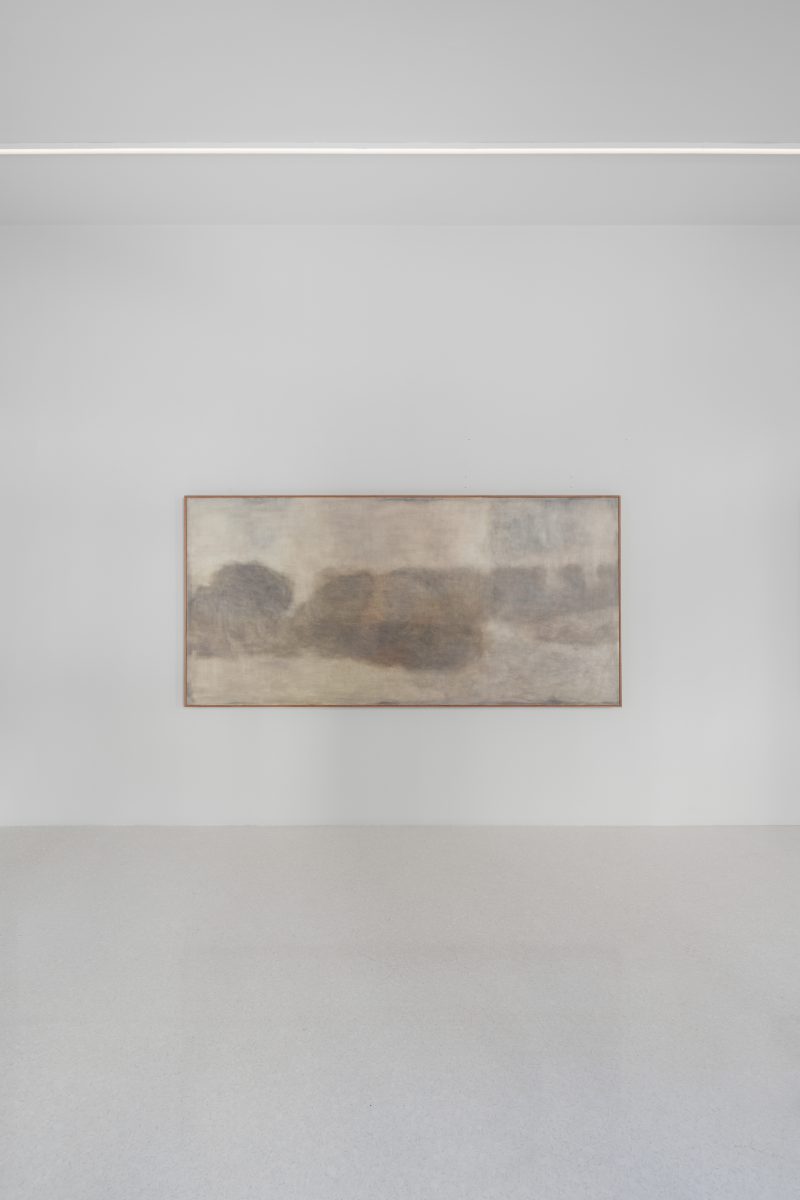
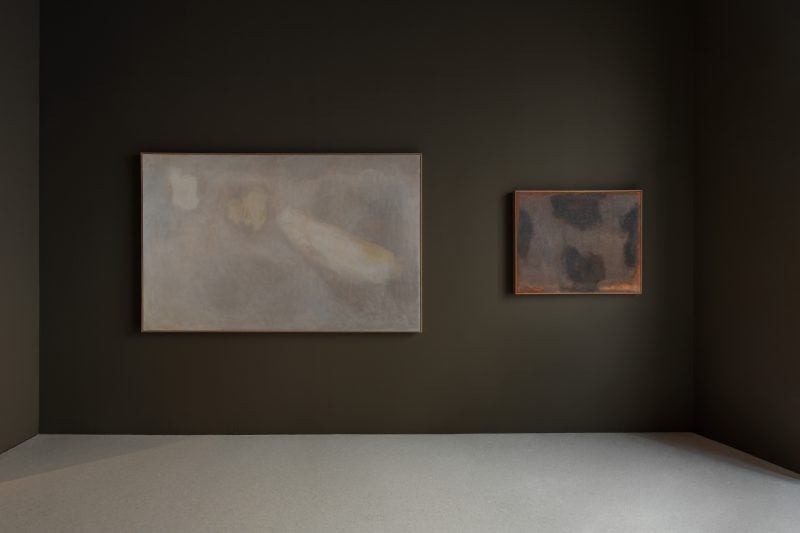
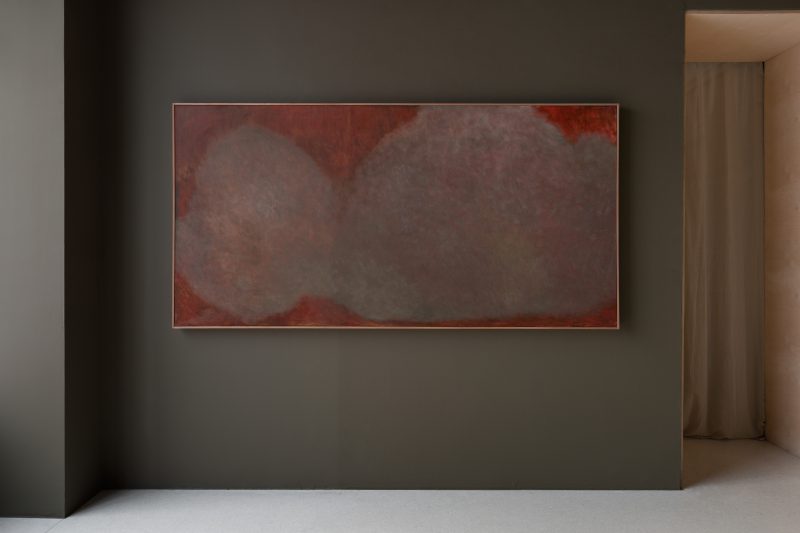
For Dutch painter Nuria Maria, the threshold between the interior world and the surrounding landscape is deliberately thin. In Blues Rouge, her solo presentation at Cadogan Gallery Milan (17 September – 17 October 2026), the home becomes a warm, introspective cell—a lens that filters light, changing weather, and passing time through stone and glass. Blending cool, melancholic blues with the radiant warmth of deep reds, Maria’s canvases translate domestic rituals, piano melodies, and natural details into immersive abstract compositions. Below, the artist speaks about framing atmospheres, expanding micro-details on canvas, and how the rural landscape shapes her understanding of home.
Athena Kuang: In Blues Rouge, the house in South Limburg acts as an optical chamber—filtering light, weather, and the passage of time through stone and glass. How has living in this specific rural environment reshaped your experience of domestic space, and where does the threshold between the interior and exterior world dissolve for you?
Nuria Maria: The rural landscape in the South of NL defines home to me. It’s the area I understand best.
The outside world and inside world—the play between interior and exterior—has always been a cohesive world for me, and that’s why I choose to live outside. It’s where I function better; I need the nature around the house not only for my work, but also for the way I understand myself. And yes, the house in the middle of that feels exactly like an optical chamber.
That rural environment enters the house throughout the seasons. I feel like I can better experience what moves me in my work when I live outside and am in the middle of it all: seasons changing, light moving, the smells and sounds. I like it when things feel complete like that. The threshold between the two should be as little as possible for me.
AK: Blues Rouge explores the quiet experience of observing the natural world from inside the home. How does watching the shifting weather and light from within a room alter your perception of the landscape outside, and how do those indoor vantage points guide the way you build atmosphere on canvas?
NM: The weather changes the form of the landscape; light can completely transform its shapes. And so does the mist, the vegetation, the colors of the season. I go out a lot, film and photograph. From filming in the past, I learned how to focus on framing an atmosphere and catching it; now I compare this approach to the window frame, the view—it is the canvas. The house is the viewing box.
Inside the house is the atelier. As I’ve described it before: the house as the warm, introspective cell, where things are reflected inwards and outwards, and history is captured in stone and objects.
AK: The title Blues Rouge combines two distinct emotional temperatures: cool, meditative blues and deep, radiant reds. How do these chromatic energies reflect the dual presence of abstraction and figuration within your canvases?
NM: The title Blues Rouge most of all defines a sentimental value:
The Blues stands for a musical blues—the melancholic tone. The Rouge defines it as a warm one. Seasons go round, and it’s an appreciation for that—the passing of time. It’s an atmosphere I know from a more silent type of life rather than a very social one. It’s also an atmosphere that, for me, has to do with living more outside rather than in a busy city.
The initial approach for the show was a very figurative one. The idea was to combine the more abstract type of landscapes I make with interior-based figurative works: still lifes, small paintings of rooms with pianos, windows, interiors, drawings of plants, and so on—the inside of the house versus the outside of the house. It was based on the moments I spent in the house composing piano compositions while living in the countryside. The video projection that is part of the exhibition reflects on this: a black-and-white composition of elements in the landscape combined with an almost Western-like piano composition.
Over time, the paintings for this exhibition all became very abstract, and it became perhaps one of the most abstract shows I’ve ever made. Yet all elements are in there, only often unrecognizable for the viewer. The play between warm and cold tones is one that came naturally.
AK: In several works, you expand small, intimate still-life elements into large-scale, expansive compositions. How does changing the scale of a familiar, everyday object alter the emotional response it evokes in the viewer?
NM: I cannot tell how it evokes the viewer, but I know how it triggers my own imagination when I apply a scale expansion like that. To focus on a few little spring petals in the morning dawn and make a large-scale painting of that changes the distance I feel to a subject. More than a distant viewer, I feel like I’m right in the middle of it all—in the middle of the scenery depicted, focusing on the details.
AK: Blues Rouge carries a felt sense of memory slipping away—that quiet attempt to hold onto a moment as it dissolves into the past. How does the act of painting allow you to reach toward these fading sensations, and how does the canvas preserve what has already begun to slip out of focus?
NM: When you make something, somehow it’s hard to avoid that “setting in stone” moment, because that is in a way what you are doing. Especially when one focuses on seasons, calling a show Blues Rouge—yes, I can imagine the nostalgic sentiment that could come with it. Yet, that is not for me what runs the theme: it’s about that atmosphere being in places. It’s about the presence of that sentiment, carried by nature. About a pleasant calmness, about history in materials, about that atmosphere itself that is not fading, because you know it.