There are places we continue to inhabit even after we have left them. They survive in our memory, change shape, and blend into our dreams. When we return to them, they rarely match what we remembered. It is precisely in this gap, between the real landscape and the imagined one, that Intimate Paths, the photographic project by the Greek artist Kosmas Iliadis, takes shape.
Born in 1991 in northern Greece, Iliadis returns to the places of his childhood to construct a personal geography made up of apparitions, absences and traces that are difficult to decipher. But it would be reductive to speak of nostalgic photography. Rather, his images seem to question the very reliability of memory, transforming familiar places into scenes where something constantly appears out of place.
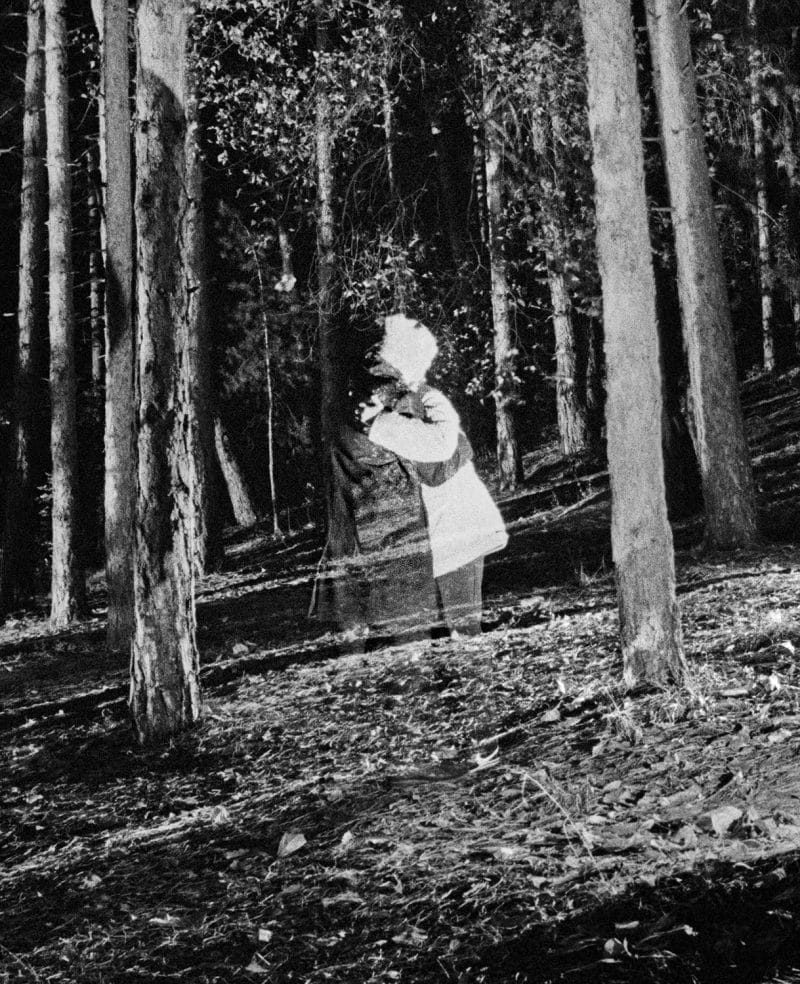
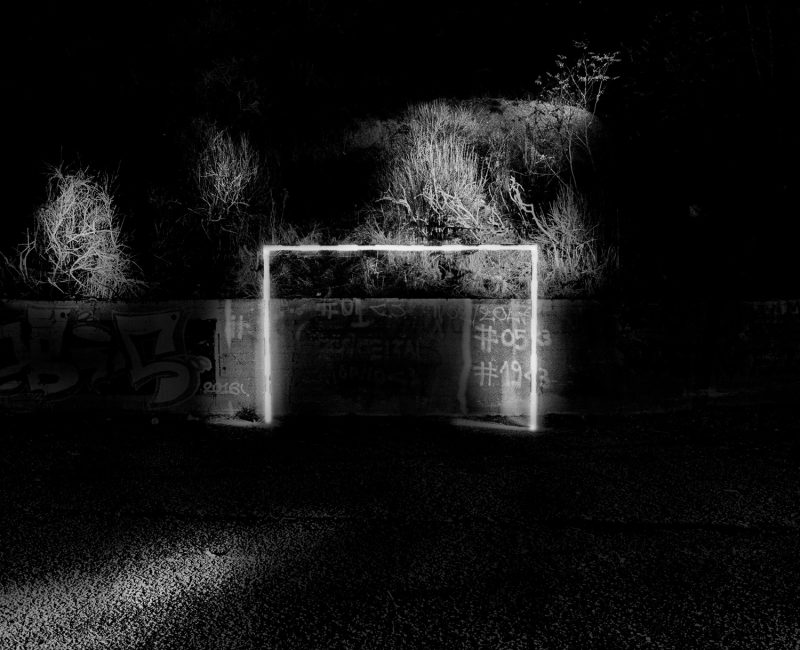
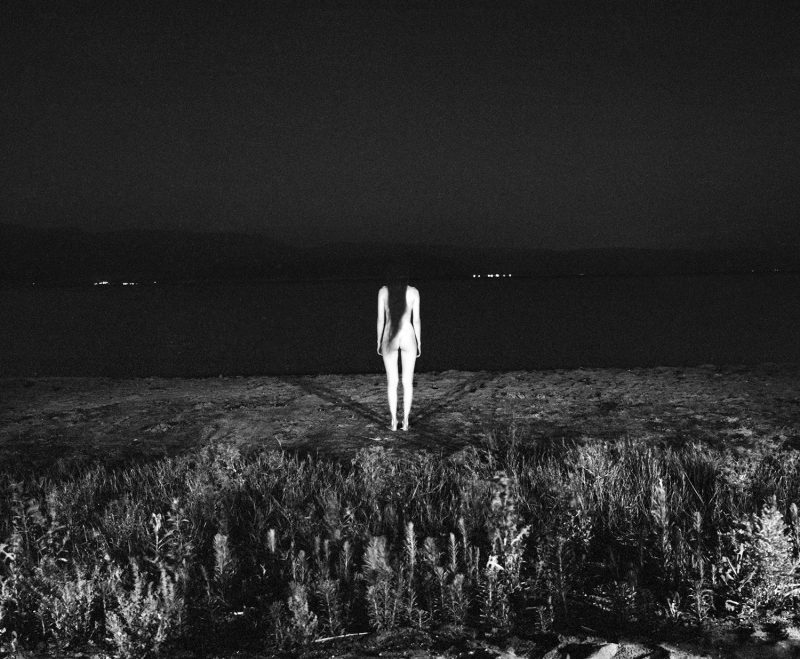
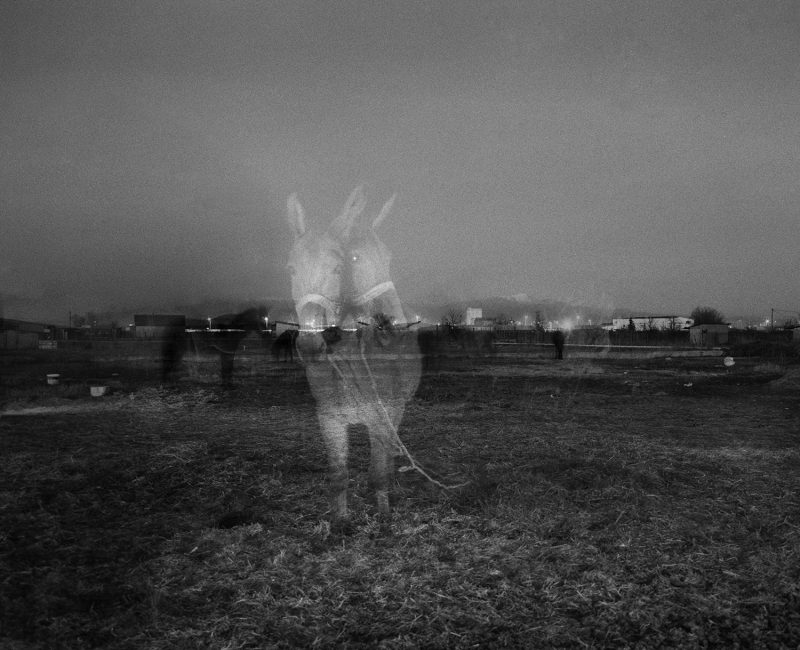
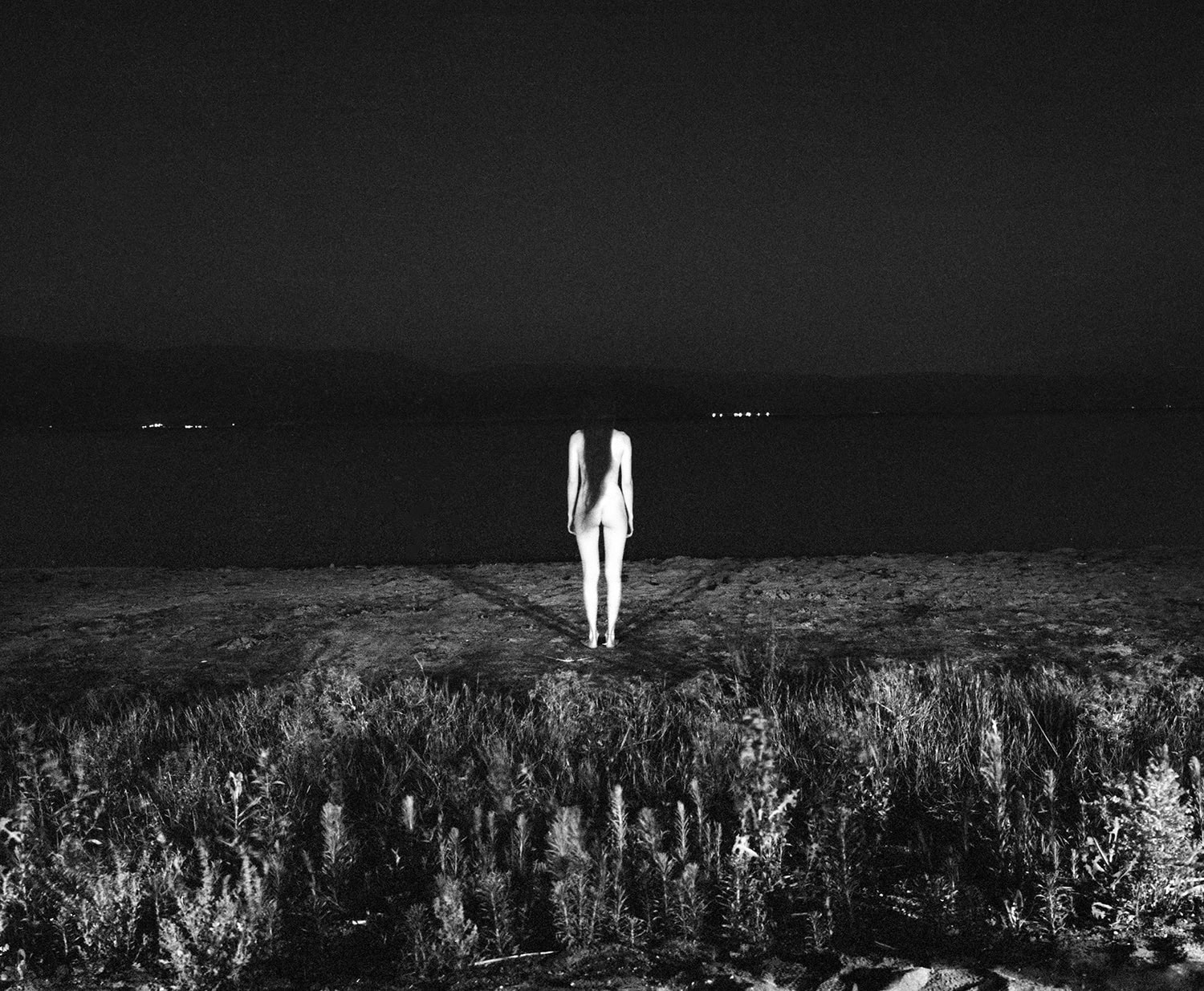
A female figure emerges from the darkness, motionless before a horizon that seems to swallow her up. Two horses overlap until they become a single ghostly presence. Elsewhere, a luminous structure pierces the darkness of an abandoned landscape, like a portal to a parallel dimension. These are images that offer no precise coordinates, but suggest the existence of a story to which we can only gain access in fragments.
The imagery inevitably brings to mind the films of David Lynch, where everyday life conceals a disturbing dimension, but also the suspended atmospheres of Andrei Tarkovsky, in which the landscape becomes an extension of consciousness. As in their narratives, here too time seems to lose any linear progression.
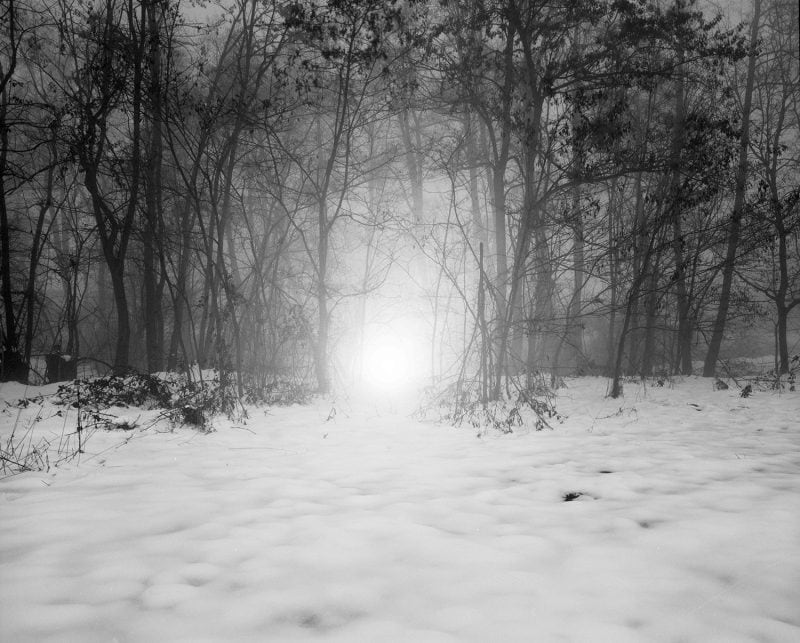
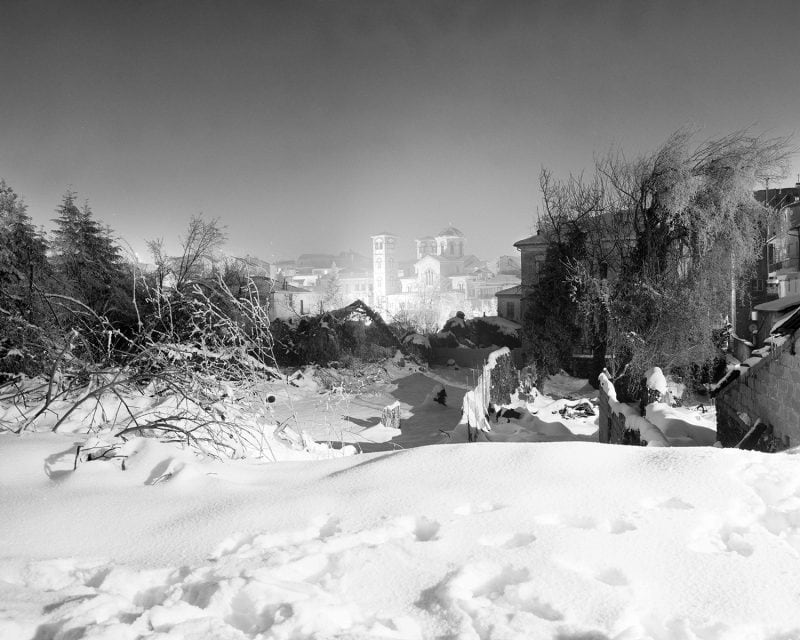
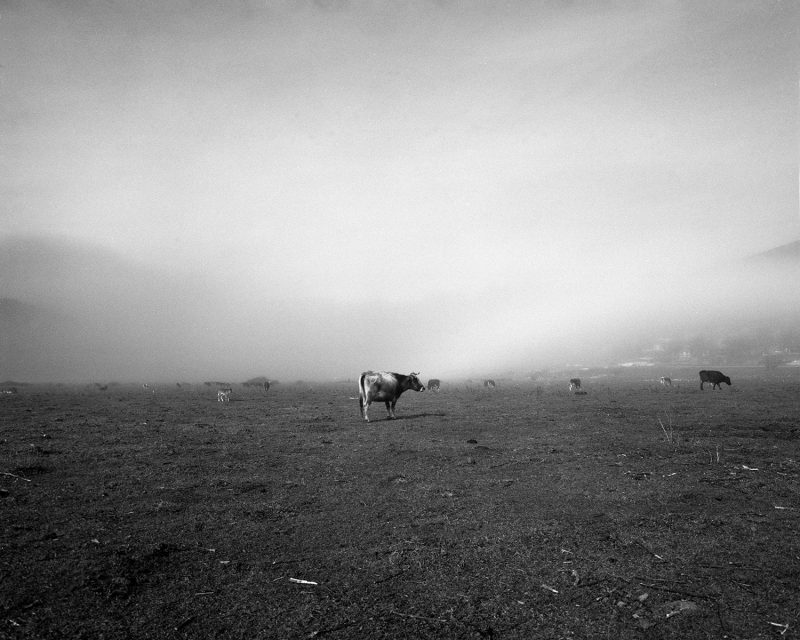
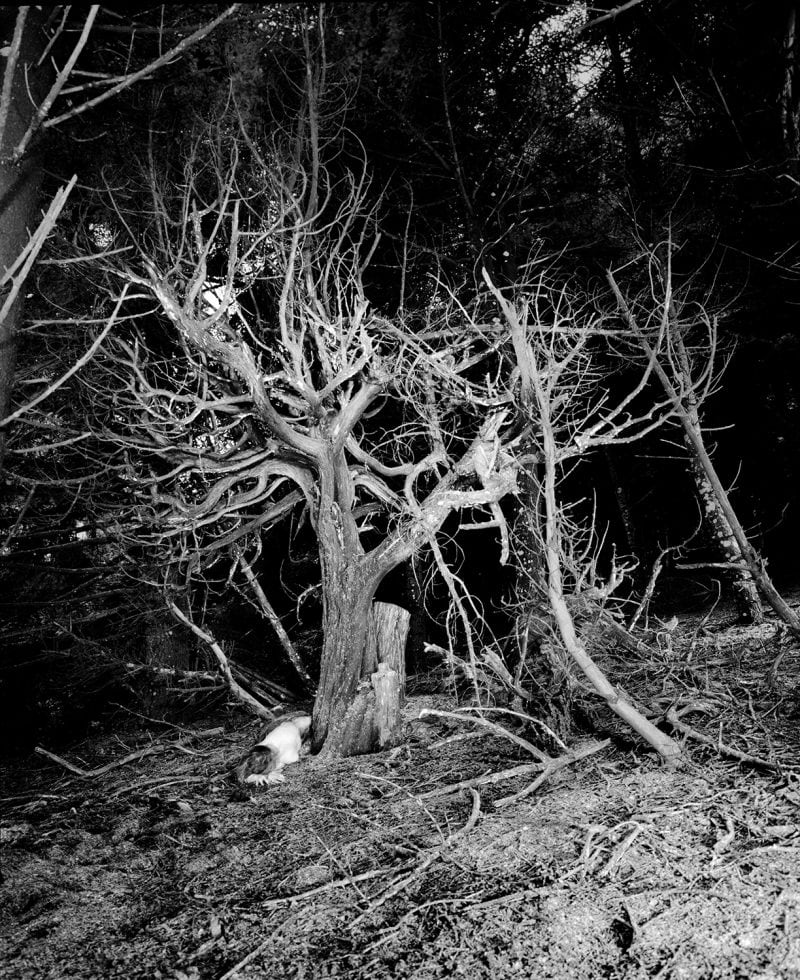
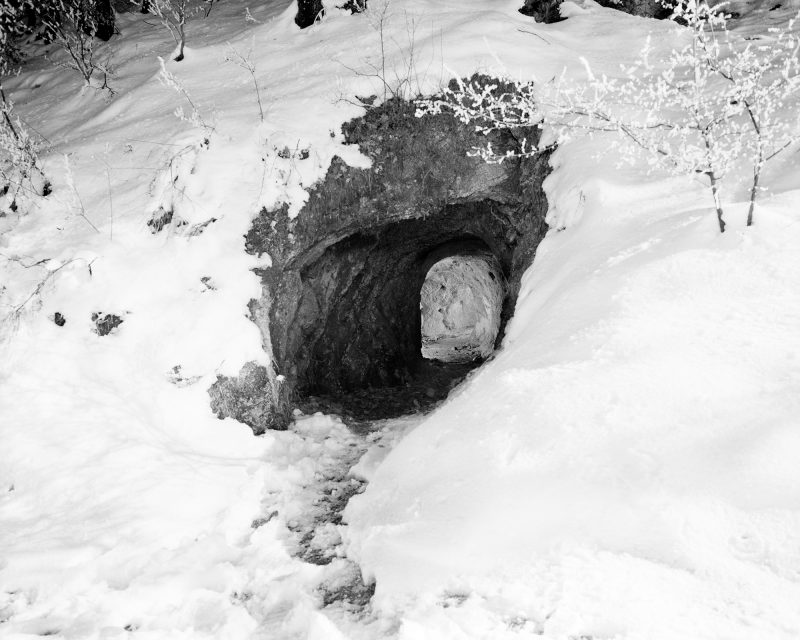
Black and white accentuates this ambiguity. The film grain, multiple exposures and extreme contrasts strip the photographs of their apparent documentary function. Snow becomes an almost abstract surface, mist erases boundaries, whilst an artificially lit tree takes on the monumental presence of a sculpture. Light does not simply serve to reveal: it selects, alters and, at times, conceals.
Yet what makes *Intimate Paths* particularly interesting is its relationship with absence. Even when human or animal figures appear, they seem to belong to a different time from the space they occupy. A person sitting in front of a tree, a cow isolated in the mist, a path carved into the snow: each element becomes a clue to something that has just happened, or that may never happen at all.
In a present obsessed with clarity and the need to document every experience, Iliadis champions the value of uncertainty. His photographs do not seek to reconstruct the past, nor to preserve it intact. Rather, they remind us that memory does not function like a photographic archive: it invents, erases and superimposes.
And that, at times, returning to a place means discovering just how much we have become strangers to our own history.