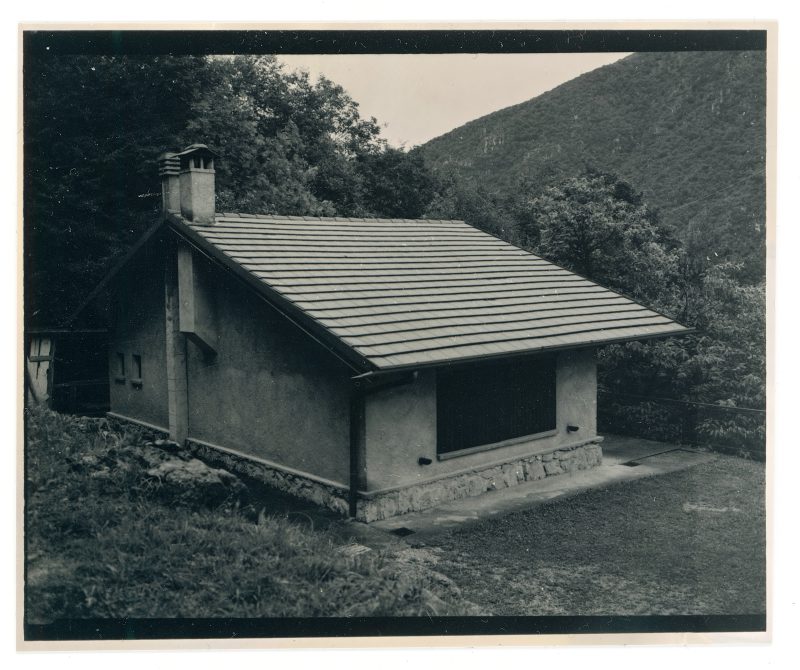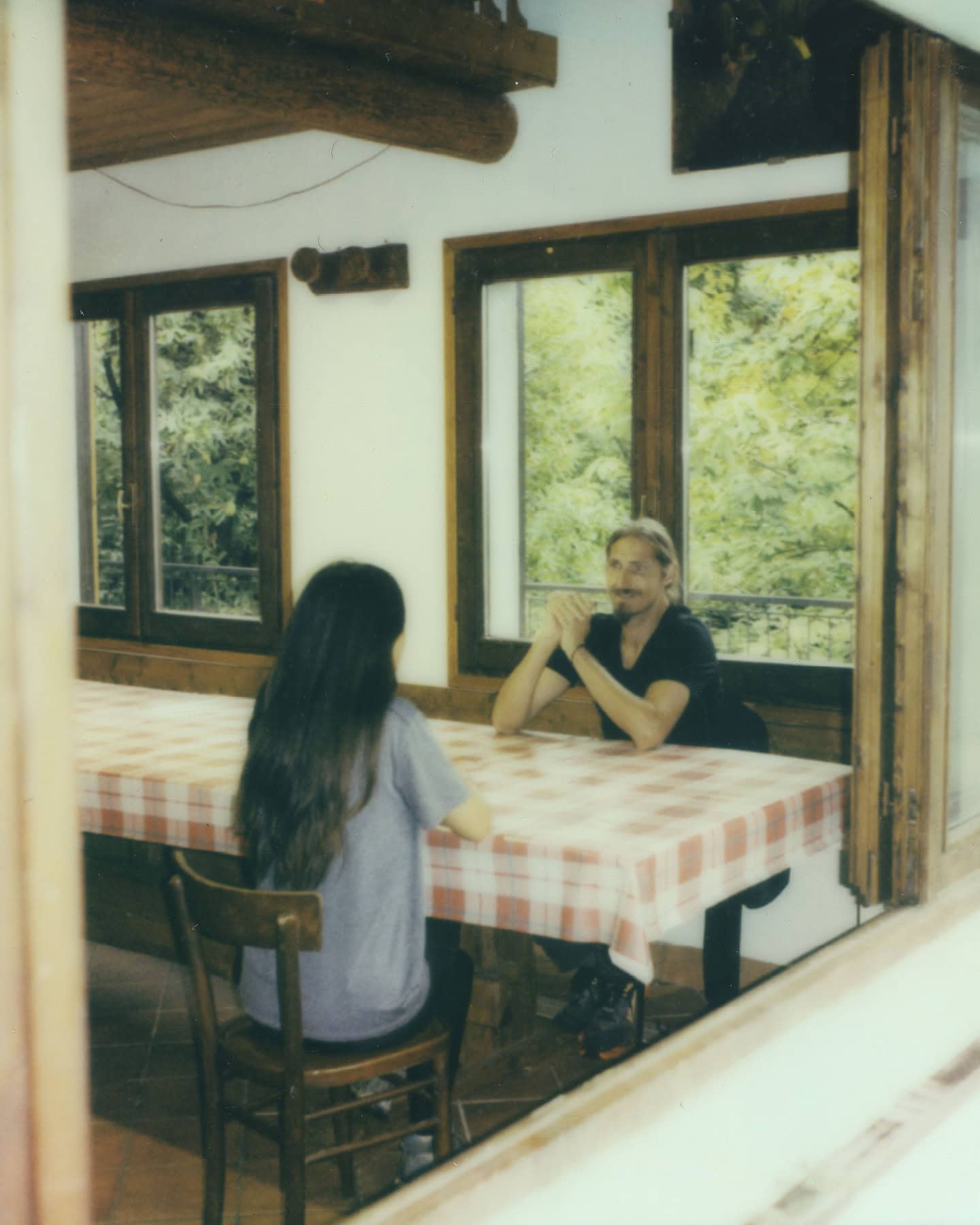
This story begins in Ballabio. Discovered through climbing, it became for Erin and Mark an ideal center for three reasons: its proximity to Milan, the ease of reaching the rock walls, and the deep sense of immersion in nature. From this starting point— both physical and symbolic—the entire visual project was built.
The bond with the environment emerges through compositions that often connect human profiles with the mountain lines. Space is never just background but part of the narrative: at times dominant, at times blending with the figures, even over-lapping them. Mark’s profile, in particular, echoes the outline of a mountain—a natural gesture turned into a narrative sign.
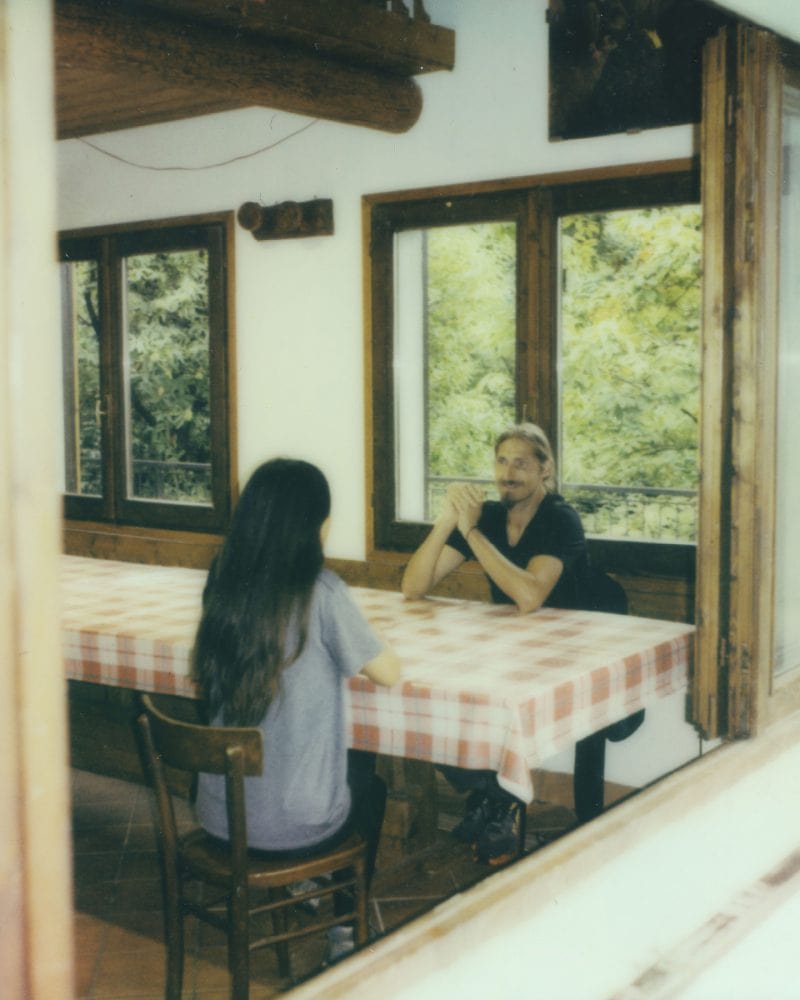
When asked to pose together, the couple always stood facing each other, never side by side. We chose to read this gesture as a narrative key: the exchange of gazes as a direct representation of their bond, communication, and the everyday construction of a relationship.
Ritamorena Zotti: Let’s start from the beginning: what’s your very first memory of kimchi, and what role did it play in your lives before becoming a business project?
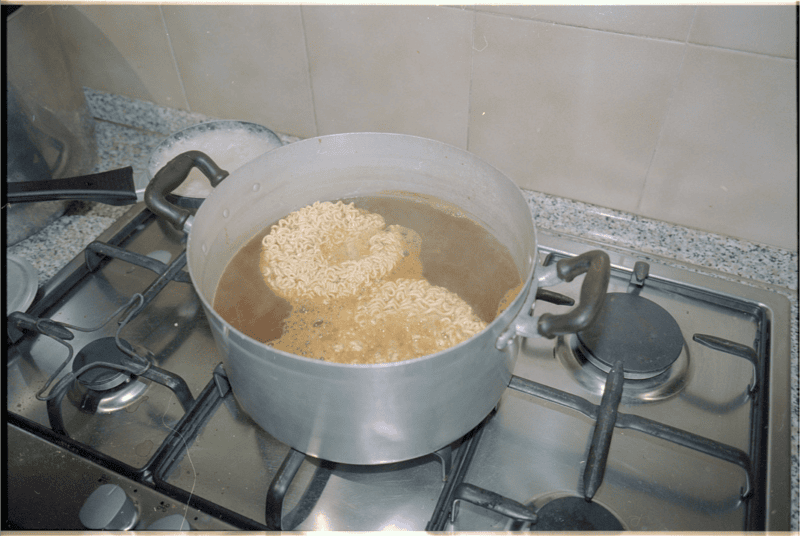
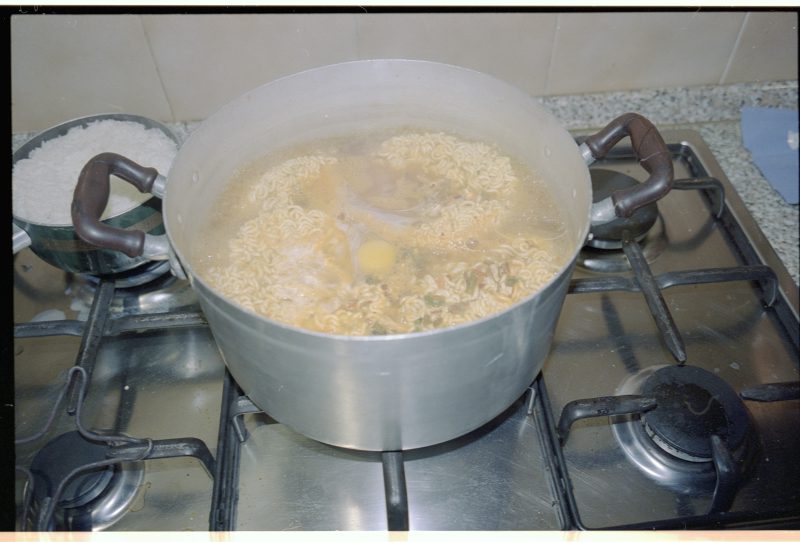
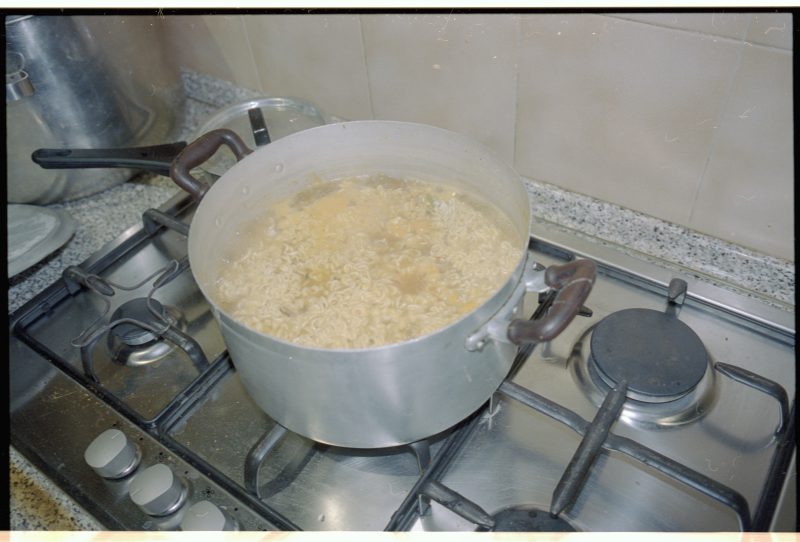
Erin Kim: I’ve been eating kimchi for as long as I remember. My mother would almost always make Korean food at home. Kimchi is served with pretty much every meal in Korea, so it was always on our tables growing up. I can’t really go without it for a long time and I know that many people with Korean background feel the same—my family members and friends even travel with little jars of kimchi on long-haul trips to Europe. When I miss home, I just want a little bowl of rice, instant Shin ramen, and some good kimchi, so we started making it and giving it out to friends. That’s kind of how the roots of the business began.
Mark Blackwell: My first vivid memory is unscrewing a tightly packed jar of kimchi which exploded all over my kitchen counter, the liquid fizzing and gurgling and spilling over. At first I thought something had gone terribly wrong but then read that it could happen sometimes because kimchi is alive. Rather than being turned off, I was fascinated. I cleaned it up, ate the rest of the jar, and kept one in my fridge ever since. After meeting Erin, a larger portion of the fridge was dedicated to it…
RZ: When and how did the spark come that made you think: ‘Let’s turn this traditional food into a contemporary brand, here in Italy’?
EK: As an American, the thing that struck me the most about Italy was the incredible attention to food, fresh ingredients, the regionality of the cuisine, and so on. And also the wholesome, no-preservatives philosophy. We started checking out farms which have been specialized in certain types of products for many many years, super local to the region (like taleggio in our area, mozzarella in Paestum, olive oil in Puglia…).
MB: In fact, daydreaming about farms and growing the ingredients to make artisanal kimchi was the spark. It was a beautiful day at the temple of the Oracle of Delphi, in Greece, and suddenly Erin said, ‘We should start a kimchi company!’. I don’t know if it was divinely inspired, but in an instant, I could see all the possibilities, and immediately agreed. We flew back to Milan and started making kimchi the next week.
RZ: How much of your personal stories—your roots, your paths, your encounters—can be found inside Kimchi Pop?
MB: A lot. Erin is Korean, so this business grows directly from her roots. Korean cuisine definitely became a big part of my life when we met. As Italians know, cuisine is a huge element of culture. Erin’s mother was pleased that I loved even the most intense flavors.
For me, I think the root was a desire for greater self-sufficiency and health that grew out of my time spent climbing and immersed in nature. In Italy, where the quality of food is so high, but kimchi is harder to find, everything came together, and the idea sprouted.
EK: Yes, it’s very personal for me! My parents are first-generation South Korean immigrants living in the United States, and I was born and raised in the USA. I was lucky because my parents made me go back to Seoul and Daegu to live with my grandparents and attend a summer school to study Korean. Also my mother regularly packed my lunchbox with Korean food, which I shared with my American classmates. Now that I’ve moved to Italy, it’s nice to share that tradition here.
RZ: Fermentation is a slow, almost meditative process: how does it reflect the philosophy with which you’ve built your brand?
EK: Unlike some other types of fermentation such as bread and yogurt, kimchi doesn’t require a culture or starter. We prepare the vegetables and salt them, but in the end, everything unfolds on its own, like a sort of miracle. We don’t pasteurize it and then add new agents so we can control it completely, as is done on an industrial scale. We want it to have a life of its own.
MB: The process is indeed meditative. It’s a science, but also an art. It can’t be rushed. There is an aspect of letting go, and of discovery each time. The journey of the company has been much like that: we certainly have plans and timelines for the business, but it has required patience, of course, and also surprised us so many times. We’ve learned so many new things we never expected along the road—about nature, our adopted country, the food industry, and of course, ourselves.
RZ: The name Kimchi Pop is simple yet layered with meaning. How did you choose it, and what does it represent for you?
EK: Mostly, it’s onomatopoeia. When you open a jar, it can pop due to the buildup of carbon dioxide from the fermentation—though we’ve learned to pack it in such a way that it doesn’t usually explode out of the jar. It’s also a bit of a play on K-Pop, which has played a huge role in spreading awareness about Korean culture as a whole globally. Also, ‘pop’ is similar to the Korean word for ‘rice’ and also just food in general (밥; which is pronounced bap). When you go to your Korean friend’s house, it’s common for the mother to ask, ‘Have you eaten bap yet?’—meaning, ‘Have you eaten yet?’—as a sign of care and concern for your well-being, and also to welcome you into the home. For us it’s a fun name, and a fun project—at least on most days.
RZ: From the jar to the pop aesthetic: packaging and communication are integral parts of the experience. How did you build this visual world?
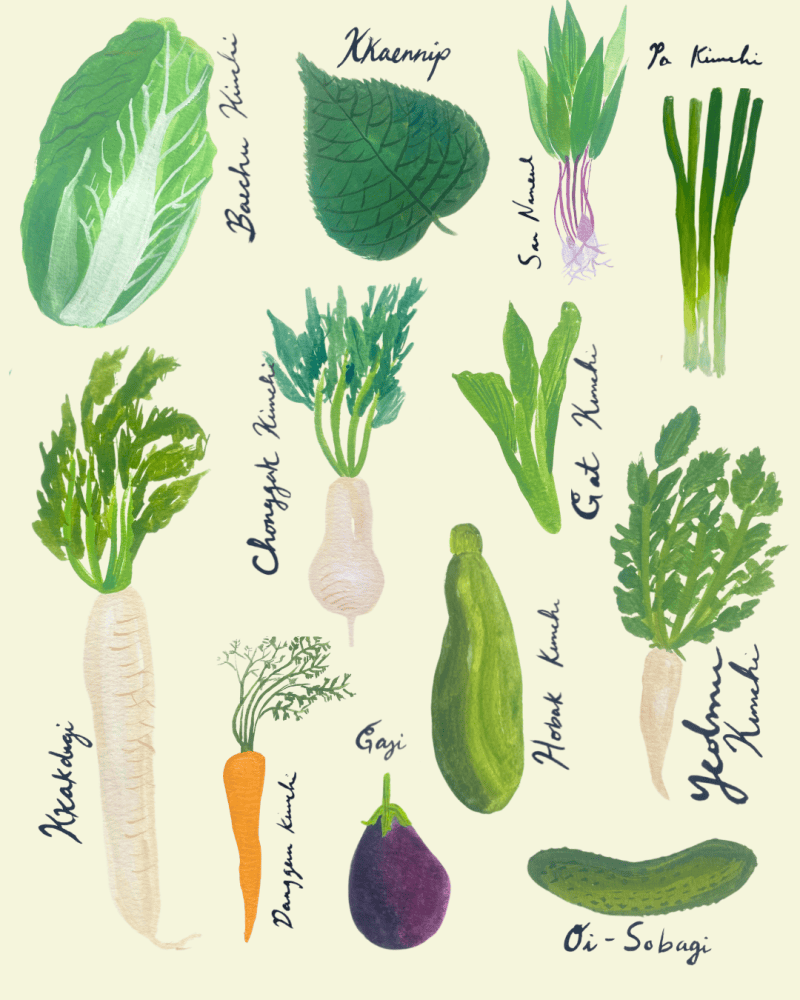
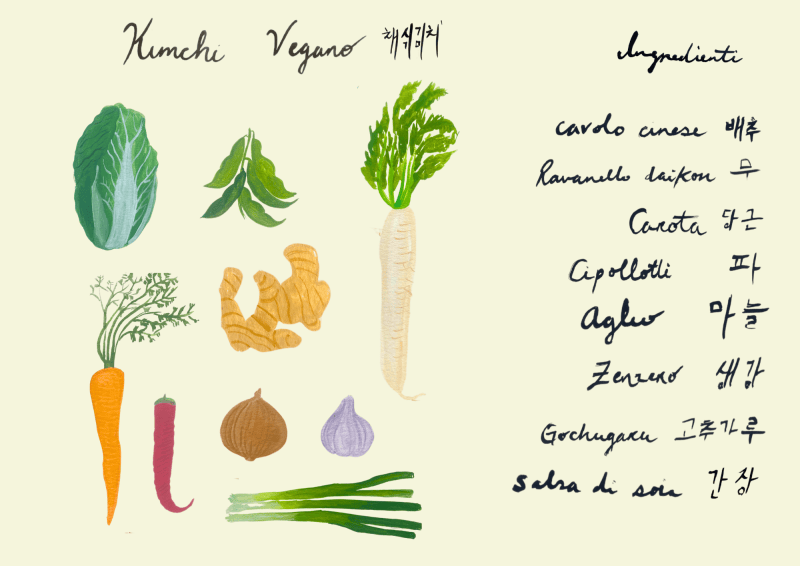
EK + MB: We worked with our friends at Paper Paper Studio for branding and packaging. We wanted something that was pop and fun, but also elegant, and we wanted to pay homage to Korean culture in some way. The logo and overall identity was inspired a little bit by hangul, the Korean writing system. The visual world is also inspired by all the fun colors in Korean food. If you look at a Korean table setting with its dozens of side dishes (반찬; banchan), you see a ton of beautiful colors.
RZ: What have been the most beautiful or unexpected reactions from people tasting your kimchi for the very first time?
EK+MB: We love seeing italian chefs use our kimchi in unexpected ways—even on pizza. It makes us proud because of the stellar culinary tradition here.
And while we initially thought kimchi was going to be more of a young people thing, probably someone living in a big city, we’ve had nonnas and pensionati try the product and tell us they’re obsessed with it. That’s been incredibly gratifying.
RZ: If you had to tell Kimchi Pop as a story, not as a product, what would the plot be? A story of memory? Of contamination? Of the future?
MB: I think it’s a love story, as corny as that sounds. We fell in love in New York, and shared a passion for Italy that led us to move there. I would say the other plot is transformation.
EK: Our careers in NYC were totally unrelated to the food industry. I worked in the art business, and Mark in art and real estate. If you told us five years ago that we would live in a small mountain village in Italy and run a kimchi business, we would never have believed you. But here we are. While I still love art and have taken up painting again, my priorities and aspirations have changed quite a bit. And the transformation continues—there is still so much to learn and explore for us, and we’re fortunate to have a great community of friends and collaborators to learn from.