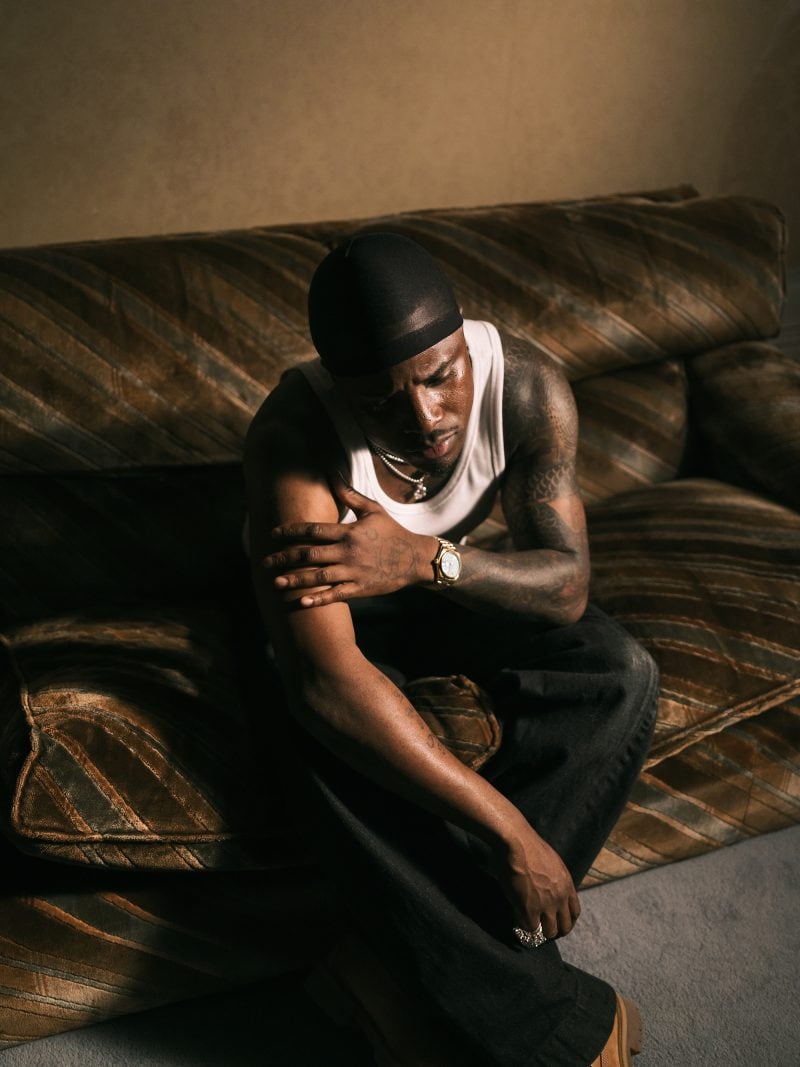
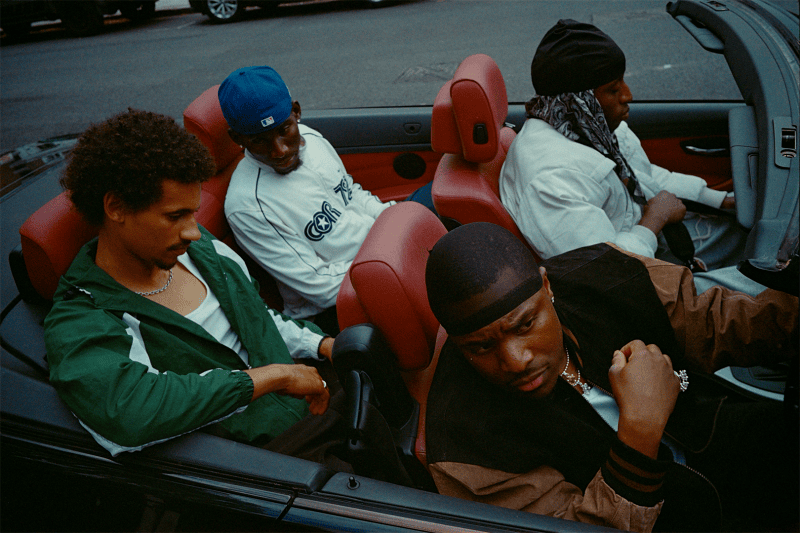
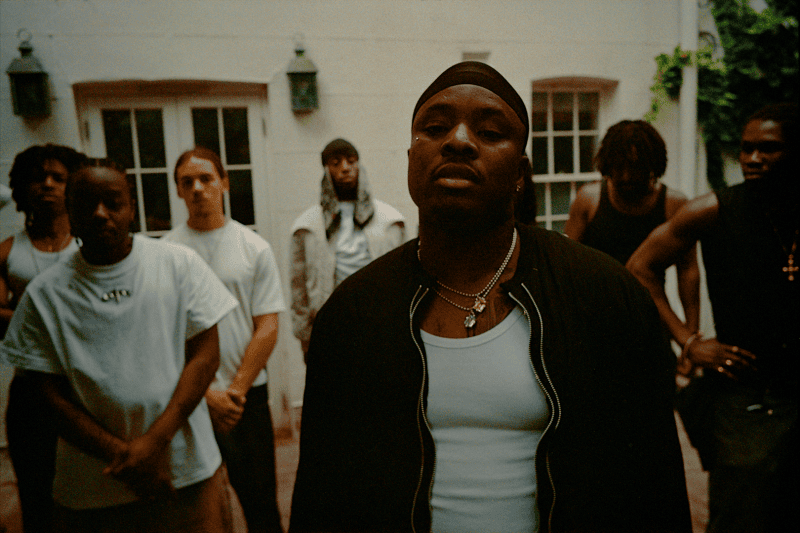
.idk.’s life has always moved at the edges—between survival and expression, confinement and freedom, rage and reflection. Sentenced as a minor to 15 years, he discovered rap behind bars, turning isolation into voice. His new project, E.T.D.S., drops Jan 23, in close reference to 2025, the year he would have walked free had he served his full sentence, and unfolds as a meditation on alternate lives, reform, and the weight of choice.
Spare, searching, and unguarded, this conversation finds .idk. speaking from the fault lines of memory, discipline, and belief. In dialogue, he reflects on the moral codes shaped by incarceration, the frustrations of an industry that confuses commerce for conviction, and the long arc of a life redirected by instinct rather than permission. Moving between childhood desire, alternate futures, and the slow unraveling of remorse and compassion on E.T.D.S., .idk. articulates a practice rooted in honesty above all else.
Athena Kuang: Before we go to the past, where are you right now creatively, emotionally? What’s the temperature of this moment for you? What’s inspiring you?
.idk.: Creatively, I think I am motivated by frustration, with people specifically in the music industry, the way that people don’t seem to take at seriously, unless it, goes hand in hand with commerce, to a certain degree. And I think that that is the main inspiration for this record. It just comes from a different set of principles and morals from when I was incarcerated.
AK: You exist at the intersection of artist, educator, and designer. How do you navigate these different worlds while keeping a singular creative vision?
.idk.: I think I’m just a realist. I just say what I believe to be real. As far as the other intersections, those are things that probably connect to my original DNA since I was young, they are all things that may have been seeds that were planted at a younger, earlier age, be it fashion, or even just music. I wrote poetry when I was in the 6th grade. I was made fun of for not having certain clothes. I wandered off into my own world of self expression, via, clothes, or style specifically. But, all of those things, education even. That’s all from me wanting music to work so bad that I taught myself how to properly use commas and how to properly spell, and how to write properly because my school system failed me, you know? So I say it’s all in my DNA. It’s all a part of the younger me, and the seeds that were planted then.
AK: Do you remember the exact moment that the idea of being an artist first entered your body?
.idk.: My first song I ever wrote was in the 7th grade and it was about North Face jackets. I guess I manifested it because I didn’t have one, but I wanted one that, and then everyone in the school system had, well, not everyone, but the people that were fortunate enough had them. I wanted it so bad that I just made a song about it. And I performed it at the lunch tables, and that kind of gave me one of the first parts of inspiration, and later on, I got another spark of inspiration when I was in boarding school in Kentucky. I got in trouble for being really bad, and getting kicked out of all the schools back home. So, they sent me to boarding school in Kentucky, and I, at that moment, is when I discovered, like, 808s & Heartbreak and Tha Carter III by Lil Wayne, and I started to write rhymes. There weren’t songs, but there were rhymes. I didn’t do anything with that, really. And then later is when I went to prison, and I started to really say, let me try to make a mixtape, and I wrote a series of songs, and that was what led to where we are now.
AK: The heart of the album itself is that it’s tied to a date that could have been your release, a version of your life that never happened. What do you think about that alternate timeline? And who do you imagine walks out of that prison?
.idk.: If I would have been in prison this entire time, I don’t think I would have came back worse or bad, I just think that I would have came back with the lack of ability to dream in the way that I, probably was able to, when I got out of such an impossible place to get out of. I think I was watching something on accident, and the algorithm took me to this conversation Robert Green was having with another person on a podcast, and he mentioned that our ability to connect emotionally to our goals and our aspirations, that burning desire lives in us, and it’s the strongest in our 20s. And then in our 30s, you can still be there, but it dies down, especially if you have kids, and in our 40s, it dies down drastically. And then obviously, in our 50s, a lot of us are kind of where we are, that’s where we see with our parents, and things of that nature. So I’d be getting out in my 30s, I probably wouldn’t have the desire and the passion that I needed to make it in the music industry, if I was just getting started in my 30s. So I think that would have been the alternate thing. I think I would have been a barber, to be honest. I probably would’ve been cutting hair.
AK: Prison is designed to flatten individuality, to make you conform. Did you feel like there was a part of yourself that refused to be erased?
.idk. It’s the part of me being honest. I find it very tough to not be honest with people. Be it criticism or just me saying what I do like about something. It bothers me, it pains me to be dishonest, and a lot of that comes from what I call, at the most pivotal years, in my opinion, of my adulthood, and specifically my manhood, I think that I was in prison, and I had to learn certain principles and morals to survive. Prison is not a place where you want to be dishonest with people. Prison is not a place where you want to make promises you cannot accomplish or achieve. That leads to many, many problems, some of them can result in debt, some of them can result in serious injury. Some of them can result in you staying in prison longer than you wanted to. That’s one of those things that I was able to pick up then, and it carried over into where I am now. That’s why, where a lot of the frustration was being realized, because the industry can be quite the opposite, you know? A lot of the opposite of what I learned to be the right way to go about life. So those are the things that I think, and that’s one of the things that cannot be changed.
AK: About the project at the album itself, you’ve mentioned that it’s a meditation on reform. And I wanted to ask musically, where does that meditation sit: between rage, stillness, forgiveness or something else in between?
.idk.: At the end of the album, we kind of see that I am, I have certain regrets, which is something that a lot of people don’t like to admit, especially where I’m from, no one likes to regret anything, but I do, I regret, how I made people feel when I essentially had their lives in my hands, and they were very afraid, you know, those are some of the things that led to me being incarcerated. Me being 17 years old at that time, I don’t think I had an understanding of what life actually meant, not only to myself, but to other people. I was kind of numb to it. And as I got older, I started to feel the pain of those people who were on the other side of, you know, to say the weapon. And, I started to gain a certain level of compassion. And I think that the album, when you listen to it, starts off quite aggressive, and with a lack of remorse. And then, as it starts to, the layers start to peel back, you start to see certain levels of vulnerability, and where I do actually care, and then why I did some of the things that I did, and then how I feel today, and what I look to do later. So that journey is expressed, throughout the body of work, the best way that my heart would allow me to express it.
AK: What did the process of creating the album look like? Were you building the story first or letting the sound lead you?
.idk.: I have a story in the back of my mind of what I want to talk about, but usually the sound brings out feelings. When those feelings started to come out, I realized there’s usually a thread that I started to realize exists. And then when I see that thread, that’s when the true vision starts to come to life. And then in the back of my mind, that vision is always there. It’s very rare that I will write an actual rap. I usually just get on the mic and say what happens in my mind. And because it’s in my subconscious often, I’m able to make certain decisions, musically, that ties back to the concept, and it just comes from years of doing this, you know? I mean, I’ve been doing this for quite some time now, and it’s become quite easy in that sense.
AK: The album features legends—MF DOOM, DMX, RZA, Madlib, Goldie. Each of these artists carries their own mythology. How do you navigate that when weaving their voices into a deeply personal album like E.T.D.S.?
.idk.: Everything I do musically is spiritual. And I hate to sound cliche because it actually is annoying to hear people say that and it may not be true or it may sound like the cool thing to say. I would never block my blessings by lying about that. I truly, truly have a spiritual connection that allows things to just happen and allows things to be. Specifically on the MF DOOM part. That’s a great example of what I mean by that. That verse was done in 2017. And it was a piece of a verse that I ended up not using the whole thing up. And when DOOM, when it was time to put this together, I was making a song, and I happened to go check his vocals, I was like, you know, let’s just close this chapter. It’s not an actual feature, ’cause I don’t want people to think he did a verse on there or anything. I want it to be more of a surprise that people hear and determine what they want it to be, but I don’t want to anticipate more than what it is. And when I started putting it together, I was shocked because he happened to be talking about prison. That whole piece of that verse, he was talking about prison, and talking about being locked up for a decade, and over a decade, and all that stuff, and I really, like, got the chills because, that’s what I mean. Those are the kind of things that happen to me. I just allow it to be, it won’t happen if it’s not supposed to happen. RZA and I had a conversation, one conversation. And then he said, I’m gonna listen to the song, and if the stars align, and if I get that feeling that I need to create, and whatever comes out, comes out, then I’ll send it to you. The next day, he sent me that verse. He didn’t say much after I didn’t even know he listened to the song. That’s how music and collaboration should be. If it’s not in the studio, it’s kind of just this organic thing that makes sense because it spoke to the other person on the other side. I’m a producer first. So I’m able to kind of make sense of a lot of things that maybe a lot of artists won’t know what to do with, you know?
AK: If the person who first walked into the system could see everything you’ve done now, the installations, the partnerships, the album, the book, what do you think he would say?
.idk.: My theory is, If you, if I’ve seen it done before, I can do it better. And obviously, that doesn’t apply to anything that requires a certain physical attribute, like, playing basketball or something. I don’t think I can beat LeBron James in a one on one game. But what I mean is, if I’ve seen you do it, especially artistically, I can do it better or if I’ve seen you accomplish it, I can accomplish it as well and do it better. So I think the younger me would have seen me as an example, and he would have been 10 times better than what I am today.
AK: And looking into the future, is there a question that you haven’t answered yet through music or writing or design that you’re excited to explore next?
.idk.: I’m working in the film area of things right now. I have a few projects that will probably come out soon. A little bit of acting, a little bit of writing, directing, and producing. So, ultimately, these stories I want to be able to tell in the most sensory related way possible, meaning, not just even visually, but through touch and smell, these are things that I experiment with in class. With my class specifically, we try to work with our partners, Le Labo or, one year we used Byredo, creating scent. When you guys start to see my writing, and the things that I’m talking about in my book, I do everything I can to not only weave in some sort of poetic element, but also try to show you how to not just see what I’m saying, but taste what I’m saying, feel what I’m saying, you know, hear what I’m saying. The point I’m making is not just film, but how do you create film that has multiple layers to it? And that’s what my goal is to start to get into.