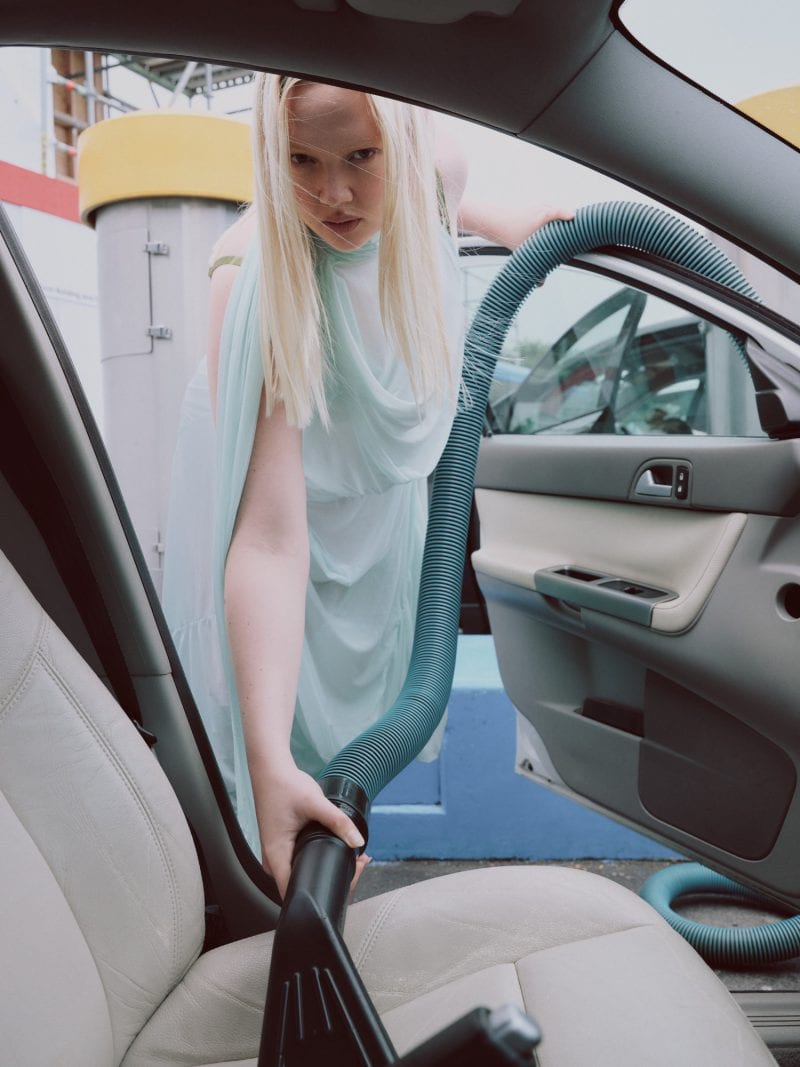
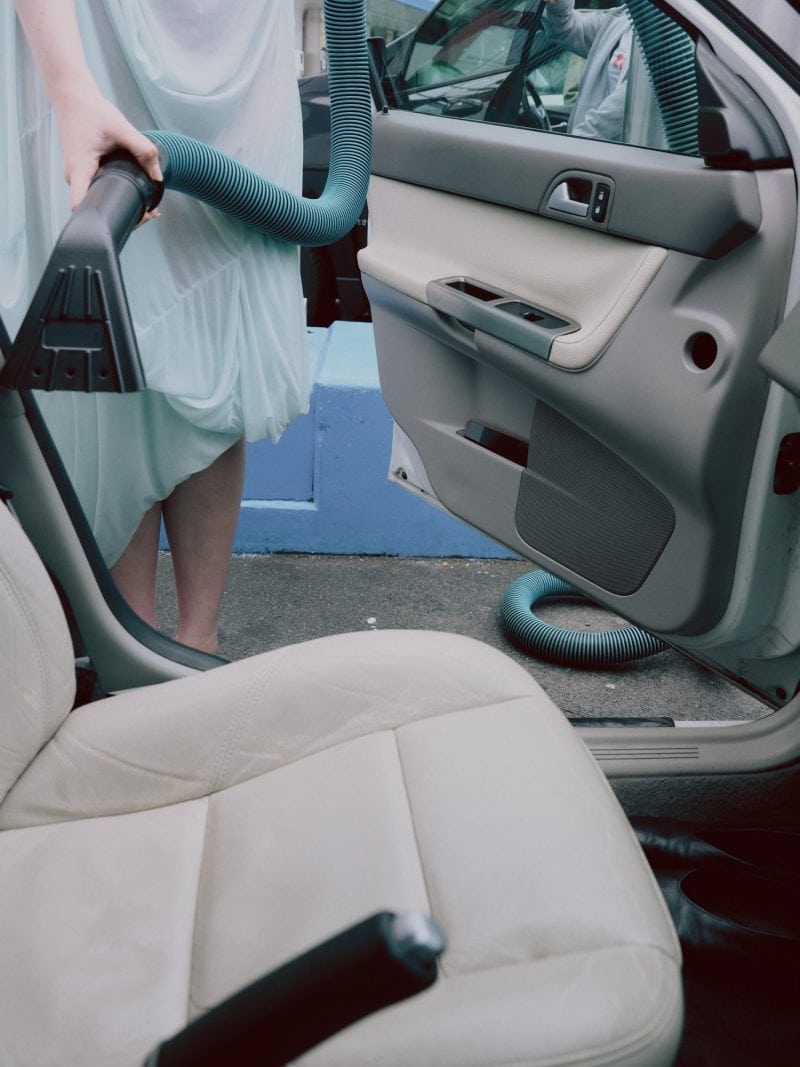
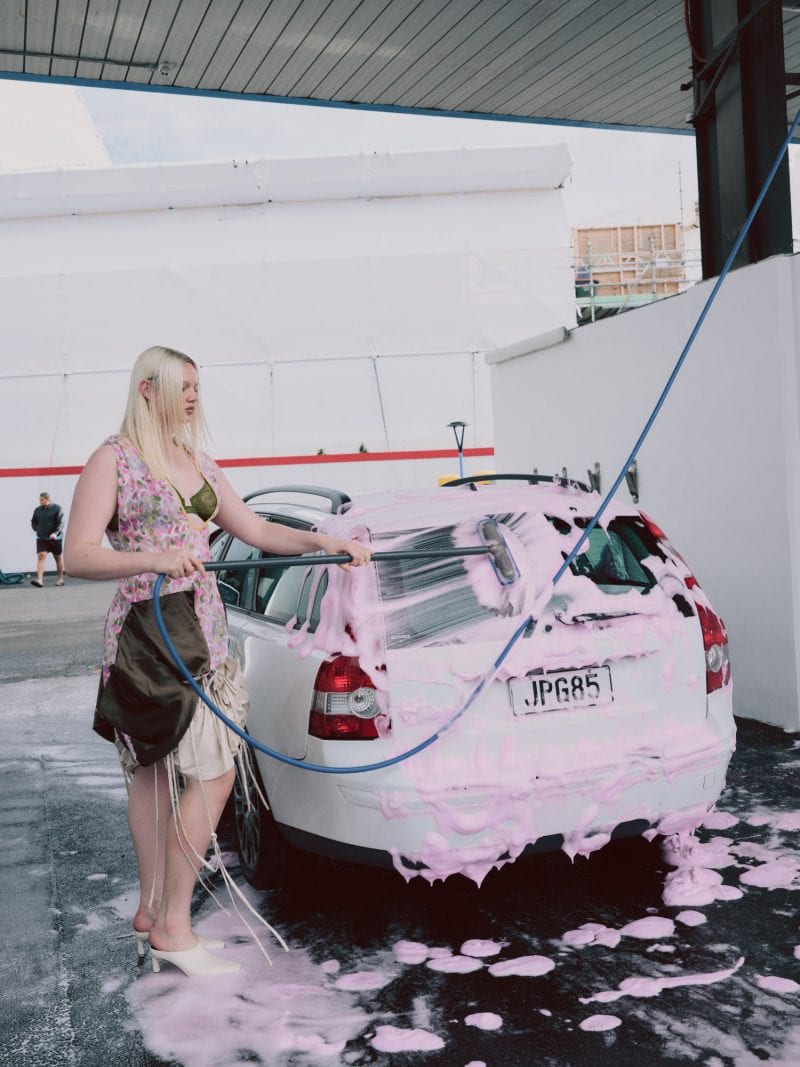
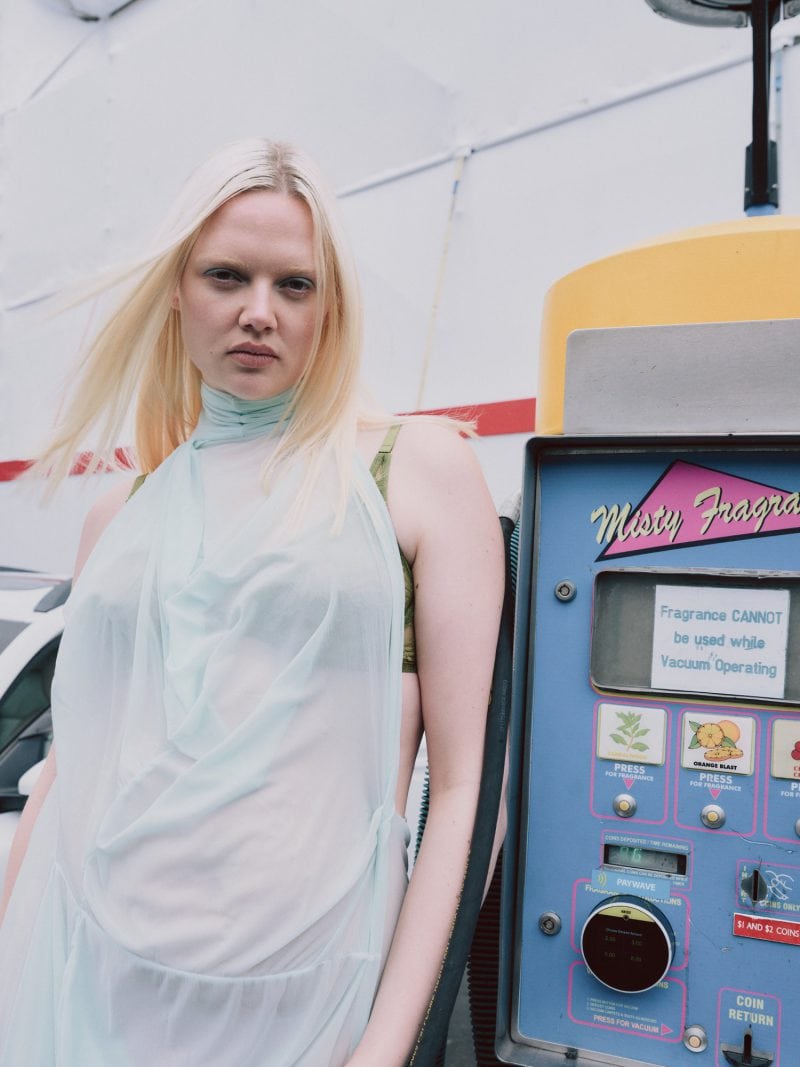
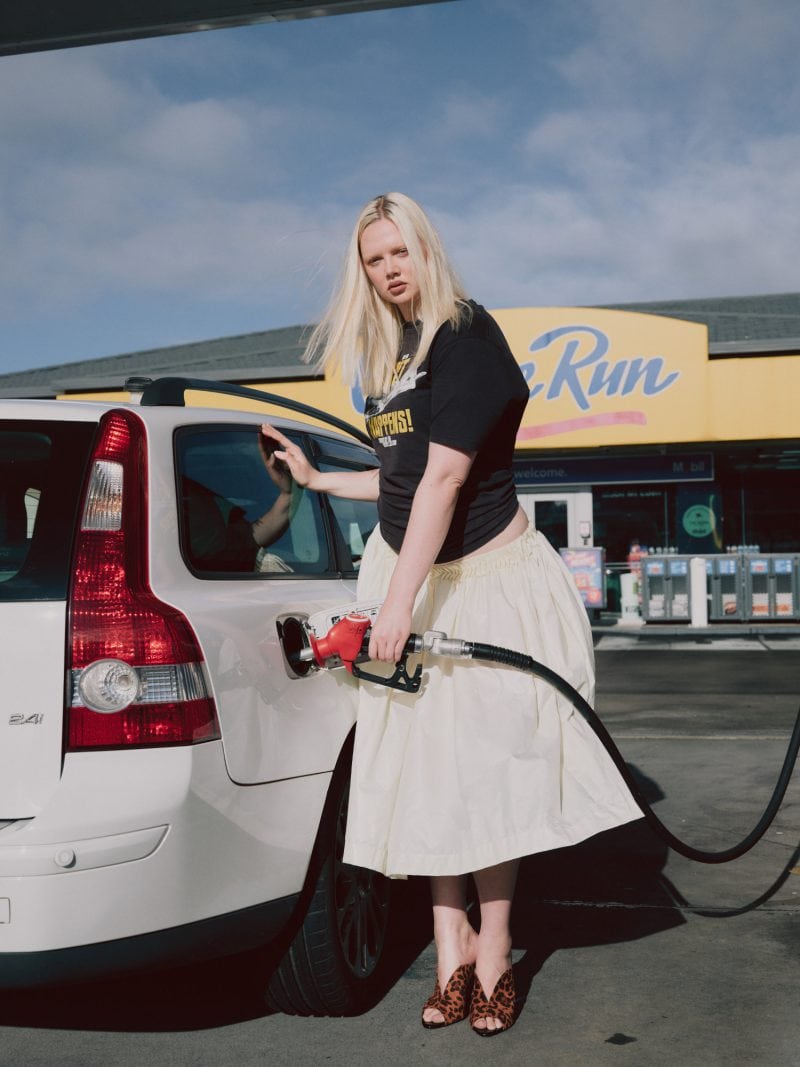
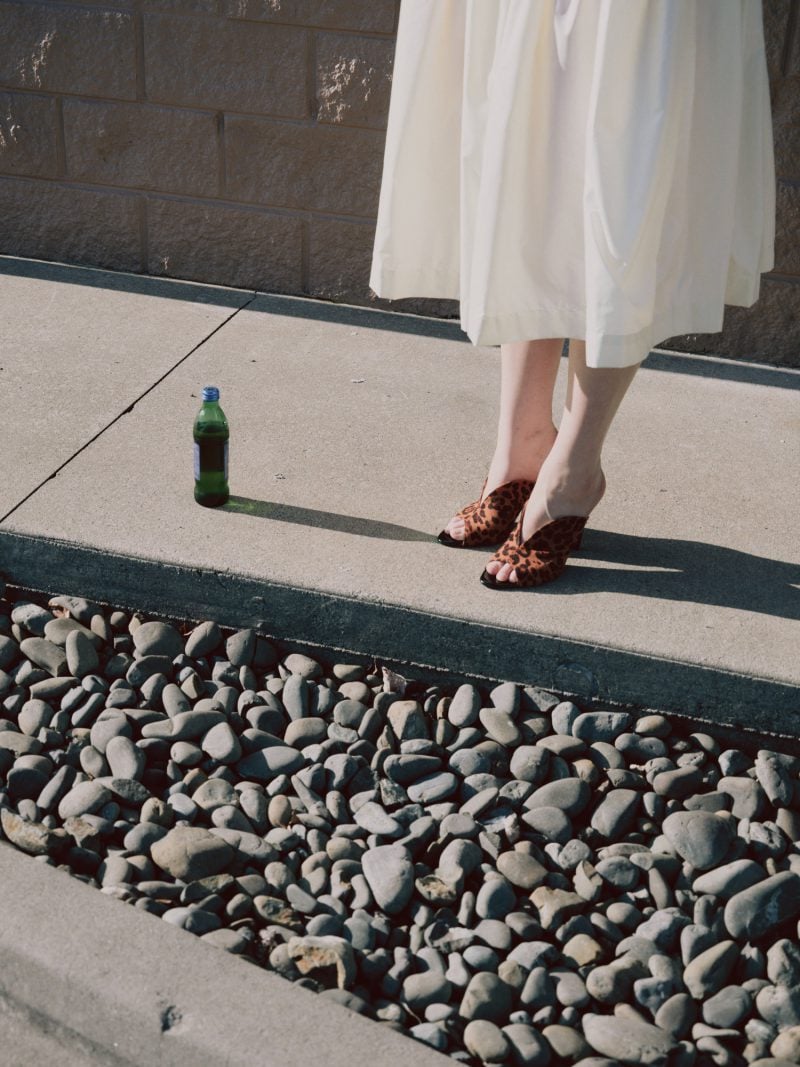
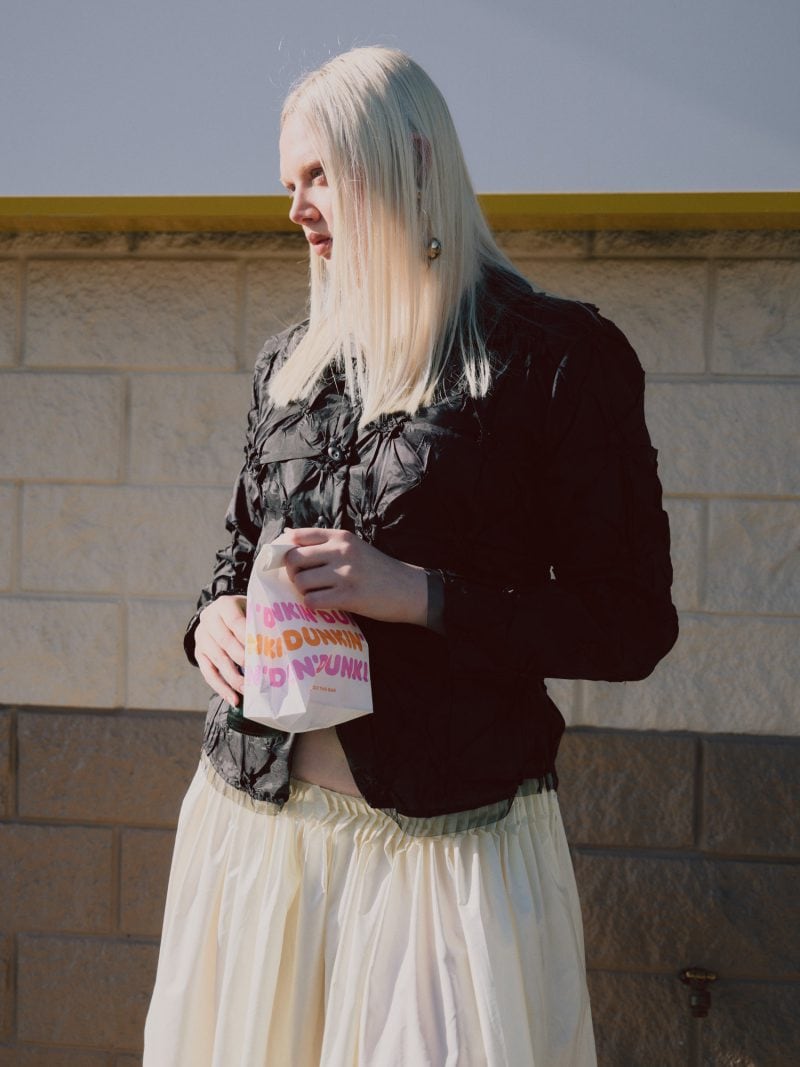
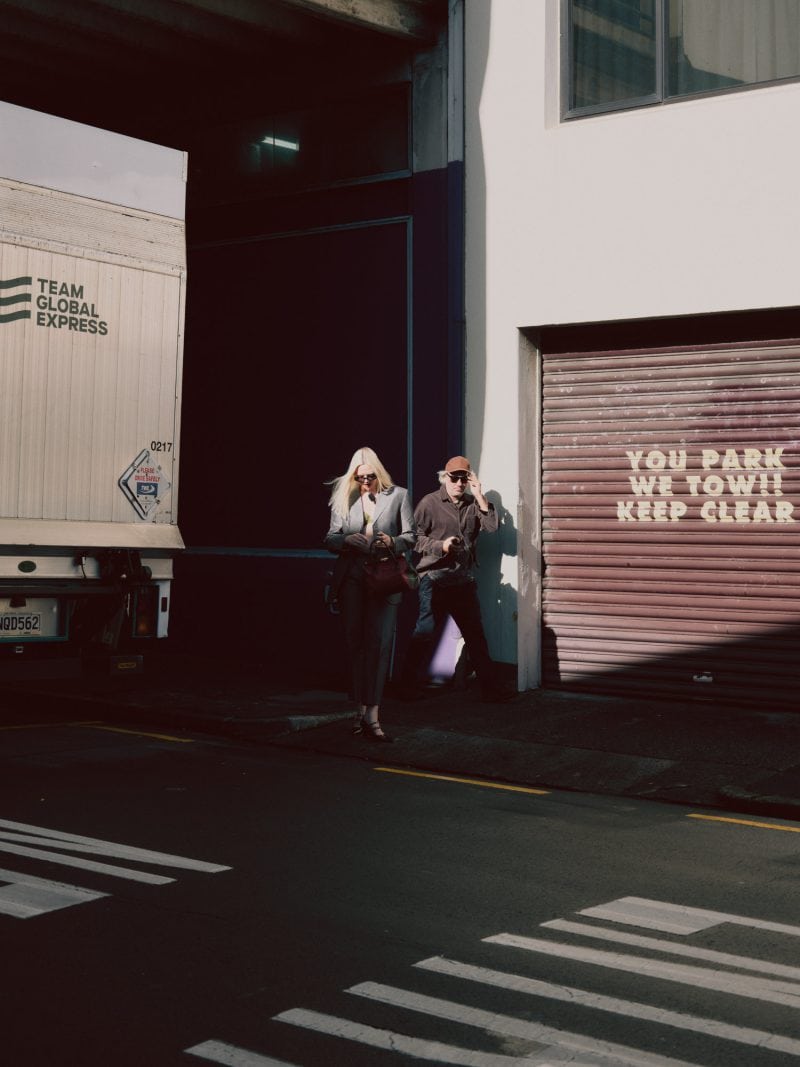
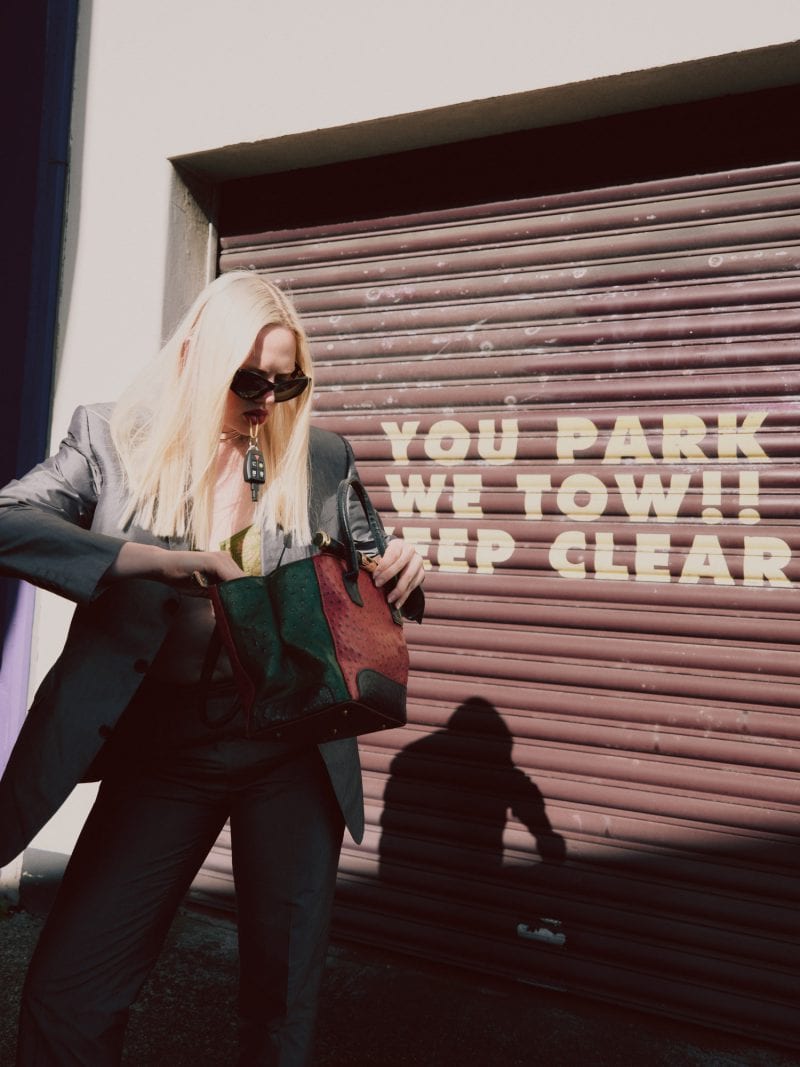
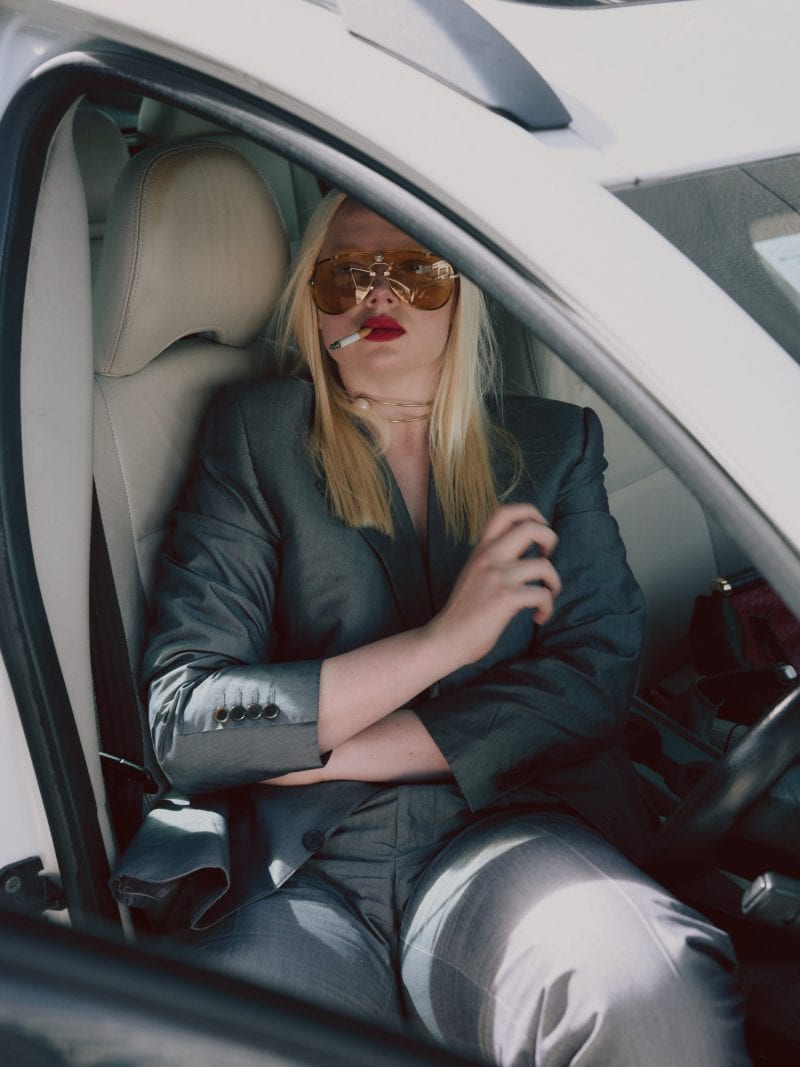
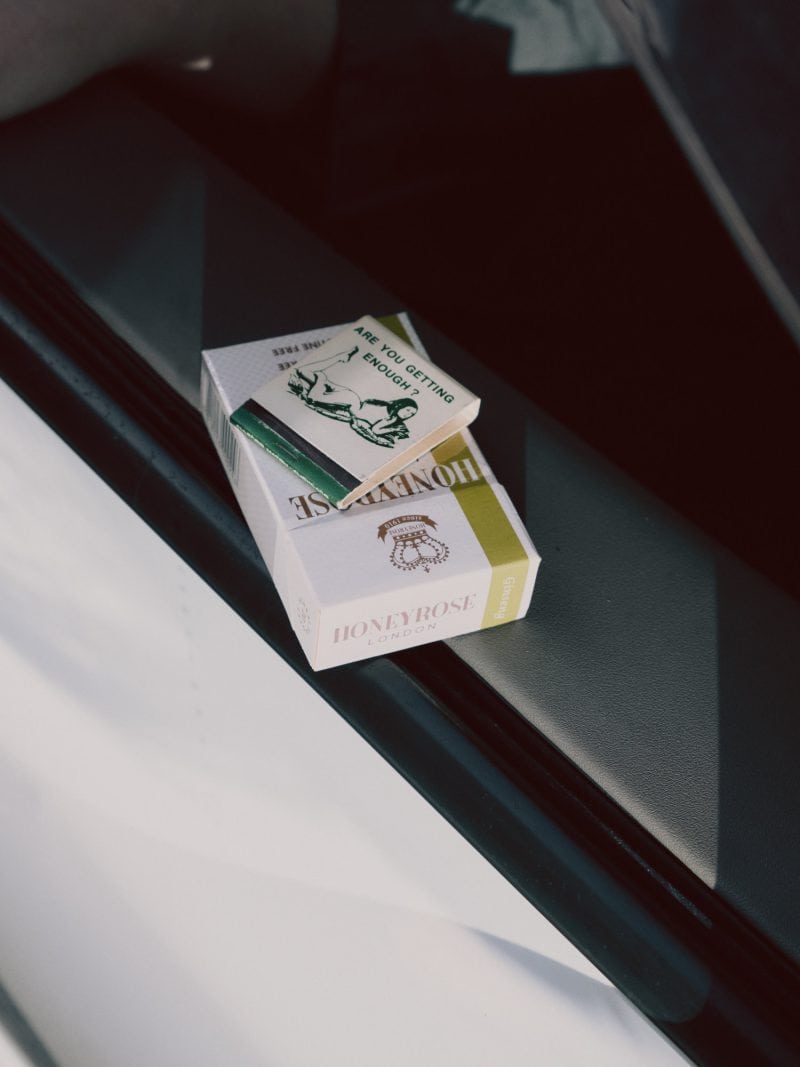
In Scott Hardy’s fashion editorial, the car functions as an extension of the body, a space to occupy, care for and move within, where ordinary gestures gradually take on a quiet sense of display. The act of cleaning a car carries a particular intimacy, as surfaces once occupied are cleared of past traces and polished for public view. Hardy begins with this familiar routine and allows it to shift into something less ordinary. The images were taken at a car wash and petrol station, settings that correspond to what Marc Augé described as “non-places,” environments shaped for movement rather than lasting presence. Within these surroundings, the pace appears unhurried. Model Holly Rose is seen vacuuming a seat in a sheer dress, rinsing a Volvo beneath layers of foam and refuelling while wearing patterned heels, turning routine tasks into measured, almost formal actions. The title refers to the 1997 documentary of the same name, in which participants kept a hand on a vehicle to win it. Hardy adapts this physical connection to fashion, presenting the car as both setting and surface rather than simply a possession or machine. Throughout the series, clothing contrasts with the surroundings: delicate materials meet industrial equipment, and formal footwear meets damp ground. Stylist Natasha Ovely avoids practical alignment with the location, which in turn draws attention to the gestures involved. Holding a fuel nozzle or vacuum wand begins to resemble holding an accessory. The work recalls the attention photographers such as William Eggleston gave to everyday roadside spaces, yet it places greater emphasis on awareness of performance. Even in moments of apparent solitude beside a vehicle, the subject seems positioned between personal movement and outward presentation. The car remains a consistent element in daily life, chosen, equipped and used for both private and visible purposes. In Hardy’s series, the notable aspect is not the presence of performance itself, but the degree to which it has come to appear routine.