
Certain sensibilities are necessary not only for what they reveal about the era in which they belong, but because their influence extends far beyond their physical presence in the world. In this sense, Italo Calvino was a forerunner of something that is now glaringly obvious: we are increasingly unable to find points of reference within ourselves, a sense of balance, a verticality; we have forgotten the strategies to do so and have fewer and fewer resources to go back and seek them out.
Italo Calvino had a special relationship with the tangible world. Always divided, indecisive, a soul torn between two worlds: the real world and the other world—that is, the world of thought, of the words used to describe it. Italo Calvino, poor restless soul, was probably incapable of performing simple actions without thinking—leaving the house, taking a stroll, going to the sea, walking on the sand, watching the waves and the seagulls—he was unable to be satisfied with what he saw or heard. Within him burned the fire of something greater, like an impulse, a desire for a deeper connection with things.
In this sense, the sea was Calvino’s absolute destination of choice; the sea as an open theater, infinite by definition, a stage for his endless thoughts.
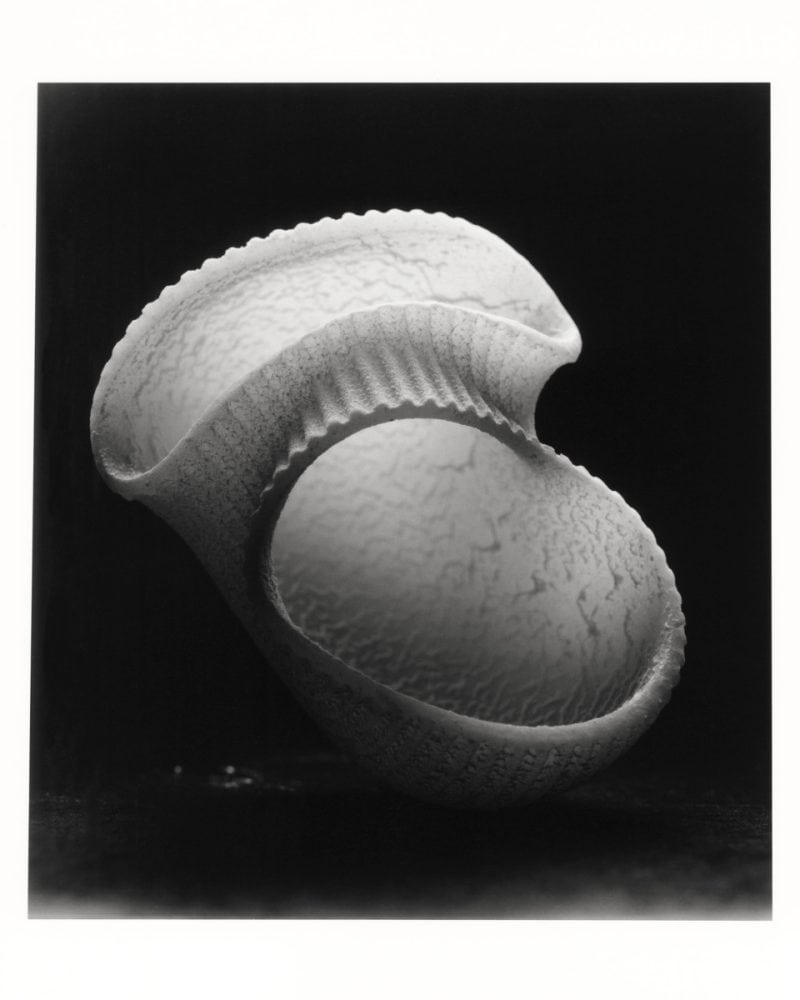
A young Italo Calvino wrote in a letter to Natalia Ginzburg that, having returned one day to his hometown of Sanremo to dispel the confusion of a reality he already found too touristy and teeming, and to regain his concentration, he began to draw, trying to copy some shells found in an old collection. The results were not masterpieces of the visual arts, but they were enough to quiet the chaos.
The practice, linked to close observation, to the meticulous search for details of form and color, linked to the hand, to the mark, to the tangible object, can become a way to create transparent walls around oneself, like a portable room where the goal is not to exclude oneself from reality, but to rediscover a center, to recalibrate, and then return to the outside world without succumbing to it.
The shell, in and of itself, is not a neutral entity: to use Calvino’s words, we might say that the shell is the singularity that contains multiplicity. A shell is a bridge between two universes, a primordial creature motionless yet alive, an ancient microcosm that lingers as a testament to what once was. In a tale from Cosmicomics, Italo Calvino has his protagonist—a creature that has travelled through the history of the universe—take the form of a mollusk, which, in an attempt to connect with its absolute aspiration for universal love, constructs its own shell, just as a sculptor builds his masterpiece. Through him, we discover that shells and the mollusks that inhabit them are blind creatures, and the marvel of their form is the result of their profound, intimate, and ancestral striving toward an unconditional desire for beauty—a desire that, however, can only acquire meaning through the eyes of those whom evolution has endowed with sight. It is, in other words, a gift they have provided for us.
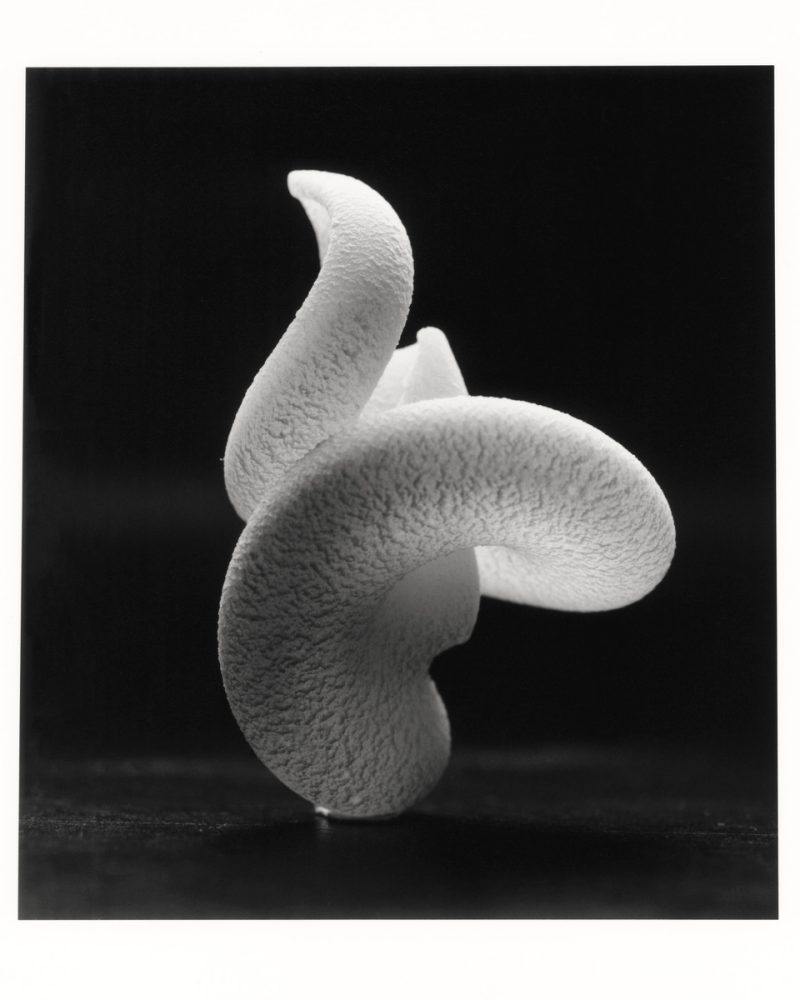
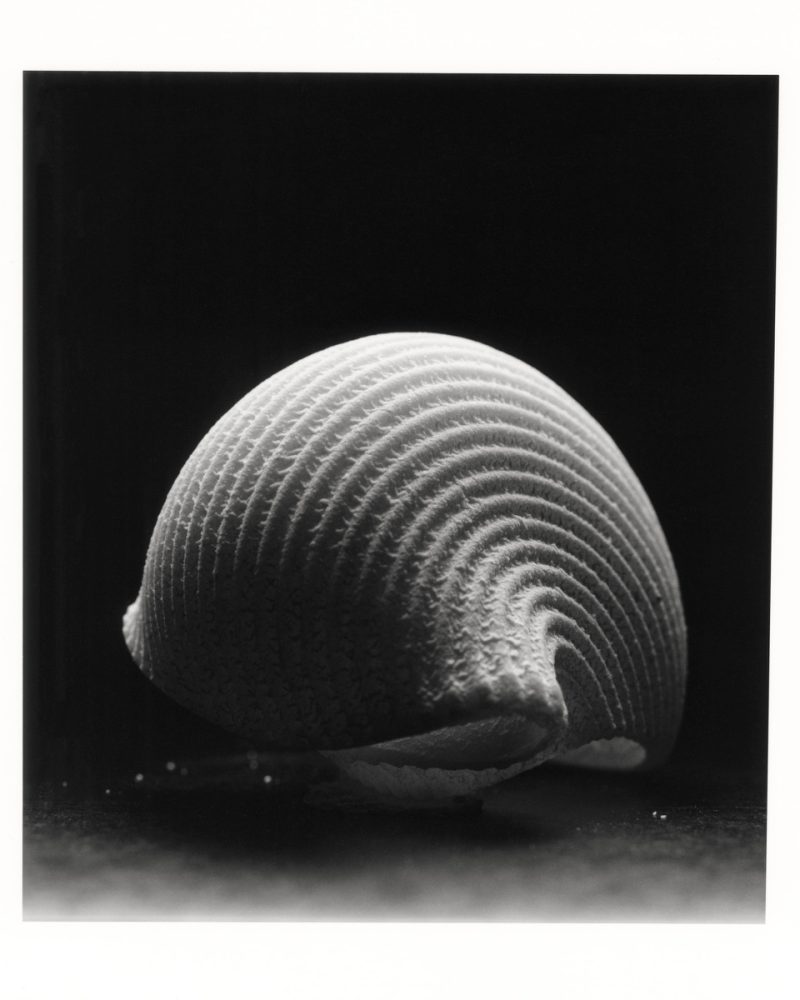
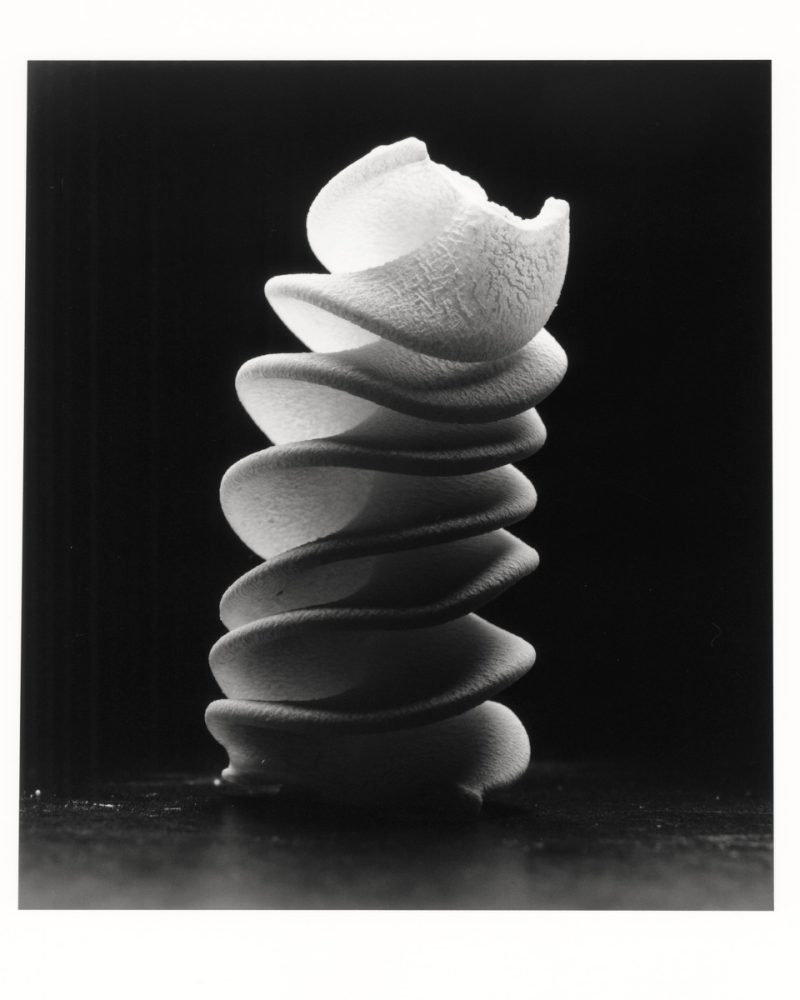
Charles Negre is a French photographer, born in 1988 and working in Paris, whose practice spans between editorial and commercial photography as well as personal and artistic research. After graduating from the renowned ÉCAL, he has collaborated with leading contemporary fashion magazines and brands, in addition to personal projects with independent publishing houses. His work focuses primarily on studio photography and the still-life genre, which he continually reinterprets, moving in parallel with contemporary demands and the medium’s evolution, navigating the space between reality and construction. Furthermore, he explores the interplay between commissioned work and personal research, creating an extremely cohesive and consistent body of work. The Shells series engages with aesthetic elements characteristic of early still-life photography and plays with the ambiguity of familiar shapes; this retelling of a common object also encapsulates a fascination with the recurring patterns found in the symmetries inherent to natural elements.
Charles Negre’s shells are an exercise of the gaze, the final act of an exploration of form as a bridge between worlds. Through close observation and subsequent abstraction, the everyday transcends its own boundaries and appears in its most essential essence, as pure form, not as an empty vessel, but as a shifting structure. These forms are what remains beyond meaning, the unconditional beauty of which Calvino spoke.
This can only happen because, in Charles Negre’s images, objects hold absolute prominence; they appear, more than ever, in their material dimension, revealed through the attention devoted to roughness, which brings the sense of touch to the forefront. It is precisely the surfaces that serve as the space where their meaning is inscribed; the surface, in fact, is not to be understood as a mere container and physical appearance, but as a living space through which the outside and the inside can communicate—it’s the epidermis of things, vulnerable and sensitive. Calvino himself maintained that it is precisely through the surface of things that a profound knowledge of them becomes possible—or rather, that access to the infinity of meanings becomes possible.
So then, what is the relationship between Calvino’s drawings and the images we create today? When we talk about rediscovering a connection with things, what role do images play? Can we truly experience reality by observing it?
There is a knot that forms between the real, the tangible, and the gaze, and we are called upon to untangle it—or perhaps not to untangle it, but to recognize it. Perhaps, to truly “touch” things, we only need to rise above, pause, and look. Drawings, like photographs, and thus images in general, can serve as an exercise or a tool to grapple with the elusiveness of things and to escape the never-ending chaos of reality.
And while it is true that we must recognize the limits of our present, which carries us ever further away from material things and ever closer to their representations, at the same time we cannot resign ourselves to the idea that all is lost, because the tangible world is still here before us, doing nothing but reflecting us as we look at it. What we must do is learn to recognize it again.
Charles Negre: Still-life is actually all about that: stillness and slowing down the time to observe and document.
Marta Valdegrani: In the article, I compare your images from the Shells series with Italo Calvino’s drawings, and my conclusion is that maybe they are actually the same thing, in terms of process. To really touch reality, to be in contact with reality, it all comes through the gaze, through the act of looking; by making time to look at things in a different way.
C.N.: I think it’s about choosing to spend time to try to look at things with care. And once you take that time, then you start seeing things in mundane objects or random objects—some sort of spectacularity or specificity that makes objects look suddenly special. Shells are already spectacular, but in a way, everyone knows what a shell looks like. Only once you start looking closely can you begin to see a lot of elements in there. And I have the feeling that the pastas, in a way, are similar. One thing that is a bit funny is that they’re also artificial, they’re man-made, and they’re done by factories, but at the same time, this doesn’t take out some of the poetry that they carry, and their materiality. Our brain creates connections so that we have the feeling that the object is natural, but it’s not natural at all; we’re just looking at organic shapes and forms that kind of relate to our brain. So that’s quite a funny and interesting process.
M.V.: I also think that different things, even the most mundane things, have this sort of inner research for beauty, even though it doesn’t serve anything. Everything goes towards that ideal of beauty.
C.N.: There’s no hierarchy in beauty, in the sense that a beautiful piece of jewelry is just a beautiful piece of jewelry, and a beautiful piece of pasta by itself is something that could be looked at, and that can also be found beautiful. It’s just a matter of choosing what’s beautiful or not. And then with the help of photography, you can really translate it and use the light to highlight these natural connections that you see. It’s about using photography as a sort of witness to this thing.
M.V.: So if I interpret this correctly, maybe you would say there is no difference between a more mundane object and a more precious one?
C.N.: I think the concept of preciousness is really subjective; the things that someone could find precious are a result of their subjectivity. At work and at my place you could find many different objects, and one could be a really normal and uninteresting coffee cup, like a paper cup, but it could have a particular shape that is nice to look at or something written on it that is really funny, and it’s as important as something really nicely crafted. I think that it’s important to say that, depending on how you look at them, you can really find the beauty in these little objects.
M.V.: I think this is really evident mostly from your work that comes from commissions, but I can say for sure that it’s visible, maybe in a quieter way, also in your personal work. So, given that for you there is no hierarchy, I was wondering what your perception of the relationship between photography and reality is.
C.N.: Well, I think photography is a tool to look at reality. The photographer sees things and photography is a language to then show that to others. I use photography as a tool to witness nature and the world that surrounds us, and I only focus on objects and still objects because I feel they’re more honest, in a way. You see, objects can’t lie. In a way, it’s harder to find a way to photograph them than people. I take pictures of animals sometimes, but I think people are so complicated, because they come with a background; they come with a personality, and with so many things that you can have no other grip on. So, I feel like what comes out is not really honest. Whereas, if you shoot an apple, then an apple is an apple, and it’s the way you are going to photograph it that is going to make it special.
M.V.: And maybe with objects you, as the photographer, are able to become the subject of the picture in a more direct way.
C.N.: Of course, because once you start photographing objects, you are the mastermind behind the objects and you can create languages and conversations between them, which is a really important aspect and it’s also infinite; there are endless possibilities with it.
M.V.: So we could say that in the same way Calvino was drawing shells, maybe photography is your tool to find balance.
C.N.: Yes, I think so. Personally, I’ve never stopped making pictures. I’ve always photographed and I cannot stop doing it. It’s really complicated, I do it almost compulsively. Every time I find a new idea, maybe I don’t photograph it, but I keep the idea in my head, I draw it, I hold it there, because I know it could be a good photograph. I use photography as an everyday act, to just document the things I see, document the things I want to stage. To relate to what Calvino said, to me, photography is definitely a sort of therapy. Photography is really a way of looking at the world, and I think drawing is the same thing, the act of composing, making mental images. What I do is, I have a mental image that I want to try to recreate, and I let reality be involved in the process.
M.V.: Maybe a photograph doesn’t have inherent meaning, but the meaning comes through the effort that you make to capture reality.
C.N.: Exactly. And what’s really nice about photography, and maybe sometimes a bit frustrating with drawing, for example, is that with photography you have many parameters and tools you can use to build up your idea and your emotions. Composition, framing, light, it’s really highly technical, but all this technique helps you get to the idea you have in your mind. Some people get anxious in front of a white empty studio because it means having endless possibilities, but personally, I get excited because once I do one day of shooting in the studio, I know that I can spend another twenty years doing it and it always will be different because of those possibilities. I understand the stress of looking at an empty space, and I guess it’s the same thing with the white blank page for a writer, but there’s something so exciting about the idea of creating a world, of creating a conversation between objects that only lasts for a short period of time, and then it’s gone. I feel like people often think, for example with cinema, that emotions only come through character and people and life struggle and drama; but I think you can have a lot of drama through objects, a lot of emotions there. It’s just that as a photographer you have to be really subtle with your own emotions to be able to show that. For example, maybe that spider on your notebook could create a sort of strange emotion, or the image of a liquid in a bed could create a reminiscence. All these things can strike a chord in your brain.
M.V.: I think that your images offer a lot of room for interpretation, not in the sense that they force an interpretation, but they offer many ways in which they can make you feel. I have one last question and I don’t know if there’s an answer, really, but I know that shells are a recurring theme for you, because I read that, in addition to this series, you have a lot more pictures of actual shells in your archive. So I was wondering if, for you, there’s a memory or an emotion linked to this object.
C.N.: I think shells are highly symbolic. They have been a recurring image in history: the image of the shell was already present in early Dutch paintings. It’s the first thing you bring back from holidays as a kid, and one of the first things adventurers came back with, in the 16th century, from all over the world. But what I find mostly interesting is not really the real shell—I do have some real shells, and I do take photographs of them. But what I love most is calling a shell something that is not a shell. Let’s say that pasta is a shell; but the coffee cup that is left in a sewer or on the street is also a shell of some sort—a leftover. A shell is all the things that are a capsule of something else, and that you can’t use anymore. They’re just leftovers of recipients of something. All these things look like shells to me. I think shells also hold many layers of time. They’re like the circles inside trees, that once you cut them, you can go through time. They were also recipients of life, because every shell was an animal. The animal is now gone, and the shell is what is left. And maybe, also, a future recipient of something else.