There is a moment on the road to Furore when the Amalfi Coast ceases to resemble geography and begins to feel like vertigo. The road coils above the Tyrrhenian Sea, villages appear improbably fastened to cliffs, and the water below seems less like something one might swim in than a vast blue atmosphere. By the time I arrived at Furore Grand Hotel, I had the peculiar sensation of having gained altitude without ever leaving the ground.
The view explains it. From the hotel’s terraces, the Mediterranean spreads out with almost no foreground to contain it. You do not look toward the sea so much as hover above it, as though seeing the coastline from a helicopter. Praiano rests in the distance; farther out, the horizon becomes a fine seam between two shades of blue. At certain hours even that seam disappears.
Furore is often called the village that does not exist, because its houses are scattered across the mountainside rather than gathered around a recognizable center. The hotel, opened in 2023 after a four-year renovation, seems to embrace that elusive quality. Set across nine green terraces between Amalfi and Positano, it appears less constructed upon the landscape than suspended within it.
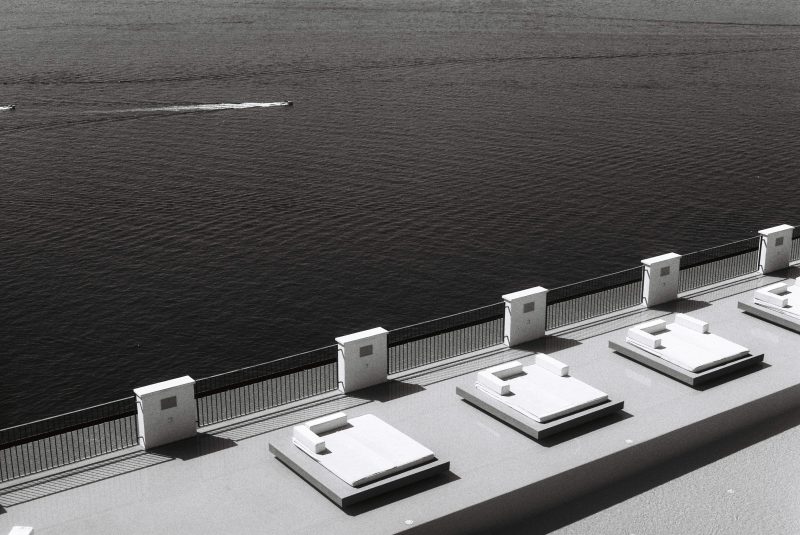
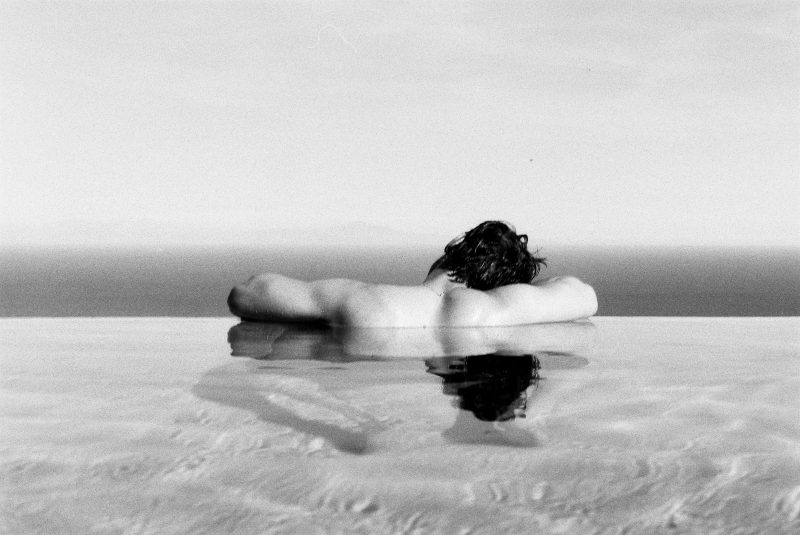
Its two pools deepen the illusion. The main infinity pool runs along the white façade, with loungers partially immersed in the shallow water. Below, a quieter pool forms part of the spa’s outdoor circuit. From either, the edges seem to dissolve into the sea until pool, ocean and sky become an infinite extension of blues. Swimming there can feel disorienting in the loveliest way: the body remains close to the hotel while the eye travels miles from shore.
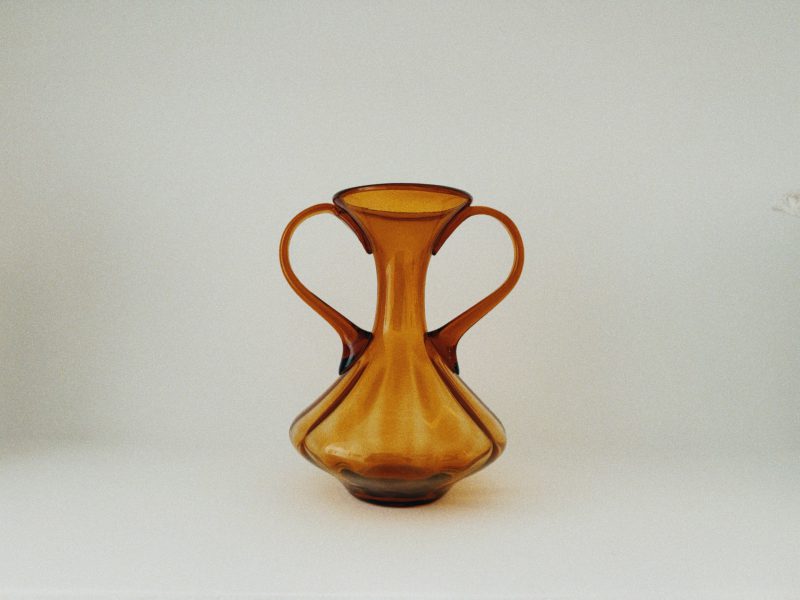
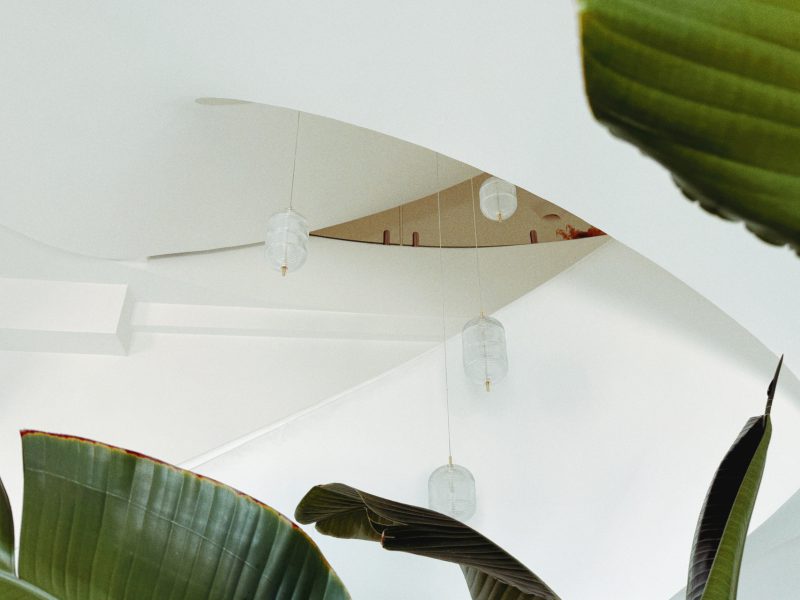
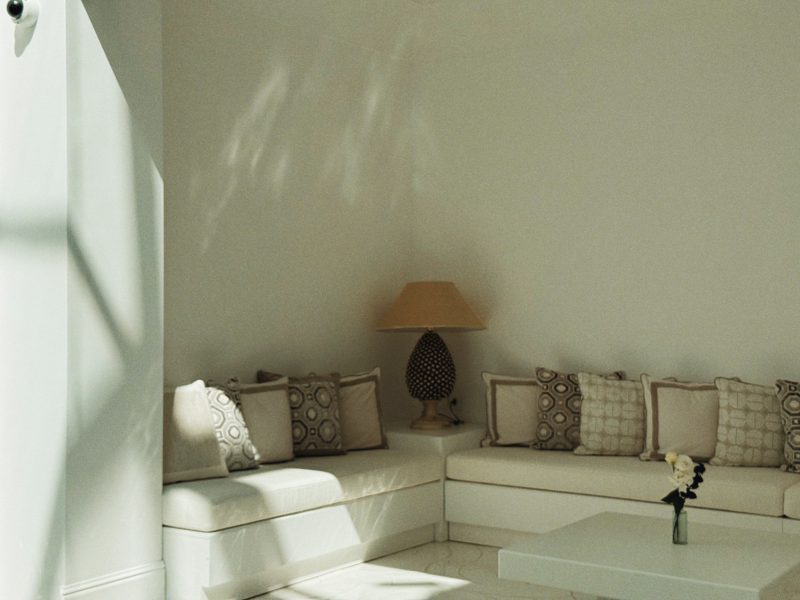
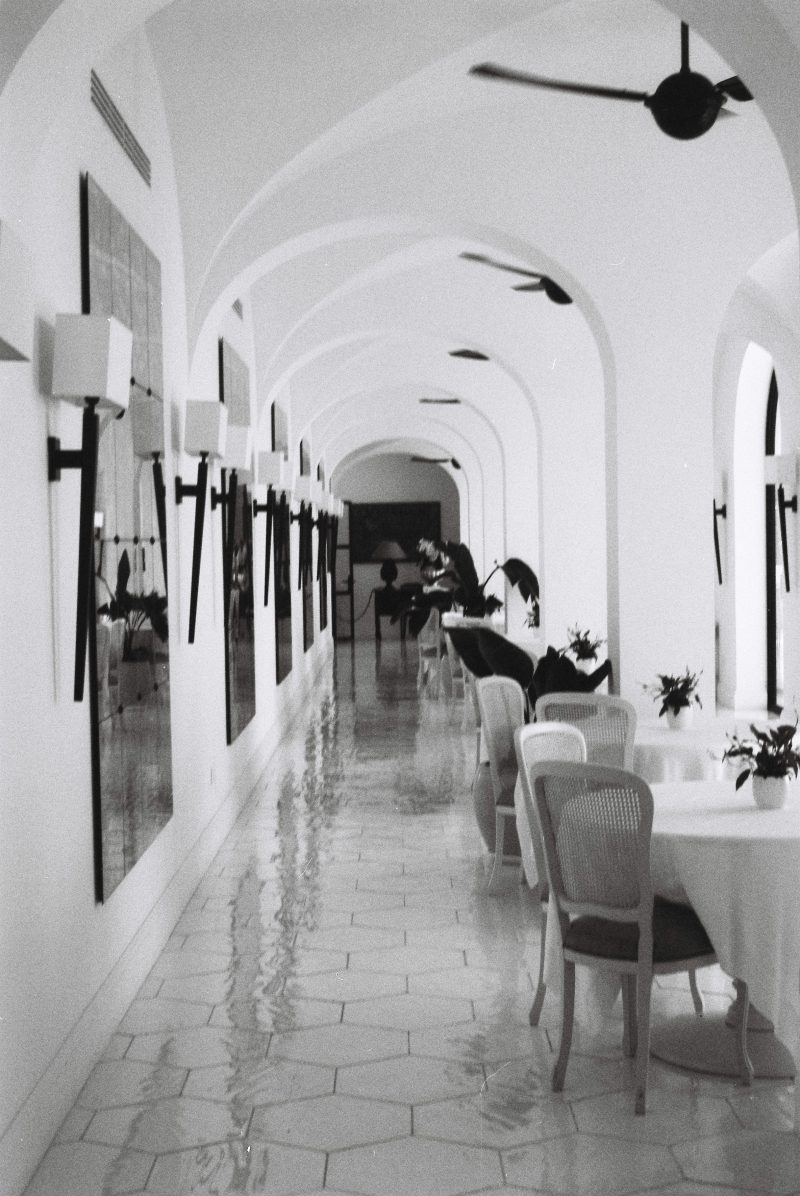
White is the hotel’s governing language. Walls, arches, terraces and vaulted interiors have been stripped of visual noise, allowing daylight and the colors outside to enter freely. The effect is not austere. It is closer to being aboard a serene Mediterranean spaceship—one furnished with hand-painted ceramics from Vietri sul Mare, softly curved furniture and an exquisite collection of glassware displayed throughout the property. Each vessel catches the light differently, holding little fragments of sea and sunset.
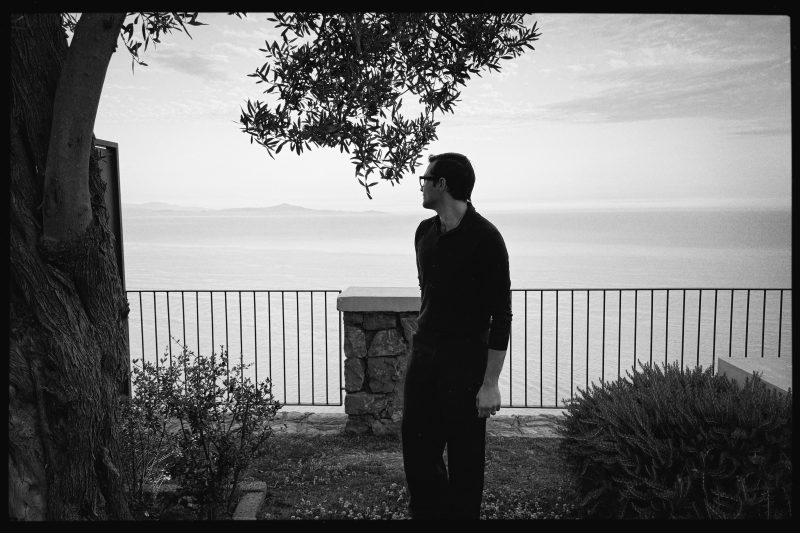
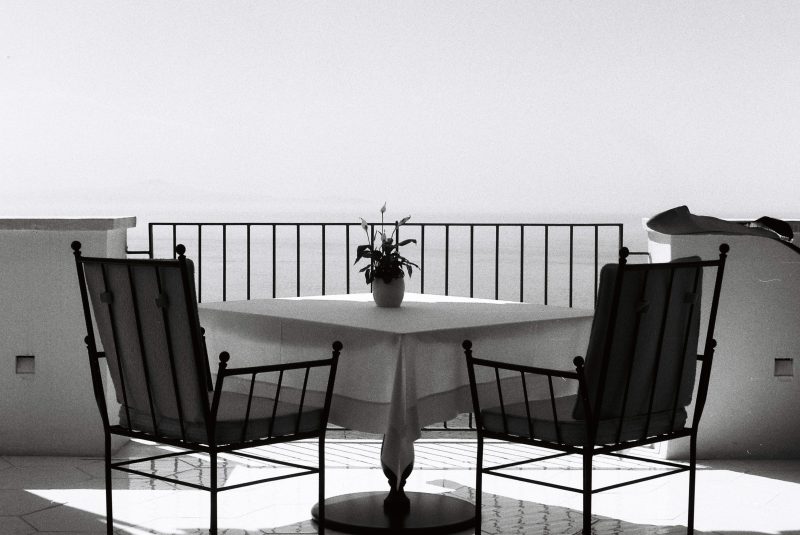
My room, one of the hotel’s Signature Pool Suites, opened onto a private garden where an olive tree leaned over a plunge pool. Jasmine and Mediterranean plants softened the immaculate geometry. I could swim beneath the tree at night, when the water reflected the darkness, and again in the morning as the first light reached the terrace. Sunrise and sunset were not events to be watched through a window; they entered the room’s daily rhythm. Luxury here was not announced by a single extravagant gesture. It accumulated quietly in the garden, the glassware, the crisp whites, the precise placement of a chair facing the horizon—until it seemed to spring from everywhere.
Beyond the suites, paths descend through gardens planted with herbs, flowers, olive trees and coastal vegetation. The landscaping recalls the Amalfi Coast’s agricultural terraces while resisting their rustic clichés. Everything feels meticulous, but never sealed off from nature. Rosemary scents the air. Bougainvillea supplies flashes of magenta against the white. The sea remains visible between branches.
Breakfast was perhaps the hotel at its most intimate. At Velaris, beneath white sails overlooking the coast, the morning unfolded slowly: pastries presented at the table, eggs made to order, fresh juices and infusions, and espresso scented with lemon peel, prepared in a Neapolitan cuccumella. It was one of the warmest breakfasts I have experienced in a hotel—and I have spent a considerable part of my life in hotels. Its comfort came not only from the food but from the people serving it, who understood that genuine hospitality is a matter of attention rather than ceremony.
That same attentiveness shaped the days. The staff composed our itinerary with the fluency of editors, arranging the coast into a sequence that felt personal rather than programmed. At Bluh Furore, the hotel’s Michelin-starred restaurant, Executive Chef Vincenzo Russo’s meal offered another kind of itinerary: a progression through Campania, interpreted with precision but grounded in recognizable flavors. Local wines, many from small producers working on the region’s steep terrain, gave the dinner a sense of place that no panoramic view alone could accomplish.
And yet the view remained the hotel’s most persuasive luxury. In a region where beauty is abundant enough to become almost theatrical, Furore Grand Hotel has found a way to frame it without overpowering it. Late in the day, the white terraces took on the peach and lavender tones of the sky. The pools darkened, then briefly caught the last light. From beneath the olive tree, I watched the boundaries disappear again—the garden into the room, the pool into the sea, the sea into the sky—and understood that the hotel’s great achievement was not bringing the outdoors inside. It was making inside and outside feel like distinctions that no longer mattered.