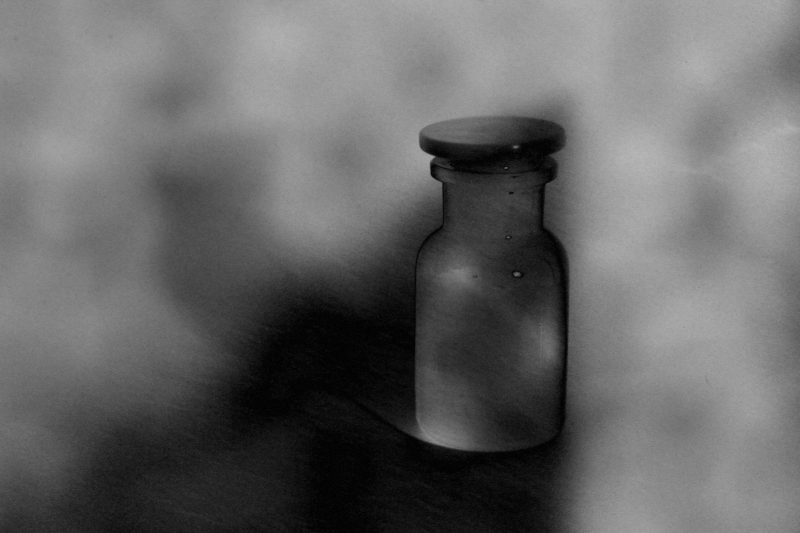
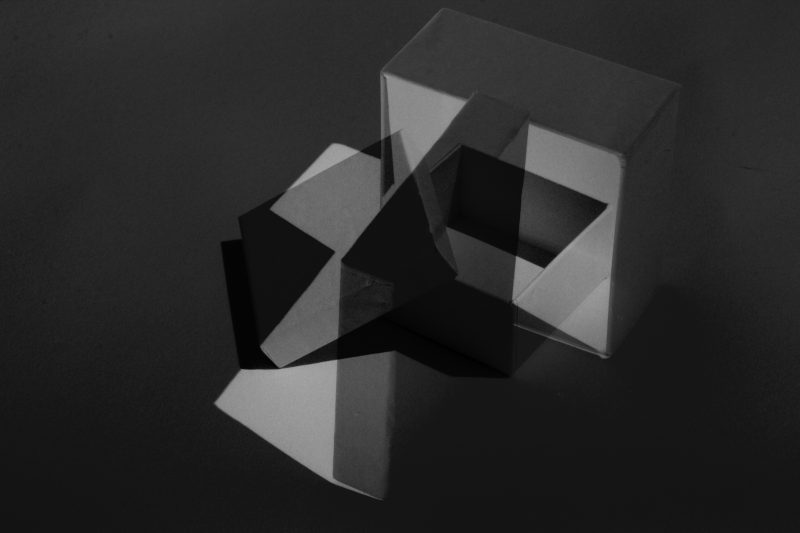
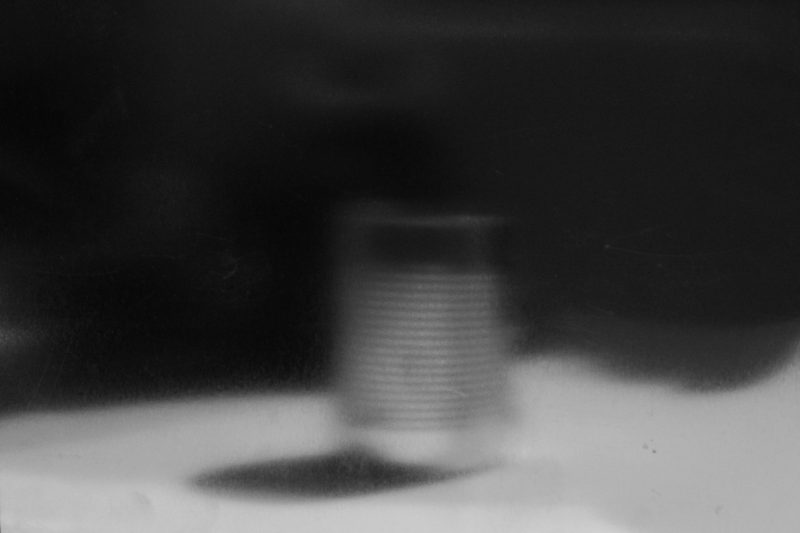
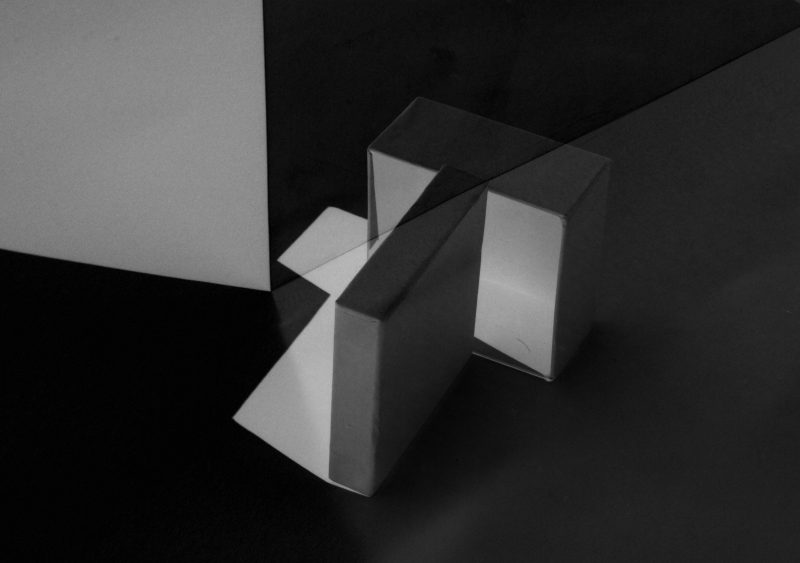
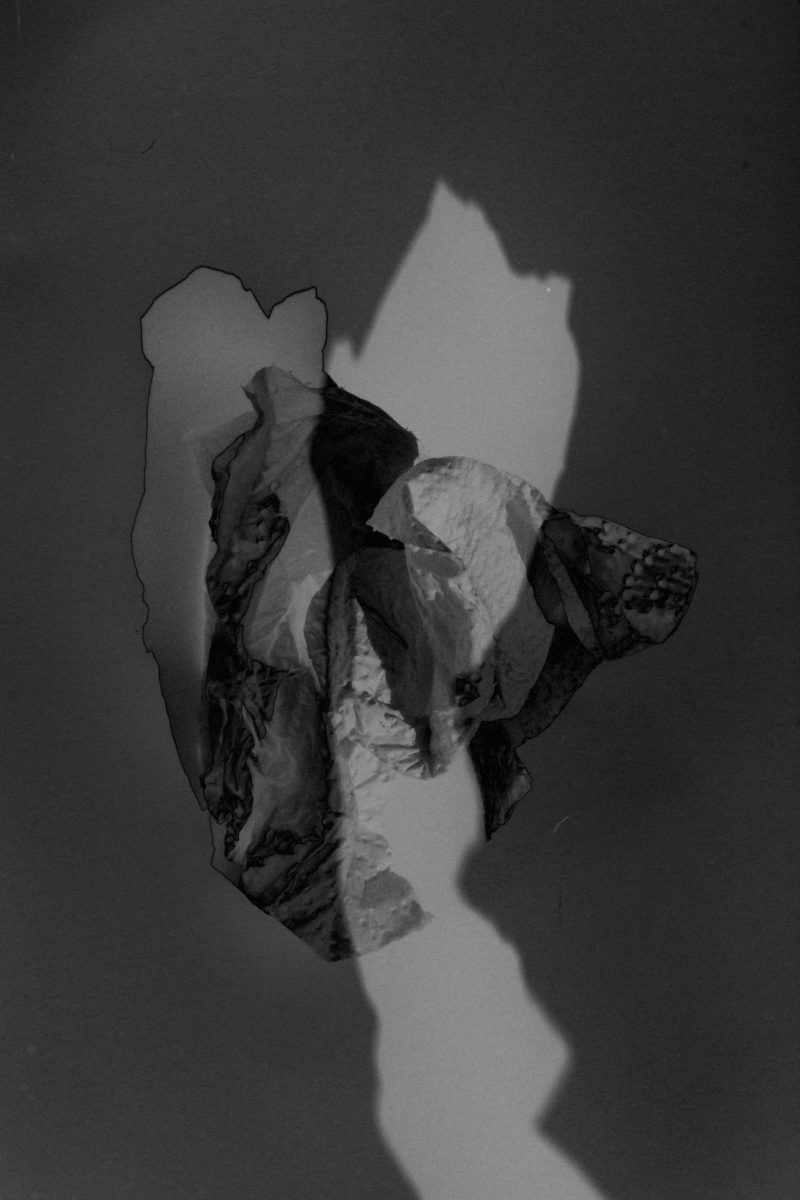
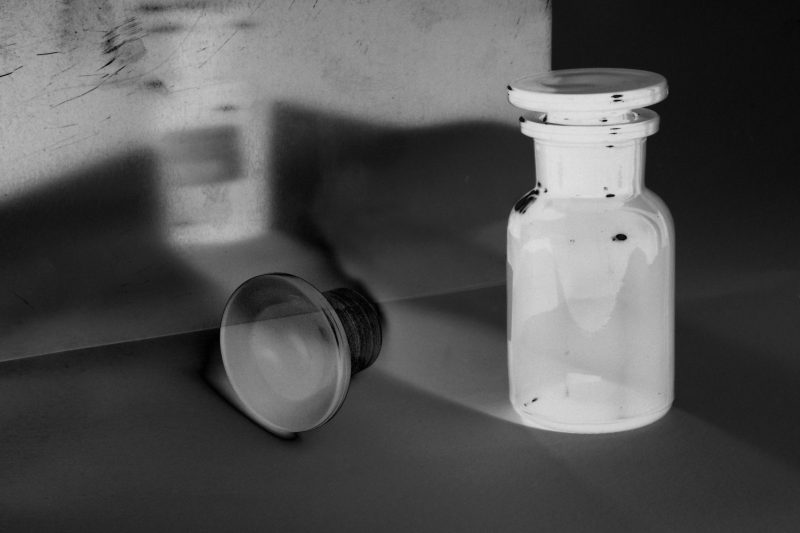
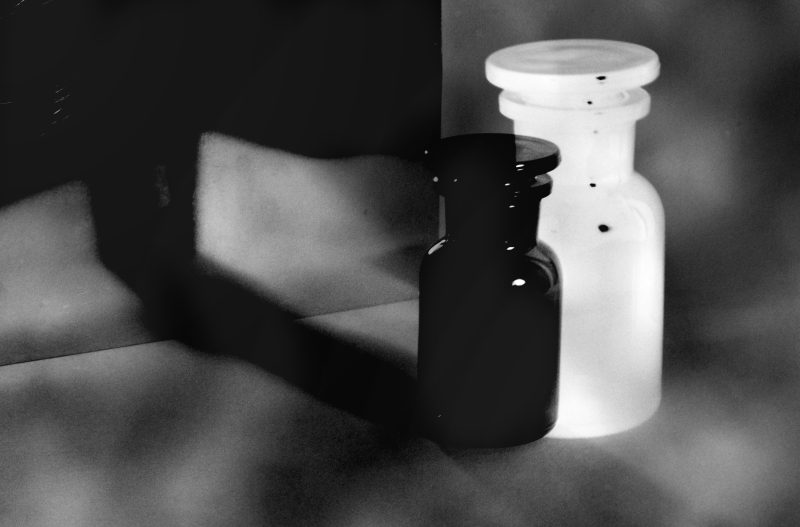
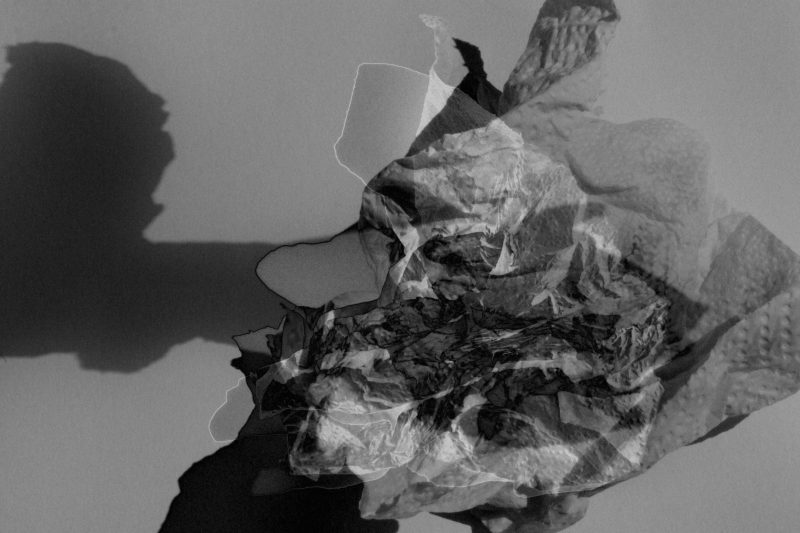
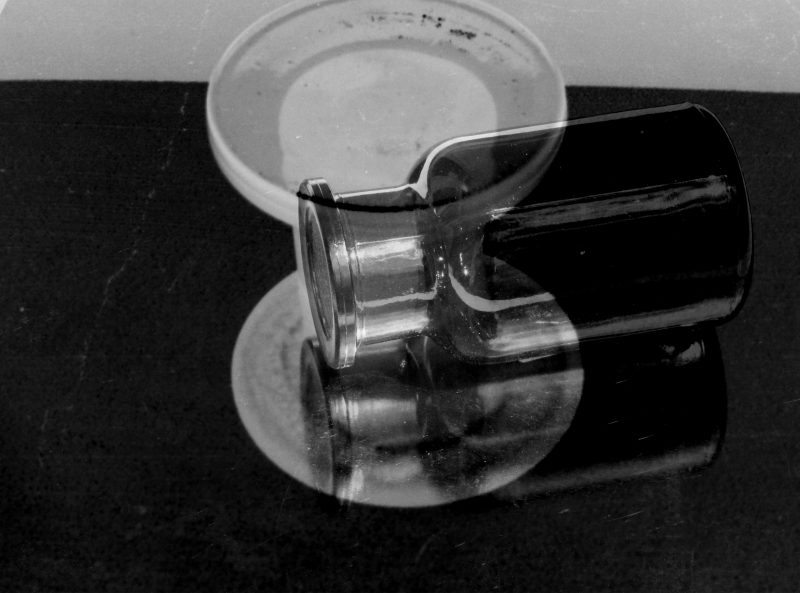
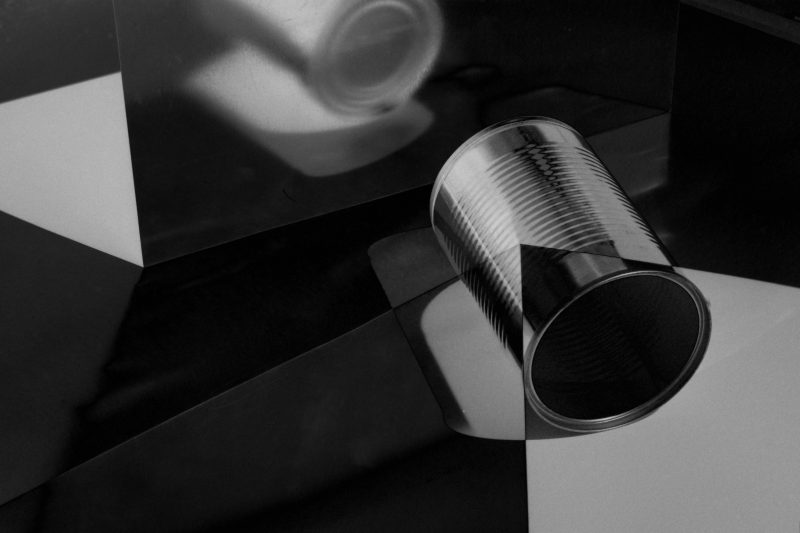
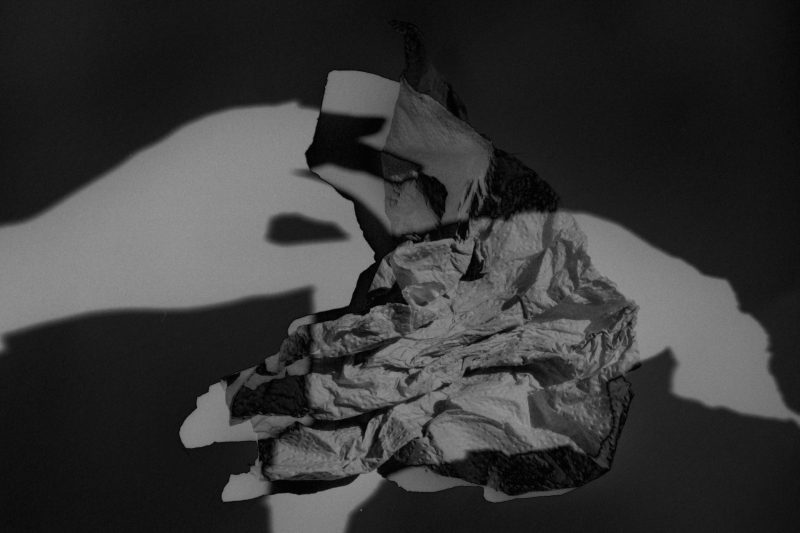
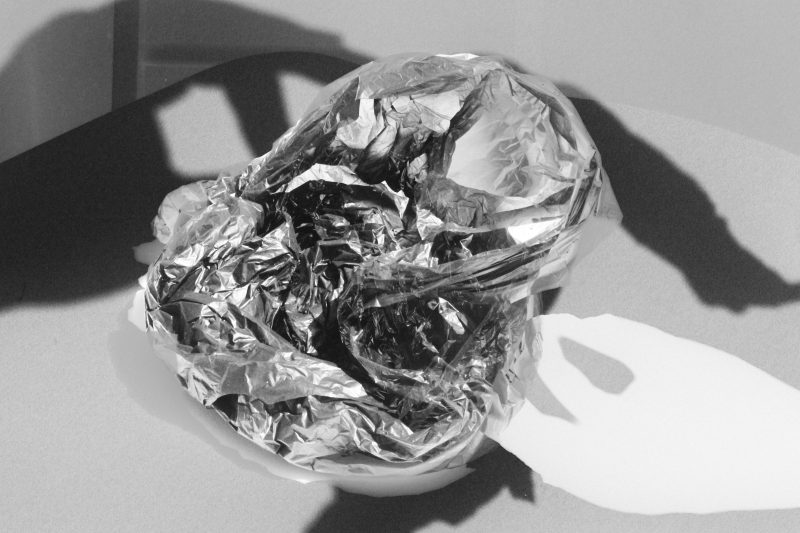
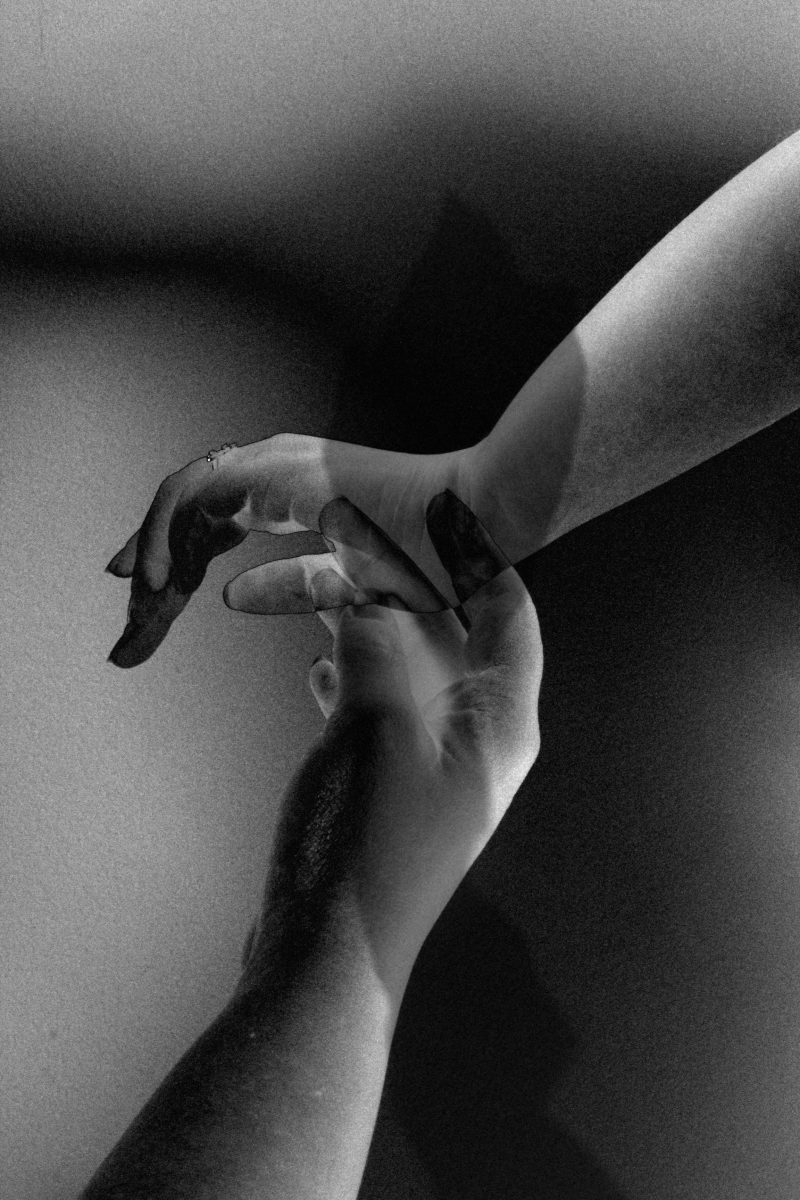
Bottles, boxes, hands and fragments of matter form the starting point for Teona Kokhodze’s photographic series False Awakening. The work explores the moment when a door opens onto a familiar room and a familiar object is grasped, yet something seems out of place. The series does not aim to depict the dream itself, but to capture the instant when reality temporarily loses its reliability. False awakening is a phenomenon that mimics everyday life without constructing fantastical worlds: it replicates what is familiar to the point of making one believe they are awake. Kokhodze takes this uncertain familiarity as her starting point. The objects, arranged in still lifes reminiscent of Giorgio Morandi but stripped of their stability, split in two, lose their substance and are pierced by their own shadows. Photography becomes a tool of distortion rather than of documentation.
Overlays, negatives and double exposures produce images in which it is difficult to determine the order of the elements. In one photograph, two hands appear to meet whilst their outlines multiply, rendering the gesture ambiguous; elsewhere, a bottle appears both light and dark at the same time, almost a negative of itself. Even a simple geometric structure made of cardboard is duplicated and intersected by transparent planes, transforming into an impossible architectural form. The series bears affinities with Surrealism, though without its penchant for the spectacular. Closer to the experiments of Man Ray and László Moholy-Nagy, it uses the language of photography to challenge the certainty of the image. Shadows take on the same weight as the objects that cast them, becoming autonomous presences. Black and white accentuates this instability, eliminating temporal references and reducing the world to light, matter and trace. Even in the most abstract images, recognisable elements remain: a crumpled surface, the outline of a hand, the neck of a bottle. It is precisely this alternation between recognition and loss that generates the tension of the series. Kokhodze does not photograph what happens in dreams, but the brief moment when one is not yet certain of having woken up.