Chaos is the reason why the universe exists, why we exist, why there is something rather than nothing. When you acknowledge its presence as mandatory, you break out from your sparkling cage of pointless worries and self-imposed rules for “a better life”.
Let’s make it clear.
You don’t know nothing about what’s going to happen. You can’t predict anything. Making plans is self-defeating. No one cares about you making your bed in the morning. Your alphabetically organized library is a waste of time. Earth doesn’t need your social rules to function. Your life is a series of unpredictable events. Forget the plan. It isn’t real. Chaos is real and chaos is beautiful.
Hi Elisabeth. The first thing that struck me about your project is chaos. You have accustomed us to a fickle imaginary, destroyed, torn to pieces but impeccable from the point of view of composition and extremely communicative. Do you consider yourself messy?
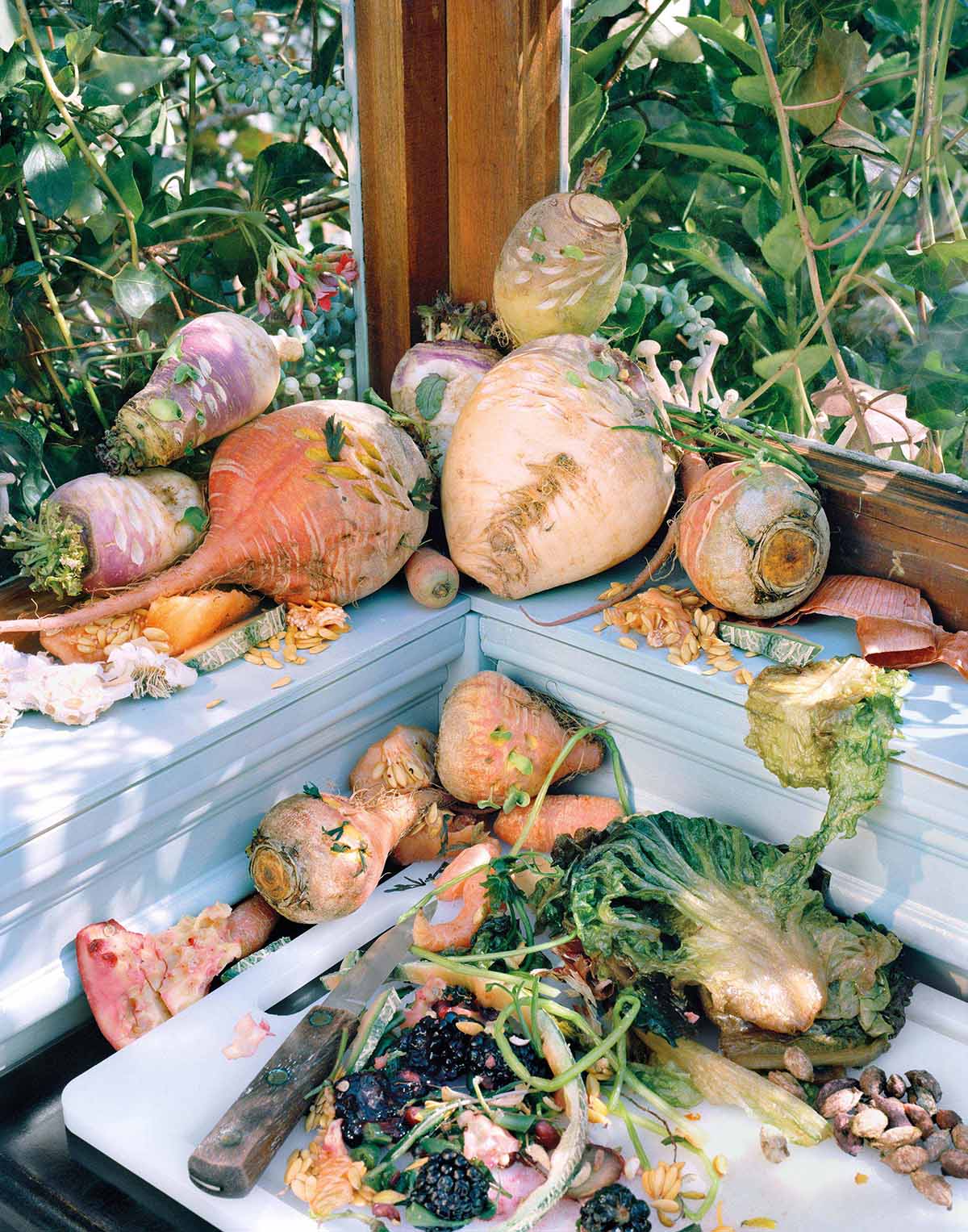
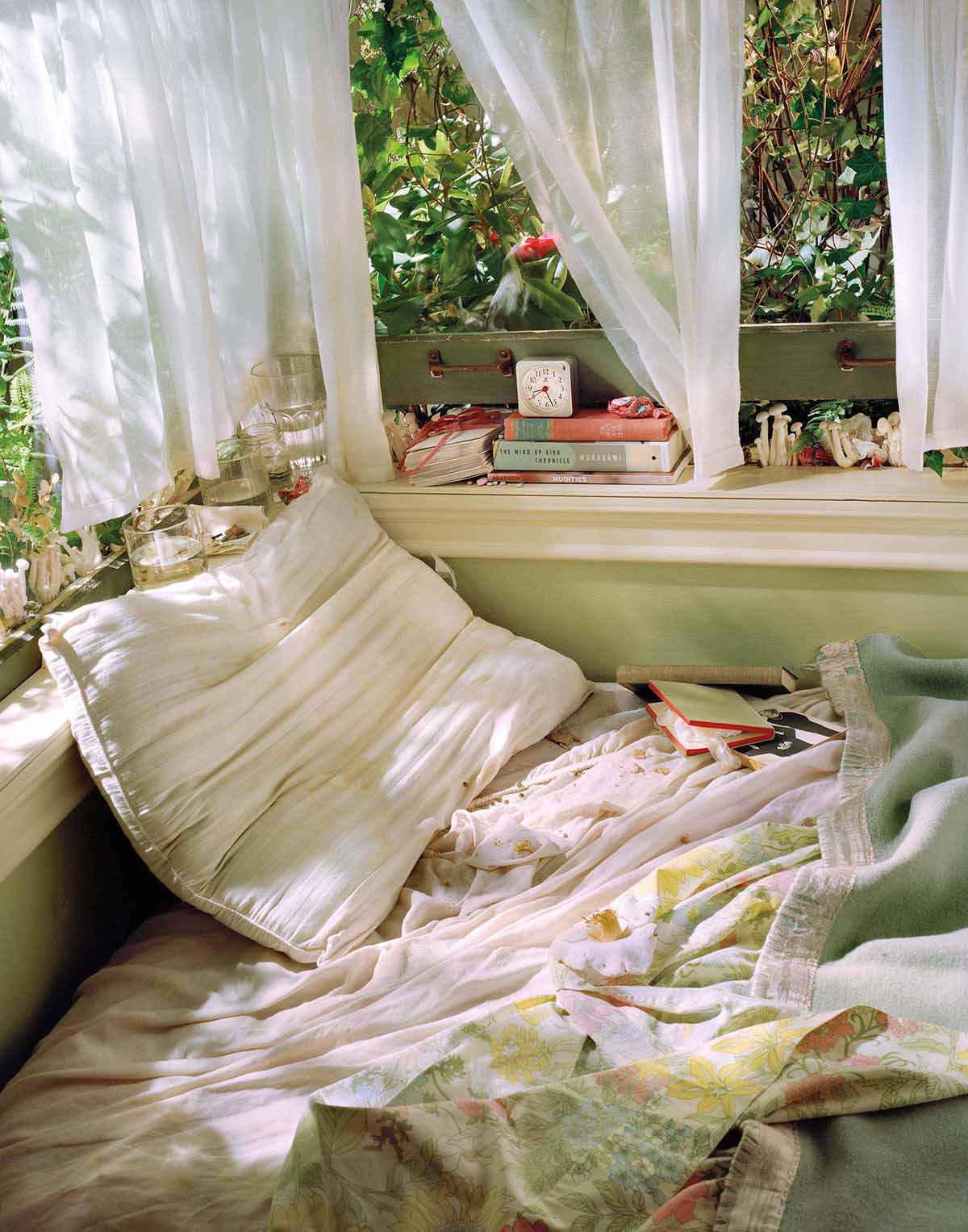
I am a not a messy person by nature, but I am interested in the awkward effect of an artificially disordered space. Vivarium is intended to be read as a fictional tableau. In its installation, the piece is 17 x 11 feet, in the corner of a room, and meant to evoke the scale and eerie stillness of a natural history museum diorama. Like these dioramas, my photo- graphs depict a staged environment that mimics the natural habitat of its imagined occupant, a human subject. Elements are fixed and static, but placed in a way to suggest movement and a dynamic, interactive space. Unlike these dioramas, the body of my inhabitant is not on view. When a viewer stands in front of the piece, objects shift in and out of a 1:1 scale. The kitchen counter sits at roughly counter height, the bed is just about big enough to sleep in. When the viewer stands in the middle of the piece, the images fill their peripheral vision, and they become the inhabitant.
Speaking to chaos, another reference I had in mind while working on this piece was Hieronymus Bosch’s 15th century painting The Garden of Earthly Delights. The composition of Bosch’s central panel is both chaotic and meticulously organized, packed with details and confusing and concurrent sub-narratives.
Order and chaos, positive and negative, good and bad, beautiful and ugly. Which elements must an image have to be considered beautiful? Which elements could you never give up in your compositions?
Tension and contradiction are important to me—the push and pull of attraction and repulsion. I think beauty is crucial to the composition to the extent that desire plays a large role in how and why we consume images. I use color and luminosity to lure the viewer to look. Once inside the image, I am interested in asking viewers to reconcile their initial aesthetic impression with how the details of the image unfold. Visual pleasure then becomes a strategy of entrapment.
In this issue, C41 questions a return to objective beauty. Do you believe that an objective vision of beauty can restore a democratic value to artistic opinion? Do you believe that such objectivity even exists?
I do not believe aesthetic value or beauty is objective nor universal. It is a matter of what we are used and trained to value through repetition. Vivarium portrays a highly stylized, com- posed, and subjective world. I draw on the visual language of pre-existing imagery, such as Northern Renaissance pain- ting, natural history dioramas, and interior design magazines to emphasize patterns and tropes of visual representation. However, I take creative license in my interpretation of tho- se conventions. Nevertheless, the piece proposes multiple ways of seeing, and is open to subjective readings.