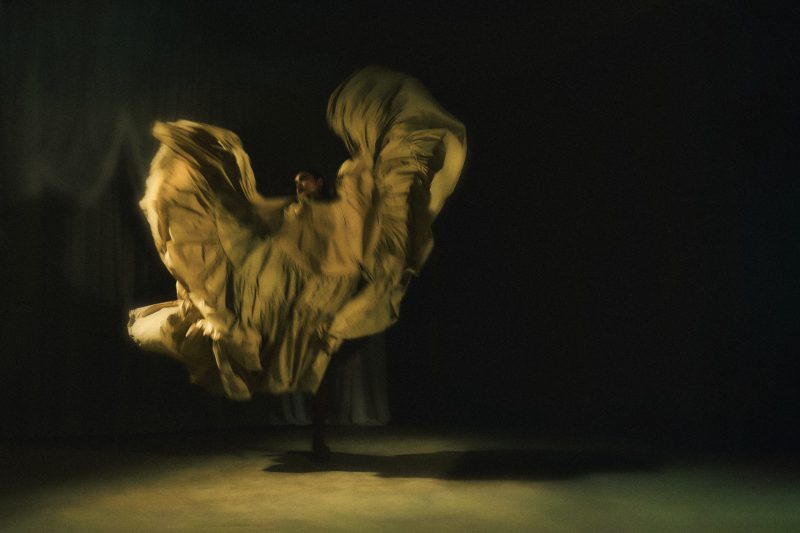
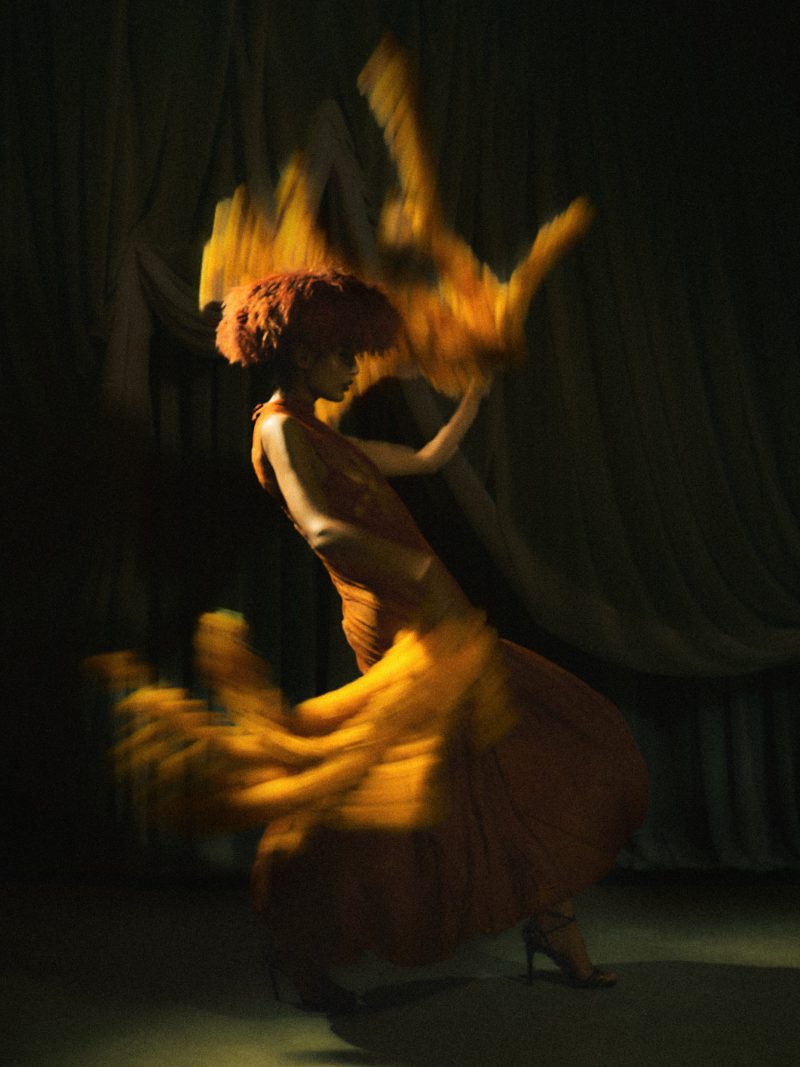
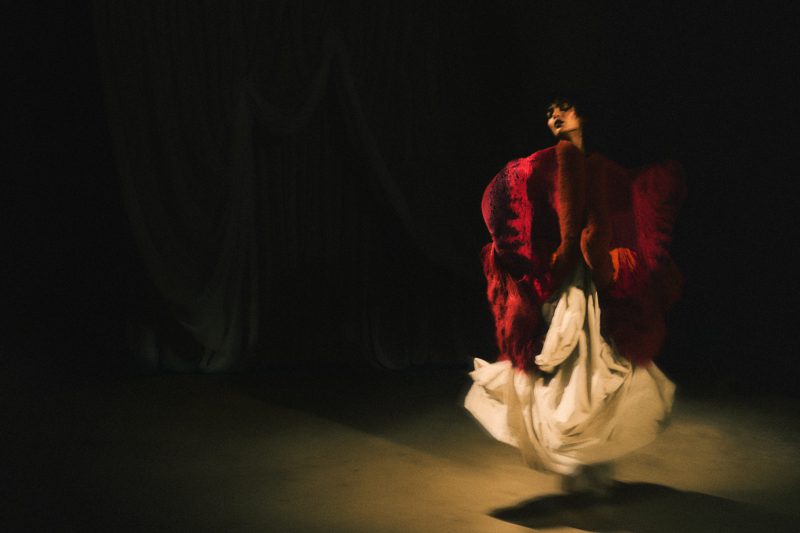
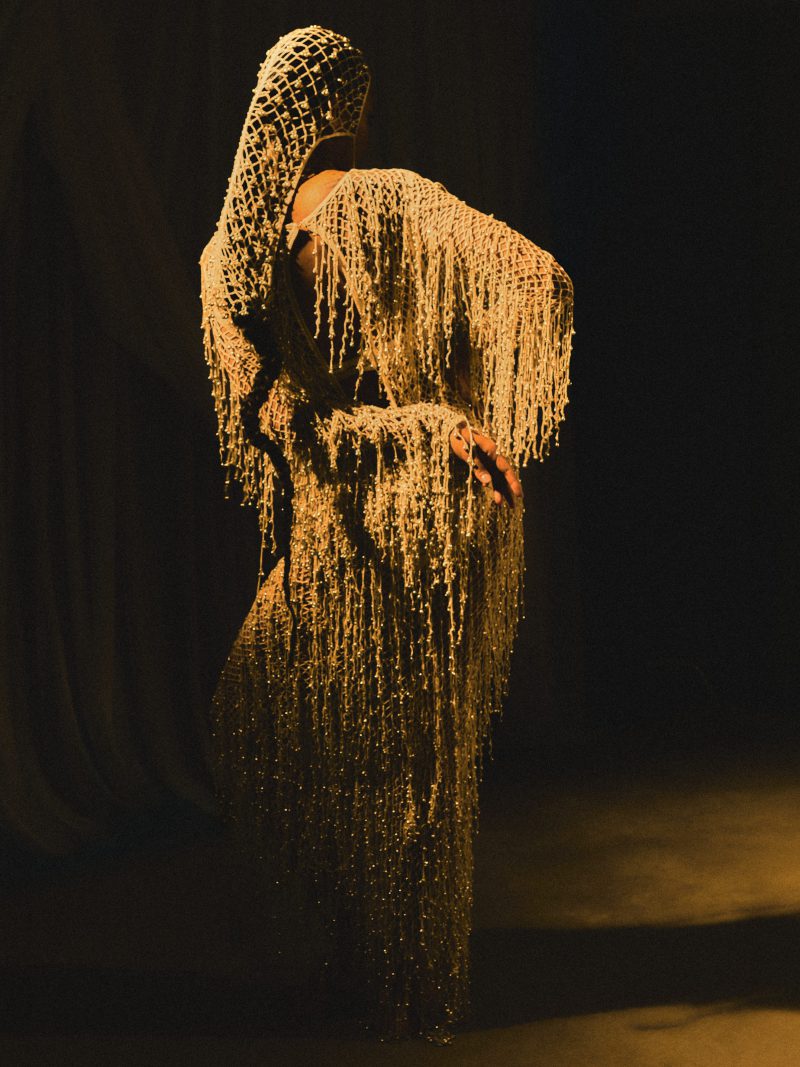
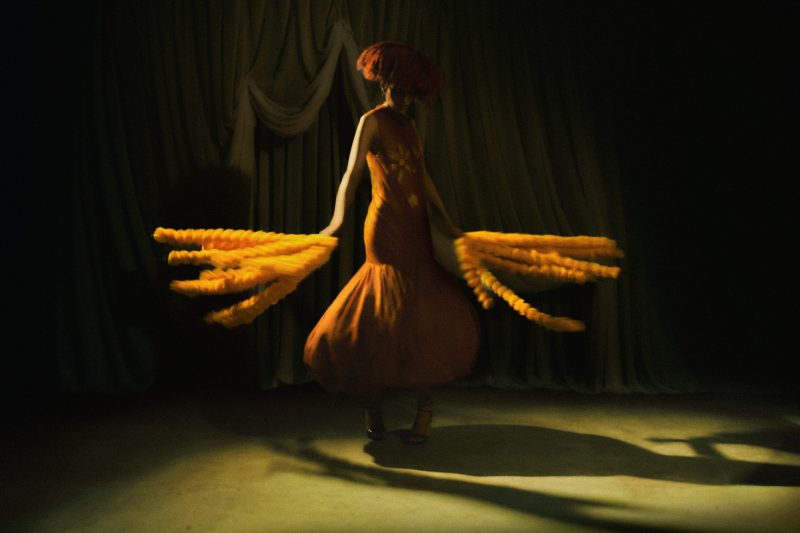
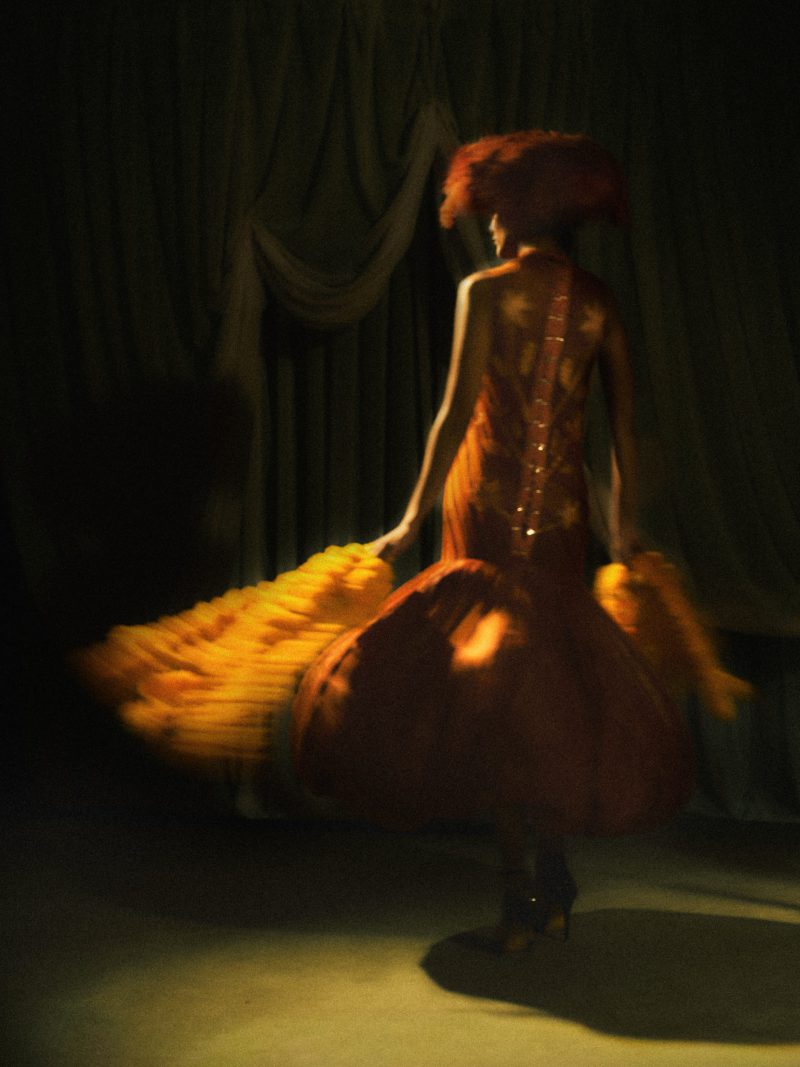
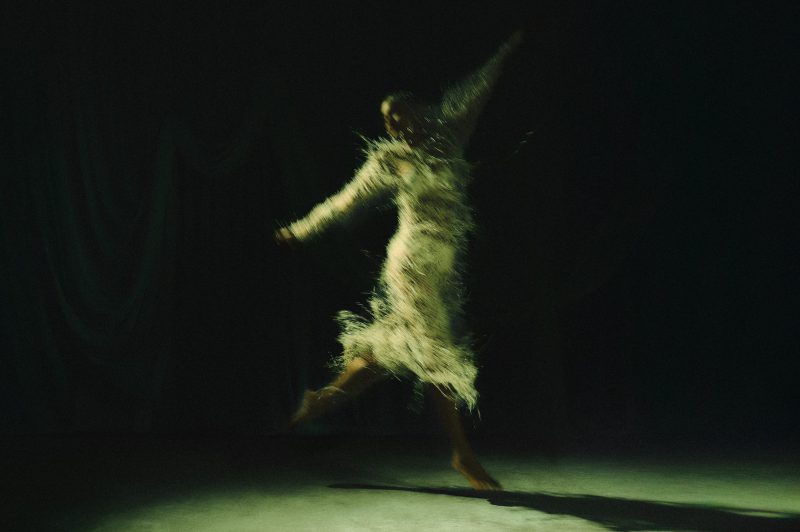
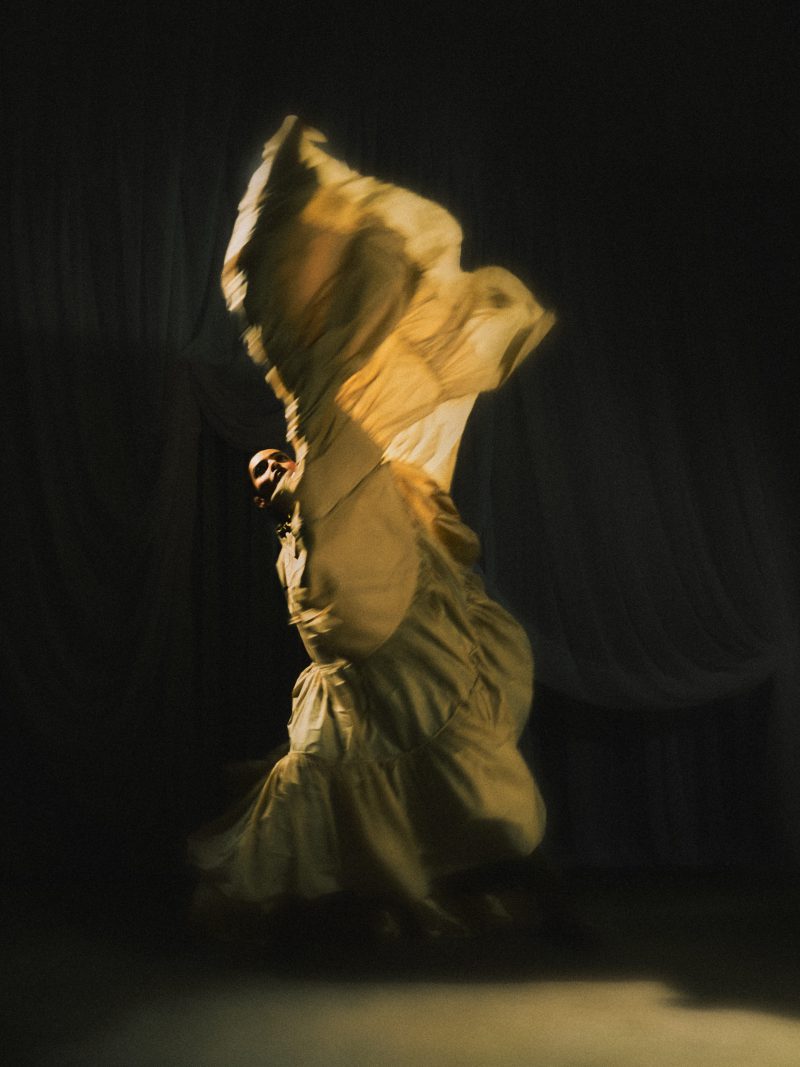
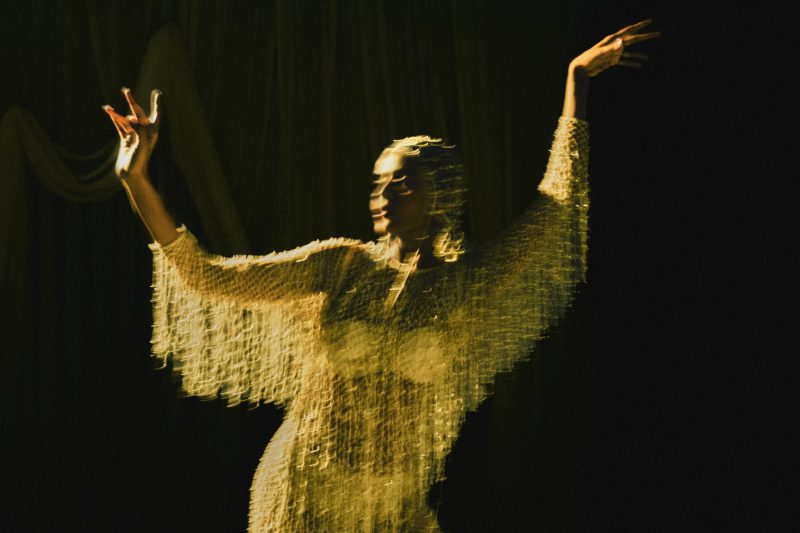
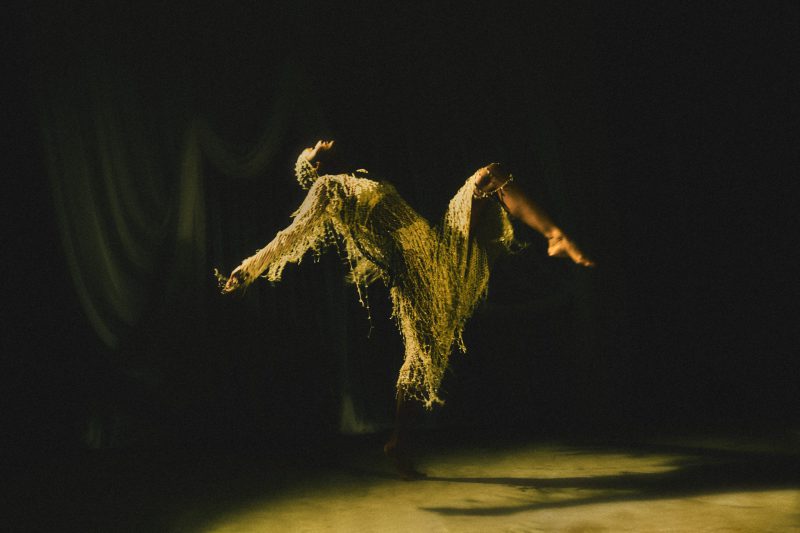
As she glides past, her hair flowing, the flowers falling, she spins into a perfect planet grounded by its own gravitation. Somewhere between performance and expression there is abandon. A sweet surrender to ecstasy and the body moves as it wills; dangerous, powerful, soft, sharp, abrupt and smooth.
Curtains of divinity, explores the South Asian and Sufi principles of the body as vessel of expression and movement with purpose, meaning, direction and rasa (essence/taste).
Inspired by the muse of French couturier Paul Poiret, Indian-Franco dancer Nyota Inyoka, a classical dancer who blended the sacred with the contemporary in 1920s Paris. Famed for her eclectic performances that became a source of inspiration and renewed interest in Indian aesthetics.
How can fashion answer the questions of abstraction, mysticism and style, is what curtains of divinity explores through the body.
The body has always served as a source of inspiration, aspiration and even control. Stepping towards a different narrative, this project explores the intimate, deep and fleeting moments that define existence via movement. The shapes we make, the personas we adapt, the direction we take, our physical existence is marked by the depth of our sentiments and heritage. As a dancer enacts a story through the body, or spins into perfect unison to tether closer to the divinity of existence; in that brief moment, abandon is immortalized.
Raw abandon, fana, annihilation, the absolute ecstasy of existence; a lovestruck fool, what oceans are crossed for, the space between words, the sophistication of simplicity, in those moments’ life soars. That fleeting beauty is difficult to capture, but that’s what should define artistic vision.
Our lives are increasingly defined by what we have access to in terms of materiality, clothes, and the roles we are expected to perform based on those markers. Designer labels are attached to a brand identity that we are, at times, conditioned to embody. Yet, the very platforms that base themselves on artistic freedom become the ones that control the conditions of expression.
In an oversaturated existence, it can seem like a challenge to break beyond and express with the body as it exists in space, true to its own soul, allowing the clothes to live out.
Where so much of our movement has become regulated and curated, where do we find the essence of our true selves?
As we try to make sense of a world that is obsessed with speed: fast fashion, quick delivery, options, easy access, the world at your fingertips, and any and every information you could need with a tap of a finger. Every step we take from the moment we wake up to when we sleep can be branded, monetized and regulated into a ‘lifestyle’.
In the race to make some aspect of our existence reap rewards, we have quite simple forgotten how to let ourselves live without inhibition. From our skin, the food we eat, getting ready, a walk in the park, our day at work we managed to tie it all into an aesthetically crafted displayable cinematic scene tied with a bow of a socially popular trend. In all this mess, we have forgotten what we truly want and even to sit with that question.
The connection to ourselves is falling apart. Curtains of divinity answers this with raw vulnerability, paying homage to heritage, history and structure yet allowing personal expression to come through in space as a free body.