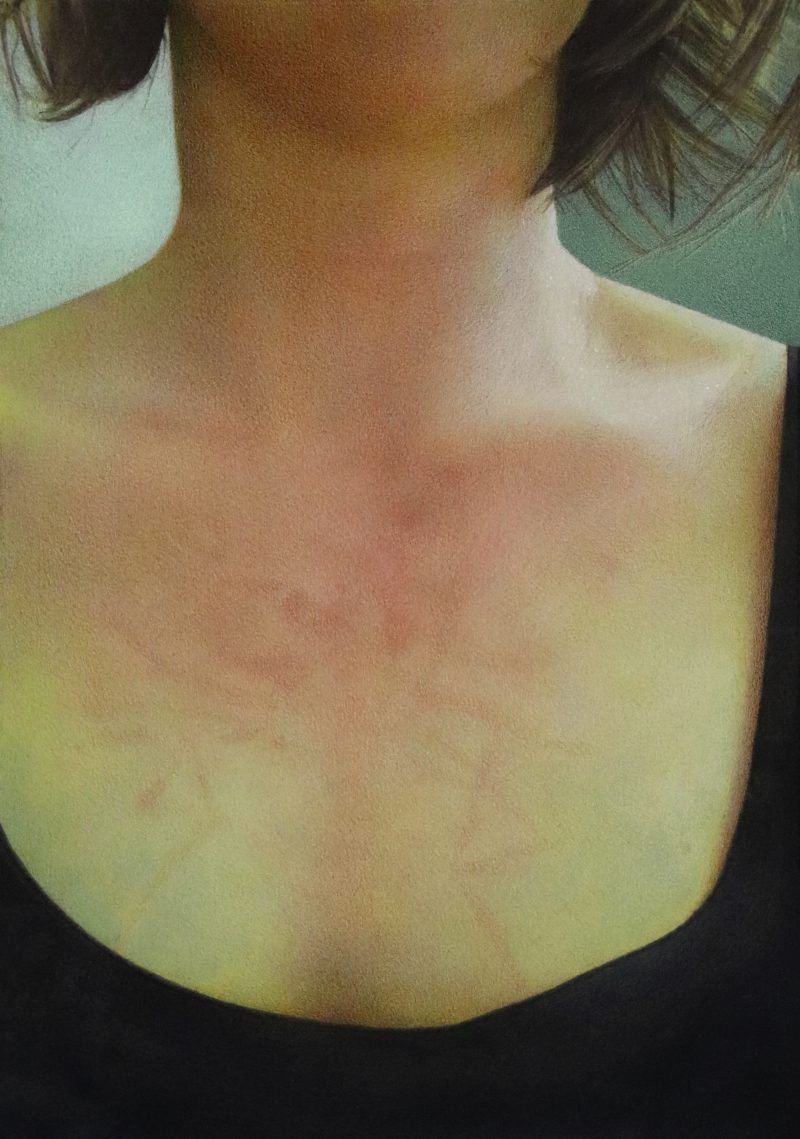
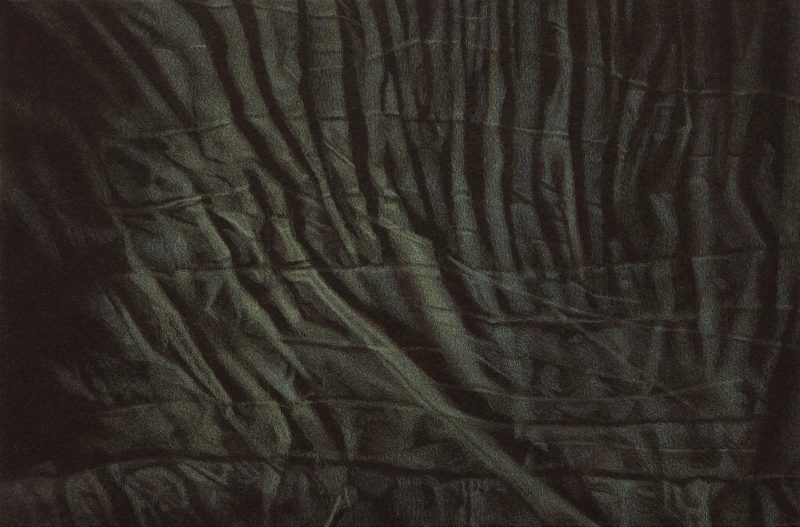
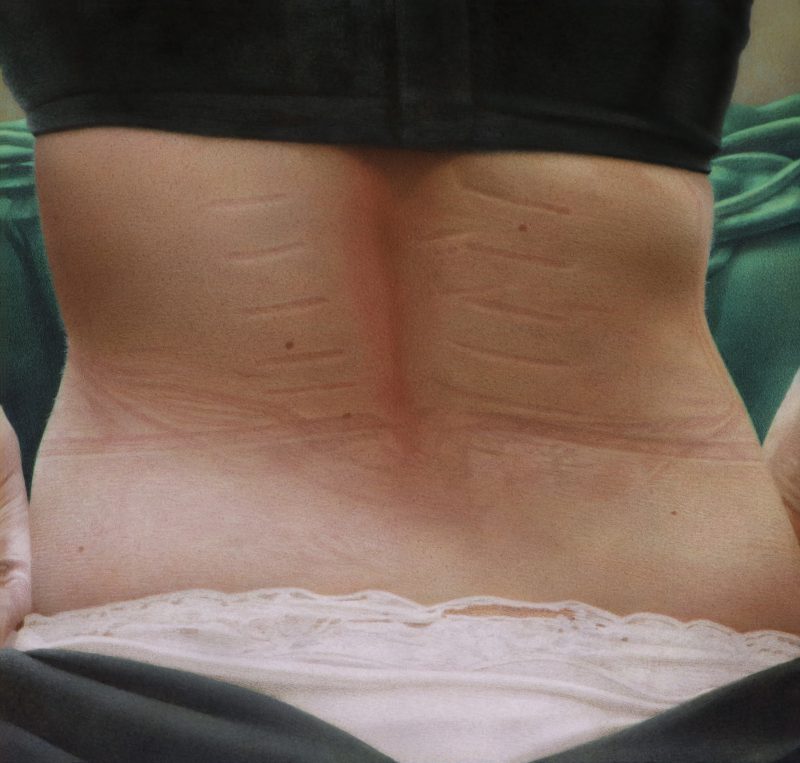
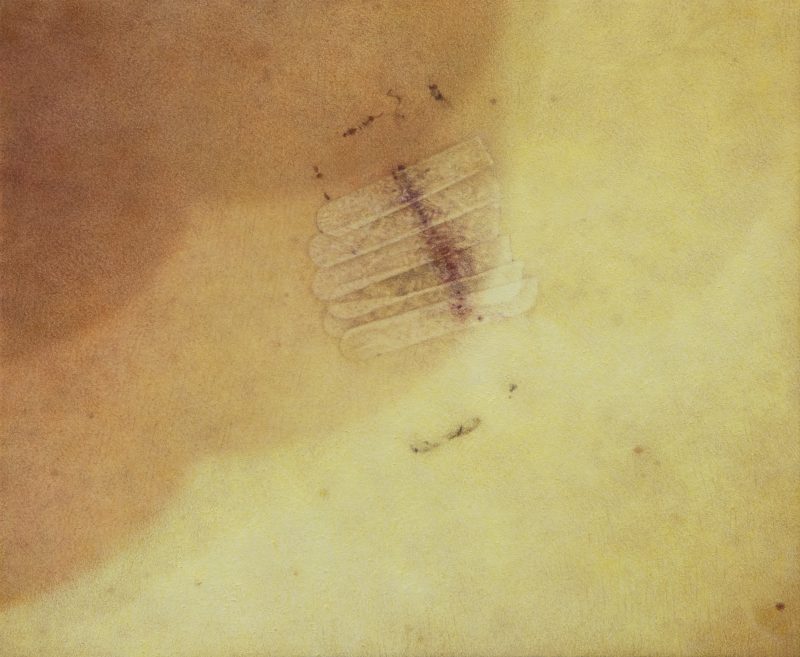
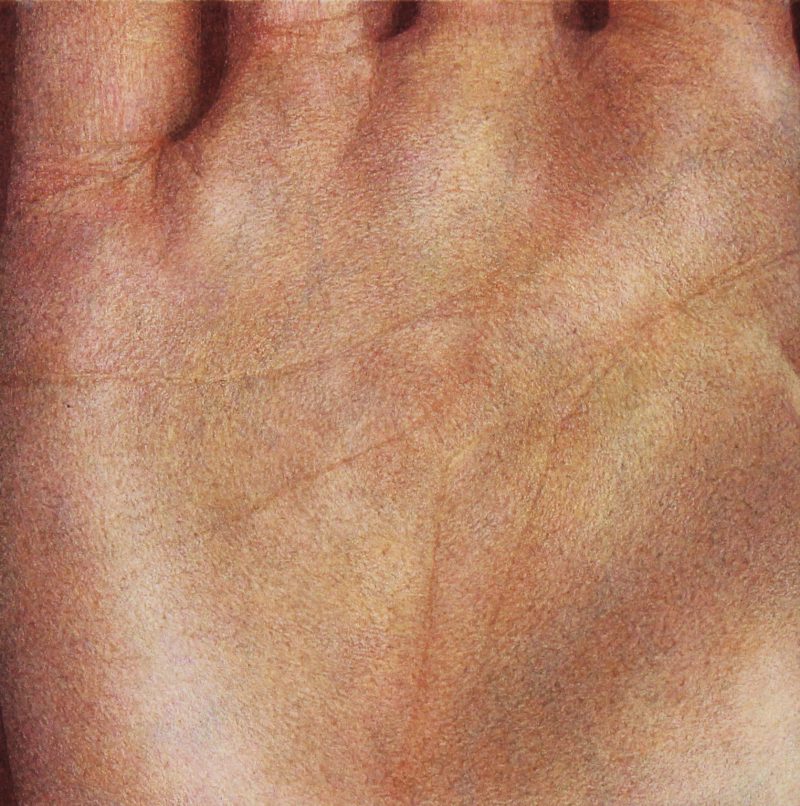
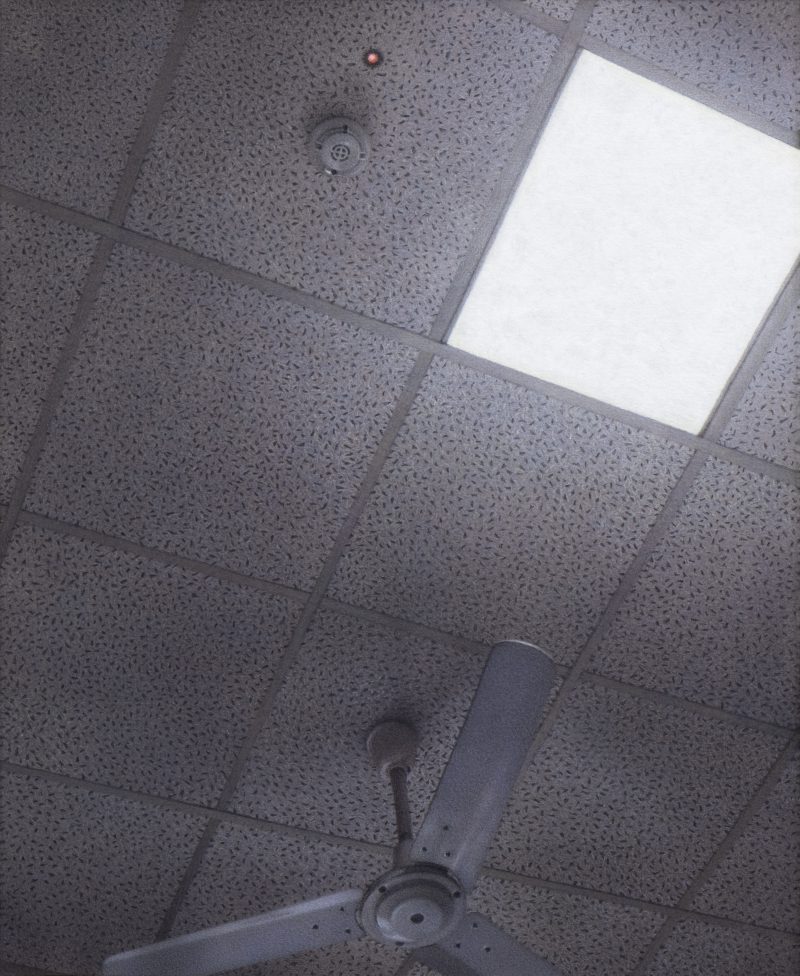
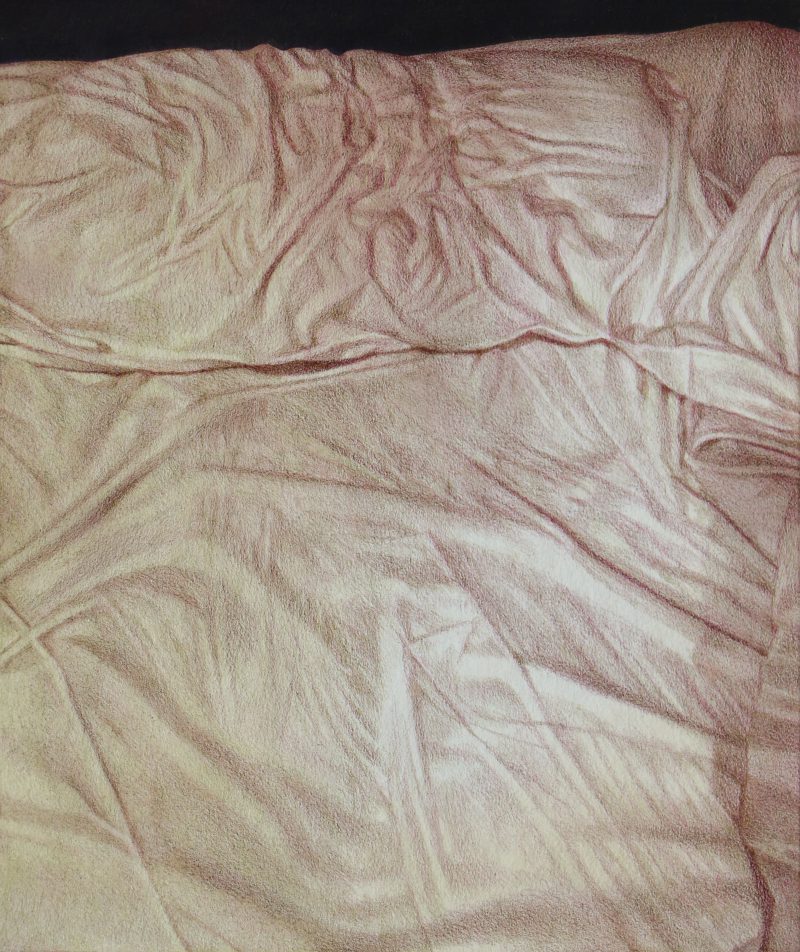
For Chiara Enzo, touching and painting are not, after all, such different things. Born in 1989, the Venetian artist creates intimate images, often small in scale, that invite the viewer to look at them closely, almost to brush against them. Fragments of the world that never exceed the size of a human face and that have the power to make us almost touch (and imagine) a landscape made up of skin, bodies and layered textures.
At a time when we experience the world primarily through screens, touch seems to have become a secondary sense. Yet the desire to touch—others, images, objects—continues to exist, even when it manifests itself merely as a tension in the gaze. For Enzo, painting arises exactly from this tension: from a constant ‘hand-to-hand’ engagement with images, with the surface, and with reality itself.
Alessia Baranello: I’d like to start with the theme of this issue: the need to touch others and the world in order to understand them better. Is there anything that, in your view, we no longer touch enough these days?
Chiara Enzo: I think we’re forgetting about touch as a means of understanding. Today, our relationship with the world is primarily mediated by immediate vision: the interface we use most is video, the screen. And there, the dimension of physical contact disappears almost entirely.
It’s curious because we continue to use touch all the time, but in a different way: we touch screens, zoom in on images, and get closer to things through our phones rather than with our bodies. With those closest to us, physical contact remains. What we are losing, however, is touch as a way of exploring the world.
AB: In your own experience, when you want to get to know something—a person, an image, a subject to paint—what is the first thing you do to feel a connection?
CE: It’s not really about touching, also because I’m a rather shy person. But I’ve always used my gaze in an almost tactile way. When I’m faced with a subject that interests me, the first thing I do is observe it very closely. At some point, there’s always something—a shape, a situation—that has an impact on me. Even before I understand why that thing interests me, I acknowledge the fact that it has struck me.
It might be attraction, it might be repulsion, but in any case there’s an impact. And so I start observing and drawing, because for me drawing is an extension of observation. Often it’s only in the aftermath that I really manage to understand what happened in that exchange.
What is represented in the final image is not so much the object itself, but rather the record of the interaction that took place with that object or with that presence. Ultimately, much of my work is precisely about this: not so much the things themselves, but the relationship I have with things and with the world.
AB: Do you remember the first thing you ever drew?
CE: The first drawing I can consciously remember is a mountain landscape, probably the Dolomites. As a child, I spent every summer there with my family, and for me it was a place of total discovery, completely different from everyday life.
I drew a great lot. I think drawing was my first real tool for understanding the world, even before I realised it. It has always been the way I’ve clung to reality.
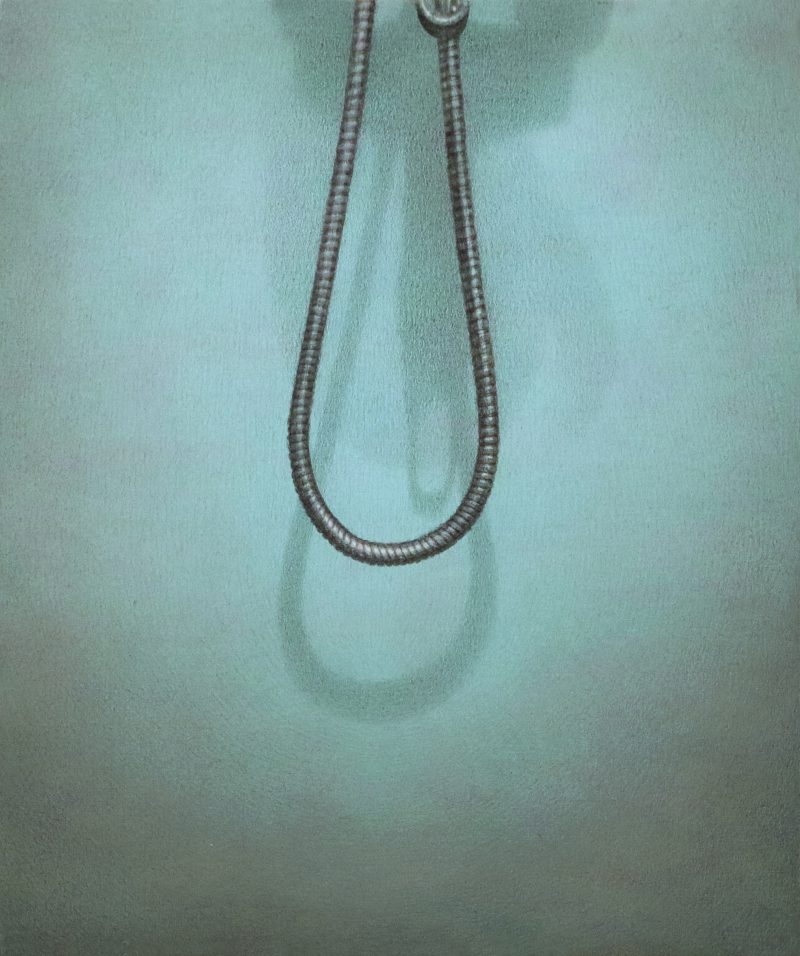
AB: Your work often focuses on the body and its fragments. What is your relationship with other people’s bodies?
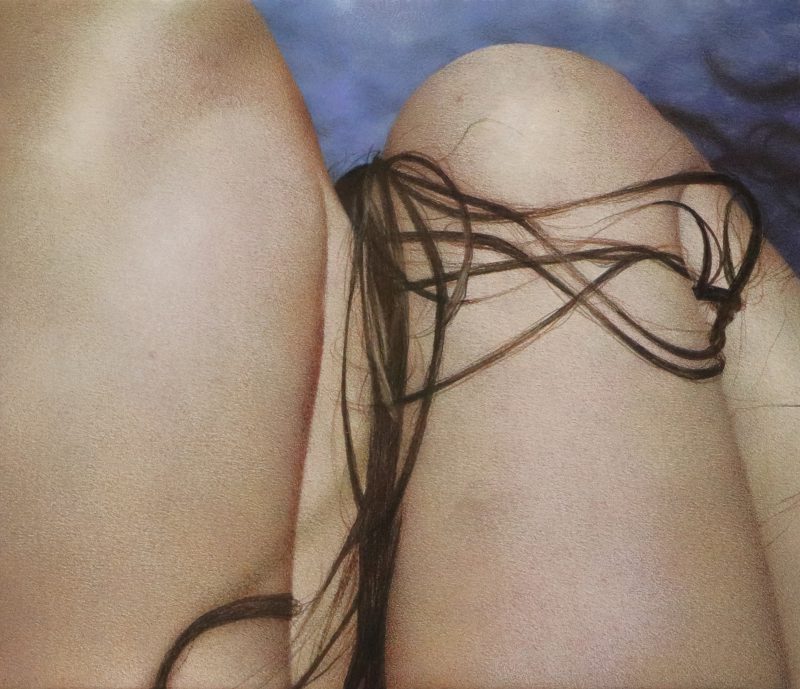
CE: My work simply reflects the way I see the world. The fact that my images often feature very close-up shots corresponds to how I mentally register things. When I meet someone, I never perceive them in a completely holistic way: my mind breaks them down, fragments them, constructs a sort of map. At that point, a person becomes almost like a landscape.
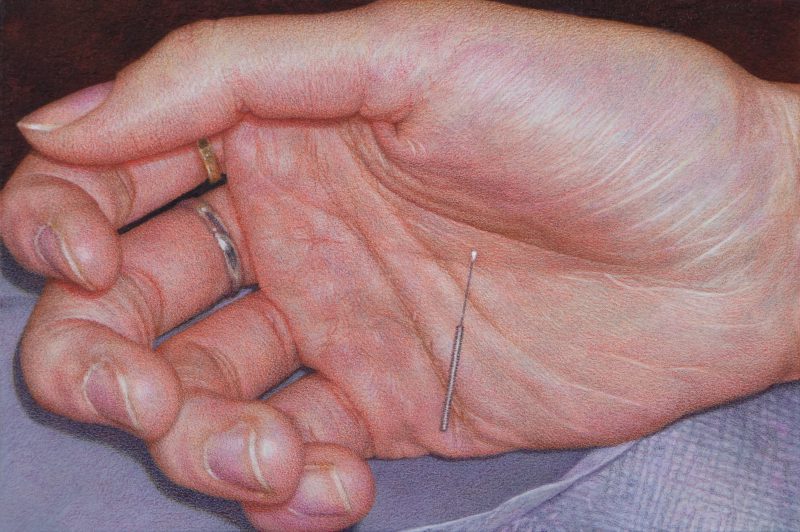
AB: When you paint in detail, do you ever feel as if you can touch what you’re depicting?
CE: It’s more complicated than that. For me, the tactility of the gaze is the embodiment of a desire. But it’s a desire that never truly comes to fruition. And that’s precisely why it remains alive and transforms into energy. In the images I choose, you can sense this physical intention of the gaze: it translates into the framing, the shift in focus, the internal tension.
My works are often asymmetrical; they have their own silent dynamics. What I want to capture is precisely this desire of the gaze to become tactile. Real contact never fully occurs, but it is precisely the impossibility of contact that produces the energy that interests me.
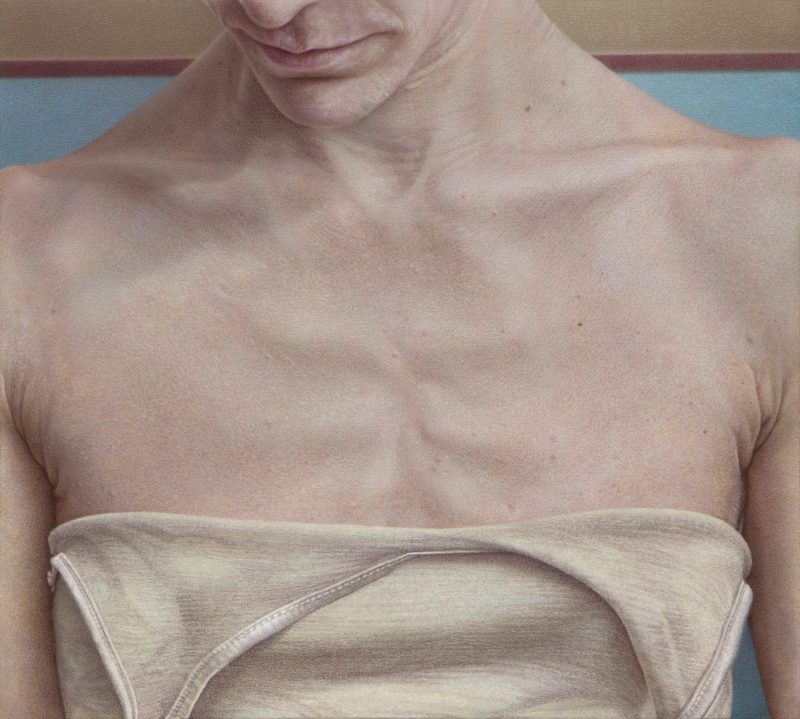
AB: Do you think that those who view your work feel this same desire for connection?
CE: It’s very subjective. No image speaks to everyone in the same way. What interests me, however, is seeking out images that can be recognised as shared human experiences. I always start from my own personal experience, but I constantly ask myself whether that feeling might also resonate with others.
My desire has always been for connection, even if mediated by the image. For me, my work is a bridge to others. When this connection is made, then it means the work is working.
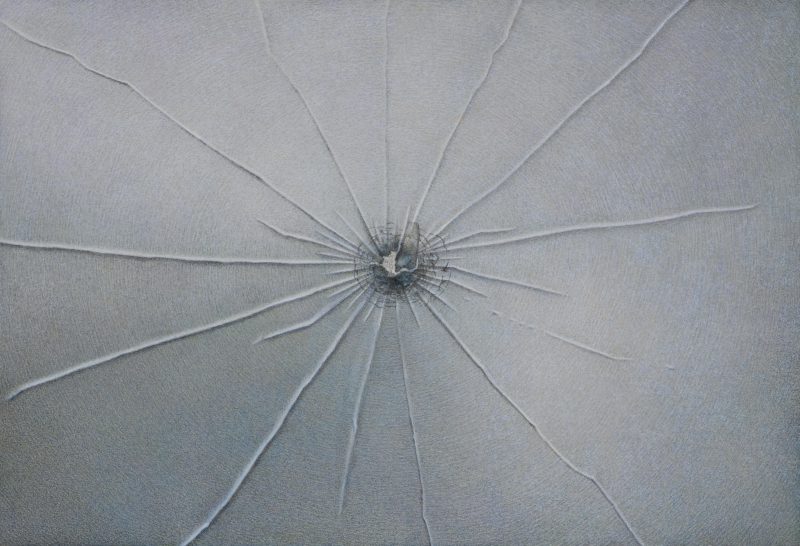
AB: Do you feel that painting has also been a way for you to overcome a certain shyness?
CE: Shyness certainly played a part, particularly in my choice of a form of expression that didn’t place me directly in the spotlight. In painting, the work becomes something separate from the person who created it.
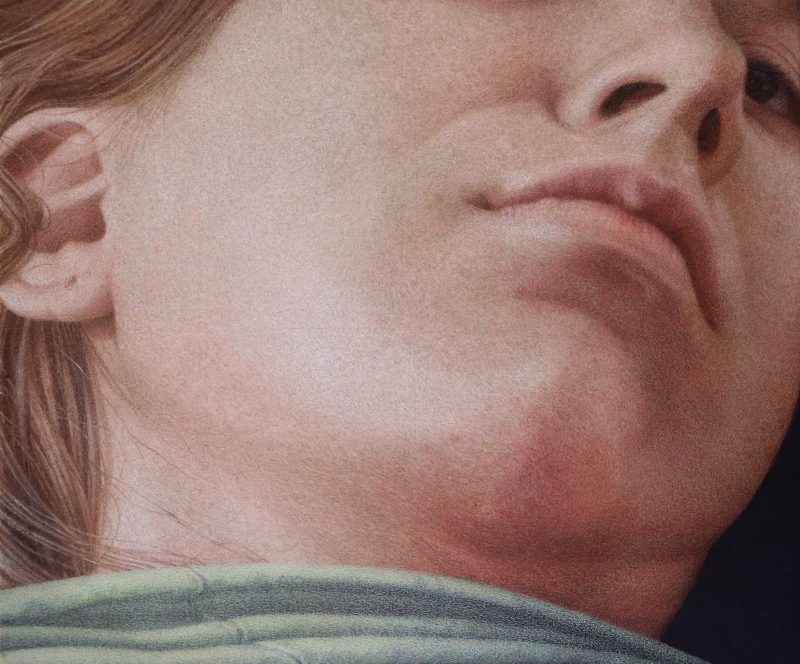
AB: There is also a very physical aspect to your working process. What is your relationship with the artistic medium?
CE: When I work, a kind of alignment occurs between what I see and the surface of the image. That desire for contact I mentioned earlier is fully transferred into the work through a very physical process, and the image becomes the catalyst for all that energy, almost the victim of that intensity. I focus intensely on the surface, almost to the point of disfiguring it. I work on small formats, using very hard, sharp pencils that scratch the paper. I fill tiny surfaces with a densely woven pattern of marks, almost as if it were fabric.
The resulting works are always poised between fragility and destruction, between delicacy and a form of hidden aggression. This is another reason why I feel it is difficult to truly explain my work through a photograph. Only by looking at the work in person does one realise this ‘hand-to-hand struggle’ I have had with the surface.
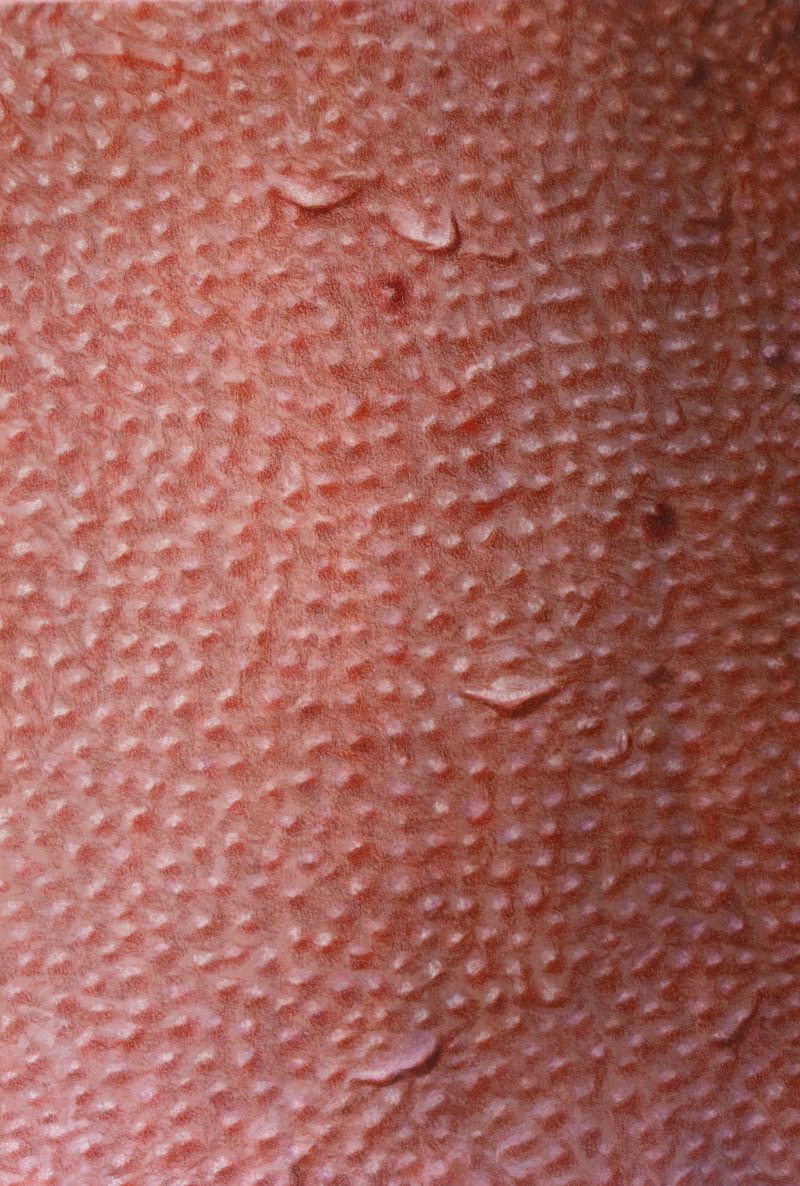
AB: These days, painting is often seen as something detached from reality, almost as if it were the most abstract of contemporary artistic languages. For you, however, the opposite seems to be true.
CE: For me, the act of painting is essential for staying grounded in reality. Using your hands, touching—that’s what it means.
Painting is simultaneously the most primitive medium possible, and one of the most complex. Making a mark in the sand is already painting: it is a primal gesture. But at the same time, painting carries with it a history stretching back thousands of years which cannot be ignored.
What I find in painting—and what I struggle most to find in other media—is above all the obligation to take one’s time. The act of painting consists first and foremost of observation: ninety per cent of the work is simply looking.
And looking, for me, means staying grounded in reality, keeping one’s feet on the ground.