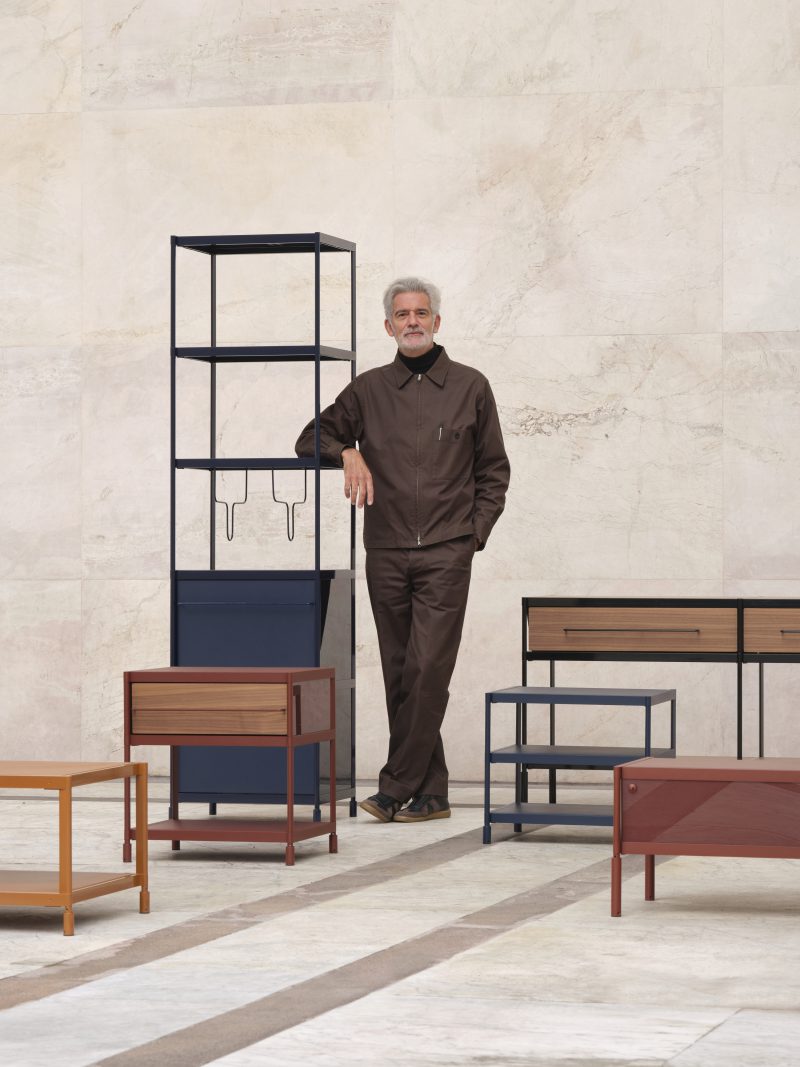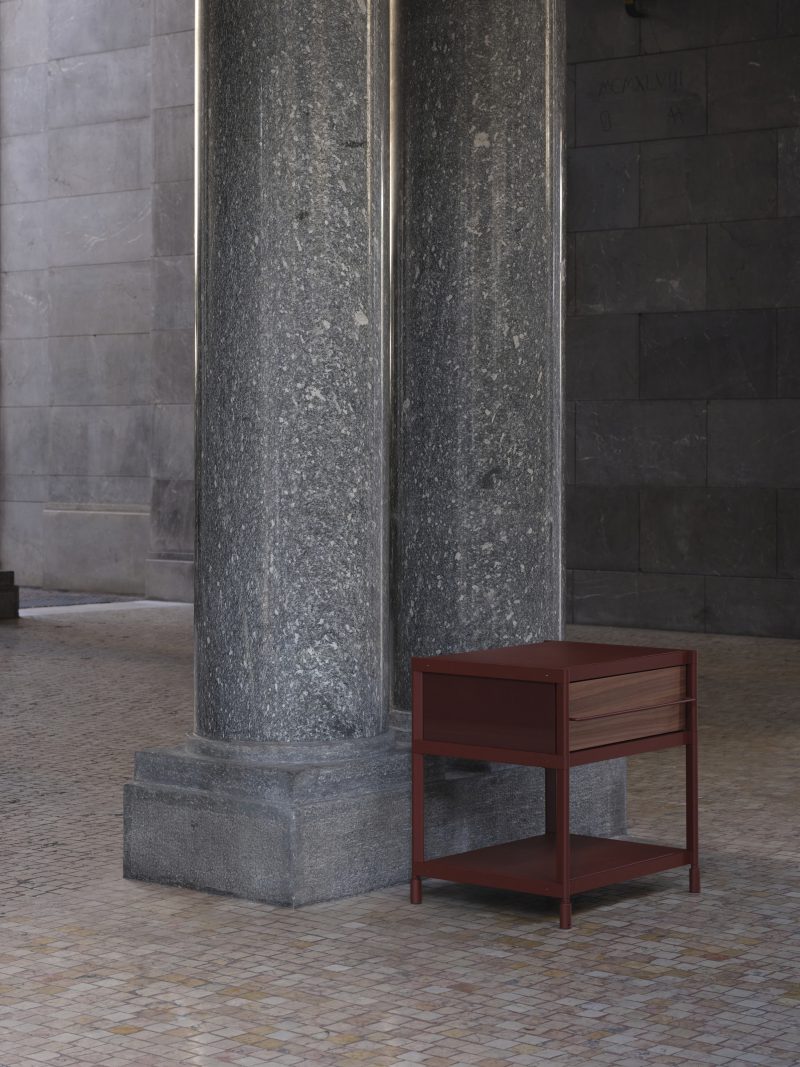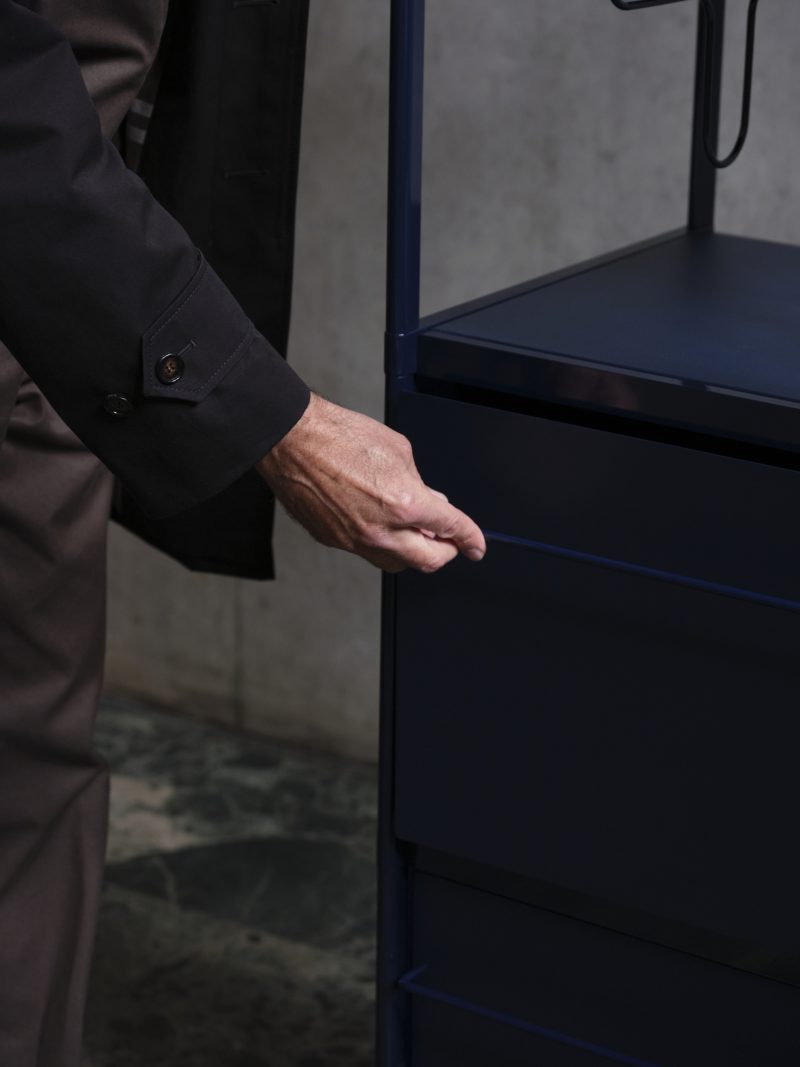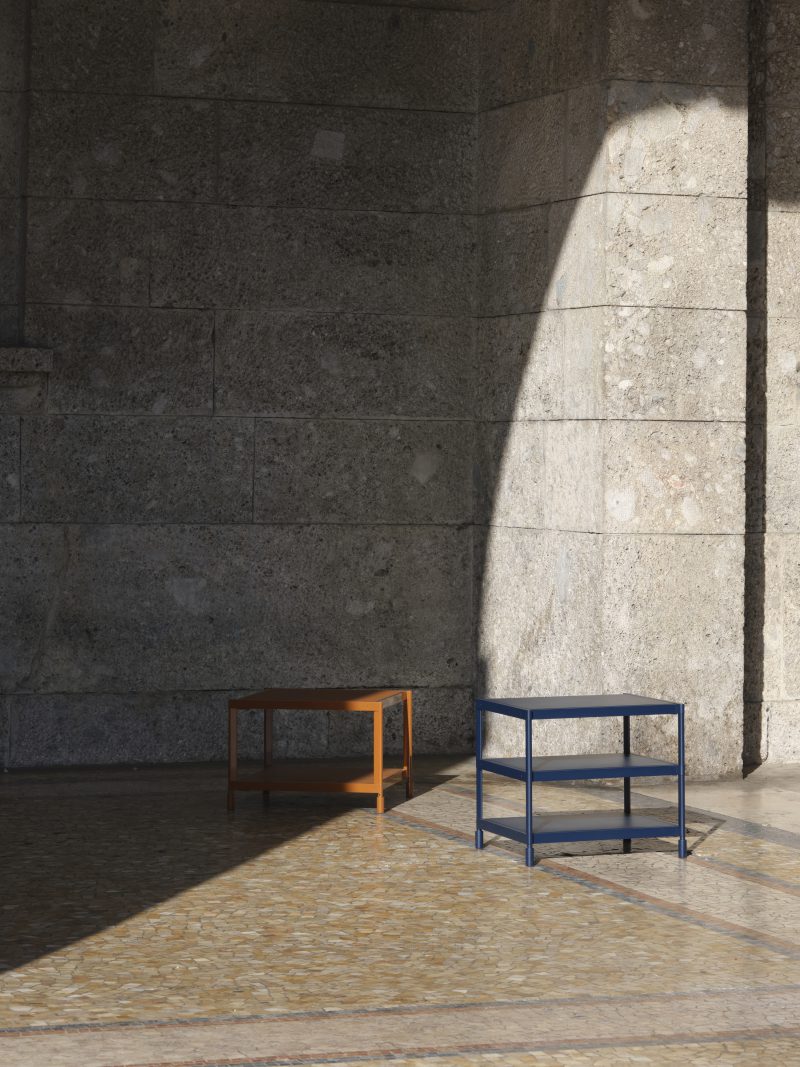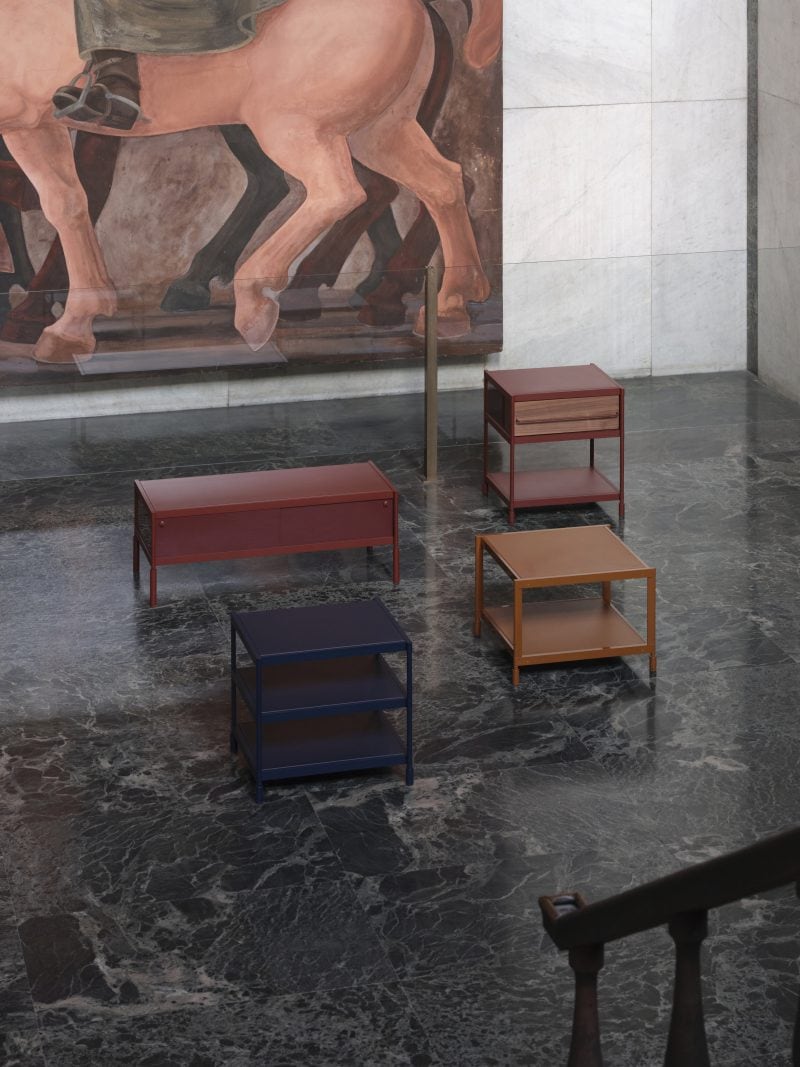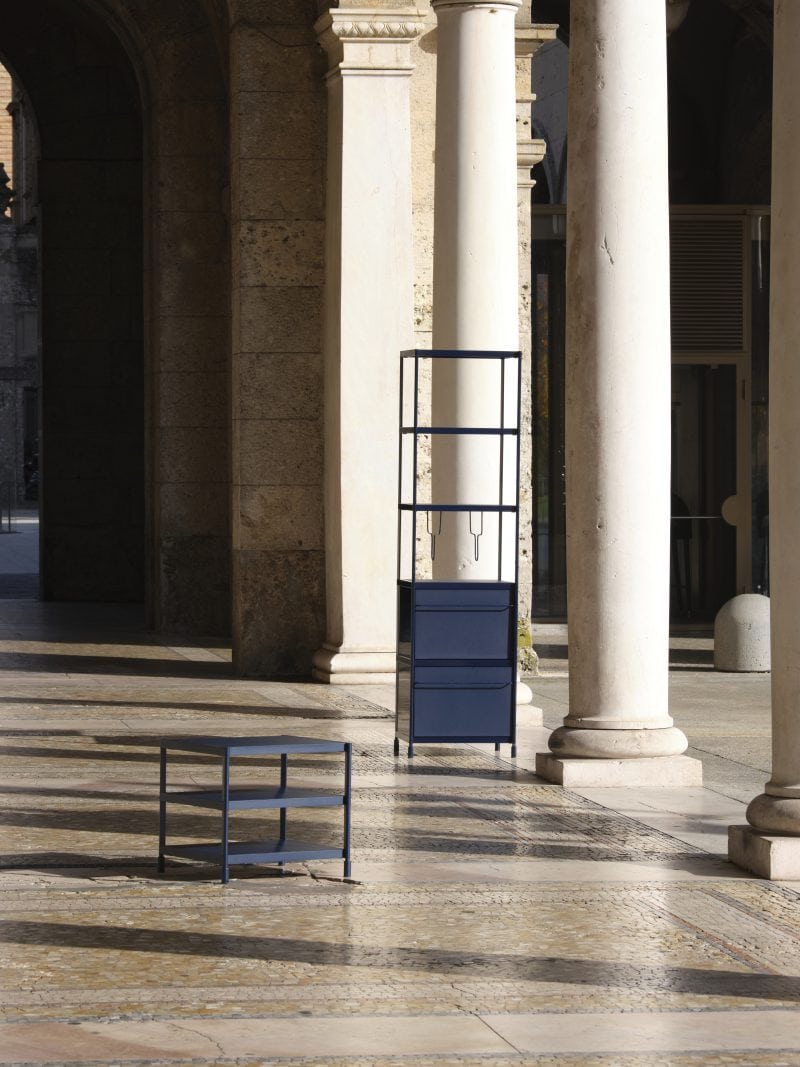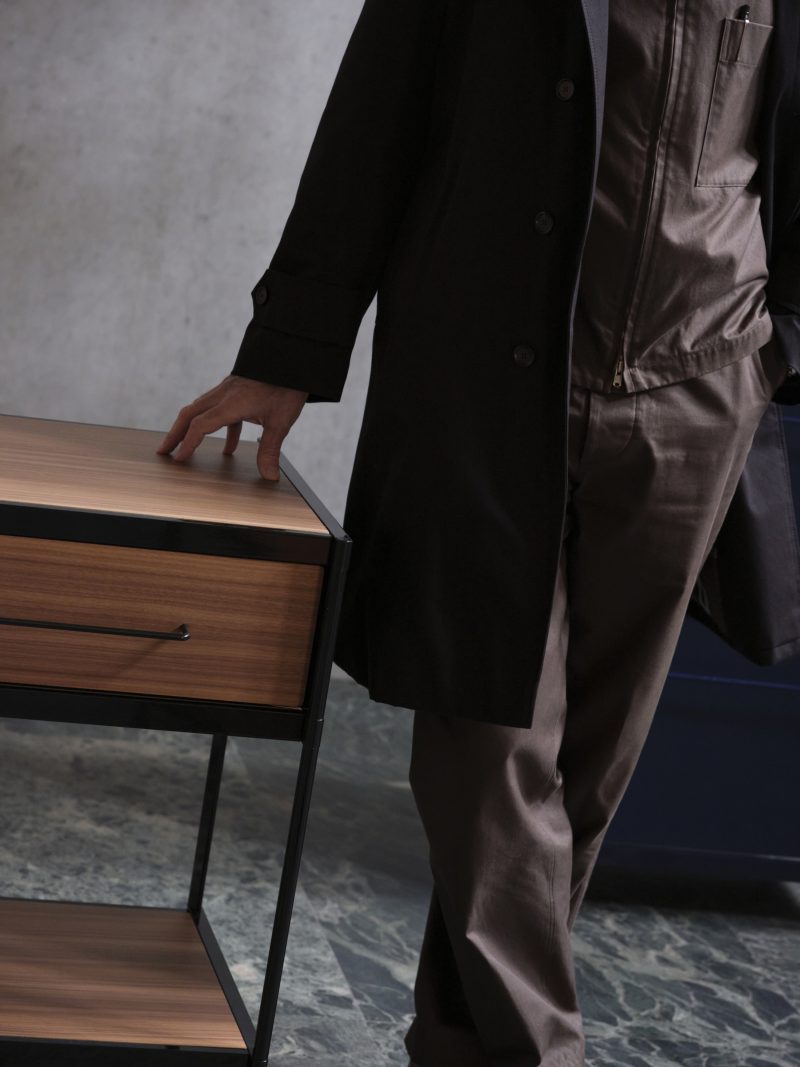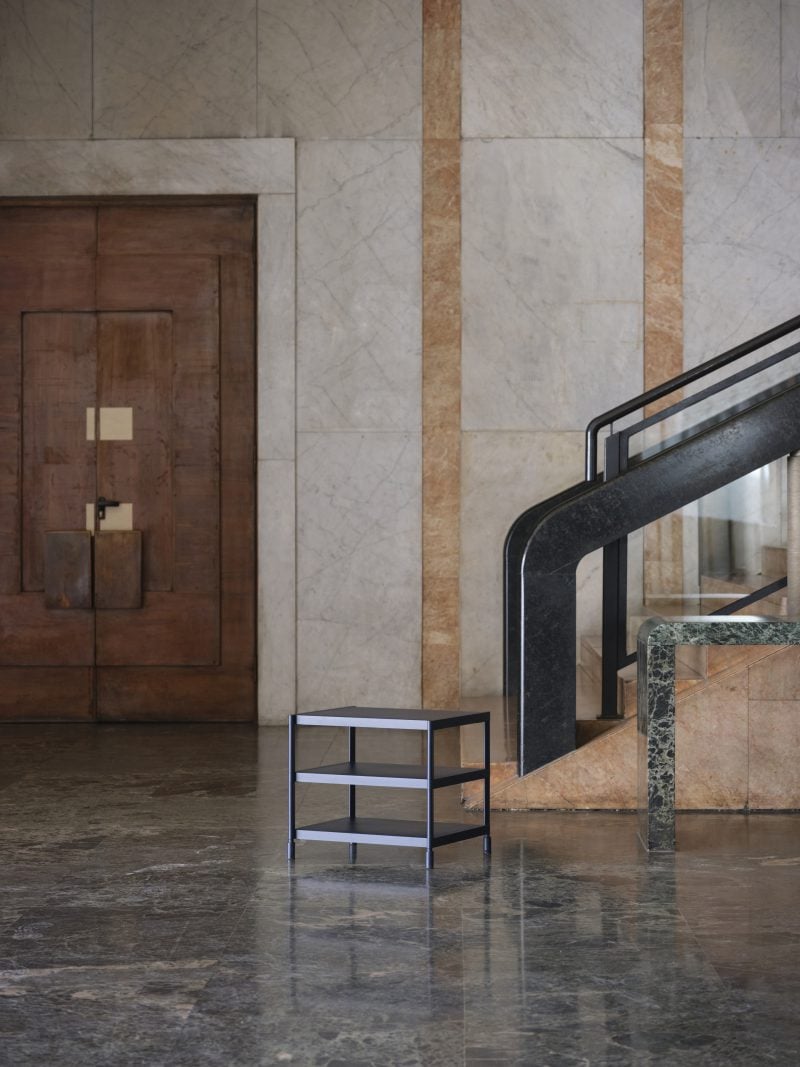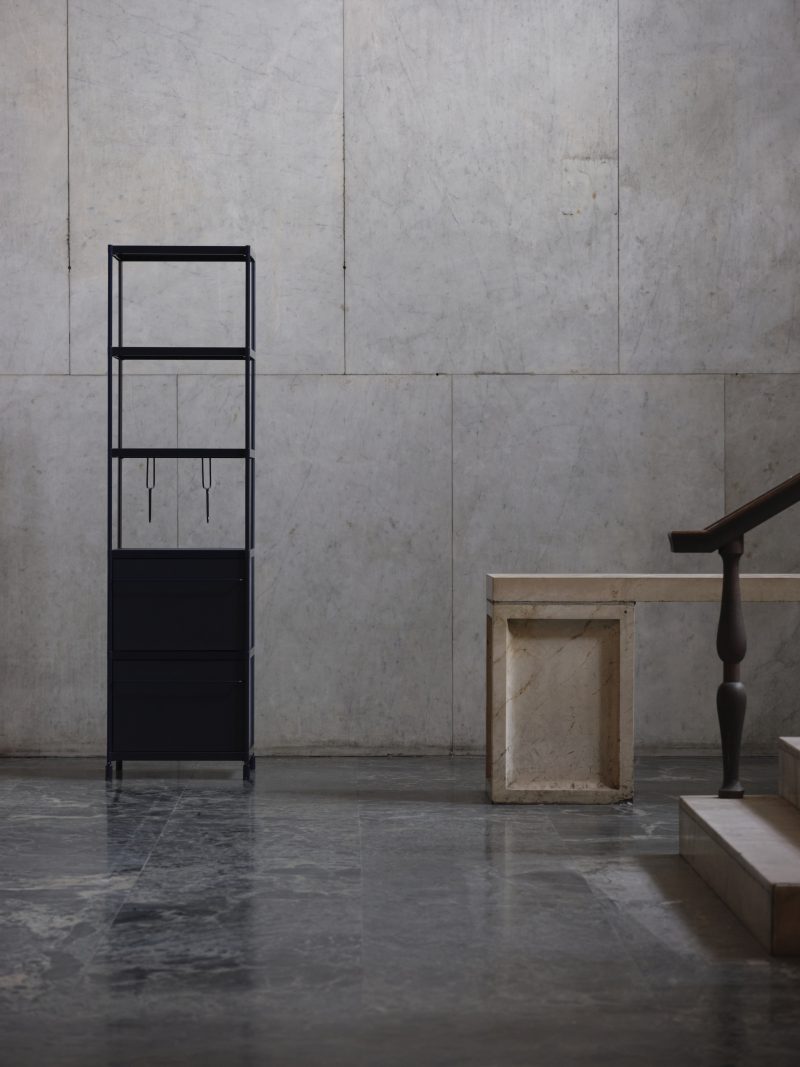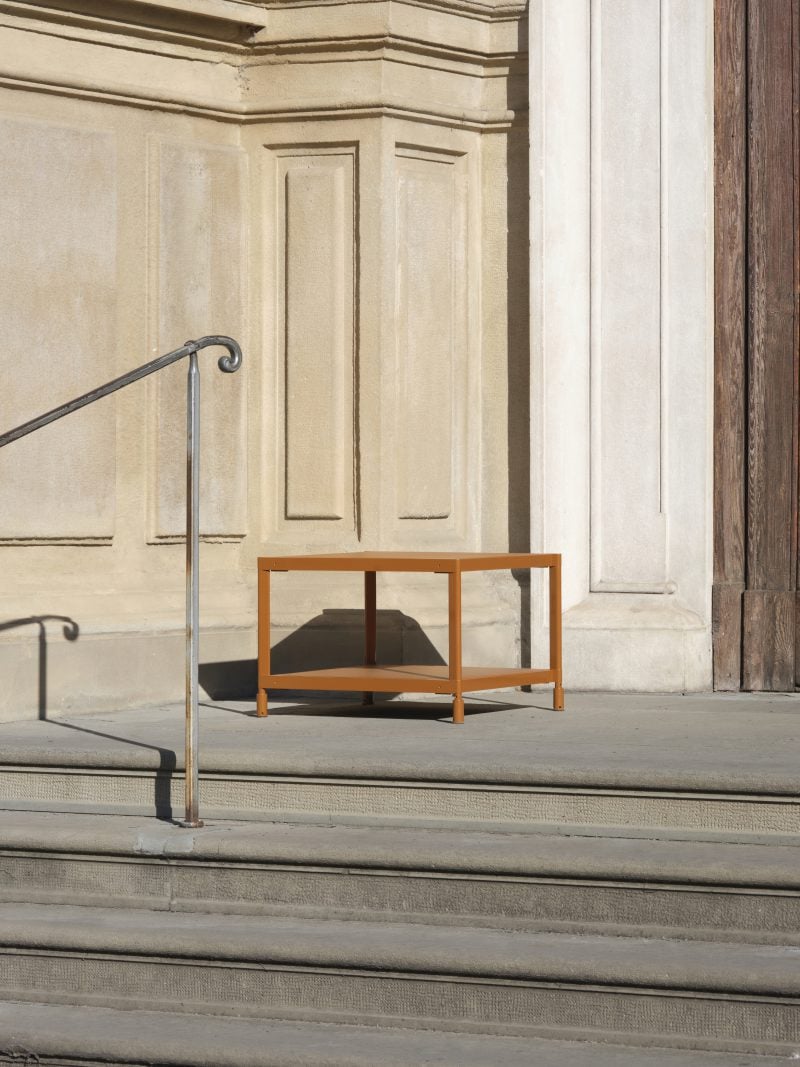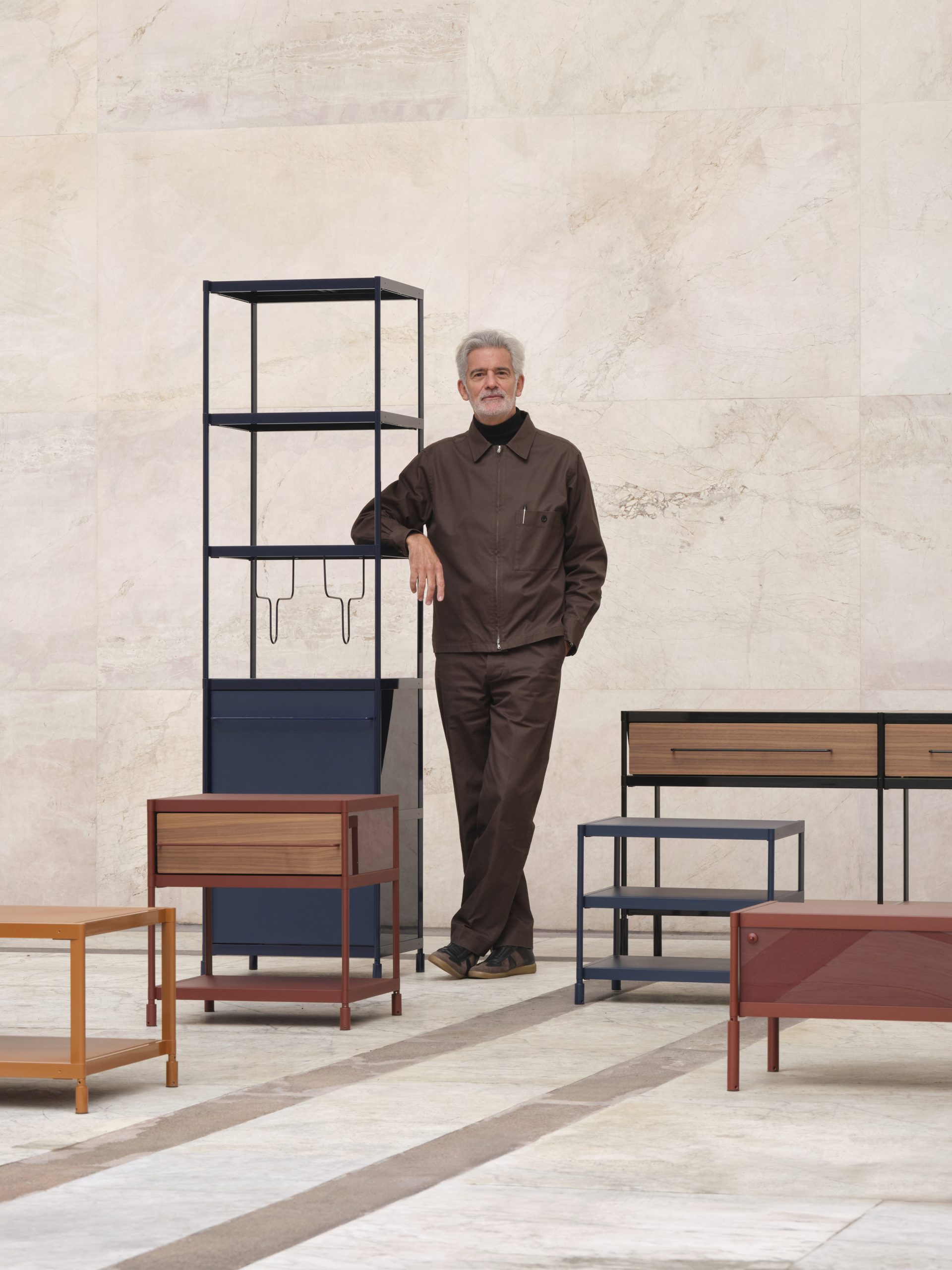
A visual dialogue celebrating the relaunched SEC modular system – originally designed in 1997 by Alfredo Häberli – now reinterpreted throughout the urban memory of Bergamo, the city where Alias was born.
Through the photographic project ‘SEC-CITY. Bergamo Dialogues’, SEC becomes spatial language and temporary architecture: evolving between Piazza della Libertà and the urban fabric of the Centro Piacentiniano, balancing rational rigour and material warmth.
Captured by photographer Luca A. Caizzi, the campaign intertwines design, place, and identity — renewing the poetic vision of its origins through a contemporary lens.
For Alias, design is never just form — it is connection, exploration, and shared belonging. Something Else, once again.
SEC – designed by Alfredo Häberli
C41: The original SEC system dates back to 1997. How did you approach the idea of re-designing or re-releasing it today?
Alfredo Häberli: First of all, SEC is a self supporting structure in aluminum. This is one part and the second part is the material that you can feel it; with drawers, with shelves, with panels, and this was, again, the idea also from redesigning SEC and looking at it another way.
C41: Modular systems today must adapt to highly flexible living and working environments. How do you balance preserving SEC’s original 90s design DNA while evolving it to meet contemporary domestic and professional needs?
AH: The quality of a system, it’s that you can adapt it to every need that you have, and you can also, over the time adapted to it, you can add some elements, you can take away some elements, compose it in a new way. And this is something which makes it extremely modern and contemporary.
C41: So do you feel like SEC has always been modern and contemporary?
AH: Yes, because it’s very important for me that I don’t follow trends. I know the trends, but we have to be in advance like three, four years, five years, even. And that makes no sense to go with trends. So that’s why SEC is now nearly 3 decades old and is still in program and still in production.
C41: The concept statement notes: “Technology and new materials… a paradox: the more complex the technology, the better suited to produce simple objects for everyday use…” How does this paradox manifest in SEC?
AH: For me, it’s not really a paradox, because using technology offered me a lot of possibilities, but I don’t have to talk about the technology that I use. It’s more invisible. So that’s why it’s not a paradox for me. Yes.
C41: In your view, what makes a design truly “timeless” — and how do you decide when an idea deserves to become part of a long-lasting cultural landscape?
AH: A product is difficult to design timeless. If you don’t follow with trends, then it’s neutral. And for me, a design object has to stay in different spaces. It has to adapt themselves in different ways, in and this makes maybe a product timeless, but I think over the year it will come out if a product is timeless or not or not, you will always recognize a little bit when it was done because it’s part of our history, because of technologies, because what the color that maybe you use, whatever. So it will show a little bit of the contemporary moment that it was designed, but over the decades, can be that it is timeless then or like kind of a modern classic at the end. And this is always nice, yes.
C41: Do you feel like that timelessness has been achieved with SEC?
AH: I think it oldered or it became older, like in a good way. How do you say? It’s aged very well. And I’m very proud that it’s still in production. That says a lot, that says really a lot. But it says also a lot about the company, because nowadays we use new colors, new materials, we adapted to today and to do that, it’s like kind of a new product, in a way, because it looks so different, but it’s still the same architecture, the same technique and the same proportion of the same elements. But just by adding colors, adding warm materials to it, it changed completely and this is nice because it’s very versatile.
C41: How did you decide on the new colors and how does it feel to see your products in these new colors?
AH: Yes, we do it together with all the other products. So the company, in a way, do it together with us. Which color shall we bring up for the next years? And this is also something that we just work together with a company. It’s not only my decision. It’s part of it, but not alone because it combines also the other products which are designed by other architects or designers. So it’s important for a company to have also a vision in which direction that I go together with us.
C41: You’ve spoken about discovering new typologies and forgotten themes. What currently inspires you the most when imagining new possibilities in design?
AH: With SEC, I wanted to offer a wide openness and possibilities of using it. So it doesn’t matter if it is in the office, in the private living room or even in the bathroom or sleeping room, it fits in every room and this is because it’s very open how you can use it. And this is essential for a long lasting product.
C41: Your work often balances intuition and technical precision. How do you personally recognise when a design has reached its “essential” form?
AH: I’m a slow designer, in a way. It takes time until I reach the level I want to have. And normally in the studio, I ask, would I buy it? And if we decide not to buy the product then we do another round. So this is quite important. And what I try always to mix is I have in my soul, I have two elements, the technological side, the precision, which is more architecture kind of. And then the poetry, which is undescribable. You cannot describe the poetry, it’s not linear. And I like these two contrasts, so I quite often talk about the soul in a product, so until I don’t see or feel the soul in a product, I don’t show it to the client.
C41: For younger designers or design lovers watching this, what would you say is the key lesson behind revisiting a historic design and bringing it into the present?
AH: I see at the moment in several companies that are taking products from the archive back in production. In our case, it never stopped in SEC, but I understand that because we are living with a lot of technologies and we are missing a little bit the comfort, the soul, the cosiness, and some of these older designs, they had that, and that’s why young people today, young designers, are fascinated by the designs from four decades or even more ago, 50 decades. Because first they didn’t know it in the history and second, they have something that touched your soul, your feelings, and this is good if a product has done. We have the same in several fields, in fashion, we have the same, we have the same in the car industry, we have the same in the architecture as well. So we are here in a building, which is very, very old and we are touched by the colors, by the proportion, by the material they used. And this is something that I think it’s a cycle that comes back forwards and backwards.
C41: You talk a lot about the feeling of soul in previous designs and culture. But what do you think now in the future? Do you feel present designs are losing their soul a bit, or how do you see the future?
AH: I always try to have a vision in the next five years. Three, five. maximum 10 years, more we cannot because the technologies are going so fast. But again, when I designed something, I tried to imagine the people who will use it. I try to imagine the space where I will use it, or I or the people will use it. And I try to offer something that I’m looking for. So it could be warmness, it could be a solution for a problem in a furniture. It could be a new way of looking to a thematic that is forgotten. But we are changing all the time and as an example the sofa changed the way we sit in the sofa over the history. In this building, you have only chairs that are uprighting kind of nowadays, we chill a lot. We are more or less horizontal sitting. So this changes and it also changes with your age. So this is something which is interesting by looking and observing to the human beings. I always say, observing is the best way of thinking. So that’s what I do. I observe young people how they use things. I observe myself, I observe my surroundings, and I get ideas out of this everyday life.
C41: Finally: if you were to pick one word to describe what this re-edition of SEC brings to the Alias catalogue now—what would it be, and why?
AH: Uniqueness. I think it’s very important to work on the character of a product, which I say now uniqueness, it has to have a character that is not already around. And I think Alias is a very small jewelry, in a way, in the furniture industry. And yeah, this is nice.