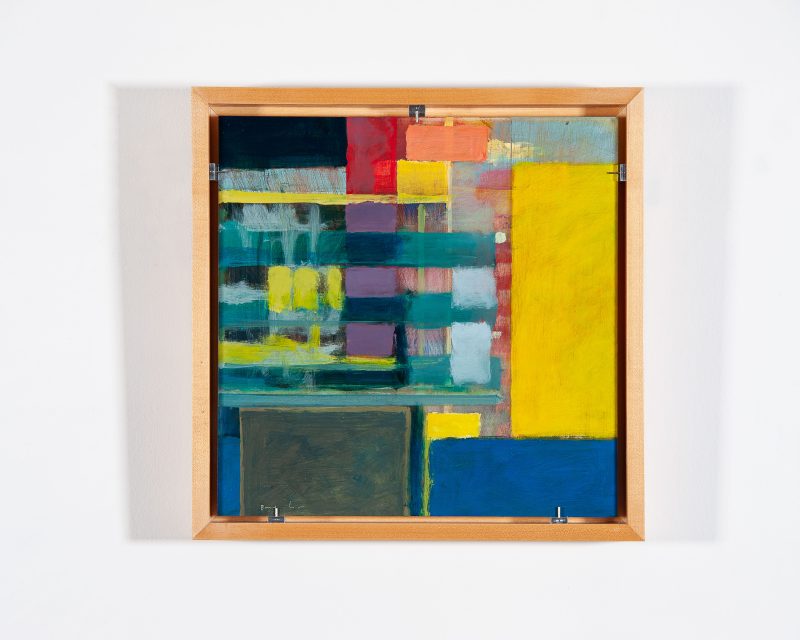
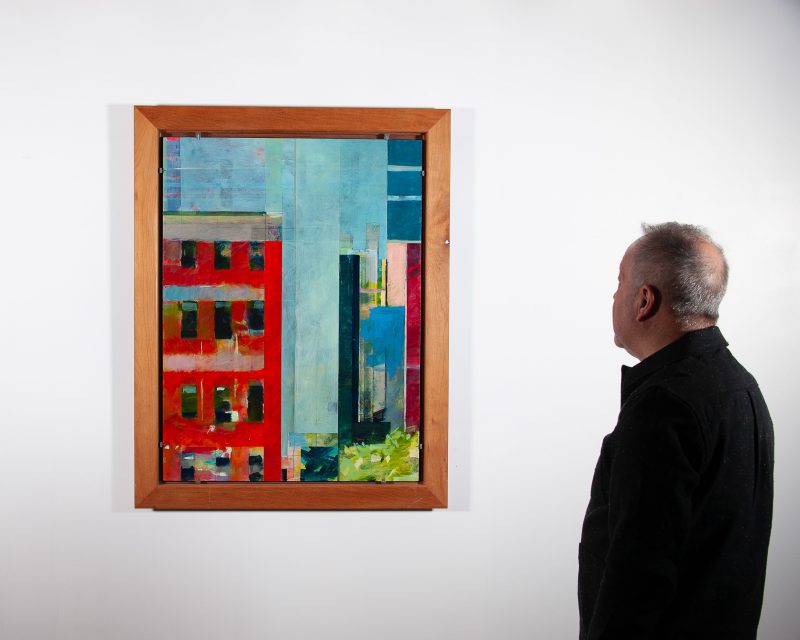
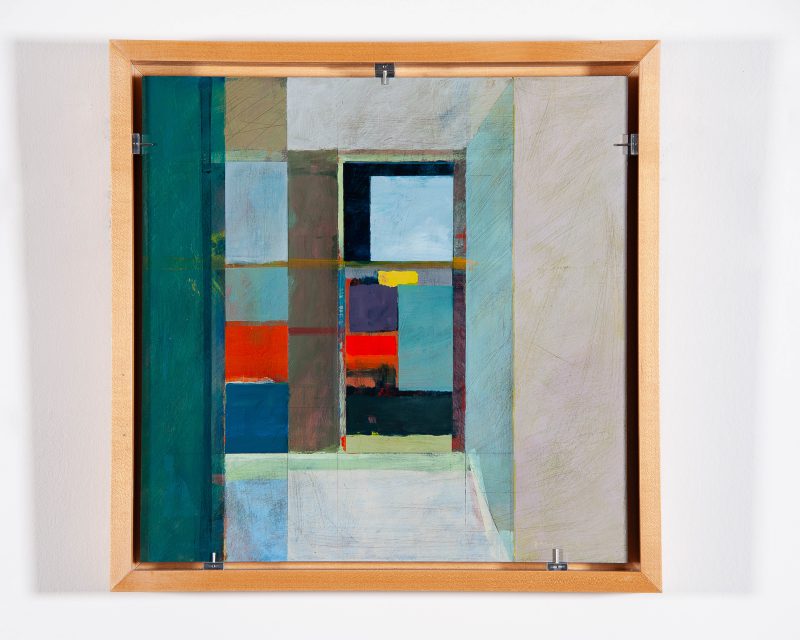
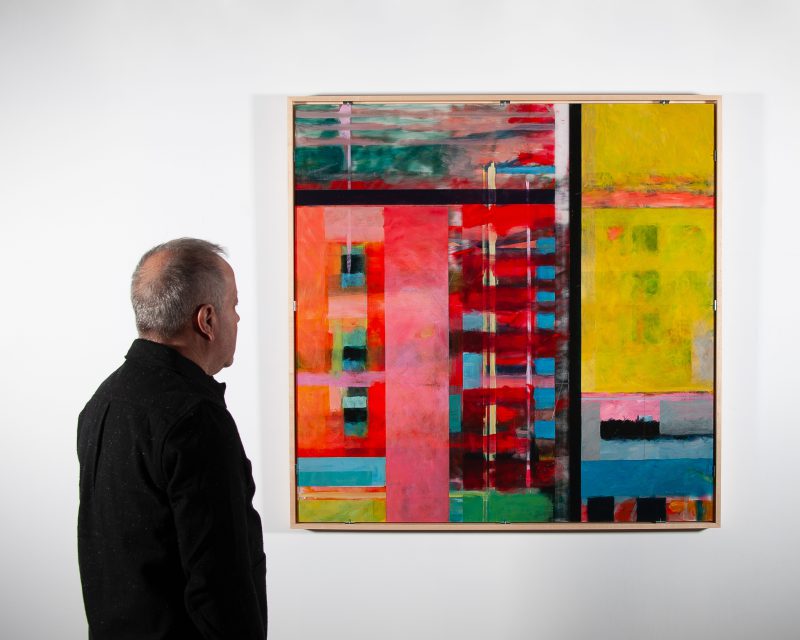
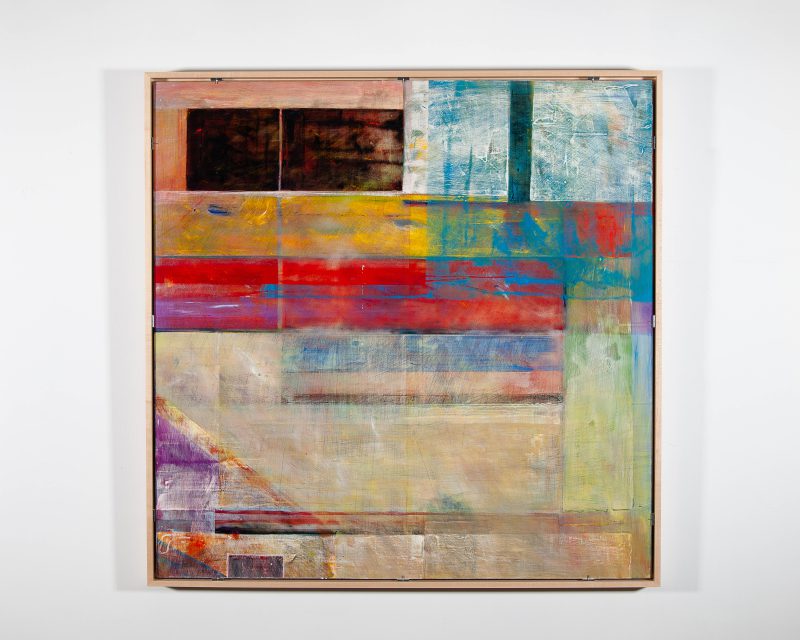
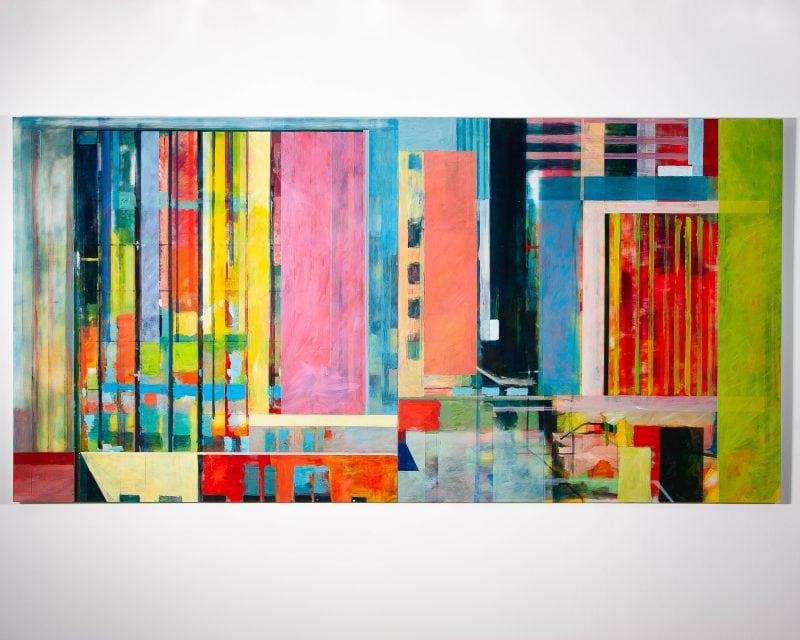
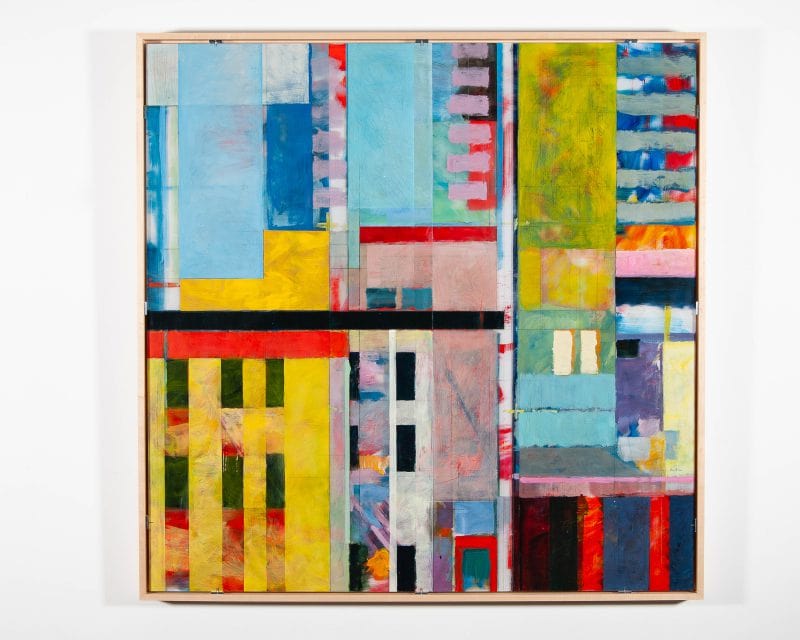
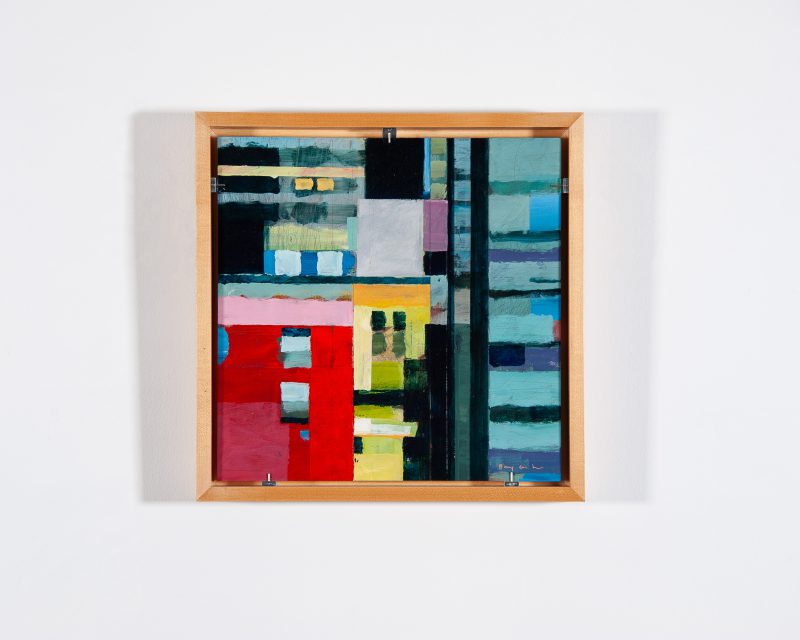
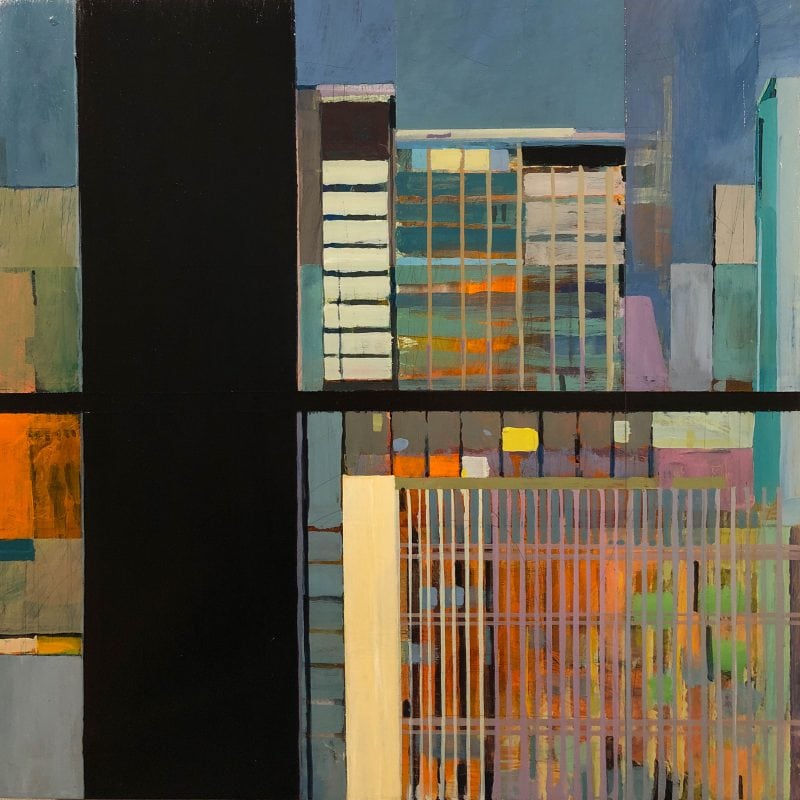
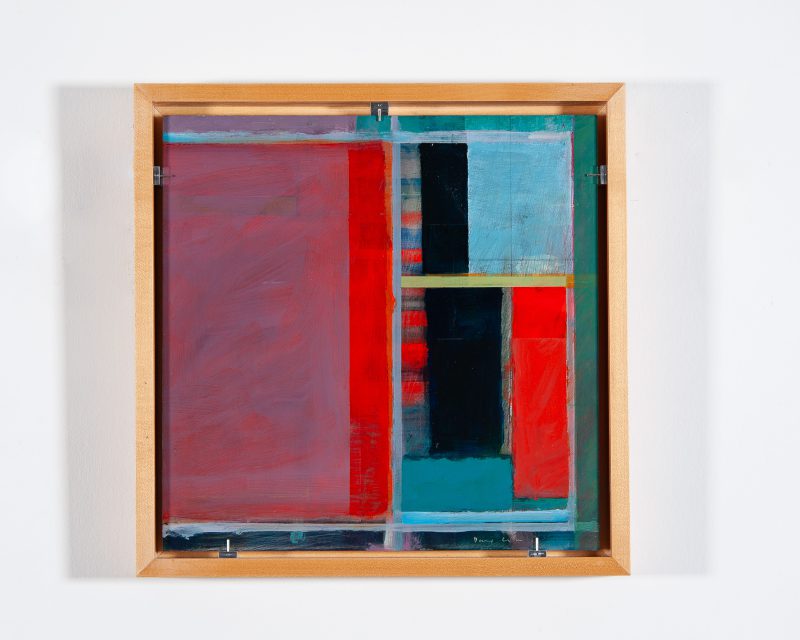
Barry Ginder is an architect and painter whose work explores the relationship between architecture, perception, and time within the urban environment. His paintings are rooted in architectural thinking, drawing inspiration from the sculptural interplay of frontality and depth that defines the fabric of cities. Rather than presenting a literal depiction of place, Ginder’s works translate the spatial and material qualities of architecture; light, weight, texture, and transparency, into layered painted surfaces.
Architecture acts as the structural foundation of his artistic practice. Precise architectural linework suggests building profiles, underlying geometries, and urban grids, while softer veils of color and atmospheric forms hint at spaces that exist just beyond the visible frame. This balance between clarity and ambiguity reflects the way cities are actually experienced: partially defined, constantly shifting, and shaped by memory as much as by physical form.
Ginder develops his paintings as fragments or “excerpts” of urban landscapes. Through a process that combines accumulation and erasure, he gradually builds complex surfaces. Classical underpainting techniques using complementary colors create luminosity and depth, while layers of translucent pigment are applied, sanded, and partially removed. This cyclical process reveals traces of earlier marks and forms, allowing previous stages of the painting to remain visible within the final composition.
Alongside his paintings, Ginder produces watercolor studies that investigate specific spatial moments. These works use overlapping washes and subtle linework to capture fleeting impressions of architectural space. Unlike the subtractive processes in his larger paintings, the watercolors rely on additive layers of transparent color, emphasizing lightness and immediacy.
Through experimentation with materials and technique, Ginder constructs surfaces that convey both spatial depth and temporal movement. The visible evidence of revision, sanding, rebuilding, and layering, gives each work a sense of shifting time. Positioned between representation and abstraction, his paintings reflect the evolving experience of moving through the contemporary city.