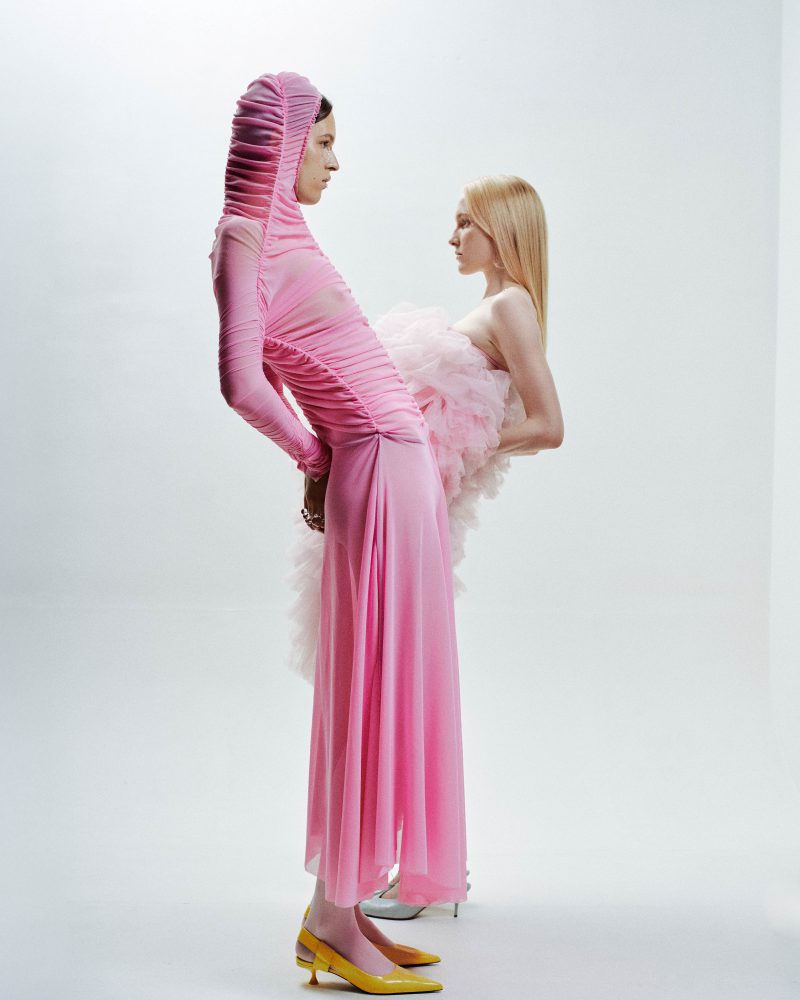
In AXIS, balance is not a fixed condition but a state of continuous negotiation. Symmetry appears only momentarily—never perfect, never permanent, but held in tension between opposing forces. What emerges is not harmony, but a charged equilibrium.
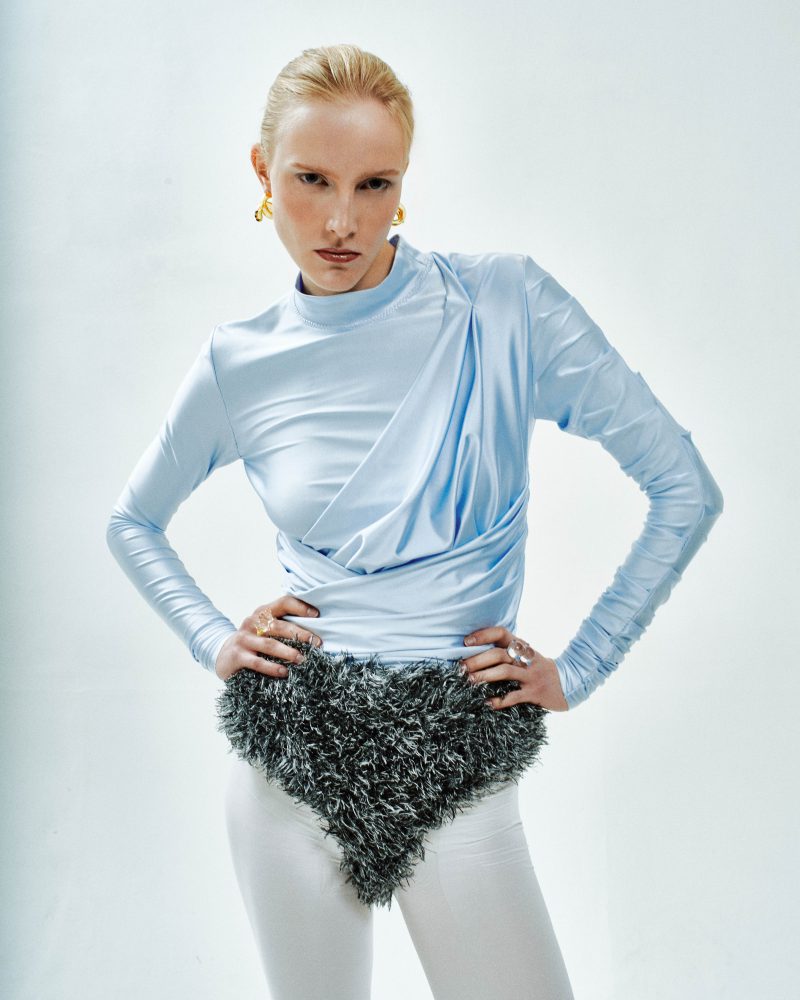
The work reinterprets the body as a mutable system. Softness is translated into structure; sensuality is distilled into line, pressure, and form. The organic and the readymade exist in constant dialogue, one fluid and instinctive, the other precise and imposed. Neither dominates. Instead, their friction generates new, unstable configurations.
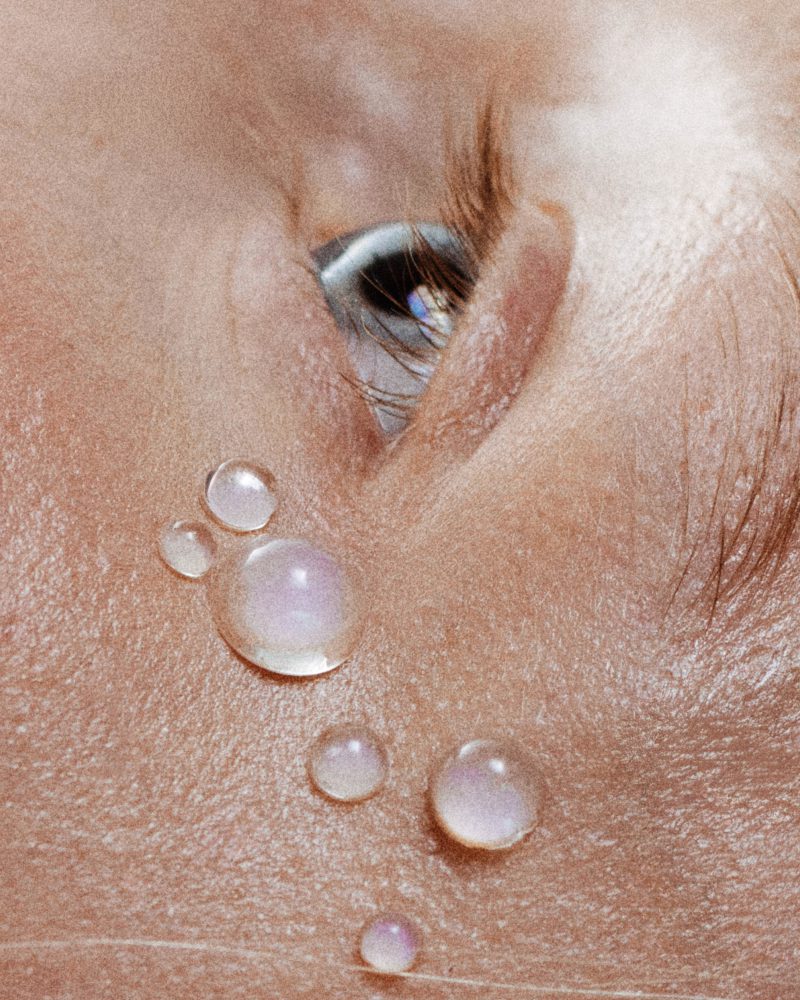
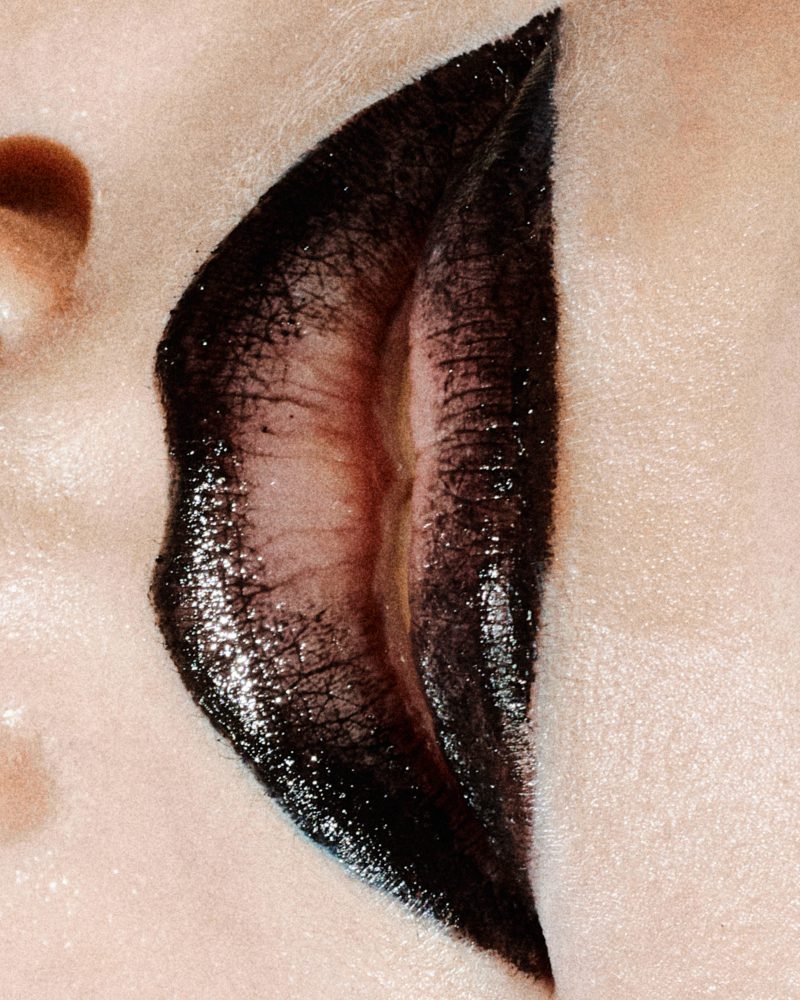
Surfaces function as active membranes rather than passive skins. They register tension, absorb movement, and reveal subtle disruptions beneath apparent control. What seems stable begins to shift; what appears constructed starts to feel responsive.
Within this framework, identity is not fixed but continuously reshaped. As the body merges with structure, its boundaries blur, becoming a surface in flux, adaptable, responsive, and unresolved.
Desire operates as an underlying force. It is not expressed, but embedded in the system itself, in the pull between elements, in moments of alignment and misalignment. It drives the work forward without ever allowing it to settle.
AXIS ultimately sustains this tension. Balance remains unstable, symmetry incomplete. What persists is a dynamic interplay between softness and precision, where form, identity, and desire are held in a constant state of transformation.