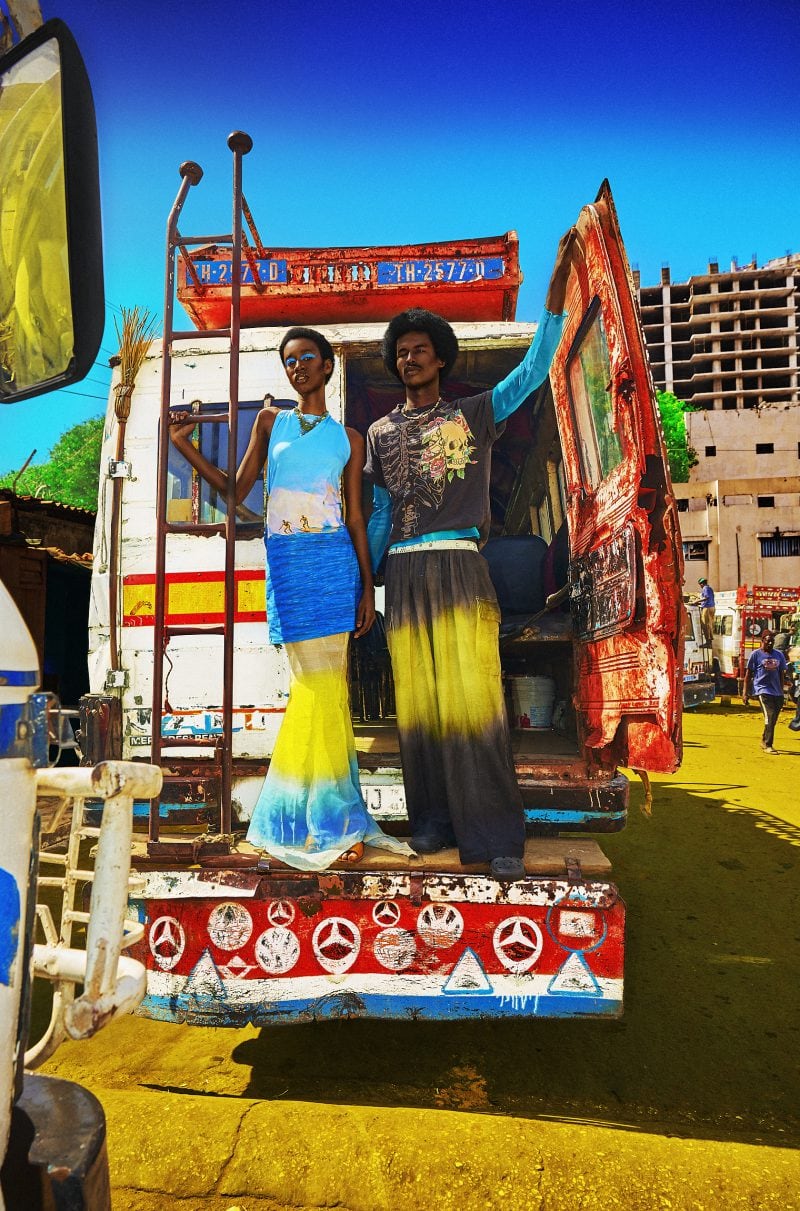
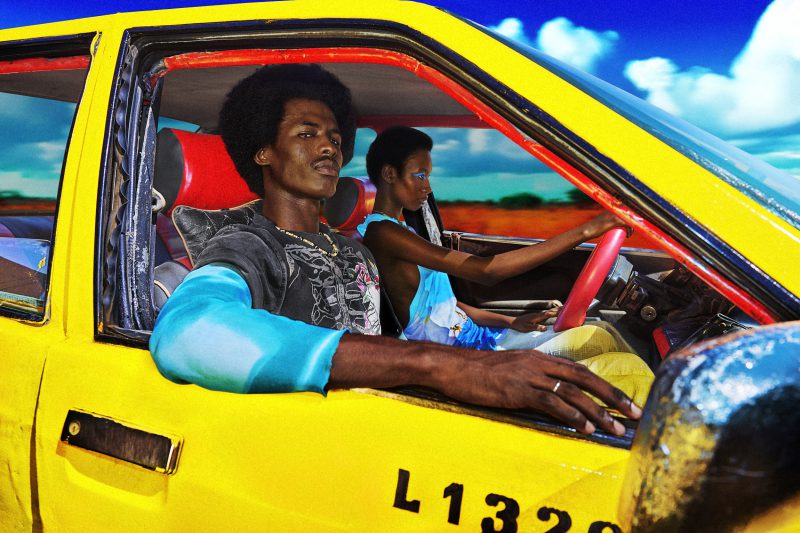
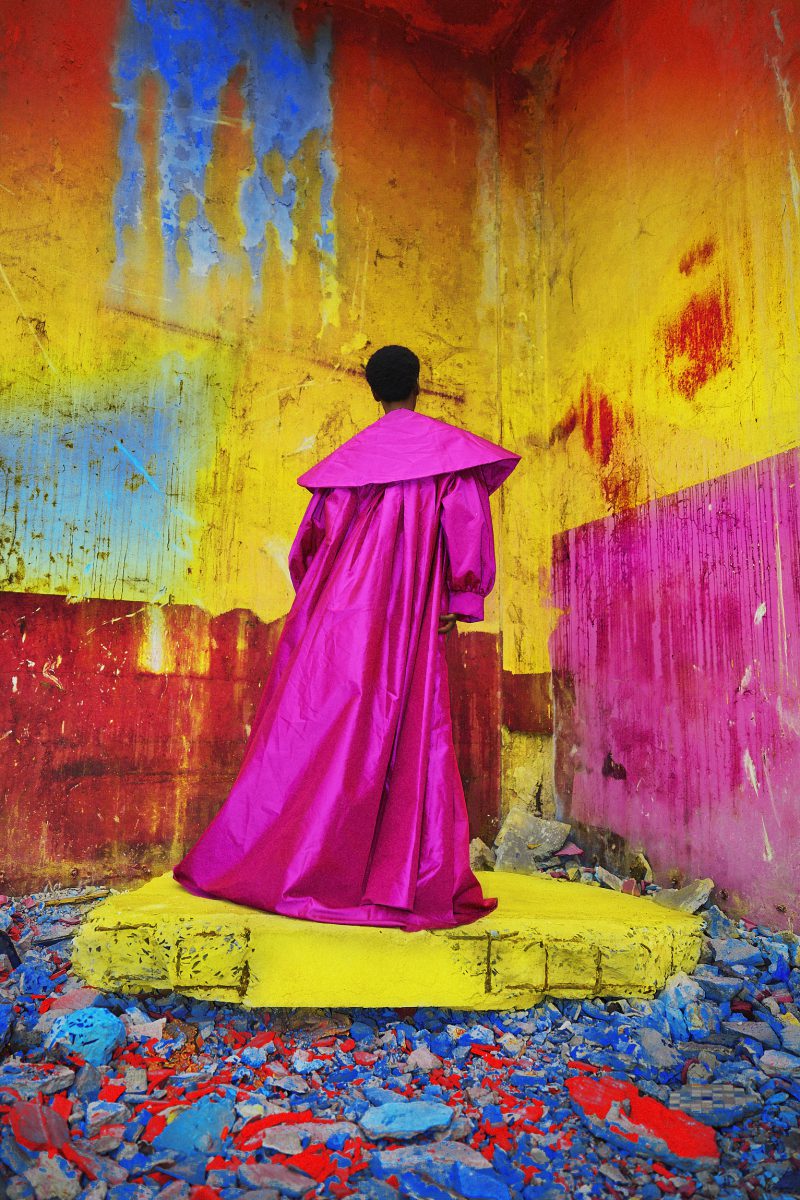
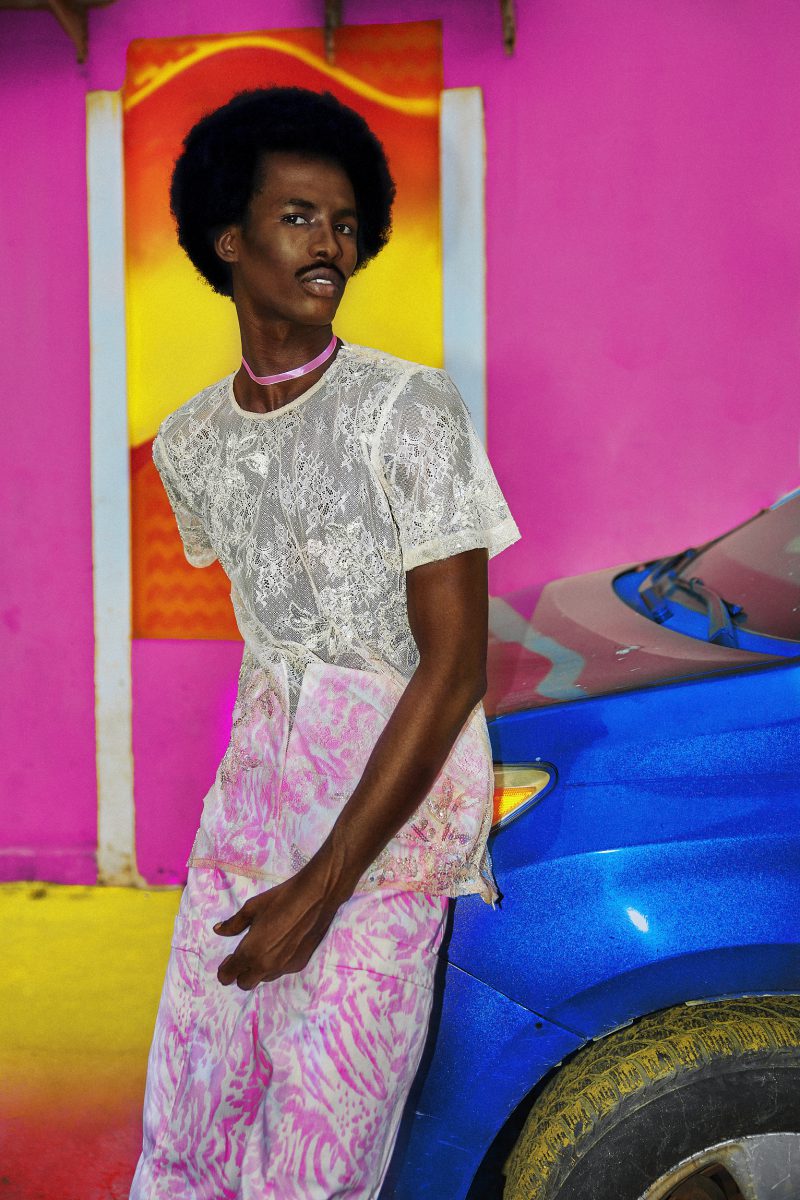
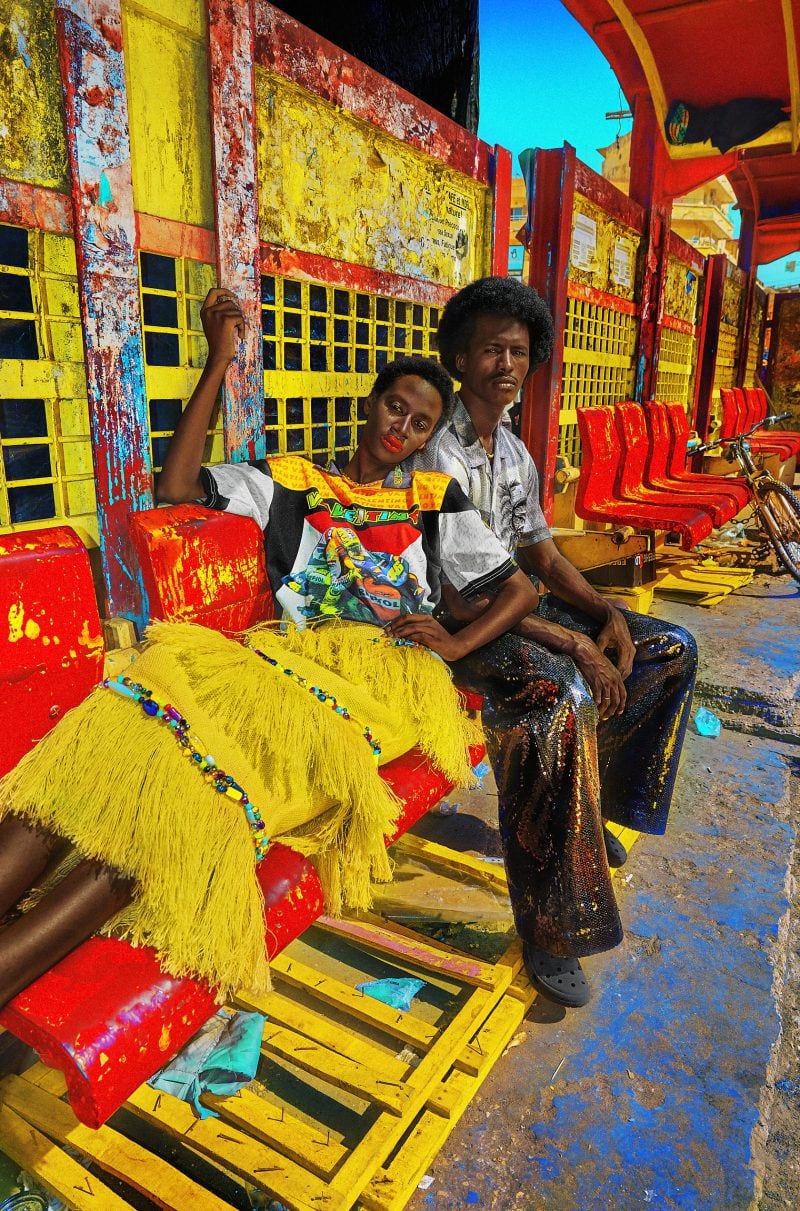
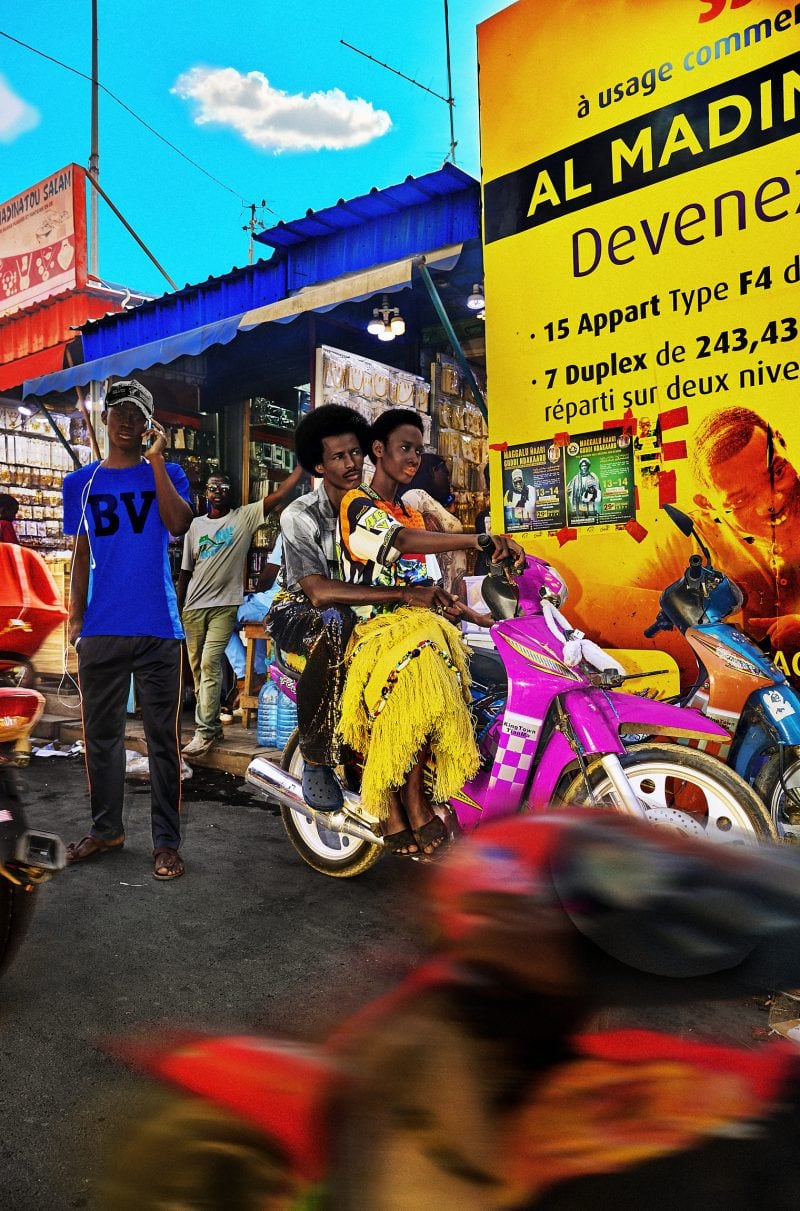
In this editorial curated by Jeanne Pieprzownik, the city of Dakar takes centre stage, reaffirming its identity and transforming itself into a living presence, capable of observing, reacting and, above all, communicating with what it wears.
Thanks to the natural movements of Daouda Sow and Fatou Wane, the gaze is accompanied on an urban journey that moves away from conventional representations of travel and towards a contemporary, vibrant and experimental visual language.
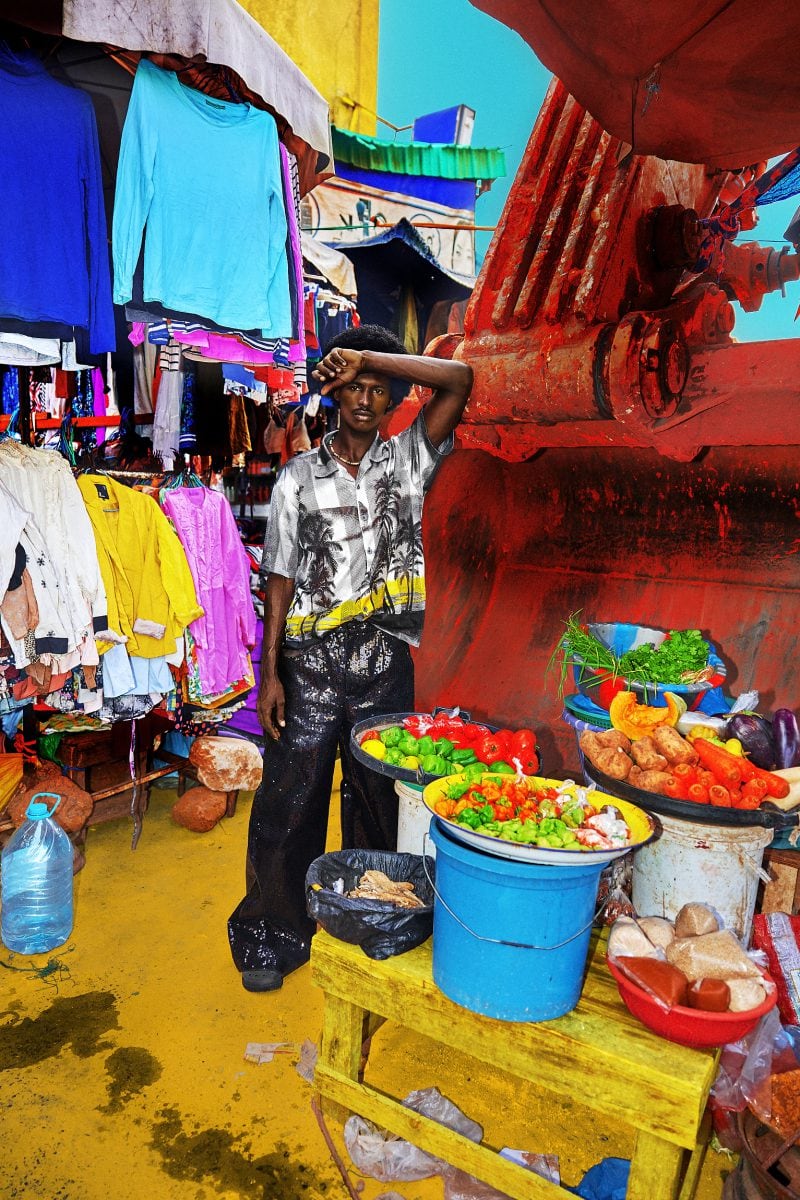
The images flow like sequences suspended between reality and vision. In the market setting, the hanging fabrics create vertical lines that contrast with the physicality of the bodies, while an intense colour palette elevates an ordinary moment — among plastic containers and vegetable stalls — to a composition with a strong visual impact. In this balance, Koura-Rosy Kane’s styling manages to bring together different universes: Mugler’s bold shapes and Mirae Paris’s sophistication intertwine with Romzy Studio and Alia Bare’s proposals without overwhelming them. The result is a confrontation between different cultural contexts that does not seek artificial harmony, but a dynamic and productive relationship.
The power of the entire project lies in its ability to make a visual impact. The use of direct, bold lighting reflects the character of a city that does not seek to tone itself down. Hair and make-up, by Afro Babies, also contribute to this free and unconventional approach, emphasising an aesthetic choice that rejects predefined patterns.
Dakar is not presented as a simple fashion story, but as a reflection on how fashion can exist in urban space. Jeanne Pieprzownik’s vision affirms an aesthetic in which originality coincides with authenticity and in which every street, reflective surface or weathered wall becomes an active part of a new African narrative: open, energetic and unapologetically unconventional.