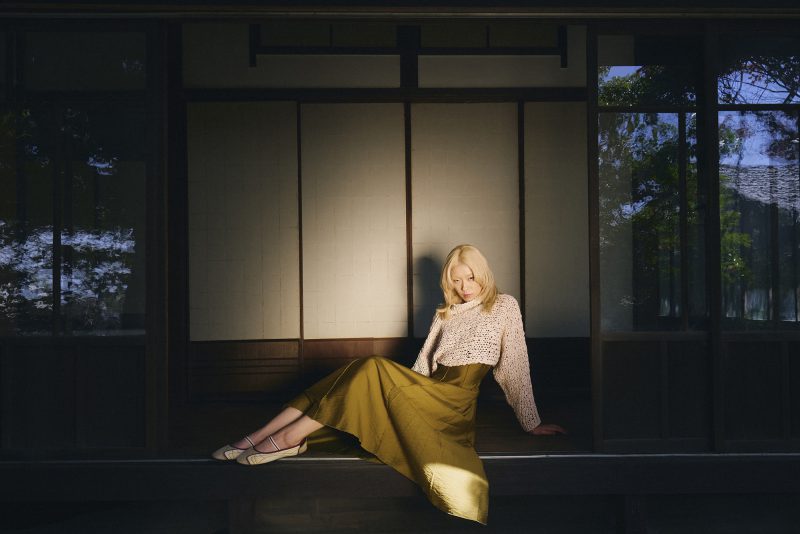
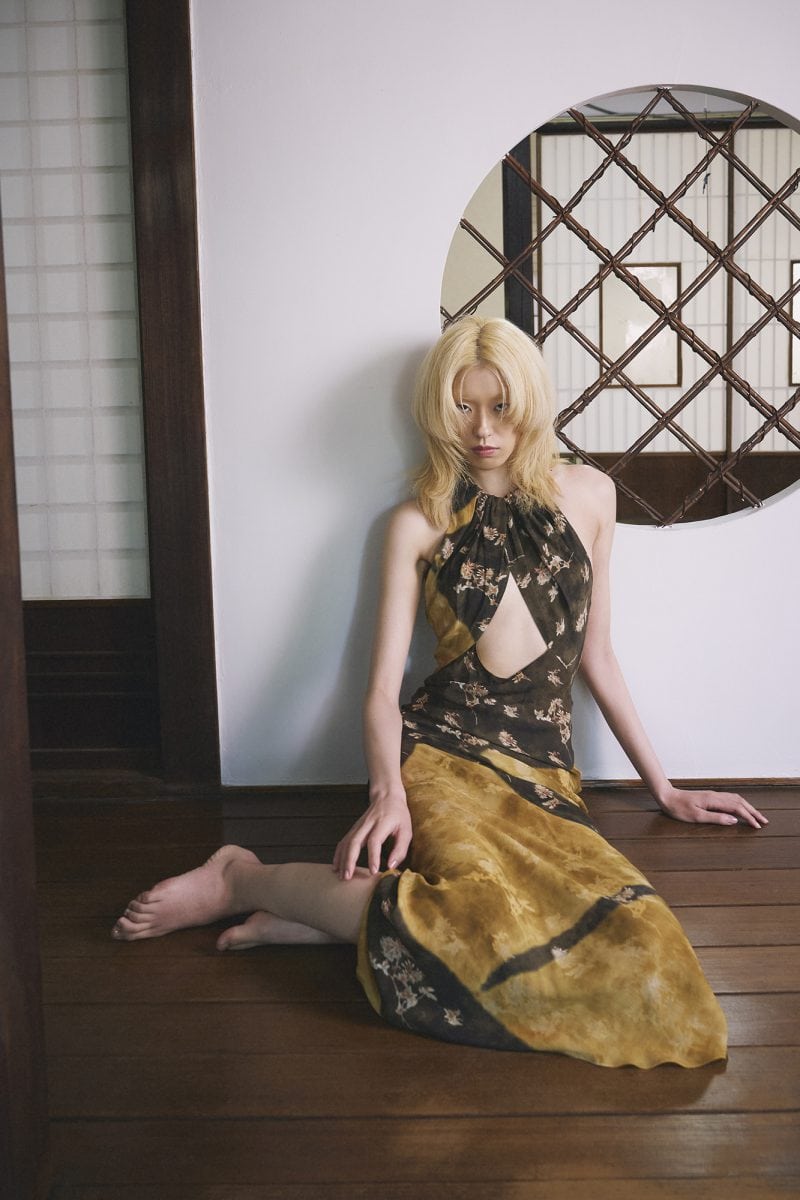
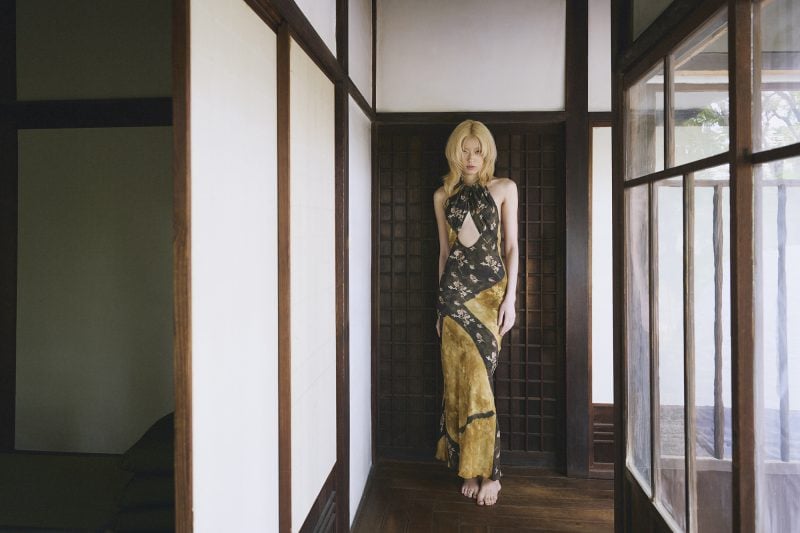
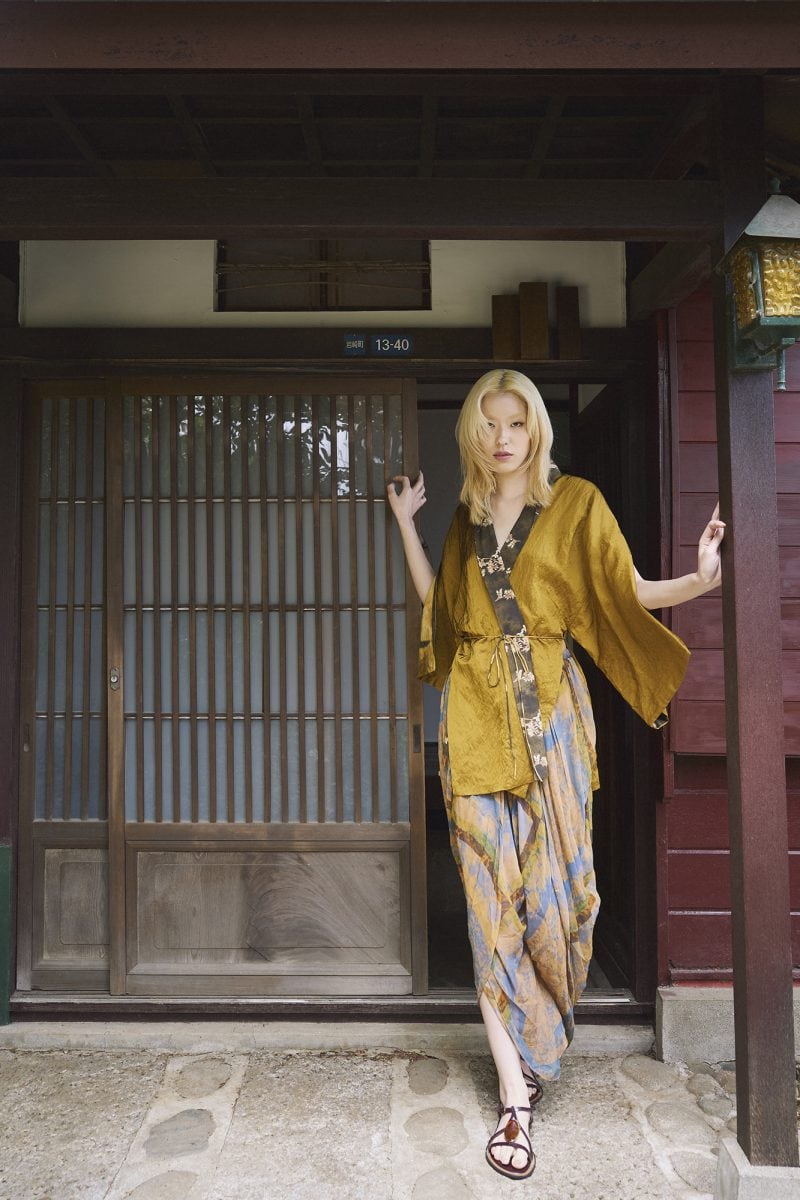
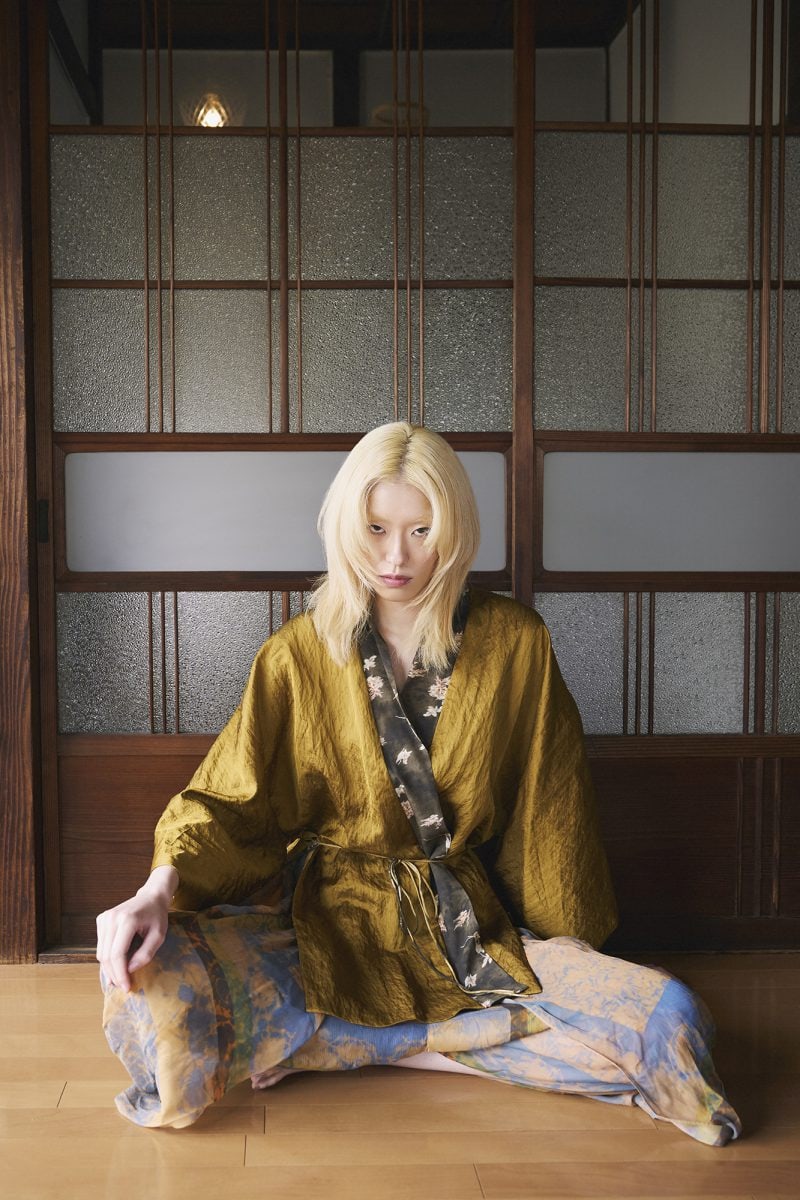
Houses are never static. They absorb gestures, preserve memories, and change alongside those who pass through them. In Inhabitant, Steph Hayashi’s editorial transforms a traditional Japanese dwelling into a living, breathing organism, where architecture, memory and fashion influence one another. It is not simply an interior that houses a body, but a space that seems to have already recorded its presence, as if every room held the memory of those who lived there before. The images weave a narrative built around doorways. The engawa – the transitional space between interior and exterior typical of Japanese architecture – becomes the symbolic heart of the entire project: a boundary that does not separate, but connects. It is there that Nodoka Usami’s body appears suspended, seated on the edge of the house, whilst natural light filters through the undulating glass and blurs the contours.
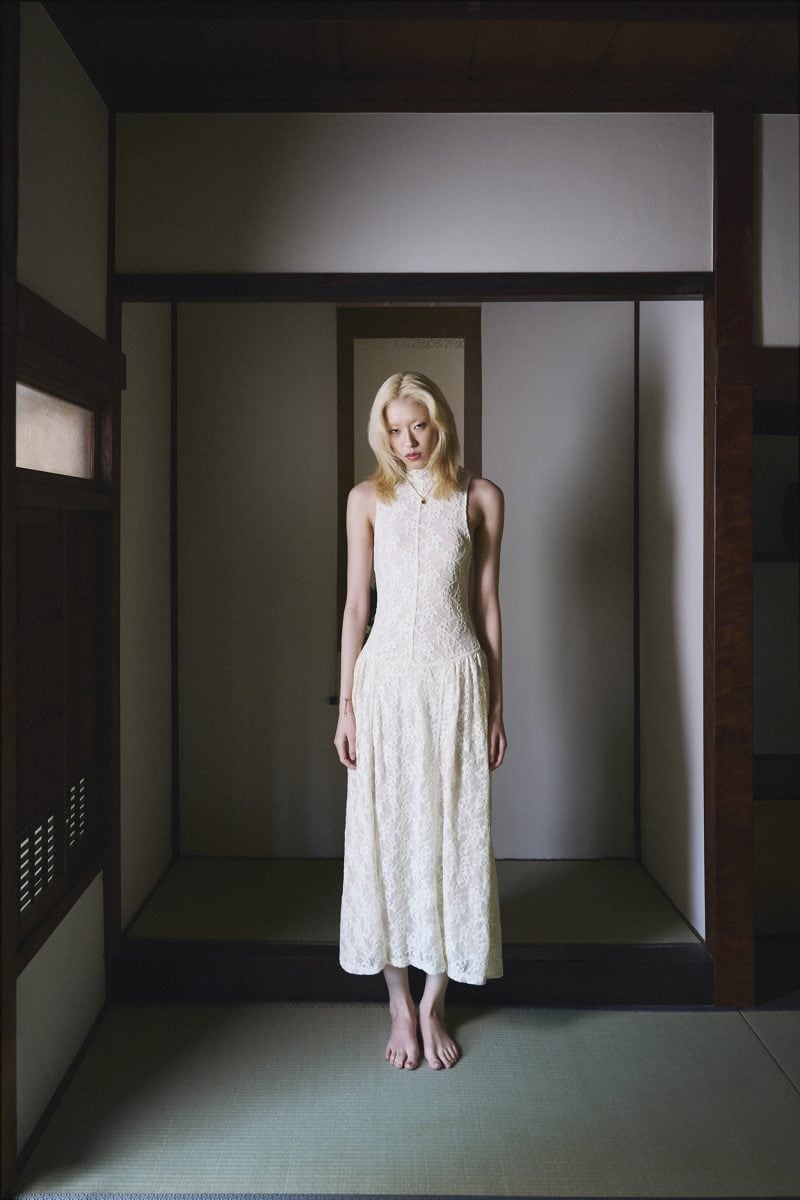
The figure seems to belong as much to the landscape as to the building, as if it were an extension of the material that surrounds it. Steph Hayashi, the photographer, avoids any folkloric imagery associated with Japan. Rather, she evokes that aesthetic sensibility which Jun’ichirō Tanizaki described in “In Praise of Shadows”: a world in which beauty arises from half-light, from wear and tear, from surfaces that time has slowly transformed. The weathered walls, the worn wood and the floors reflecting a soft light are not merely scenographic elements, they contribute to the construction of the visual identity just as much as the garments themselves. Fashion, consequently, relinquishes the idea of being the absolute protagonist. The garments oscillate between materiality and lightness: knitted fabrics, fluid silks, lace and structured volumes interact with the house without ever dominating it.
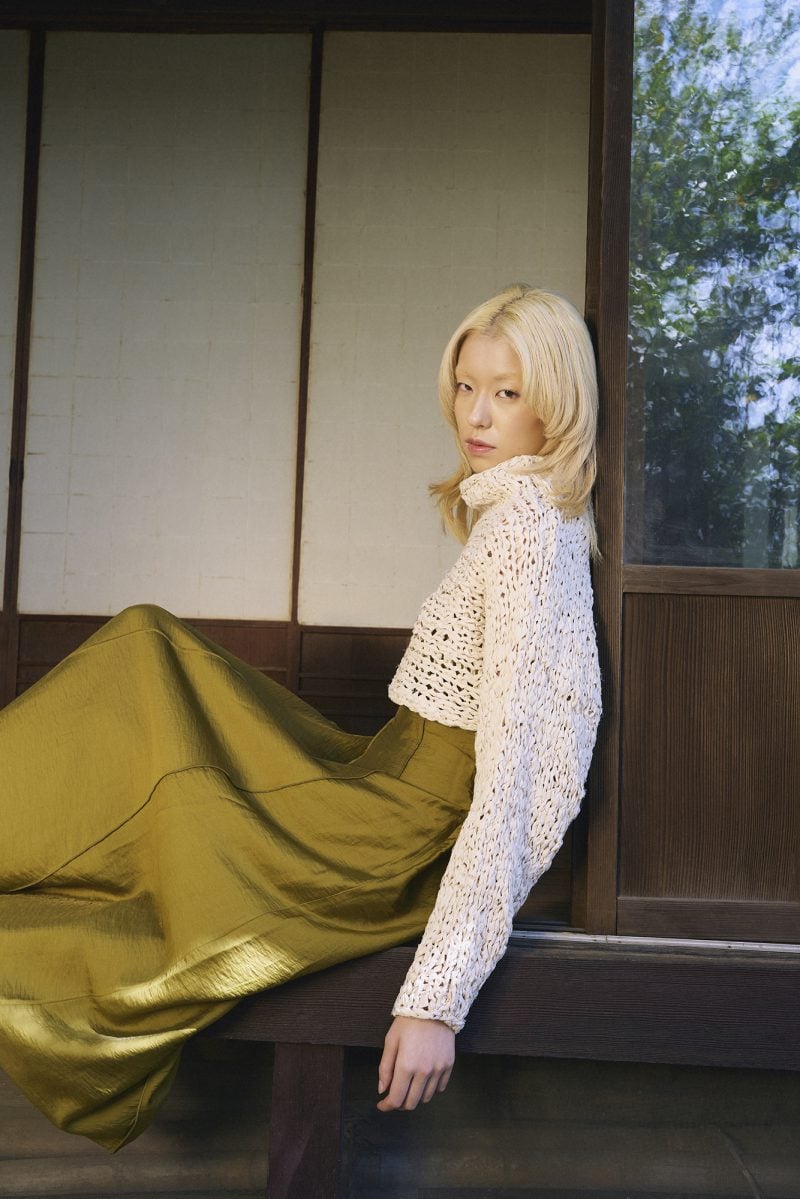
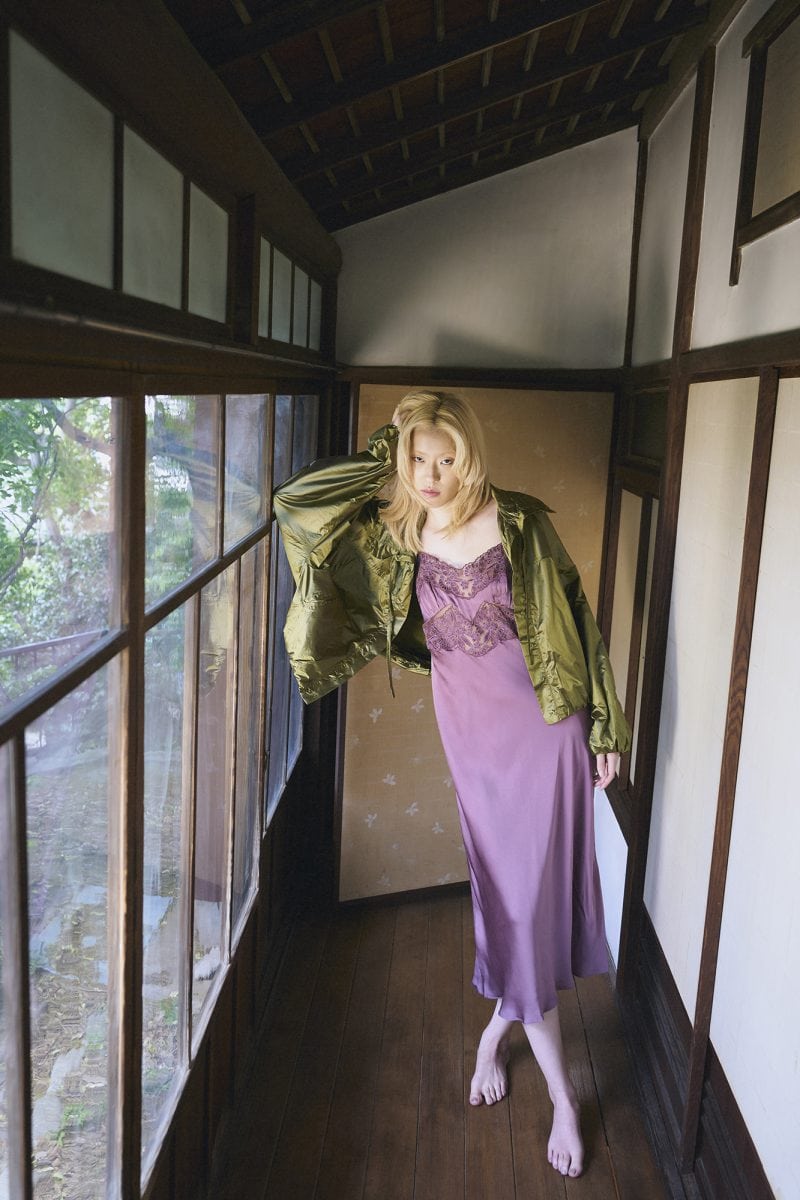
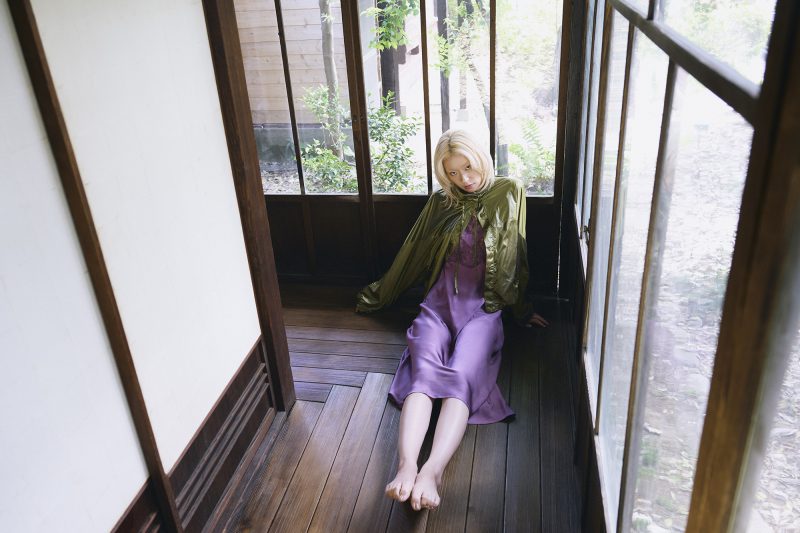
In one of the shots, an olive-green fabric drapes along the geometry of the veranda, whilst in another the lilac satin cuts across the corridor like a foreign presence, introducing a chromatic tension that disrupts the tranquillity of the interiors. Further on, the reimagined kimono and the printed dress seem instead to absorb the hues of the wood, almost as if they had been dyed by the space itself. The photography, too, follows this logic of coexistence. The shots alternate between strictly architectural compositions and close-up portraits in which the model’s gaze breaks the silence with an almost restless intensity. The house observes just as much as it is observed. Inhabitant thus suggests a broader reflection on contemporary living. Hayashi imagines the home as an emotional archive, capable of shaping those who live there just as much as it is shaped by their presence. Clothing, then, is not just something one wears, but another layer of this ongoing relationship between body, memory and place.