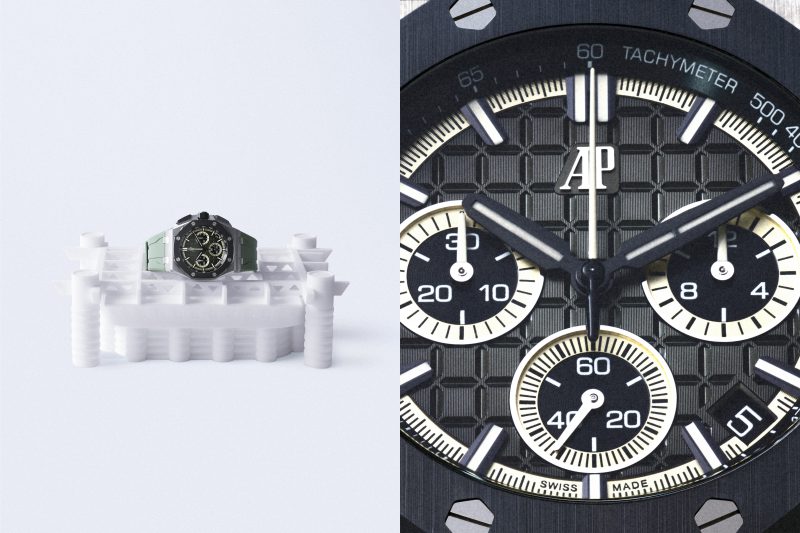
Why is Audemars Piguet’s largest AP House in the world located precisely in Milan?
It is a simple question, almost a naive one. And yet it immediately opens up a broader reflection on the relationship between a high watchmaking maison and a city like Milan. Milan has always spoken the language of design, of materials, of surfaces, of architecture, of objects that inhabit space and give it form.
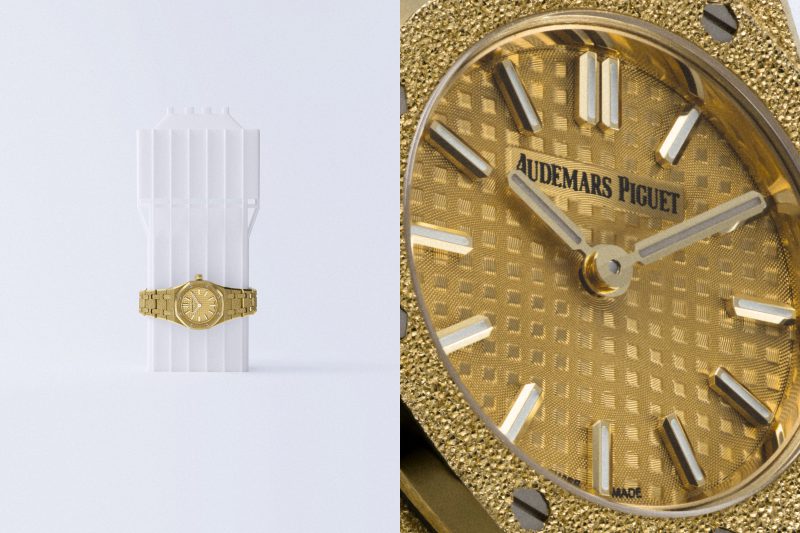
At first glance, watches seem to have little to do with any of this. They are not lamps, not furniture, not surfaces or environments. Watches appear to belong to another dimension entirely: not space, but time. And yet, in Milan, that distance seems to shrink. As if two different languages were trying to articulate the same sentence. But perhaps that is precisely the point.
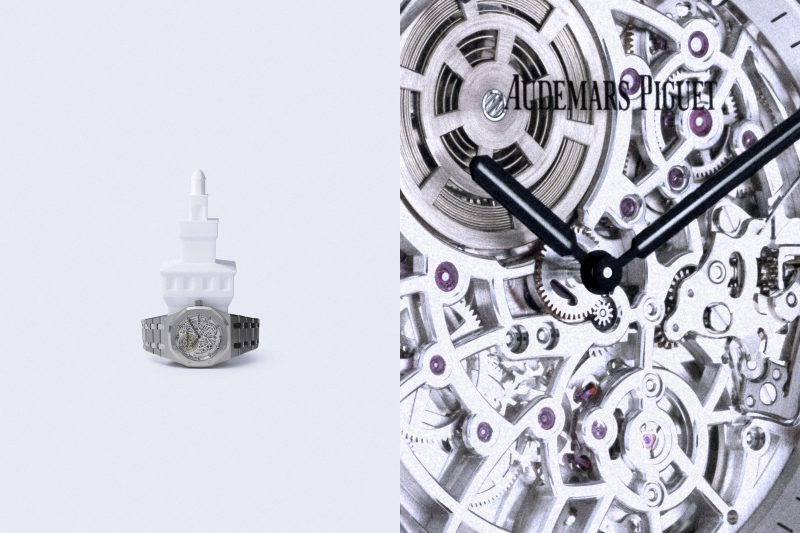
Because Milan has become a place where disciplinary boundaries grow thinner, almost to the point of disappearing. Here, fashion enters architecture, architecture enters into dialogue with art, art spills into product design. Design ceases to be a category and becomes instead a cultural condition, a porous territory in which identities intersect and transform.
Within this landscape, a watch is no longer simply an object that measures time. It becomes matter, surface, mechanics. A form of miniature architecture. A sculpture inhabited by movement. It becomes design.
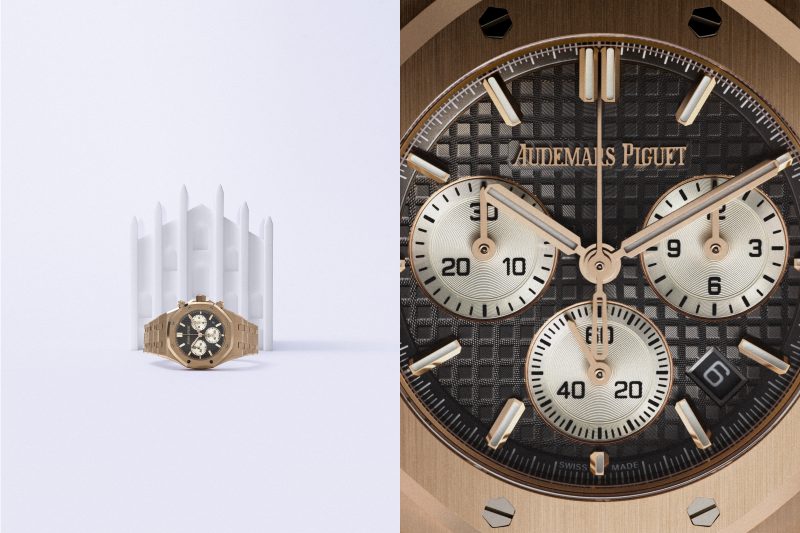
And so the paradox ceases to be a paradox. Perhaps the meaning lies precisely in the apparent lack of it. It was once said — as Achille Castiglioni used to remind us — that light comes from above and falls downward. A natural metaphor for cultural hierarchies: a centre that radiates, and a periphery that receives. Today, that light seems to behave differently.
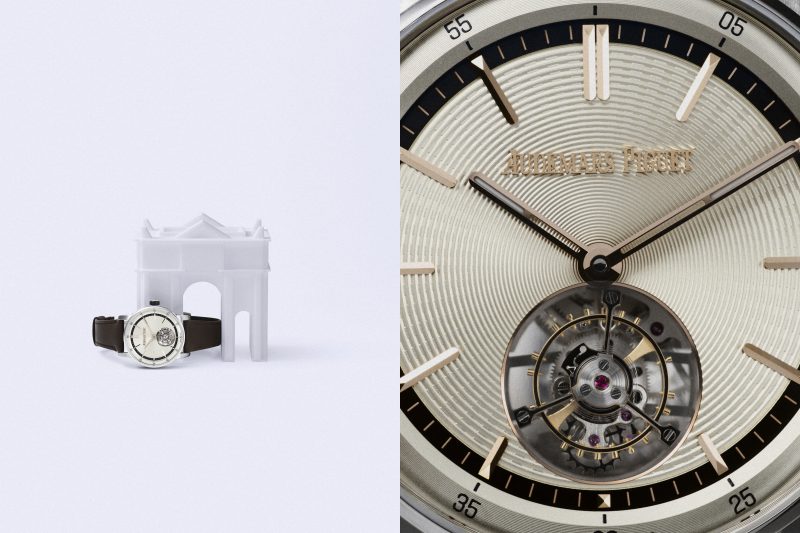
It no longer descends in a straight line. It bounces. It refracts. It strikes unexpected surfaces and moves across disciplines that once remained separate. We live in a system of reflections. And so it happens that time — the time of watches — finds its way into the space of design. And that Milan, once again, becomes the sensitive surface on which these cultural refractions become visible.