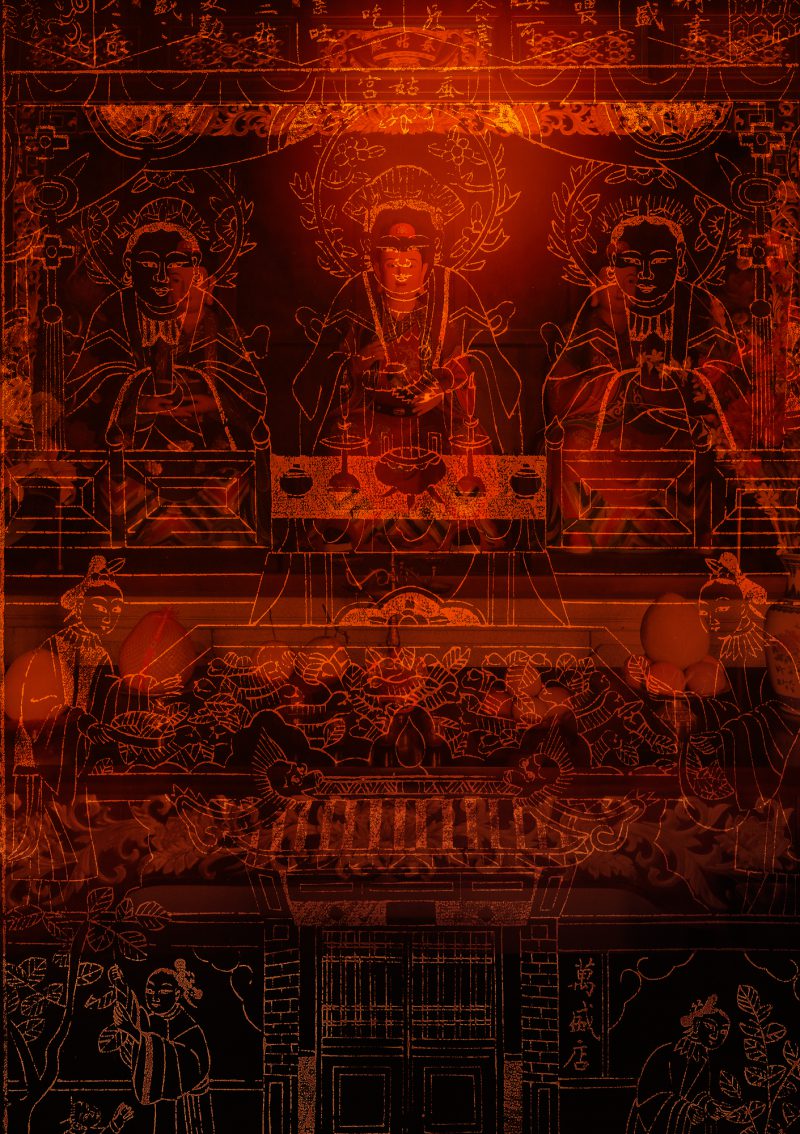
A silk thread can take on more than one form: it encapsulates the time of those who worked it, the knowledge passed down from generation to generation, and the stories that have remained on the margins of the official narrative. In the project ‘A Silkworm’s Dreams Weave A Rhyme’, the material presents itself as an archive to be explored. Jyuemim’s work links the silkworm’s life cycle to the gestures and bodies of the women engaged in sericulture. The legend of the Goddess of the Silkworm has long linked femininity, transformation and production; the artist draws on these images to reveal another aspect of the story – a patient and often invisible labour, overshadowed by an idealised narrative. Here, silk is not merely a precious surface, but the tangible trace of a body of knowledge and the conditions that made it possible.
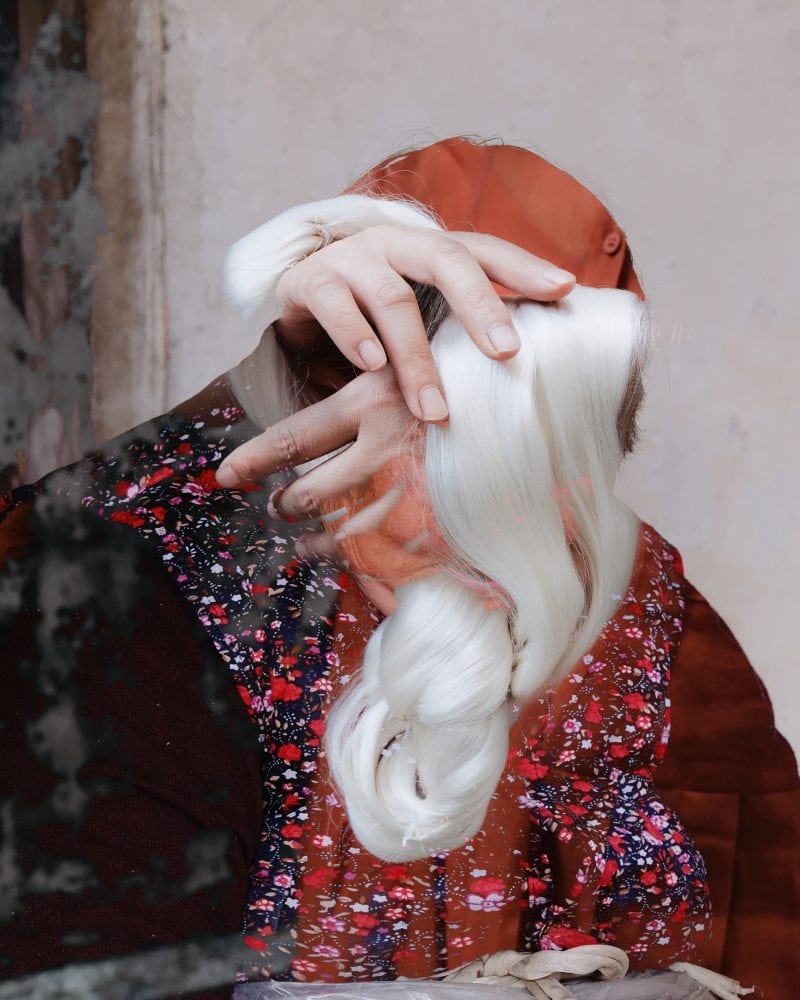
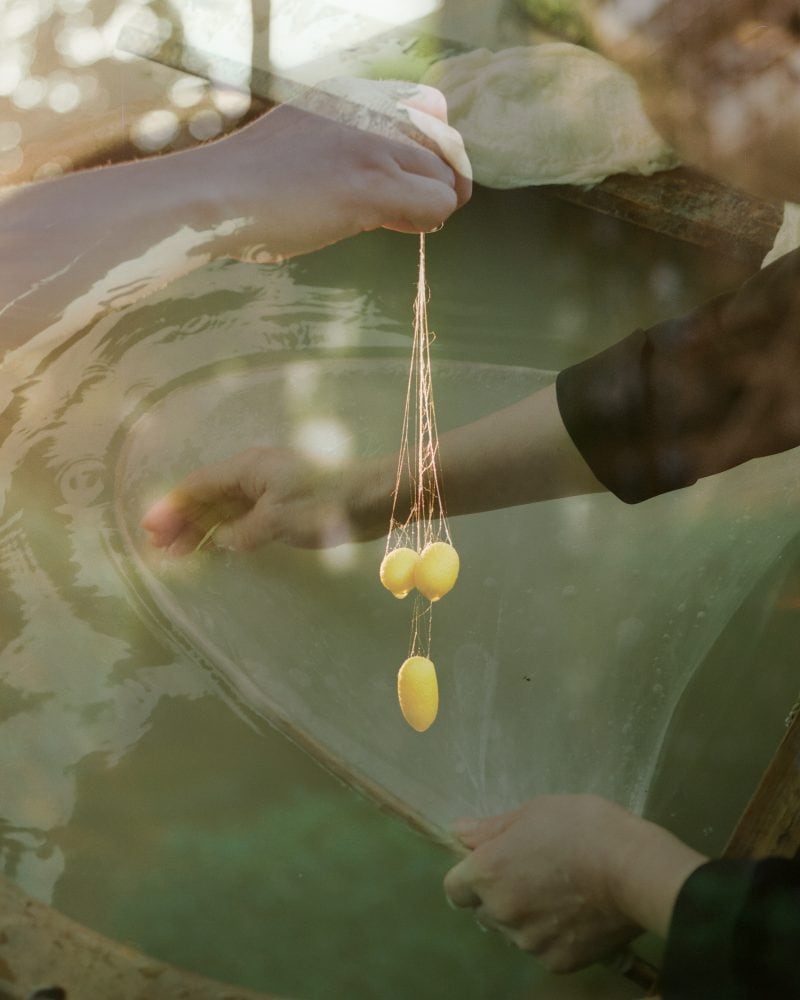
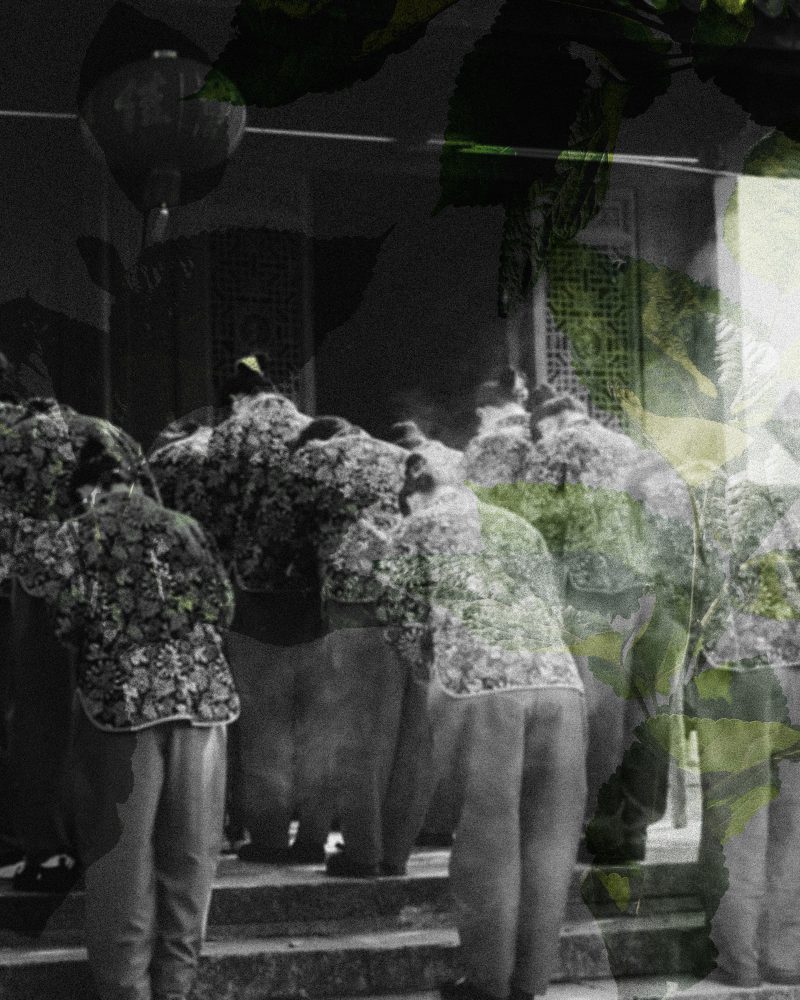
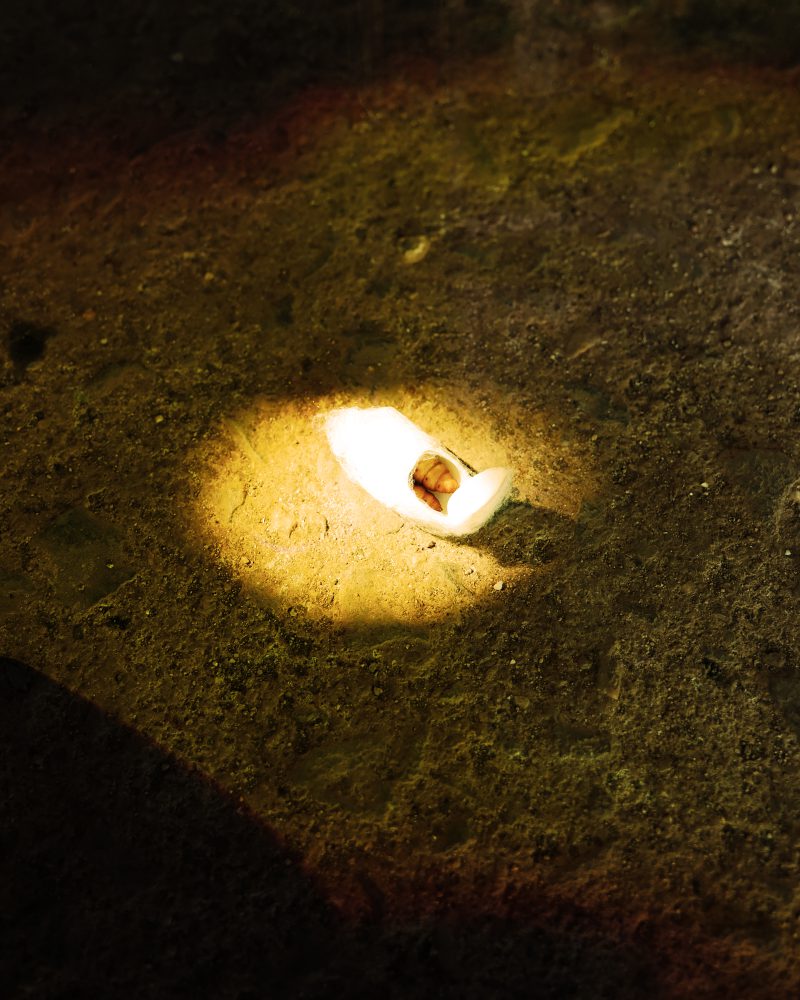
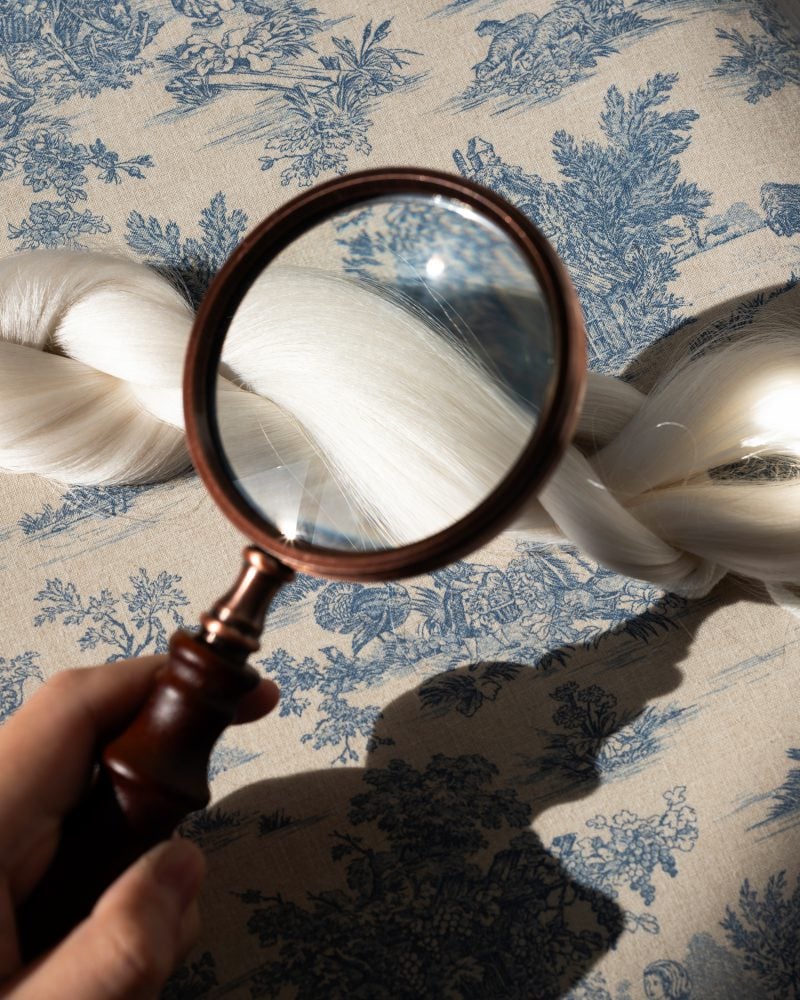
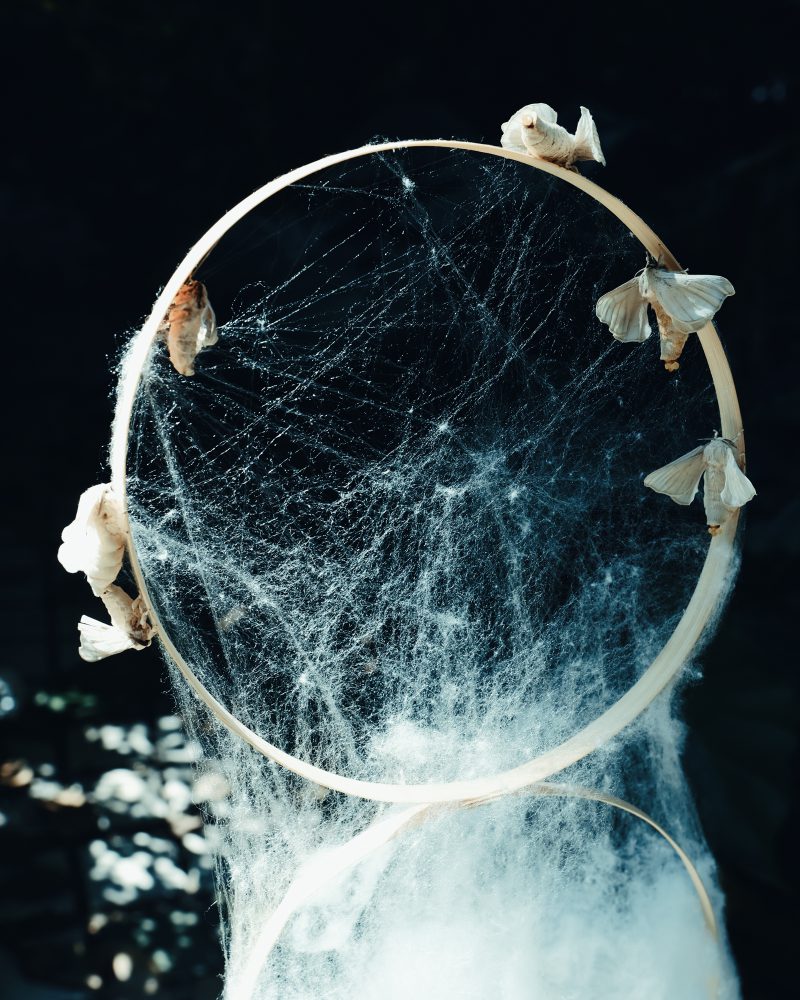
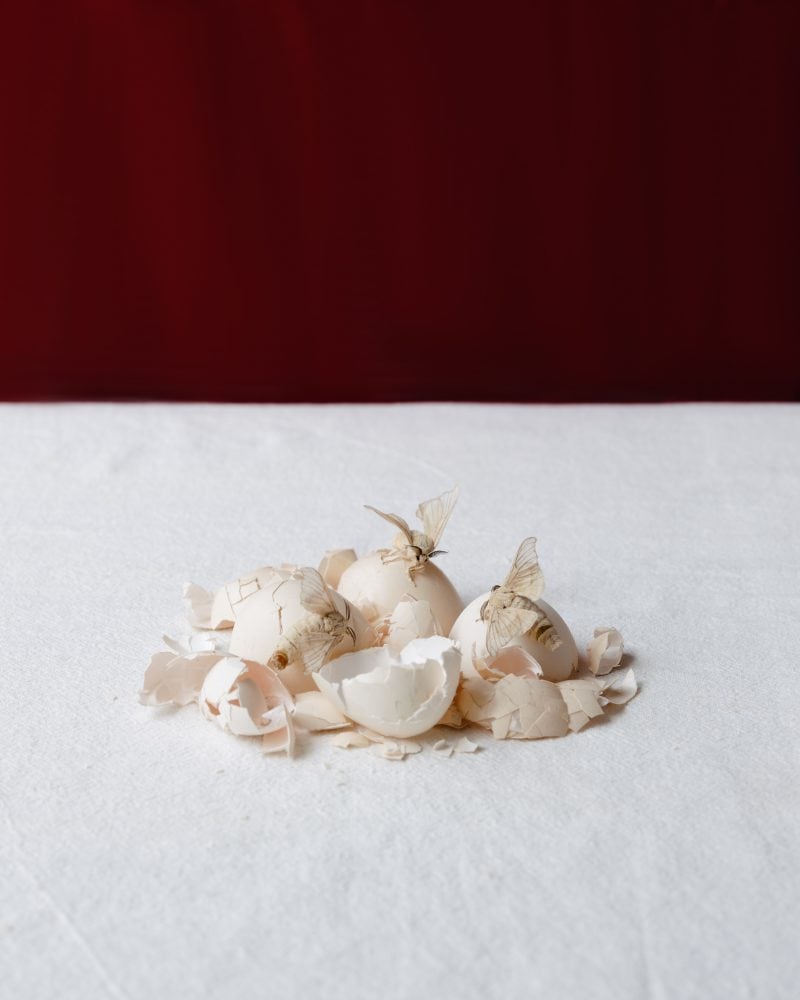
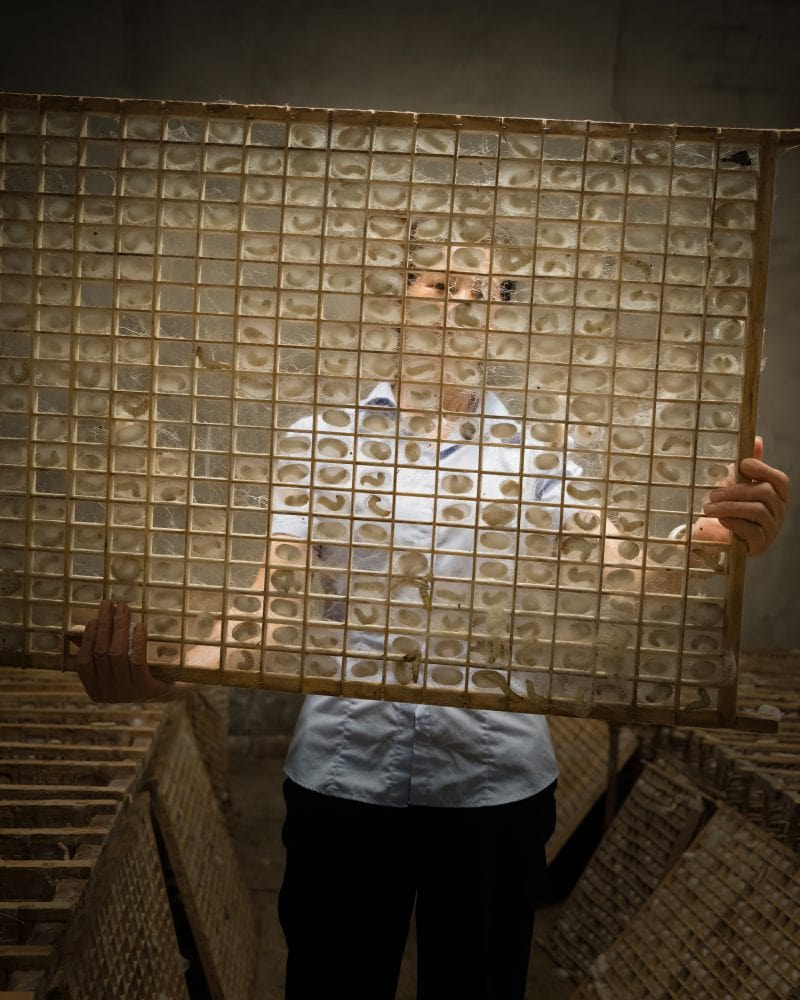
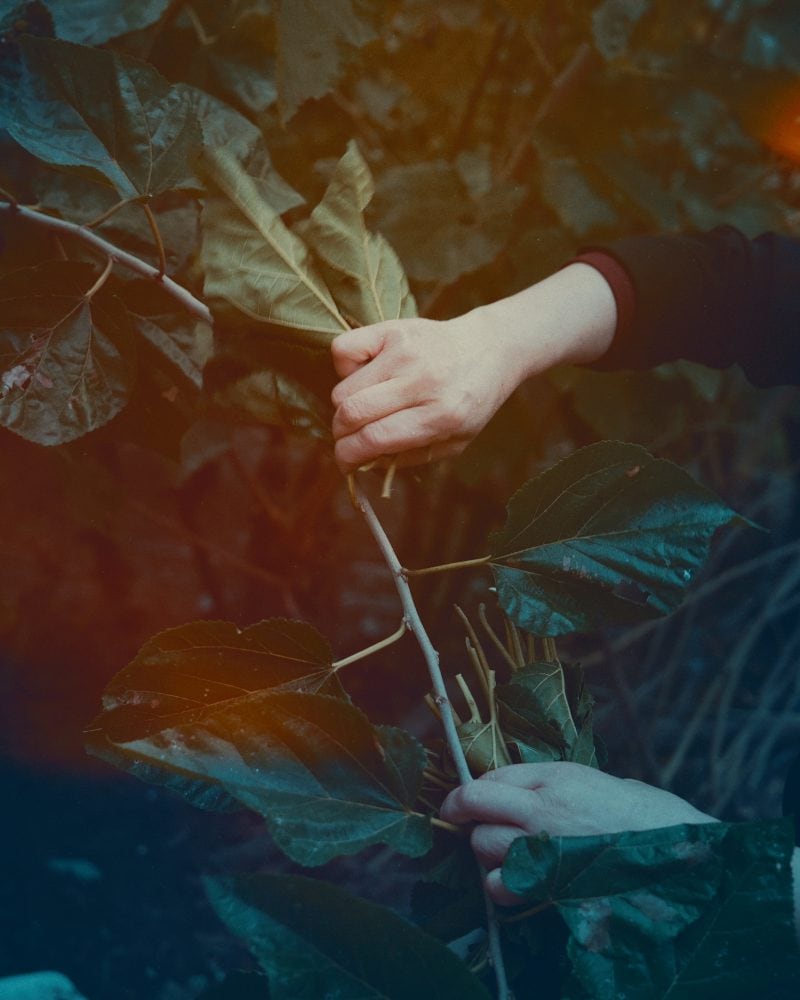
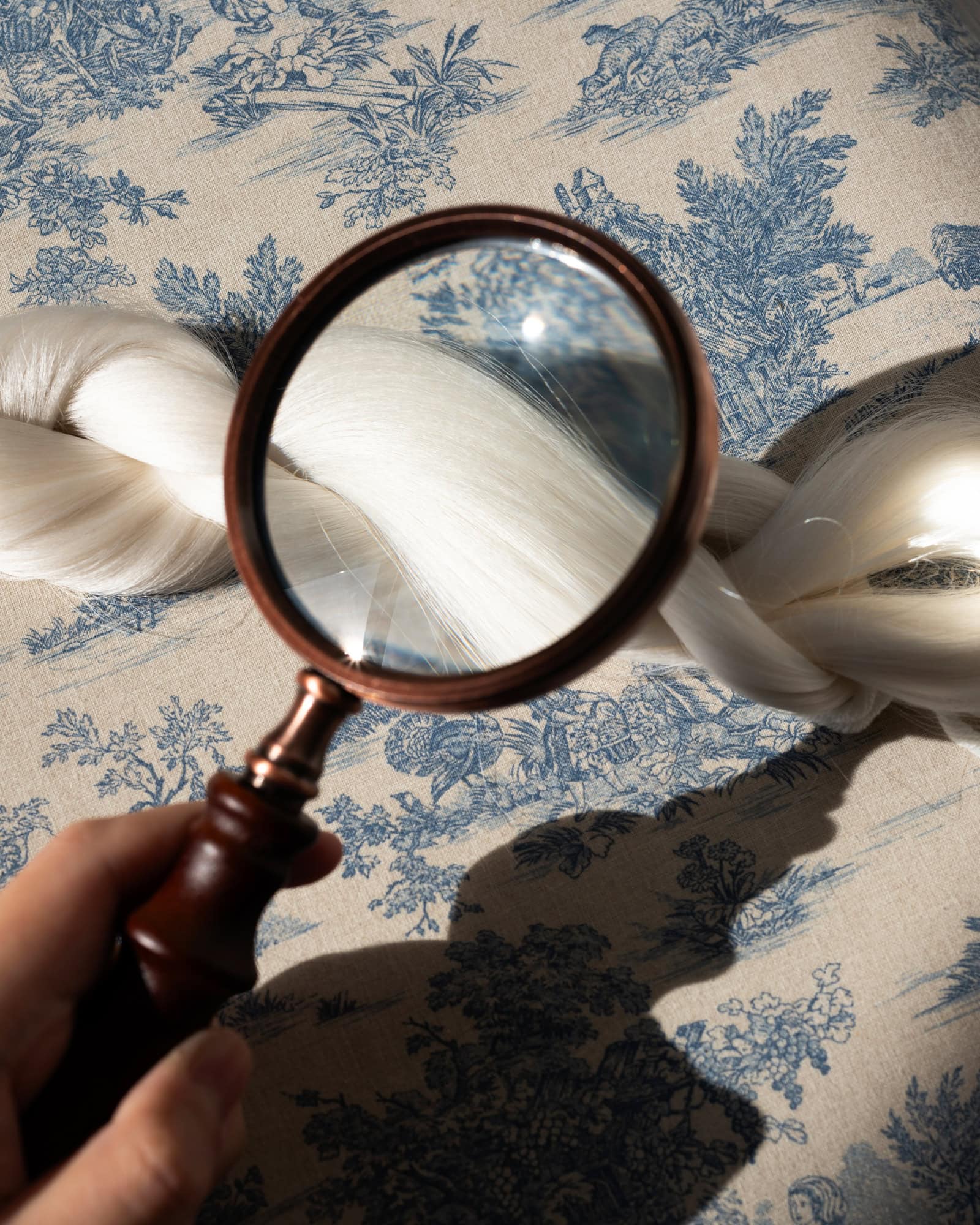
The photographs lie somewhere between documentation and imagination. In one, hands immersed in water lift fine threads; in another, a woman appears behind a grid of cocoons, as if the loom were both a tool and a constraint. A white lock of hair, held between her fingers, echoes the shape of the thread and brings the material closer to the body. Elsewhere, moths and silkworms occupy a web suspended on a circular loom: metamorphosis becomes an image, whilst remaining linked to the toil of production. Overlays, printed fabrics, collages and embroidery interrupt the continuity of the photographs, not to reconstruct an intact past, but to reveal its gaps. The project contrasts the speed of industry with a method built on layers and returns, in which mending also means restoring value to gestures at risk of disappearing. Rather than celebrating craftsmanship as nostalgia, “A Silkworm’s Dreams Weave A Rhyme” invites us to observe what every object carries with it: hands, time and labour. The weave thus becomes a form of shared memory.