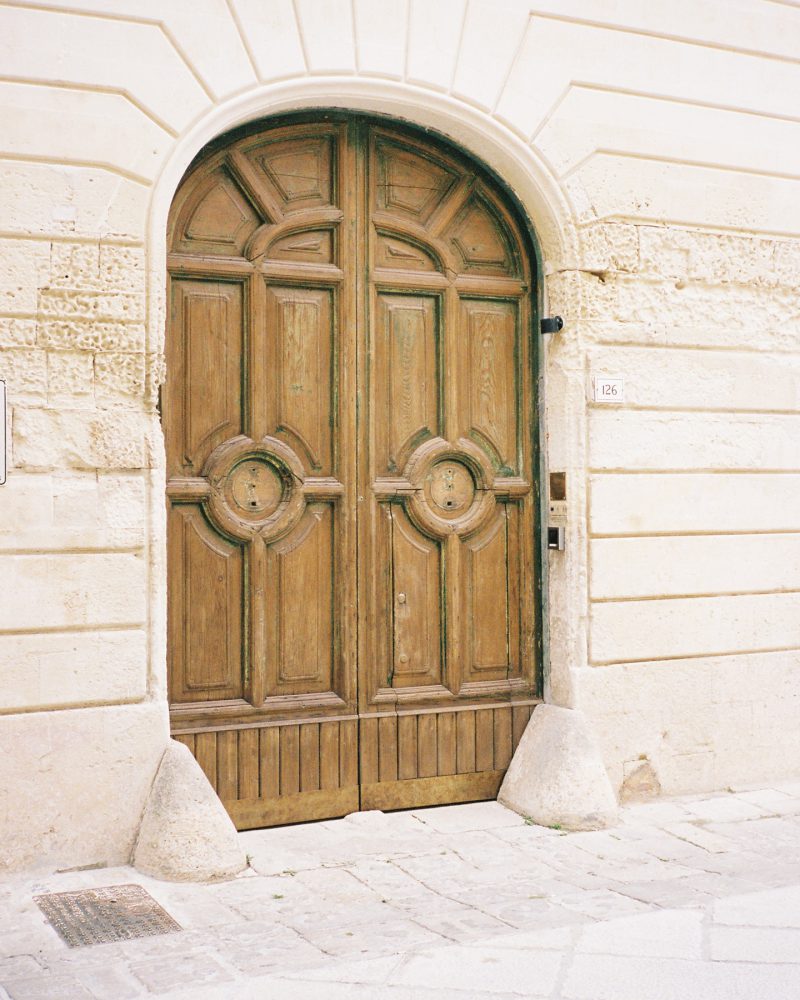
I arrive in Lequile on a quiet morning in late April. The kind of small town you pass through slowly: a bar with plastic chairs out front, narrow streets, the sound of birds more present than that of cars. Then the gate. Massive, wooden, weathered. Once it opens, everything shifts.
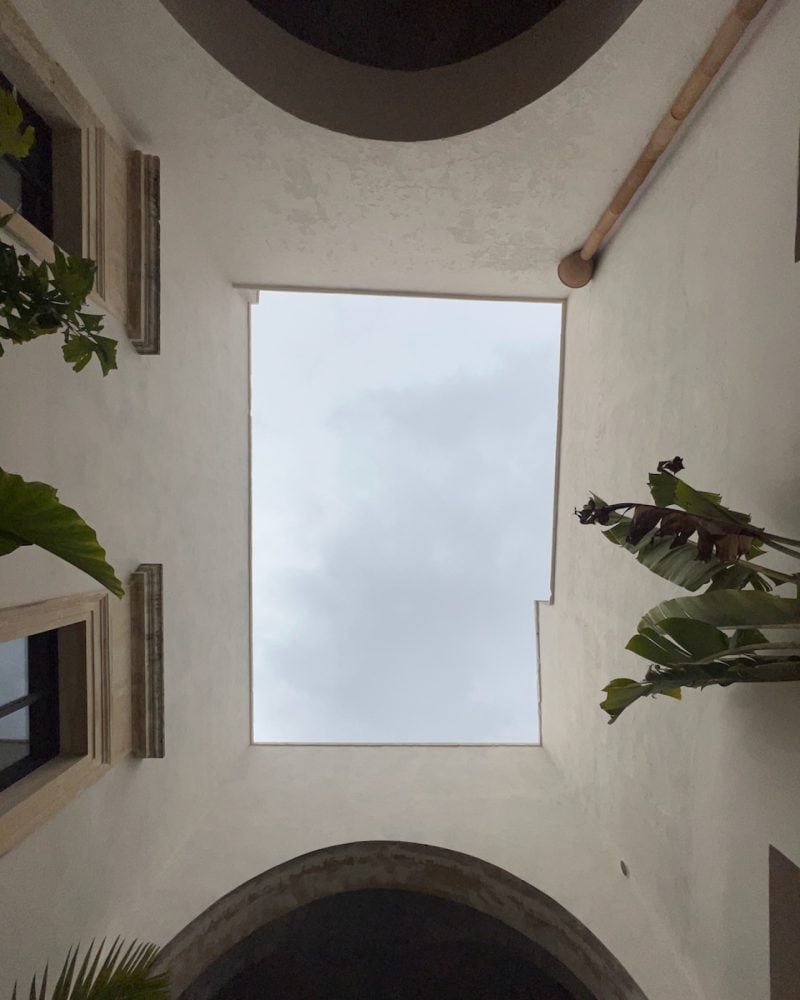
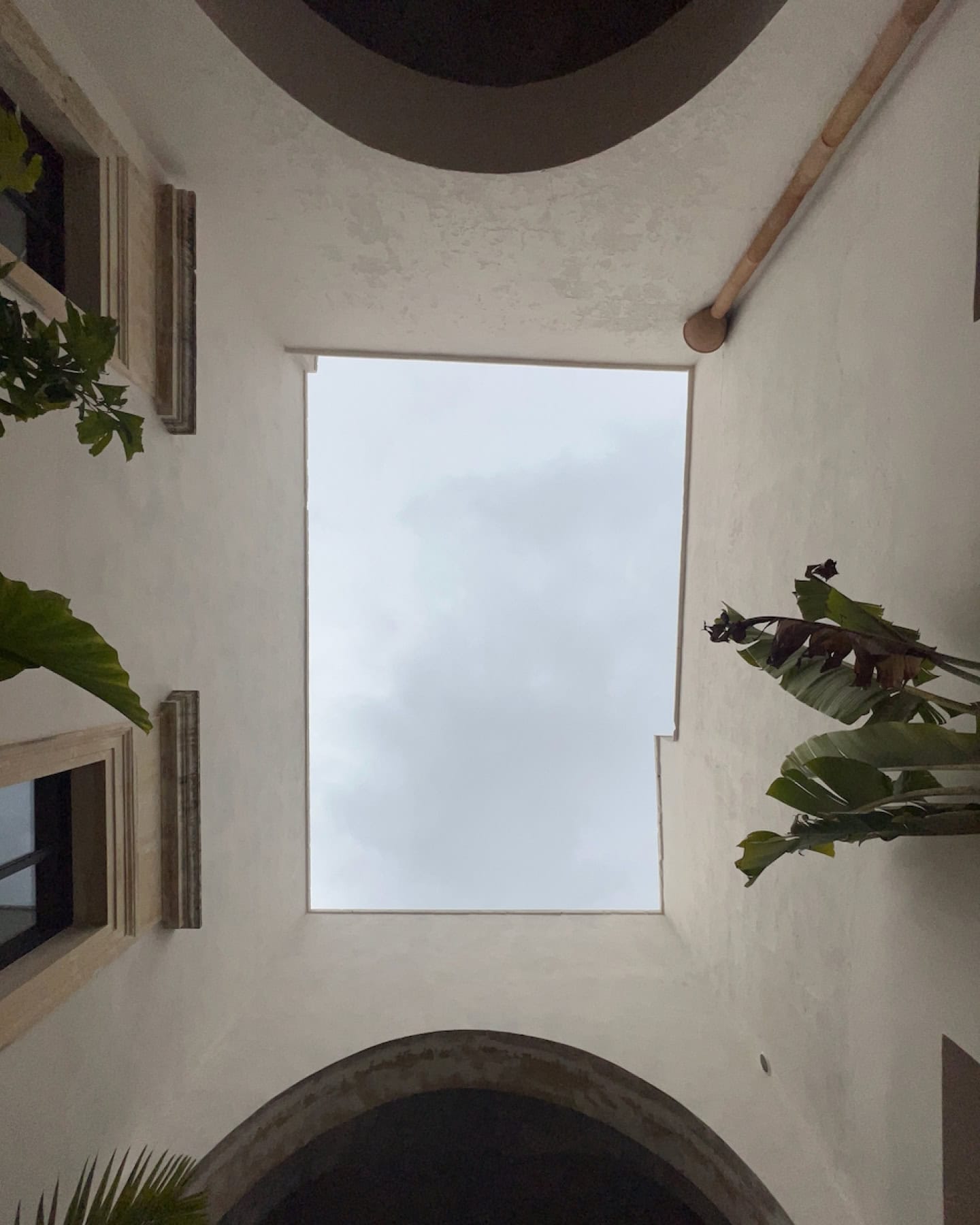
The building is a 19th-century palazzo, restored by Valari Studio. The restoration isn’t performative—it’s considered. The walls breathe; the stone glows white in the sun. A patio lined with terracotta pots leads the way in. It’s quiet. Sharp, clean, grounded.
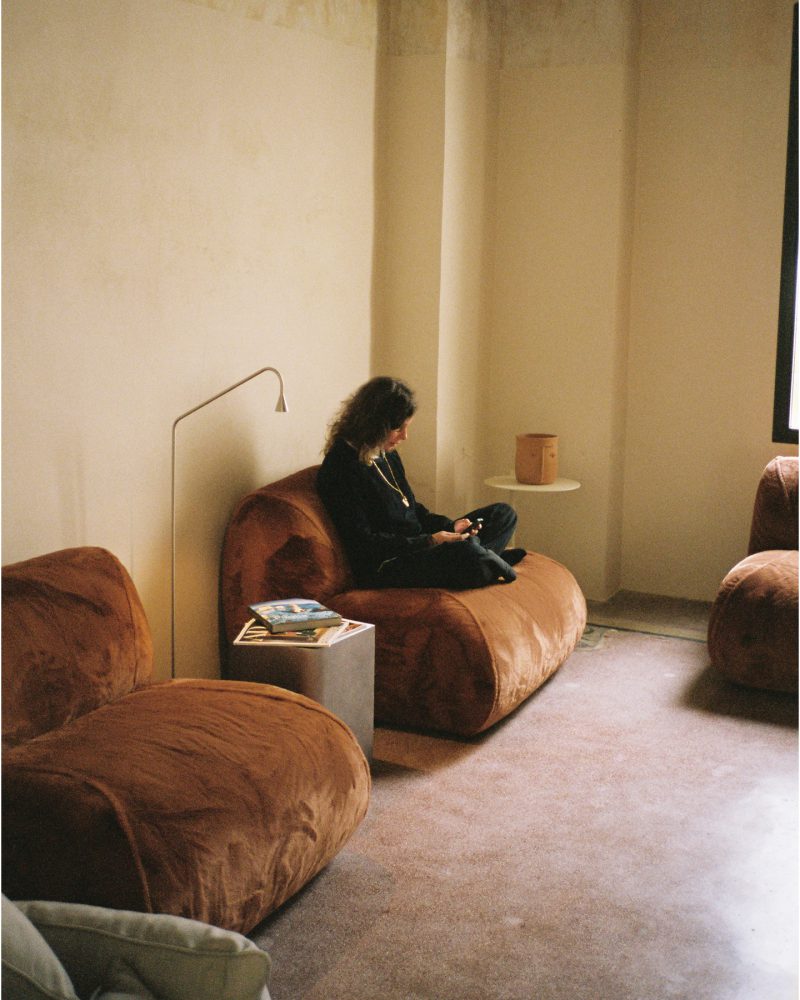
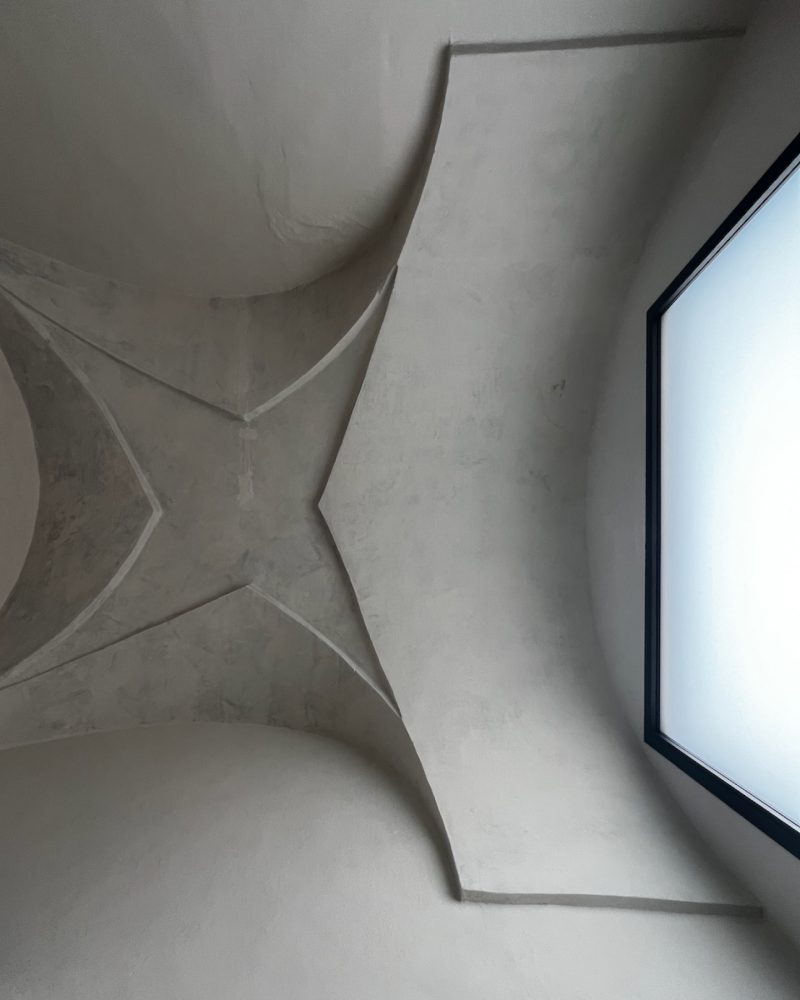
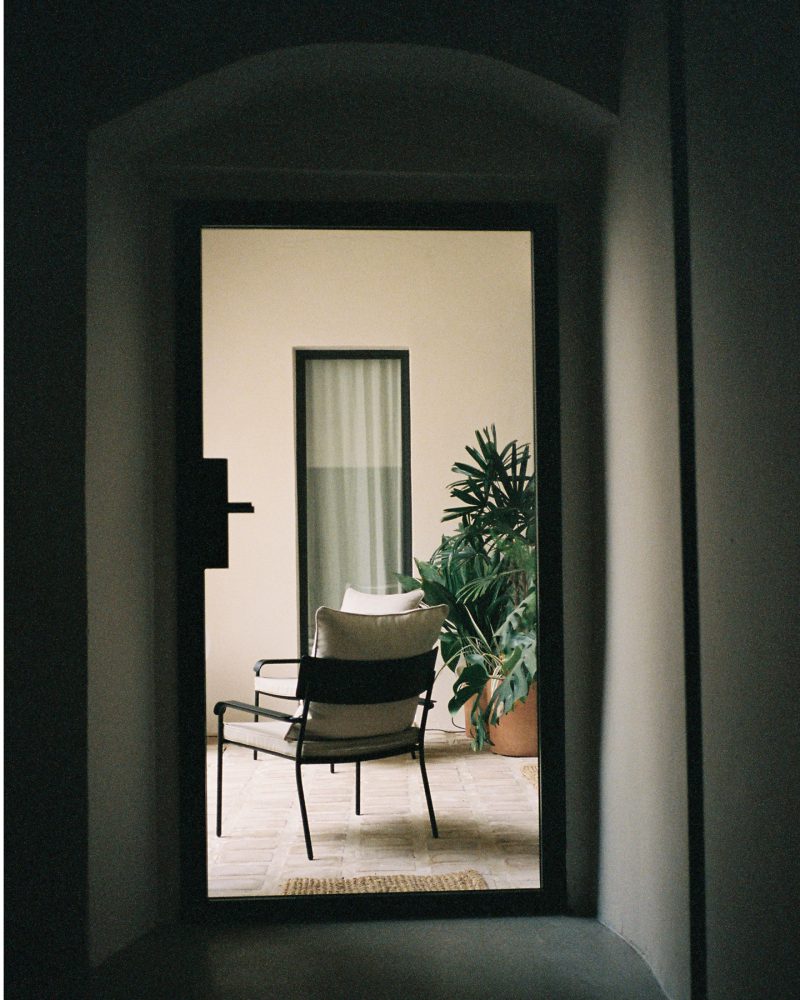
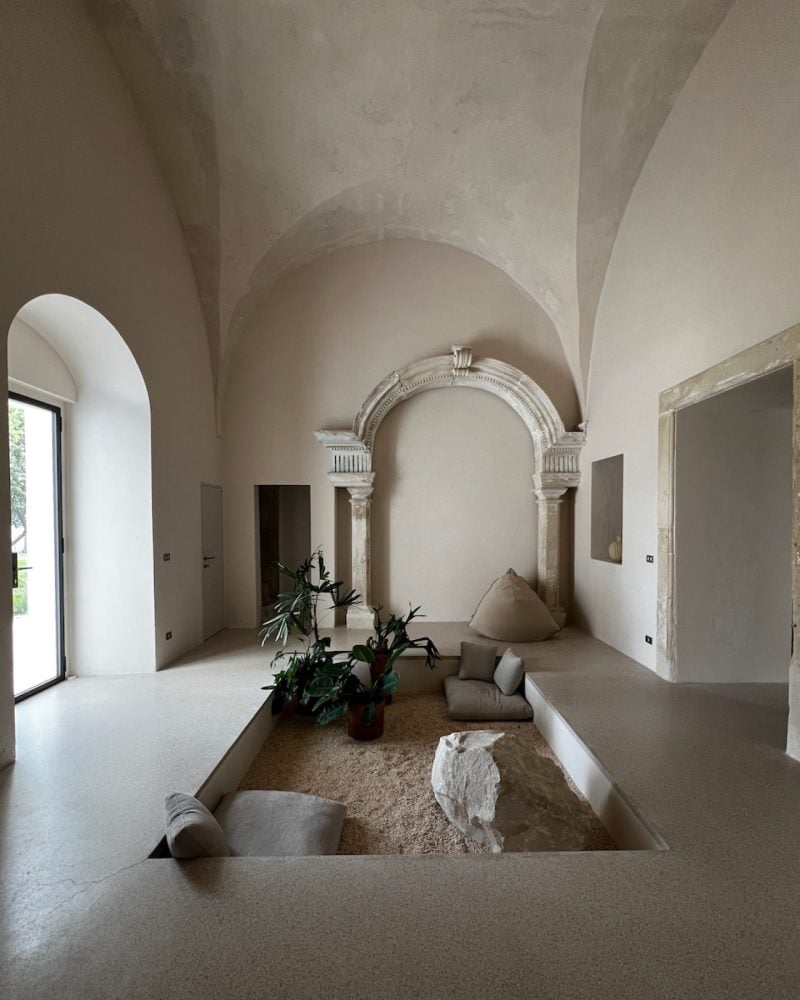
Inside, the original floors have been preserved. Lime plaster softens the light. Spaces flow into each other naturally: an entrance with a fireplace and two armchairs, a minimal living room, a study, and the kitchen. Every room has a function, but none are fixed in time—they feel adaptable, lived-in but not worn out.
The kitchen is essential. A stainless steel island stands in the center, surrounded by handmade ceramic plates, bowls, and serving stands by Nicola Fasano from Grottaglie. On the counter: olive oil, sun-dried tomatoes, taralli, and carosello—a local variety of melon, eaten like cucumber. If you want, a local woman can come and cook for you. No drama, no “authenticity” tropes. Just good food, simply made.
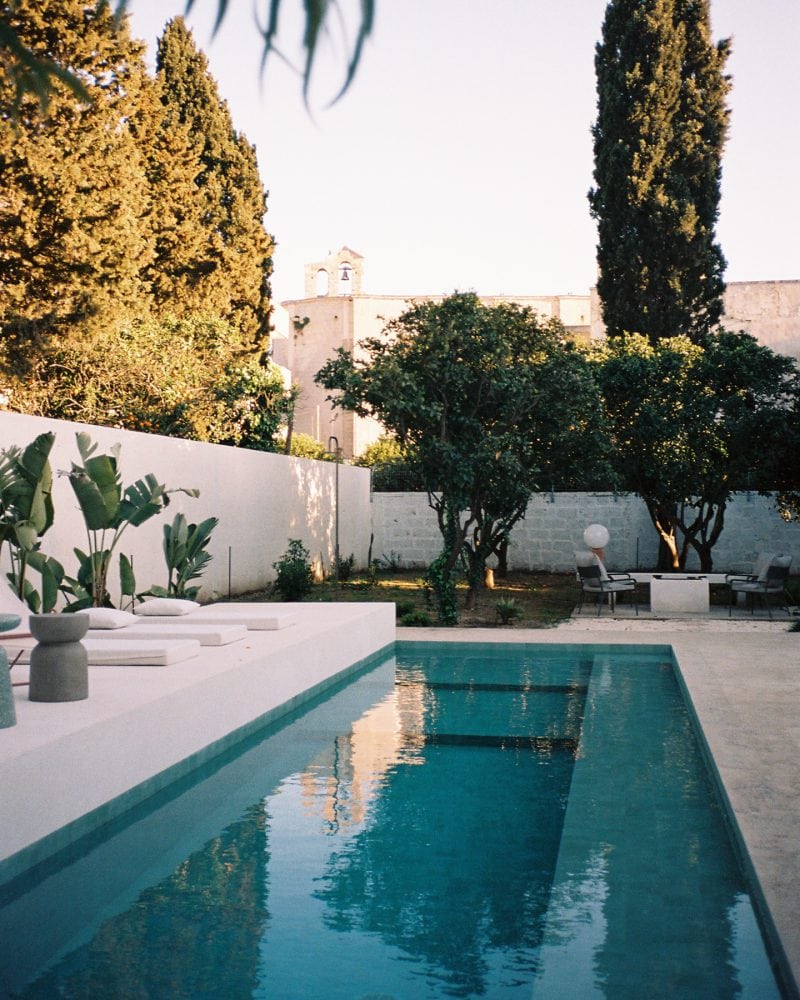
From the kitchen and dining area, you move directly outdoors. The 700-square-meter garden is generous, but intimate. A stone pool, striped umbrellas, soft loungers. There’s a small outdoor bar with cloud-soft armchairs. It invites both solitude and company. You can spend an entire day here doing absolutely nothing, or host an impromptu dinner for ten.
There are four bedrooms, each with a private en suite. They’re spacious and quiet, with natural light and real privacy. My room had an open-air shower—stone walls, plants creeping through the edges, open sky above. Some rooms face the garden, others are more secluded. All are minimal without being bare.
There’s also a hidden zen garden: clean lines, Mediterranean plants, silence. A place to sit, read, or do nothing at all.
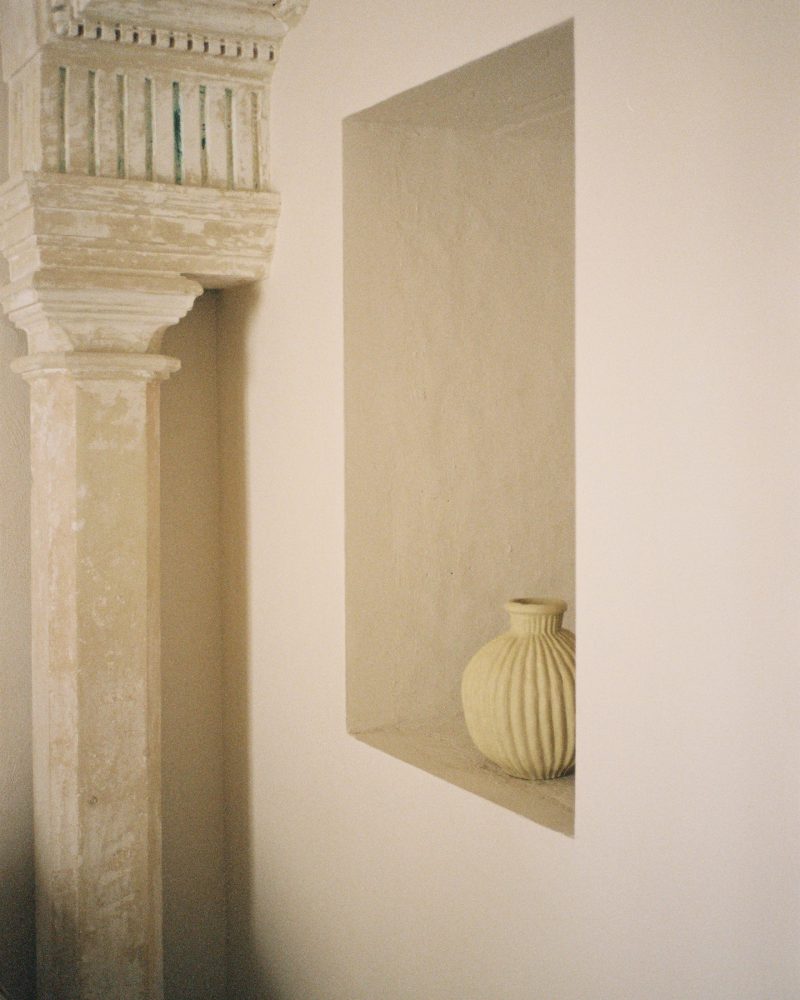
Throughout the house, choices are intentional. Materials are local. There’s solar energy, rainwater collection, and discreet lighting by Flos that changes with the time of day. The architecture remains legible—you see where the house has aged, where it was repaired, where it was left alone on purpose.
There’s no need to label the place. It doesn’t try to be a hotel, or a retreat, or a design property.
You live in it as it is.
You might arrive alone. Stay a few days. Start imagining what it would be like to invite your friends, your partner, your family. You might not leave.