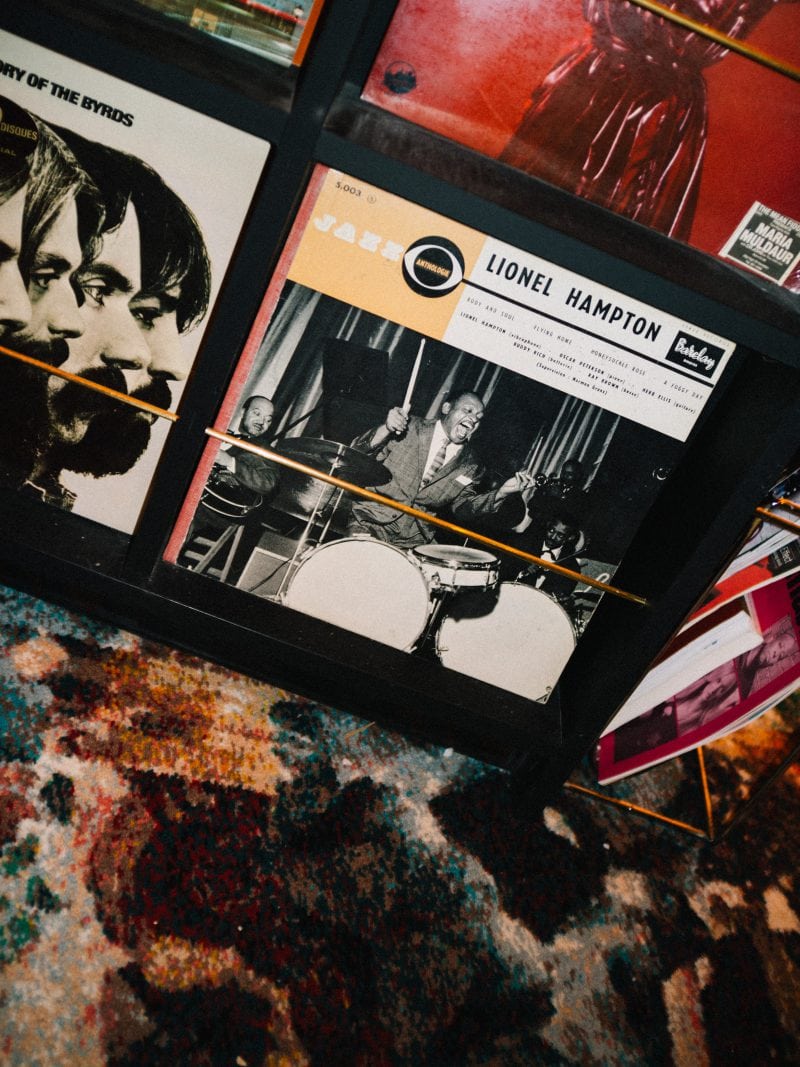
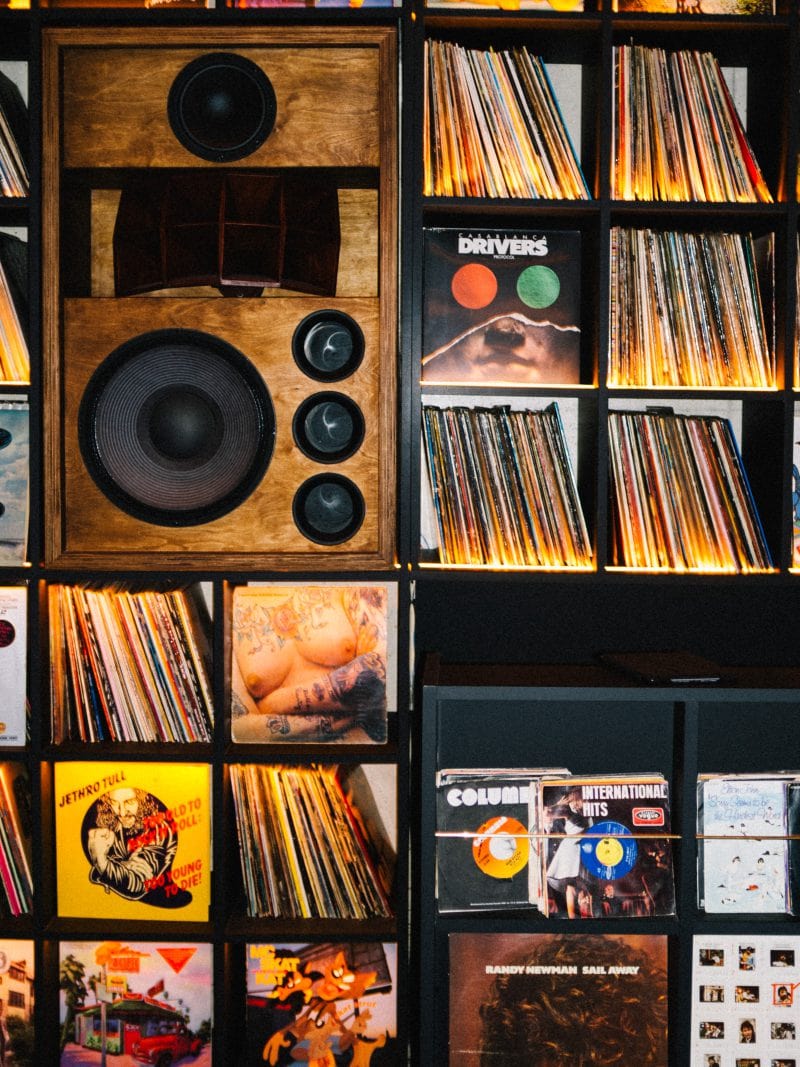
Bus Palladium is a name that echoes through the night-soaked history of Paris—a legendary Pigalle sanctuary where rock’n’roll was lived. Today, as nightlife venues across Europe undergo a profound cultural and culinary redefinition, the iconic space enters a new era. At the helm of this transformation is a chef who doesn’t care about trends, hotel clichés, or playing it safe.
Freshly arrived from the sun-bleached grit of Marseille, Valentin Raffali has traded his intimate seaside brigade for a high-octane kitchen of fifteen chefs, building a new ecosystem entirely from scratch. His philosophy is remarkably stripped back yet deeply radical: no over-planned concepts, no tailoring menus to please generic global clienteles, and zero compromise on quality. Everything—from the morning breakfast to the late-night pass—is made entirely in-house, dictated purely by the rapid, fleeting rhythm of French seasons and the raw energy of the team.
In this exclusive conversation, we step inside the loud, chaotic, and beautiful world of the new Bus Palladium kitchen. We talk with Valentin Raffali, a chef operating straight from the gut—navigating the delicate transition from the South to Paris, the striking parallel between a photographer’s frame and a dish’s color palette, and why true rock’n’roll cooking means trusting your instinct, pushing past the boundaries of the average palate, and just fucking opening.
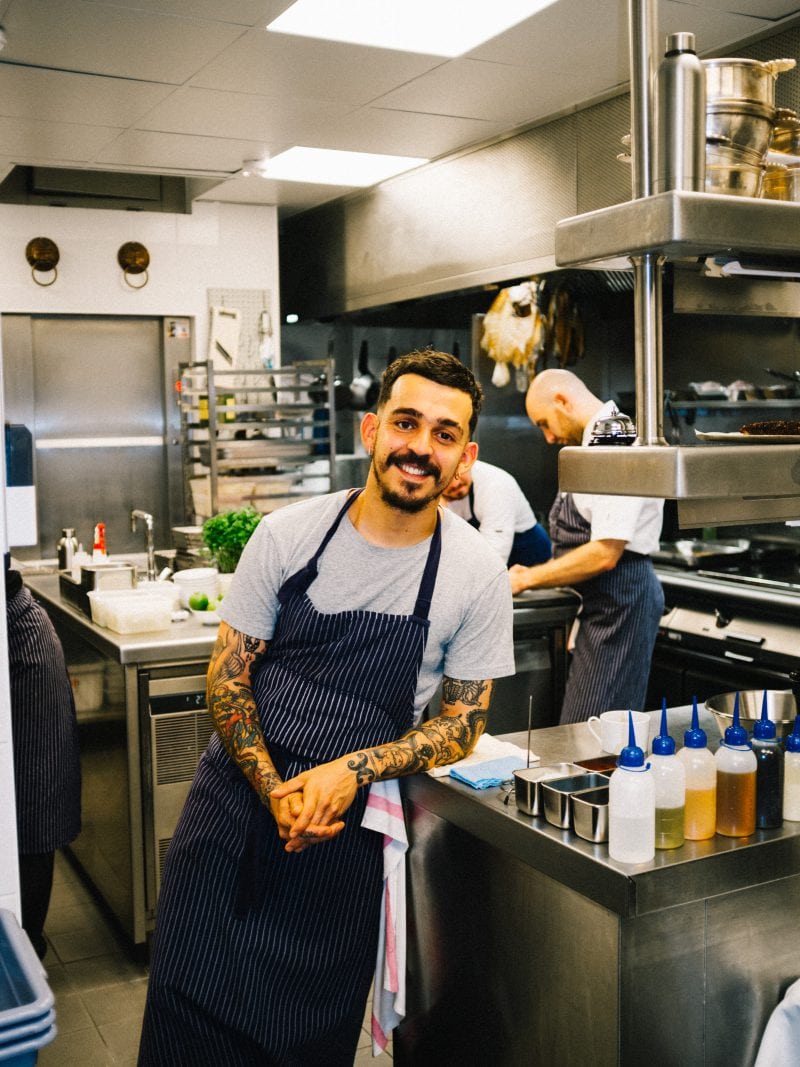
AE: Bus Palladium is a legendary name in Paris, deeply rooted in music and nightlife history. How does it feel to step into this venue as the new chef? And how do you plan to translate its rock’n’roll heritage into your dishes?
VR: It’s always impressive, man. It’s always a little bit stressful because I made the decision to build my team from scratch. I started here and didn’t know anyone. Through my career, I always cooked with my friends or was supported by people I always cook with, but for the first time, I was like, “You know what? I’m from Marseille and I just moved to Paris for this project. Let’s start from scratch.” So this was a little bit impressive. I was a bit scared because, working as a team, there’s always energy and people, and I just hoped the group was going to be okay. I felt that people waited for this project for a long time, as well. And me coming from the south, to be fair, man, I’ve never heard of this place before. Marseille and Naples are kind of similar, so you know where I’m from then. Before the project, when everybody was talking about it and a lot of press were coming to ask questions, I was going to bed like, “I hope I’m going to be good enough for the project, man.” I felt a lot of humility. I felt small because I used to have my restaurant in Marseille, but the dimension was way smaller, man. We were like three or four people cooking, two waiters, and one wine person. Here, man, there’s like 15 chefs. So, yeah, I was a bit scared but super motivated. The words are humility and doubt.
And how do you plan to translate the rock’n’roll heritage? All I’ve planned in my life is to be great in anything that I do, but I think food should be an extension of yourself. I know what I love. Everything has to be seasonal, fresh. Everything has to be prepared during the day and served at night. Everything has to be honest, you know. But the reason why I’m here is because I have never planned anything for this place. All I’ve planned was just to do my best with what I have, the people with me, and the equipment that I have. That’s it.
You will lose the rock’n’roll heritage by planning too much. That’s why I used to say, “Guys, let’s just fucking open. Let’s be spontaneous. Let’s open and we see.” I don’t like to talk too much before because stress goes up, and I only feel good when I’m cooking. Let’s do our fucking best. Openings are tough, but yeah, I’ve never planned any rock’n’roll heritage because I think it’s part of me. Just stay yourself, man… stay true. Exactly. So, I hope I answer well the question.
AE: And so, nightlife venues redefining their culinary identities is a huge contemporary trend. What is your vision for the new era of Bus Palladium kitchen?
VR: I spent so much time working for myself—and it’s still the case now—that I never watch what other people are doing. I know what the trends are, but I don’t really care, you know.
All that matters for me is like, this new era of Bus Palladium, I want us to be known for the hotel that makes everything home, starting from the breakfast to the end. The only thing that I don’t do is the viennoiserie—the croissant, pain au chocolat. This one, I buy it because we don’t have the space. But if we had more space, I think we would do it.
I want to be known for this. So many big hotels are so beautiful, but if you go inside the kitchen, you see stuff that don’t look as good as what the hotel is. They take shortcuts, and I’m not the one to point any fingers. But what I know is like, right now, this year I’m here. And because I’m here, I want to try my best to do everything.
New era for me is like new generation. Big hotels’ menus, if you step in a hotel, you will always find a Caesar salad, the club sandwich. There’s so many classics because owners tend to ask food for everyone. They be like, “Yo, be careful because we’re going to have this clientele, or this guy, Chinese, Arabic people, Americans.” I think the new era, it doesn’t matter about where your clients are coming from. Otherwise, you lose your identity. I care about the food to be really good, and that’s for me the best way to respect my client. But I will never base the writing of my menu based on who they are, you know? That’s something quite generational about food.
So, yeah, I’m treating this place as if it was a small place… but in a big one. What matters is to never give up on quality. Never give up on the will of doing everything home. Never give up on changing the menu because seasons are going super fast in France. When spring starts, you have so many products available, and then they’re gone, and so many others are available. So, my work and the team is to play with this. That’s something quite new for a hotel like this, and if there is one thing that I’m super proud of, it’s this.
Even tonight, you’re going to see, man, we have the first courgette flowers. We made a dish out of it, you’re going to try. We have like a super green salad made of lettuce heart, it’s called. It’s not really famous, this product, but I will show you tonight. We always change. And to change, you need to trust yourself, man, as long as you do your best at the time you clock in and you clock out, and the products are good, and the team is good, and the music is loud…
AE: When creating a new menu for a new place with such a strong personality, where do you start? Do you look at traditional French bistro or are you pushing boundaries to something more experimental?
VR: The answer that I have is a bit boring, but there is different kind of chefs, you know? I know who I am, and what’s super important is to start writing the menu based on what’s available around you. It starts with your team first, to be able to understand and recognize who is good at what they’re good at. Then it goes to the equipment of your kitchen. The design of your menu is first human-based, then equipment-based, and then it goes to the products available. That’s how it really starts.
I had no clue, man, about the food I wanted to do—it was so blurry, man. So blurry. But I know that if I combine the science of humans, science of equipment, and the planet one, which is product-based, when you combine the three together, you should have a menu ready in the end.
I think it’s super selfish and super old school to be this guy like, “I think of food all the time, all the time.” Sometimes creativity is something negative, because you can’t impose… I mean, the ecosystem has to be right. You need to build the ecosystem, which is human, equipment, product. This ecosystem has to be safe and then you start writing. If you write outside this ecosystem, then it’s not good, because sometimes the need of technique for a plate is too high based on the team that you have. Sometimes a product is too fragile and you can’t have it all the way through the week. So, it’s so many questions. But it starts with building the right environment and just have fun with it. Have fun and try, and sometimes it’s not as good as you want it. Go to bed, try again the day after, you know?
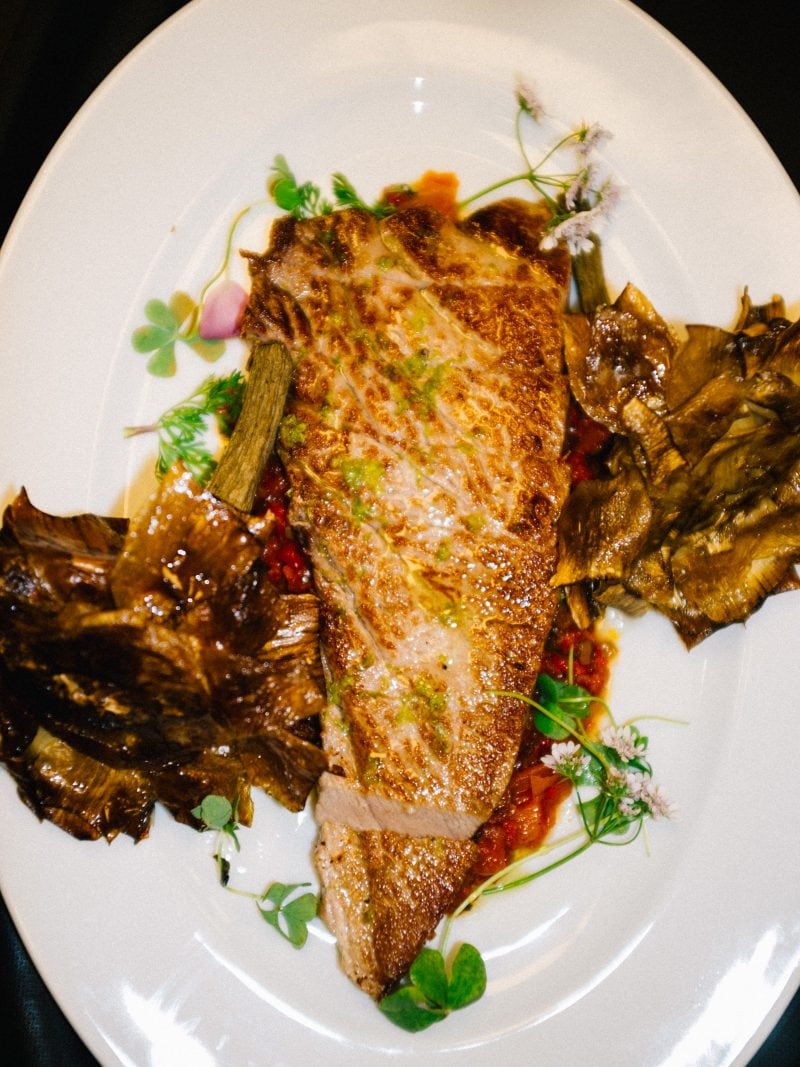
AE: Can you walk through one of your signature dishes on the menu that perfectly encapsulates your culinary philosophy?
VR: There’s one that I’m super proud of, because I’m like, “Wow, that one, there is nothing to touch.” And it’s funny, because I’m so not known for dessert, man. Back in Marseille I was doing so much fish and stuff. But I think it’s quite trendy right now to play with classics, you know, some 70s classics with our food.
The inspiration was this: it’s called Fraisier. Fraisier is a strawberry cake. At first, man, I was like, “Oh, I wish…” You know, it’s kind of super trendy to do these super old-school cakes, and I was like, “I wish I had someone in the team that knows how to do it.” It’d be so cool to prep like a few cakes, and at the end of the night you put them on the counter and serve it to the slice. But no one knew how to do it, no way, we have no time.
I didn’t give up on this idea, but I was like, “What do I have available?” Again, I saw the glasses to the bar while I was writing the menu, and I was like, “Oh, those glasses are sick.” I was like, “Maybe I can build the same shit, but inside this glass,” which is super old school, you know? So, that’s one where I was like, “Well, that’s kind of cool.” And also it’s super seasonal, it was the first strawberry, so people they love it.
That’s the new green salad that we putting on the menu tonight, which is cucumber, celtuce, raspberries—it’s super fresh. There’s many, man.
The other one is super, super nice. In the morning, usually hotels serve like a salmon or smoked trout, you know? And the fish that I’m preparing for the people in the morning, I’m also using it at night. So this plate is a smoked trout dish—rhubarb water, and the flower is called nasturtium, which is a peppery flower. I’m super proud of this dish, and the feedbacks are really good.
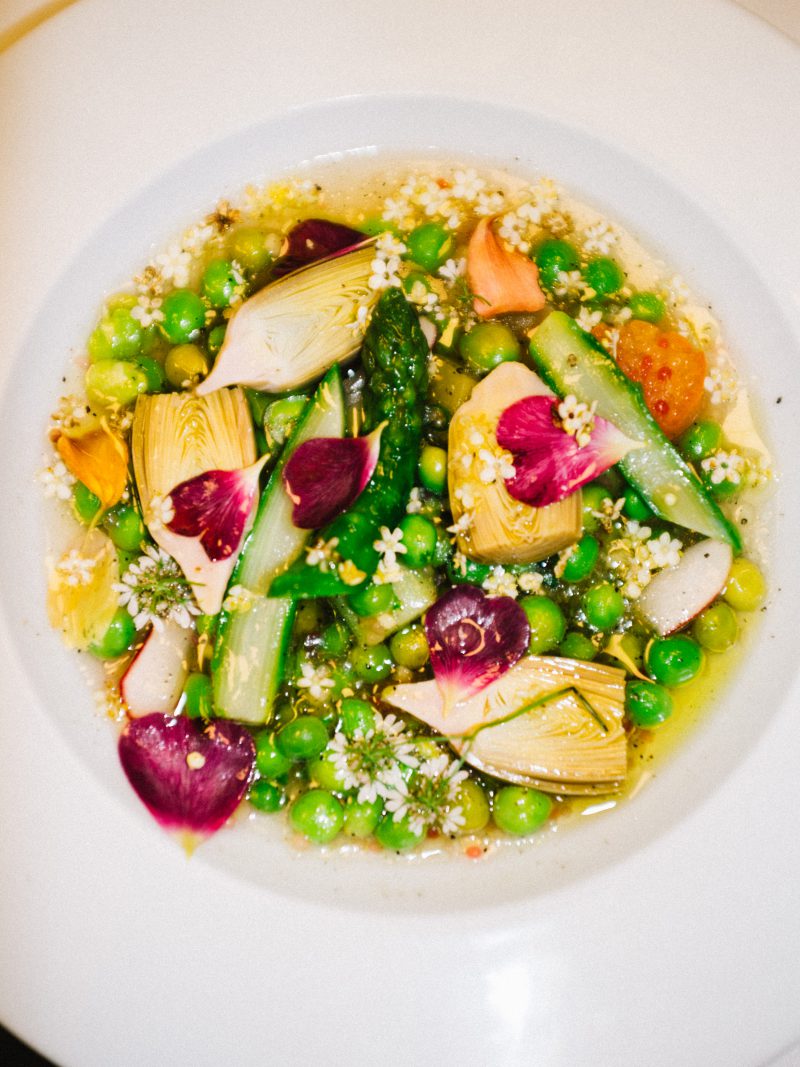
Look at the size of the artichoke, man. They’re super beautiful. I think there’s no signature dishes, but more like signature products, which is like super beautiful artichoke we’re working with, the best fruits, the best peas, the best fava beans, you know? We opened two months ago, and I think it’s good to let other people tell you what are your signature dishes, more than yourself. Exactly. We try to keep it fun, always seasonal, always fresh, you know?
AE: Food, like photography and music, is very sensory. How do you balance the visual presentation of a dish with the emotional comfort of the taste of the dish?
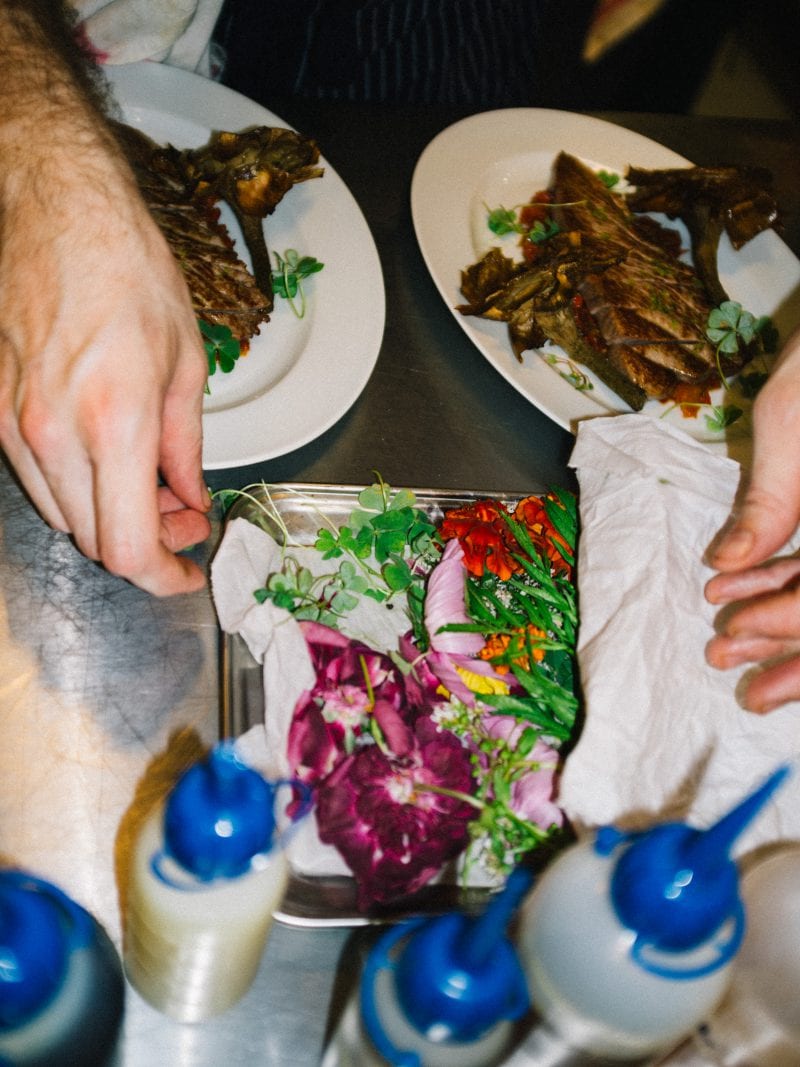
VR: So, you see this dish, for example? That one is super visual, you know, when you see it, you’re like, “Oh!” And it really starts from the product. I think it’s a matter of to be able to see beauty everywhere.
Every night I will receive a list of products available. Through experience, you know, it’s a really cold list where they write like basil, chives, onions, carrots, blah, blah, blah. And on this list, there is like product that I know are so rare and so relative to spring, then I’m like, “Oh, I love that one,” which is this orange one. That’s how I build a plate. I love this flower so much, but back in the south where I’m from, it’s too hot to grow this one. So, it’s been years I’d be like, “Wow, I wish I was around Paris to be able to do this like that.” Now I’m there, you know.
The look of the flower is so beautiful. The flavor is kind of peppery, and I love it. And I knew I had a lot of fish from the breakfast, which is the smoked trout, and I was like… you know, there is a technique in food, a saying where it’s called color combination. Everything red—if you put like raspberries, strawberries, and let’s say a piece of beetroot—it will work together because colors are related. I’ve built this plate based on orange and pink. So, all I do is like, I start with this orange flower, I go through the list, and I’m like, “All right, what’s orange? What’s pink?” Then I put them on the side, and I’m like, “Okay, what do I have again in my fridge? What team do I have today?” That’s how you build a plate, pretty much. But for me, it’s really based on color. First on flavor, then on color, and then technique.
AE: Every chef brings their own history to the kitchen, so I want to ask you what personal experience or mentor have shaped your vision and the way you cook today?
VR: If there is one chef—I’ve been trained by a few chefs, you know—but if there is one, he’s from London, his name is Harry Cummins. That’s him. When I used to have my restaurant in Marseille, we were business partners. The restaurant still exists now, but I sold my shares because I wanted to focus here. But everything about product, everything about having the right touch… a great chef has to be sensitive, and sensitivity starts with how we touch things. Because everything is fragile, and as much as you can respect something, then you will become great at cooking, you know? And that’s stuff that I’ve learned with him. Everything that I know about the Mediterranean culture is from him. It’s funny, but I worked with him for five years.
And if there is another one, it’s Serge Chenet, which is a super French name. He’s way older, and I started with him. Look, man, the OG, man. So him, he was my first chef. In France, if a French chef wears this collar, which is the flag, it’s called “Meilleur Ouvrier de France,” which is best craftsman of France, pretty much. He’s one of the best chefs in France. With him, I’ve learned my basics—all sauce basics, working on all animals, offals. So, I had such a strong training in this star restaurant with him. Then I’ve traveled, I did my thing, then I’ve met Harry, and then I built my restaurant, and now I’m here. To make it super short, yeah.
Exactly. But the link with every people I work for is like they always try their best. Always, always, and they fed me with this energy of every day you try to do something great. Even when you don’t feel it, you’re like, “All right, let’s do it.” That’s discipline, you know. And you do that every day.
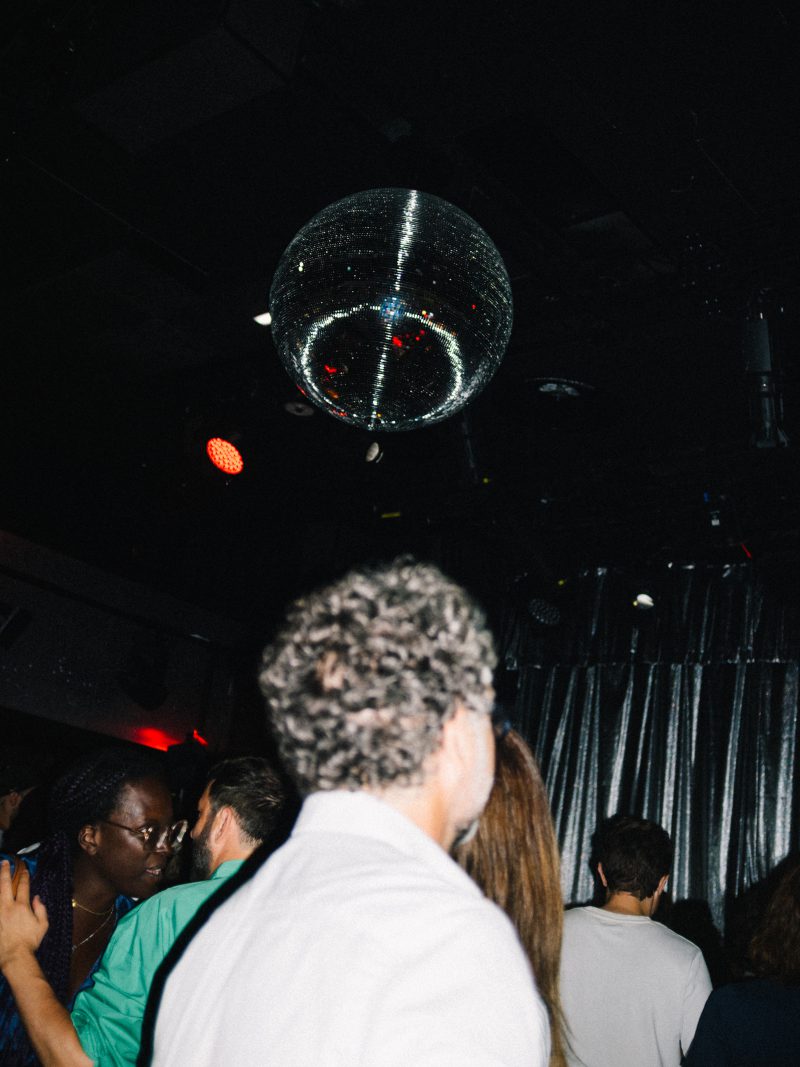
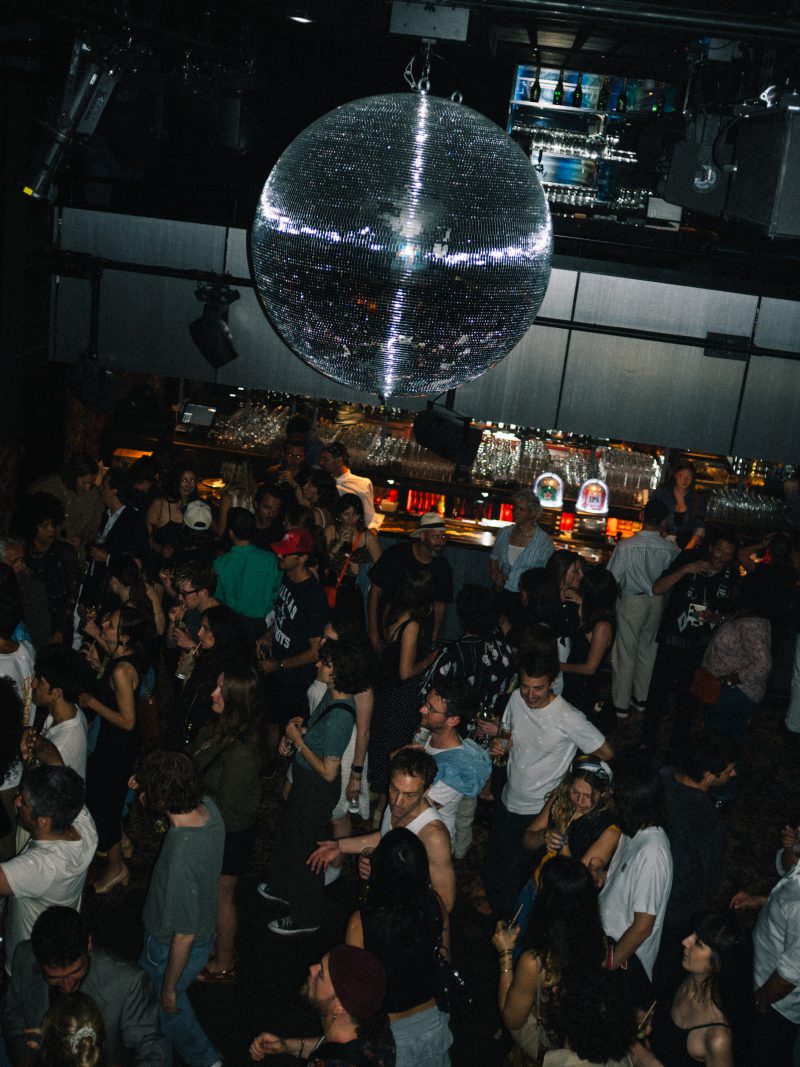
AE: The kitchen of a busy Paris venue can be chaotic and high energy. What keeps you grounded and inspired during the most intense service hours?
VR: Well, you don’t think really. Working in a busy kitchen can be chaotic, high energy, the music is loud, but all we’re looking for at the end of the day as a chef—you’re going to see, tonight is quite slow. Super hot in Paris, people like to be outside and I get it. But on a busy service, all we love as a chef is the moment where you enter in the zone. And the zone is all you got to do is just to… your hands move and you don’t even think. The music is behind, you know exactly what to do, everything looks beautiful, the team is healthy. That’s all I’m looking for, this energy to be in the zone, to be operative. This I love it, and to not think.
I spend all day to do my best so everything looks sharp, everything tastes good. During the busy, chaotic time, I just want to be in my zone and to do my things. Greatest inspiration, it really comes from the guts, you know? And we do some freestyle plates sometimes. We do quick creation and it becomes so great. But they’re so great because we were prepared. We work hard all day, you just go. So, I tend to overthink a lot in my life, but about how grounded or inspired, no, this I don’t.
AE: Fantastic. Okay, last question. So, looking ahead, what do you want people to say about their experience here at Bus Palladium after they’ve tasted your food? What kind of memory do you want to give them?
VR: I want people to feel how honest the food is, you know? I want people to feel and see how generous it is, how hearty it can be, how well-seasoned it is. Everything is cooked with the intention of making it great. So I just want people to say, “Yo, it was delicious, man,” and that’s it. Really, that’s it, because my job stops there.
I meet some people that remember like dishes that I made like five or six years ago, and I’m always like, “Wow, it’s crazy that you remember it.” But I’m not looking for this. Me, I’m just looking for something honest with a lot of humility. Every night the guests, they have to be happy. If the food is great and the friends around the table are great, they have a good time… and I think in a hard time that we’re living in now, the world is a bit going mad, if me, I can give a little piece of happiness with great food, then I’m good, brother. I’m good, but I’m not looking for something deeper.
But not everybody understands my food, and that’s the rock’n’roll thing with me. Where people stop, I like to keep going a little bit. Where let’s say intensity, let’s say the average people will stop here on the seasoning or something, I will always try to push it a little bit further, or to add something. And I think rock’n’roll is this: it’s just to trust your gut. Do what you love, and never compromise, because I don’t care if people stop here, you know? I’d love to stop there, so I will stop there.
And it’s funny to see because we, I think we’re the same age, you know? People from our generation they love it, they understand. And the older they get, the more they’re like, “Whoa, what is it? Oh, I’m not used to it,” and I’m not scared. I’m not scared of this. I just do it.
AE: And you do your job.
VR: Yeah, exactly, and I do the job, man.