Few photographers have navigated the porous boundary between art and commerce as deftly as Roe Ethridge. For more than two decades, his images have moved fluidly between the glossy surfaces of fashion editorials and the quieter, more idiosyncratic spaces of personal life—never fully settling in either. Instead, Ethridge has built a practice that thrives on slippage: between the real and the ideal, the generic and the intimate, the applied and the autonomous.
The republication of In the Beginning by Loose Joints in January 2026 gathers three early books—County Line, Spare Bedroom, and Orange Grove—created at a formative moment when Ethridge’s commercial and artistic practices began to merge in earnest. Alongside it, Rude in the Good Way pushes further, a vivid, unruly sequence of images capturing Ethridge building and dismantling his visual world through humour, desire, and invention. Together, these volumes offer a chance to witness the slippages, tensions, and quiet dislocations that have always been at the heart of his practice.
Athena Kuang: Your work often uses the real to suggest, or disrupt, the ideal. When did that tension first become central to how you thought about photography?
Roe Ethridge: I guess the example that comes to mind is very early on, 1999 when I did a portrait of a model with chapped lips. It was for a beauty story. And it was Photoshop times, and so it was this, almost literary in its irony that it was my first job for a beauty magazine would be how to put on lipstick, and the model would come with—it was wintertime—her lips were really chapped, and it was really peeling, and it was just kind of the worst case scenario for that particular picture, you know?
But in the end, that surprise turned—not the picture for the magazine, because the picture for the magazine was perfect and retouched, and everything was serious with no expression. But there was an outtake from it that was her laughing with the red lip and just a classical face in it. It sort of reminded me of an archaic Greek sculpture; that sort of smiling, good health and wealth, but also humor, and then because it’s a photo and at that time I was shooting large format, it was very detailed. And so you could really read all the details in it.
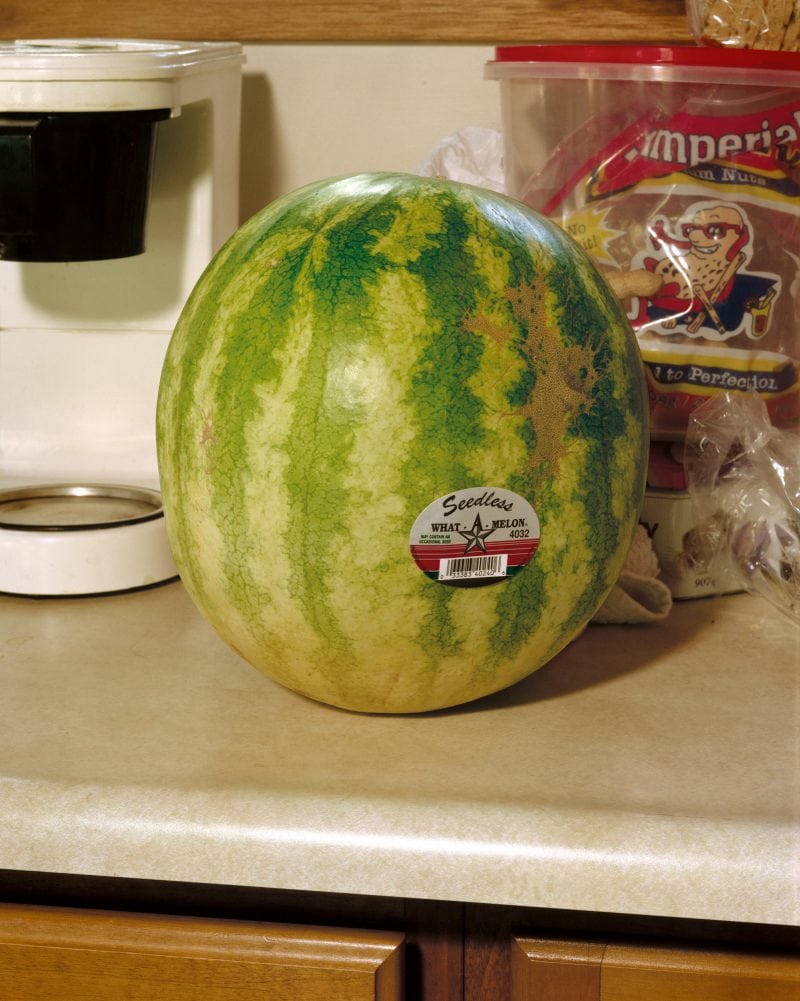
So that’s where the disruptive real might be, you might say that’s like the literal example of it. And I suppose it’s still going on where I sort of do both sides where there’s a picture of something that’s real, but it looks ideal. And there’s no retouching to it. It’s just crazy that it looks like that. But I feel like I have so many more arrows in my quiver that I use now that it’s not just my one move.
AK: When did the collapse between applied and autonomous images open up for you?
RE: I grew up in the teenager in the 80s and in an American suburban, very, very typical middle class situation, but also in the South. So, a little bit more Christian, a little bit more repressive. A lot less culture. I got a lot through the TV and through going to a Barnes and Noble and hitting the magazines, looking at art magazines. When I was in college, it was an interesting time to be in that conversation because at the same time, that Twin Peaks is on TV, you’re having these other conversations about what’s acceptable in art, and it was amazing that Twin Peaks was on TV. Television and magazines and things like that, were where I got my information, but I was very interested in the commercial image.
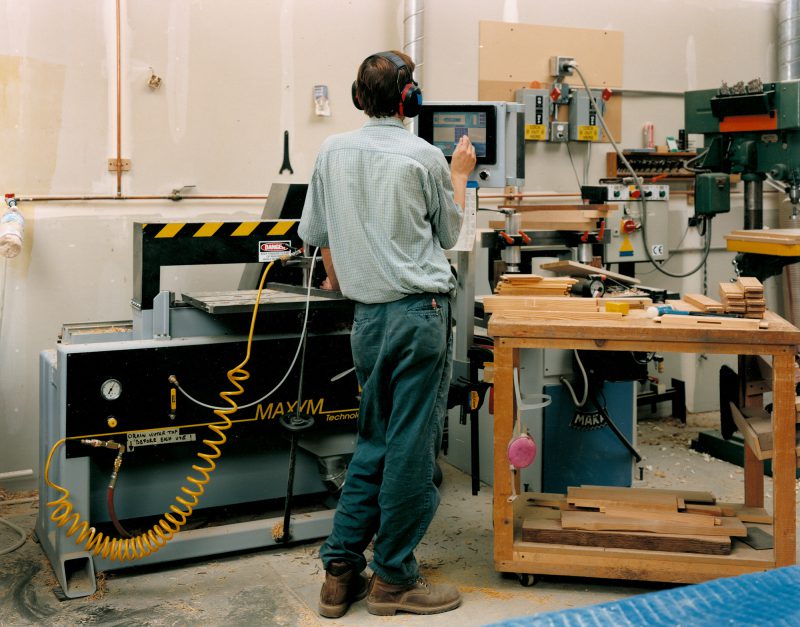
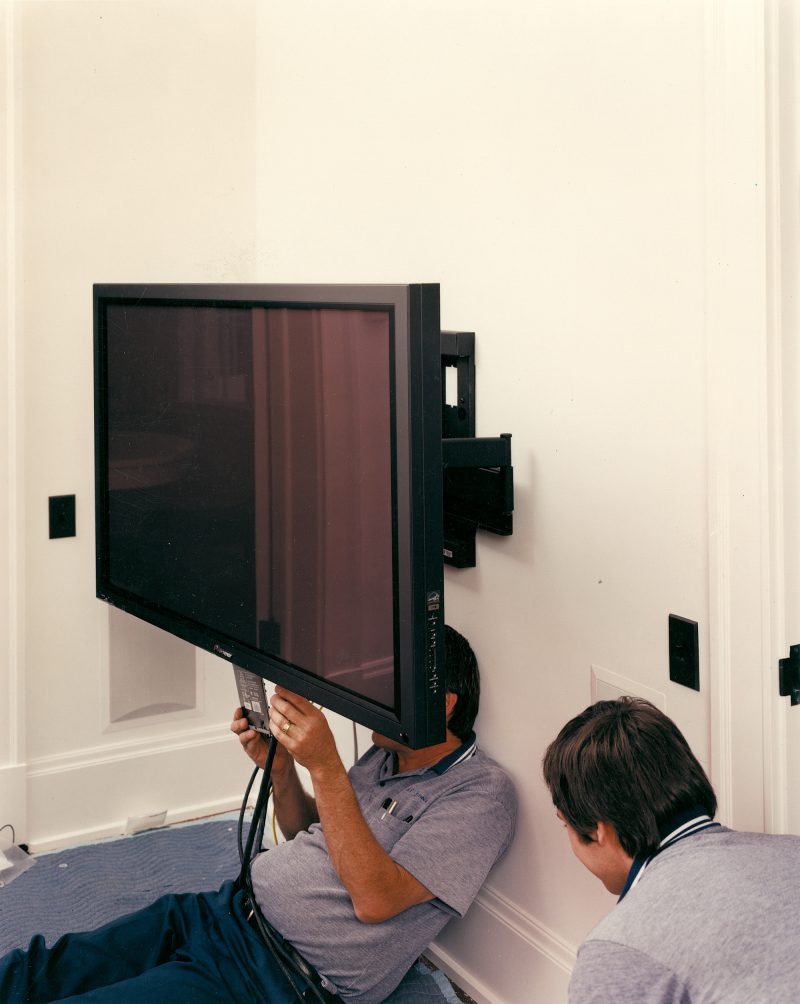
In Atlanta, where I was living, it was a lot of catalog photography. I assisted a lot of catalog photographers, and I was fascinated with just the sheer volume of it and how fast it would go. The quality wasn’t really the issue; it was about hitting the mark with the fake smile.
When you’re in that studio, anything can happen. The commercial studio is like a thing that gets coordinated with lots of different people. Lots of different elements and things that are outside of your control. And then you’re just taking pictures. An arbitrary thing can happen. And it could be intentional or accidental, but then, you’re there, like Lee Friedlander on the street. You’re observing it and using your instincts and taking the pictures. But you’re also an editor back in the office afterwards, days later, or years later, many times. And finding things that weren’t part of the job, that wasn’t part of the intention. It was something that happened on the side or on the craft table or just like the model did something that was different and that is where the money is. That’s the emotional center of this thing, that speaks to that idea the best, and somehow almost doesn’t have anything to do with the job.
AK: In the Beginning brings together Orange Grove, Spare Bedroom, and County Line, books made at a time when your commercial and artistic practices were beginning to merge. How do you reflect on those early publications now and how do these early publications reflect that cross-pollination?
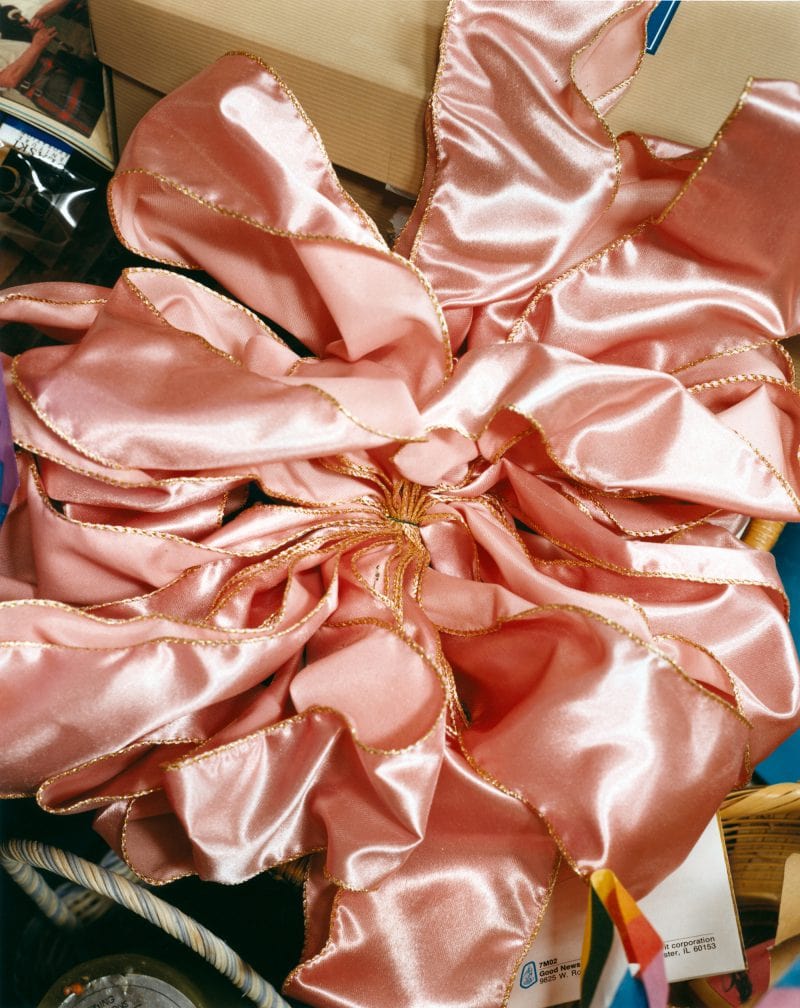
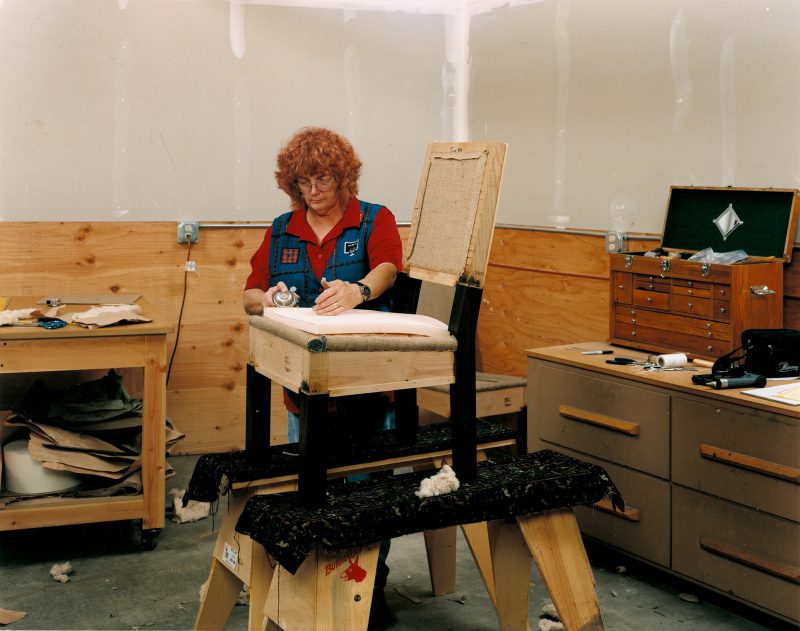
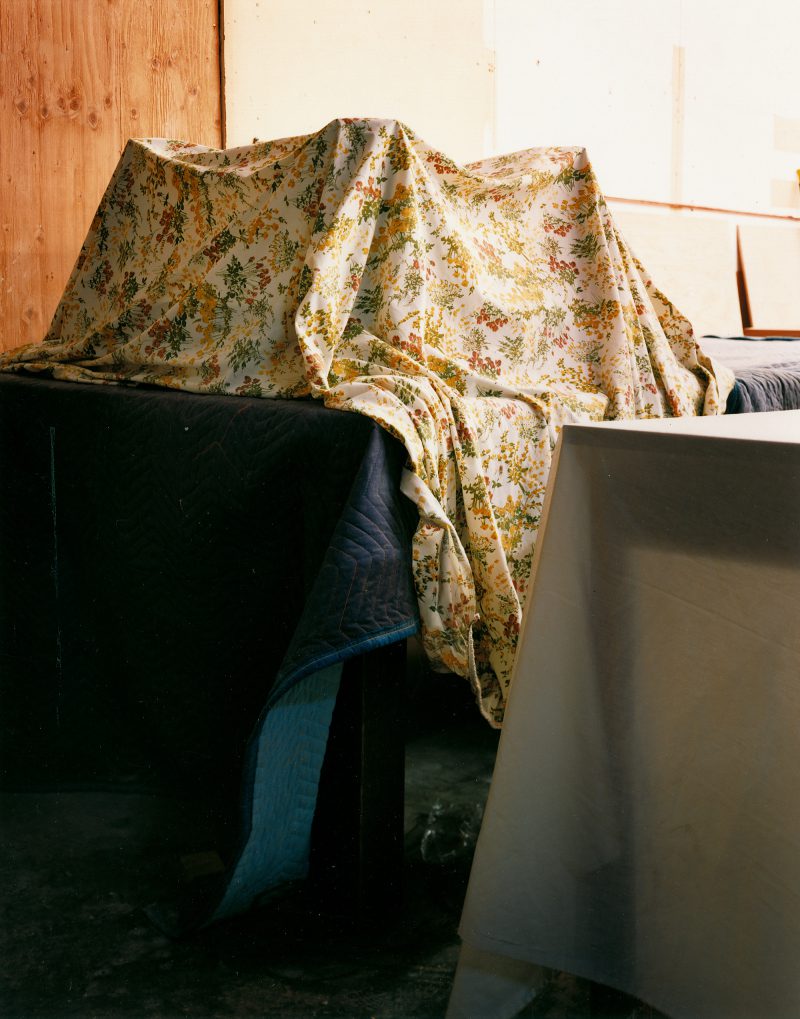
RE: Spare Bedroom started as an editorial for The New York Times magazine photographing Roy McMakin’s furniture company in Seattle called Domestic Furniture, and from that introduction that we got, we felt like this just wasn’t enough, the story that we did for a magazine. His work felt like it was hyperbolic versions of the suburban domestic. So it really made sense to keep working together. He was doing a commission for Tommy Lee Jones in San Antonio at the time. And so we devised the project where I would follow the production of that work from its making in Seattle to its delivery in San Antonio. And in the meantime, these other things came up, like I went home for Christmas and was like, oh man, my parents’ basement. And so there was so much stuff in there that made sense, but it was not part of the project. So, it was cool to have that setup where there was a formula where I could discover as I went along and add things as I went along and not have it be like, there’s a script, there’s a thesis.
In a way, County Line was similar, I was feeling sort of homesick, a little nostalgic for the South. There was something about that hitting the Nassau County line, like, oh, I’m outside of New York now, you know, and somehow that seemed metaphorically like I’m in a different world
That’s when I started thinking about the fugue and the sort of idea of like this like far flung thing and losing track of who I am. I just didn’t want it to be illustrative, I wanted to keep finding things whilst also trying to use my voice.
The Orange Grove, I was down in Florida at my cousin’s house. When I was staying in Fort Pierce, across the street from their house was this vast orange grove that had been allowed to go to seed. And the state pays you to not harvest the oranges because there’s too many. So, it just looked like a haunted orange grove, and I had an idea of what I would do with it right away. I knew I wanted to do these detailed portraits of these beautiful molding, rotting oranges, and they seemed so poetic, and also at the same time I was shooting pictures of the moon.
There’s something that I still love about taking pictures like that, which is that you can push your lens into this tree, and there’s branches and leaves and everything going around and you can find inside of this wild, overdone pattern, you find a composition, and it’s where your eye is and how that fills up the brain. And so it’s like a ready-made still life situation, you know? And it’s very good for vertical format.
AK: Across these books, familiar genres—still life, portrait, architectural study—are filtered through the visual language of advertising and everyday image culture. Were you consciously engaging art-historical forms, or responding more intuitively to what was around you?
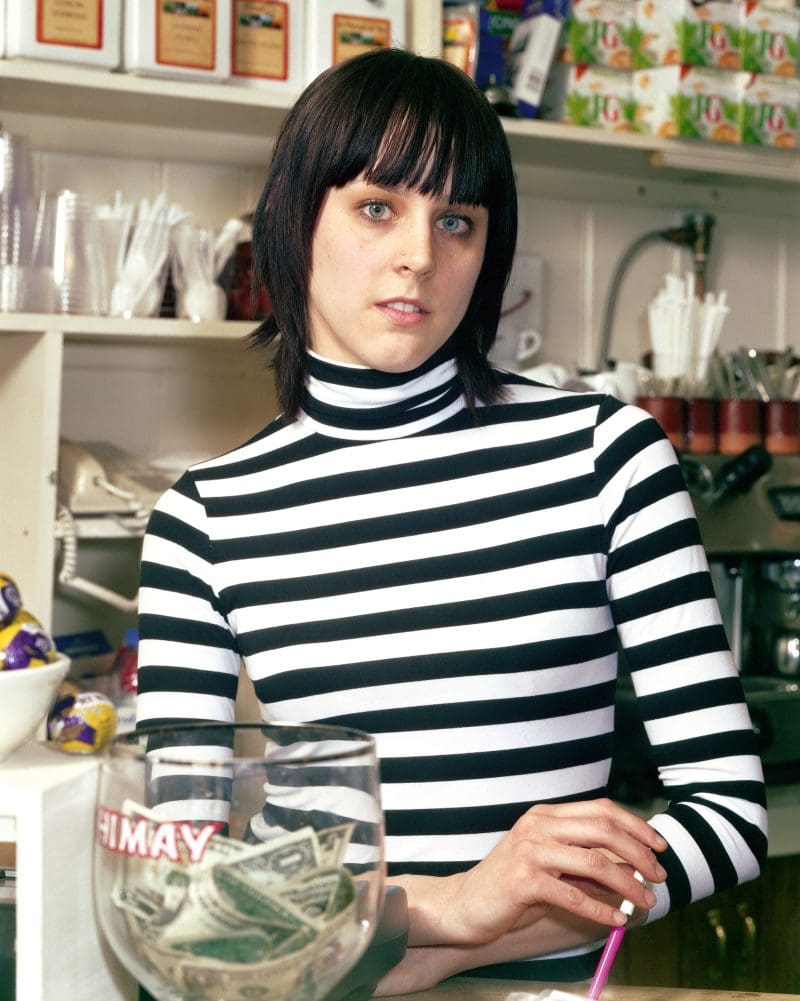
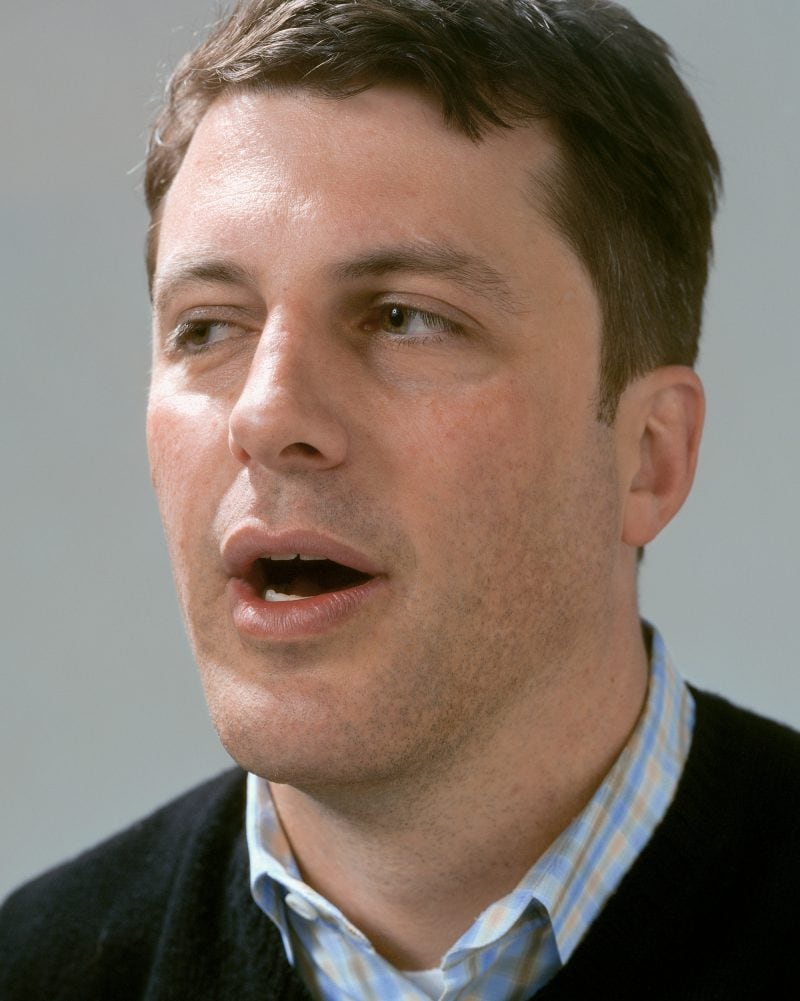
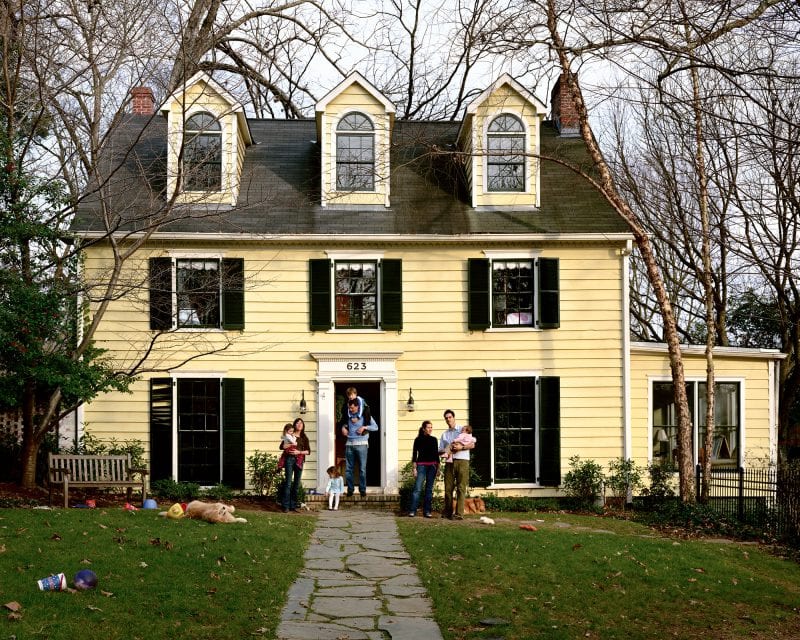
RE: I suppose it’s both. I loved, and I still do love when I sort of recognize the image that I’ve made. I do love things when they’re perfect, but I like to mess them up somehow, or put them in a different context or play with that idea. I suppose that’s being a suburban person, the idea of the happy life, the perfect thing. So distressing that, or knocking it off one peg is cool, but there’s something about the recognition of it and not going, I’m gonna go make things that relate to the Bechers today. Instead, it’s like, I had this strong compulsion to make a picture of my friends in front of their house. And then later, I realized, it looks like an ad for something from National Geographic in the 70s. But it also has a Bechers-like hypological—the plainness, the flatness, the front, all the conversations that happened through that in my head are in that image. So it’s not one thing or another. It’s conscious, but it’s also in recognition.
AK: Rude in the Good Way brings together luxury still lifes, casual snapshots, glitches, and intimate portraits without hierarchy. What interested you in letting these different image registers coexist on equal terms?
RE: It’s The Democratic Forest, right? If you accept that as a premise, then everything kind of goes together, but it’s not equal. I think that, certainly for me, this book is born out of somewhat of an accident because Loose Joints asked if I would be interested in having them do the reissue of In The Beginning, and then asked if I would make a sort of addendum to it, a fourth thing. At the same time, I was working on the Gagosian show for Athens. So it was like a vast churning through all of this archival stuff. I’ve been wanting to work with this body of work forever.
It was chiefly sparked by the conversation between the new pictures that I’d been doing with Lulu. And the pictures from 2008 that I shot at John Currin’s studio. And those two, the sexual, explicit spark of that stuff, suddenly it was like we’re off to the races.
There’s things that function in groups. You could almost say it breaks down from groups, and then it’s a little bit atomized at certain points, but it feels very much like a part of the multiple voices employed by me and, also a new chapter in my life with a new partnership making stuff that I couldn’t have made. To do these pictures with my partner is something that is an allowance that I just couldn’t find in that sort of applied world.
AK: If In the Beginning maps the emergence of your hybrid commercial and artistic photography approach, what does Rude in the Good Way reveal about where that approach has arrived?
RE: I feel like I know my voices. And I say plural, because I think I don’t just have one. It’s a little bit like a comedian doing impersonations. But in my case, that impersonation is constantly seeking synthesis. I’m not a specialist. I’m a specialist at doing everything. It is better and harder, but worth it to have that heterogeneous practice and to try to synthesize things, whether it’s for the image service industry or for yourself and your autonomous practice. That’s the good faith. That’s the best foot forward in a sensible shoe.