
In the heart of Bagnolet, a striking architectural transformation has turned a pair of vertically stacked apartments within a 2000s building into a singular, cohesive duplex. Rather than relying on traditional spatial divisions, the project strips the original structures down to their raw essentials, executing a radical reconfiguration that celebrates the very physics of its creation. The core of this intervention relies on making the structural engineering entirely legible.
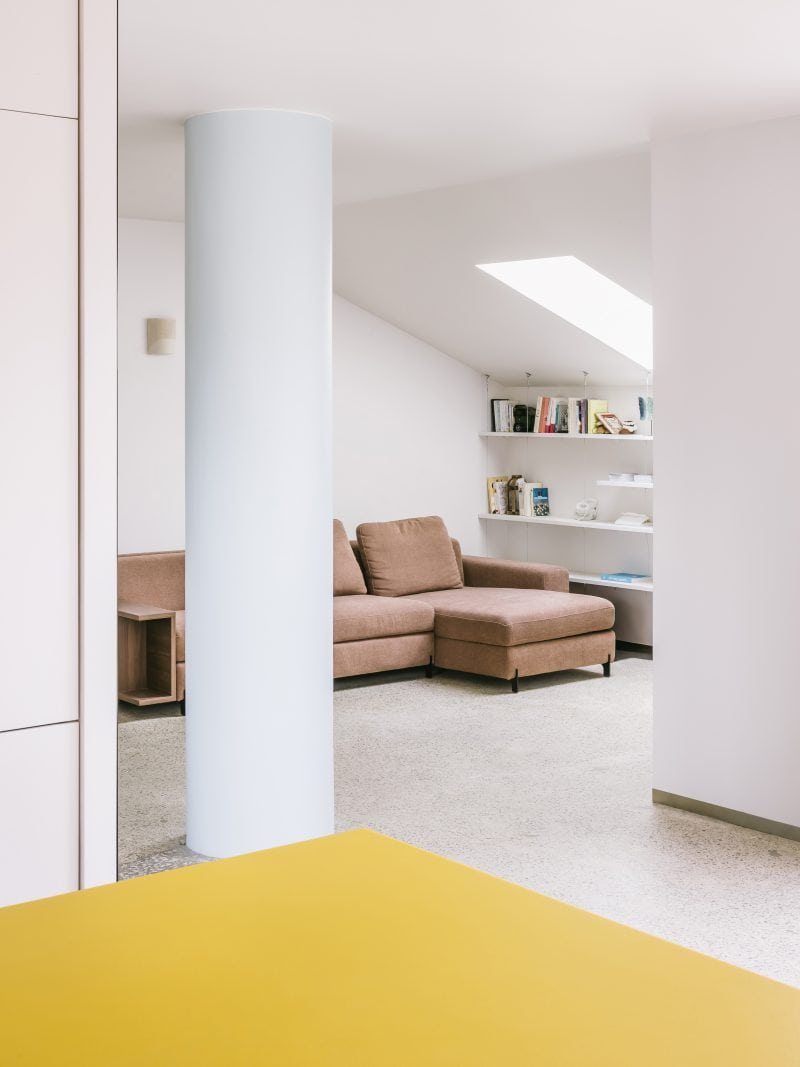
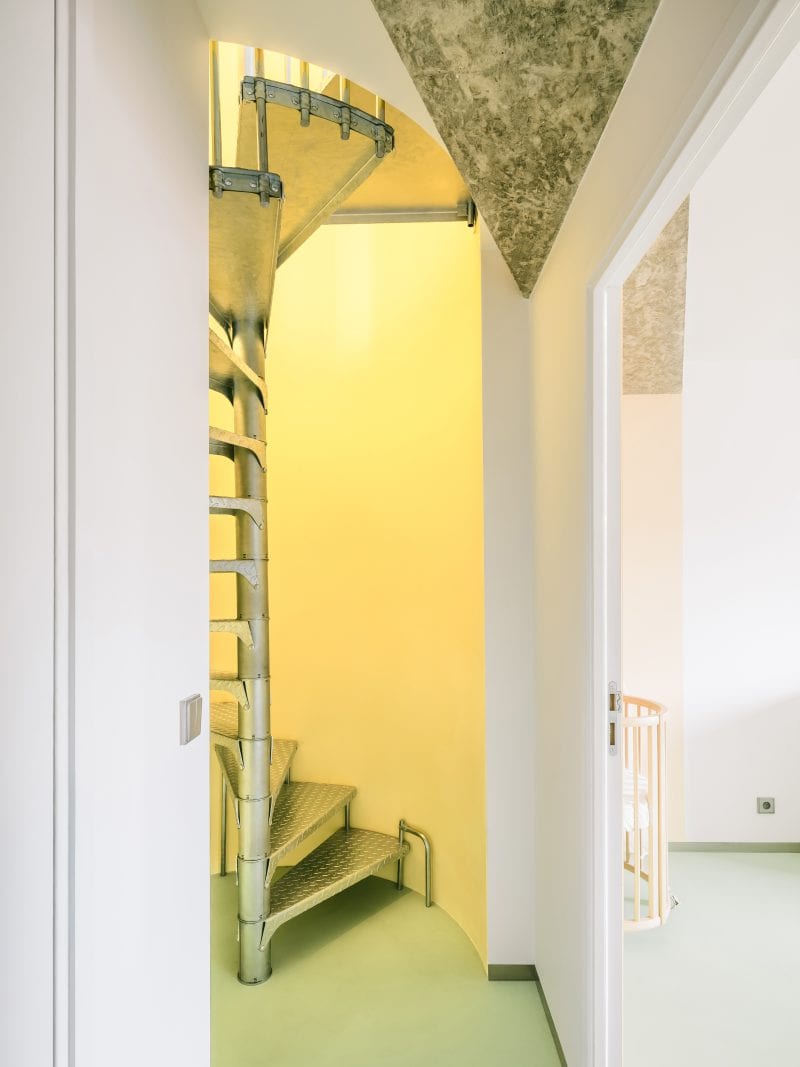
A massive concrete beam, introduced to support the new slab opening, cuts diagonally across the plan to rest on the primary load-bearing walls. Instead of hiding this massive structural element, the design leans into it, leaving a bold triangular opening in the ceiling completely exposed. To honor the building’s evolution, the architects utilized a visual shorthand in the masonry itself: the additions feature a pale, white aggregate concrete, which stands in stark contrast to the dark, weathered tone of the original slab. This deliberate juxtaposition acts as a physical timeline of the construction process, separating old from new at a single glance.
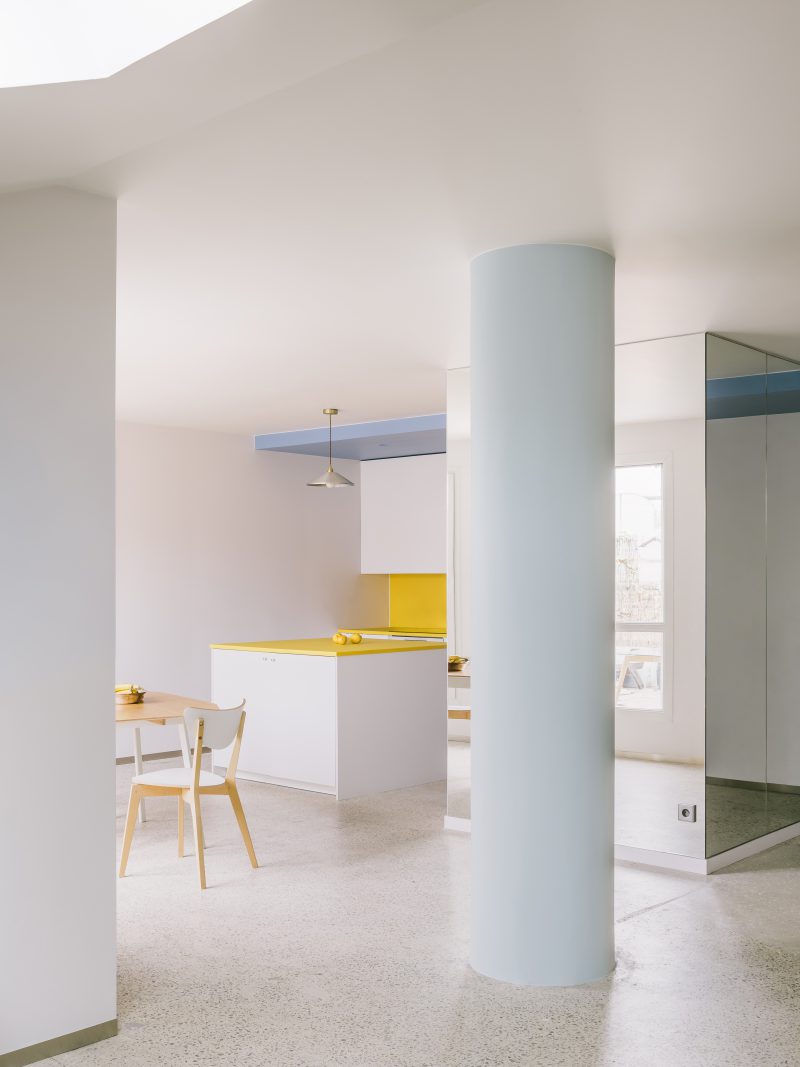
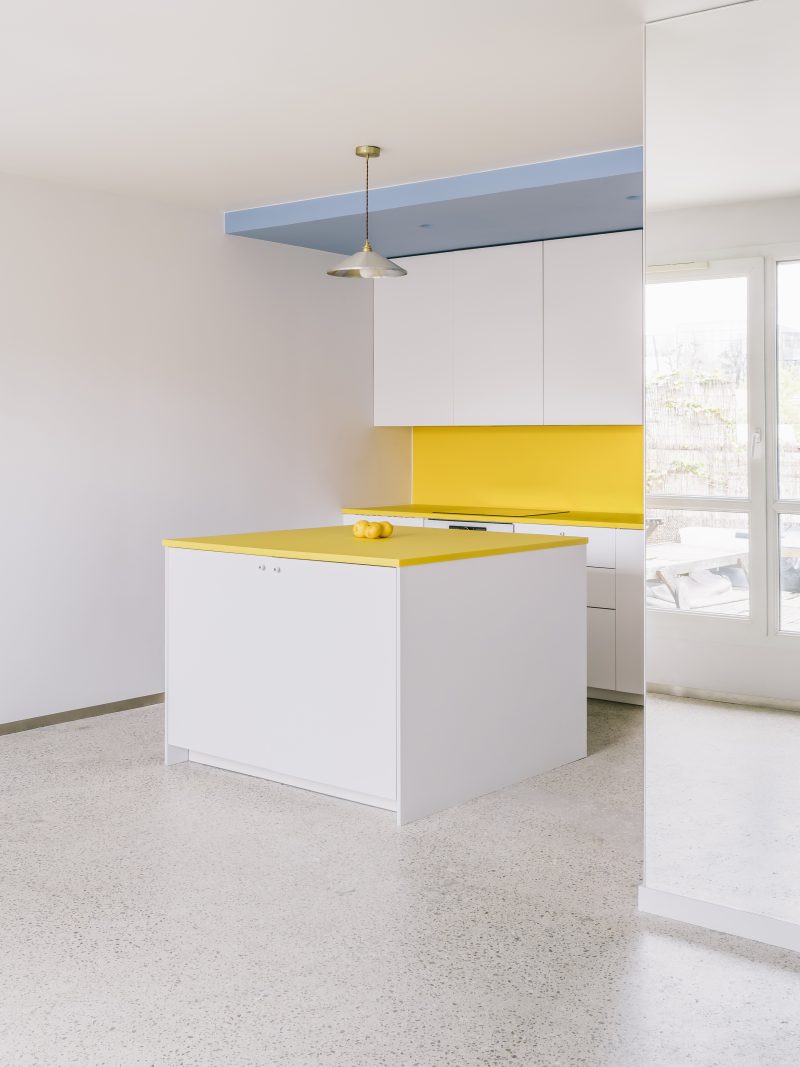
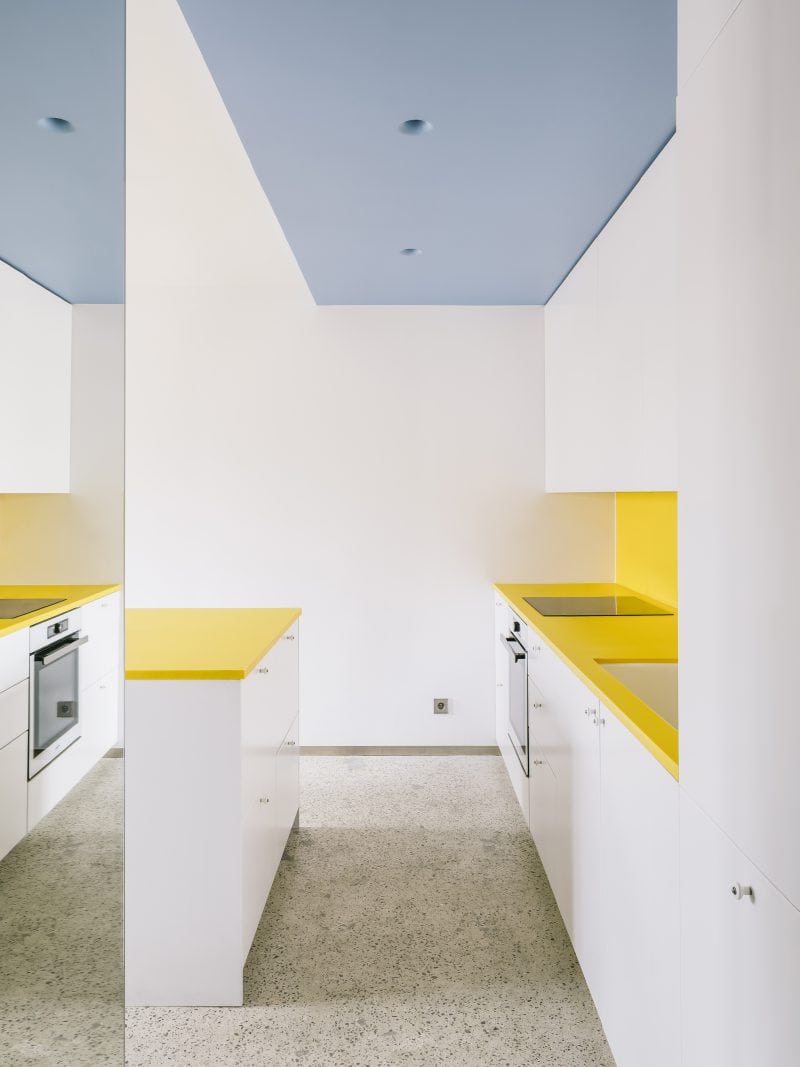
As the raw concrete beam travels down to the lower level, it maintains an uninterrupted presence, piercing directly through the walls of the bedroom, corridor, and bathroom. This continuity ensures that the mechanical logic of the duplex is never obscured, allowing the structural skeletal system to guide the home’s layout. Coexisting with this raw industrial skeleton is a sophisticated color system designed to organize the daily rhythm of the home, define transitions, and map out paths of movement. A vibrant yellow volume envelops the staircase, anchoring the vertical circulation and turning the stairs into the home’s emotional and spatial core, firmly establishing the upper living area as the true point of departure before one descends into the private bedrooms below.
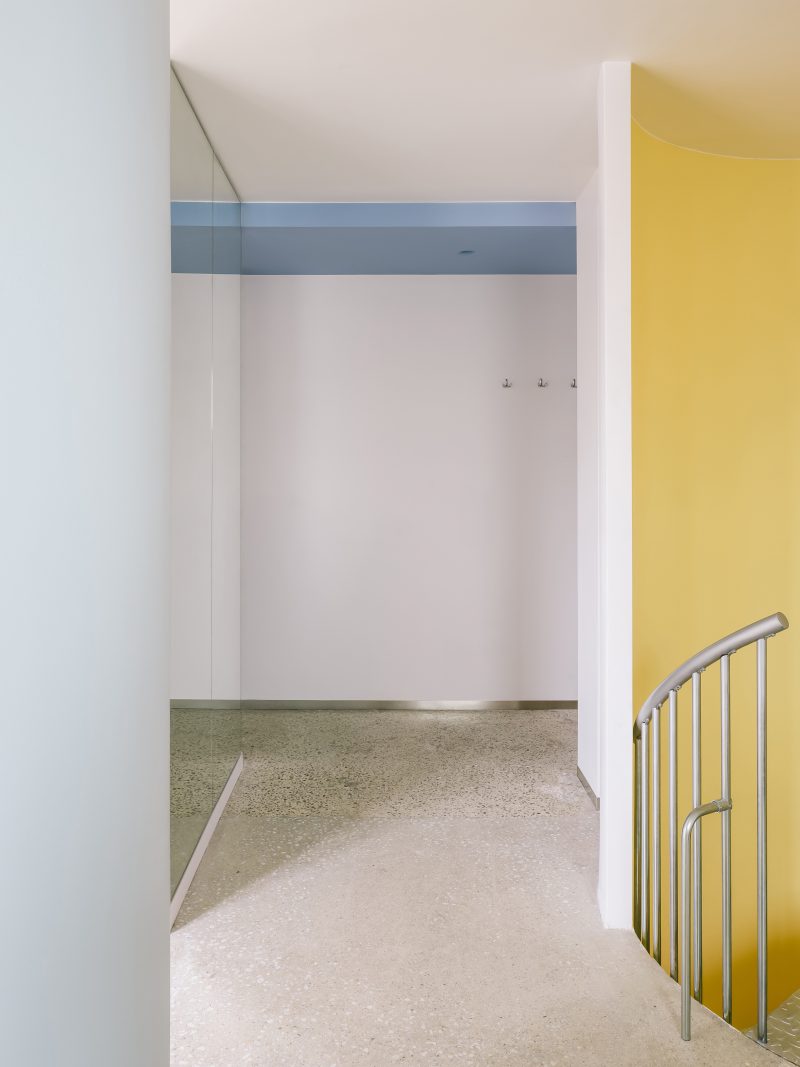
Further into the background of the main floor, a dropped blue ceiling visually groups the utilitarian zones, seamlessly organizing the entryway, kitchen, and bathroom facilities while establishing clear relationships between them. In a playful nod to functional design, the kitchen surfaces are crafted from polyethylene, the exact high-density plastic used for heavy-duty professional cutting boards. The chosen yellow hue borrows from commercial food safety codes, where yellow signifies poultry preparation. By scaling this material up from a humble culinary tool to an architectural element, the design beautifully illustrates its core philosophy: color isn’t merely an afterthought used to describe a room; it is the vital force that actively produces the space itself.