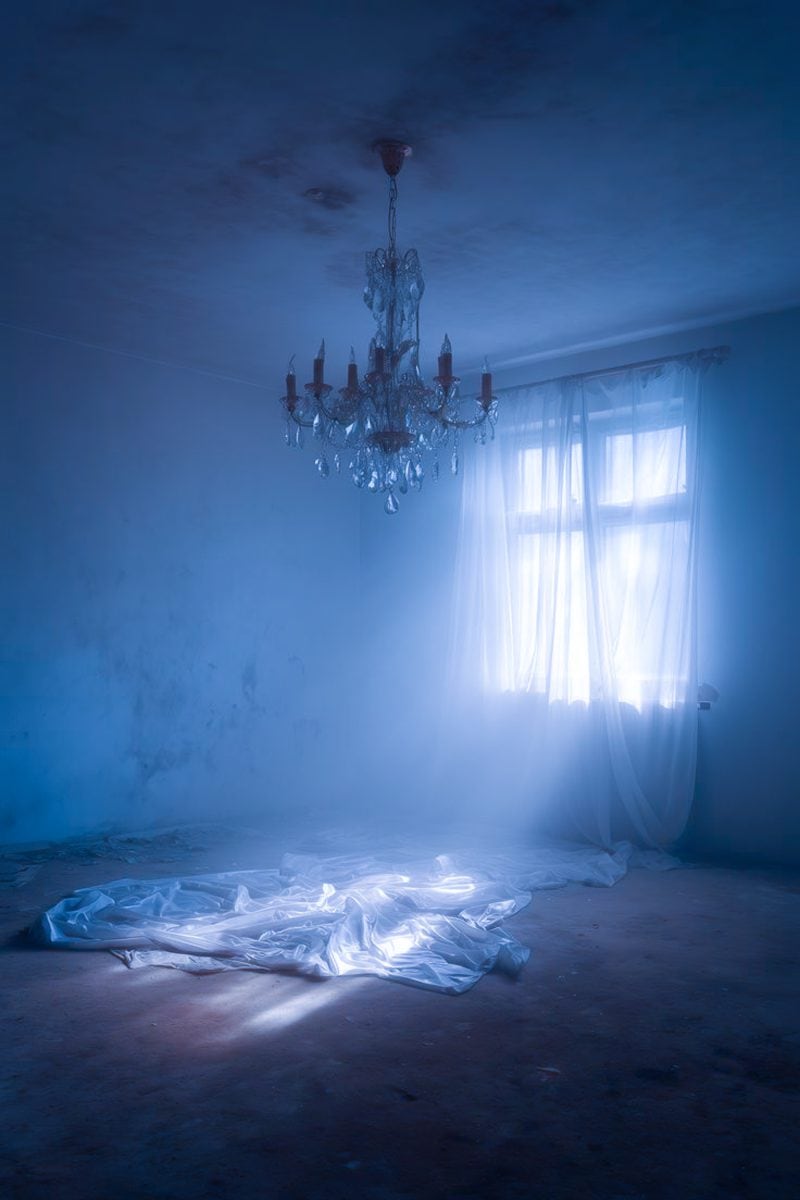
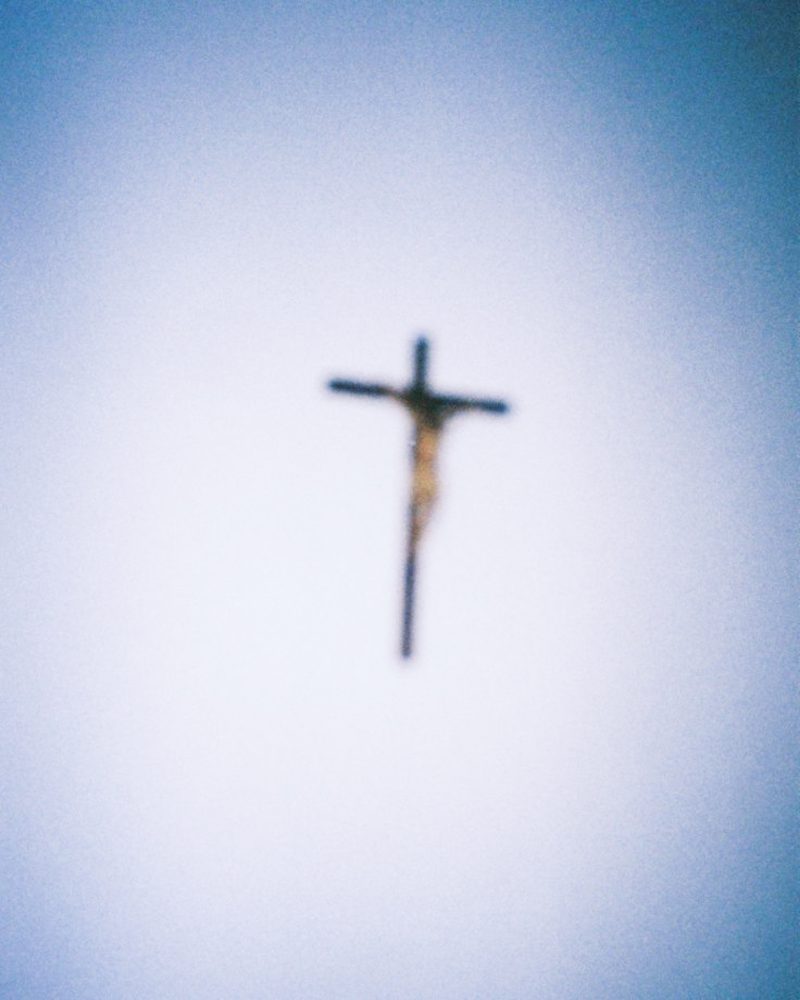
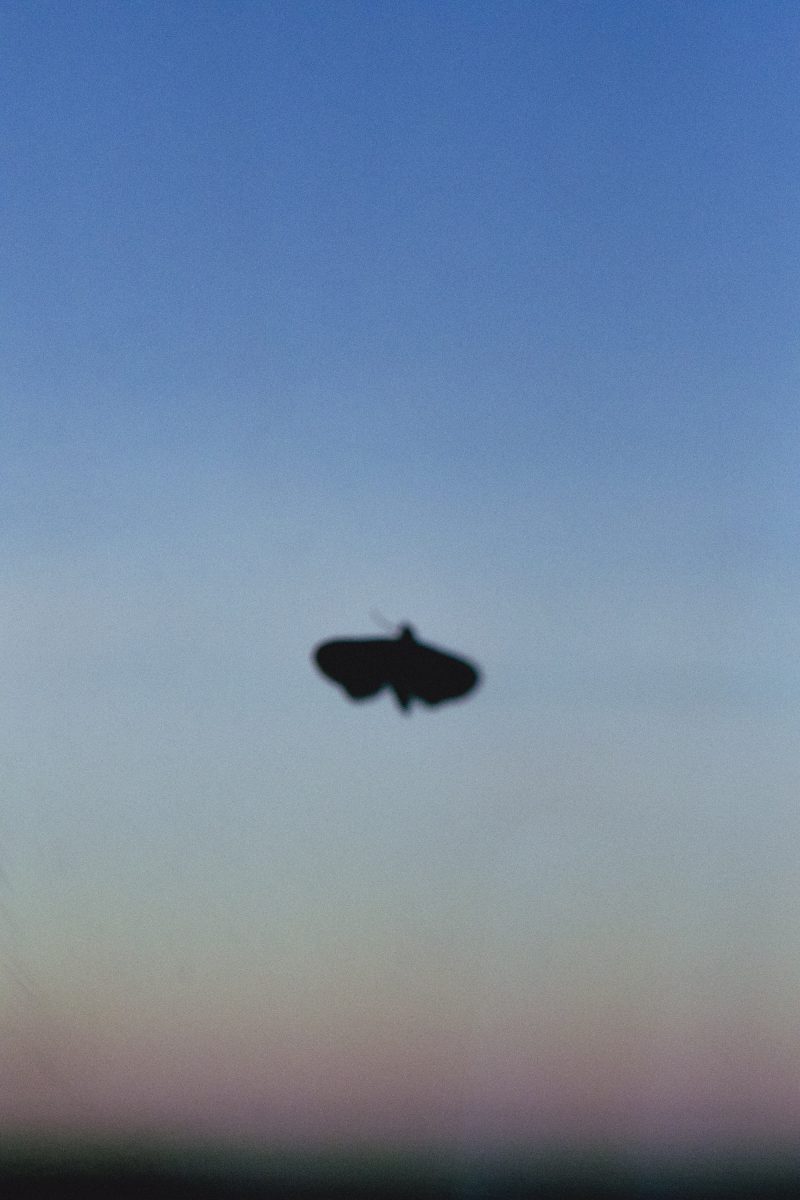
In the Daimonos series, the sacred does not manifest itself explicitly. It is enough for it to leave a trace. An empty room bathed in an almost unreal light, a moth suspended against the sky, an out-of-focus cross: in Dimitris Fodiadis’s photographs, the human presence seems to recede gradually, whilst what remains takes on the weight of an apparition.
The title refers to the daimon of ancient Greek culture, an entity intermediate between humans and gods, neither strictly divine nor earthly. It is precisely this ambiguous condition that defines the visual vocabulary of the series. There is no clear distinction between the spiritual and the material: a landscape can be transformed into a place of worship, an animal can take on the power of a symbol, and an everyday object can become a relic.
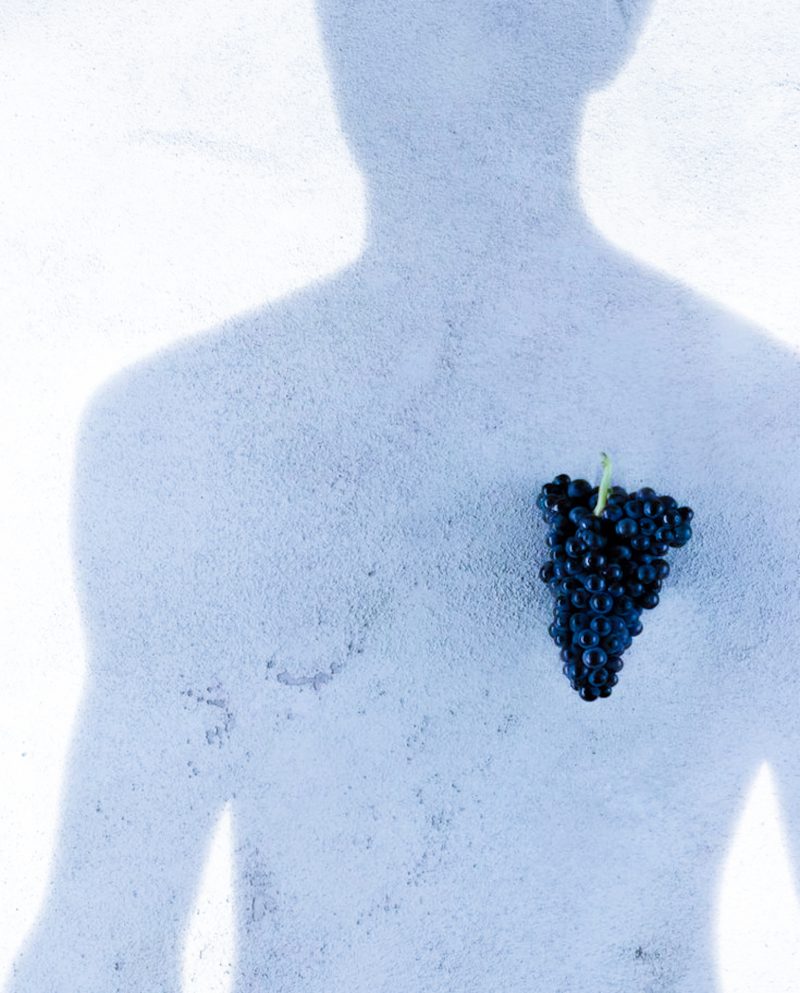
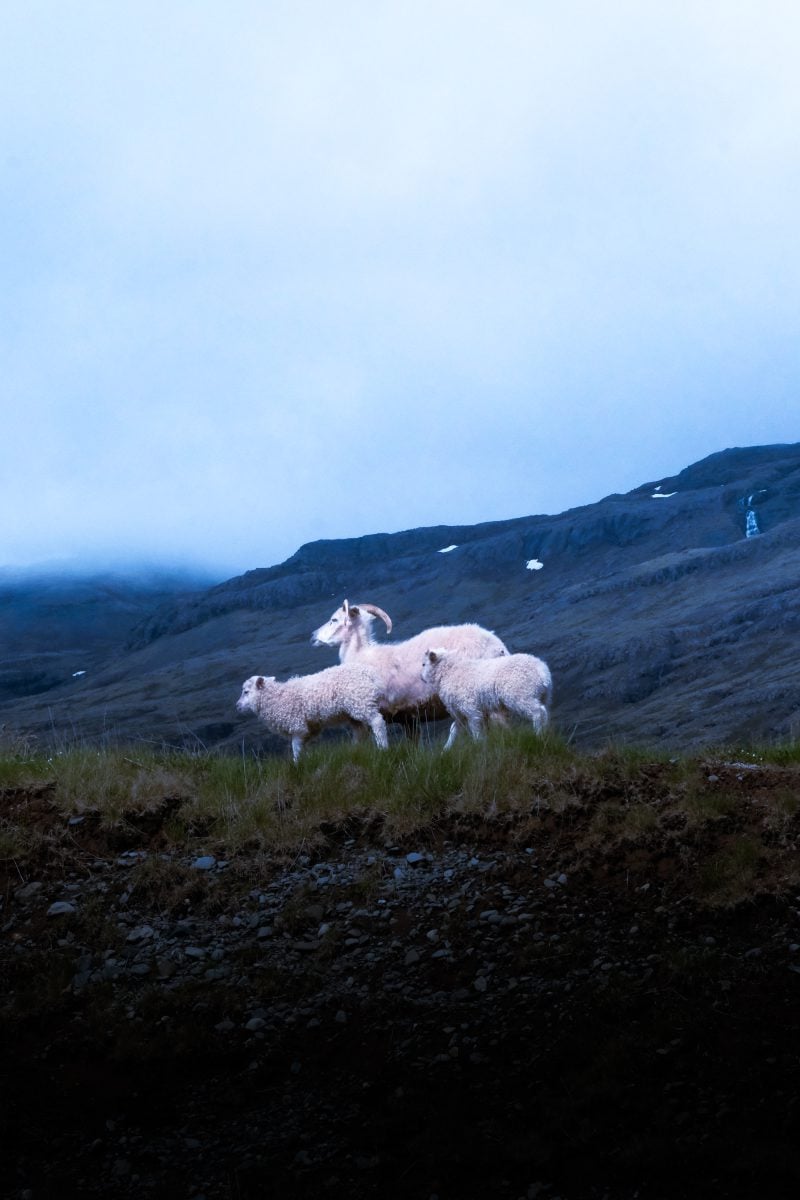
The image of the sheep, motionless on the mountainside, seems to belong both to a pastoral landscape and to Christian iconography. Shortly afterwards, a bunch of grapes appears on the chest of a human silhouette. This reference can be interpreted through the lens of wine and the Eucharistic tradition, but also through the figure of Dionysus, the god of intoxication, metamorphosis and the blurring of individual boundaries. Paganism and Christianity are not set in opposition: they overlap, suggesting how the images through which we represent the transcendent continue to influence one another.
Even the body, when it appears, is never actually shown. It is a silhouette, a surface onto which to project meanings. Elsewhere, it disappears entirely. What remains is a lit chandelier in a bare room, a piece of fabric abandoned on the floor, a cross reduced to a patch of light. There is something of the Surrealist logic in this transformation of the ordinary through seemingly simple juxtapositions: not so much a desire to construct a fantasy world, as a desire to render the familiar alien.
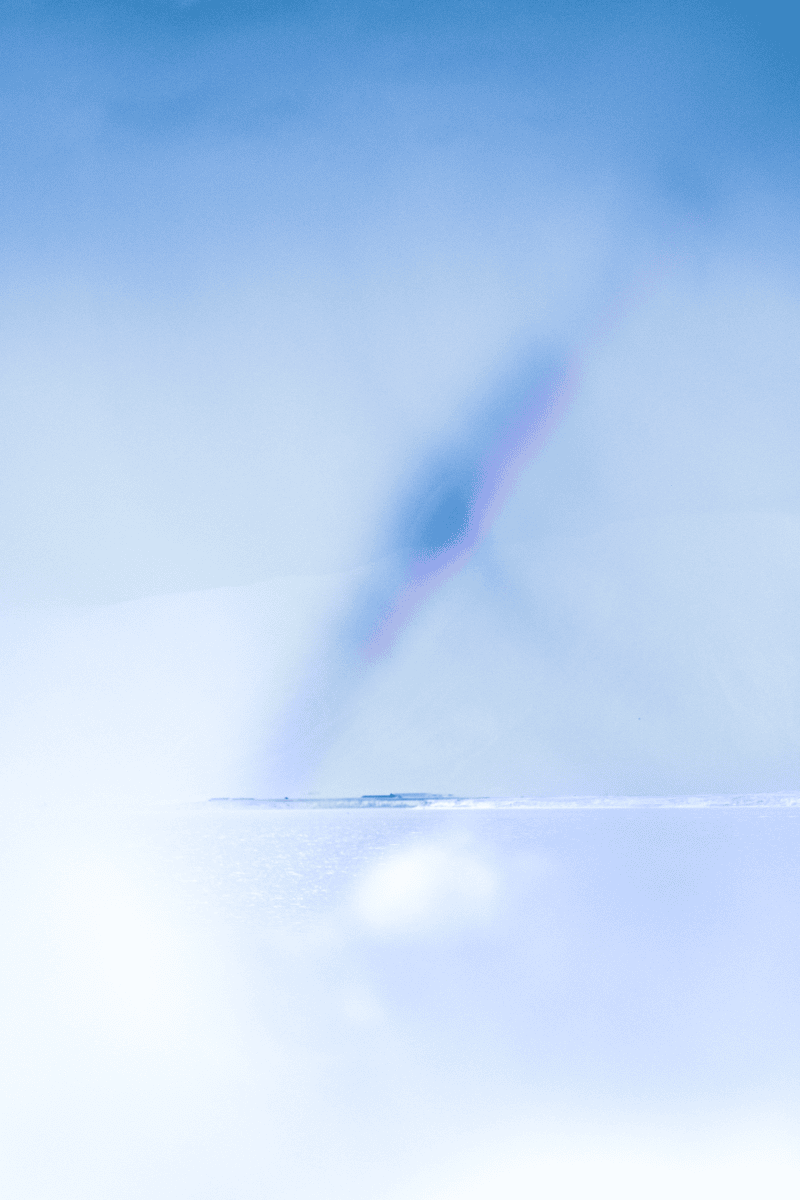
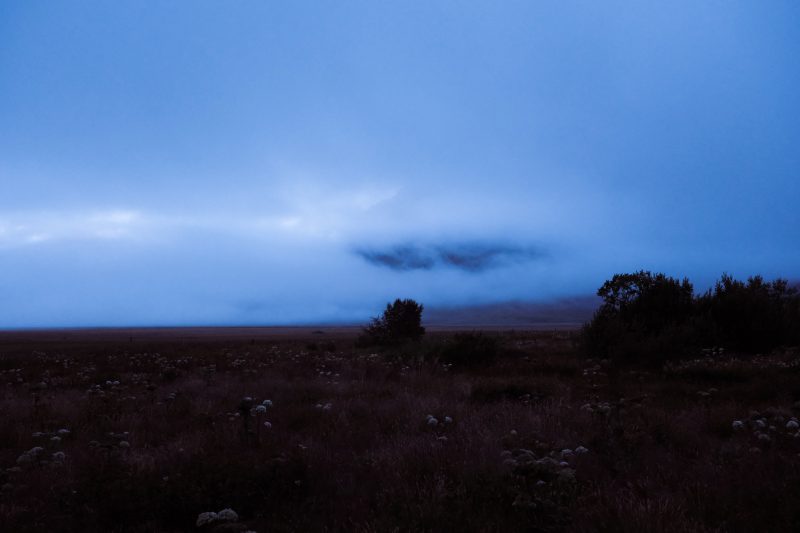
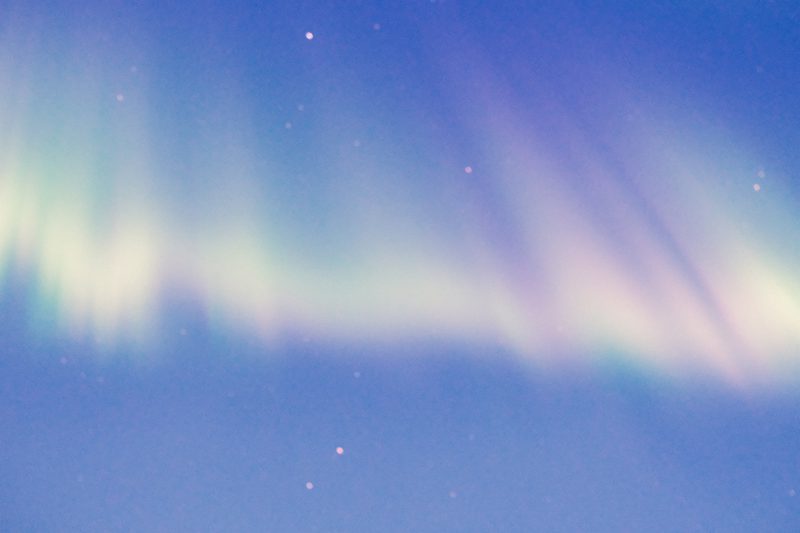
The blue that dominates Daimonos helps to keep every image in a state of ambiguity, as if it had been photographed in the moment just before daybreak or just after nightfall. Even the landscape loses its definition: low-hanging clouds obscure the horizon, whilst an iridescent shape crosses the sky like an optical illusion or a vision.
It is here that the series finds its most intriguing tension. It does not seek to photograph the divine, but rather what happens when one begins to seek it. And suddenly anything — an animal, a shadow, an empty room — can appear as a sign.