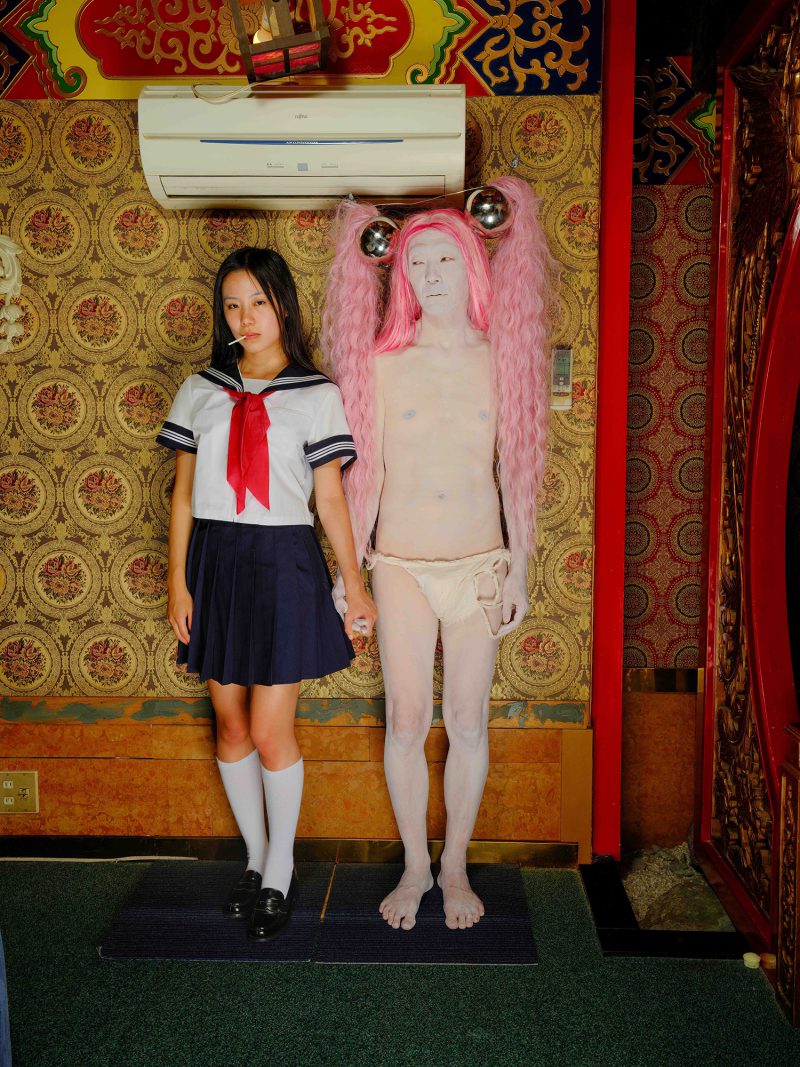
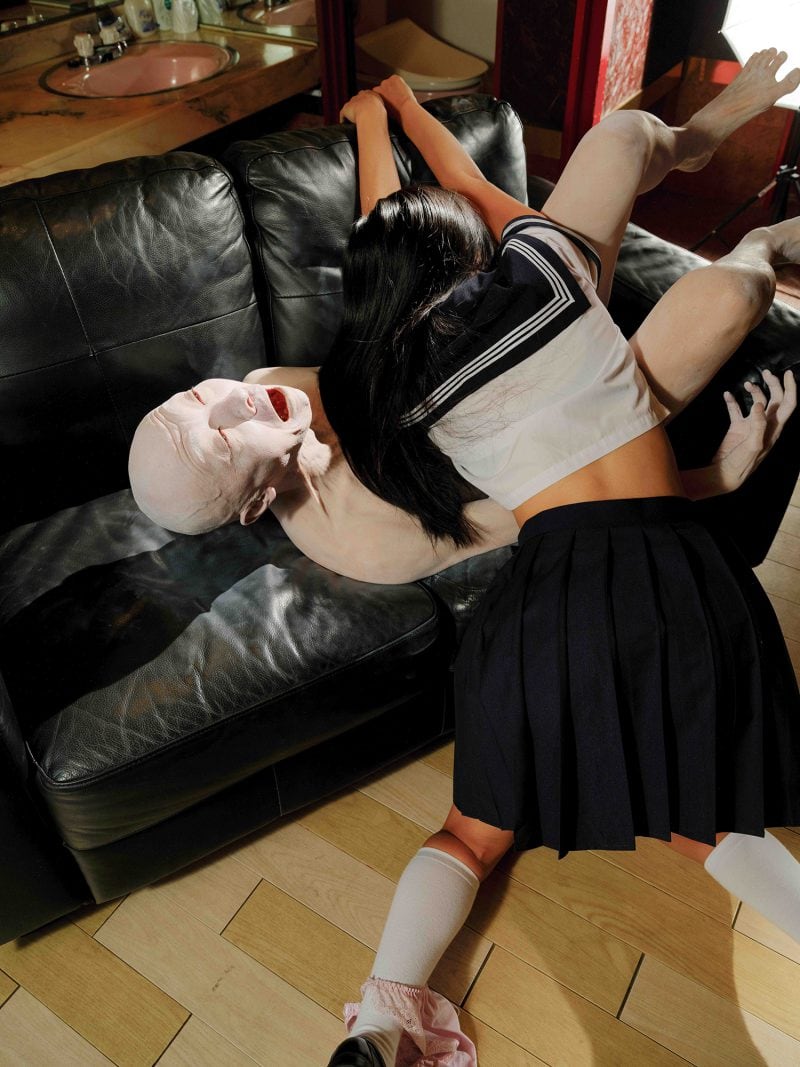
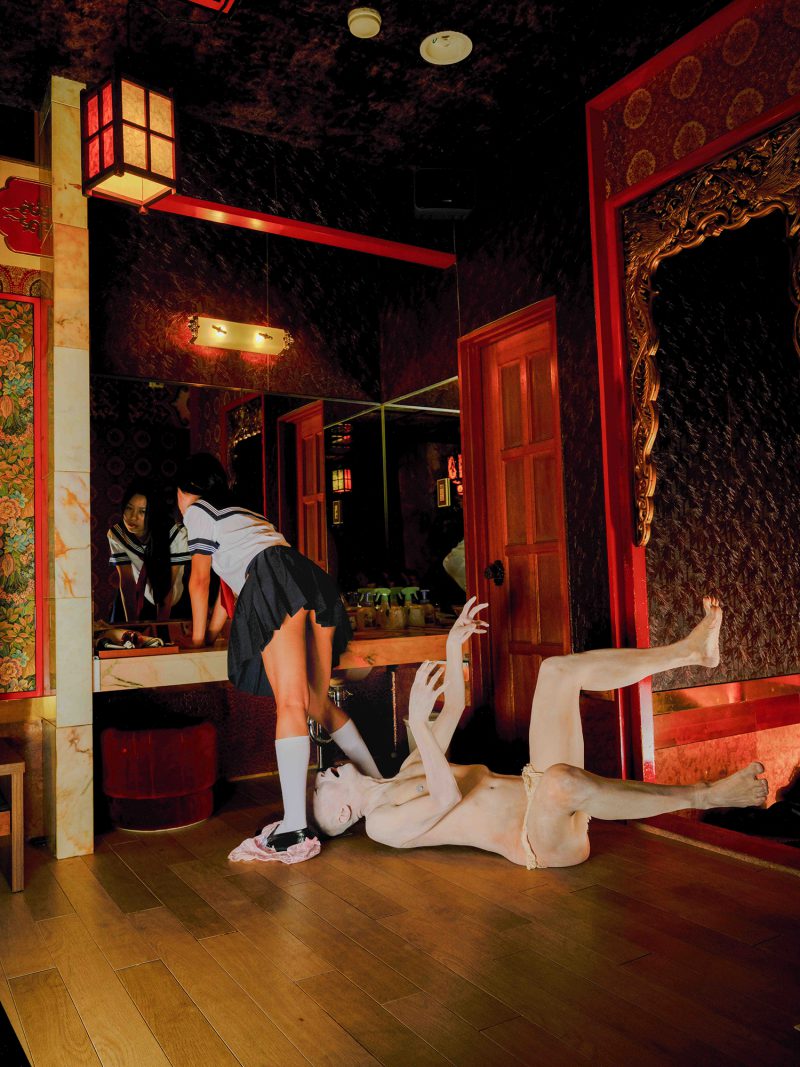
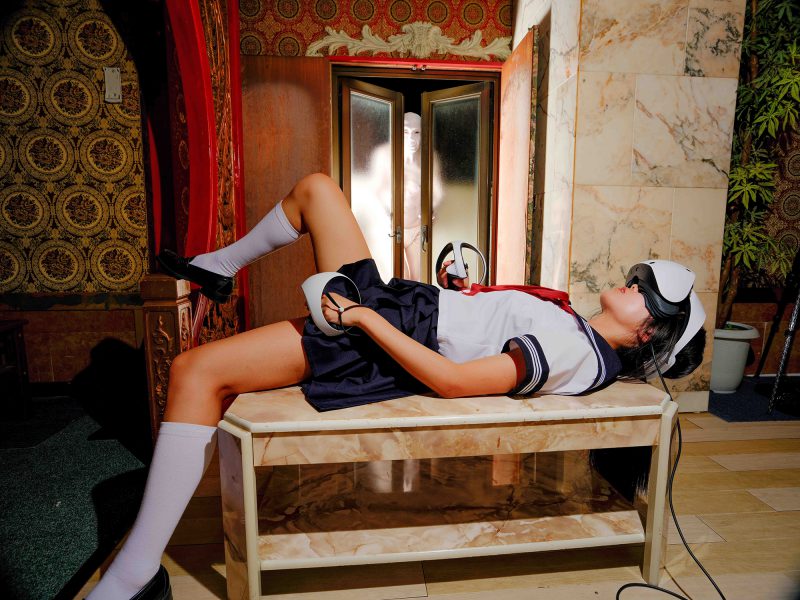
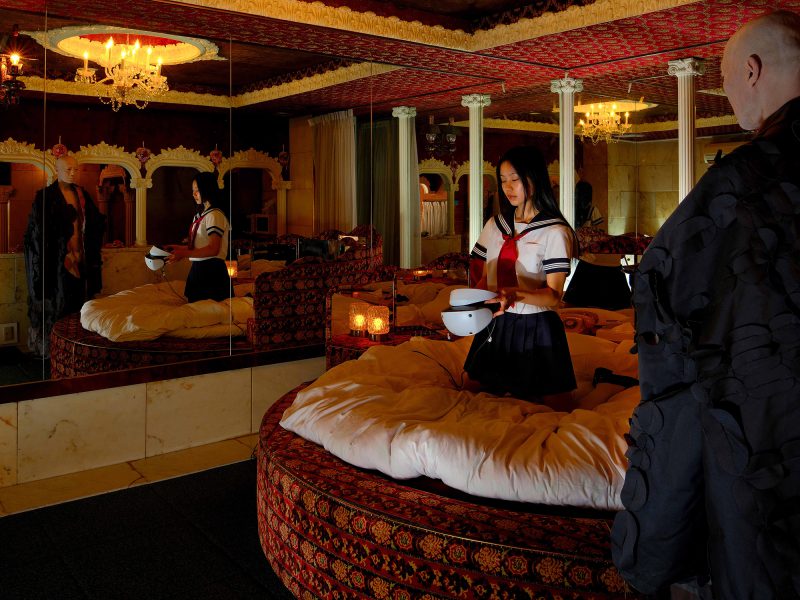
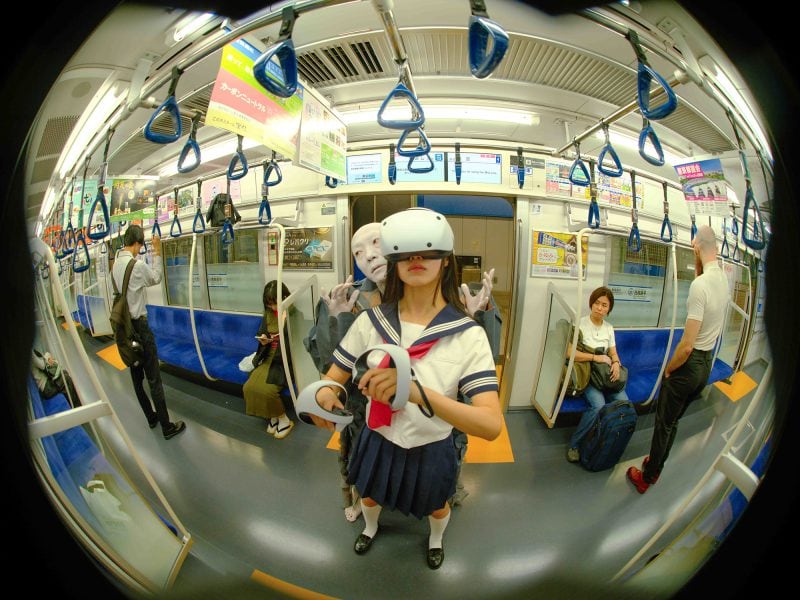
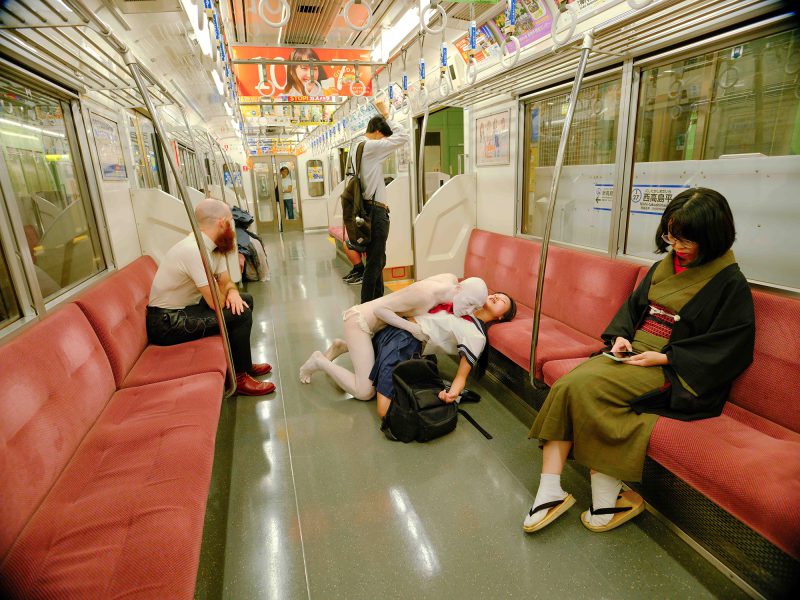
Neo Kamaitachi is a myth that renews itself, moving gracefully through the present. The editorial takes inspiration from Hosoe’s work but then deviates, choosing Tokyo as its new hunting ground. Folklore abandons the rice fields to infiltrate subway carriages, the corridors of a Shōwa love hotel, and claustrophobic interiors where dreams and control intertwine.
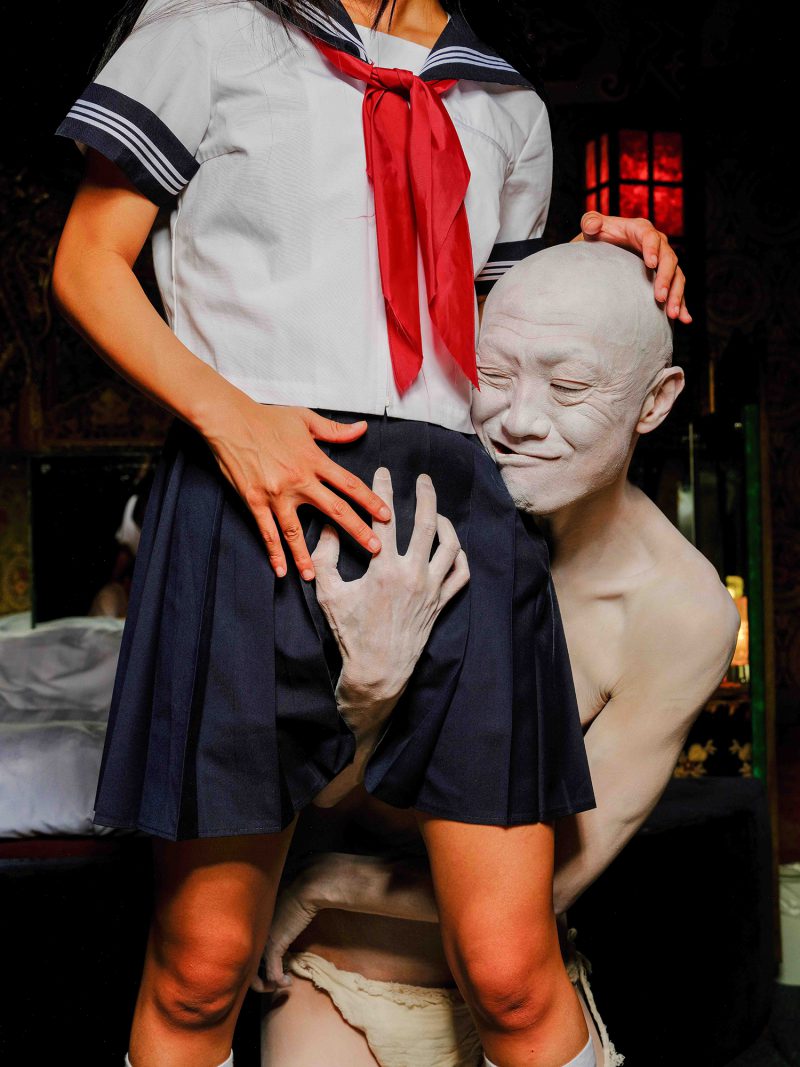
The images generate tension through contrast. On the one hand, the radical physicality of Butoh: a white, emaciated body, like an open wound in the urban landscape. On the other, the female figure in school uniform, a culturally charged symbol that is never passive here. Their relationship is never explicitly violent or reassuring, it is intimate and provocative.
Of particular impact is the use of VR headsets, which do not appear as futuristic gadgets but block the gaze, interrupting contact with reality and transforming the subjects into isolated presences. On trains or within the walls of rooms, the devices signal an escape from the weight of the present.
From an editorial point of view, Neo Kamaitachi builds a constant dynamic between exposure and defence. The bodies are vulnerable but never weak. The Kamaitachi is both a threat and a shield, its monstrosity becoming a form of extreme sensitivity. In the Japanese context, this ambivalence takes on further depth. The woman, despite her schoolgirl uniform, emerges as the most lucid and dominant presence in the series.
This is where the editorial transcends aesthetics, transforming itself into a commentary on power, gender, and emotional survival in a society that demands control. Neo Kamaitachi cuts like the wind of myth, leaving subtle but persistent marks. And it is precisely in these traces that it reveals its power.