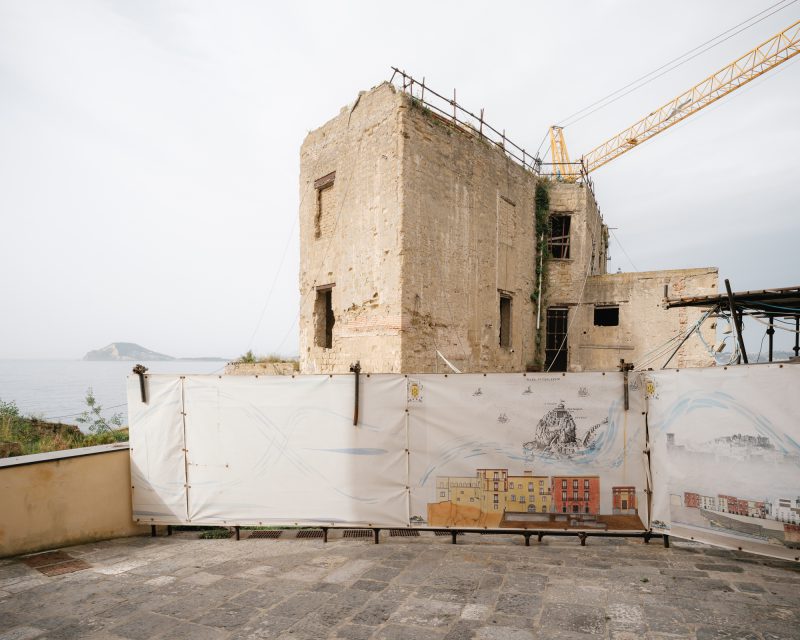
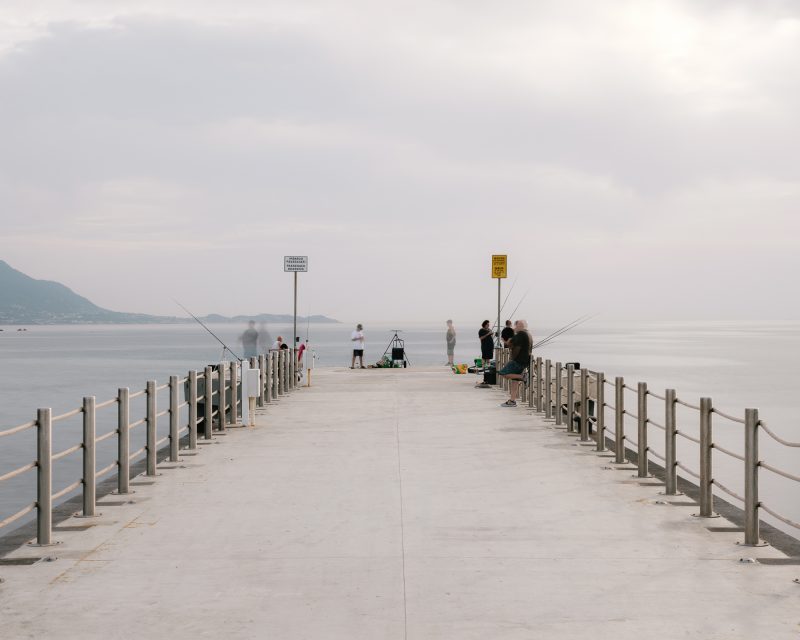
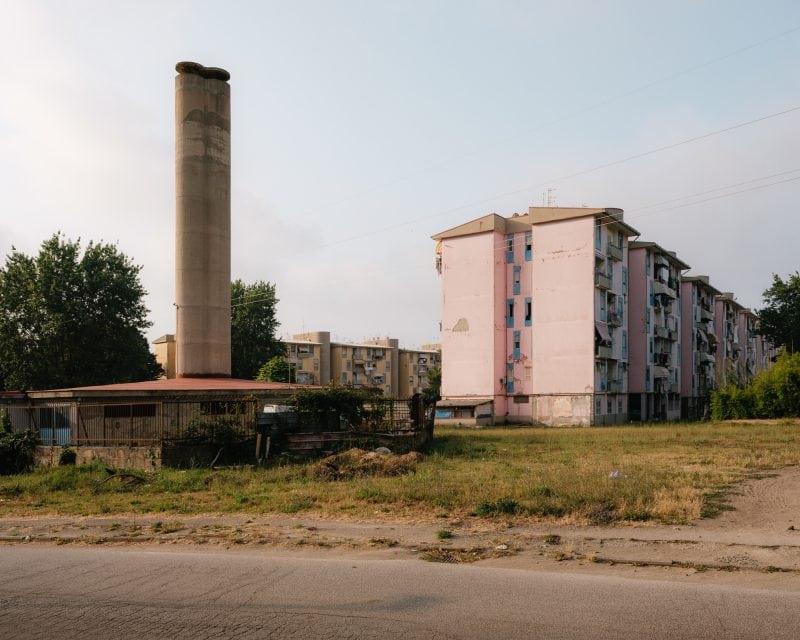
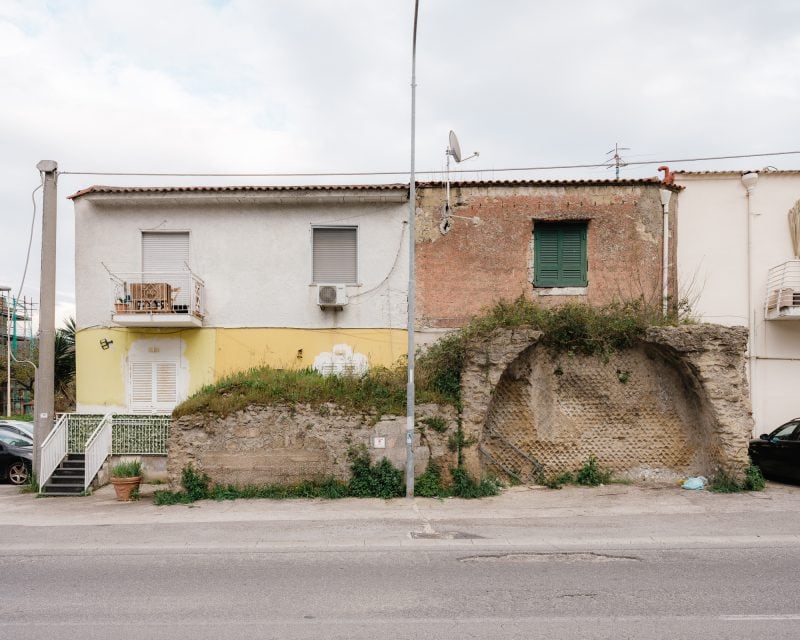
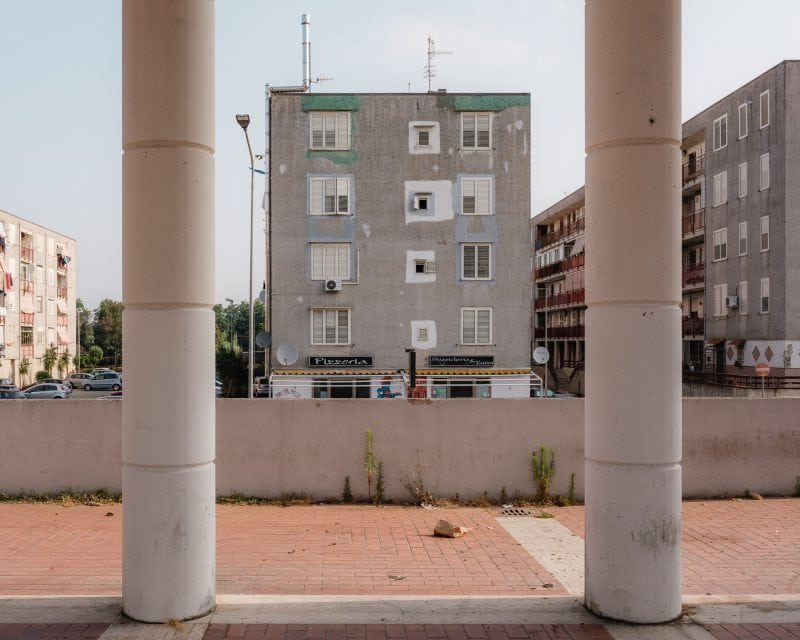
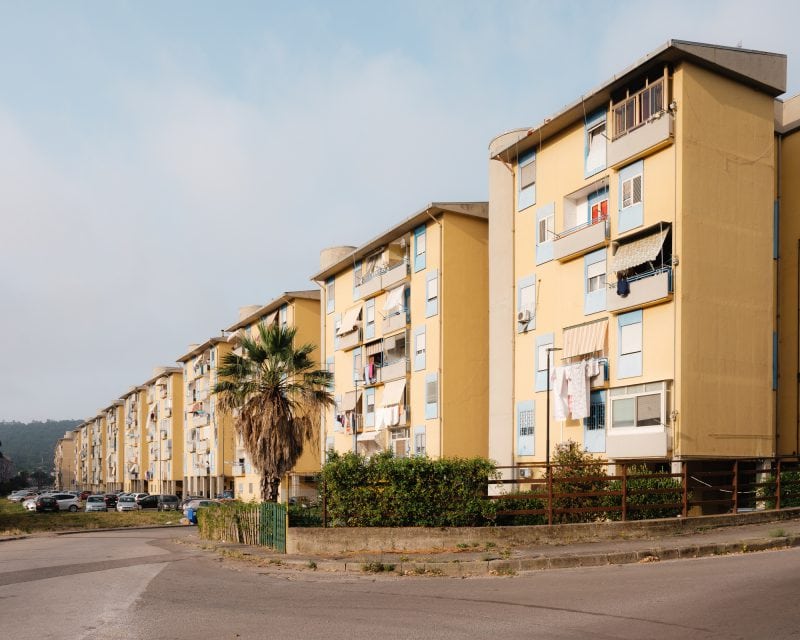
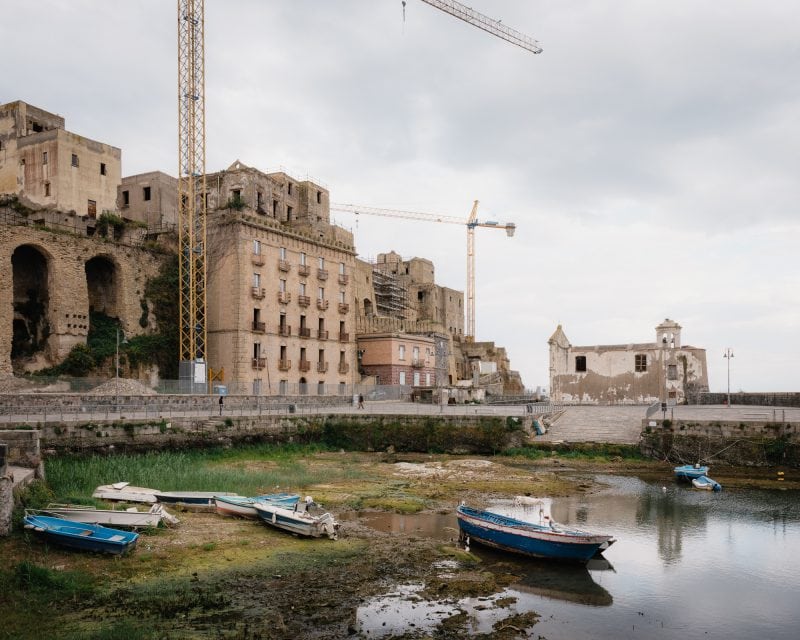
In the series ‘Topografie Flegree,’ Andrea Martino constructs a geographical collection of the Campi Flegrei, avoiding mythical or postcard representations. His photographs show a territory that emerges in the edges and pauses. The editorial approach of the project is evident in the choice to observe Bacoli, Pozzuoli, and Monte di Procida as surfaces often considered invisible. Through ochre-coloured tenement buildings along anonymous streets, with clothes hanging out to dry as signs of presence, Martino conveys an idea of inhabiting places with presence. A dock extends into a milky sea with fishermen standing still, almost suspended in time. The image narrates waiting as a relationship with the landscape. The sea, an archetypal element of the South, is a neutral backdrop that absorbs the gaze. The series takes on a critical value by rejecting the aesthetics of the sublime in favour of the ordinary. Particularly significant are the photographs in which buildings appear to emerge directly from the earth, such as houses on tuff outcrops and walls that incorporate rock. History is reflected in the stratification, becoming a visible physical fact. Unfinished construction sites and cranes on ancient or industrial buildings reflect an unstable present, an overlapping modernity often without resolution. Martino uses strategic positioning, in which each image is autonomous but in dialogue with the others.
‘Topografie Flegree’ questions the place, inviting us to consider the concepts of centre and periphery related to identity, suggesting that the truth of the landscape is revealed in the intermediate areas.