London-based artist Millie Chen does not limit herself to the classic bounds of one medium. Working with found objects, photography, installation and performance, Chen’s work metabolizes cross cultural pain. Like the dadaists and surrealists of the ready-made before her, the artist uses familiar objects of our daily lives – like doors, keys and chairs – to invite us to reimagine our relationship to the ordinary, revealing the charged notions that are only visible to us if we scratch the surface of our comprehension. Her commitment to examining the personal and yet universal pressures of contemporary society presses us to consider place and meaning in a world that presents challenges to both.
Chen is an early-career artist who holds a BA from Nanjing Normal University and graduated with an MA in Communication and Media Studies from King’s College London. As a Chinese immigrant living and working in London and China, Chen’s work is entwined with questions of identity, memory, and cultural translation. Her piece Misplaced Objects, Diasporic Body unites three installations which transcend language to provide the framework for heartfelt examinations of the reality of immigration; a state which requires constant deconstruction and reconstruction of our person and our relationships as we struggle between the differences that make us who we are, and the desire to find community in a new culture.
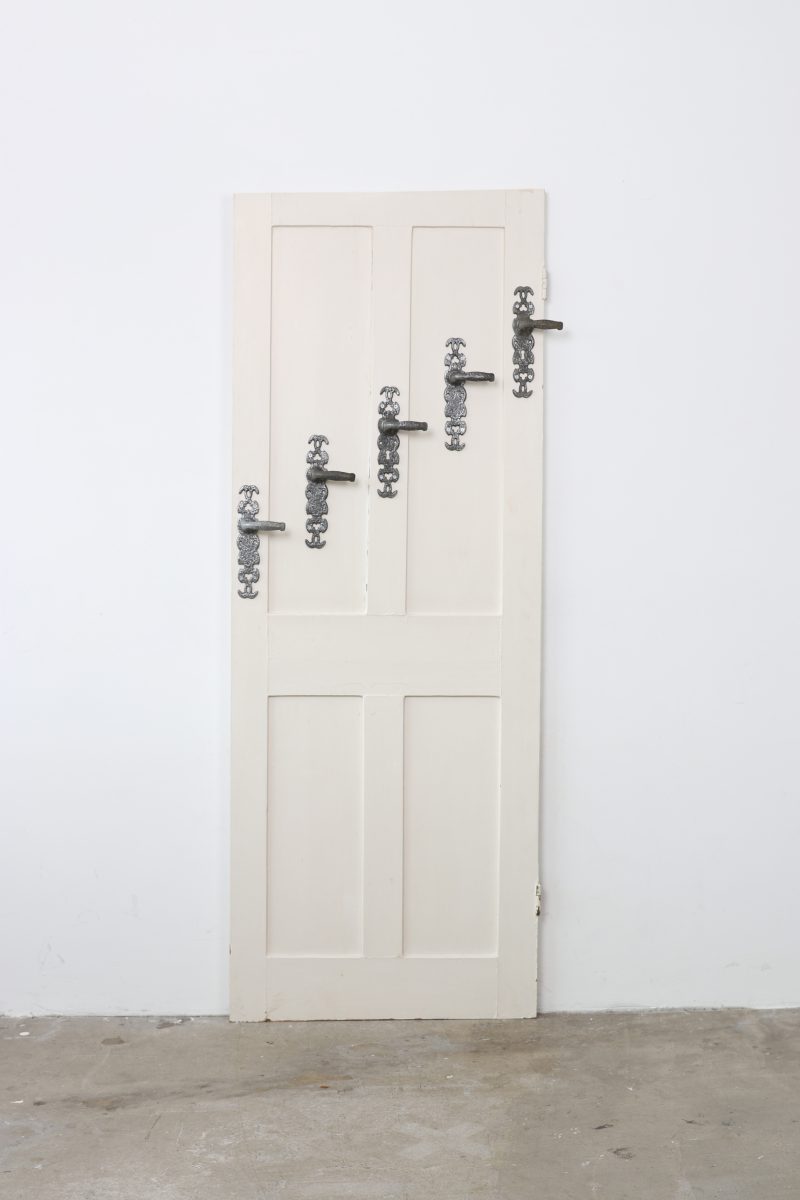
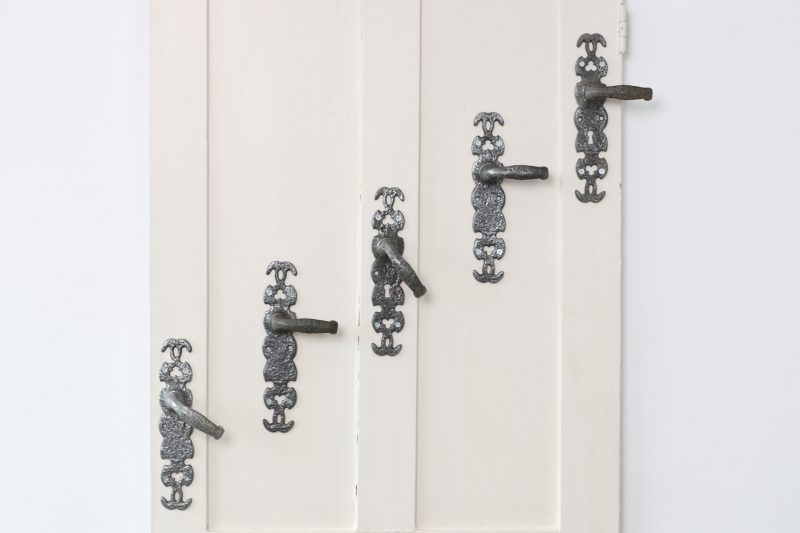
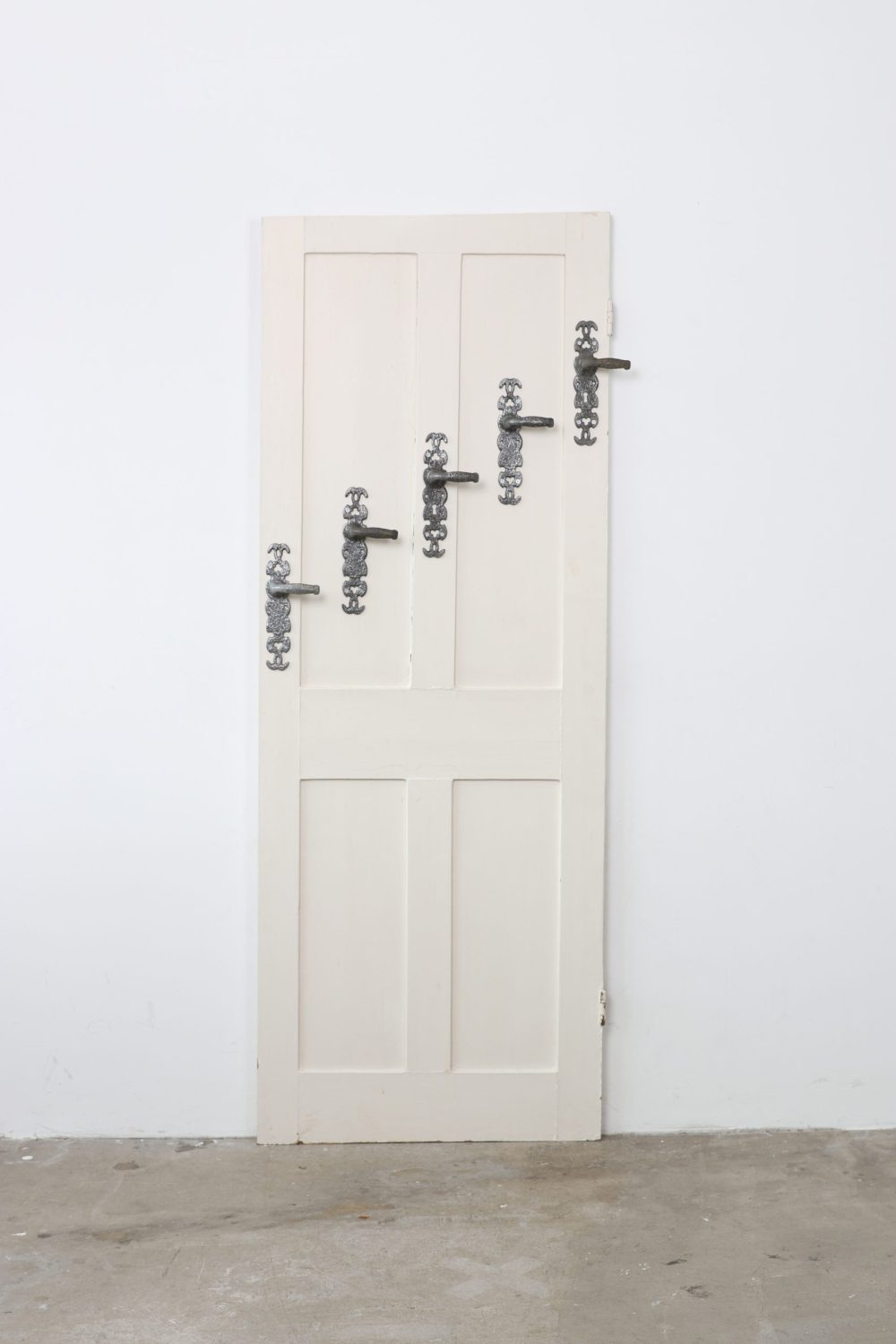
The work “I Tried But There’s No Door I” (2025) presents a white wooden door with five door handles. It is a door to nowhere, and yet the five handles seem to invite the promise of several possibilities for entry or exit. This potential cannot be realized, however, as the impossibility of traversing it reveals without mercy our repeated and often futile attempts at self actualisation. No matter how many handles we try, we are met with a purgatory; we are bound to our present struggle for advance or consolidation in perpetuity.
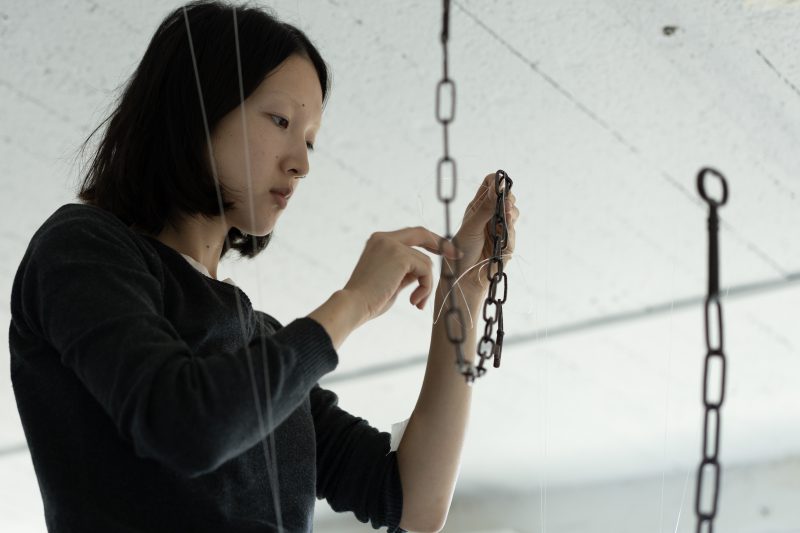
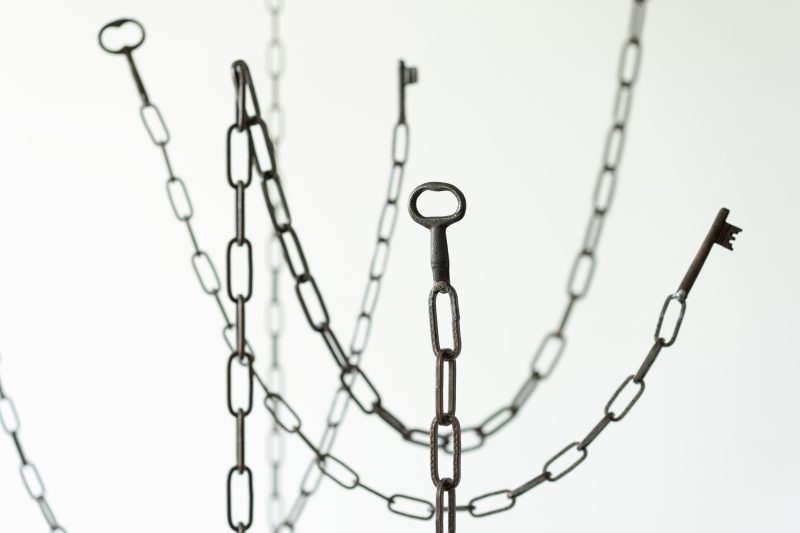
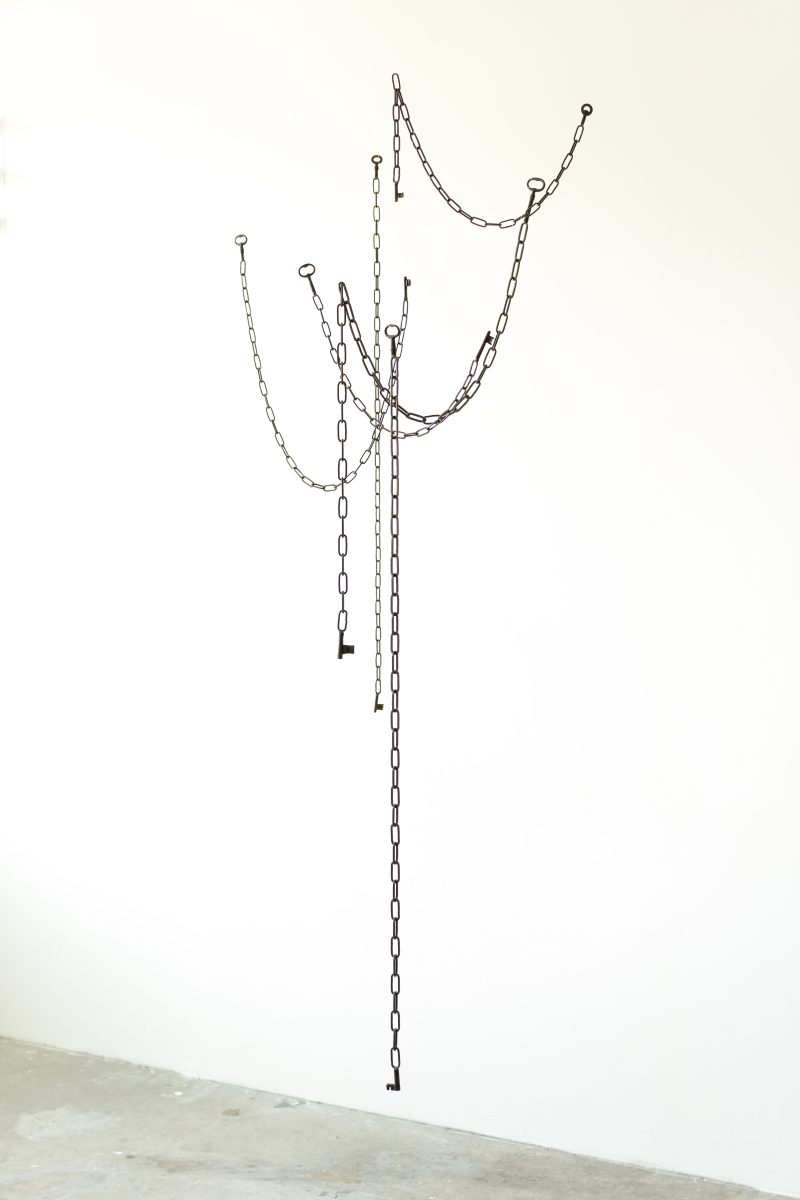
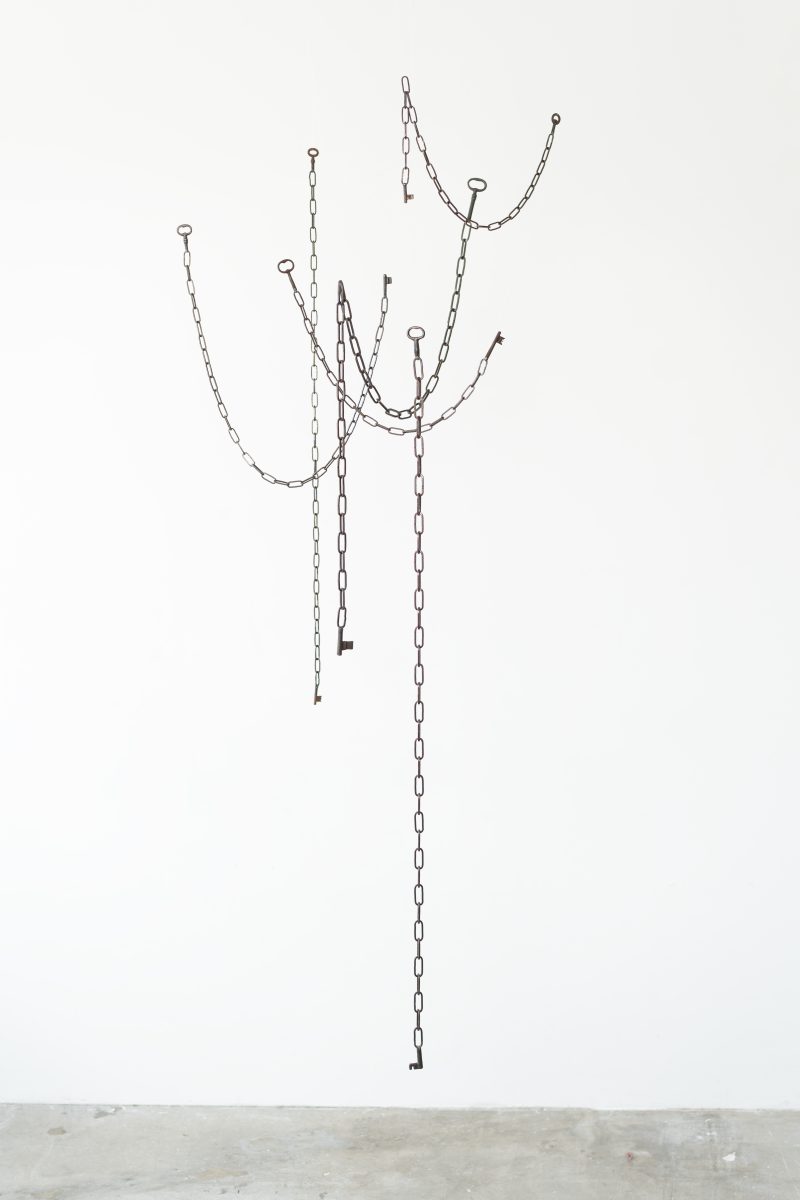
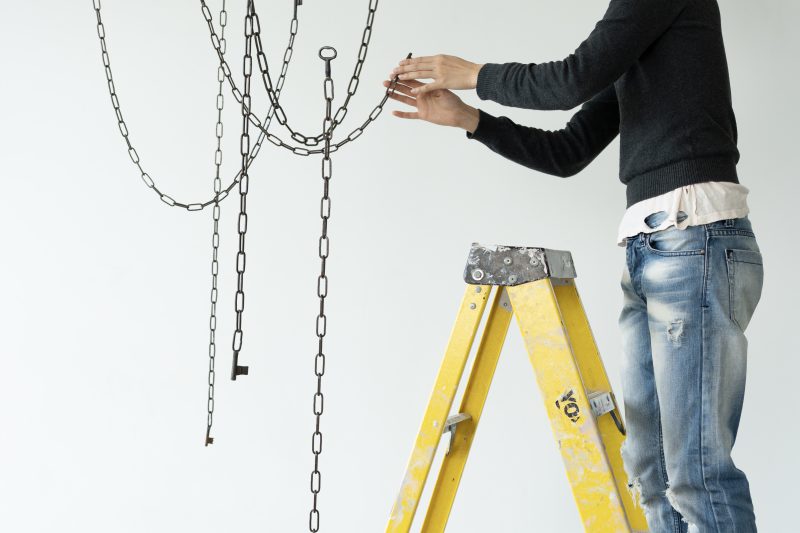
I Tried But There’s No Door II (2025) would seem to provide some kind of answer for our inertia, as a series of keys are suspended in the air, hanging off long chains that overlap and loop each other. Where the key would usually symbolise what is required to release ourselves from our trapped state, Chen’s work carries a more weighted reality. The chains suggest restriction. There is no guarantee that the keys unlock anything at all; rather, they remind us of the inherent contradictions that lie behind many of our perceived acts towards personal liberation.
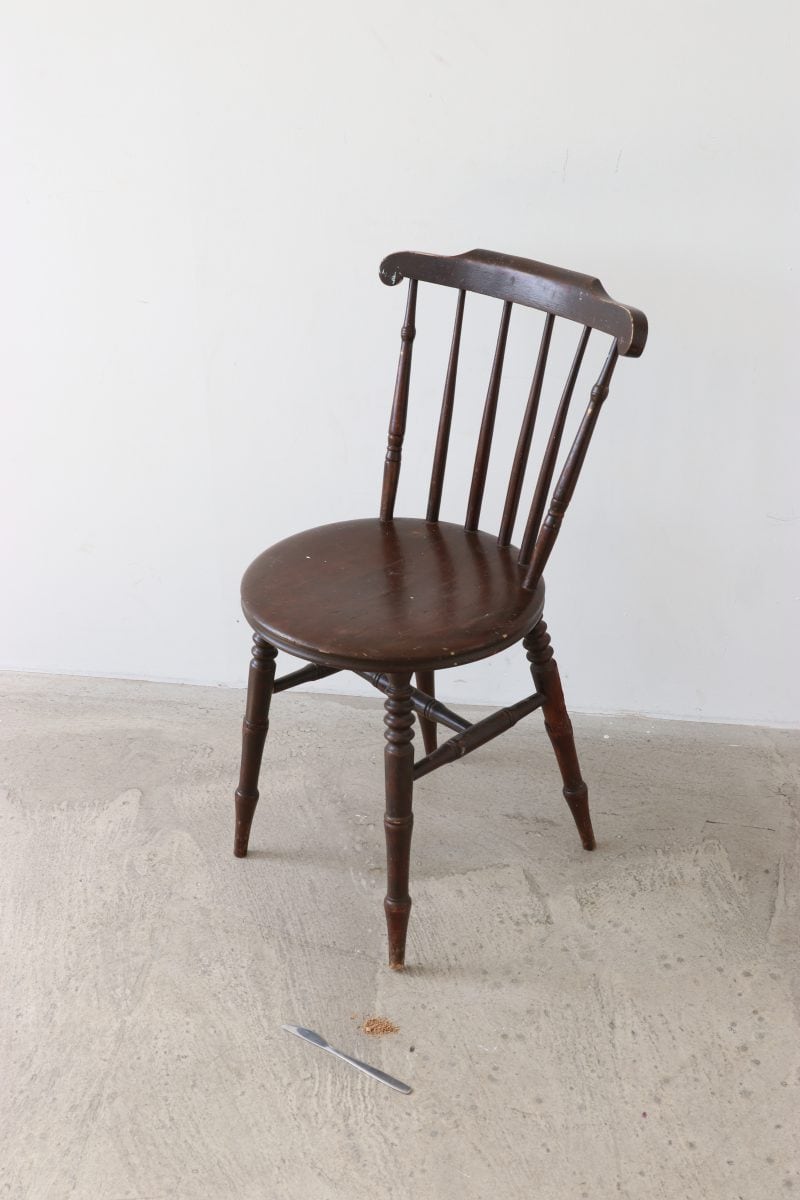
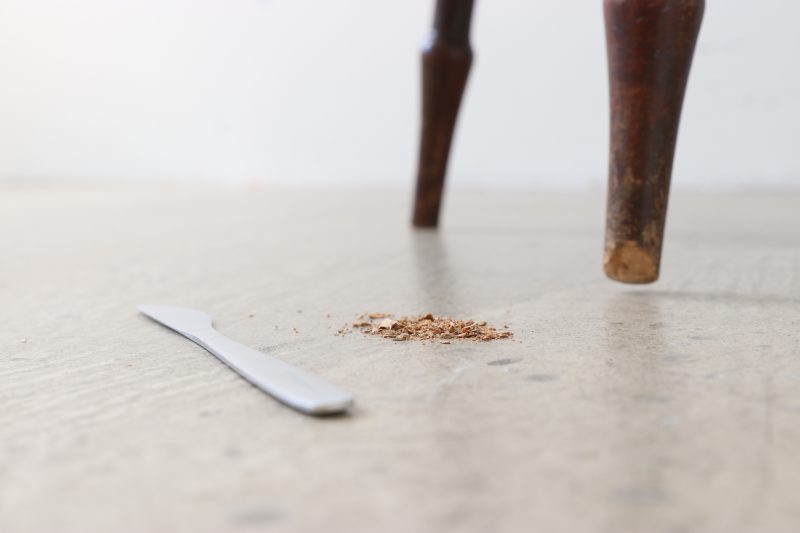
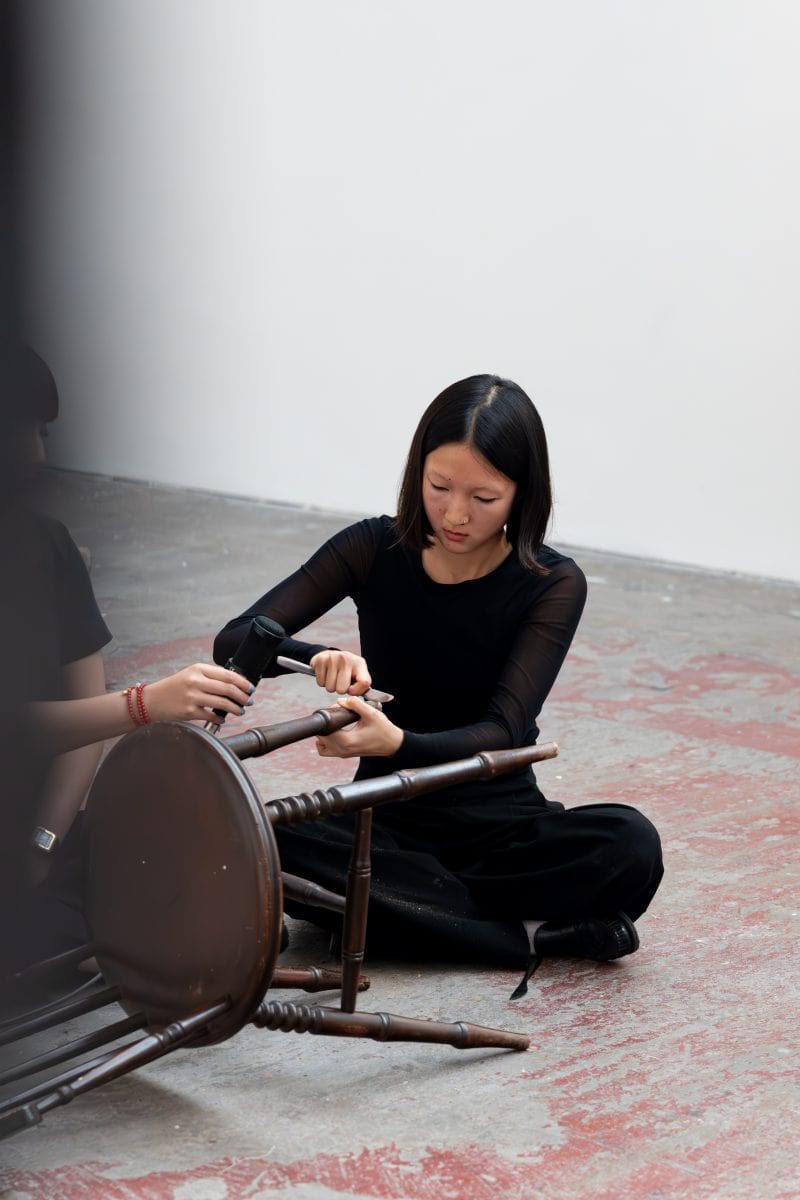
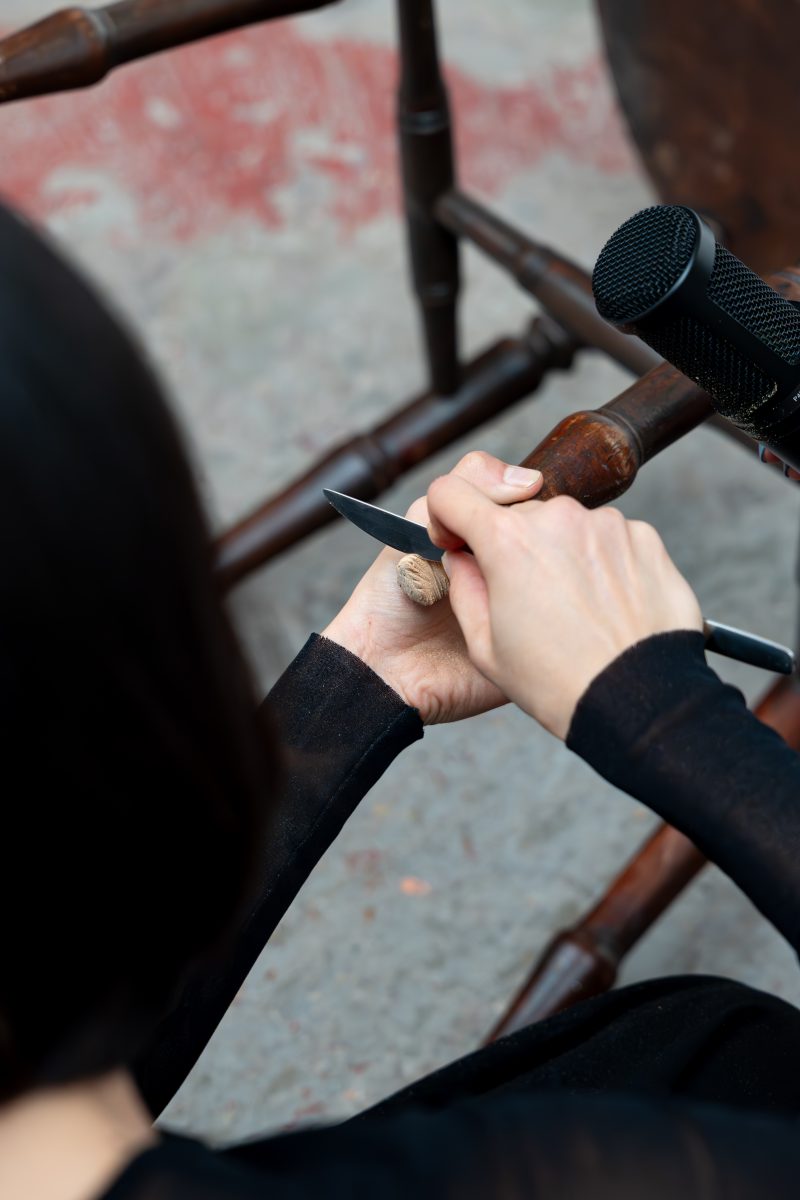
Chen completes her trilogy with A 2cm Wound (2025), a performance piece that materializes the oftentimes invisible psychological wounds suffered by immigrants facing displacement and discrimination. Over 36 minutes, Chen cuts at the base of one leg of a chair with a dinner knife. A small pile of wood shavings accumulates beneath the destabilized chair, giving body to the physical consequences of continual emotional trauma experienced by immigrants daily.
Chen is a deeply personal artist who treats their practice as a meditation on states of being which are sometimes easier to ignore. Her work gives value to the mental and physical realities of how our attempts at a better life – at more meaningful personal liberation – are often entangled with hardship and injury. Never shying away from the literal, Chen’s work reaches beyond the restrictions of language and translation, proving art’s enduring capability to image universal anxieties.