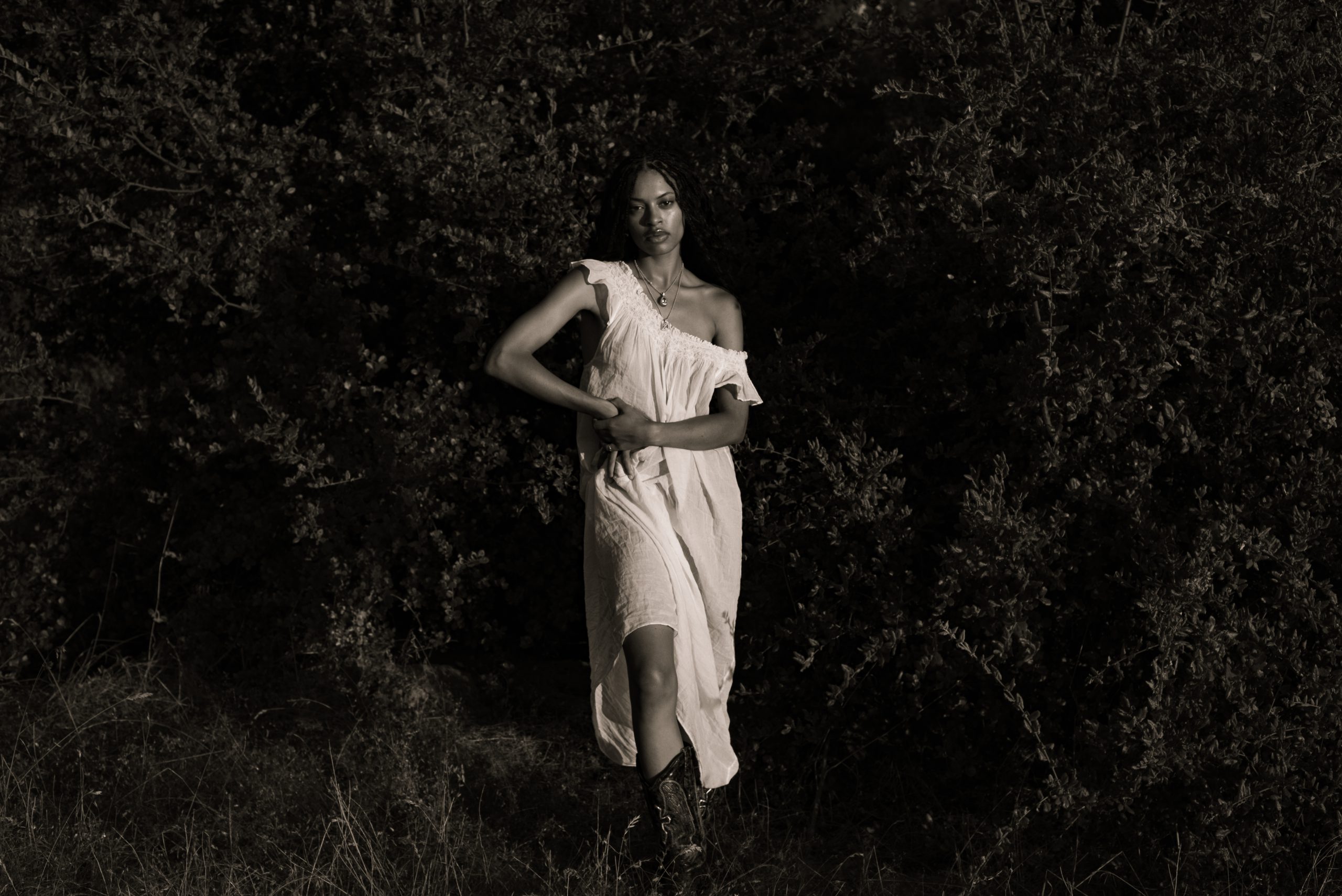
There is a moment near the end of Tether, the debut album by the singer-songwriter Annahstasia, when the music seems to outgrow the room it was recorded in. On “Believer,” guitars crackle and rise, percussion swells into something nearly devotional, and Annahstasia’s voice: smoky, weathered, impossibly calm inside the storm, pushes toward the horizon as if searching for a stage larger than the one beneath her feet. It is the sound of someone imagining herself into myth. Not fame exactly. Something older than that.
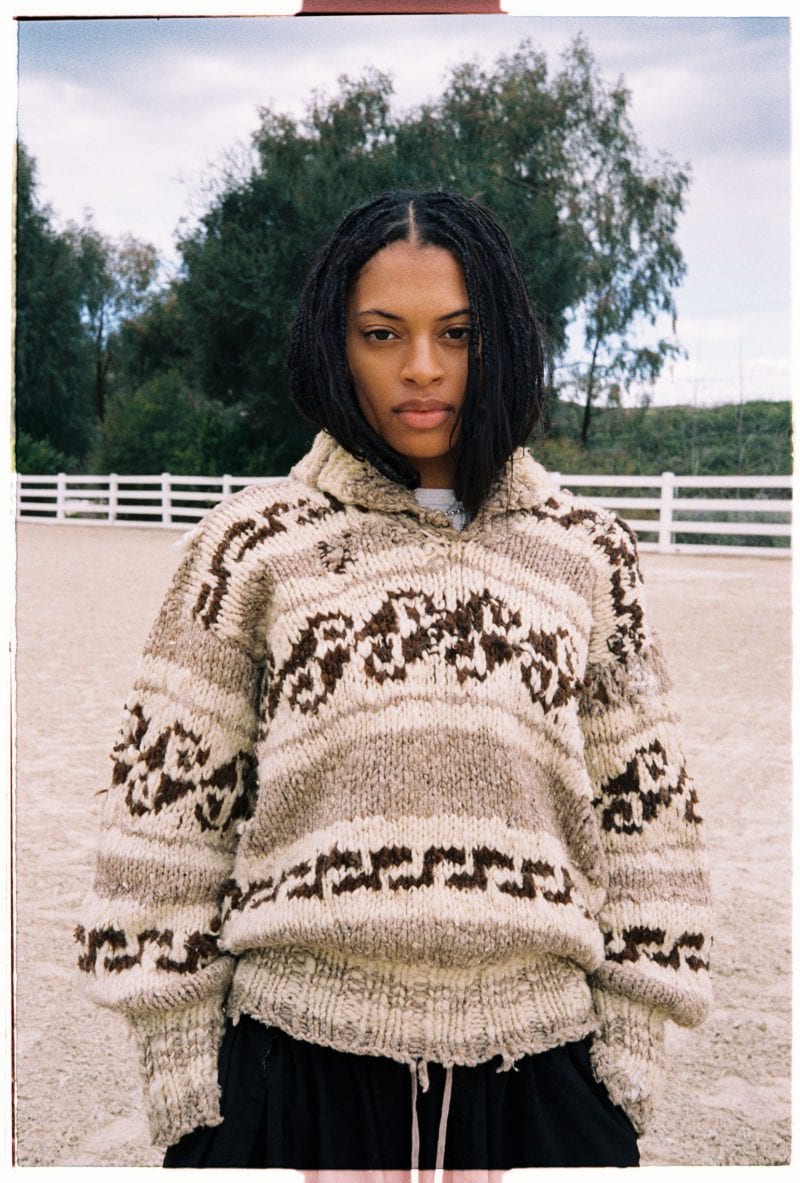
“At my core,” she says, “I’m a rock star without the budget or the fame yet.”
The fantasy is vivid enough to feel remembered rather than invented: the year is 1972, the amplifiers buzz softly, rain mists over a massive outdoor crowd, and somewhere in the distance a sea of strangers scream her name. But what makes Tether remarkable is not its nostalgia for another musical era; it is the way Annahstasia transforms longing itself into a form of architecture. The album does not imitate the past so much as inhabit its emotional scale — the grandeur, patience and vulnerability of records made before music became optimized for speed, before every silence needed filling.
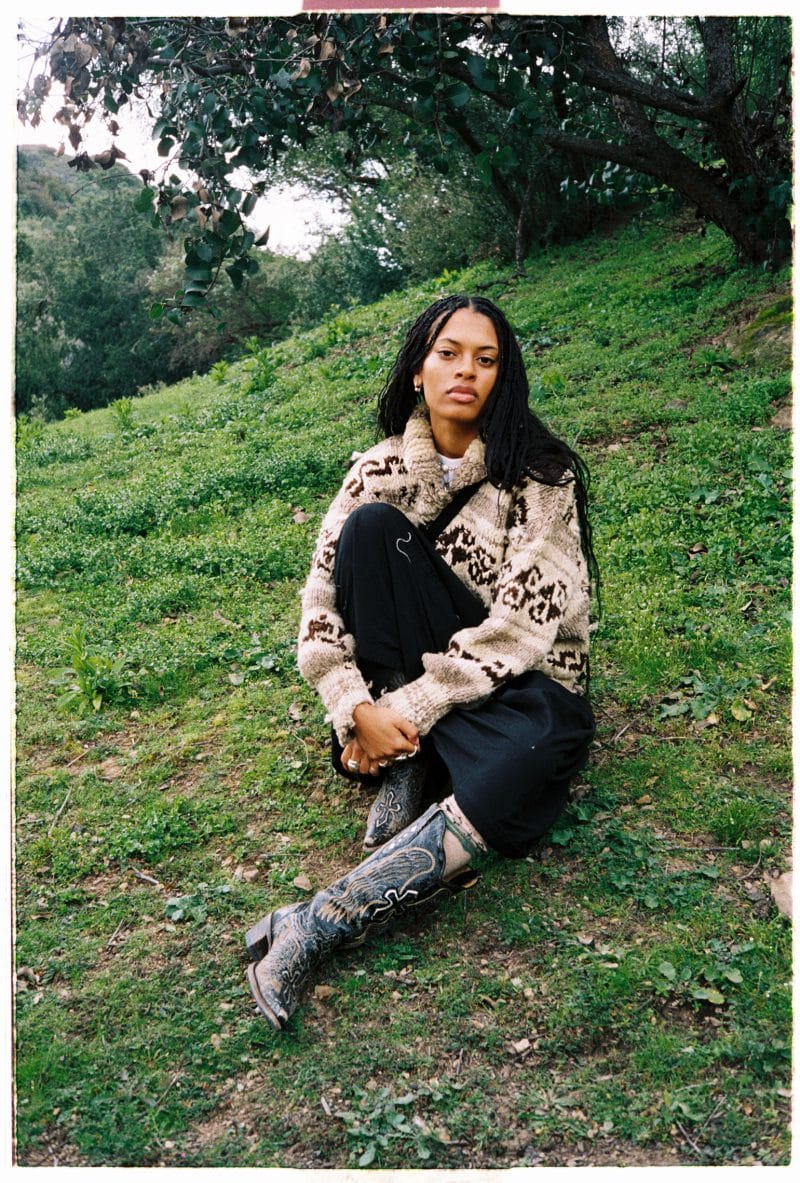
“My career has been a lesson in patience,” she says. Listening to Tether, that patience feels almost radical.
Though framed as a debut, the album arrives less like an introduction than a culmination. Annahstasia, born Annahstasia Enuke, has spent the better part of a decade circling the edges of the industry, writing songs, touring quietly, surviving the pressures of early discovery and slowly building a musical language resistant to easy categorization. Folk, soul, chamber pop, gospel, blues — all of those descriptions apply, and none of them really do. Her songs move more like weather systems than compositions, guided by intuition rather than genre allegiance.
“I have never subscribed to genre,” she says. “It is a sorting system created by labels to sell to certain demographics. It was never about the music itself.”
That refusal gives Tether its peculiar sense of timelessness. Recorded live at the storied Valentine Studios in Los Angeles with producers including Jason Lader, Andrew Lappin and Aaron Liao, the album preserves the accidental holiness of musicians listening to one another in real time. You can hear fingers shifting against guitar strings, breaths hanging between lines, the subtle instability of people trying to arrive at the same emotional place simultaneously.
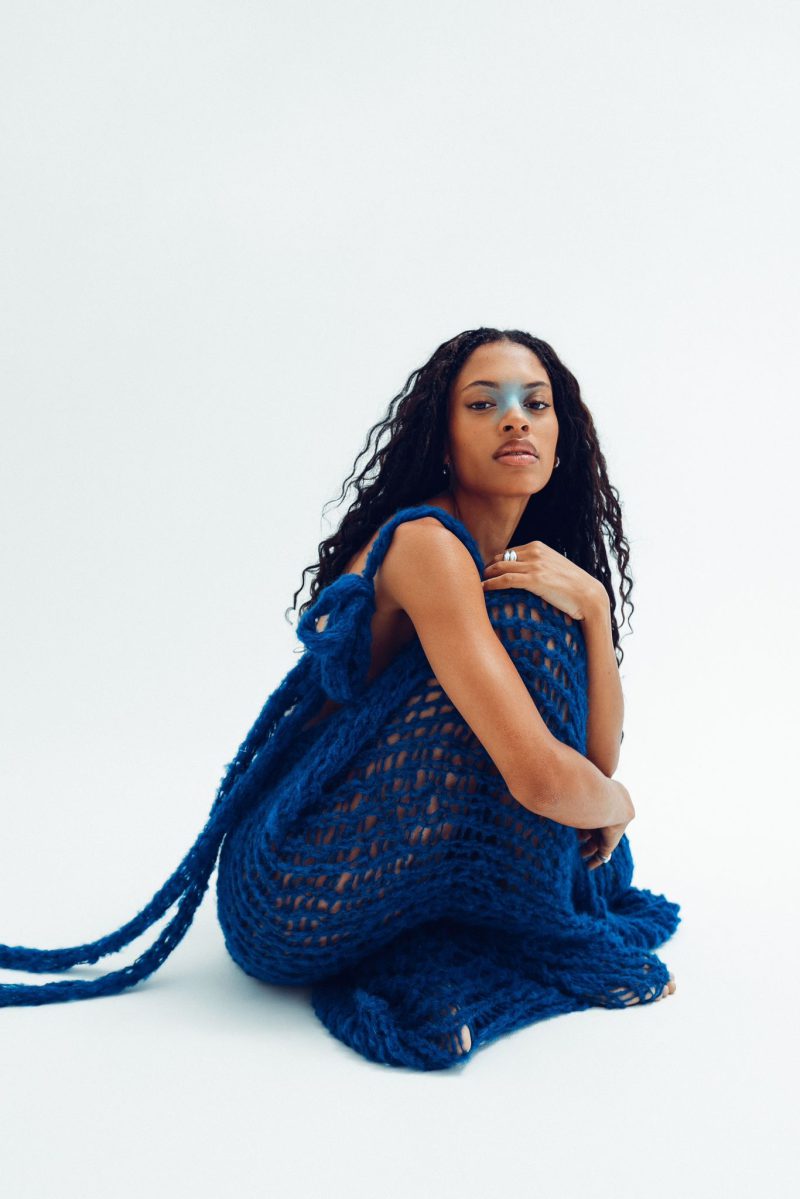
“Recording live maintains the breath and the energy stream that comes from multiple musicians focusing on one moment in time together,” she says. “There is nothing more precious to me than that air you can hear.”
That air is everywhere on Tether. It hovers inside the stark openness of “Be Kind,” whose minimal instrumentation frames her voice almost uncomfortably close, as though she were singing directly into the listener’s chest. It swells through “Villain,” where brass and gospel harmonies expand a song about memory and accountability into something nearly communal. “We are all made of both shadow and light,” she sings, not absolving herself so much as acknowledging the impossibility of purity.
“Life moves with the information and the tools you have at the time,” she says. “We are constantly in evolution.”
Her songs often begin as questions rather than declarations. What is love? What does freedom require? How do we survive our own contradictions? Tether refuses the polished certainty that contemporary pop often demands from women performers. Annahstasia sounds more interested in witnessing transformation than packaging conclusions.
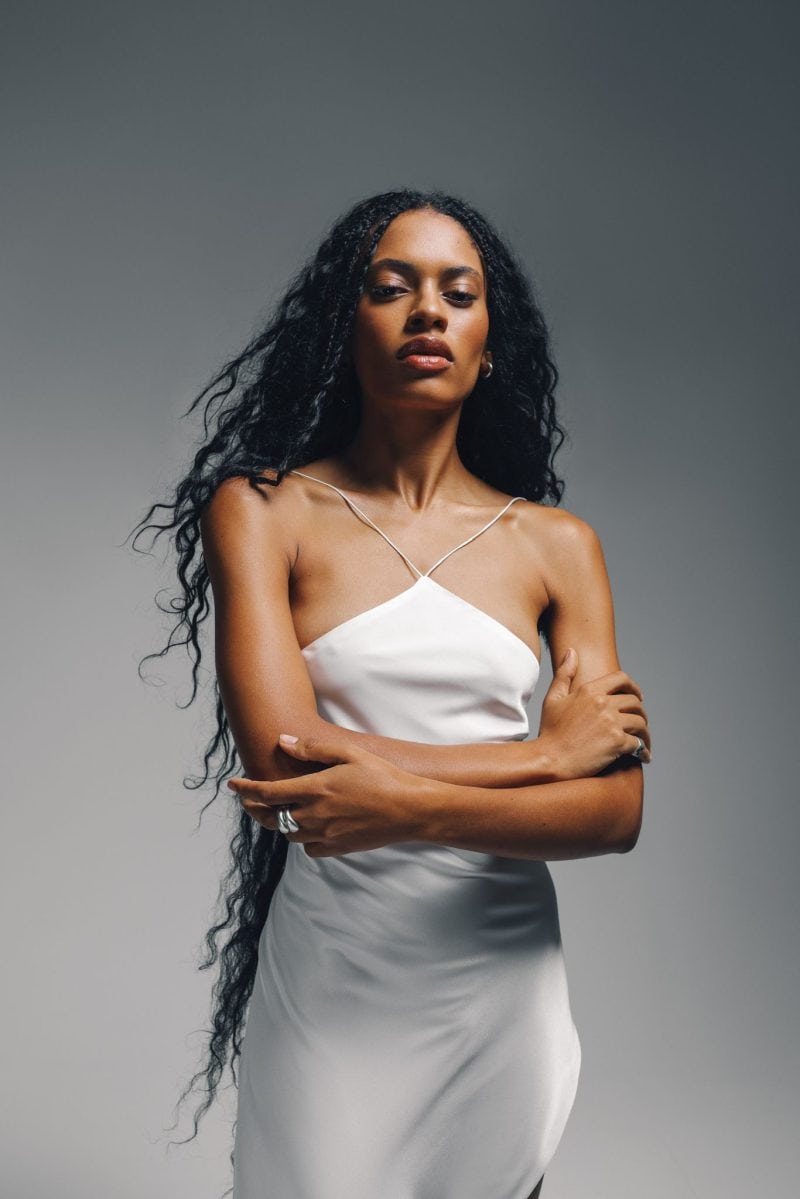
“The songs come from the questions,” she says. “I realized one year sitting beneath a eucalyptus tree that love is the most infinite resource in the universe. It is the universe itself, the fabric of all creation.”
That expansive understanding of love runs through the album like a hidden current. Romantic love appears, certainly, but so does self-preservation, artistic devotion, tenderness between collaborators, even compassion for former versions of oneself. The emotional register of the album is intimate without becoming confessional in the flattened, hyper-literal way modern songwriting often encourages. Annahstasia leaves room for mystery. Her lyrics feel lived-in rather than strategically revealing.
Perhaps nowhere is that more evident than on “Slow,” her hypnotic duet with the Nigerian artist Obongjayar. The song began after a chance meeting in London, when the two musicians spent hours talking after one of her shows before eventually recording a demo huddled around a single ribbon microphone in an Airbnb living room.
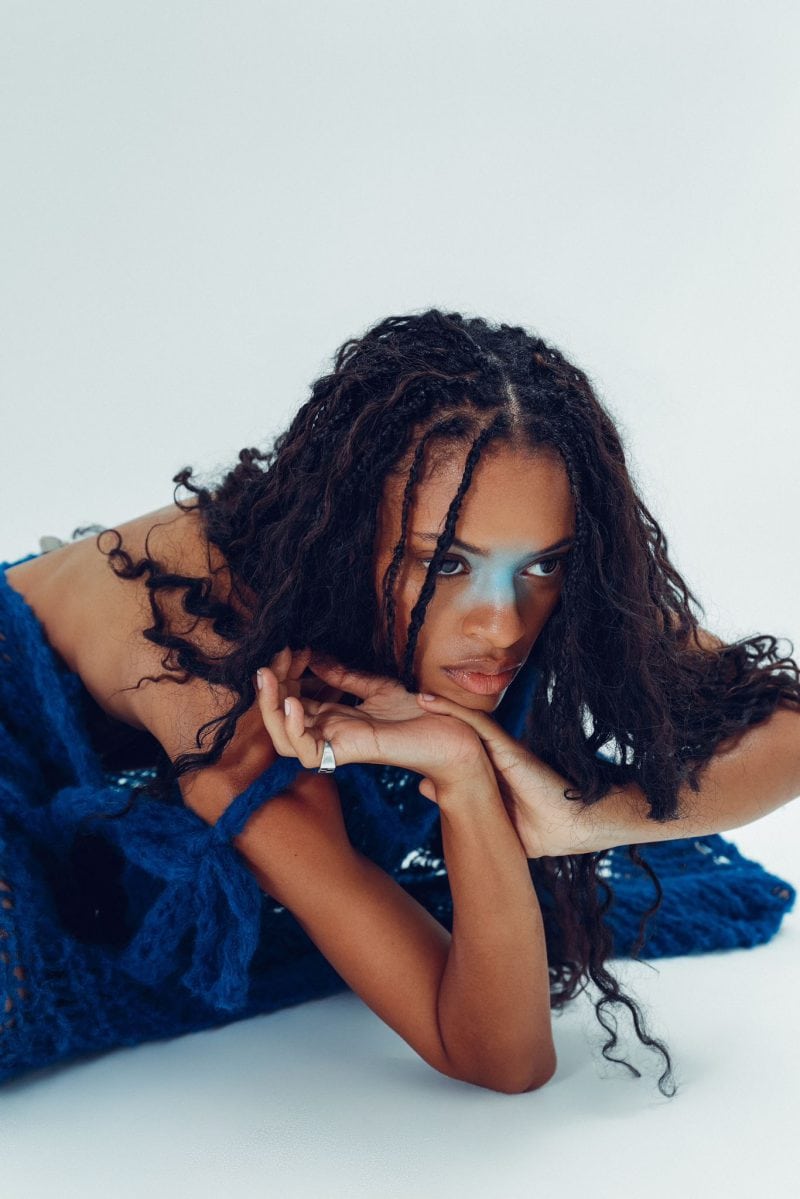
“That song would have remained half-finished if I had never met Obongjayar,” she says. “Songs have a nature and will of their own.”
The track becomes one of the album’s emotional centers precisely because of that sense of serendipity. Their voices circle each other carefully, sensually, as though discovering the song at the exact moment the listener hears it. In lesser hands, such looseness can feel unfinished. Here, it feels alive.
The same instinctual quality shapes her collaboration with the poet aja monet on “All is. Will Be. As it Was.,” a spoken meditation captured almost in passing, delicate as wind moving through an open window. Throughout the album, community is treated not as branding language but as a genuine creative philosophy. The songs breathe because they were allowed to belong to more than one person. And yet Tether remains unmistakably Annahstasia’s world: dramatic, searching, spiritually restless. Even at its quietest, the album carries the emotional scale of arena rock. One senses that if these songs were stripped of their orchestration and played acoustically in a small room, they would somehow still feel enormous.
Maybe that is the paradox at the heart of Annahstasia’s music. She speaks often about grandeur, the fantasy of huge festival stages, full bands, theatricality, while simultaneously making songs that resist spectacle altogether. In an era where visibility is often mistaken for artistic legitimacy, her work moves at the speed of actual experience: slow, contradictory, unresolved.
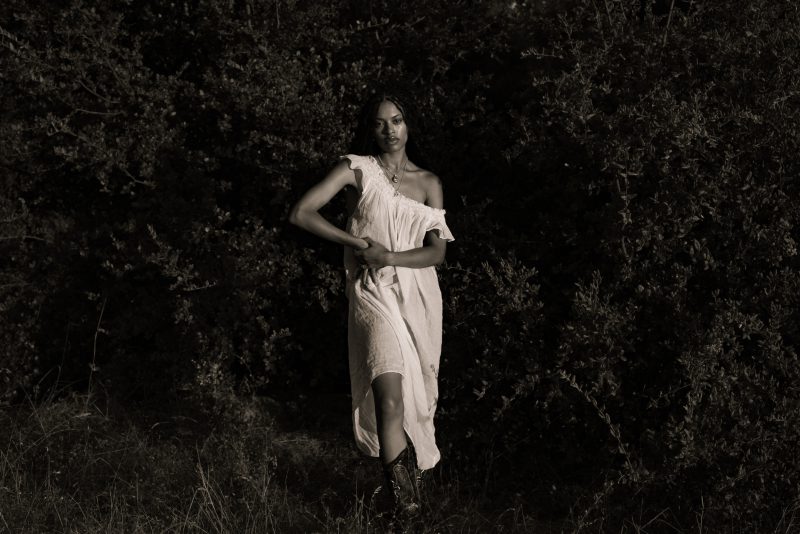
“Most of the best artists I know have had long careers underground,” she says. “Doing their slow work. Living within the practice of their craft.”
That philosophy has shaped Tether into something increasingly rare in contemporary music: a debut album unconcerned with announcing itself. It does not shout for attention or chase immediacy. Instead, it unfolds gradually, asking to be lived with rather than consumed. The songs seem to deepen as they move, revealing themselves the way certain truths only emerge long after they are spoken aloud.
When Annahstasia sings, there is often the feeling that she is listening too, to the room, to the musicians around her, to the earlier selves embedded inside the songs. The result is music that feels less performed than inhabited.
By the time “Believer” closes the album in a blaze of imagined rock stardom, the fantasy no longer sounds escapist. It sounds earned. Not because Tether reaches for spectacle, but because it understands something larger: that devotion, sustained long enough, eventually creates its own mythology.